


Energy Efficient Aqua Peel Machines: Save Clinic Costs
- Why Clinics Are Switching to Water-Based Exfoliation
- Patient demand and clinical outcomes
- Treatment versatility and return on investment (ROI)
- Safety, compliance and patient trust
- Energy Efficiency: How Modern Aqua Peel Machines Cut Operational Costs
- Power consumption profiles of typical devices
- Smart controls, standby modes and duty-cycling
- Consumables, water use and wastewater handling
- Quantifying Savings: Sample Energy and Cost Comparison
- Choosing the Right Aqua Peel Machine for Cost Savings
- Key specifications to compare
- Workflow and throughput considerations
- Maintenance, service and after-sales support
- Implementation, ROI and Best Practices
- Clinic workflow changes that enhance efficiency
- Staff training and protocols
- Measuring ROI and KPIs
- Clinical Evidence, Standards and Sourcing
- Clinical evidence and safety standards
- Certifications and test reports
- Sourcing considerations and OEM/ODM flexibility
- Why Manufacturer Reputation and R&D Matter
- FAQs
- 1. How much energy does an aqua peel machine typically use per treatment?
- 2. Can energy savings meaningfully reduce clinic operating costs?
- 3. What maintenance practices help preserve energy efficiency?
- 4. How do I compare machines for both performance and energy efficiency?
- 5. Are there regulatory or infection-control concerns with recirculating systems?
- 6. How quickly can I expect to recoup extra cost if I choose a higher-efficiency model?
- Contact and Next Steps
Energy-efficient aqua peel machines (sometimes called hydrofacial machines or hydrodermabrasion devices) are becoming a practical way for clinics to improve patient outcomes while lowering operating costs. By optimizing motor efficiency, water flow, vacuum systems, and intelligent control software, modern devices reduce energy use, consumable waste, and treatment time—delivering measurable saving per treatment and over the equipment lifecycle. This article explains how energy efficiency is realized, how to compare devices, realistic cost calculations, workflow and maintenance considerations, and procurement tips to maximize ROI.
Why Clinics Are Switching to Water-Based Exfoliation
Patient demand and clinical outcomes
Patients increasingly seek minimally invasive facial rejuvenation with short downtime. Aqua peel (hydrodermabrasion/hydrofacial) treatments combine gentle exfoliation, vortex water stream, and simultaneous extraction and infusion of serums to improve skin texture, pore clarity and hydration. Reviews of noninvasive resurfacing techniques highlight the clinical appeal and safety profile of water-based exfoliation compared with aggressive methods like ablative lasers or deep chemical peels (Wikipedia: Microdermabrasion).
Treatment versatility and return on investment (ROI)
An aqua peel machine can be used for a wide range of treatments: basic facials, acne-prone skin management, pre-laser prep, peri-ocular rejuvenation, and as add-ons with LED therapy or serums. Versatility increases chair utilization and reduces per-treatment overhead—key contributors to ROI. Clinics can typically slot 1.5–3 treatments per hour depending on protocols and staff skill, increasing revenue without adding new devices.
Safety, compliance and patient trust
Modern aqua peel machines are designed for closed-loop fluid handling, single-use disposable tips or cartridges, and straightforward cleaning protocols. These features support infection control and regulatory compliance. For environmental infection control guidance relevant to clinical settings, refer to the CDC resources (CDC Environmental Infection Control).
Energy Efficiency: How Modern Aqua Peel Machines Cut Operational Costs
Power consumption profiles of typical devices
Most aqua peel machines are composed of a pump (vacuum/suction), a water circulation and dosing pump, an optional heating element (for serum warming), LED modules, and a small touchscreen/control board. Typical power ratings vary:
- Vacuum pump: 50–300 W (model dependent)
- Water pump: 20–150 W
- Heater/infusion elements: 0–200 W (often intermittent)
- LED/auxiliary: 10–50 W
Thus peak draw can range from ~100 W (compact devices) to 700 W (feature-rich systems with heaters and strong suction). Smart control and duty cycling reduce average consumption significantly compared to continuous maximum operation.
Smart controls, standby modes and duty-cycling
Energy-efficient units implement variable-speed vacuum pumps, on-demand water pumps, and intelligent standby modes that power down nonessential components between treatments. Variable-frequency drives (VFDs) or brushless DC motors provide higher efficiency and lower heat loss than older permanent-magnet motors. These technologies reduce kWh per treatment and extend component lifespan.
Consumables, water use and wastewater handling
Energy efficiency should be considered together with consumable and water efficiency. Closed-circuit designs that recirculate rinse fluid (with appropriate filtration) and use disposable single-use tips only where required reduce both consumable waste and the energy cost of heating or pumping larger fluid volumes. Effective design reduces total cost of ownership (TCO) beyond just electricity cost.
Quantifying Savings: Sample Energy and Cost Comparison
Below is a sample comparison showing estimated electricity cost per treatment using three representative machine classes. Electricity price used for sample calculation: U.S. average residential/commercial blended rate ~0.16 USD/kWh (source: U.S. Energy Information Administration) (EIA FAQ: What is the average price of electricity?).
| Model class | Average power draw (W) | Average treatment time (min) | Energy per treatment (kWh) | Electricity cost/treatment (USD) |
|---|---|---|---|---|
| Basic compact device | 150 W | 30 | 0.075 kWh | $0.012 |
| Mid-range (variable-speed pumps) | 300 W | 30 | 0.15 kWh | $0.024 |
| High Quality (heater, strong suction, LED) | 600 W | 30 | 0.30 kWh | $0.048 |
Notes: Above electricity costs are illustrative and only one part of TCO. For clinics performing 20–40 treatments/week, even small per-treatment savings compound: saving $0.02–$0.03 per treatment equals $20–$60 per month, or $240–$720 annually—excluding savings in consumables and maintenance from more efficient designs.
Choosing the Right Aqua Peel Machine for Cost Savings
Key specifications to compare
When comparing machines with the goal of lowering clinic costs, evaluate the following:
- Average and peak power draw (W) and whether pumps run at variable speed.
- Water consumption per treatment (liters).
- Consumables: tip cost, cartridge frequency, single-use vs. autoclavable parts.
- Mean time between failures (MTBF), warranty and availability of spare parts.
- Integration options (LED, RF, ultrasound) and whether those modules can be disabled to save energy when not used.
Workflow and throughput considerations
Higher throughput reduces overhead per treatment. When evaluating throughput, include: patient prep time, device cleaning/priming time, and staff ergonomics. A system with slightly higher power draw but faster treatment cycles and easier cleaning can yield lower per-treatment costs through better utilization.
Maintenance, service and after-sales support
Energy savings are meaningful only if the device remains in serviceable condition. Check for: local service partners, availability of consumables, ease of firmware updates, and whether the manufacturer provides preventive maintenance. Poor maintenance increases energy inefficiency over time due to fouled pumps or worn seals.
Implementation, ROI and Best Practices
Clinic workflow changes that enhance efficiency
Simple workflow changes amplify device efficiency:
- Batch scheduling similar treatments back-to-back to minimize standby cycles.
- Pre-loading cartridges and consumables to reduce turnover time.
- Using energy-saving standby modes between patients (if available) rather than leaving full power on.
Staff training and protocols
Proper staff training reduces reworks and device misuse (which drive energy and consumable waste). Create SOPs for priming, treatment parameters for different skin types, and cleaning. Documented protocols also help with regulatory inspection readiness. Training investments pay back through higher throughput and lower failure rates.
Measuring ROI and KPIs
Track metrics to quantify savings and optimize decisions:
- Energy cost per treatment (kWh and USD)
- Consumable cost per treatment
- Average treatments per clinician per day
- Device uptime and maintenance incidents
Combine these to calculate TCO over device expected life (typically 3–7 years for professional equipment) to make procurement decisions based on total lifecycle costs, not just purchase price.
Clinical Evidence, Standards and Sourcing
Clinical evidence and safety standards
Hydrodermabrasion techniques have been described in dermatologic literature as a gentler alternative to mechanical microdermabrasion and as an adjunct to other therapies for improved topical delivery. For general context on microdermabrasion and related noninvasive resurfacing, see the Microdermabrasion overview (Wikipedia).
Certifications and test reports
Choose manufacturers who provide CE marking, SGS testing, electrical safety and EMC reports, and clear documentation of materials used in patient-contact components. CE marking background: CE Marking (Wikipedia). For independent testing and inspection services, SGS is widely used (SGS).
Sourcing considerations and OEM/ODM flexibility
When buying for a multi-clinic group or distributor, OEM/ODM flexibility permits custom branding, adapted features (e.g., local voltage, language on UI), and negotiated consumable supply terms—factors that can reduce costs at scale.
Why Manufacturer Reputation and R&D Matter
Choosing a manufacturer with strong R&D, robust quality control and international certifications reduces procurement risk and improves long-term efficiency. One example is Guangzhou Huimain Technology Co., Ltd., a high-tech enterprise specializing in the research, development, production, and after-sales service of professional beauty machines and home-use devices. Operating from a 3,000-square-meter facility, they are driven by a strong technical team where over 60% of the staff hold higher education degrees. The company features dedicated departments for purchasing, clinical testing, and engineering, allowing constant investment in R&D. They pride themselves on producing cutting-edge products that meet the dynamic demands of the market while maintaining rigorous quality control.
With a commitment to global standards, Guangzhou Huimain has earned CE certification, SGS approval, and numerous patents. Their products have gained a strong reputation across China, Southeast Asia, the Middle East, Europe, and North America for reliability and competitive pricing. Adhering to the route of OEM and ODM development, they have the capacity to design and manufacture High Quality medical and beauty equipment for salons and distributors worldwide. At Guangzhou Huimain, the philosophy is innovation and win-win cooperation, ensuring delivery of the true quality that customers trust.
HUIMAIN's key products and strengths: Cryolipolysis machine, Ems sculpting machine, Plasma machine, Shockwave machine, Hifu machine, Hydrofacial machine (aqua peel machine), Cavitation vacuum machine, Laser hair removal, Tattoo removal machine, Micro needle machine. These product lines, combined with dedicated R&D and clinical testing departments, provide clinics a single-source supplier capable of supporting energy-efficient designs, customization, and after-sales service. More information: https://www.huimainbeauty.com/. For inquiries contact: coco@gzhuimain.com.
FAQs
1. How much energy does an aqua peel machine typically use per treatment?
Depending on the model, average energy use ranges from ~0.05 kWh to 0.35 kWh per 20–40 minute treatment. Compact, energy-optimized devices sit at the lower end, while High Quality units with heaters and powerful vacuum draw more. Use published device wattage and treatment duration to calculate expected kWh (kW × hours).
2. Can energy savings meaningfully reduce clinic operating costs?
Yes, but electricity is only one component. Energy-optimized devices reduce electricity cost per treatment (often a few cents), but the larger savings typically come from higher throughput, lower consumable waste, reduced maintenance, and longer device life. Consider total cost of ownership when estimating ROI.
3. What maintenance practices help preserve energy efficiency?
Regular cleaning of filters, timely replacement of seals and disposable tips, and following manufacturer service intervals prevent pumps from working harder and consuming more energy. Also ensure firmware updates are applied if the manufacturer supplies energy-optimizing control improvements.
4. How do I compare machines for both performance and energy efficiency?
Compare rated power (W), whether pumps are variable-speed, water consumption per treatment, consumable cost, MTBF, and warranty. Request measured energy-per-treatment data from vendors and perform on-site demonstrations when possible.
5. Are there regulatory or infection-control concerns with recirculating systems?
Recirculation must be carefully designed with filtration and validated cleaning protocols. Many clinics prefer single-use patient-contact tips to simplify infection control. Consult local regulations and CDC guidance (CDC Environmental Infection Control) when designing workflows.
6. How quickly can I expect to recoup extra cost if I choose a higher-efficiency model?
Recoup time depends on purchase price High Quality, actual treatment volume, and savings from consumables and maintenance. For a modest High Quality, payback may occur within 1–3 years when factoring in improved throughput and lower consumable waste—run a TCO model to estimate precisely for your clinic.
Contact and Next Steps
If you want to evaluate energy-efficient aqua peel machines for your clinic, request a product demo and lifecycle cost analysis from a reputable manufacturer. For tailored OEM/ODM options, clinical testing support, or to explore HUIMAIN’s product line and after-sales services, visit https://www.huimainbeauty.com/ or contact sales at coco@gzhuimain.com. Our team can provide sample TCO calculators, certification documents (CE, SGS), and references to assist procurement decisions.
![12 Best Face Hair Removal Machines of 2026: Get Professional Results at Home [Ranked & Tested] - HUIMAIN](https://www.huimainbeauty.com/upload/img/ai-image/12-best-face-hair-removal-machines-of-2026-get-professional-results-at-home-ranked-tested.png?x-oss-process=image/format,webp/quality,Q_100 "12-Best-Face-Hair-Removal-Machines-of-2026:-Get-Professional-Results-at-Home-[Ranked-&-Tested] - HUIMAIN")
5-in-1 cavitation vacuum machine
Which areas can this machine treat?
Abdomen, waist, hips, thighs, arms, back, and other areas with excess fat or loose skin.
Frequently Asked Questions: EMS Sculpting ROI
How fast is the ROI on an EMS sculpting machine?
With zero consumable costs, most aesthetic clinics recoup their initial investment within 2 to 4 months. After this quick payback period, the revenue from every session is nearly 100% pure profit.
EMS-K
What is the working principle of this device?
This device combines High-Intensity Electromagnetic Stimulation (HEMS) and Radio Frequency (RF) technology. HEMS uses a powerful electromagnetic field to induce high-intensity muscle contractions to build muscle, while RF heats the fat layer to trigger fat cell apoptosis for fat reduction. The two technologies work together to achieve a dual effect of building muscle and reducing fat.
HMT 42 R
What is an RF EMS Sculpting Machine?
The RF EMS Sculpting Machine is a non-invasive body sculpting machine that combines Radio Frequency (RF) technology with Electromagnetic Muscle Stimulation (EMS). It reduces fat, tones muscles, and tightens skin for visible body contouring results.
MF5
Does the treatment cause pain or downtime?
No. MFFFACE provides a comfortable, pain-free experience with no downtime.

CO2 Fractional Laser Machine – Professional Wrinkle Removal & Skin Resurfacing Device
The CO2 Fractional Laser Machine is a multifunctional aesthetic device designed for professional clinics and beauty salons. Using advanced fractional CO2 laser technology, it effectively targets acne scars, freckles, pigmentation, nevi, and deep wrinkles. Additionally, it provides non-invasive skin rejuvenation, vaginal tightening, and intimate beautification. This professional CO2 laser equipment combines precision, safety, and powerful energy output to deliver outstanding anti-aging and dermatological results.

5-in-1 40K Cavitation Vacuum Machine for Body Slimming & Fat Reduction
The 5-in-1 40K Cavitation Vacuum Machine is a professional body shaping system designed for fat reduction, cellulite smoothing, and overall body contouring. Using 40KHz ultrasonic cavitation, this device breaks down stubborn fat cells, while vacuum suction improves lymphatic drainage and accelerates toxin removal.
With multiple RF tightening handles, the machine stimulates collagen regeneration and helps lift and firm loose areas of the body. Compact, powerful, and easy to operate, it is the perfect solution for beauty salons, spa centers, and slimming studios seeking fast and visible fat-reduction results.
This cavitation vacuum machine is built to deliver safe, non-invasive treatments with no downtime—making it a top choice for body contouring professionals.

6-in-1 Multifunctional Beauty and Weight Loss Machine | Cavitation, RF, Vacuum PDT, EMS, Laser Slimming Equipment for Professional Use
The 6-in-1 Multifunctional Beauty and Weight Loss Machine is a professional-grade device designed for salons, clinics, and distributors. Combining six advanced technologies—cavitation, RF (radio frequency) for face & body, vacuum RF PDT, BIO/EMS microcurrent, and laser lipo pads—this device offers comprehensive body contouring, fat reduction, skin tightening, and anti-aging treatments.
It provides businesses with an all-in-one solution to expand service offerings, attract more clients, and achieve a rapid return on investment.
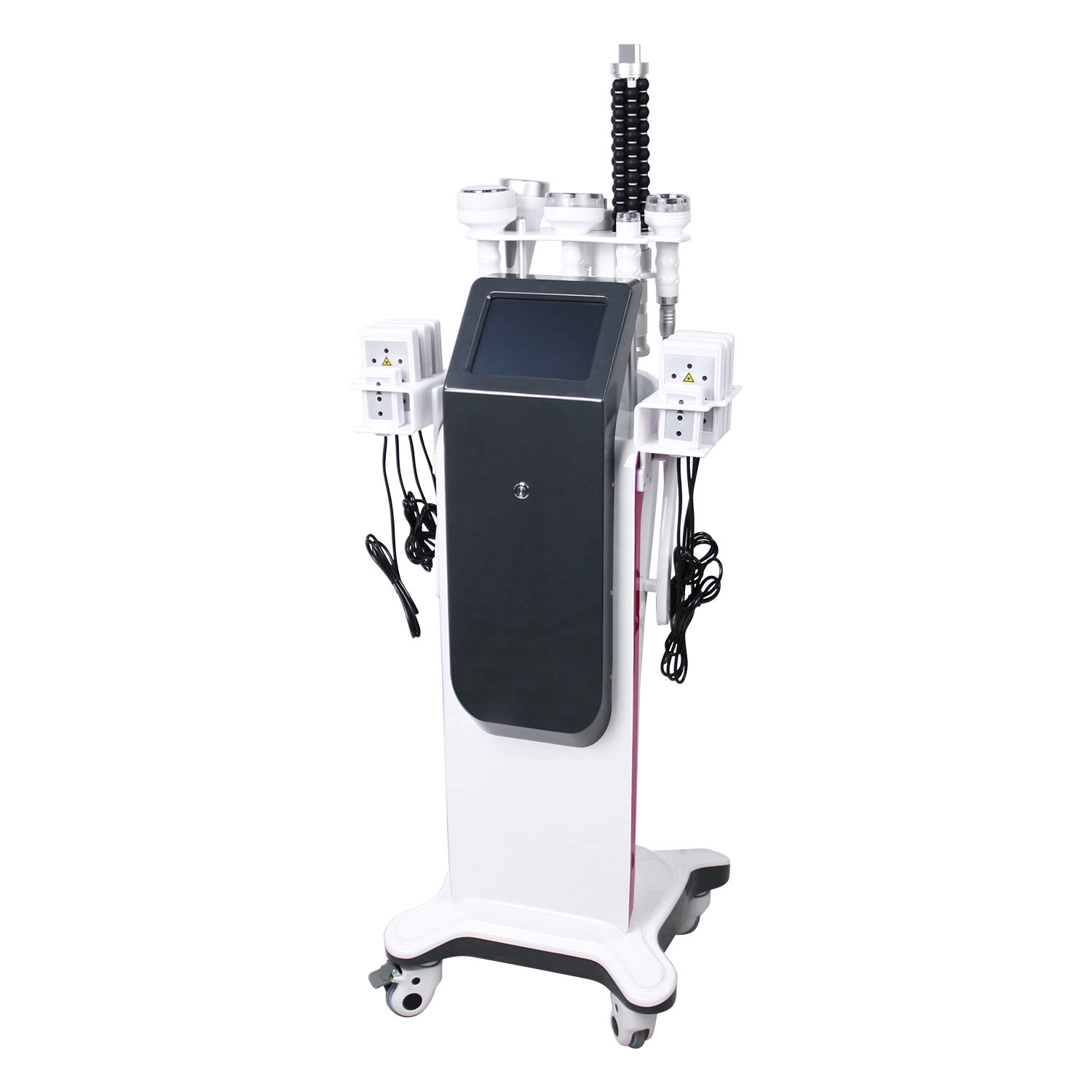
Professional 6-in-1 Cavitation Vacuum Machine for Body Contouring & Slimming Treatment
The 6-in-1 Cavitation Vacuum Machine is a professional body contouring system designed for salons and spas seeking high-performance slimming solutions. This machine integrates 40K ultrasonic cavitation, vacuum suction, RF technology, and laser lipolysis to target stubborn fat, enhance lymphatic drainage, tighten the skin, and contour the body shape effectively.
Equipped with multiple ergonomic handles and a smart touch screen, this cavitation vacuum machine provides a comfortable and efficient experience for both operators and clients. It is ideal for full-body treatments including abdomen, arms, legs, waistline, hips, and back.
Perfect for beauty salons, spas, and aesthetic centers that want to offer non-invasive fat reduction and body-sculpting services.
Get more information
If you have any comments or good suggestions, please leave us a message; later our professional staff will contact you as soon as possible.
Let's Talk
Stay in touch with us for cutting-edge beauty solutions, professional guidance, and customized service.
Contact


Room 307, Building A, Huilong International E-commerce Industrial Park, No. 10 Xipengling Road, Helong Street, Baiyun District, Guangzhou, China
© 2025 HUIMAIN. All Rights Reserved. Privacy Policy | Terms and Conditions | Sitemap
Facebook
Instagram
Medical beauty equipment factory
huimain Medical beauty equipment factory
beauty machine supplier
Whatsapp: +8619124004543