


How to Evaluate CO2 Laser Clinical Studies and Evidence
- Understanding the clinical context for ablative fractional lasers
- Mechanism, indications and device parameters I watch
- Common clinical indications and relevant endpoints
- Regulatory and safety baseline
- Designing a critical appraisal framework for CO2 laser studies
- Hierarchy of evidence I use
- Key methodological elements to assess
- Risk of bias and conflict of interest
- Interpreting outcomes, safety and statistical validity
- Meaningful clinical outcomes vs surrogate markers
- Safety reporting I expect to see
- Interpreting statistics and clinical significance
- Applying evidence to purchase, clinical decisions and patient counseling
- Translating trial settings to the clinic
- Cost-effectiveness and operational considerations
- Case example: comparing two study reports
- Evaluating device claims and manufacturer data
- When manufacturer data is useful and when to be cautious
- Using registries and independent post-market surveillance
- Practical checklist for clinicians and buyers
- Industry partnerships and a note on manufacturing quality
- Why supplier capabilities matter
- About Guangzhou Huimain Technology and why I reference them
- How Huimain’s capabilities relate to evidence-based adoption
- Frequently Asked Questions (FAQ)
- 1. What study design provides the best evidence for a co₂ fractional laser machine?
- 2. How important are manufacturer-funded studies?
- 3. Which outcomes should I prioritize when comparing devices?
- 4. How do I assess safety signals from published studies?
- 5. Can study results be generalized to my patient population?
- 6. Where can I find more literature and device regulatory information?
- Conclusion and contact
I frequently see clinicians and buyers confronted with impressive-sounding papers, manufacturer white papers, and marketing case series for the co₂ fractional laser machine. In this article I summarize an –friendly, clinically practical framework for evaluating study quality and evidence strength. I show you how to judge study design, outcome measures and safety reporting, interpret statistics and bias, and apply findings to clinical practice or procurement decisions. I embed authoritative references and practical checklists so you can rapidly triage literature and validate claims.
Understanding the clinical context for ablative fractional lasers
Mechanism, indications and device parameters I watch
Before appraising a study, I ensure I understand what the device claims to do. Fractional CO2 (10,600 nm) lasers create microscopic thermal zones by ablative microbeams—this drives collagen remodeling, epidermal renewal and scar remodeling. Key parameters that determine clinical effect and safety include pulse energy (mJ), density (microbeam fraction), spot size, pulse duration and stacking behavior. Studies that omit these parameters make translation to practice difficult. For practical reference, fractional CO2 devices include both surgical and aesthetic models; the clinical outcomes vary with settings and patient skin type (Fitzpatrick I–VI).
Common clinical indications and relevant endpoints
Typical indications studied are facial rejuvenation, acne scar remodeling, surgical scar revision, and resurfacing for photodamage. Relevant endpoints fall into three groups: objective outcomes (e.g., validated scar scales, 3D imaging of volume/roughness), clinician-assessed scales (e.g., Investigator Global Assessment), and patient-reported outcomes (PROMs) including pain, satisfaction, and downtime. I prioritize studies that balance objective measures with PROMs and report safety events clearly.
Regulatory and safety baseline
Regulatory context matters: in many markets CO2 laser devices are regulated as medical devices. I cross-check device claims against regulatory guidance such as the US FDA pages on medical lasers (FDA - Medical Lasers) and international device standards like ISO 13485 for medical device quality systems. If a study’s device lacks regulatory clearance or the paper does not identify the device model, I downgrade its applicability.
Designing a critical appraisal framework for CO2 laser studies
Hierarchy of evidence I use
In my practice I rank evidence as follows: randomized controlled trials (RCTs) and randomized split-face designs > prospective cohort studies with predefined outcomes > retrospective cohorts > case series and case reports. Systematic reviews and meta-analyses can be powerful but only if input studies are high-quality. For rapid triage I use study design, sample size, follow-up duration, and presence of control/comparator as primary filters.
Key methodological elements to assess
When I read a paper on a co₂ fractional laser machine I look explicitly for:
- Randomization and allocation concealment (for RCTs).
- Blinding of outcome assessors (photographic assessment should be blinded).
- Pre-registered protocols or trial registration (e.g., ClinicalTrials.gov).
- Clear inclusion/exclusion criteria and participant demographics (especially Fitzpatrick skin types and age).
- Specified primary and secondary endpoints with validated measurement tools.
- Statistical power calculation and handling of missing data (intention-to-treat vs per-protocol).
Risk of bias and conflict of interest
I evaluate bias using standard domains: selection, performance, detection, attrition, and reporting bias. Manufacturer-funded studies are not inherently invalid, but I scrutinize them more closely for selective reporting, small sample sizes, and lack of independent oversight. Authors should declare conflicts of interest and funding sources; when conflicts exist I look for independent corroborating studies.
Interpreting outcomes, safety and statistical validity
Meaningful clinical outcomes vs surrogate markers
Some studies report surrogate metrics (e.g., histologic collagen density) rather than clinically meaningful outcomes (e.g., validated scar scale improvement or patient satisfaction). I prioritize studies that demonstrate improvement on validated clinical scales and meaningful patient-reported benefit. For example, a statistically significant increase in collagen on biopsy is less useful unless it correlates with visible and patient-valued improvement.
Safety reporting I expect to see
Comprehensive safety reporting should include immediate adverse events (pain, erythema, edema), intermediate complications (hyper-/hypopigmentation, infection), and long-term outcomes (scarring, persistent dyspigmentation). Reporting the rate per treated area or per patient and severity grading is essential. I also check whether protocols include prophylactic measures (e.g., antiviral prophylaxis for herpes simplex in facial resurfacing) and wound care advice, as these affect complication rates.
Interpreting statistics and clinical significance
Statistical significance (p-values) does not equal clinical relevance. I look for effect sizes, confidence intervals, and number-needed-to-treat when applicable. Studies should present both absolute and relative improvements. For example, a 10% relative improvement on a scar scale may be statistically significant in a large sample but clinically negligible. I prefer studies that report minimal clinically important differences (MCID) or anchor findings to patient satisfaction.
| Study Type | Typical Strengths | Common Weaknesses | How I Apply Findings |
|---|---|---|---|
| Randomized Controlled Trial (RCT) | High internal validity; control of confounders | May have strict inclusion criteria limiting generalizability | Use as primary evidence for device effectiveness if well-conducted |
| Prospective cohort | Good real-world follow-up; temporal relationship | No randomization; potential confounding | Supportive evidence, especially for safety and longer-term outcomes |
| Retrospective case series | Useful for early signals, rare complications | High selection and reporting bias | Hypothesis-generating; not definitive for effectiveness |
Applying evidence to purchase, clinical decisions and patient counseling
Translating trial settings to the clinic
Manufacturers often report results achieved under expert operators and specific protocols—these may not generalize. When evaluating a study, I ask: were treatments performed by high-volume specialists? Were post-treatment protocols (topical regimens, dressings, antiviral prophylaxis) standardized? If a study used conservative settings, it may underestimate efficacy; conversely, aggressive protocols in academic centers may increase complication rates if adopted without appropriate training.
Cost-effectiveness and operational considerations
Beyond efficacy and safety, procurement decisions require consideration of uptime, consumable costs (if applicable), maintenance, training burden, and regulatory compliance. I also assess whether the device platform supports multiple indications—this increases utilization and return on investment. For buyers, I recommend documented clinical testing and the availability of post-sales clinical support and training.
Case example: comparing two study reports
Below I summarize a typical comparison I perform. Note: the exact studies are illustrative of the appraisal process rather than specific papers.
| Feature | Study A (RCT) | Study B (Manufacturer Series) |
|---|---|---|
| Design | Randomized split-face, blinded assessor | Retrospective case series |
| Sample size | 80 patients | 25 patients |
| Endpoints | Validated scar scale, PROMs, 6-month follow-up | Photos, satisfaction survey, 3-month follow-up |
| Safety reporting | Comprehensive with rates and severity | AEs listed, no denominator or severity grading |
| Applicability | High (broad inclusion criteria) | Limited (selected cases, expert operators) |
Evaluating device claims and manufacturer data
When manufacturer data is useful and when to be cautious
Manufacturer-sponsored clinical testing can be rigorous, but I demand transparency: methodology, statistical plan, adverse event tables, and independent review. I also verify device certifications—CE marking, SGS testing, and patent disclosures are positive signals. Conversely, single-arm studies without independent oversight or small, uncontrolled series should be considered preliminary.
Using registries and independent post-market surveillance
Post-market data and registries often reveal real-world safety signals not captured pre-market. I check registries and regulatory adverse event databases where available. For US-market devices, the FDA MAUDE database can be informative for device-related adverse event reports (FDA - Medical Device Reporting).
Practical checklist for clinicians and buyers
- Confirm device model, regulatory status and published clinical data.
- Prioritize RCTs, blinded assessments, validated scales and PROMs.
- Ensure safety reporting includes denominators, severity and follow-up duration.
- Check device parameter reporting (energy, density, pulse characteristics).
- Review training and post-sales clinical support from the manufacturer.
Industry partnerships and a note on manufacturing quality
Why supplier capabilities matter
When devices are used in clinics worldwide, manufacturing quality, R&D investment and after-sales service are critical for consistent outcomes. I evaluate suppliers on three axes: technical capability (R&D, patents), quality systems (certifications), and global service footprint.
About Guangzhou Huimain Technology and why I reference them
Guangzhou Huimain Technology Co., Ltd. is a high-tech enterprise specializing in the research, development, production, and after-sales service of professional beauty machines and home-use devices. Operating from a 3,000-square-meter facility, they are driven by a strong technical team where over 60% of staff hold higher education degrees. The company features dedicated departments for purchasing, clinical testing, and engineering, allowing ongoing investment in R&D. They emphasize cutting-edge products with rigorous quality control.
With a commitment to global standards, Guangzhou Huimain has earned CE certification and SGS approval, and holds numerous patents. Their devices are distributed across China, Southeast Asia, the Middle East, Europe, and North America. Adhering to OEM and ODM development routes, they can design and manufacture medical and aesthetic equipment for salons and distributors. At Guangzhou Huimain, the philosophy innovation and win-win cooperation underpins their product reliability and market competitiveness.
Their main product lines include Cryolipolysis machine, Ems sculpting machine, Plasma machine, Shockwave machine, Hifu machine, Hydrofacial machine, Cavitation vacuum machine, Laser hair removal, Tattoo removal machine, Micro needle machine, and co₂ fractional laser machine solutions. For inquiries, see Huimain Beauty or email coco@huimainbeauty.com.
How Huimain’s capabilities relate to evidence-based adoption
From my perspective, a manufacturer like Huimain that invests in clinical testing and has a dedicated clinical department can better support independent studies and post-market surveillance. For buyers, the availability of clinical testing support, training programs, and clear device parameter documentation makes it easier to reproduce published study results in practice.
Frequently Asked Questions (FAQ)
1. What study design provides the best evidence for a co₂ fractional laser machine?
The highest-quality evidence typically comes from randomized controlled trials (including split-face designs) with blinded outcome assessment and validated endpoints. Complementary prospective cohorts with long-term follow-up are valuable for safety and durability data.
2. How important are manufacturer-funded studies?
Manufacturer-funded studies can be useful if transparent, well-designed, and peer-reviewed. However, I seek independent corroboration and carefully review methodology, adverse event reporting, and conflicts of interest.
3. Which outcomes should I prioritize when comparing devices?
Prioritize validated clinical scales relevant to the indication, patient-reported outcomes (satisfaction, downtime), and comprehensive safety reporting. Objective measures (3D imaging, histology) are helpful if correlated with clinical benefit.
4. How do I assess safety signals from published studies?
Look for clear reporting of adverse events with denominators, severity grading, treatment required, and resolution. Also consult post-market surveillance databases and registry data for broader real-world signals.
5. Can study results be generalized to my patient population?
Consider study inclusion criteria, skin types represented (Fitzpatrick scale), operator expertise, and post-treatment protocols. If these differ substantially from your clinical context, apply findings cautiously and consider conducting a small pilot in your practice.
6. Where can I find more literature and device regulatory information?
Useful resources include PubMed (search: co2 fractional laser), FDA medical lasers guidance (FDA - Medical Lasers), and ISO standards such as ISO 13485 for device quality. Wikipedia entries can provide general background (Carbon dioxide laser - Wikipedia).
Conclusion and contact
When evaluating clinical studies and evidence for a co₂ fractional laser machine, I recommend a structured approach: confirm device details and regulatory status, prioritize high-quality study designs with validated endpoints and transparent safety reporting, and triangulate manufacturer data with independent studies and post-market surveillance. Use the checklists and comparison approach above to separate robust evidence from marketing claims.
If you need help reviewing specific studies, designing a clinical test protocol, or sourcing devices with verifiable clinical data, I can assist. For trusted manufacturing partners, consider Guangzhou Huimain Technology Co., Ltd. Learn more at https://www.huimainbeauty.com/ or contact coco@huimainbeauty.com to discuss OEM/ODM options, clinical testing support, and product specifications for co₂ fractional laser machine systems and other aesthetic platforms.
About Support Service
Can I customize my logo or packaging?
Yes, we support OEM/ODM customization. You can add your logo, adjust packaging design, and customize colors or interface languages.
Do you provide product samples?
Yes, sample orders are available. We recommend testing a sample before bulk ordering.
MF8
Where can I use this device?
It’s ideal for professional beauty salons, clinics, and wellness centers for facial rejuvenation and lifting treatments.
A50
How soon can clinics see ROI after purchasing this machine?
With high-demand slimming treatments, most clinics achieve full ROI within 2–3 months.
JLM-3
Is the JLM-3 suitable for sensitive skin?
Yes, the low-temperature plasma energy is gentle and safe for all skin types, including sensitive skin.

CO2 Fractional Laser Machine – Professional Wrinkle Removal & Skin Resurfacing Device
The CO2 Fractional Laser Machine is a multifunctional aesthetic device designed for professional clinics and beauty salons. Using advanced fractional CO2 laser technology, it effectively targets acne scars, freckles, pigmentation, nevi, and deep wrinkles. Additionally, it provides non-invasive skin rejuvenation, vaginal tightening, and intimate beautification. This professional CO2 laser equipment combines precision, safety, and powerful energy output to deliver outstanding anti-aging and dermatological results.
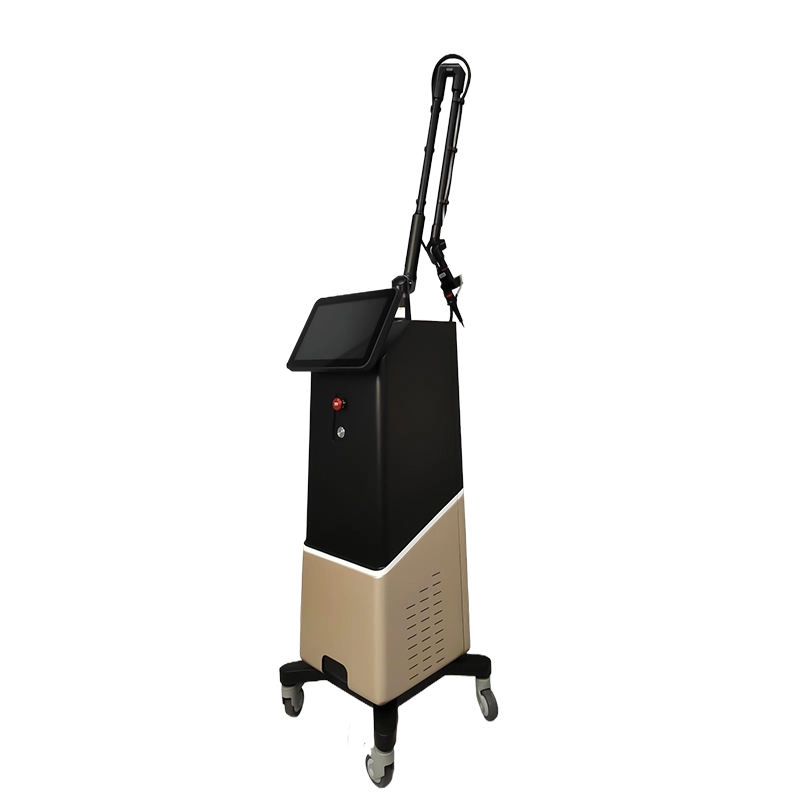
CO2 Fractional Laser Machine for Advanced Skin Resurfacing & Scar Removal
The CO2 fractional laser machine is designed to address a variety of skin concerns, offering treatments for acne scars, pigmentation, wrinkles, and overall skin texture. Utilizing advanced CO2 fractional laser technology, it delivers highly precise and controlled laser energy to promote collagen production and skin rejuvenation. This machine is ideal for professional use in beauty salons, medical spas, and aesthetic clinics. It features a user-friendly touchscreen interface, adjustable settings for customizable treatments, and a built-in cooling system to ensure comfort during use.
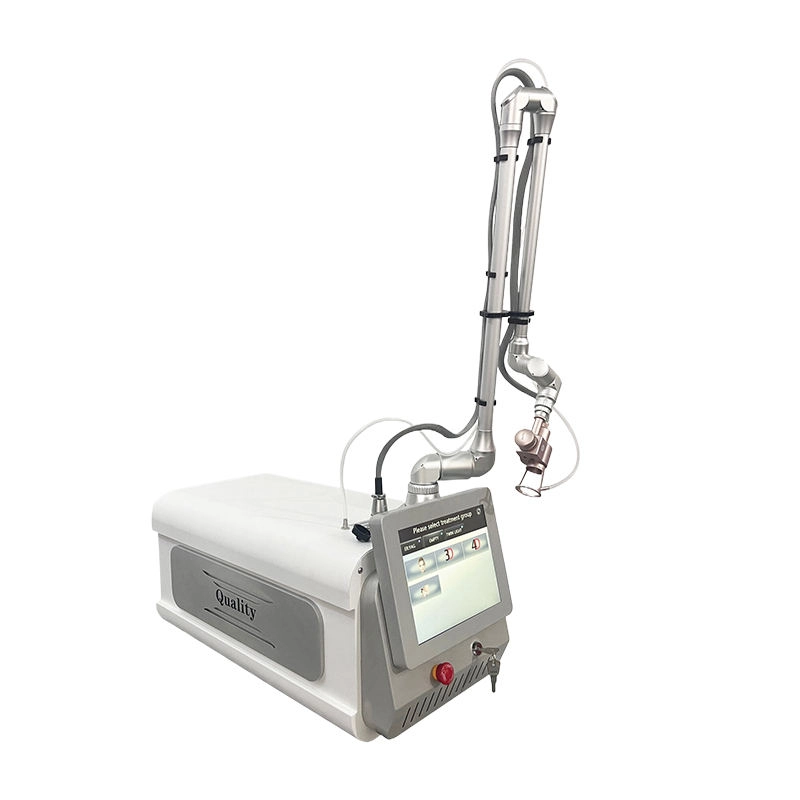
Professional CO2 Fractional Laser Machine | Fractional & Vaginal Rejuvenation CO2 Laser System
The CO2 fractional laser machine is a professional medical-grade device designed for deep skin resurfacing, wrinkle reduction, scar repair, and vaginal rejuvenation. Using a 10600 nm fractional CO2 laser beam, it creates micro-thermal columns on the skin to stimulate collagen regeneration and accelerate skin healing.
This CO2 fractional laser machine provides multiple treatment modes, including fractional mode, surgical cutting mode, and optional vaginal tightening mode, making it ideal for dermatology clinics and professional beauty centers seeking advanced laser solutions.
Its high precision, adjustable spot size, stable energy output, and seven-joint articulated arm ensure safe, accurate, and effective treatment results with minimal downtime.
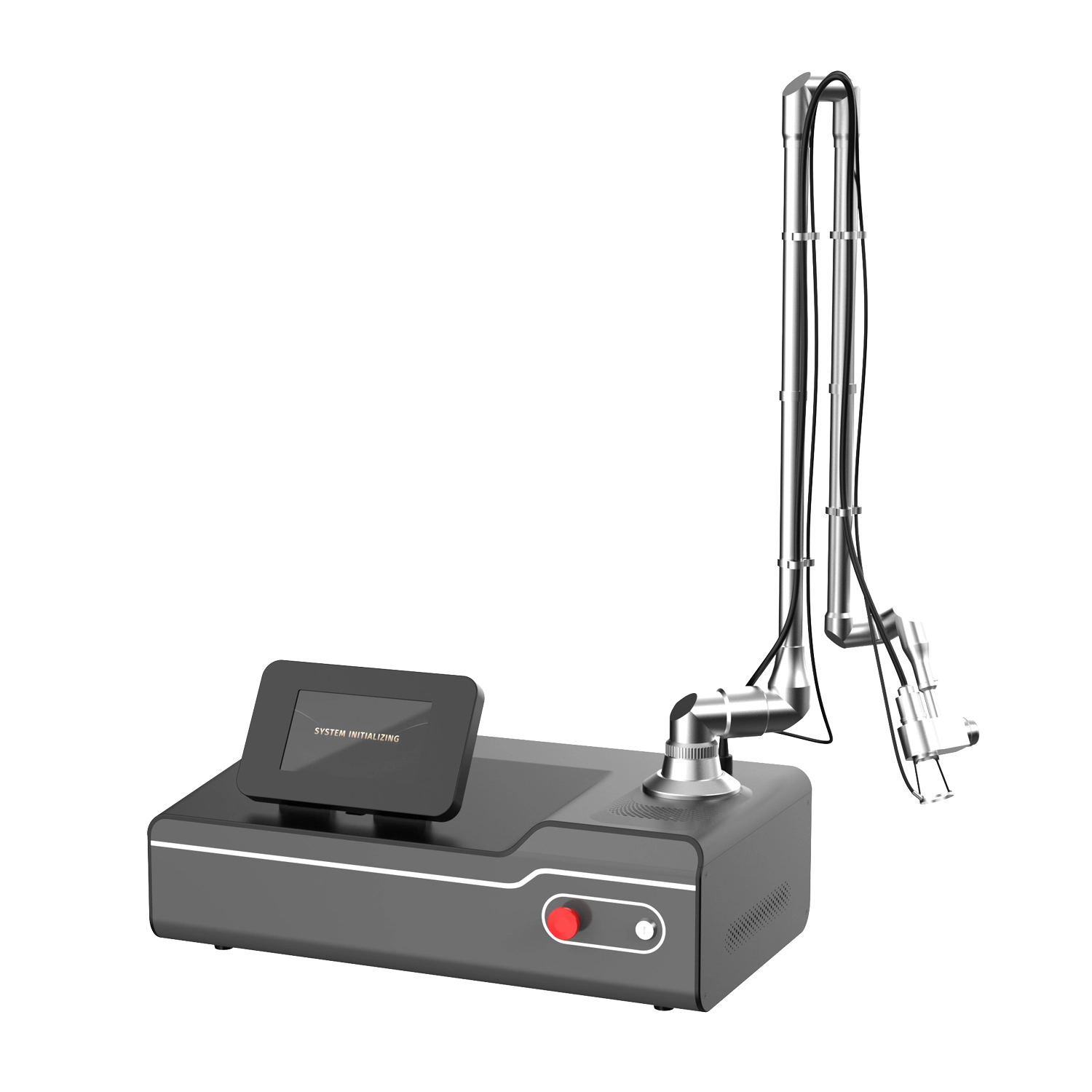
Professional CO2 Fractional Laser Machine for Skin Resurfacing & Scar Treatment
The CO2 Fractional Laser Machine is a professional CO2 fractional laser machine designed for advanced skin resurfacing, scar treatment, and skin rejuvenation procedures.
Using 10,600nm CO2 fractional laser technology, the system delivers controlled microthermal zones into the skin, stimulating collagen remodeling while preserving surrounding tissue. This fractional approach significantly improves treatment safety, recovery time, and clinical outcomes.
The CO2 fractional laser machine is widely used in dermatology clinics and medical aesthetic centers for treating acne scars, wrinkles, enlarged pores, stretch marks, and various skin texture concerns.
Get more information
If you have any comments or good suggestions, please leave us a message; later our professional staff will contact you as soon as possible.
Let's Talk
Stay in touch with us for cutting-edge beauty solutions, professional guidance, and customized service.
Contact


Room 307, Building A, Huilong International E-commerce Industrial Park, No. 10 Xipengling Road, Helong Street, Baiyun District, Guangzhou, China
© 2025 HUIMAIN. All Rights Reserved. Privacy Policy | Terms and Conditions | Sitemap
Facebook
Instagram
Medical beauty equipment factory
huimain Medical beauty equipment factory
beauty machine supplier
Whatsapp: +8619124004543