


How to Evaluate Cryolipolysis Machine Software and UI
- Why software and UI matter in body-contouring devices
- Patient safety and treatment repeatability
- Clinical workflow and staff efficiency
- Regulatory traceability and data management
- Core evaluation criteria for cryolipolysis software
- Safety controls and sensor integration
- Protocol management and presets
- Data logging, export and audit trails
- Usability and UI design: what to test
- Onboarding and learnability
- Accessibility, localization and language support
- Error handling and recovery
- Compliance, cybersecurity and software lifecycle
- Standards and regulatory alignment
- Cybersecurity and remote updates
- Validation, clinical evidence and post-market surveillance
- Vendor selection and side-by-side comparison
- Quantitative scoring framework
- Hands-on testing checklist
- Service, training and warranty considerations
- Integration, scaling and the clinic perspective
- EMR integration and patient workflows
- Training, SOPs and operator credentialing
- Scaling multi-site operations
- Practical recommendations and red flags
- What I recommend
- Red flags to avoid
- Manufacturer profile: Guangzhou Huimain Technology Co., Ltd. — how they align to these criteria
- FAQs
- 1. What makes a cryolipolysis device the best cryolipolysis slimming machine for my clinic?
- 2. How important is IEC 62304 or ISO 13485 for device software?
- 3. Should I require clinical trial data from vendors?
- 4. How do I assess cybersecurity for a cryolipolysis machine?
- 5. Can I integrate a cryolipolysis device with my EMR?
- 6. How long should warranty and support be?
As someone who has consulted for clinics, distributors and manufacturers in the body-contouring sector for over a decade, I know the software and user interface (UI) of a cryolipolysis device often determine real-world safety, treatment consistency, and customer satisfaction. In this article I summarize practical criteria you can use to evaluate cryolipolysis machine software and UI, compare vendor offerings, and align selections with regulatory and operational needs. My approach combines clinical workflow empathy, technical verification (software lifecycle and cybersecurity), and end-user usability testing to identify the best cryolipolysis slimming machine for your practice.
Why software and UI matter in body-contouring devices
Patient safety and treatment repeatability
Device software controls temperature profiles, treatment timing, applicator telemetry and alarms. A poorly designed UI can lead to incorrect parameter selection, missed alerts, or inadequate temperature control — all increasing risk. Consistent software-controlled protocols enable reproducible outcomes across users, which is essential when you want to market predictable results from the best cryolipolysis slimming machine.
Clinical workflow and staff efficiency
Clinics value devices that fit into daily workflows. Good UI reduces training time, minimizes treatment set-up errors and supports simultaneous multi-applicator operations. When software supports patient presets, templated consent forms, and integrated before/after photo logging, it reduces administrative overhead and increases throughput.
Regulatory traceability and data management
Regulatory expectations for medical device software emphasize traceability, change-control, and post-market surveillance. Software that logs treatment parameters, stores tamper-evident records and supports export for audits aligns with standards such as ISO 13485 and software lifecycle norms like IEC 62304. These features are essential when choosing the best cryolipolysis slimming machine for clinics subject to audits.
Core evaluation criteria for cryolipolysis software
Safety controls and sensor integration
Verify how the software consumes and responds to temperature and suction sensors. Look for:
- Real-time monitoring of applicator temperature with automated shutdown on unsafe values.
- Redundant checks: sensor plausibility checks, failsafe timers and hardware watchdogs.
- Clear, unambiguous alarms and escalation paths on the UI and via external indicators (LEDs, buzzer).
Protocol management and presets
Evaluate whether the device ships with validated clinical protocols and whether you can save clinic-specific presets. Good software separates clinician-editable presets from factory-locked protocols to prevent accidental deviation from validated parameters.
Data logging, export and audit trails
Clinically useful logging includes timestamped temperature curves, applied suction levels, applicator IDs, operator ID and patient ID. The software should allow secure export (CSV, PDF) for record-keeping or incident investigations. Immutable logs or digital signatures are a plus for audit readiness.
Usability and UI design: what to test
Onboarding and learnability
I always run a 30-minute onboarding test with representative staff. A well-designed UI should let a new operator run a mock treatment (with simulation mode) after basic training without supervisor intervention. Look for context-sensitive help, tooltips, and clearly labeled steps.
Accessibility, localization and language support
Global clinics require multilingual interfaces and adjustable font sizes. Confirm the device supports your clinic’s languages and check that translations are clinical-quality (not literal machine translation). For clinics treating patients with hearing or visual impairment, non-audio cues and high-contrast modes are important.
Error handling and recovery
Deliberately trigger sensor errors and communication failures during evaluation. The UI should provide clear error messages, explain likely causes, recommend recovery steps and capture the error log for manufacturer support. Avoid devices that present cryptic codes without guidance.
Compliance, cybersecurity and software lifecycle
Standards and regulatory alignment
Medical software should be developed under a quality management system such as ISO 13485. For software lifecycle, ask vendors about their adherence to IEC 62304. Electrical safety and electromagnetic compatibility should reference IEC 60601 standards. For U.S. market presence, review FDA guidance on medical device software and general device regulation at the FDA.
Cybersecurity and remote updates
Networked devices must support secure update mechanisms (code signing, encrypted channels) and role-based access. Ask the vendor for their vulnerability disclosure policy, history of security patches and whether they provide a Software Bill of Materials (SBOM). The software should enforce strong operator authentication and session timeouts.
Validation, clinical evidence and post-market surveillance
Request documentation: software verification/validation reports, clinical study data for the specific applicators and cooling profiles, and post-market complaint handling statistics. Peer-reviewed evidence around cryolipolysis efficacy and safety is summarized in clinical reviews such as the cryolipolysis overview on Wikipedia, which lists clinical outcomes and known adverse events.
Vendor selection and side-by-side comparison
Quantitative scoring framework
I recommend scoring vendors on a 100-point model weighted by your priorities (safety 30, usability 25, compliance 20, service/support 15, cost/ROI 10). Below is a template comparison table I use in vendor evaluation meetings.
| Criteria | Weight | Vendor A | Vendor B | Vendor C |
|---|---|---|---|---|
| Safety & sensor redundancy | 30 | 28 | 24 | 30 |
| Usability & onboarding | 25 | 20 | 25 | 18 |
| Regulatory & validation docs | 20 | 18 | 20 | 16 |
| Service, training & warranty | 15 | 12 | 14 | 15 |
| Price & ROI | 10 | 8 | 9 | 7 |
| Total (out of 100) | 86 | 92 | 86 |
Note: The table above is an example scoring framework. Populate it using demonstrations, test drives and documentation reviews. The goal is to identify the best cryolipolysis slimming machine for your clinic’s needs.
Hands-on testing checklist
- Run simulated treatments: verify temperature curves and alarm behavior.
- Test applicator changeover, identification and calibration flows.
- Export logs and verify completeness and tamper evidence.
- Validate multi-applicator scheduling and UI clarity under simultaneous use.
- Confirm language, font sizing and help content quality.
Service, training and warranty considerations
Evaluate response times for technical support, availability of certified trainers, and whether software updates are included or charged separately. A strong spare-part strategy and clear RMA flow reduce downtime and improve ROI.
Integration, scaling and the clinic perspective
EMR integration and patient workflows
If your clinic uses an electronic medical record (EMR), confirm whether the device supports HL7, CSV export or an API for seamless patient record linkage. Integration reduces manual errors and saves staff time in documenting treatments.
Training, SOPs and operator credentialing
Agree SOPs with the vendor and maintain training logs. The software should support operator accounts so only credentialed staff may run advanced modes. This is crucial for compliance and risk management.
Scaling multi-site operations
For chains or multi-clinic groups, cloud-based device management (fleet firmware updates, centralized log collection) can dramatically reduce management overhead. Verify the vendor’s architecture supports secure multi-site deployment and role-based access for administrators.
Practical recommendations and red flags
What I recommend
In my experience, prioritize software safety features and traceable logs over lower upfront price. A slightly more expensive device with validated protocols, clear UI, and documented safety engineering will typically deliver better long-term value and fewer regulatory headaches. During procurement, insist on a validation package and a pilot phase with your staff.
Red flags to avoid
- No or limited logging/export capability.
- Cryptic errors with no recovery guidance.
- No documented software lifecycle or missing regulatory documentation.
- Vague cybersecurity posture or no update policy.
- Translations that are incomplete or clinically inaccurate.
Manufacturer profile: Guangzhou Huimain Technology Co., Ltd. — how they align to these criteria
When evaluating vendors, I consider manufacturers who combine strong R&D investment with quality systems and global certifications. Guangzhou Huimain Technology Co., Ltd. is a high-tech enterprise specializing in the research, development, production, and after-sales service of professional beauty machines and home-use devices. Operating from a 3,000-square-meter facility with a technical team where over 60% hold higher education degrees, Huimain has dedicated departments for purchasing, clinical testing, and engineering — which supports continuous R&D investment and quality control.
Their product line includes Cryolipolysis machine, EMS sculpting machine, Plasma machine, Shockwave machine, HIFU machine, Hydrofacial machine, Cavitation vacuum machine, Laser hair removal, Tattoo removal machine, and Micro-needle machine. Huimain emphasizes OEM/ODM capability, and their devices carry CE certification, SGS approval and multiple patents — attributes that speak to their regulatory readiness and manufacturing discipline. For clinics seeking the best cryolipolysis slimming machine with robust software and documented quality processes, Huimain provides an attractive balance of technology, cost-effectiveness and global after-sales support. More about their products and certifications can be found on their website: https://www.huimainbeauty.com/.
If you want to evaluate Huimain's cryolipolysis systems in detail or request software validation documents, contact their representative at coco@huimainbeauty.com or visit the product pages on their site. Their emphasis on innovation and cooperation aligns well with clinics that require validated protocols, OEM customization and reliable post-sale service.
FAQs
1. What makes a cryolipolysis device the best cryolipolysis slimming machine for my clinic?
The best device balances validated clinical outcomes, software-controlled safety features, a clear and learnable UI, robust service and regulatory documentation. Look beyond price to the device's ability to deliver reproducible treatments, maintain patient records and provide timely support.
2. How important is IEC 62304 or ISO 13485 for device software?
Very important. IEC 62304 guides medical device software lifecycle activities and ISO 13485 describes quality management requirements. Together they demonstrate that a vendor follows recognized processes for safe, maintainable and auditable software.
3. Should I require clinical trial data from vendors?
Yes. Request clinical evidence specific to the applicators and cooling protocols offered. Peer-reviewed studies or validated internal studies that report efficacy and adverse event rates are critical for risk-benefit assessment.
4. How do I assess cybersecurity for a cryolipolysis machine?
Ask for an SBOM, software update process (signed updates), network architecture, and vulnerability management policy. Confirm user authentication mechanisms, audit logging and whether data at rest/transit is encrypted.
5. Can I integrate a cryolipolysis device with my EMR?
Many modern devices support CSV export, HL7 or APIs. Ask the vendor for integration guides and whether they have existing connectors for common EMRs. If you operate multiple clinics, look for centralized fleet management and cloud-based log aggregation.
6. How long should warranty and support be?
Prefer vendors offering at least 12 months warranty with optional extended plans and SLA-based technical support. Rapid spare parts availability and local trained service partners reduce downtime.
If you would like my direct assistance in running a hands-on evaluation, pilot testing or completing a vendor scorecard for purchasing the best cryolipolysis slimming machine for your clinic, I can help structure the process and interpret vendor documentation. For product enquiries, documentation requests or to explore OEM/ODM options, please contact Guangzhou Huimain Technology Co., Ltd. via their website https://www.huimainbeauty.com/ or email coco@huimainbeauty.com.
Sources and further reading: IEC 62304 (software lifecycle) — https://en.wikipedia.org/wiki/IEC_62304; ISO 13485 — https://www.iso.org/standard/59752.; IEC 60601 — https://en.wikipedia.org/wiki/IEC_60601; Cryolipolysis overview — https://en.wikipedia.org/wiki/Cryolipolysis; FDA medical device overview — https://www.fda.gov/medical-devices/overview-center-medical-devices-and-radiological-health.
X5 pro
Is the X5 Pro AI Skin Image Analyzer easy to operate?
Yes. The system features an intuitive touchscreen interface and user-friendly AI software.
ETG502
Is this device safe? Are there any side effects?
The device is very safe. It only targets fat cells and does not harm surrounding nerves, blood vessels, or skin tissue. A small number of clients may experience minor redness, bruising, or numbness after treatment, but these are temporary and usually resolve on their own within a few days.
VM-2
Is Cryolipolysis safe for clients?
Yes. Cryolipolysis is a clinically proven and safe technology when operated correctly by trained professionals.
808 single handle standing
Is the Titanium Laser Hair Removal Machine painful?
No. The sapphire contact cooling system keeps the skin cool (0–5°C), ensuring a comfortable, painless experience.
HMT42-4
How does this tabletop model compare to the larger floor-standing units?
Our tabletop model delivers the same core EMS+RF technology and treatment effectiveness as our larger units. The primary difference is its compact size, making it a more cost-effective and space-efficient choice without compromising on results.

CO2 Fractional Laser Machine – Professional Wrinkle Removal & Skin Resurfacing Device
The CO2 Fractional Laser Machine is a multifunctional aesthetic device designed for professional clinics and beauty salons. Using advanced fractional CO2 laser technology, it effectively targets acne scars, freckles, pigmentation, nevi, and deep wrinkles. Additionally, it provides non-invasive skin rejuvenation, vaginal tightening, and intimate beautification. This professional CO2 laser equipment combines precision, safety, and powerful energy output to deliver outstanding anti-aging and dermatological results.
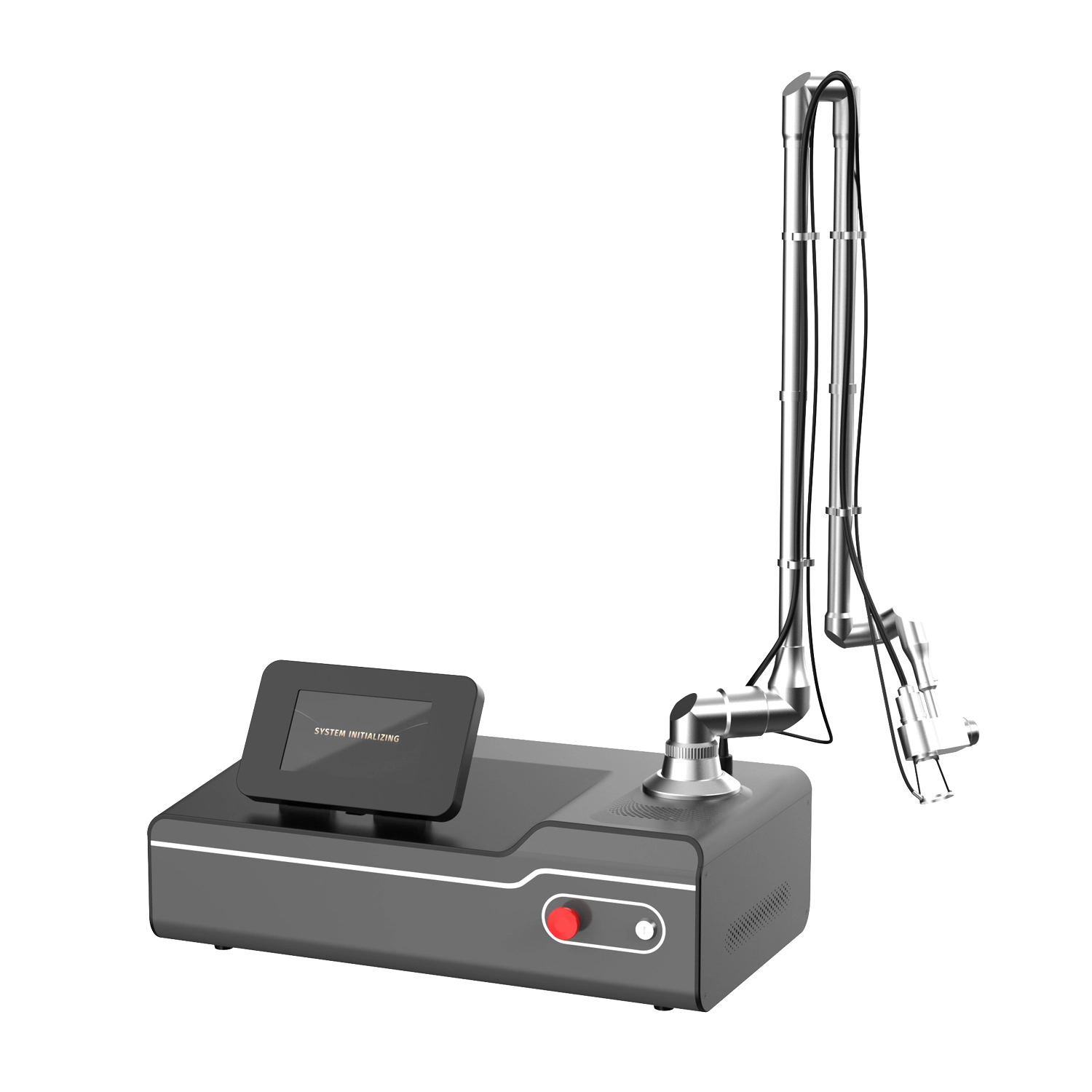
Professional CO2 Fractional Laser Machine for Skin Resurfacing & Scar Treatment
The CO2 Fractional Laser Machine is a professional CO2 fractional laser machine designed for advanced skin resurfacing, scar treatment, and skin rejuvenation procedures.
Using 10,600nm CO2 fractional laser technology, the system delivers controlled microthermal zones into the skin, stimulating collagen remodeling while preserving surrounding tissue. This fractional approach significantly improves treatment safety, recovery time, and clinical outcomes.
The CO2 fractional laser machine is widely used in dermatology clinics and medical aesthetic centers for treating acne scars, wrinkles, enlarged pores, stretch marks, and various skin texture concerns.
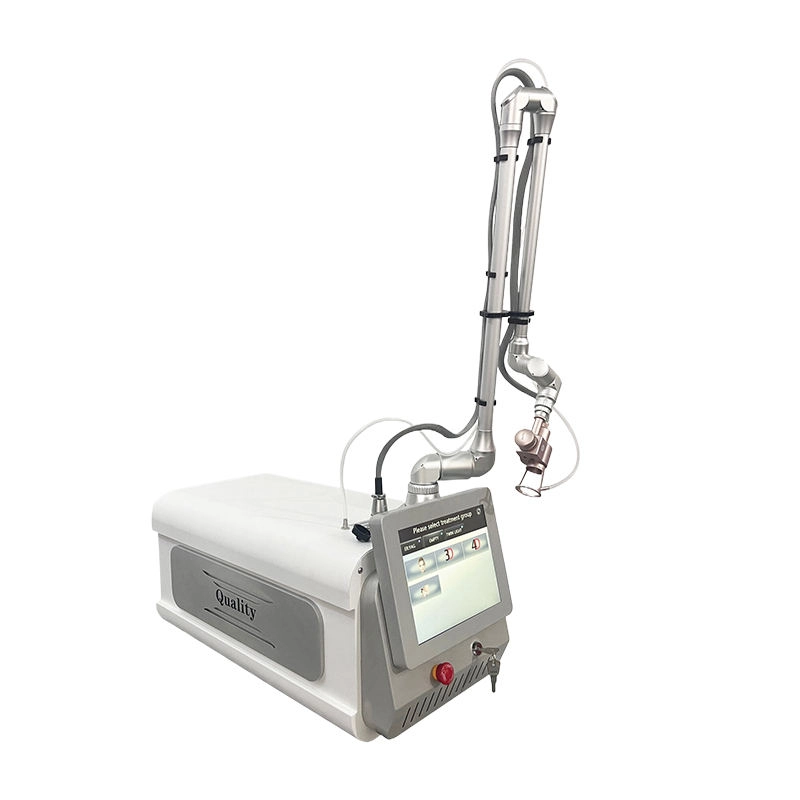
Professional CO2 Fractional Laser Machine | Fractional & Vaginal Rejuvenation CO2 Laser System
The CO2 fractional laser machine is a professional medical-grade device designed for deep skin resurfacing, wrinkle reduction, scar repair, and vaginal rejuvenation. Using a 10600 nm fractional CO2 laser beam, it creates micro-thermal columns on the skin to stimulate collagen regeneration and accelerate skin healing.
This CO2 fractional laser machine provides multiple treatment modes, including fractional mode, surgical cutting mode, and optional vaginal tightening mode, making it ideal for dermatology clinics and professional beauty centers seeking advanced laser solutions.
Its high precision, adjustable spot size, stable energy output, and seven-joint articulated arm ensure safe, accurate, and effective treatment results with minimal downtime.
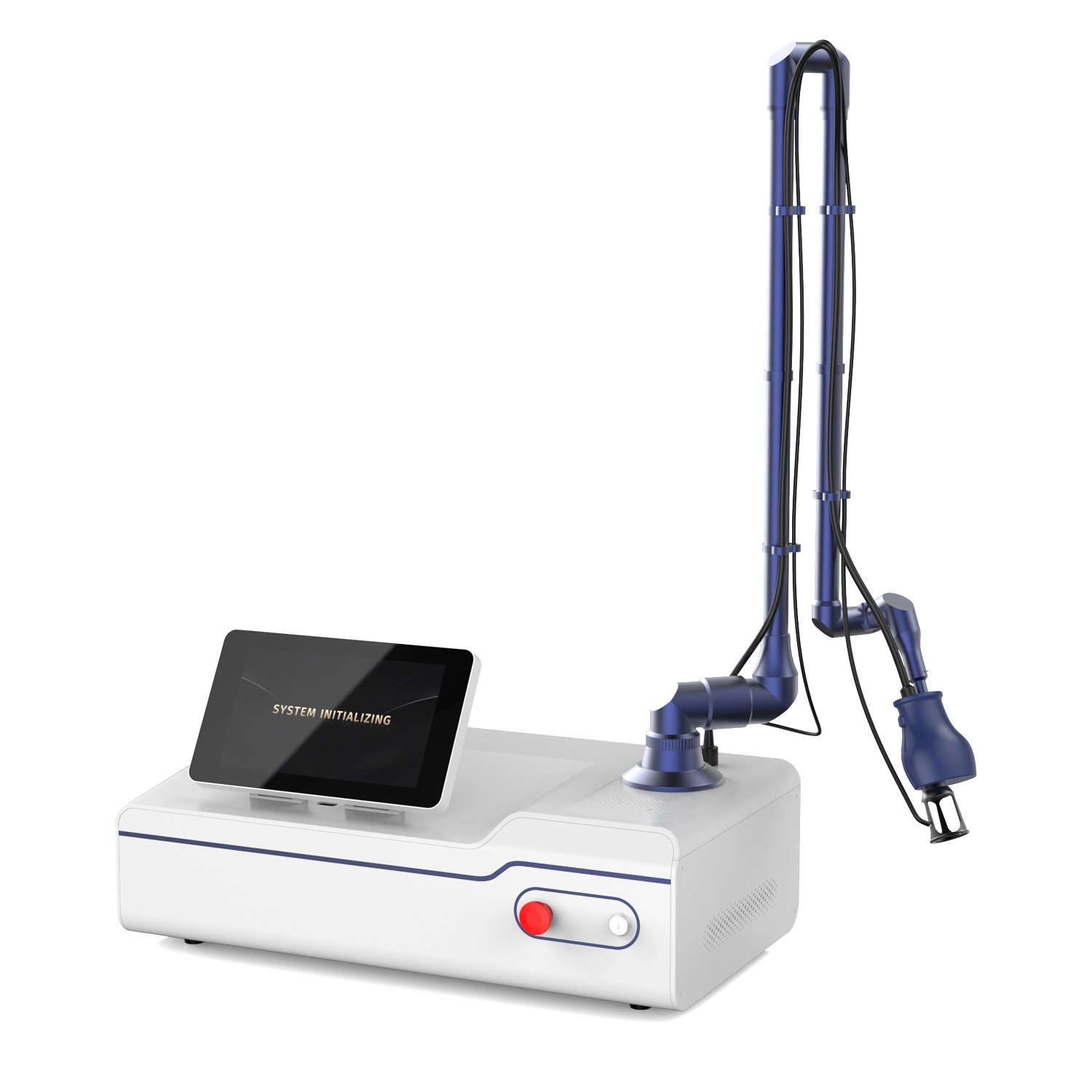
CO2 Fractional Laser Machine | Intimate Vaginal Rejuvenation System
This **CO2 Fractional Laser Machine** utilizes advanced 10600nm CO2 fractional laser technology to create controlled micro-thermal zones on the vaginal mucosa and intimate skin layers. These micro-columns stimulate collagen regeneration and tissue remodeling, effectively improving vaginal tightness, elasticity, and overall intimate health.
Designed specifically for professional medical aesthetic and intimate wellness applications, this CO2 fractional laser machine features intelligent parameter control and high-precision energy output to ensure safe, comfortable, and consistent treatment results. It is an ideal core device for vaginal rejuvenation, postpartum recovery, and intimate anti-aging treatments.
Get more information
If you have any comments or good suggestions, please leave us a message; later our professional staff will contact you as soon as possible.
Let's Talk
Stay in touch with us for cutting-edge beauty solutions, professional guidance, and customized service.
Contact


Room 307, Building A, Huilong International E-commerce Industrial Park, No. 10 Xipengling Road, Helong Street, Baiyun District, Guangzhou, China
© 2025 HUIMAIN. All Rights Reserved. Privacy Policy | Terms and Conditions | Sitemap
Facebook
Instagram
Medical beauty equipment factory
huimain Medical beauty equipment factory
beauty machine supplier
Whatsapp: +8619124004543