


How to Evaluate HIFU Suppliers: Certifications, Warranty, Support
- Choosing the Right HIFU Machines Supplier: A Practical Guide
- Why supplier selection matters for HIFU machines
- Key certifications and what they prove for HIFU machines
- Certification comparison: what buyers should expect
- Evaluating warranty offers: beyond length to substance
- After‑sales support and training: non-negotiable for clinical HIFU
- Supply-chain & manufacturing due diligence
- Clinical evidence and real-world performance metrics
- Cost of ownership: go beyond the unit price
- Red flags and how to verify claims
- Checklist for procurement: quick decision tool
- Comparison: typical supplier offerings (example)
- Case study: what an ideal supplier package looks like
- About Guangzhou Huimain Technology Co., Ltd. — a supplier profile
- How to engage a supplier like Huimain during procurement
- Final recommendations and procurement checklist
- Frequently Asked Questions (FAQ)
- References
Choosing the Right HIFU Machines Supplier: A Practical Guide
Why supplier selection matters for HIFU machines
High-Intensity Focused Ultrasound (HIFU) machines are capital medical/aesthetic devices that deliver focused ultrasound energy to sub-dermal tissues. Because they directly affect patient safety and clinical outcomes, supplier selection is not just a price decision — it affects regulatory compliance, clinical efficacy, legal risk, and total cost of ownership. This guide explains how to evaluate HIFU suppliers with emphasis on certifications, warranty terms, and technical & clinical support, so clinics, distributors, and procurement teams can make evidence-based decisions.
Key certifications and what they prove for HIFU machines
Certifications validate a supplier’s manufacturing and quality processes, and are commonly requested by regulators, buyers, and healthcare facilities. When evaluating HIFU Machines suppliers, look for the following:
- ISO 13485: Quality management system for medical devices; shows consistent manufacturing and QMS processes.
- CE Marking (MDR/IVDD era context): Required for medical device commercialisation in the EU market; indicates compliance with relevant EU directives/regulations.
- FDA clearance or 510(k): If selling in the U.S., FDA clearance or approval for the specific intended use demonstrates adherence to US regulatory requirements.
- IEC 60601 series (electrical safety) and IEC 62304 (software lifecycle): Relevant for electrical safety and software-controlled medical devices.
- Biocompatibility and EMC/RoHS test reports: Ensures materials are safe and electromagnetic compatibility is within limits.
- Third‑party test reports (SGS, Intertek): Independent verification of claims (power output, acoustic profile, consumable life).
When a supplier provides certificates, check their scope (which model(s) they cover) and validity (dates, notified body number for CE). Never accept generic certificates that lack model references or have expired dates.
Certification comparison: what buyers should expect
| Certification / Report | What it shows | Why it matters for HIFU Machines |
|---|---|---|
| ISO 13485 | Quality management for medical device manufacturers | Reduces production variability; required by many distributors and hospitals |
| CE Certificate | Conformity with EU medical device regulations | Mandatory for EU market; implies risk management and technical documentation |
| FDA Clearance / 510(k) | Compliance with U.S. regulatory premarket requirements | Needed to market in U.S.; strong indicator of clinical evidence and safety |
| IEC 60601 / EMC | Electrical safety and electromagnetic compatibility | Ensures safe operation near other equipment and protects patients/operatives |
| SGS / Intertek Reports | Independent product testing | Useful to verify acoustic output, energy consistency, and material safety |
Evaluating warranty offers: beyond length to substance
Warranty length is only one dimension. When assessing warranty offers for HIFU Machines, verify:
- Coverage scope: Does the warranty include transducers/handpieces, software, electronics, and mechanical parts? Consumables often have different terms.
- Onsite vs depot repair: For clinics, onsite support reduces downtime; know whether the supplier offers onsite repair or requires shipping to a service center.
- Turnaround times: Maximum repair or replacement time commitments and whether loaner units/backup handpieces are provided during repairs.
- Spare parts availability: Minimum guaranteed years of spare-part supply (reasonable: 5–10 years for medical devices).
- Software updates & upgrades: Are software bug fixes and safety patches included? What about major upgrades and costs?
- Service-level agreements (SLA): Response times, escalation paths, and penalties for missed SLAs.
A robust warranty combined with a clear SLA reduces long-term operational risk and total cost of ownership.
After‑sales support and training: non-negotiable for clinical HIFU
HIFU treatment requires precise protocols and skilled operators. Assess supplier support across these dimensions:
- Initial training: On-site hands-on training for clinicians and technicians, including treatment parameters, safety protocols, and troubleshooting.
- Clinical protocol support: Access to validated treatment protocols, treatment logs, and best-practice guidance.
- Technical training for engineers: Repair manuals, spare-parts diagrams, and certified training for in-country technicians.
- Remote technical support: Secure remote diagnostics, software patching, and tele-support availability (24/7 or business hours).
- Clinical evidence and peer-reviewed resources: Supplier-provided clinical studies, published papers, and case series supporting device efficacy and safety.
- Local presence / distributor network: Local representation reduces lead times for parts and service.
Supply-chain & manufacturing due diligence
Ask for factory audit materials and sample production records. Key checks:
- Factory tour (virtual or in-person) showing production lines, clean areas, and final test benches.
- Equipment calibration records and traceability for critical components (transducer elements, power supplies).
- Incoming inspection procedures and batch test results for acoustic output.
- Design history file (DHF) summaries, risk analyses, and change-control procedures.
These items prove consistent manufacturing quality and reduce the risk of latent defects.
Clinical evidence and real-world performance metrics
Request clinical data from the supplier and validate independently where possible:
- Published clinical studies (peer-reviewed) or well-documented case series.
- User outcome data: complication rates, retreatment rates, patient satisfaction surveys collected under real-world conditions.
- Performance metrics: number of pulses per treatment, handpiece lifecycle, power stability over cycles.
Beware of suppliers who only provide anecdotal testimonials or unverifiable before/after photos without clinical protocols or consent documentation.
Cost of ownership: go beyond the unit price
Calculate total cost of ownership (TCO) for a minimum of 3–5 years including:
- Initial purchase price and optional accessories.
- Consumables and handpiece replacement frequency.
- Annual maintenance and calibration costs.
- Training, certification renewal, and software license fees.
- Downtime costs associated with repairs and device unavailability.
Often a cheaper unit with poor support or high consumable costs ends up more expensive over time.
Red flags and how to verify claims
Common warning signs when vetting HIFU suppliers:
- No verifiable model-specific certificates or expired / generic certificates.
- Reluctance to share factory audit reports, design documents, or contactable clinical references.
- Vague warranty terms without clear SLAs or exclusions buried in small print.
- Unrealistic performance claims without independent lab reports or peer‑reviewed clinical evidence.
Verification steps: ask for copies of certificates that list the exact model; contact the notified body or testing lab; request contact details for two or three clinics using the device and speak to them directly; and arrange an on-site or virtual factory assessment.
Checklist for procurement: quick decision tool
- Model-specific ISO 13485 and CE/FDA documentation verified
- IEC 60601 and EMC test reports available
- Independent test reports (SGS / Intertek) for key performance parameters
- Clear warranty with onsite options and SLA specifying response/repair times
- Training program for clinicians and in-country technical training
- Spare-parts availability guaranteed for at least 5 years
- Clinical evidence and published papers or case series
- Factory audit / production and QC records accessible
- Reference clinics to contact and positive user feedback
Comparison: typical supplier offerings (example)
| Supplier Type | Certifications | Warranty | Support | Best for |
|---|---|---|---|---|
| Established OEM (medical-grade) | ISO 13485, CE, IEC tested, often FDA | 2–3 years, onsite SLA | Full clinical & technical training, spare parts network | Hospitals, large chains |
| Low-cost manufacturer | Limited or generic certificates | 6–12 months, depot repairs | Remote support only | Small budgets, non-medical aesthetic studios (higher risk) |
| Distributor with local service | Depends on manufacturer | Manufacturer warranty + local SLA | Local technicians, quicker parts | Regions without direct manufacturer presence |
Case study: what an ideal supplier package looks like
An ideal HIFU supplier offers model-specific ISO 13485 and CE documentation, independent acoustic output verification (e.g., SGS), a minimum 2-year comprehensive warranty with onsite repairs and loaner units, certified clinical training, spare parts guaranteed for 5–10 years, and published clinical data. They provide clear SLAs, remote diagnostic tools, and an accessible engineering team for urgent fixes. This reduces clinical risk and improves patient outcomes.
About Guangzhou Huimain Technology Co., Ltd. — a supplier profile
When evaluating OEM/ODM partners, Guangzhou Huimain Technology Co., Ltd. is an example of an integrated supplier with capabilities across R&D, production, sales, and after-sale service. Highlights include:
- High‑tech company focused on beauty machines and home‑use device series with OEM/ODM services.
- Factory area of approximately 3,000 square meters and a professional staff profile: over 20% hold bachelor’s degrees and more than 40% have junior college degrees; multiple experienced engineers and PE experts support development and procurement.
- Strong technical R&D team, clinical testing capability, and an established after‑sales service department.
- Investment priority in R&D with several registered patents for products; certified with CE and SGS approvals.
- Global distribution covering China, Southeast Asia, the Middle East, Europe, and North America with positive customer feedback for quality and price competitiveness.
Products and strengths summary: Huimain produces and supplies Cryolipolysis machines, Ems sculpting machines, Plasma machines, Shockwave machines, HIFU machines, Hydrofacial machines, Cavitation vacuum machines, Laser hair removal and tattoo removal systems, and Microneedle devices. Their competitive advantages include integrated OEM/ODM design and production capabilities, a strong R&D pipeline, robust technical and after‑sales teams, and compliance with international test standards.
How to engage a supplier like Huimain during procurement
- Request model-specific certificates and official translations if necessary.
- Ask for independent test reports (e.g., SGS) for acoustic output and electrical safety.
- Arrange a factory tour or virtual audit, and review calibration & QC records.
- Negotiate warranty terms, SLA, and spare-parts guarantees in writing.
- Clarify training scope: initial clinician training, refresher courses, and technician certification.
- Obtain references from clinics using the specific HIFU model and verify outcomes.
Final recommendations and procurement checklist
Prioritize suppliers who provide transparent, model-specific regulatory documentation, independent testing, robust warranty & SLA terms, comprehensive training, and a demonstrable spare-parts supply chain. Use the checklist in this article to standardize evaluations, score suppliers against mandatory criteria (certifications, warranty coverage, support), and choose the one that minimizes long-term risk rather than only the upfront cost.
Frequently Asked Questions (FAQ)
- Q: What are the minimum certifications I should require for a HIFU Machine?
A: At minimum, request model‑specific ISO 13485 (manufacturer QMS), IEC 60601 electrical safety/EMC reports, and CE marking if you intend to market or use in the EU. For the U.S. market, FDA clearance is required. Also request independent test reports for acoustic output (SGS/Intertek) and biocompatibility where applicable.
- Q: How long should the warranty be and what should it cover?
A: Aim for at least a 2‑year comprehensive warranty covering electronics, software, and handpieces. Ensure clear terms for consumables, onsite vs depot repair, guaranteed spare parts supply (5–10 years), and defined SLAs for response and repair times.
- Q: Can I rely on suppliers that only provide remote support?
A: Remote support can be effective for software issues or diagnostics, but for clinical HIFU devices you should ensure access to local or regional onsite service to reduce downtime and patient scheduling disruption.
- Q: How do I verify a CE certificate or ISO 13485?
A: Request the actual certificate PDF with model references and the notified body number. Cross-check the notified body and certificate validity on the notified body’s public registry or the EU’s NANDO database. For ISO 13485, request scope details and audit dates.
- Q: What clinical evidence should a reputable HIFU supplier provide?
A: Publish peer‑reviewed studies, clinical trial summaries, retrospective analyses, and outcome metrics (complication and satisfaction rates). If unavailable, ask for anonymized case logs and references from clinics using the same device model.
- Q: What questions should I ask during a factory audit?
A: Ask about production workflow, incoming material QC, final device testing (electrical, acoustic), calibration logs, staff qualifications, corrective action history, and traceability for critical components. Review the design history and change-control records for the specific model.
Ready to evaluate HIFU machines with confidence? Contact Guangzhou Huimain Technology Co., Ltd. to request model‑specific certificates, independent test reports, clinical references, and a factory tour. View product details and OEM/ODM options for HIFU machines and related beauty devices such as Cryolipolysis machines, EMS sculpting machines, Plasma machines, Shockwave machines, Hydrofacial systems, Cavitation vacuum machines, Laser hair removal systems, Tattoo removal machines, and Microneedle devices. Huimain emphasizes innovation, quality control, and win‑win cooperation to deliver devices that meet clinical and market needs.
Contact/See Products CTA: For product specifications, certificates, and sample quotations, visit Guangzhou Huimain Technology Co., Ltd. or request a dedicated quotation and technical dossier through their sales & service channels.
References
- European Commission — CE Marking: Overview. https://ec.europa.eu/growth/single-market/ce-marking/overview_en (accessed Dec 25, 2025)
- ISO — ISO 13485 Medical devices — Quality management systems. https://www.iso.org/standard/59752. (accessed Dec 25, 2025)
- IEC 60601 Series — Electrical safety standards for medical electrical equipment. https://www.iec.ch/standards/ (accessed Dec 25, 2025)
- SGS — Medical devices testing & certification services. https://www.sgs.com/en/healthcare-medical (accessed Dec 25, 2025)
- Grand View Research — High-Intensity Focused Ultrasound (HIFU) Market Report (industry overview). https://www.grandviewresearch.com/industry-analysis/high-intensity-focused-ultrasound-hifu-market (accessed Dec 25, 2025)
- FDA — Medical Device Overview (premarket submission/clearance information). https://www.fda.gov/medical-devices (accessed Dec 25, 2025)
MF8
Is the treatment safe?
Yes, it’s non-invasive and clinically tested. The system includes temperature monitoring and adjustable energy levels for safety
Can it be used on all skin types?
Yes, the EMS RF Face Machine is suitable for all skin types and tones.
HMR-2 立式磁力环
Who can use this Magnetic Transduction Machine?
It is designed for professional use in physiotherapy clinics, rehabilitation centers, sports recovery facilities, and wellness clinics.
ETG502
How long does one session take? How soon can results be seen?
A single session typically takes 30-60 minutes. Some clients may see initial results within 2-3 weeks, with the best results usually appearing within 1-3 months after the treatment, as the body needs time to metabolize the dead fat cells.
A58
Do you offer OEM/ODM services?
Absolutely. We provide full customization including logo, interface, and machine color.

CO2 Fractional Laser Machine – Professional Wrinkle Removal & Skin Resurfacing Device
The CO2 Fractional Laser Machine is a multifunctional aesthetic device designed for professional clinics and beauty salons. Using advanced fractional CO2 laser technology, it effectively targets acne scars, freckles, pigmentation, nevi, and deep wrinkles. Additionally, it provides non-invasive skin rejuvenation, vaginal tightening, and intimate beautification. This professional CO2 laser equipment combines precision, safety, and powerful energy output to deliver outstanding anti-aging and dermatological results.

5-in-1 40K Cavitation Vacuum Machine for Body Slimming & Fat Reduction
The 5-in-1 40K Cavitation Vacuum Machine is a professional body shaping system designed for fat reduction, cellulite smoothing, and overall body contouring. Using 40KHz ultrasonic cavitation, this device breaks down stubborn fat cells, while vacuum suction improves lymphatic drainage and accelerates toxin removal.
With multiple RF tightening handles, the machine stimulates collagen regeneration and helps lift and firm loose areas of the body. Compact, powerful, and easy to operate, it is the perfect solution for beauty salons, spa centers, and slimming studios seeking fast and visible fat-reduction results.
This cavitation vacuum machine is built to deliver safe, non-invasive treatments with no downtime—making it a top choice for body contouring professionals.

6-in-1 Multifunctional Beauty and Weight Loss Machine | Cavitation, RF, Vacuum PDT, EMS, Laser Slimming Equipment for Professional Use
The 6-in-1 Multifunctional Beauty and Weight Loss Machine is a professional-grade device designed for salons, clinics, and distributors. Combining six advanced technologies—cavitation, RF (radio frequency) for face & body, vacuum RF PDT, BIO/EMS microcurrent, and laser lipo pads—this device offers comprehensive body contouring, fat reduction, skin tightening, and anti-aging treatments.
It provides businesses with an all-in-one solution to expand service offerings, attract more clients, and achieve a rapid return on investment.
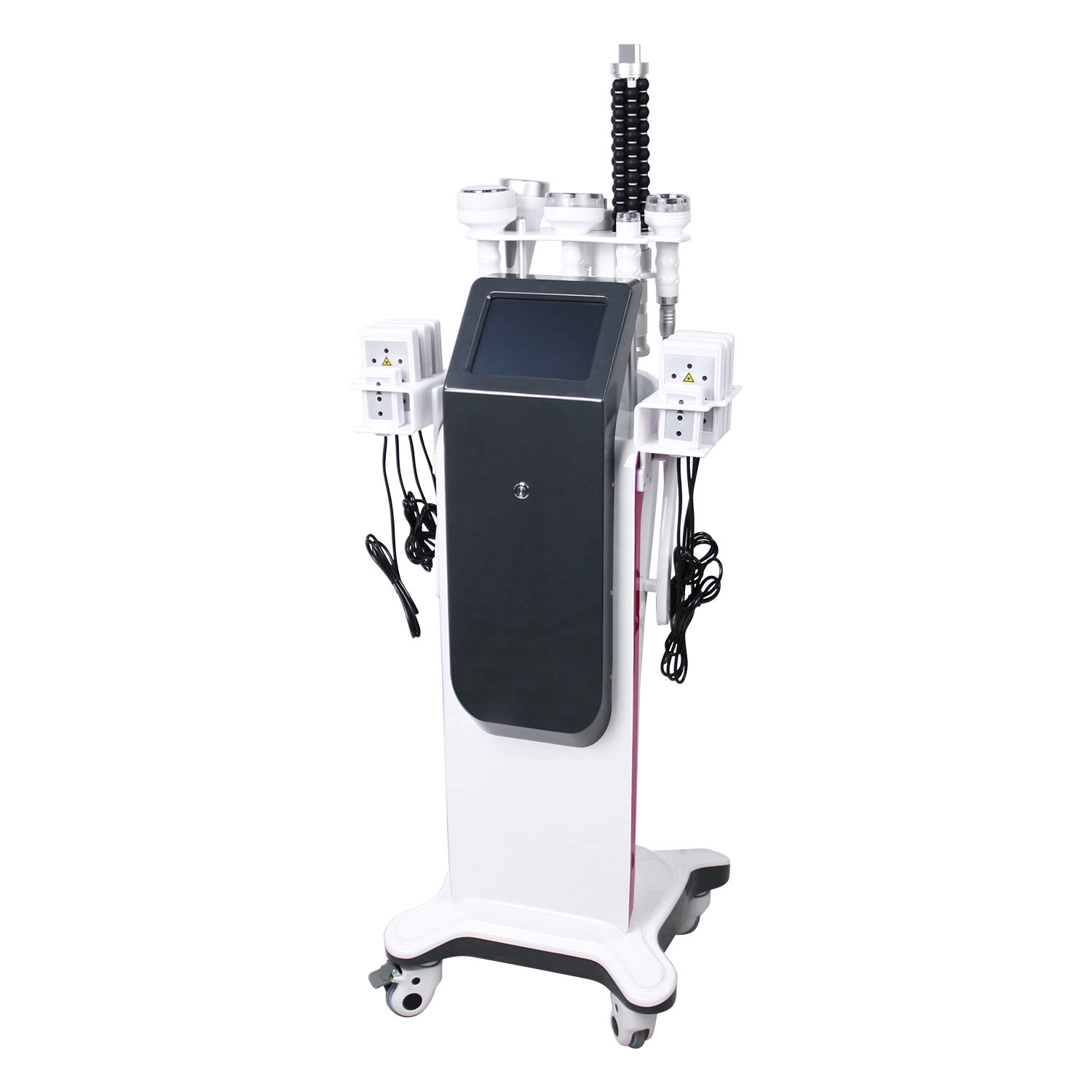
Professional 6-in-1 Cavitation Vacuum Machine for Body Contouring & Slimming Treatment
The 6-in-1 Cavitation Vacuum Machine is a professional body contouring system designed for salons and spas seeking high-performance slimming solutions. This machine integrates 40K ultrasonic cavitation, vacuum suction, RF technology, and laser lipolysis to target stubborn fat, enhance lymphatic drainage, tighten the skin, and contour the body shape effectively.
Equipped with multiple ergonomic handles and a smart touch screen, this cavitation vacuum machine provides a comfortable and efficient experience for both operators and clients. It is ideal for full-body treatments including abdomen, arms, legs, waistline, hips, and back.
Perfect for beauty salons, spas, and aesthetic centers that want to offer non-invasive fat reduction and body-sculpting services.
Get more information
If you have any comments or good suggestions, please leave us a message; later our professional staff will contact you as soon as possible.
Let's Talk
Stay in touch with us for cutting-edge beauty solutions, professional guidance, and customized service.
Contact


Room 307, Building A, Huilong International E-commerce Industrial Park, No. 10 Xipengling Road, Helong Street, Baiyun District, Guangzhou, China
© 2025 HUIMAIN. All Rights Reserved. Privacy Policy | Terms and Conditions | Sitemap
Facebook
Instagram
Medical beauty equipment factory
huimain Medical beauty equipment factory
beauty machine supplier
Whatsapp: +8619124004543