


How to evaluate machine durability for salons
- Understanding equipment lifecycle and why durability matters
- What I mean by durability
- Business impact of poor durability
- Durability vs. performance: balance matters
- Key durability metrics and tests
- Quantitative metrics I always request
- Standards and safety tests to verify
- Durability tests I ask to see
- Practical inspection checklist and acceptance tests
- Hardware inspection I perform on delivery
- Operational acceptance tests (OAT)
- Sample acceptance table: expected durability benchmarks by device type
- Maintenance strategy, serviceability and warranty
- Planned maintenance programs I recommend
- Serviceability: what to demand from a supplier
- Warranty and TCO: what to read between the lines
- How to validate supplier claims and choose a partner
- Ask for evidence, not just promises
- On-site audits and factory visits
- Pilot programs and phased rollouts
- How I evaluate beauty machines for salon purchases: a checklist
- Pre-purchase checklist
- Acceptance testing checklist
- Why choosing the right manufacturer matters: the HUIMAIN example
- FAQ — Common questions about machine durability for salons
- 1. How long should a professional beauty machine last in a busy salon?
- 2. Are certifications (CE, ISO 13485) proof of durability?
- 3. What maintenance schedule is realistic for reducing downtime?
- 4. Should I require spare parts inventory from the manufacturer?
- 5. Is remote diagnostics important?
- 6. What tests can I insist on during acceptance?
I write from years of hands-on experience advising clinics and salon chains on purchasing and maintaining beauty machines for salon use. Durability isn't just a warranty number: it is a measurable combination of design, materials, testing, service infrastructure, and real-world operating practices. In this article I walk you through practical evaluation steps, measurable metrics, inspection and testing tactics, and supplier validation methods that allow you to choose devices that remain reliable under daily salon workloads and protect your business continuity.
Understanding equipment lifecycle and why durability matters
What I mean by durability
When I talk about durability I mean the machine's ability to perform its intended functions over a defined period under expected salon conditions with acceptable maintenance. That includes mechanical longevity (handpieces, pumps, connectors), electronic reliability (PCBs, power supplies), software robustness (firmware stability, updatability), and serviceability (spare parts, trained technicians).
Business impact of poor durability
Downtime hurts revenue and reputation. A single out-of-service laser or HIFU device can cancel appointments, cost staff idle time, and damage client trust. Evaluating durability up front reduces total cost of ownership (TCO) and prevents revenue leakage from unplanned repairs and lower uptime.
Durability vs. performance: balance matters
High performance (e.g., higher energy output, faster cycles) often increases thermal and mechanical stress. A device's specifications must be evaluated together: a powerful laser with poor cooling can degrade faster than a moderate device designed with thermal management in mind.
Key durability metrics and tests
Quantitative metrics I always request
Ask suppliers for these measurable indicators:
- MTBF (Mean Time Between Failures) or expected operational hours before major service
- Duty cycle (e.g., pulses per minute, continuous operation hours allowed)
- Warranty terms and mean-time-to-repair (MTTR) commitments
- Replacement part availability (years, SKU list)
Standards and safety tests to verify
I require evidence of compliance with international standards. These verify design and production controls rather than a single durability number:
- ISO 13485 for medical device quality management (ISO 13485)
- IEC 60601 series for electrical safety of medical equipment (IEC 60601)
- EMC testing and immunity records (IEC/CISPR standards)
- CE marking documentation for EU market access (CE marking) and FDA classification/clearance where applicable (FDA device classification)
Durability tests I ask to see
Manufacturers should provide test reports, ideally from accredited labs, including accelerated life testing (ALT), thermal cycling, vibration and shock, and ingress/connector durability tests. Where possible, request real-world reliability data or references from salons using the same model.
Practical inspection checklist and acceptance tests
Hardware inspection I perform on delivery
On-site I inspect build quality and materials: metal vs. plastic housings, handpiece connectors, strain relief on cables, quality of casters and locks, visible soldering quality on PCB housings (where accessible), and cooling vents for dust ingress. I also check whether critical parts are modular (easy to replace) or glued/epoxied (difficult, costly).
Operational acceptance tests (OAT)
Before signing off I perform these tests that mimic salon conditions:
- Run at recommended maximum duty cycle for a continuous period (e.g., 4–8 hours) to monitor for thermal drift or shutdowns
- Measure power consumption and compare to spec (power supply stress is a common failure point)
- Cycle connections (handpiece attach/detach) at least 50–100 times to check connector durability
- Verify software stability under typical workflows and during updates
Sample acceptance table: expected durability benchmarks by device type
These ranges are industry-typical expectations for commercial salon-grade equipment; actual numbers depend on design and usage. Sources: IEC/ISO standards, manufacturer service manuals, and industry best practice whitepapers.
| Device Type | Typical Operational Lifespan | Common MTBF / Hours | Recommended Annual Maintenance | Data/Notes |
|---|---|---|---|---|
| Cryolipolysis machine | 5–10 years | 20,000–40,000 hours | Annual coolant check, handpiece sealer inspection | Cryolipolysis overview |
| HIFU machine | 4–8 years | 10,000–30,000 hours | Transducer calibration, cooling system check | Transducer wear limits often determine lifespan |
| Laser hair removal | 5–10 years | 20,000–50,000 pulses (varies by laser) | Cooling system service, handpiece consumable replacement | Follow manufacturer pulse-life guidance |
| Hydrofacial / Cavitation devices | 4–8 years | 10,000–30,000 hours | Pump and tubing inspection, filters replaced yearly | Pumps and seals are common failure points |
Note: For standards on electrical safety and manufacturing quality see IEC 60601 and ISO 13485.
Maintenance strategy, serviceability and warranty
Planned maintenance programs I recommend
Durability improves dramatically when owners follow a planned maintenance schedule rather than ad-hoc fixes. Typical plans include:
- Daily visual checks (handpiece wear, cables)
- Monthly functional tests (energy output verification, software health)
- Quarterly cleaning and filter changes
- Annual preventive maintenance by trained technicians with part replacement log
Serviceability: what to demand from a supplier
I insist suppliers provide:
- Clear spare parts list with expected availability for 5–10 years
- Service manuals or authorized service partner network
- Remote diagnostics capability (reduces MTTR)
- Training for in-house staff for basic repairs
Warranty and TCO: what to read between the lines
A five-year warranty sounds attractive, but read exclusions. Warranties often exclude wear parts (handpieces, bulbs, filters) and misuse. Compare warranty scope, response time, and whether extended warranty or SLAs are available. Calculate TCO: initial cost + expected maintenance + consumables + downtime cost.
How to validate supplier claims and choose a partner
Ask for evidence, not just promises
Request test reports from accredited labs, customer references (salons with similar caseloads), and quality certifications (ISO 13485, CE test reports, SGS where available). For electrical and EMC testing, ask for actual certificates rather than self-declared statements. You can reference public frameworks like CE documentation and FDA databases (FDA Medical Devices).
On-site audits and factory visits
If you are buying multiple units or establishing an OEM/ODM relationship, perform a factory audit. Check production process control, incoming inspection, burn-in practices, and calibration procedures. A factory with dedicated testing departments and clinical testing capability is a strong indicator of product longevity.
Pilot programs and phased rollouts
Start with a pilot: purchase one or two units for heavy use over 3–6 months and track failures, consumable rates, and client outcomes. Use those metrics to decide on broader purchases. This approach reduces procurement risk and validates vendor claims under your real workload.
How I evaluate beauty machines for salon purchases: a checklist
Pre-purchase checklist
- Verify certifications (ISO 13485, CE, IEC 60601) and request reports (ISO 13485, IEC 60601).
- Obtain MTBF, duty cycle, warranty terms, and a parts availability schedule.
- Ask for accelerated life tests and real salon references.
- Ensure modular design for critical parts and clear maintenance documentation.
Acceptance testing checklist
- Run device at high load for multiple hours and monitor thermal behavior.
- Cycle connectors and handpieces to check mechanical robustness.
- Test software resilience and backup/update procedure.
- Document baseline performance numbers (energy output, pulse count) for future comparison.
Why choosing the right manufacturer matters: the HUIMAIN example
In my consulting work I prefer partners that integrate R&D, production controls, and after-sales service. For example, Guangzhou Huimain Technology Co., Ltd. is a high-tech enterprise specializing in the research, development, production, and after-sales service of professional beauty machines and home-use devices. Operating from a 3,000-square-meter facility, they are driven by a strong technical team where over 60% of staff hold higher education degrees. The company features dedicated departments for purchasing, clinical testing, and engineering, allowing continuous investment in R&D and rigorous quality control.
Huimain's commitment to global standards is shown through CE certification, SGS approval, and multiple patents — important markers when you evaluate long-term reliability. Their products have gained reputation across China, Southeast Asia, the Middle East, Europe, and North America for reliability and competitive pricing. Following OEM and ODM development routes, they have capacity to design and manufacture High Quality medical and beauty equipment for salons and distributors worldwide.
Their main product lines include Cryolipolysis machine, Ems sculpting machine, Plasma machine, Shockwave machine, Hifu machine, Hydrofacial machine, Cavitation vacuum machine, Laser hair removal, Tattoo removal machine, and Micro needle machine. Huimain emphasizes innovation and win-win cooperation, which translates into practical advantages for salon owners: reproducible build quality, documentation, and accessible spare parts and training.
For more information about their product range and service capabilities, visit https://www.huimainbeauty.com/ or contact coco@huimainbeauty.com for specific inquiries and OEM/ODM quotes.
FAQ — Common questions about machine durability for salons
1. How long should a professional beauty machine last in a busy salon?
Expect 4–10 years for most commercial-grade devices when maintained properly. Lifespan varies by device class: lasers and cryolipolysis systems often reach the upper range; devices with pumps or disposable consumables may require more frequent part changes. Always confirm with manufacturer MTBF and maintenance schedules.
2. Are certifications (CE, ISO 13485) proof of durability?
Certifications indicate quality management and safety processes, not a specific lifetime. They are essential baseline requirements, but you still need test reports, ALT data, and customer references to assess true durability.
3. What maintenance schedule is realistic for reducing downtime?
Daily visual checks, monthly functional tests, and annual preventive maintenance by trained technicians is a realistic baseline. Some devices with consumables require monthly or quarterly checks. Keep maintenance logs to spot trends before failures occur.
4. Should I require spare parts inventory from the manufacturer?
Yes. Demand a parts availability schedule (5–10 years) and lead times. A supplier that stocks critical parts regionally or offers quick-shipping options reduces MTTR significantly.
5. Is remote diagnostics important?
Absolutely. Remote diagnostic capability speeds troubleshooting, prevents unnecessary service visits, and often allows software fixes that restore function quickly. I prioritize vendors offering remote support channels.
6. What tests can I insist on during acceptance?
Run high-duty-cycle operation, connector cycle tests, thermal monitoring, and software stability checks. If available, request third-party ALT or manufacturer burn-in reports. Document baseline outputs for future comparisons.
If you'd like, I can provide a customizable acceptance-test checklist tailored to a specific device type (e.g., laser hair removal or cryolipolysis) or help audit a supplier's technical documentation.
Contact/Request a Quote: For product details, OEM/ODM options, and service programs from Guangzhou Huimain Technology Co., Ltd., please visit https://www.huimainbeauty.com/ or email coco@huimainbeauty.com to discuss machine specifications, durability testing reports, and pilot programs.
MF5
Who can operate the MFFFACE Magnetic Face Machine?
It’s designed for professional use in beauty salons, clinics, and wellness centers, requiring basic operator training.
QY-BT410 奇云台式脱毛仪
How many sessions are needed for visible results?
Most clients see noticeable results after 3–5 treatments, depending on hair type.
About OEM & ODM
What certifications do your products have?
Our products are certified with CE and SGS, ensuring compliance with international safety and quality standards.
HMC1
How long does each treatment last?
Each session takes about 30 minutes, allowing clients to return to normal activities immediately after.
SW7 新款聚焦冲击波
What is a Focused Shockwave Therapy Device?
A focused shockwave therapy device uses high-energy acoustic waves to treat pain and promote tissue healing at deeper levels.

CO2 Fractional Laser Machine – Professional Wrinkle Removal & Skin Resurfacing Device
The CO2 Fractional Laser Machine is a multifunctional aesthetic device designed for professional clinics and beauty salons. Using advanced fractional CO2 laser technology, it effectively targets acne scars, freckles, pigmentation, nevi, and deep wrinkles. Additionally, it provides non-invasive skin rejuvenation, vaginal tightening, and intimate beautification. This professional CO2 laser equipment combines precision, safety, and powerful energy output to deliver outstanding anti-aging and dermatological results.
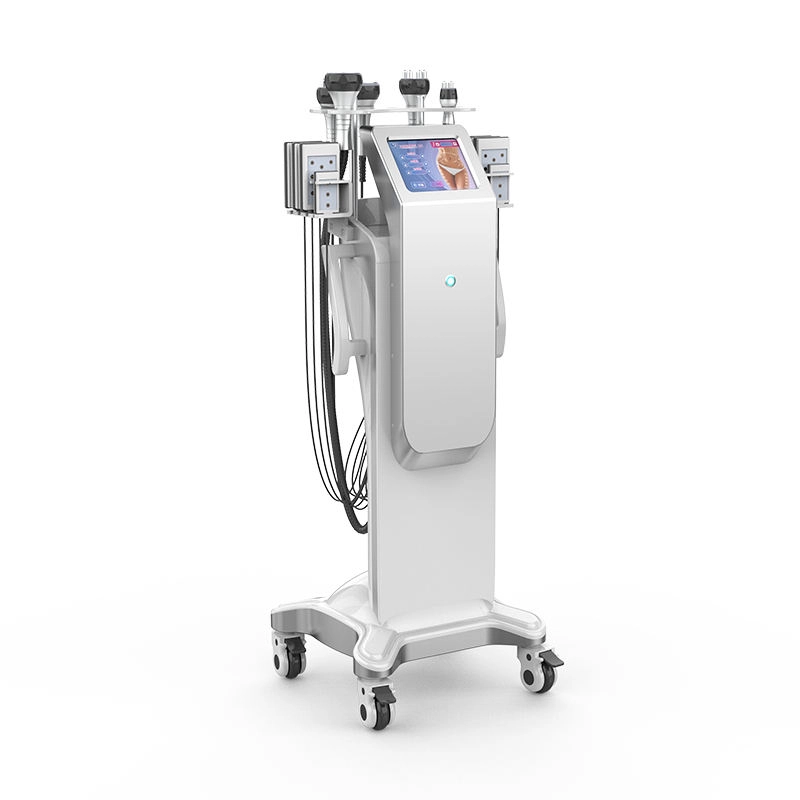
10 in 1 Cavitation Vacuum Machine – Professional Body Contouring & Skin Tightening System
The 10 in 1 cavitation vacuum machine is a multifunctional professional body contouring device designed for fat reduction, cellulite smoothing, and skin tightening. Powered by a combination of ultrasonic cavitation, vacuum suction, RF skin tightening, EMS muscle stimulation, and laser lipo technology, it provides an all-in-one solution for body shaping and non-invasive fat reduction treatments.
This upgraded system features a 10.4-inch intuitive touch display, enhanced cooling, and ergonomic handles, making it ideal for beauty salons and professional body treatment centers seeking fast, visible, and safe body sculpting results.
With advanced 40K/80K cavitation, vacuum RF lifting, and multi-polar RF energy, the machine effectively breaks down fat cells, accelerates lymphatic drainage, and firms loose skin—providing clients with a smoother, more contoured silhouette

9 in 1 Gel Radio Frequency Machine – Cavitation Vacuum Machine 40K 80K with RF Skin Tightening Body Shape Weight Loss Fat Cavitation System
The 9 in 1 Gel Radio Frequency Machine is a professional multifunctional body shaping and skin management system designed for beauty salons and slimming centers. Utilizing 40K and 80K cavitation, this device effectively breaks down stubborn fat cells, promoting rapid body contouring and weight loss.
Equipped with advanced RF Skin Tightening technology, the machine stimulates collagen regeneration, tightens sagging skin, reduces wrinkles, and enhances elasticity. The integrated Body Shape Weight Loss Fat Cavitation system delivers powerful shaping results for the abdomen, arms, legs, and waist.
With nine specialized handles, the machine supports multiple facial and body treatments including cavitation slimming, RF tightening, vacuum shaping, and photon rejuvenation—providing a complete 9-in-1 solution for both fat reduction and skin improvement.
Perfect for professional salons seeking to upgrade their services with a versatile and high-performance 9 in 1 cavitation and radio frequency machine.
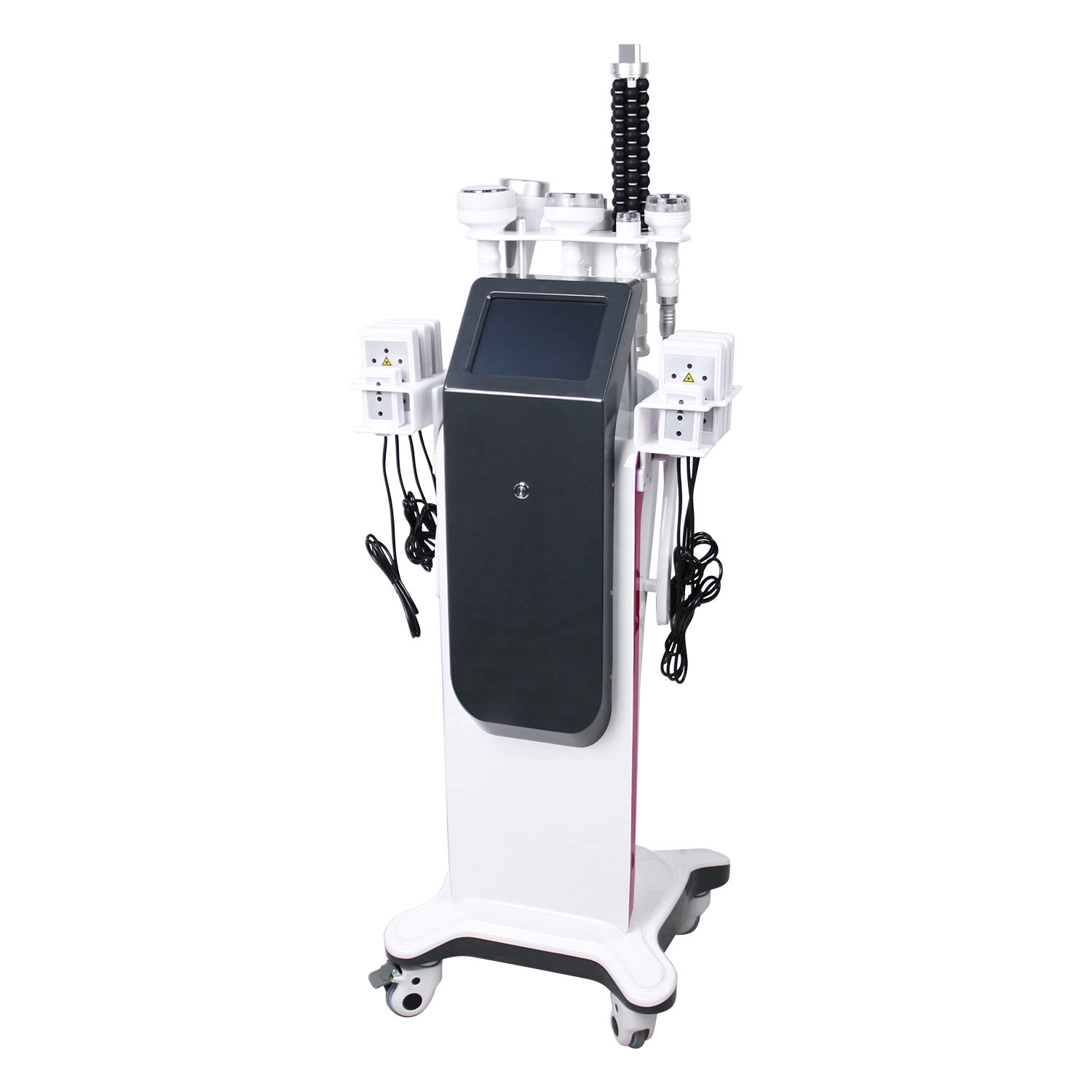
Professional 6-in-1 Cavitation Vacuum Machine for Body Contouring & Slimming Treatment
The 6-in-1 Cavitation Vacuum Machine is a professional body contouring system designed for salons and spas seeking high-performance slimming solutions. This machine integrates 40K ultrasonic cavitation, vacuum suction, RF technology, and laser lipolysis to target stubborn fat, enhance lymphatic drainage, tighten the skin, and contour the body shape effectively.
Equipped with multiple ergonomic handles and a smart touch screen, this cavitation vacuum machine provides a comfortable and efficient experience for both operators and clients. It is ideal for full-body treatments including abdomen, arms, legs, waistline, hips, and back.
Perfect for beauty salons, spas, and aesthetic centers that want to offer non-invasive fat reduction and body-sculpting services.
Get more information
If you have any comments or good suggestions, please leave us a message; later our professional staff will contact you as soon as possible.
Let's Talk
Stay in touch with us for cutting-edge beauty solutions, professional guidance, and customized service.
Contact


Room 307, Building A, Huilong International E-commerce Industrial Park, No. 10 Xipengling Road, Helong Street, Baiyun District, Guangzhou, China
© 2025 HUIMAIN. All Rights Reserved. Privacy Policy | Terms and Conditions | Sitemap
Facebook
Instagram
Medical beauty equipment factory
huimain Medical beauty equipment factory
beauty machine supplier
Whatsapp: +8619124004543