


FDA and Regulatory Status of HIFU Devices Globally
- Regulatory Pathways and What Clearance Means for HIFU Machines
- Overview: Why regulation matters for HIFU Machines
- United States — FDA pathways and practical considerations for HIFU Machines
- FDA classifications and common routes for HIFU Machines
- European Union — CE marking under the MDR for HIFU Machines
- How the EU MDR applies to HIFU Machines and what changes mean
- China — NMPA regulatory expectations for HIFU Machines
- NMPA device registration and clinical requirements for HIFU Machines
- Canada, Australia, Japan, and South Korea — regional highlights for HIFU Machines
- Comparative summary of regulatory expectations
- Comparing Regulatory Pathways: quick reference table for HIFU Machines
- Key technical and clinical evidence expectations for HIFU Machines
- What regulators typically require for HIFU Machines
- Market entry strategy and risk mitigation for manufacturers and buyers of HIFU Machines
- Practical steps to reduce regulatory and commercial risk
- Case examples and real-world regulatory notes related to HIFU Machines
- Examples to illustrate diversity of approvals
- Guangzhou Huimain Technology Co., Ltd. — regulatory readiness and product strengths
- Company profile and competencies in HIFU Machines and related beauty equipment
- Huimain competitive advantages and main products
- Implementation checklist for bringing a HIFU Machine to market
- Practical pre-launch to post-market checklist
- FAQ — Frequently Asked Questions about the FDA and Regulatory Status of HIFU Machines
- 1. Are all HIFU Machines FDA-approved?
- 2. What is the difference between FDA 510(k) clearance and CE marking for HIFU Machines?
- 3. Do I need clinical trials to register a HIFU Machine?
- 4. Can a HIFU Machine labeled for aesthetic use be used for therapeutic procedures?
- 5. How long does global regulatory approval take for a new HIFU Machine?
- 6. How can clinics verify that a HIFU Machine is legally allowed in their country?
- Contact for product inquiry and consultation
- References and authoritative sources
Regulatory Pathways and What Clearance Means for HIFU Machines
Overview: Why regulation matters for HIFU Machines
High-intensity focused ultrasound (HIFU) machines span a wide clinical and aesthetic spectrum: from medical therapeutic systems (e.g., uterine fibroid ablation, prostate ablation, neurological indications) to energy-based aesthetic devices (skin tightening, fat reduction). Because HIFU Machines deliver concentrated acoustic energy to modify tissue, regulators treat them as medical devices with potential safety and effectiveness risks. Understanding regulatory status is essential for manufacturers, distributors, clinics, and purchasers to ensure legal market access, patient safety, and reliable performance.
United States — FDA pathways and practical considerations for HIFU Machines
FDA classifications and common routes for HIFU Machines
In the U.S., regulatory control is through the Food and Drug Administration (FDA). HIFU Machines are regulated as medical devices and fall into Class II or Class III depending on indication and technological risk. Common pathways include:
- 510(k) clearance (substantial equivalence) — typically used for HIFU systems that can be compared to a legally marketed predicate device. Many aesthetic microfocused ultrasound systems (for noninvasive lifting) and certain therapeutic systems have used 510(k).
- De Novo classification — for novel low-to-moderate risk devices without a predicate.
- Premarket Approval (PMA) — required for high-risk Class III devices, often used for novel therapeutic HIFU intended for high-health-risk indications (e.g., prostate ablation when no predicate exists).
Practical points for manufacturers:
- Clinical evidence: The FDA reviews bench testing, software validation, biocompatibility, electromagnetic compatibility, acoustic output measurements, and clinical data appropriate to the intended use and claims.
- Labeling and claims: Claims must be supported by data; cosmetic vs therapeutic claims drive regulatory classification.
- Postmarket obligations: Medical Device Reporting (MDR), device corrections/recalls, and possible post-approval studies for PMA devices.
(Primary FDA resources: device databases for 510(k)/PMA; general device regulation pages — see References.)
European Union — CE marking under the MDR for HIFU Machines
How the EU MDR applies to HIFU Machines and what changes mean
Under the EU Medical Device Regulation (MDR 2017/745), HIFU Machines are regulated as medical devices and classification depends on intended purpose and technology. Many HIFU devices fall into Class IIa, IIb, or even Class III (higher risk) if invasive or intended for critical functions. Key points:
- Conformity assessment: Requires a Notified Body involvement for most HIFU devices (except the lowest-risk devices). Technical documentation must demonstrate safety, performance, risk management (ISO 14971), and clinical evaluation in compliance with MEDDEV/MDR requirements.
- Clinical evaluation: Stronger clinical evidence requirements under MDR than previous MDD, including clinical investigations when necessary.
- Post-market surveillance and vigilance: MDR mandates proactive post-market clinical follow-up (PMCF) and periodic safety update reports.
Manufacturers exporting HIFU Machines to EU markets must maintain an MDR-compliant quality management system (often ISO 13485) and coordinate with a Notified Body for certification.
China — NMPA regulatory expectations for HIFU Machines
NMPA device registration and clinical requirements for HIFU Machines
China's National Medical Products Administration (NMPA, formerly CFDA) requires device registration for medical HIFU systems. Key aspects:
- Classification: Devices are class I–III; therapeutic HIFU devices are often Class II or III depending on invasiveness and intended use.
- Technical dossier: Requires device description, performance testing, sterilization/biocompatibility (if applicable), software validation, and clinical evidence. Clinical trials in China may be required for Class III devices without sufficient foreign clinical data or local equivalence.
- Local agent: Foreign manufacturers must appoint a China agent and follow post-market surveillance and registration renewal processes.
Practically, NMPA timelines vary; planning for 6–18+ months for complex therapeutic devices is prudent.
Canada, Australia, Japan, and South Korea — regional highlights for HIFU Machines
Comparative summary of regulatory expectations
- Health Canada: Medical device licensing based on device class (I–IV). HIFU Machines for therapeutic or significant clinical risk are typically Class II–IV and require a medical device license with supporting evidence and QMS (ISO 13485 recommended).
- Australia (TGA): Inclusion in the ARTG for medical devices; classification-based requirements apply. Clinical evidence and conformity assessment (often via third-party conformity assessment bodies) are required.
- Japan (PMDA): Requires marketing authorization; clinical data and PMDA review are typical for higher-risk HIFU therapeutic indications.
- South Korea (MFDS): Registration requires technical documentation, clinical evidence depending on class, and local representation.
Each jurisdiction has nuanced requirements for clinical data, electrical/acoustic safety, and labelling — so global market strategies must be harmonized with local specifics.
Comparing Regulatory Pathways: quick reference table for HIFU Machines
| Region | Typical Classification for HIFU Machines | Usual Pathway | Estimated Timeline (typical) | Key Documentation/Requirements |
|---|---|---|---|---|
| USA (FDA) | Class II or III | 510(k), De Novo, or PMA | 3–12 months (510(k)); 1–3+ years (PMA) | Bench testing, acoustic/output data, software validation, clinical data for claims, labeling |
| EU (MDR) | Class IIa–III | Notified Body conformity assessment (CE) | 6–18 months (varies by Notified Body workload) | Technical File, clinical evaluation, risk management, QMS (ISO 13485) |
| China (NMPA) | Class II–III | Registration dossier; clinical trial often required for Class III | 6–18+ months | Local clinical data (sometimes), technical testing, local agent |
| Canada (Health Canada) | Class II–IV | Medical Device License | 3–12 months | Device dossier, safety/effectiveness evidence, QMS |
| Australia (TGA) | Class IIa–III | ARTG inclusion via conformity assessment | 3–9 months | Clinical evidence, conformity assessment certificate |
| Japan (PMDA) | Class II–III | Marketing authorization; review of clinical data | 6–18 months+ | Clinical trials/data, PMDA review |
| South Korea (MFDS) | Class II–III | Registration with technical dossier | 3–12 months | Testing, clinical evidence as required, local rep |
(Notes: timelines are indicative and depend on device complexity, quality of dossier, and local regulator workload.)
Key technical and clinical evidence expectations for HIFU Machines
What regulators typically require for HIFU Machines
Manufacturers should prepare a dossier that covers:
- Device description and principle of operation (including acoustic field maps, focal zone characteristics, and energy density metrics);
- Electrical and software safety (IEC 60601 series, IEC 62304 for software lifecycle);
- Acoustic output testing and calibration protocols (repeatability and safety limits);
- Preclinical testing (ex vivo tissue, animal studies where appropriate);
- Clinical evidence proportional to risk and claims (comparative clinical studies, published literature, or well-constructed bench/clinical equivalence arguments);
- Risk analysis (ISO 14971), usability/human factors testing (IEC 62366), and sterilization/biocompatibility where applicable;
- Labeling and instructions for use (including operator training requirements and contraindications).
Regulatory reviewers focus on whether the device performs reliably at intended parameters and whether heating/potential collateral tissue effects are mitigated by device design and training.
Market entry strategy and risk mitigation for manufacturers and buyers of HIFU Machines
Practical steps to reduce regulatory and commercial risk
- Define intended use and claims precisely: Cosmetic vs therapeutic claims determine the regulatory class and the evidence burden.
- Early regulatory engagement: Consider pre-submission meetings with regulators (e.g., FDA Q-Sub) to align on clinical endpoints and testing strategy.
- Invest in robust bench testing and ISO/IEC compliance early to reduce rework.
- Plan for clinical data needs early: multi-center trials are often necessary for therapeutic indications.
- Quality management: Implement ISO 13485 and robust post-market surveillance processes.
- Labeling and training: Provide clear operator training programs to reduce misuse and adverse events.
For buyers (clinics, distributors): verify device clearance/approval in your jurisdiction, confirm training and service support, and review clinical data relevant to intended use.
Case examples and real-world regulatory notes related to HIFU Machines
Examples to illustrate diversity of approvals
- MR-guided focused ultrasound (MRgFUS) systems have received regulatory clearances/approvals in many jurisdictions for specific therapeutic uses (e.g., uterine fibroids, certain neurological indications). These systems combine MRI imaging and focused ultrasound and typically undergo rigorous clinical review because they target deep tissues.
- Micro-focused ultrasound devices used for dermatologic lifting (often described as HIFU in marketing) have received regulatory clearances where supporting clinical evidence demonstrates safety and efficacy for limited cosmetic claims. However, claim breadth and marketing statements are closely reviewed by regulators for overreach.
Note: Specific product approvals and cleared indications change over time. Always consult national device databases (FDA 510(k)/PMA, EU Notified Bodies, NMPA public databases) to confirm current regulatory status.
Guangzhou Huimain Technology Co., Ltd. — regulatory readiness and product strengths
Company profile and competencies in HIFU Machines and related beauty equipment
Guangzhou Huimain Technology Co., Ltd. is a high-tech company specializing in beauty machines and home-use device series. The company integrates R&D, production, sales, and after-sales service. Facilities cover approximately 3,000 square meters. More than 20% of personnel hold bachelor’s degrees, and over 40% have junior college degrees. The technical development department includes many experienced engineers, PE experts, a professional purchasing department, clinical testing resources, and a responsive after-sales service team.
With robust R&D capabilities, Huimain continuously invests in new product development to meet market demand. The company has achieved CE certification and SGS approval for certain products and has earned multiple patents. Products are sold worldwide including China, Southeast Asia, the Middle East, Europe, and North America, and have received positive feedback for quality and pricing.
Huimain follows OEM/ODM routes for beauty machine development and production, offering design and manufacturing for high-quality medical and beauty machines to customers and salon partners.
Huimain competitive advantages and main products
- Research & Development strength: strong technical team and investment in product innovation.
- Manufacturing scale and QA: 3,000 m2 facility with structured departments for design, procurement, clinical testing, and after-sales support.
- Regulatory credentials: CE and SGS approvals; multiple patents.
- Product portfolio: Cryolipolysis machine, EMS sculpting machine, Plasma machine, Shockwave machine, HIFU machine, Hydrofacial machine, Cavitation vacuum machine, Laser hair removal, Tattoo removal machine, Microneedle machine.
Huimain’s positioning emphasizes technology innovation and win-win cooperation: producing reliable, market-accepted beauty machines with competitive pricing and supportive services.
Implementation checklist for bringing a HIFU Machine to market
Practical pre-launch to post-market checklist
- Define intended use and market claims.
- Conduct hazard analysis (ISO 14971) and usability testing (IEC 62366).
- Perform electrical, software, acoustic output testing, and EMC compliance (IEC 60601 family).
- Prepare preclinical (bench) and clinical evidence proportional to device risk.
- Implement ISO 13485 quality management system.
- Choose regulatory pathway per target jurisdiction (510(k)/PMA/CE/CMC/NMPA etc.) and prepare dossier.
- Arrange technical documentation, labeling, IFU, and operator training materials.
- Plan post-market surveillance, adverse event reporting, and complaint handling.
FAQ — Frequently Asked Questions about the FDA and Regulatory Status of HIFU Machines
1. Are all HIFU Machines FDA-approved?
No. Not all HIFU Machines have FDA approval or clearance. Some specific HIFU systems have received FDA 510(k) clearances or PMA approvals for defined indications; others may be marketed in the U.S. only after appropriate regulatory clearance. Always check the FDA 510(k)/PMA databases for a device’s status.
2. What is the difference between FDA 510(k) clearance and CE marking for HIFU Machines?
510(k) clearance demonstrates substantial equivalence to a predicate device in the U.S. CE marking (under EU MDR) indicates conformity with European regulatory requirements and involves Notified Body assessment for most HIFU devices. Each pathway has different evidence expectations and post-market obligations.
3. Do I need clinical trials to register a HIFU Machine?
It depends on the device class and claims. Many high-risk therapeutic HIFU devices require clinical trial data. For some lower-risk or substantially equivalent devices, published literature and bench testing may suffice. Regulatory pre-submission discussions help clarify expectations.
4. Can a HIFU Machine labeled for aesthetic use be used for therapeutic procedures?
No. Devices must be used according to their cleared/approved intended use. Using an aesthetic-labeled device for medical therapy outside its approved indications can contravene regulations and risk patient safety.
5. How long does global regulatory approval take for a new HIFU Machine?
Timelines vary by jurisdiction and device complexity. Typical estimates: 3–12 months for 510(k) or some national registrations; 6–18+ months for EU MDR conformity assessments or NMPA/Class III registrations; PMA or extensive clinical approvals may take multiple years.
6. How can clinics verify that a HIFU Machine is legally allowed in their country?
Check national device registries and databases (e.g., FDA 510(k)/PMA database for the U.S., NMPA database in China, TGA ARTG in Australia, Health Canada databases, EU country Notified Body certificates). Verify the model number, intended use, and the certificate holder.
Contact for product inquiry and consultation
If you are sourcing HIFU Machines or need OEM/ODM partnership, Guangzhou Huimain Technology Co., Ltd. can provide design, production, and after-sales support for a broad portfolio including HIFU machines and other beauty equipment. For consultation, clinical evidence support, or to review product specifications and regulatory documentation, please contact Huimain sales and technical teams to discuss regulatory readiness and customization options.
References and authoritative sources
- U.S. Food & Drug Administration (FDA) — Medical Devices: https://www.fda.gov/medical-devices (accessed 2025-12-20)
- FDA Device Databases — 510(k) and PMA: https://www.accessdata.fda.gov/scripts/cdrh/cfdocs/cfpmn/pmn.cfm and https://www.accessdata.fda.gov/scripts/cdrh/cfdocs/cfpma/pma.cfm (accessed 2025-12-20)
- European Commission — Medical Devices (MDR): https://health.ec.europa.eu/medical-devices-sector_en (accessed 2025-12-20)
- International Medical Device Regulators Forum (IMDRF): https://www.imdrf.org/ (accessed 2025-12-20)
- China National Medical Products Administration (NMPA): http://www.nmpa.gov.cn/ (accessed 2025-12-20)
- Health Canada — Medical Devices: https://www.canada.ca/en/health-canada/services/medical-devices. (accessed 2025-12-20)
- Therapeutic Goods Administration (TGA), Australia — Medical devices: https://www.tga.gov.au/medical-devices (accessed 2025-12-20)
- Pharmaceuticals and Medical Devices Agency (PMDA), Japan: https://www.pmda.go.jp/english/ (accessed 2025-12-20)
- Korean Ministry of Food and Drug Safety (MFDS): https://www.mfds.go.kr/eng/ (accessed 2025-12-20)
- ISO standards referenced: ISO 13485 (Quality Management), ISO 14971 (Risk Management), IEC 60601 (Electrical safety) — see iso.org and iec.ch for standards (accessed 2025-12-20)
TLD-1
How soon can results be seen after treatment?
Initial lifting results are visible immediately, with continuous improvement as collagen regenerates over 2–3 months.
About Support Service
What certifications do your products have?
Our machines are certified with CE, SGS, and comply with international safety standards. Some models hold utility/design patents.
EMS-b
How many sessions are needed to see results?
Most clients see noticeable improvements after 4–6 sessions, with optimal results in 6–8 weeks.
JHF-51
Is this HIFU machine suitable for professional and commercial use?
Yes, this professional HIFU machine is designed for aesthetic clinics, beauty salons and SPA centers.
A58
Does the treatment hurt?
With topical numbing cream, discomfort is minimal. Most clients tolerate the treatment very well.

CO2 Fractional Laser Machine – Professional Wrinkle Removal & Skin Resurfacing Device
The CO2 Fractional Laser Machine is a multifunctional aesthetic device designed for professional clinics and beauty salons. Using advanced fractional CO2 laser technology, it effectively targets acne scars, freckles, pigmentation, nevi, and deep wrinkles. Additionally, it provides non-invasive skin rejuvenation, vaginal tightening, and intimate beautification. This professional CO2 laser equipment combines precision, safety, and powerful energy output to deliver outstanding anti-aging and dermatological results.

5-in-1 40K Cavitation Vacuum Machine for Body Slimming & Fat Reduction
The 5-in-1 40K Cavitation Vacuum Machine is a professional body shaping system designed for fat reduction, cellulite smoothing, and overall body contouring. Using 40KHz ultrasonic cavitation, this device breaks down stubborn fat cells, while vacuum suction improves lymphatic drainage and accelerates toxin removal.
With multiple RF tightening handles, the machine stimulates collagen regeneration and helps lift and firm loose areas of the body. Compact, powerful, and easy to operate, it is the perfect solution for beauty salons, spa centers, and slimming studios seeking fast and visible fat-reduction results.
This cavitation vacuum machine is built to deliver safe, non-invasive treatments with no downtime—making it a top choice for body contouring professionals.

6-in-1 Multifunctional Beauty and Weight Loss Machine | Cavitation, RF, Vacuum PDT, EMS, Laser Slimming Equipment for Professional Use
The 6-in-1 Multifunctional Beauty and Weight Loss Machine is a professional-grade device designed for salons, clinics, and distributors. Combining six advanced technologies—cavitation, RF (radio frequency) for face & body, vacuum RF PDT, BIO/EMS microcurrent, and laser lipo pads—this device offers comprehensive body contouring, fat reduction, skin tightening, and anti-aging treatments.
It provides businesses with an all-in-one solution to expand service offerings, attract more clients, and achieve a rapid return on investment.
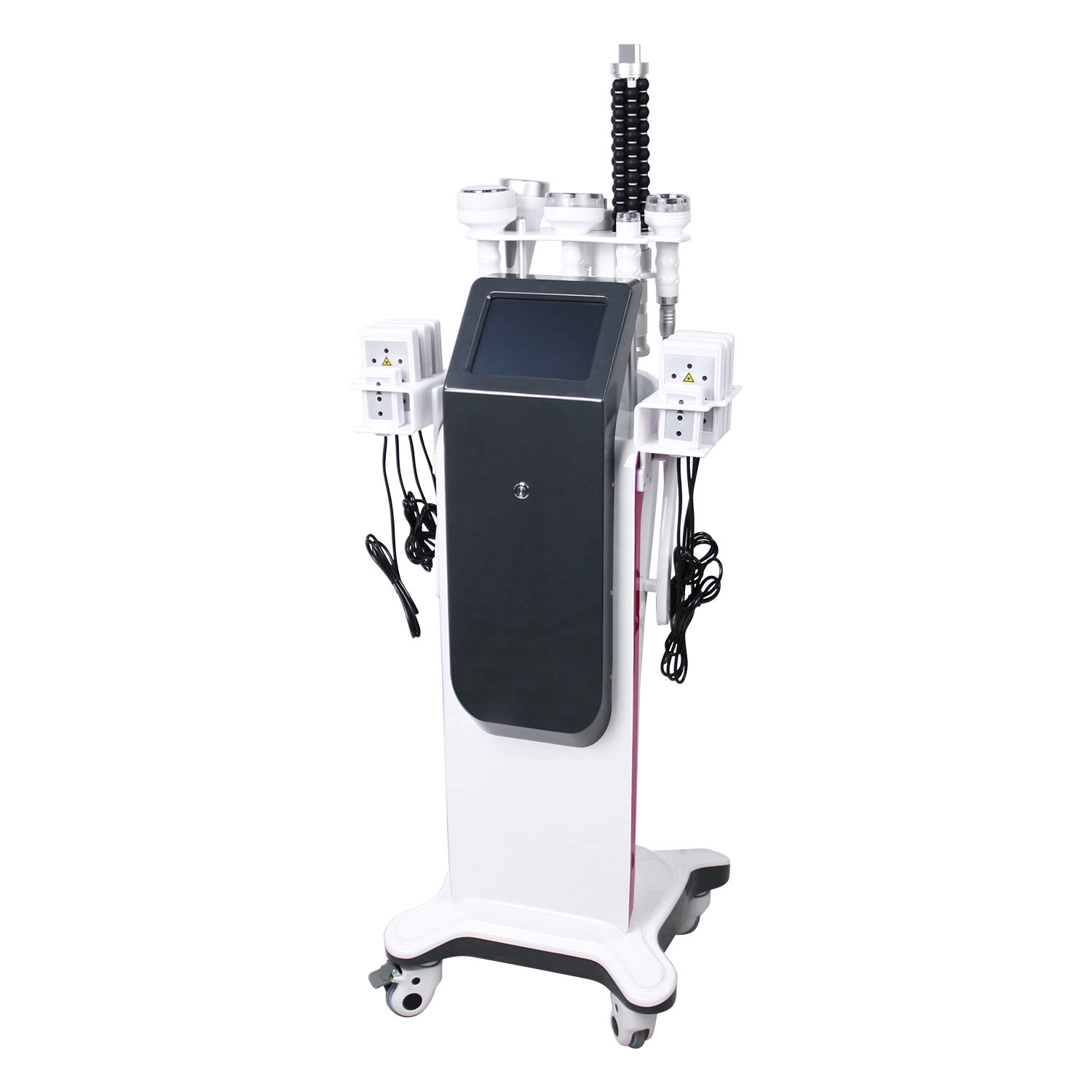
Professional 6-in-1 Cavitation Vacuum Machine for Body Contouring & Slimming Treatment
The 6-in-1 Cavitation Vacuum Machine is a professional body contouring system designed for salons and spas seeking high-performance slimming solutions. This machine integrates 40K ultrasonic cavitation, vacuum suction, RF technology, and laser lipolysis to target stubborn fat, enhance lymphatic drainage, tighten the skin, and contour the body shape effectively.
Equipped with multiple ergonomic handles and a smart touch screen, this cavitation vacuum machine provides a comfortable and efficient experience for both operators and clients. It is ideal for full-body treatments including abdomen, arms, legs, waistline, hips, and back.
Perfect for beauty salons, spas, and aesthetic centers that want to offer non-invasive fat reduction and body-sculpting services.
Get more information
If you have any comments or good suggestions, please leave us a message; later our professional staff will contact you as soon as possible.
Let's Talk
Stay in touch with us for cutting-edge beauty solutions, professional guidance, and customized service.
Contact


Room 307, Building A, Huilong International E-commerce Industrial Park, No. 10 Xipengling Road, Helong Street, Baiyun District, Guangzhou, China
© 2025 HUIMAIN. All Rights Reserved. Privacy Policy | Terms and Conditions | Sitemap
Facebook
Instagram
Medical beauty equipment factory
huimain Medical beauty equipment factory
beauty machine supplier
Whatsapp: +8619124004543