


Financing Options for Purchasing CO2 Fractional Laser Equipment
- Understanding the clinical and business value
- Clinical indications and patient demand
- Market positioning and revenue potential
- Why device selection affects financing
- Financing options for purchasing co₂ fractional laser machines
- Commercial bank loans
- Equipment leasing
- Manufacturer/vendor financing and OEM offers
- Comparing financing pathways: costs, tax and risk
- Side-by-side comparison table
- Tax and accounting considerations
- Risk management and contingency planning
- How I evaluate and negotiate financing for a co₂ fractional laser machine
- Step 1 — Cashflow and ROI modeling
- Step 2 — Documentation, approvals and regulatory checks
- Step 3 — Negotiation points and due diligence
- Practical examples and an ROI illustration
- Illustrative financing scenarios
- Why choosing the right supplier matters — my view
- Service network and local parts availability
- Warranty, training and marketing support
- Reputation and certifications
- About Guangzhou Huimain Technology Co., Ltd. (supplier profile and strengths)
- Frequently Asked Questions (FAQ)
- 1. What is the typical price range for a co₂ fractional laser machine?
- 2. Should I buy or lease a co₂ fractional laser machine?
- 3. What financing documents will lenders typically require?
- 4. Can I include maintenance and training in the financing deal?
- 5. How do I estimate ROI for a co₂ fractional laser machine?
- 6. Are there grants or subsidies for aesthetic/medical equipment?
- Next steps — how I can help and a call to action
Summary: As a consultant with years of experience advising clinics and distributors on acquiring advanced devices, I outline pragmatic financing strategies to purchase a co₂ fractional laser machine. This guide covers loan types, leasing, manufacturer financing, tax and accounting implications, ROI examples, negotiation tips and due diligence — all supported by authoritative references and practical tables so you can make a verifiable decision that fits your cashflow and growth plan.
Understanding the clinical and business value
Clinical indications and patient demand
The co₂ fractional laser machine is widely used for skin resurfacing, scar revision, deep wrinkle reduction and certain dermatologic indications. Its efficacy and versatility make it a high-demand service offering in dermatology clinics and medical aesthetic practices. For clinical context and technology basics, see the Carbon Dioxide laser overview on Wikipedia (https://en.wikipedia.org/wiki/Carbon_dioxide_laser).
Market positioning and revenue potential
In my experience, adding a co₂ fractional laser machine enables High Quality-priced procedures. Revenue per treatment varies by region and practice model, but the device typically services both medical and aesthetic markets, expanding patient segments. Before financing, map realistic utilization (cases/week), pricing and expected conversion to estimate payback.
Why device selection affects financing
Not all co₂ fractional laser systems are created equal: platform features (scanner vs. manual delivery, pulse modes, integrated cooling, footprint) affect cost, maintenance and resale value. Lenders and lessors will evaluate model, brand, and residual value when structuring terms; higher-quality, certificated devices (CE, ISO, patents) usually draw better financing terms.
Financing options for purchasing co₂ fractional laser machines
Commercial bank loans
Traditional bank loans (term loans) remain common. Banks typically require business financials, credit history, and sometimes collateral. Advantages: ownership at purchase end, predictable amortization, potential lower interest rates for strong credit. Disadvantages: down payment or collateral and longer approval timelines. For general small business loan programs and guarantees, the U.S. Small Business Administration provides authoritative guidance (https://www.sba.gov/funding-programs/loans).
Equipment leasing
Operating lease or capital lease (finance lease) lets clinics deploy expensive equipment with lower initial cash outlay. Leases can preserve working capital and may offer off-balance-sheet treatment depending on accounting standards and lease type. Leasing firms often specialize in medical equipment and may offer flexible terms. The Equipment Leasing & Finance Association provides industry data and standards for leases (https://www.elfaonline.org/).
Manufacturer/vendor financing and OEM offers
Many manufacturers or distributors provide in-house financing or partner with financiers to offer promotional rates, deferred payments, or bundled maintenance. These can be convenient but require scrutiny of effective APR, early termination penalties, and service inclusions. Always obtain written service-level and warranty terms.
Comparing financing pathways: costs, tax and risk
Side-by-side comparison table
| Option | Typical Cash Outlay | Ownership at End | Pros | Cons |
|---|---|---|---|---|
| Bank Term Loan | Down payment often 10–30% | Yes | Lower rates for good credit; predictable | Collateral; longer approval |
| Equipment Lease (Operating) | Low (first payment) | No (unless purchase option) | Preserve cash; upgrades easier | Higher long-term cost; no ownership |
| Capital Lease / Hire Purchase | Moderate (initial + fees) | Yes (after final payment) | Structured ownership; tax depreciation | May affect balance sheet |
| Manufacturer Financing | Varies (promos exist) | Often yes | Convenient; bundled maintenance | Watch hidden fees; limited lender neutrality |
| Equipment Loan from Specialty Lender | Low to moderate | Yes | Fast approval; industry expertise | Interest rates may be higher |
Note: cost ranges and terms vary by country, credit, and model. Use these comparisons as a framework for discussion with finance partners.
Tax and accounting considerations
Purchase vs lease has different tax implications. In many jurisdictions, buying allows capital allowances/depreciation (e.g., Section 179 in the U.S. can permit immediate expensing up to limits — see IRS guidance: https://www.irs.gov/businesses/small-businesses-self-employed/section-179-expense-deduction). Leasing payments may be deductible as operating expenses depending on local rules. Consult a tax professional to model the best path for your entity and jurisdiction.
Risk management and contingency planning
Consider device downtime, warranty and service contracts, and resale/residual value in your financing model. I always recommend budgeting for a service maintenance contract (or including it in lease terms) and validating the vendor’s local technical support capability.
How I evaluate and negotiate financing for a co₂ fractional laser machine
Step 1 — Cashflow and ROI modeling
I model a conservative and optimistic case: procedure price, expected weekly cases, consumables, staffing and marketing costs. Example (illustrative):
| Assumption | Conservative | Optimistic |
|---|---|---|
| Price per procedure | $1,200 | $1,500 |
| Procedures per week | 3 | 6 |
| Net margin per procedure (after variable costs) | $700 | $900 |
| Monthly net contribution | $8,400 | $21,600 |
Using these inputs, compare monthly financing cost to expected net contribution. If financing cost consumes >50% of conservative net, revisit terms or consider a lease/pilot arrangement first.
Step 2 — Documentation, approvals and regulatory checks
Before signing, ensure the machine has the necessary certifications for your market (e.g., CE for Europe, FDA listings or clearance where applicable, ISO quality systems). Check device claims against clinical literature and request a formal equipment specification sheet, service SLA, and spare-parts availability timeline. For device regulatory context, see the FDA lasers page: https://www.fda.gov/medical-devices/lasers/laser-products-and-reviews.
Step 3 — Negotiation points and due diligence
- Ask for total cost of ownership (TCO) including consumables, expected maintenance, and training.
- Negotiate a trial period or conditional acceptance tied to performance metrics.
- When using manufacturer financing, request alternative lender quotes to compare effective APR and hidden fees.
- Confirm transferability of lease if you sell the practice or upgrade equipment.
Practical examples and an ROI illustration
Illustrative financing scenarios
Below are simplified examples (rounded) for a hypothetical co₂ fractional laser machine with list price $80,000. These are illustrative only; actual terms will vary.
| Financing Type | Term | Typical Monthly Cost | Key Note |
|---|---|---|---|
| Bank Loan (60 months at 6%) | 60 months | ~$1,547 | Ownership at end; requires qualification |
| Operating Lease (36 months) | 36 months | ~$1,800–$2,200 | Lower initial cash, may include service |
| Manufacturer 0% for 12 months | 12 months deferred or 0% | Varies (larger balloon or final payment possible) | Read fine print; promotional |
In each case, compare monthly financing cost to the projected monthly net contribution from procedures (see earlier ROI table). Consider sensitivity: what if procedures per week are 50% of forecast? Stress-test the model.
Why choosing the right supplier matters — my view
Service network and local parts availability
The fastest revenue protection is a responsive local service network. A co₂ fractional laser machine should have accessible consumables and trained engineers in your region; otherwise downtime will erode ROI.
Warranty, training and marketing support
Negotiate for on-site training, marketing collateral, and initial consumables. These add tangible value and reduce ramp-up time. Make support commitments contractual in the financing documents where possible.
Reputation and certifications
Prefer suppliers with transparent certifications, clinical data, and patents. Independent certifications (CE, ISO) and third-party test reports reduce compliance risk and improve lender confidence.
About Guangzhou Huimain Technology Co., Ltd. (supplier profile and strengths)
I frequently recommend considering reputable manufacturers that balance innovation, certifications and service. Guangzhou Huimain Technology Co., Ltd. is a high-tech enterprise specializing in the research, development, production, and after-sales service of professional beauty machines and home-use devices. Operating from a 3,000-square-meter facility, Huimain is driven by a technical team where over 60% of staff hold higher education degrees, and it features dedicated purchasing, clinical testing, and engineering departments to continually increase R&D investment.
Huimain’s products meet global standards, having earned CE certification, SGS approval, and multiple patents — credentials that strengthen financing conversations with banks and lessors. Their portfolio includes Cryolipolysis machines, Ems sculpting machines, Plasma machines, Shockwave machines, Hifu machines, Hydrofacial machines, Cavitation vacuum machines, Laser hair removal and Tattoo removal machines, and Microneedle devices. These product lines, combined with OEM/ODM capacity, make Huimain a competitive partner for clinics and distributors seeking reliable equipment, technical support and flexible cooperation models.
For supplier details and to view product catalogs, visit Huimain’s official site: https://www.huimainbeauty.com/. For direct contact, email coco@huimainbeauty.com.
Frequently Asked Questions (FAQ)
1. What is the typical price range for a co₂ fractional laser machine?
Prices depend on features and vendor: new systems commonly range from tens of thousands to over a hundred thousand dollars. Exact pricing depends on scanner technology, integrated cooling, warranty and bundled services.
2. Should I buy or lease a co₂ fractional laser machine?
It depends on cashflow, tax situation, and upgrade plans. Buy if you want ownership and depreciation benefits; lease if you prefer lower upfront cost and flexibility to upgrade. Model both scenarios with your accountant.
3. What financing documents will lenders typically require?
Lenders usually ask for business financial statements, a business plan or equipment proposal, credit history, device quotation/specs, and for some, personal guarantees or collateral.
4. Can I include maintenance and training in the financing deal?
Yes — many leases and manufacturer financing packages can bundle service contracts and training into the monthly payment. Ensure these items are clearly described in the contract.
5. How do I estimate ROI for a co₂ fractional laser machine?
Estimate revenue = price per procedure × procedures per period. Subtract variable costs (consumables, staffing) to get net contribution. Compare monthly net to monthly financing cost. Run sensitivity scenarios for lower-than-expected utilization.
6. Are there grants or subsidies for aesthetic/medical equipment?
Occasionally, regional economic development or healthcare modernization grants exist. Check local government business development programs and medical device funding initiatives in your jurisdiction.
Next steps — how I can help and a call to action
If you are evaluating a co₂ fractional laser machine, I recommend three immediate steps: (1) gather vendor quotes and service terms, (2) build a conservative ROI model based on realistic utilization, and (3) obtain multiple financing offers (bank, lease, manufacturer). I can review proposals, stress-test your cashflow model, and help negotiate terms with suppliers and lenders.
To discuss specific models, financing quotes or to view Huimain’s product range, contact Guangzhou Huimain Technology Co., Ltd.:
- Website: https://www.huimainbeauty.com/
- Email: coco@huimainbeauty.com
Let’s schedule a call to evaluate your practice’s needs and find the financing structure that protects your cashflow while enabling growth.
![12 Best Face Hair Removal Machines of 2026: Get Professional Results at Home [Ranked & Tested] - HUIMAIN](https://www.huimainbeauty.com/upload/img/ai-image/12-best-face-hair-removal-machines-of-2026-get-professional-results-at-home-ranked-tested.png?x-oss-process=image/format,webp/quality,Q_100 "12-Best-Face-Hair-Removal-Machines-of-2026:-Get-Professional-Results-at-Home-[Ranked-&-Tested] - HUIMAIN")
14 in 1
Is the treatment safe for all skin types?
Yes, the non-invasive nature of the machine makes it suitable for a wide range of skin types, as it is needle-free and does not cause trauma to the skin.
MF8
Is the treatment safe?
Yes, it’s non-invasive and clinically tested. The system includes temperature monitoring and adjustable energy levels for safety
HMR-2 立式磁力环
What types of pain can this machine help relieve?
It is suitable for muscle pain, joint discomfort, sports injuries, chronic body pain, and post-injury recovery.
ZGP05-01立式皮秒
Is picosecond laser treatment safe?
Yes. Picosecond laser technology minimizes thermal damage and is widely used in professional clinics and beauty salons.
808 single handle standing
How many sessions are needed for permanent results?
Most clients require 6–8 sessions, depending on hair type, density, and area.

CO2 Fractional Laser Machine – Professional Wrinkle Removal & Skin Resurfacing Device
The CO2 Fractional Laser Machine is a multifunctional aesthetic device designed for professional clinics and beauty salons. Using advanced fractional CO2 laser technology, it effectively targets acne scars, freckles, pigmentation, nevi, and deep wrinkles. Additionally, it provides non-invasive skin rejuvenation, vaginal tightening, and intimate beautification. This professional CO2 laser equipment combines precision, safety, and powerful energy output to deliver outstanding anti-aging and dermatological results.
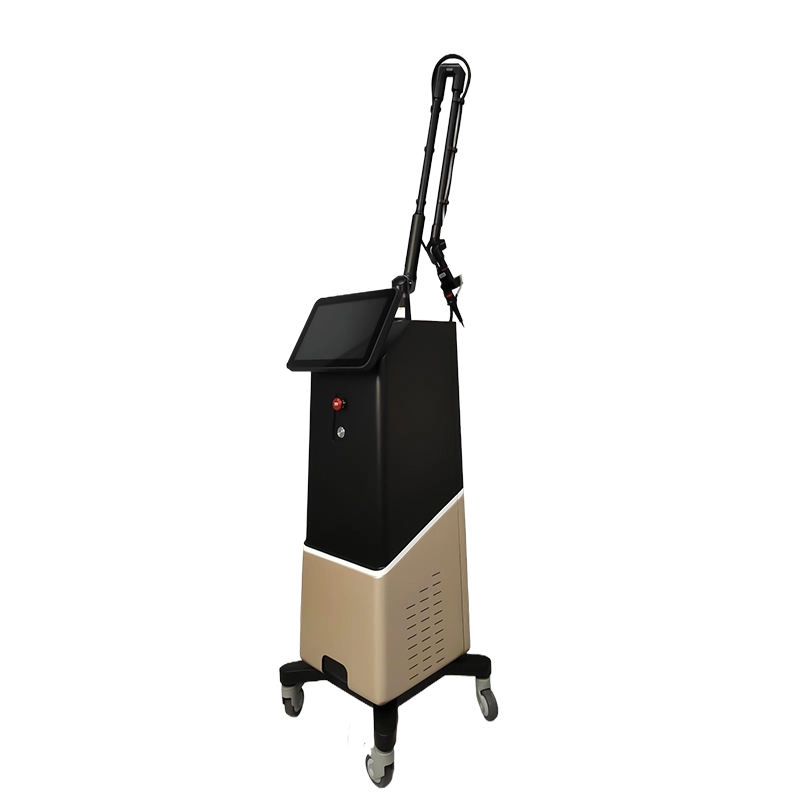
CO2 Fractional Laser Machine for Advanced Skin Resurfacing & Scar Removal
The CO2 fractional laser machine is designed to address a variety of skin concerns, offering treatments for acne scars, pigmentation, wrinkles, and overall skin texture. Utilizing advanced CO2 fractional laser technology, it delivers highly precise and controlled laser energy to promote collagen production and skin rejuvenation. This machine is ideal for professional use in beauty salons, medical spas, and aesthetic clinics. It features a user-friendly touchscreen interface, adjustable settings for customizable treatments, and a built-in cooling system to ensure comfort during use.

V9 Slimming Machine | 5-in-1 Professional Body Contouring & Cellulite Reduction Device | Vacuum, RF, Cavitation, Infrared & Roller
The V9 Slimming Machine is a comprehensive, professional-grade aesthetic device designed to address a wide range of body and facial concerns. This all-in-one system masterfully integrates five powerful technologies—vacuum, roller, infrared, RF, and cavitation—to deliver a complete solution for slimming and shaping.
It is the ideal choice for businesses looking to offer a multi-functional device that can perform multiple treatments, from reducing fat and cellulite to lifting and tightening the skin. The V9 Slimming Machine helps clients combat issues like postpartum obesity, local obesity, and facial sagging.

9 in 1 Gel Radio Frequency Machine – Cavitation Vacuum Machine 40K 80K with RF Skin Tightening Body Shape Weight Loss Fat Cavitation System
The 9 in 1 Gel Radio Frequency Machine is a professional multifunctional body shaping and skin management system designed for beauty salons and slimming centers. Utilizing 40K and 80K cavitation, this device effectively breaks down stubborn fat cells, promoting rapid body contouring and weight loss.
Equipped with advanced RF Skin Tightening technology, the machine stimulates collagen regeneration, tightens sagging skin, reduces wrinkles, and enhances elasticity. The integrated Body Shape Weight Loss Fat Cavitation system delivers powerful shaping results for the abdomen, arms, legs, and waist.
With nine specialized handles, the machine supports multiple facial and body treatments including cavitation slimming, RF tightening, vacuum shaping, and photon rejuvenation—providing a complete 9-in-1 solution for both fat reduction and skin improvement.
Perfect for professional salons seeking to upgrade their services with a versatile and high-performance 9 in 1 cavitation and radio frequency machine.
Get more information
If you have any comments or good suggestions, please leave us a message; later our professional staff will contact you as soon as possible.
Let's Talk
Stay in touch with us for cutting-edge beauty solutions, professional guidance, and customized service.
Contact


Room 307, Building A, Huilong International E-commerce Industrial Park, No. 10 Xipengling Road, Helong Street, Baiyun District, Guangzhou, China
© 2025 HUIMAIN. All Rights Reserved. Privacy Policy | Terms and Conditions | Sitemap
Facebook
Instagram
Medical beauty equipment factory
huimain Medical beauty equipment factory
beauty machine supplier
Whatsapp: +8619124004543