


Future Trends in Body Slimming Machine Technology 2026
- Evolving Landscape of Non-Invasive Body Contouring
- Key technologies shaping Body Slimming Machine innovation
- Multi-modal and combination Body Slimming Machine systems — clinical and commercial value
- AI, personalization and data-driven protocols in Body Slimming Machine development
- Home-use and wearable Body Slimming Machine devices — balancing accessibility and efficacy
- Regulation, clinical validation and safety expectations for Body Slimming Machine suppliers
- Market dynamics, OEM/ODM opportunities and Guangzhou Huimain Technology Co., Ltd.
- Sustainability, manufacturing trends and after-sale service for 2026
- How clinics, distributors and buyers should prepare — practical checklist
- FAQs about Body Slimming Machine Trends in 2026
- 1. What is a Body Slimming Machine and how does it differ from surgical options?
- 2. Are results from Body Slimming Machine treatments permanent?
- 3. How safe are home-use Body Slimming Machine devices compared with clinic systems?
- 4. What certifications should buyers require when choosing a Body Slimming Machine supplier?
- 5. How will AI change treatment protocols for Body Slimming Machine technology?
- 6. Can clinics combine multiple technologies for better results?
- 7. What after-sale services should I demand from an OEM/ODM partner?
- References
Evolving Landscape of Non-Invasive Body Contouring
The global demand for non-invasive body contouring is accelerating: patients and clinics want measurable fat reduction, muscle toning, and skin tightening with minimal downtime. A primary behind queries for Body Slimming Machine is to understand which technologies are effective, safe, cost-efficient, and future-proof. This article outlines technology, clinical evidence, regulatory trends and commercial opportunities to help clinics, distributors and OEM partners make informed decisions through 2026.
Key technologies shaping Body Slimming Machine innovation
By 2026, expect incremental but important advances across established modalities: cryolipolysis, high-intensity focused ultrasound (HIFU), radiofrequency (RF), electromagnetic muscle stimulation (EMS), cavitation, and laser-assisted approaches. Each technology has distinct mechanisms, evidence levels and ideal use-cases:
- Cryolipolysis: selective cold-induced adipocyte apoptosis—well-established for focal fat reduction with multiple clinical studies supporting safety and efficacy (moderate evidence).
- HIFU and focused ultrasound: thermal fat coagulation and collagen remodeling—growing evidence for skin tightening and localized fat reduction.
- RF (mono-/multi-polar) and RF combined with suction or microneedling: volumetric heating for collagen remodeling and modest adipose remodeling.
- EMS (e.g., high-intensity magnetic stimulation): muscle hypertrophy and toning, increasingly combined with fat-reduction modalities for composite results.
- Cavitation and vacuum-assisted modalities: mechanical disruption and lymphatic support—commonly used as adjuncts to enhance contour outcomes.
- Laser-assisted lipo and laser lipolysis: precise adipocyte disruption—used in minimally invasive and some non-invasive platforms.
Clinical decision-making requires matching device mechanism to the patient’s anatomy and goals. For example, subcutaneous localized fat pockets respond best to cryolipolysis or focused ultrasound, while diastasis or low muscle tone benefits from EMS-based systems.
Multi-modal and combination Body Slimming Machine systems — clinical and commercial value
Combination or multi-modal devices are a major 2026 trend. The rationale: fat loss, skin tightening and muscle tone often need different energies. Integrating complementary energies into a single protocol improves outcomes and patient satisfaction, while also improving clinic utilization and ROI.
| Technology | Mechanism | Typical Session Time | Downtime | Evidence Level* | Primary Use |
|---|---|---|---|---|---|
| Cryolipolysis | Controlled cooling → adipocyte apoptosis | 35–75 min per applicator | Minimal (bruising, numbness) | Moderate (multiple clinical trials) | Focal fat pockets (flanks, abdomen) |
| HIFU / Focused Ultrasound | Thermal coagulation of adipose + collagen remodeling | 30–60 min | Minimal to 1–2 days | Moderate | Skin tightening, small-volume fat reduction |
| RF (mono-/multi-polar) | Volumetric heating → collagen contraction | 20–60 min | Minimal | Moderate to limited | Skin laxity, adjunct fat remodeling |
| EMS / HIFEM | Supramaximal muscle contractions → hypertrophy | 30 min | None | Moderate (muscle tone) | Muscle building, body contouring adjunct |
| Cavitation / Vacuum | Ultrasonic cavitation → adipocyte disruption + lymphatic | 30–60 min | Minimal | Limited | Adjunct for contour and cellulite |
*Evidence level is a generalization based on peer-reviewed literature and industry systematic reviews (see References).
AI, personalization and data-driven protocols in Body Slimming Machine development
Artificial intelligence (AI) and advanced software are transitioning from marketing features to core differentiators. By 2026, expect three practical capabilities to be standard in High Quality Body Slimming Machine platforms:
- Personalized treatment planning: AI models use patient photos, body measurements and prior treatment outcomes to recommend energy settings, applicator placement and expected results.
- Real-time safety monitoring: sensors and algorithms to detect tissue temperature, impedance changes or slippage and automatically adjust energy delivery.
- Outcome tracking and predictive analytics: standardized imaging and cloud-based dashboards allow clinics to benchmark outcomes, compliance and predict touch-up needs.
These trends mirror healthcare-wide AI adoption and offer measurable benefits: improved consistency, fewer adverse events, and better patient counseling based on predicted outcomes (see McKinsey analysis on AI in healthcare in References).
Home-use and wearable Body Slimming Machine devices — balancing accessibility and efficacy
Consumer demand for at-home body-slimming solutions is growing. Home-use devices (low-energy lasers, RF, LED, EMS wearables) increase access but have trade-offs:
- Lower per-session efficacy due to safety-limited energy output.
- Higher frequency of use may cumulatively improve outcomes for motivated users.
- Regulatory scrutiny: jurisdictions differentiate between medical-grade clinic systems and lower-energy home devices; manufacturers must provide clear instructions and safety validation.
Clinics can capitalize on this trend by offering hybrid programs: initial high-efficacy clinic treatments followed by monitored home-use maintenance devices. This model increases lifetime patient value and improves long-term satisfaction.
Regulation, clinical validation and safety expectations for Body Slimming Machine suppliers
Regulatory compliance is no longer optional. Buyers increasingly require CE marking, ISO manufacturing standards and robust clinical evidence. In many regions, national authorities classify certain body-contouring devices as medical devices, which entails clinical evaluation and post-market surveillance. Key vendor due diligence points:
- Clinical data: peer-reviewed studies or well-documented clinical trials supporting safety and efficacy.
- Certifications: CE (Europe), regulatory clearances or listings in target markets, and ISO 13485 for quality management.
- Post-market support: adverse event reporting, device traceability and supplied training materials.
Regulatory frameworks evolve quickly; buyers should verify current requirements in each target market prior to procurement (see EU MDR and FDA device overviews in References).
Market dynamics, OEM/ODM opportunities and Guangzhou Huimain Technology Co., Ltd.
Market reports forecast sustained growth in non-invasive body-contouring devices driven by aging populations, rising disposable incomes and a preference for non-surgical options. This creates opportunities for OEM/ODM manufacturers that can deliver validated, customizable platforms with strong after-sales service.
Guangzhou Huimain Technology Co., Ltd., is an example of a high-tech OEM/ODM partner positioned to serve these market needs. The company specializes in beauty machines and home-use machine series and offers integrated capabilities across R&D, production, sales and after-sale service. Key company strengths include:
- A 3000 square meter facility staffed by a technically strong team: >20% with bachelor degrees and >40% with junior college degrees.
- A robust technical development department with experienced engineers, PE experts, professional purchasing, clinical test and after-sale service units.
- Ongoing investment in R&D, multiple patents, CE and SGS approvals, and worldwide sales across China, Southeast Asia, the Middle East, Europe and North America.
- OEM/ODM focus enabling bespoke design and production of medical and beauty machines for salons and clinics.
Huimain’s main product portfolio relevant to Body Slimming Machine trends includes: Cryolipolysis machine, EMS sculpting machine, Plasma machine, Shockwave machine, HIFU machine, Hydrofacial machine, Cavitation vacuum machine, Laser hair removal, Tattoo removal machine, Micro-needle machine. Their positioning emphasizes technological innovation, competitive pricing and reliable after-sales support — a combination that appeals to distributors and clinic chains seeking scalable OEM partners.
Sustainability, manufacturing trends and after-sale service for 2026
Sustainability and lifecycle thinking are emerging procurement criteria. Clinics and distributors increasingly ask for:
- Energy-efficient device designs and recyclable packaging.
- Modular devices with upgradeable software/hardware to extend lifecycle.
- Comprehensive training, remote diagnostics and spare-part availability to minimize downtime.
Manufacturers that combine strong clinical evidence with service excellence and sustainable design will achieve higher retention among professional customers.
How clinics, distributors and buyers should prepare — practical checklist
When selecting Body Slimming Machine partners or systems for 2026, use this pragmatic checklist:
- Clinical validation: request peer-reviewed studies, clinical protocol and before/after metrics.
- Regulatory compliance: verify CE, ISO 13485, and region-specific approvals.
- Software capability: ask about AI features, data export and imaging standards.
- Service & training: on-site startup training, remote diagnostics and spare-parts lead times.
- Business model fit: financing, consumables cost, and OEM/ODM customization potential.
These steps reduce procurement risk and increase patient satisfaction.
FAQs about Body Slimming Machine Trends in 2026
1. What is a Body Slimming Machine and how does it differ from surgical options?
Answer: Body Slimming Machine is a broad term for non-invasive or minimally invasive devices that reduce fat, improve skin laxity or increase muscle tone. Unlike liposuction or abdominoplasty, these technologies rely on energies (cold, heat, ultrasound, RF, electromagnetic) and typically have less downtime, lower complication rates, but often require multiple sessions for optimal results.
2. Are results from Body Slimming Machine treatments permanent?
Answer: Fat cell reduction techniques (e.g., cryolipolysis) remove adipocytes, producing long-term volume changes in treated areas if body weight is maintained. However, new fat accumulation is possible with weight gain. Muscle-building (EMS/HIFEM) effects require maintenance or follow-up courses to preserve hypertrophy.
3. How safe are home-use Body Slimming Machine devices compared with clinic systems?
Answer: Home devices are engineered for safety with lower energy levels, which reduces risk but also limits per-session efficacy. They are suitable for maintenance or mild improvements; clinicians should guide patients on expectations and safe usage.
4. What certifications should buyers require when choosing a Body Slimming Machine supplier?
Answer: Look for ISO 13485 (quality management), CE marking for EU sales, and evidence of clinical testing. For sale in specific countries, confirm local regulatory clearances or registrations.
5. How will AI change treatment protocols for Body Slimming Machine technology?
Answer: AI will standardize treatment planning, improve safety via real-time monitoring, and enable predictive outcome modeling—leading to more consistent results and data-backed patient counseling.
6. Can clinics combine multiple technologies for better results?
Answer: Yes. Multi-modal protocols (e.g., cryolipolysis for fat reduction + EMS for muscle tone + RF for skin tightening) are increasingly used to produce complementary effects. Choice of combination should be evidence-based and individualized.
7. What after-sale services should I demand from an OEM/ODM partner?
Answer: Training, remote and on-site technical support, clear warranty terms, spare parts availability, regular software updates, and assistance with clinical validation or marketing materials.
Contact CTA: For consultation, OEM/ODM inquiries, or to view product catalogs and clinical documentation, contact Guangzhou Huimain Technology Co., Ltd. Our team can provide technical specifications, regulatory documents, clinical data summaries and customized manufacturing solutions.
References
- Cryolipolysis clinical review: Stevens, W. G., et al., Cryolipolysis for noninvasive body contouring: clinical efficacy and adverse effects. Aesthetic Surgery Journal. PubMed ID: 25644491. https://pubmed.ncbi.nlm.nih.gov/25644491/ (accessed 2025-12-13).
- Grand View Research, Body Contouring Devices Market Size, Share & Trends Analysis (market forecast). https://www.grandviewresearch.com/industry-analysis/body-contouring-devices-market (accessed 2025-12-13).
- McKinsey & Company, AI in Healthcare: Opportunities and Trends (insights on AI adoption in healthcare systems). https://www.mckinsey.com/industries/healthcare-systems-and-services/our-insights/how-ai-will-transform-healthcare-by-2030 (accessed 2025-12-13).
- European Commission, Medical devices: guidance on CE marking and the new regulations (EU MDR overview). https://ec.europa.eu/health/md_newregulations/overview_en (accessed 2025-12-13).
- U.S. Food & Drug Administration, Overview of Medical Devices (regulatory considerations). https://www.fda.gov/medical-devices/overview-center-medical-devices-and-radiological-health (accessed 2025-12-13).
- Systematic reviews on non-invasive body contouring technologies and safety: see PubMed search results for noninvasive body contouring review for consolidated literature: https://pubmed.ncbi.nlm.nih.gov/?term=noninvasive+body+contouring+review (accessed 2025-12-13).
Note: For clinical procurement, always request the manufacturer’s device-specific clinical trial data, device manuals, and regional regulatory documentation to verify claims and compliance.
HMR-1 台式磁立环
Is the treatment safe?
Yes. The body sculpting machine is non-invasive, needle-free, and designed with adjustable energy levels for safety and comfort.
ZGP03 (台式皮秒)
Is this device suitable for pigment treatment on the face?
Yes, its precise energy control makes it ideal for facial pigment treatment with minimal skin damage.
About Support Service
How long is the production lead time?
• Standard models: 3–7 working days
• Customized orders: 10–25 working days, depending on complexity.
专业级三波长激光脱毛设备
Is the treatment painful?
The advanced cooling system significantly reduces discomfort during treatment.
2-in-1 Diode Laser
How many sessions are needed for permanent hair removal?
On average, 6–8 sessions are recommended for optimal and long-lasting results.

CO2 Fractional Laser Machine – Professional Wrinkle Removal & Skin Resurfacing Device
The CO2 Fractional Laser Machine is a multifunctional aesthetic device designed for professional clinics and beauty salons. Using advanced fractional CO2 laser technology, it effectively targets acne scars, freckles, pigmentation, nevi, and deep wrinkles. Additionally, it provides non-invasive skin rejuvenation, vaginal tightening, and intimate beautification. This professional CO2 laser equipment combines precision, safety, and powerful energy output to deliver outstanding anti-aging and dermatological results.

5-in-1 40K Cavitation Vacuum Machine for Body Slimming & Fat Reduction
The 5-in-1 40K Cavitation Vacuum Machine is a professional body shaping system designed for fat reduction, cellulite smoothing, and overall body contouring. Using 40KHz ultrasonic cavitation, this device breaks down stubborn fat cells, while vacuum suction improves lymphatic drainage and accelerates toxin removal.
With multiple RF tightening handles, the machine stimulates collagen regeneration and helps lift and firm loose areas of the body. Compact, powerful, and easy to operate, it is the perfect solution for beauty salons, spa centers, and slimming studios seeking fast and visible fat-reduction results.
This cavitation vacuum machine is built to deliver safe, non-invasive treatments with no downtime—making it a top choice for body contouring professionals.

6-in-1 Multifunctional Beauty and Weight Loss Machine | Cavitation, RF, Vacuum PDT, EMS, Laser Slimming Equipment for Professional Use
The 6-in-1 Multifunctional Beauty and Weight Loss Machine is a professional-grade device designed for salons, clinics, and distributors. Combining six advanced technologies—cavitation, RF (radio frequency) for face & body, vacuum RF PDT, BIO/EMS microcurrent, and laser lipo pads—this device offers comprehensive body contouring, fat reduction, skin tightening, and anti-aging treatments.
It provides businesses with an all-in-one solution to expand service offerings, attract more clients, and achieve a rapid return on investment.
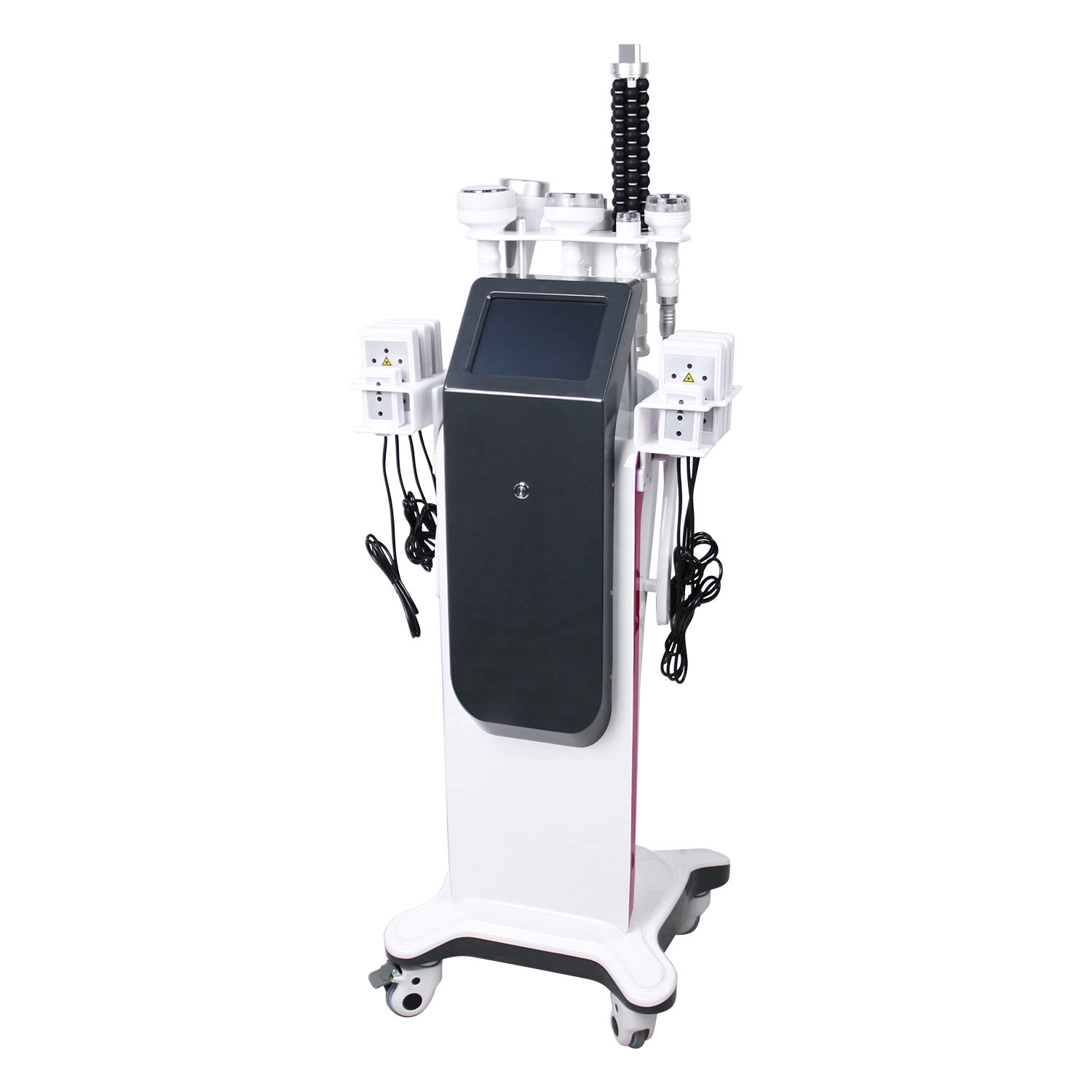
Professional 6-in-1 Cavitation Vacuum Machine for Body Contouring & Slimming Treatment
The 6-in-1 Cavitation Vacuum Machine is a professional body contouring system designed for salons and spas seeking high-performance slimming solutions. This machine integrates 40K ultrasonic cavitation, vacuum suction, RF technology, and laser lipolysis to target stubborn fat, enhance lymphatic drainage, tighten the skin, and contour the body shape effectively.
Equipped with multiple ergonomic handles and a smart touch screen, this cavitation vacuum machine provides a comfortable and efficient experience for both operators and clients. It is ideal for full-body treatments including abdomen, arms, legs, waistline, hips, and back.
Perfect for beauty salons, spas, and aesthetic centers that want to offer non-invasive fat reduction and body-sculpting services.
Get more information
If you have any comments or good suggestions, please leave us a message; later our professional staff will contact you as soon as possible.
Let's Talk
Stay in touch with us for cutting-edge beauty solutions, professional guidance, and customized service.
Contact


Room 307, Building A, Huilong International E-commerce Industrial Park, No. 10 Xipengling Road, Helong Street, Baiyun District, Guangzhou, China
© 2025 HUIMAIN. All Rights Reserved. Privacy Policy | Terms and Conditions | Sitemap
Facebook
Instagram
Medical beauty equipment factory
huimain Medical beauty equipment factory
beauty machine supplier
Whatsapp: +8619124004543