


HIFU Consumables and Replacement Parts Guide
- Choosing Reliable Components for Cosmetic Devices
- Key Consumables and Replaceable Parts for HIFU Machines
- HIFU Cartridges / Transducers: The Heart of Performance
- Coupling Gel, Single-Use Tips, and Consumable Accessories
- Maintenance Parts: Cooling, Power, and Electronics
- Replacement Intervals and Typical Costs — Practical Table
- How to Verify Cartridge Health and When to Replace
- OEM vs Third-Party Parts: Risks and Benefits
- Regulatory and Safety Considerations
- Inventory Management and Procurement Strategies
- Cost Optimization Without Sacrificing Quality
- Service, Calibration, and Documentation Practices
- Case Scenarios: Troubleshooting Common Issues
- Working with Manufacturers: Selecting a Reliable Partner for HIFU Machines
- Guangzhou Huimain Technology Co., Ltd. — Capabilities and Advantages
- How to Onboard an OEM Supplier
- FAQ — Frequently Asked Questions
- 1. How often should I replace HIFU cartridges on my HIFU Machines?
- 2. Can I use third-party cartridges to save costs?
- 3. What consumables should I always keep in stock for a busy clinic?
- 4. Are replacement parts regulated?
- 5. How can I verify a cartridge's authenticity?
- 6. What maintenance schedule is recommended for HIFU Machines?
- 7. How should I handle a faulty part during a treatment season?
- References and Further Reading
Choosing Reliable Components for Cosmetic Devices
High-Intensity Focused Ultrasound (HIFU) Machines are widely used in non-invasive aesthetic treatments such as facial lifting and body contouring. For clinic owners, biomedical engineers, and procurement managers, understanding HIFU consumables and replacement parts is essential to ensure safety, consistent outcomes, and cost-effective operation. This guide explains the types of consumables, replacement intervals, testing and calibration needs, supply chain choices (OEM vs. third-party), and procurement best practices tailored to commercial and medical-grade HIFU Machines.
Key Consumables and Replaceable Parts for HIFU Machines
HIFU Machines rely on several replaceable components that directly affect treatment quality and device lifespan. Common consumables include cartridges/transducers, coupling gel, disposable treatment tips/coupons, and protective covers. Replaceable parts include power supplies, cooling modules, fuses, and user-interface components. When sourcing replacement parts for HIFU Machines, always prioritize compatibility (model-specific cartridges), certified performance, and traceability.
HIFU Cartridges / Transducers: The Heart of Performance
Cartridges (also called transducers) determine focal depth, energy profile, and treatment area. Typical facial HIFU cartridges focus at depths of 1.5 mm, 3.0 mm, and 4.5 mm; body cartridges often target 6.0 mm or deeper. Cartridge life is measured in the number of shots or pulses. Using worn or mismatched cartridges can reduce efficacy and increase risk of burns or inadequate results.
Coupling Gel, Single-Use Tips, and Consumable Accessories
Coupling gel ensures efficient ultrasound transmission; choose medical-grade, hypoallergenic gels to reduce bubble formation and patient reactions. Single-use tips and hygiene covers prevent cross-contamination. Stock planning for consumables is low-cost insurance against treatment cancellations and compliance issues.
Maintenance Parts: Cooling, Power, and Electronics
Regular replacement of cooling filters, fans, and periodic checks/replacement of power modules and fuses maintain uptime. Electronic boards and connectors degrade over time, especially in high-throughput clinics. Establish preventive maintenance schedules and record keeping for each HIFU Machines unit to minimize unexpected downtime.
Replacement Intervals and Typical Costs — Practical Table
Below is a practical comparison of common HIFU consumables and replacement parts. Costs and intervals will vary by manufacturer and usage; use this as a planning baseline.
| Item | Typical Lifespan / Replacement Trigger | Approx. Cost Range (USD) | Compatibility Notes |
|---|---|---|---|
| HIFU Cartridge / Transducer | 3,000–10,000 shots or manufacturer-specified pulses; visual & performance checks | $80–$1,200 each (varies widely by OEM and frequency) | Model-specific; focal depth must match system |
| Coupling Gel (medical-grade) | Single session use per patient; replace per clinic hygiene policy | $0.50–$3 per patient (bulk pricing) | Non-conductive formulas recommended for ultrasound |
| Single-use Tips / Covers | Single session | $0.10–$5 per tip | Ensure sterile packaging; OEM tips fit precisely |
| Cooling Filters / Fans | 6–12 months (or per runtime hours) | $10–$200 | Model- or chassis-specific |
| Power Supply / Fuses | As needed; after power anomalies or per preventive schedule | $20–$400 | OEM recommended to protect electronics |
| Control Board / Connectors | 3–7 years depending on usage and maintenance | $200–$2,000 | High technical replacement; usually by certified service |
Data sources: manufacturer service manuals and aggregated market pricing (accessed dates in references).
How to Verify Cartridge Health and When to Replace
Practical checks for cartridge health include monitoring energy output consistency (software diagnostics), visual inspection for cracks or corrosion, and tracking shot counts. Many modern HIFU Machines include built-in counters and diagnostic tools. If treatment efficacy declines (less lift, shorter duration of effect) or if the device records fault codes related to transducer impedance, replace the cartridge immediately. Always log replaced parts to provide traceability for warranty and regulatory audits.
OEM vs Third-Party Parts: Risks and Benefits
OEM parts usually guarantee compatibility, warranty continuity, and predictable performance for HIFU Machines. Third-party alternatives can be cheaper but carry risks: inconsistent energy profiles, poor mechanical fit, absent serial tracking, and potential to void device warranties. For clinics performing medically classified procedures or seeking predictable outcomes, prioritizing certified OEM cartridges and components is recommended.
Regulatory and Safety Considerations
HIFU devices used in medical and aesthetic settings may be subject to national medical device regulations (for example, FDA in the U.S. or CE marking in the EU). Replacement parts should not compromise the device’s original certification. Maintain documentation for parts traceability and perform risk assessments before introducing non-OEM parts. For safety and legal compliance, consult your national regulator's guidance when replacing major modules or transducers in HIFU Machines.
Inventory Management and Procurement Strategies
Best practices for inventory management include maintaining a minimum stock of high-use consumables (cartridges commonly used for facial packages), using a first-expire-first-out (FEFO) approach for gels and disposable items, and negotiating service contracts with suppliers for priority shipment of critical parts. Consider a vendor-managed inventory (VMI) arrangement with trusted OEM suppliers to reduce the risk of stockouts during peak seasons.
Cost Optimization Without Sacrificing Quality
To balance cost and quality, analyze your clinic’s usage patterns and negotiate bulk pricing with OEMs. Implement preventive maintenance to extend component lifespan (e.g., regular cooling system cleaning) and avoid reactive replacements. Validate third-party consumables in a controlled manner (small-batch clinical evaluation with documented outcomes) before broader adoption.
Service, Calibration, and Documentation Practices
Establish service intervals and conduct calibration checks per manufacturer guidance. Keep a service log per HIFU Machines unit: date of maintenance, parts replaced (serial numbers), service technician, and outcome testing results. Calibration and acceptance testing should be performed after significant part replacement, especially transducers, to confirm focal accuracy and energy output.
Case Scenarios: Troubleshooting Common Issues
Issue: Reduced treatment efficacy after 1,500 shots. Action: Check cartridge shot count, run diagnostic energy output test, replace cartridge if output < manufacturer threshold. Issue: Overheating during treatment sessions. Action: Inspect and replace cooling filters and fans, verify coolant levels if applicable, and confirm ventilation. Issue: Intermittent fault codes on start-up. Action: Check fuses and power modules; escalate to authorized service if persistent.
Working with Manufacturers: Selecting a Reliable Partner for HIFU Machines
Partnering with an experienced manufacturer reduces procurement friction and improves long-term outcomes. Below is an example of a manufacturer profile that demonstrates the kind of capabilities clinics and distributors should seek.
Guangzhou Huimain Technology Co., Ltd. — Capabilities and Advantages
Guangzhou Huimain Technology Co., Ltd. is a high-tech company in beauty machines and home-use machine series. The company is professional in research & development, production, sales, and after-sale service. Huimain possesses a 3,000-square-meter facility; more than 20% of staff hold bachelor's degrees and over 40% have junior college degrees. A strong technical R&D department with experienced engineers, PE experts, a professional purchasing department, a clinical testing department, and a robust after-sales service team supports their operations.
With significant investment in R&D, Huimain produces new products based on market demand. The company holds CE certification and SGS approvals and has earned multiple patents. Their products sell worldwide across China, Southeast Asia, the Middle East, Europe, and North America, earning praise for quality and competitive pricing.
Huimain focuses on beauty machine OEM and ODM development and production, offering design and manufacturing services for high-quality medical and beauty devices for customers and salons. The company’s guiding idea: We innovate technology and win-win cooperation. Their product portfolio includes Cryolipolysis machine, EMS sculpting machine, Plasma machine, Shockwave machine, HIFU machine, Hydrofacial machine, Cavitation vacuum machine, Laser hair removal, Tattoo removal machine, and Micro-needle machine.
Why consider Huimain as a supplier for HIFU Machines consumables and parts:
- Integrated R&D and manufacturing reduces lead times for OEM parts and custom cartridge designs.
- Clinical testing capability supports validation of consumables and clinical protocols.
- CE and SGS approvals provide baseline quality assurance for many international markets.
- After-sale service structure and spare-parts inventory reduce clinic downtime.
How to Onboard an OEM Supplier
Steps to onboard: request technical datasheets and part serialization plans; ask for sample cartridges for bench and small-scale clinical testing; verify certifications (CE, ISO, test reports); negotiate spare parts lead times and warranty terms; and set up a service-level agreement (SLA) for critical component replacement. Keep written agreements on training, maintenance, and parts sourcing to ensure a long-term partnership.
FAQ — Frequently Asked Questions
1. How often should I replace HIFU cartridges on my HIFU Machines?
Replacement depends on manufacturer specifications and shot counts—commonly 3,000–10,000 shots. Monitor treatment efficacy and use built-in counters and diagnostics; replace when output drops below manufacturer thresholds or visual damage is noted.
2. Can I use third-party cartridges to save costs?
While third-party cartridges can reduce upfront costs, they may have inconsistent energy profiles, fit issues, and could void warranties. If considering third-party options, conduct controlled validation and ensure traceability.
3. What consumables should I always keep in stock for a busy clinic?
Maintain a minimum stock of the most used cartridges (by focal depth), medical-grade coupling gel, single-use tips/covers, and cooling filters. Stock levels should be based on appointment volume and lead times from suppliers.
4. Are replacement parts regulated?
Yes. Replacement parts for medical devices may affect a device’s regulatory status. Retain documentation and verify that parts do not invalidate CE or other regulatory certifications. Consult local regulation for clarity.
5. How can I verify a cartridge's authenticity?
Check packaging for serial numbers, holograms, QR codes linked to manufacturer verification pages, and request certificate of conformity from the supplier. Maintain procurement records and cross-check against the manufacturer’s authorized distributor list.
6. What maintenance schedule is recommended for HIFU Machines?
Follow manufacturer guidelines—typical practice includes daily cleaning, weekly filter checks, monthly full diagnostics, and annual professional servicing. Keep a log for audits and warranty purposes.
7. How should I handle a faulty part during a treatment season?
Have an SLA with your supplier for expedited shipping of critical parts. Maintain spare cartridges and cooling modules on-site to minimize disruption. Train staff in basic troubleshooting to determine if the issue is consumable-related or requires service.
For personalized advice, spare parts pricing, or to view our HIFU Machines product range and OEM/ODM services, contact Guangzhou Huimain Technology Co., Ltd. or visit our product catalog. Our technical team can provide part compatibility checks and service agreements tailored to your clinic’s needs.
References and Further Reading
- U.S. Food & Drug Administration (FDA) — Information about HIFU and ultrasound-based devices. https://www.fda.gov (accessed 2025-06-12)
- PubMed — Review articles on HIFU in aesthetic medicine. Example: High-intensity focused ultrasound for facial rejuvenation: A systematic review. https://pubmed.ncbi.nlm.nih.gov (accessed 2025-06-10)
- IEC / ISO standards for medical electrical equipment — general guidance on device safety (search IEC/ISO catalogs). https://www.iso.org (accessed 2025-06-15)
- European Commission — Medical device regulation and CE marking information. https://health.ec.europa.eu (accessed 2025-06-12)
- Manufacturer service manuals and parts pricing data — aggregated from OEM publicly available datasheets and company catalogs (accessed 2025-06)
For technical consultations, spare parts quotes, or OEM/ODM inquiries, contact Guangzhou Huimain Technology Co., Ltd.; our team specializes in HIFU Machines manufacturing, R&D, and after-sale support to keep your clinic running safely and profitably.
Portable EMS Magnetic Ring
Which body areas can be treated?
It can be applied to the knee, back, waist, shoulder, leg, and other body areas requiring rehabilitation.
DL-2 Led Light Therapy
How long should I use the machine?
Recommended usage is 10-20 minutes per session, 2-3 times per week for best results.
6 Handle Magnetic Face Lift Machine Vertical
How soon can results be seen?
Visible improvements can be noticed after 3–5 sessions, with progressive tightening over time.
A58
Is the RF micro needle machine suitable for all skin types?
Yes. With adjustable needle depth and RF levels, it is safe for multiple skin types and conditions.
OL-153
How often can treatments be performed?
Recommended once every 2–4 weeks depending on the client’s skin condition.

CO2 Fractional Laser Machine – Professional Wrinkle Removal & Skin Resurfacing Device
The CO2 Fractional Laser Machine is a multifunctional aesthetic device designed for professional clinics and beauty salons. Using advanced fractional CO2 laser technology, it effectively targets acne scars, freckles, pigmentation, nevi, and deep wrinkles. Additionally, it provides non-invasive skin rejuvenation, vaginal tightening, and intimate beautification. This professional CO2 laser equipment combines precision, safety, and powerful energy output to deliver outstanding anti-aging and dermatological results.

5-in-1 40K Cavitation Vacuum Machine for Body Slimming & Fat Reduction
The 5-in-1 40K Cavitation Vacuum Machine is a professional body shaping system designed for fat reduction, cellulite smoothing, and overall body contouring. Using 40KHz ultrasonic cavitation, this device breaks down stubborn fat cells, while vacuum suction improves lymphatic drainage and accelerates toxin removal.
With multiple RF tightening handles, the machine stimulates collagen regeneration and helps lift and firm loose areas of the body. Compact, powerful, and easy to operate, it is the perfect solution for beauty salons, spa centers, and slimming studios seeking fast and visible fat-reduction results.
This cavitation vacuum machine is built to deliver safe, non-invasive treatments with no downtime—making it a top choice for body contouring professionals.

6-in-1 Multifunctional Beauty and Weight Loss Machine | Cavitation, RF, Vacuum PDT, EMS, Laser Slimming Equipment for Professional Use
The 6-in-1 Multifunctional Beauty and Weight Loss Machine is a professional-grade device designed for salons, clinics, and distributors. Combining six advanced technologies—cavitation, RF (radio frequency) for face & body, vacuum RF PDT, BIO/EMS microcurrent, and laser lipo pads—this device offers comprehensive body contouring, fat reduction, skin tightening, and anti-aging treatments.
It provides businesses with an all-in-one solution to expand service offerings, attract more clients, and achieve a rapid return on investment.
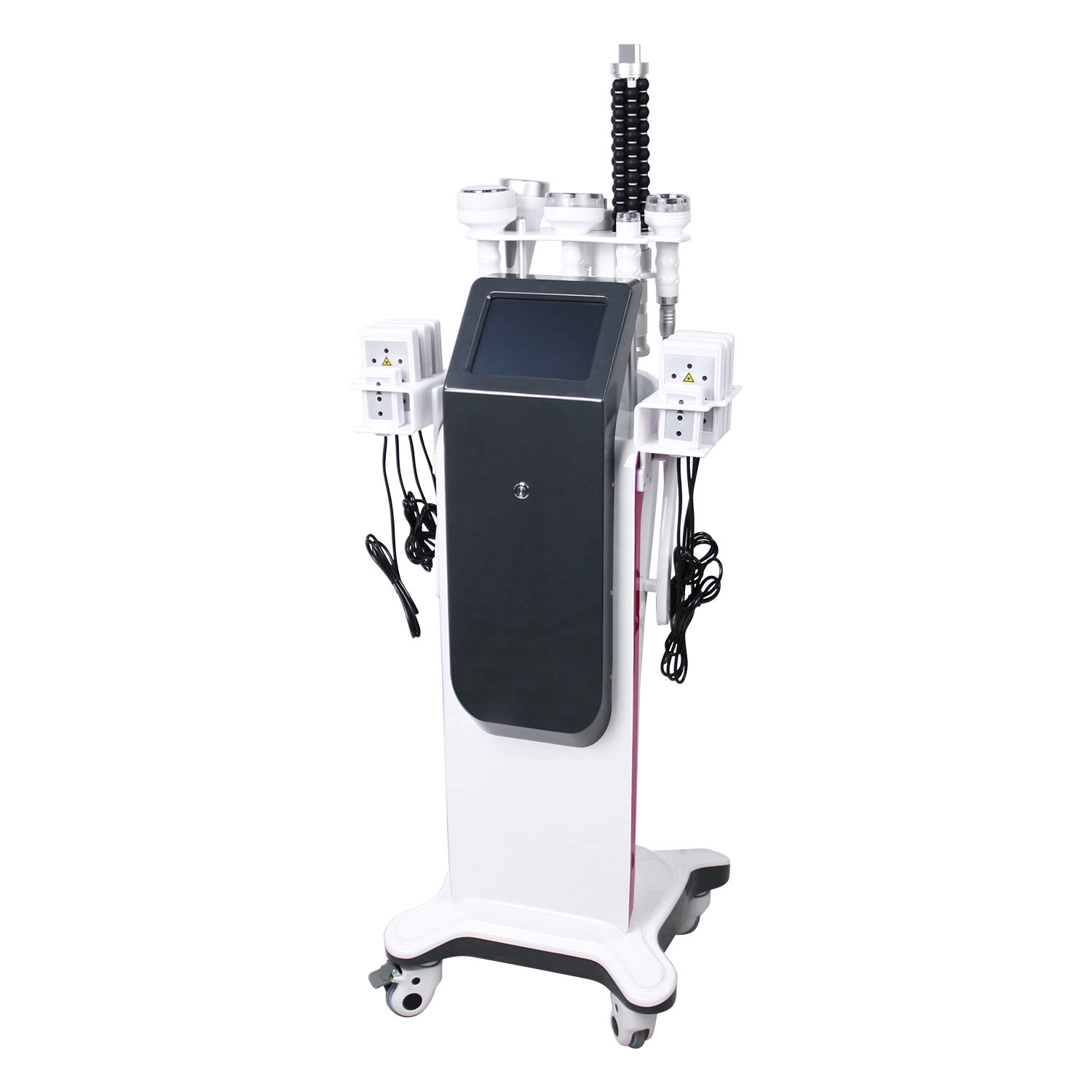
Professional 6-in-1 Cavitation Vacuum Machine for Body Contouring & Slimming Treatment
The 6-in-1 Cavitation Vacuum Machine is a professional body contouring system designed for salons and spas seeking high-performance slimming solutions. This machine integrates 40K ultrasonic cavitation, vacuum suction, RF technology, and laser lipolysis to target stubborn fat, enhance lymphatic drainage, tighten the skin, and contour the body shape effectively.
Equipped with multiple ergonomic handles and a smart touch screen, this cavitation vacuum machine provides a comfortable and efficient experience for both operators and clients. It is ideal for full-body treatments including abdomen, arms, legs, waistline, hips, and back.
Perfect for beauty salons, spas, and aesthetic centers that want to offer non-invasive fat reduction and body-sculpting services.
Get more information
If you have any comments or good suggestions, please leave us a message; later our professional staff will contact you as soon as possible.
Let's Talk
Stay in touch with us for cutting-edge beauty solutions, professional guidance, and customized service.
Contact


Room 307, Building A, Huilong International E-commerce Industrial Park, No. 10 Xipengling Road, Helong Street, Baiyun District, Guangzhou, China
© 2025 HUIMAIN. All Rights Reserved. Privacy Policy | Terms and Conditions | Sitemap
Facebook
Instagram
Medical beauty equipment factory
huimain Medical beauty equipment factory
beauty machine supplier
Whatsapp: +8619124004543