


HIFU Machine ROI: Pricing and Profit Strategies
- How to Maximize ROI from HIFU Machines
- Understanding the commercial value of HIFU Machines
- Clinical and regulatory context affecting pricing of HIFU Machines
- Cost components that determine HIFU Machine ROI
- Pricing strategies for HIFU Machines and services
- ROI modeling: comparison table of three realistic scenarios for HIFU Machines
- How to increase utilization of HIFU Machines (and shorten ROI time)
- Maintenance, consumables and warranty: hidden ROI drains for HIFU Machines
- Financing and leasing options to optimize cash flow for HIFU Machines
- Competitive positioning: how product features affect pricing power of HIFU Machines
- Case study: integrating HIFU Machines with other modalities to boost revenue
- Why choose Guangzhou Huimain Technology Co., Ltd. for HIFU Machines and related equipment
- Company profile and strengths in beauty machine OEM/ODM
- R&D, certifications and market reach
- Product portfolio and competitive advantages relevant to HIFU Machines
- Practical tips when negotiating with OEM/ODM vendors like Huimain
- Frequently Asked Questions (FAQ)
- 1. How much does a HIFU Machine cost?
- 2. What is a realistic payback period (ROI) for a HIFU Machine?
- 3. Do HIFU treatments require physicians to perform them?
- 4. How should I price HIFU treatments in a competitive market?
- 5. What maintenance should I expect for a HIFU Machine?
- 6. How can Huimain help reduce my costs and improve ROI?
- Contact and next steps
- References
How to Maximize ROI from HIFU Machines
Understanding the commercial value of HIFU Machines
High-Intensity Focused Ultrasound (HIFU) machines have moved from specialized hospital therapy into mainstream aesthetic clinics for non-surgical skin lifting and tightening. For clinic owners, spa operators, and medical device purchasers, the central question is not just clinical efficacy but return on investment (ROI): how quickly a HIFU device pays for itself and how to sustainably grow profits from it. This section frames the by connecting device costs, per-treatment pricing, throughput, and ongoing costs to realistic payback timelines.
Clinical and regulatory context affecting pricing of HIFU Machines
Regulatory clearances and published clinical evidence directly affect how a clinic can price HIFU treatments. FDA-cleared systems (e.g., marketed under brand names such as Ultherapy) and CE-marked devices generally command higher price points because of perceived safety and efficacy. Likewise, peer-reviewed studies and systematic reviews that document durable tightening results for facial and neck areas support High Quality pricing. When positioning services, factor in whether the machine has recognized clearances and whether local medical boards require physician supervision—these influence staffing and legal costs.
Cost components that determine HIFU Machine ROI
To calculate ROI you must separate upfront capital costs from recurring costs. Typical components include:
- Capital expenditure: device purchase price, optional handpieces, initial training, and installation.
- Variable cost per session: consumables (cartridges or coupling gel if used), disposable items, and direct labor for the treatment.
- Fixed monthly costs: room rent allocation, marketing and advertising, equipment maintenance, service contracts, and amortized warranty/insurance.
- Opportunity costs and financing: interest on equipment loans or lease payments.
Accounting for all of the above lets you set a session price that ensures margin while remaining competitive.
Pricing strategies for HIFU Machines and services
Clinics should consider multiple pricing strategies to maximize revenue per customer and lifetime value:
- Value-based pricing: charge based on perceived benefit (face/neck full session vs. small-area touch-ups) rather than purely cost-plus.
- Tiered packages: offer bronze/silver/gold packages (different depths, areas treated, or combined modalities) to capture more price-sensitive and High Quality clients.
- Bundling: combine HIFU with complementary treatments (micro-needling, PRP, energy-based fractional lasers) to increase transaction value.
- Memberships and financing: monthly memberships or installment plans make higher price points accessible and boost retention.
- Promotional introductory pricing: use limited-time offers to accelerate bookings after device launch, while keeping regular prices higher.
ROI modeling: comparison table of three realistic scenarios for HIFU Machines
Below is an example table showing modeled ROI under three operating scenarios. These are hypothetical but use clear assumptions so you can adapt them to your market and clinic.
| Scenario | Device Cost (USD) | Avg Session Price (USD) | Sessions / Month | Variable Cost / Session (USD) | Monthly Fixed Costs (USD) | Monthly Net Profit (USD) | Estimated ROI (months) |
|---|---|---|---|---|---|---|---|
| Conservative | 60,000 | 1,200 | 10 | 100 | 2,500 | 8,500 | ≈7.1 |
| Moderate | 90,000 | 1,000 | 30 | 120 | 3,500 | 22,900 | ≈3.9 |
| Aggressive | 150,000 | 1,200 | 60 | 150 | 6,000 | 57,000 | ≈2.6 |
Notes: Monthly Net Profit = (Sessions/Month × (Avg Session Price − Variable Cost)) − Monthly Fixed Costs. Adjust inputs for your local price levels, staffing costs, and financing terms. These examples show that throughput (number of treatments) is the key lever to shorten payback period.
How to increase utilization of HIFU Machines (and shorten ROI time)
Improving device utilization is often the fastest path to ROI:
- Cross-sell to existing clients: screen every aesthetic consultation for suitability for HIFU Machines.
- Offer combo protocols: pair HIFU with fillers or skin maintenance plans to create repeat visits.
- Flexible scheduling: allow block bookings on specific days for HIFU to concentrate throughput and reduce per-treatment idle time.
- Training and delegation: train nurses/physician assistants to perform treatments under supervision to increase capacity while complying with regulations.
- Local marketing and education: workshops, before/after galleries, patient seminars and targeted ads emphasize value and durability of results.
Maintenance, consumables and warranty: hidden ROI drains for HIFU Machines
Many buyers focus on upfront price and overlook lifecycle costs. Common hidden costs include cartridge replacement (if applicable), transducer wear, software updates, service contracts, and downtime during repairs. Negotiate clear service level agreements (SLAs) and check availability and cost of replacement handpieces. If the vendor offers timely spare parts, remote diagnostics or on-site engineers, this reduces unplanned downtime—critical to protecting revenue.
Financing and leasing options to optimize cash flow for HIFU Machines
Financing spreads capital cost and can improve short-term cash flow. Options include:
- Equipment loans with fixed payments—good if you expect consistent revenue growth.
- Leasing—often includes maintenance and can be structured to reduce monthly payments early in adoption stages.
- Revenue-sharing or per-use payment models—some suppliers offer per-treatment billing which aligns costs with utilization.
Run sensitivity analyses: add interest, lease fees and residual values into ROI models to compare net cost over typical equipment lifetime (3–7 years).
Competitive positioning: how product features affect pricing power of HIFU Machines
Not all HIFU Machines are equal. Differentiators that support higher price points include:
- Depth versatility (multiple cartridges for different tissue depths).
- Real-time monitoring and user-friendly interfaces.
- Clinical evidence and published studies supporting results.
- FDA/CE clearance and visible third-party certifications.
- Ergonomics and treatment speed—shorter treatments free up more appointment slots.
When choosing a vendor, weigh feature differences against price and local demand for High Quality services.
Case study: integrating HIFU Machines with other modalities to boost revenue
A mid-sized clinic added a HIFU Machine to its service menu alongside fillers and micro-needling. Strategy highlights:
- Launch promotion bundled a HIFU full-face session with a follow-up micro-needling discount—conversion of consultations to booked HIFU rose 35% in the first quarter.
- Upsell rate: 22% of HIFU patients later purchased maintenance packages or skin-care regimens increasing lifetime value.
- Payback: with targeted marketing and scheduling, the clinic reached break-even in 5 months against a mid-range device cost.
Key takeaway: integrated service pathways and aftercare products dramatically increase per-patient revenue and retention.
Why choose Guangzhou Huimain Technology Co., Ltd. for HIFU Machines and related equipment
Company profile and strengths in beauty machine OEM/ODM
Guangzhou Huimain Technology Co., Ltd. is a high-tech company specialized in professional beauty machines and home-use device series, covering R&D, production, sales and after-sale service. The company operates a 3,000 m² facility and has a strong technical team—over 20% of staff hold bachelor’s degrees and more than 40% have junior college degrees. Experienced engineers, product experts, procurement professionals, clinical testing staff, and after-sale teams underpin product reliability and faster market response.
R&D, certifications and market reach
Huimain continually invests in R&D to design devices that match market demand. The company holds CE certification and SGS approvals and has obtained several patents. Its products are sold internationally—China, Southeast Asia, Middle East, Europe and North America—and receive favorable feedback for quality and price competitiveness. These credentials support clinics that require certified devices for regulatory compliance and for patient confidence.
Product portfolio and competitive advantages relevant to HIFU Machines
Huimain's main product offerings include Cryolipolysis machine, EMS sculpting machine, Plasma machine, Shockwave machine, HIFU machine, Hydrofacial machine, Cavitation vacuum machine, Laser hair removal, Tattoo removal machine and Micro needle machine. Advantages include:
- OEM/ODM capability: tailored device design and branding to clinic requirements.
- Cost advantage: efficient manufacturing and procurement lower device price without sacrificing quality—improving ROI potential.
- Technical support and clinical test department: helps with clinical validations and staff training.
- After-sale service: spare parts availability and service teams minimize downtime.
For buyers focused on maximizing ROI and differentiating service menus, partnering with a manufacturer like Huimain provides pricing flexibility and faster product iteration aligned to local market needs.
Practical tips when negotiating with OEM/ODM vendors like Huimain
When you work with an OEM/ODM partner, consider:
- Requesting sample units and on-site trials to validate efficacy and ergonomics.
- Negotiating training packages and marketing materials as part of the deal.
- Confirming warranties, lead times for spare parts, and SLAs for repairs.
- Asking for clinical data and test reports that you can use for local marketing and regulatory submissions.
Frequently Asked Questions (FAQ)
1. How much does a HIFU Machine cost?
Device prices vary widely by brand, features and certification. Typical price ranges are approximately $25,000 for basic units to over $150,000 for high-end, multi-depth clinical systems. Always compare total cost of ownership including consumables, service contracts and training.
2. What is a realistic payback period (ROI) for a HIFU Machine?
Payback depends on treatment price, utilization, and operating cost. In modeled cases above, payback ranged from ~3 to 8 months depending on throughput and pricing. Lower utilization and higher financing costs will extend payback; high throughput clinics can achieve payback in a few months.
3. Do HIFU treatments require physicians to perform them?
Regulatory requirements vary by country and region. In some jurisdictions a physician must perform or supervise HIFU treatments; in others trained medical staff (nurses or technicians) may perform treatments under supervision. Verify local laws before staffing and pricing your services.
4. How should I price HIFU treatments in a competitive market?
Use a combination of market benchmarking, value-based positioning, and package strategies. Start with a price that covers per-treatment costs and desired margin, then add packages, memberships and bundled services to enhance perceived value and increase average revenue per patient.
5. What maintenance should I expect for a HIFU Machine?
Plan for periodic software updates, transducer/handpiece replacements, calibration, and possible on-site servicing. Budget for an annual maintenance contract or a spare-parts reserve to reduce downtime risk.
6. How can Huimain help reduce my costs and improve ROI?
Huimain offers OEM/ODM flexibility, competitive manufacturing pricing, clinical testing support and after-sale service. These capabilities reduce acquisition cost, ensure spare parts availability and provide training—collectively shortening the time to profitable operations.
Contact and next steps
If you are evaluating HIFU Machines and want tailored ROI projections, product specifications or OEM/ODM options, contact Guangzhou Huimain Technology Co., Ltd. for quotations, clinical data and after-sale support packages. Their integrated R&D and production capabilities make them a strong partner for clinics seeking cost-effective, certified HIFU solutions. For product enquiries and to view full product lines (including Hifu machine, Cryolipolysis, EMS sculpting, Laser hair removal and more), reach out to the company sales team to request a proposal and sample test.
References
- Wikipedia — High-intensity focused ultrasound. https://en.wikipedia.org/wiki/High-intensity_focused_ultrasound (accessed 2025-12-20).
- Grand View Research — High-Intensity Focused Ultrasound Market Analysis. https://www.grandviewresearch.com/industry-analysis/high-intensity-focused-ultrasound-market (accessed 2025-12-20).
- RealSelf — Ultherapy Cost Guide (market pricing reference). https://www.realself.com/cost/ultherapy (accessed 2025-12-20).
- PubMed — literature and systematic reviews on HIFU for aesthetic applications (search results). https://pubmed.ncbi.nlm.nih.gov/?term=high-intensity+focused+ultrasound+skin (accessed 2025-12-20).
- European Commission — CE Marking information (regulatory context). https://ec.europa.eu/growth/single-market/ce-marking_en (accessed 2025-12-20).
- SGS — Company and product testing & certification services. https://www.sgs.com/ (accessed 2025-12-20).
Frequently Asked Questions About EMS Sculpting Technology
How deep can HI-EMT energy penetrate muscle tissue?
The focused electromagnetic field generated by professional devices can penetrate up to approximately 7 cm (nearly 3 inches) into the human body. This depth is sufficient to safely pass through the epidermis, dermis, and subcutaneous fat layers to fully engage and stimulate the deep skeletal muscle belly underneath.
W8002
What businesses can use this Hydrafacial machine?
Beauty salons, medical spas, estheticians, and skincare clinics.
HMC2S
How many sessions are needed to see results?
Most clients see improvement after 4–6 sessions, with optimal results after 6–10 sessions.
EMS-b
Can I customize the machine with my own brand?
Yes, we support OEM/ODM customization including logo printing, software interface, and packaging design.
JHF-61
How long do facial and vaginal HIFU results last?
Typically 12–18 months depending on individual conditions and treatment programs.

CO2 Fractional Laser Machine – Professional Wrinkle Removal & Skin Resurfacing Device
The CO2 Fractional Laser Machine is a multifunctional aesthetic device designed for professional clinics and beauty salons. Using advanced fractional CO2 laser technology, it effectively targets acne scars, freckles, pigmentation, nevi, and deep wrinkles. Additionally, it provides non-invasive skin rejuvenation, vaginal tightening, and intimate beautification. This professional CO2 laser equipment combines precision, safety, and powerful energy output to deliver outstanding anti-aging and dermatological results.

5-in-1 40K Cavitation Vacuum Machine for Body Slimming & Fat Reduction
The 5-in-1 40K Cavitation Vacuum Machine is a professional body shaping system designed for fat reduction, cellulite smoothing, and overall body contouring. Using 40KHz ultrasonic cavitation, this device breaks down stubborn fat cells, while vacuum suction improves lymphatic drainage and accelerates toxin removal.
With multiple RF tightening handles, the machine stimulates collagen regeneration and helps lift and firm loose areas of the body. Compact, powerful, and easy to operate, it is the perfect solution for beauty salons, spa centers, and slimming studios seeking fast and visible fat-reduction results.
This cavitation vacuum machine is built to deliver safe, non-invasive treatments with no downtime—making it a top choice for body contouring professionals.

6-in-1 Multifunctional Beauty and Weight Loss Machine | Cavitation, RF, Vacuum PDT, EMS, Laser Slimming Equipment for Professional Use
The 6-in-1 Multifunctional Beauty and Weight Loss Machine is a professional-grade device designed for salons, clinics, and distributors. Combining six advanced technologies—cavitation, RF (radio frequency) for face & body, vacuum RF PDT, BIO/EMS microcurrent, and laser lipo pads—this device offers comprehensive body contouring, fat reduction, skin tightening, and anti-aging treatments.
It provides businesses with an all-in-one solution to expand service offerings, attract more clients, and achieve a rapid return on investment.
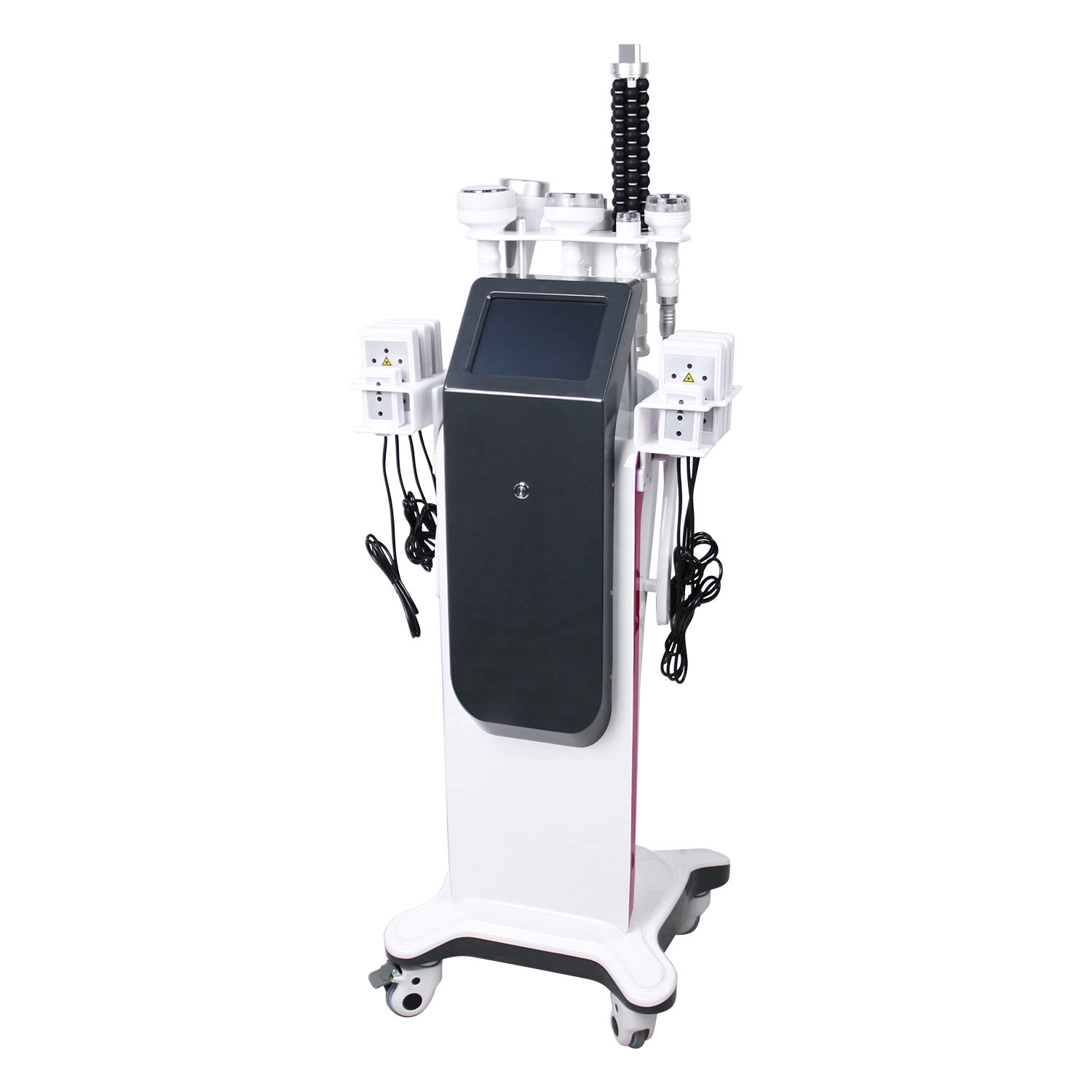
Professional 6-in-1 Cavitation Vacuum Machine for Body Contouring & Slimming Treatment
The 6-in-1 Cavitation Vacuum Machine is a professional body contouring system designed for salons and spas seeking high-performance slimming solutions. This machine integrates 40K ultrasonic cavitation, vacuum suction, RF technology, and laser lipolysis to target stubborn fat, enhance lymphatic drainage, tighten the skin, and contour the body shape effectively.
Equipped with multiple ergonomic handles and a smart touch screen, this cavitation vacuum machine provides a comfortable and efficient experience for both operators and clients. It is ideal for full-body treatments including abdomen, arms, legs, waistline, hips, and back.
Perfect for beauty salons, spas, and aesthetic centers that want to offer non-invasive fat reduction and body-sculpting services.
Get more information
If you have any comments or good suggestions, please leave us a message; later our professional staff will contact you as soon as possible.
Let's Talk
Stay in touch with us for cutting-edge beauty solutions, professional guidance, and customized service.
Contact


Room 307, Building A, Huilong International E-commerce Industrial Park, No. 10 Xipengling Road, Helong Street, Baiyun District, Guangzhou, China
© 2025 HUIMAIN. All Rights Reserved. Privacy Policy | Terms and Conditions | Sitemap
Facebook
Instagram
Medical beauty equipment factory
huimain Medical beauty equipment factory
beauty machine supplier
Whatsapp: +8619124004543