


HIFU Machine Buying Guide for Clinics
- Understanding HIFU Machines: What Clinics Need to Know
- How HIFU Machines Work and Clinical Indications
- Key Technical Specifications to Evaluate in HIFU Machines
- How to Read a HIFU Machine Specification — Practical Comparison Table
- Regulatory, Safety and Evidence Considerations for HIFU Machines
- Operational and Commercial Checklist: What Clinics Must Budget For
- Selecting a Vendor: Questions to Ask Vendors of HIFU Machines
- Practical Tips for In-Clinic Trials and Acceptance Testing
- Service, Training and Long-Term Support for HIFU Machines
- Comparative Snapshot: Typical HIFU Machine Options for Clinics
- Guangzhou Huimain Technology Co., Ltd. — Supplier Profile and Why Clinics Consider HUIMAIN HIFU Machines
- Acceptance Testing and Final Procurement Checklist for Clinics Purchasing HIFU Machines
- Frequently Asked Questions (FAQ)
- 1. How effective are HIFU Machines for non-surgical facial lifting?
- 2. How many HIFU sessions are needed per patient?
- 3. What are common side effects and safety concerns?
- 4. How should clinics price HIFU treatments?
- 5. Are all HIFU Machines the same?
- 6. What training is recommended for clinicians?
- 7. How do I ensure good ROI from a HIFU Machine?
- Contact & Next Steps
- References and Sources
Understanding HIFU Machines: What Clinics Need to Know
High-Intensity Focused Ultrasound (HIFU) machines are increasingly used in aesthetic and medical clinics for non-invasive skin tightening, facial lifting, and certain body contouring indications. For clinic owners and medical directors considering procurement, this guide translates clinical evidence, technical specifications, regulatory checkpoints, and commercial requirements into actionable steps to select the right HIFU device for your practice.
How HIFU Machines Work and Clinical Indications
HIFU Machines deliver focused ultrasound energy to targeted tissue depths to create thermal coagulation points (TCPs) without cutting the skin. That thermal effect stimulates neocollagenesis and tissue remodeling. Clinically, HIFU is most commonly used for:
- Non-surgical facial lifting and skin tightening (brow, cheek, jowl, submental areas)
- Periorbital rejuvenation and neck tightening
- Some body applications for tightening and small-volume contouring (dependent on device and cartridges)
Understanding which indications you will offer determines the depth, cartridge types, and treatment protocols the machine must support.
Key Technical Specifications to Evaluate in HIFU Machines
When comparing HIFU Machines for clinic purchase, focus on these measurable parameters rather than marketing claims:
- Frequencies and focal depths: Common frequencies are 4–10 MHz; focal depths typically include 1.5 mm, 3.0 mm, 4.5 mm for facial indications and deeper options (6–13 mm) for body usages. Ensure the device offers depths aligned with the clinical indications you plan to treat.
- Energy per line or shot (mJ): Adjustable energy settings and consistent energy output across shots are essential for predictable outcomes and safety.
- Shot density and line length: Determines treatment speed and extent (e.g., shots per cartridge and per treatment area).
- Handpiece ergonomics and usability: Size, weight, visibility of ultrasound imaging (if present), and cartridge exchange mechanism affect clinician efficiency and patient comfort.
- Imaging guidance: Some HIFU Machines include integrated ultrasound imaging to visualize tissue layers and optimize targeting—useful in medical settings.
- Consumables and cartridge lifetime: Cost per cartridge and available shot counts impact running costs and ROI.
- Safety features: Temperature monitoring, automatic shutoffs, and software limits help reduce adverse events.
How to Read a HIFU Machine Specification — Practical Comparison Table
Use the table below to compare shortlisted devices. This example lists the fields clinics should request from vendors.
| Specification | Why It Matters | Clinic Target Value (example) |
|---|---|---|
| Available focal depths | Matches indications (superficial to deep SMAS) | 1.5 mm, 3.0 mm, 4.5 mm (optional 6–13 mm for body) |
| Frequency (MHz) | Affects focal zone precision and penetration | 4–10 MHz range, with consistent output |
| Energy / shot (mJ) | Predictable thermal effect for efficacy | Adjustable settings; consistent across shots |
| Shots per cartridge | Running cost metric | ≥500 shots/cartridge preferred |
| Handpiece screens / imaging | Improves targeting, especially in medical uses | Optional integrated ultrasound imaging |
| Regulatory certifications | Indicates safety compliance in target markets | CE and local regulatory approvals (FDA510k if US market) |
| Warranty & service SLA | Reduces downtime and long-term costs | 12–24 months warranty, fast spare parts supply |
Regulatory, Safety and Evidence Considerations for HIFU Machines
Before procurement, verify the device’s regulatory status in your country. CE marking verifies compliance with European safety standards; in the US, an FDA 510(k) clearance or approval may be required for certain indications. For clinical safety and efficacy:
- Review peer-reviewed studies and systematic reviews on HIFU efficacy for the specific indication (e.g., facial skin tightening). Evidence supports modest to moderate improvement after single or multiple sessions, with best results often after 3–6 months as collagen remodels.
- Request device-specific clinical data and adverse event rates from the vendor. Prefer vendors that provide prospective clinical evaluations or real-world registries.
- Confirm training programs, proctoring availability, and detailed contraindications (e.g., active infection, certain implants near treatment area).
Operational and Commercial Checklist: What Clinics Must Budget For
Beyond the device purchase price, account for:
- Consumables (cartridges), estimated cost per treatment, and shelf life
- Staff training and initial proctoring fees
- Service contracts, spare parts, and expected maintenance downtime
- Marketing and patient education materials to accelerate ROI
- Insurance and malpractice considerations when offering new procedures
Example ROI calculation (illustrative):
| Item | Example Value (USD) |
|---|---|
| Device price (one-off) | $45,000 |
| Cost per treatment (cartridge / staff time) | $60 |
| Average charge per treatment | $800 |
| Gross margin per treatment | $740 |
| Treatments to recover capital | ~61 treatments (45,000 / 740) |
Adjust your local pricing, utilization rate, and consumable costs to estimate realistic payback periods. High-utilization clinics (multiple treatments weekly) will amortize capital faster.
Selecting a Vendor: Questions to Ask Vendors of HIFU Machines
When you shortlist suppliers, ask for clear answers in writing on:
- Device specifications (detailed tech sheet): focal depths, frequency, energy ranges
- Clinical evidence specific to their model (published papers or internal studies)
- Warranty, service-level agreement, spare parts lead times
- Training and certification process for clinicians
- Consumable pricing, lifetime, and expected shots per cartridge
- Regulatory approvals for the markets where you will operate
- References from other clinics (ideally with similar case-mix)
Practical Tips for In-Clinic Trials and Acceptance Testing
Run an in-clinic evaluation before final purchase:
- Arrange demo treatments on consenting patients or anatomical phantoms to test ergonomics and shot feel.
- Validate energy delivery consistency by tracking immediate tissue response and acute patient comfort.
- Time a full-face or target-area treatment to estimate throughput and staff time.
- Confirm consumable exchange speed and inventory requirements.
- Obtain written acceptance criteria and a short return/upgrade window in the purchase contract.
Service, Training and Long-Term Support for HIFU Machines
Post-sales support differentiates reliable suppliers from commodity sellers. Requirements to prioritize:
- On-site installation and clinical training with proctoring for first cases.
- Remote troubleshooting and software updates.
- Fast parts replacement and local technical competence (either vendor-employed or certified third-party engineers).
- Clear escalation paths and spare loaner devices for critical downtime.
Comparative Snapshot: Typical HIFU Machine Options for Clinics
Below is a simplified comparison of common device categories you will encounter:
| Device Category | Strengths | Weaknesses | Best For |
|---|---|---|---|
| Basic HIFU (fixed-depth cartridges) | Lower entry cost, simple to operate | Less flexibility for different tissues; may lack imaging | High-volume aesthetic clinics with standard protocols |
| Advanced HIFU (multi-depth, imaging-guided) | Greater control, improves safety in complex cases | Higher capital cost, steeper learning curve | Medical clinics and practices offering diverse indications |
| Hybrid systems (HIFU + RF or other modalities) | Potential synergistic outcomes, marketing appeal | Complex protocols, higher maintenance | Clinics targeting competitive market differentiation |
Guangzhou Huimain Technology Co., Ltd. — Supplier Profile and Why Clinics Consider HUIMAIN HIFU Machines
When evaluating vendors, Guangzhou Huimain Technology Co., Ltd. is one example of a vertically integrated OEM/ODM supplier in the beauty machine space. Key points about Huimain:
- High-tech company focusing on beauty machines and home-use device series, with full capabilities in research & development, production, sales, and after-sale service.
- Manufacturing footprint: approximately 3,000 square meters; team includes a significant proportion of educated staff (over 20% with bachelor’s degrees, >40% with junior college degrees), experienced engineers and technical developers.
- Organizational strengths include professional purchasing, clinical test departments, and after-sale service teams—important for spare parts, validation and clinical support.
- Regulatory and IP: Huimain reports CE certification, SGS approvals, and several product patents—evidence of a compliance and innovation focus.
- Market reach: Products sold across China, Southeast Asia, the Middle East, Europe and North America; positive customer feedback noted for quality and price competitiveness.
- Business model: Focus on OEM/ODM, able to design and produce medical and beauty machines for clinics and salons, with emphasis on innovation and cooperative partnerships.
Huimain’s main products relevant to clinics include: Cryolipolysis machine, Ems sculpting machine, Plasma machine, Shockwave machine, Hifu machine, Hydrofacial machine, Cavitation vacuum machine, Laser hair removal, Tattoo removal machine, Microneedle device. Their competitive advantages are production capacity, R&D strength, service network, CE/SGS certification, and OEM/ODM flexibility.
For clinics considering Huimain devices, request device-specific clinical evidence, warranty details, local service arrangements, and a demo or trial period. Their OEM/ODM model can be an advantage if you require custom branding or bundled service agreements.
Acceptance Testing and Final Procurement Checklist for Clinics Purchasing HIFU Machines
Before signing a purchase order, ensure the following are documented:
- Final technical specification sheet matching demo unit
- List of included consumables and initial quantities
- Training plan with dates and proctoring commitments
- Warranty terms and SLA for parts/service
- Return, upgrade, or compensation terms if the device fails acceptance tests
- Regulatory compliance documents and user manuals in local language
Frequently Asked Questions (FAQ)
1. How effective are HIFU Machines for non-surgical facial lifting?
Clinical literature and real-world registry data indicate that HIFU can deliver modest to moderate improvements in skin laxity and lifting, with peak remodeling effects typically seen at 2–6 months post-treatment. Results vary by patient age, skin quality, and energy delivered per treatment.
2. How many HIFU sessions are needed per patient?
For many patients, a single comprehensive HIFU session produces visible improvement, but some clinics recommend 1–2 follow-up sessions at 6–12 month intervals depending on baseline laxity and desired results.
3. What are common side effects and safety concerns?
Typical short-term effects include transient erythema, edema, and mild tenderness. Rare complications can include superficial burns, numbness, or temporary paresthesia if energy is misapplied. Proper operator training, device calibration, and patient selection minimize risks.
4. How should clinics price HIFU treatments?
Pricing depends on regional market rates, clinic positioning, and consumable costs. Benchmark fees range widely. Calculate pricing to cover consumables, staff time, and a proportionate share of capital while remaining competitive locally.
5. Are all HIFU Machines the same?
No. Devices differ in focal depths, energy control, cartridge lifetime, imaging capability, and build quality. Compare technical specs and clinical evidence rather than price alone.
6. What training is recommended for clinicians?
Hands-on vendor-led training with supervised proctoring for the initial cases (ideally 5–10) is recommended. Train for patient selection, energy titration, and complication management.
7. How do I ensure good ROI from a HIFU Machine?
Maximize ROI by optimizing utilization (scheduling efficient treatment blocks), managing consumable stock, offering package pricing, and leveraging marketing to educate patients about HIFU benefits and downtime advantages compared with surgical options.
Contact & Next Steps
If you would like assistance comparing models, arranging vendor demos, or obtaining a quote, contact our procurement advisory team or view available HIFU Machines and related devices including those from Guangzhou Huimain Technology Co., Ltd. for OEM/ODM opportunities and product specifications.
Request a demo, technical datasheet, or clinical evidence pack from a shortlisted vendor before purchase. For inquiries about HUIMAIN product lines and OEM/ODM cooperation, contact their sales or after-sales team to arrange samples and training.
References and Sources
- Wikipedia — High-intensity focused ultrasound. https://en.wikipedia.org/wiki/High-intensity_focused_ultrasound (accessed 2025-12-16)
- Grand View Research — High-Intensity Focused Ultrasound (HIFU) Market Analysis. https://www.grandviewresearch.com/industry-analysis/high-intensity-focused-ultrasound-hifu-market (accessed 2025-12-16)
- U.S. Food & Drug Administration — Information on therapeutic ultrasound devices and regulatory considerations. https://www.fda.gov/medical-devices (accessed 2025-12-16)
- Peer-reviewed literature and professional society guidance on HIFU safety and efficacy — consult PubMed and specialty society recommendations for model-specific evidence (search via https://pubmed.ncbi.nlm.nih.gov/) (accessed 2025-12-16)
Note: Specific clinical outcomes and regulatory requirements depend on the device model and your jurisdiction. Always validate vendor claims with device-specific clinical data, local regulatory guidance, and an in-clinic demonstration prior to purchase.
ulthra超声刀
How long do results last?
Results can last 12–18 months, depending on individual skin conditions and lifestyle factors.
L50
How many sessions are needed to see results?
Most clients see visible improvement after 3–5 sessions, depending on body condition.
CRL-6
Is this machine suitable for all skin types?
Yes, the device is designed for all skin types and body areas, with adjustable energy levels for different clients.
MF8
How many sessions are needed to see results?
Most clients notice improvements after 3–5 sessions, with optimal results in 6–8 treatments.
W8002
How often can clients receive Hydrafacial treatments?
Hydrafacial treatments can be performed every 7–14 days depending on the client’s skin condition.

CO2 Fractional Laser Machine – Professional Wrinkle Removal & Skin Resurfacing Device
The CO2 Fractional Laser Machine is a multifunctional aesthetic device designed for professional clinics and beauty salons. Using advanced fractional CO2 laser technology, it effectively targets acne scars, freckles, pigmentation, nevi, and deep wrinkles. Additionally, it provides non-invasive skin rejuvenation, vaginal tightening, and intimate beautification. This professional CO2 laser equipment combines precision, safety, and powerful energy output to deliver outstanding anti-aging and dermatological results.

5-in-1 40K Cavitation Vacuum Machine for Body Slimming & Fat Reduction
The 5-in-1 40K Cavitation Vacuum Machine is a professional body shaping system designed for fat reduction, cellulite smoothing, and overall body contouring. Using 40KHz ultrasonic cavitation, this device breaks down stubborn fat cells, while vacuum suction improves lymphatic drainage and accelerates toxin removal.
With multiple RF tightening handles, the machine stimulates collagen regeneration and helps lift and firm loose areas of the body. Compact, powerful, and easy to operate, it is the perfect solution for beauty salons, spa centers, and slimming studios seeking fast and visible fat-reduction results.
This cavitation vacuum machine is built to deliver safe, non-invasive treatments with no downtime—making it a top choice for body contouring professionals.

6-in-1 Multifunctional Beauty and Weight Loss Machine | Cavitation, RF, Vacuum PDT, EMS, Laser Slimming Equipment for Professional Use
The 6-in-1 Multifunctional Beauty and Weight Loss Machine is a professional-grade device designed for salons, clinics, and distributors. Combining six advanced technologies—cavitation, RF (radio frequency) for face & body, vacuum RF PDT, BIO/EMS microcurrent, and laser lipo pads—this device offers comprehensive body contouring, fat reduction, skin tightening, and anti-aging treatments.
It provides businesses with an all-in-one solution to expand service offerings, attract more clients, and achieve a rapid return on investment.
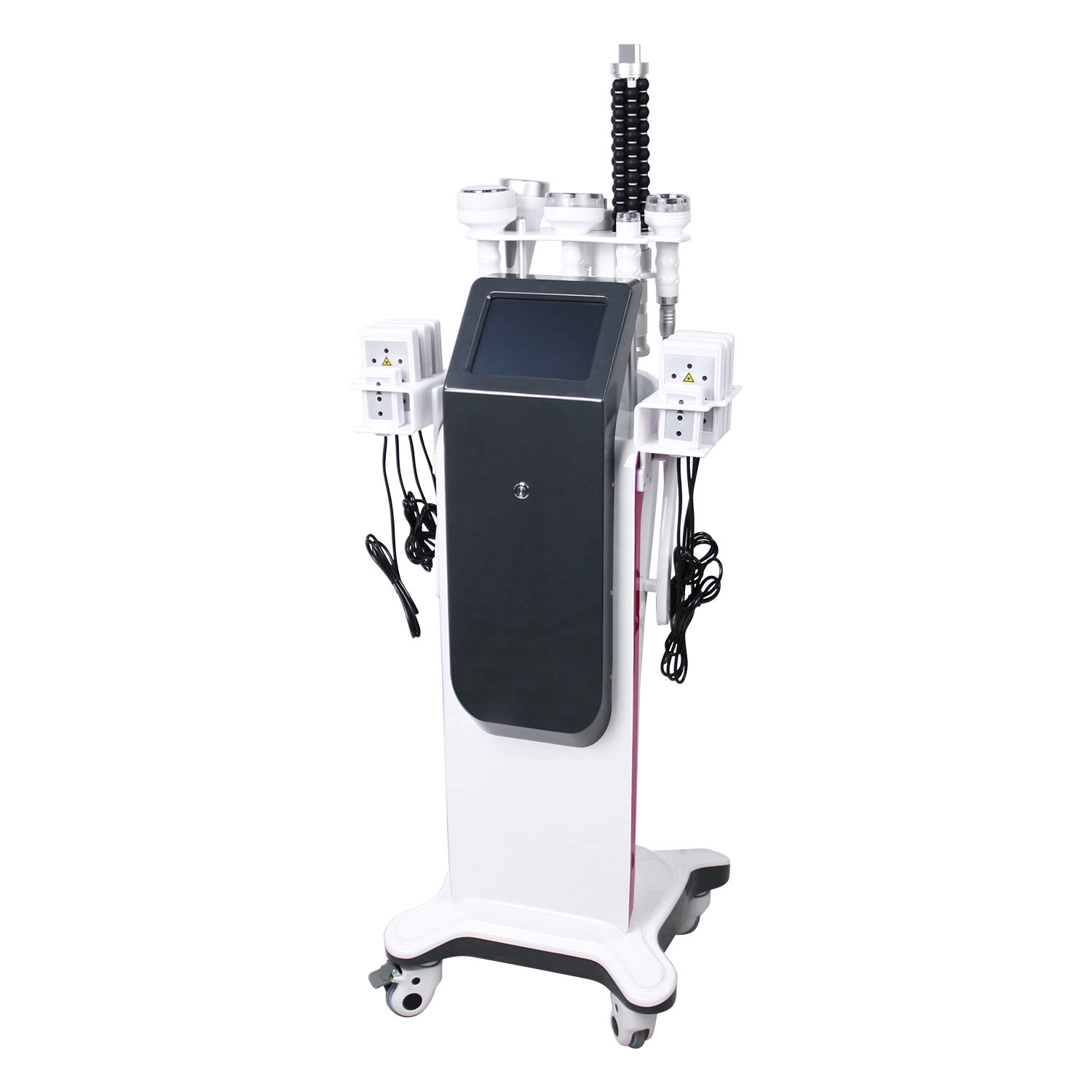
Professional 6-in-1 Cavitation Vacuum Machine for Body Contouring & Slimming Treatment
The 6-in-1 Cavitation Vacuum Machine is a professional body contouring system designed for salons and spas seeking high-performance slimming solutions. This machine integrates 40K ultrasonic cavitation, vacuum suction, RF technology, and laser lipolysis to target stubborn fat, enhance lymphatic drainage, tighten the skin, and contour the body shape effectively.
Equipped with multiple ergonomic handles and a smart touch screen, this cavitation vacuum machine provides a comfortable and efficient experience for both operators and clients. It is ideal for full-body treatments including abdomen, arms, legs, waistline, hips, and back.
Perfect for beauty salons, spas, and aesthetic centers that want to offer non-invasive fat reduction and body-sculpting services.
Get more information
If you have any comments or good suggestions, please leave us a message; later our professional staff will contact you as soon as possible.
Let's Talk
Stay in touch with us for cutting-edge beauty solutions, professional guidance, and customized service.
Contact


Room 307, Building A, Huilong International E-commerce Industrial Park, No. 10 Xipengling Road, Helong Street, Baiyun District, Guangzhou, China
© 2025 HUIMAIN. All Rights Reserved. Privacy Policy | Terms and Conditions | Sitemap
Facebook
Instagram
Medical beauty equipment factory
huimain Medical beauty equipment factory
beauty machine supplier
Whatsapp: +8619124004543