


Clinical Evidence and Safety Standards for HIFU Devices
- Clinical Validation and Safety of HIFU Machines
- Overview: What HIFU Machines Are and Why Clinical Evidence Matters
- Mechanism of Action and Intended Indications for HIFU Machines
- Clinical Evidence: What the Literature Shows about HIFU Machines
- Comparative Summary of Evidence by Indication (HIFU Machines)
- Regulatory Frameworks and Safety Standards for HIFU Machines
- Key Safety Risks for HIFU Machines and How to Mitigate Them
- Device Testing, Calibration and Quality Control (HIFU Machines)
- Designing Robust Clinical Trials for HIFU Machines
- Practical Guidance for Clinics Buying or Using HIFU Machines
- Comparison Table: Regulatory and Evidence Attributes for Typical HIFU Uses
- Guangzhou Huimain Technology Co., Ltd.: Company Profile and HIFU Machines Capability
- Conclusions and Practical Takeaways about HIFU Machines
- FAQ — Frequently Asked Questions about HIFU Machines
- 1. Are HIFU Machines safe for facial skin tightening?
- 2. How strong is the evidence that HIFU Machines reduce wrinkles or laxity?
- 3. Do HIFU Machines require specific certifications or operator training?
- 4. Can HIFU Machines be used for fat reduction?
- 5. What maintenance and calibration do HIFU Machines need?
- 6. How should clinics evaluate different HIFU Machine vendors?
- Contact and Product Inquiry
- References and Sources
Clinical Validation and Safety of HIFU Machines
Overview: What HIFU Machines Are and Why Clinical Evidence Matters
High-intensity focused ultrasound (HIFU) machines concentrate acoustic energy to precise tissue volumes to create controlled thermal or mechanical effects. In medicine and aesthetics, HIFU Machines are used across two broad domains: non‑invasive skin tightening and body contouring in aesthetic practice, and thermal ablation for medical indications (e.g., uterine fibroids, essential tremor, prostate, liver). The strength of clinical evidence and robust safety standards determine device adoption, regulatory approvals, reimbursement, and—most importantly—patient outcomes. Buyers and clinicians should evaluate peer‑reviewed data, regulatory status, and manufacturing quality when selecting or using HIFU Machines.
Mechanism of Action and Intended Indications for HIFU Machines
HIFU focuses ultrasound energy into millimeter‑scale focal zones that rapidly raise tissue temperature (typically >55°C) to produce coagulative necrosis, or generate mechanical cavitation and micro‑shear effects depending on parameters. For aesthetic applications such as lifting and tightening, microfocused HIFU creates thermal coagulation points in the dermis and superficial musculoaponeurotic system (SMAS) to stimulate collagen remodeling. For clinical ablation (uterine fibroids, essential tremor, prostate), HIFU applies higher energy volumes under imaging guidance (ultrasound or MRI) to destroy pathological tissue. Clear differentiation of indication, focal depth, energy delivery mode, and guidance modality (ultrasound vs MRI) is essential for safety and efficacy.
Clinical Evidence: What the Literature Shows about HIFU Machines
Evidence quality varies by indication:
- Aesthetic skin tightening: multiple prospective studies and some randomized controlled trials (RCTs) show modest-to-moderate improvements in skin laxity and patient satisfaction at 3–12 months, with histologic evidence of neocollagenesis. Results depend on device focal depth, operator technique, and patient factors (skin thickness, age).
- Body contouring/fat reduction: evidence is mixed; some controlled studies report modest localized fat reduction, but heterogeneity in endpoints and follow‑up limits broad conclusions.
- Uterine fibroids and essential tremor: MR‑guided HIFU has stronger evidence with several multicenter studies showing symptom relief and reduced surgical rates; some systems received regulatory clearances for specific indications.
- Oncological applications: HIFU ablation for prostate and liver tumors has supportive clinical series and registers, but regulatory approval and adoption vary by country and tumor type.
Clinical evidence should be appraised by trial design (RCT vs observational), sample size, objective endpoints (e.g., validated symptom scores, volumetric MRI), adverse event reporting, and independent replication. Systematic reviews and meta‑analyses provide higher‑level summaries when available.
Comparative Summary of Evidence by Indication (HIFU Machines)
| Indication | Typical Guiding Modality | Evidence Strength | Primary Endpoints | Common Adverse Events |
|---|---|---|---|---|
| Aesthetic skin tightening | Ultrasound imaging (microfocused) | Moderate (prospective studies, some RCTs) | Clinical grading of laxity, patient satisfaction, photographic assessment | Transient erythema, pain, edema, rare burns or nodules |
| Body contouring/fat reduction | Ultrasound | Low–moderate (heterogeneous trials) | Volume reduction, circumference change, imaging fat loss | Pain, numbness, irregularities |
| Uterine fibroids | MRI‑guided | Moderate–high (multicenter studies) | Symptom severity score, fibroid volume, surgical avoidance | Pain, skin burn (rare), nerve injury (rare) |
| Essential tremor (neurology) | MRI‑guided focused ultrasound | High (randomized trials and FDA clearance for some systems) | Tremor rating scales, functional improvement | Gait disturbance, paresthesia (often transient) |
| Oncologic ablation (prostate, liver) | Ultrasound or MRI guided | Variable (institutional series to controlled studies) | Tumor control, PSA decline, local recurrence | Urinary symptoms, pain, thermal injury to adjacent tissue |
Regulatory Frameworks and Safety Standards for HIFU Machines
Manufacturers and healthcare providers must navigate a complex regulatory landscape. Key standards and pathways include:
United States: FDA reviews HIFU systems as medical devices. Pathways include 510(k) for substantially equivalent devices and premarket approval (PMA) for higher‑risk class III devices. The FDA has approved/cleared HIFU systems for specific indications (see references). Post‑market surveillance and device labeling are critical. (See FDA press releases and device databases.)
European Union: Medical devices must comply with the Medical Device Regulation (MDR 2017/745) and obtain CE marking via a notified body. Clinical evaluation files demonstrating safety/effectiveness are required under MDR.
International standards: ISO 13485 (quality management for medical devices), ISO 14971 (risk management), and IEC 60601 series (electrical safety and electromagnetic compatibility) are foundational for HIFU Machines. Manufacturing, software lifecycle, and cybersecurity considerations should follow recognized standards.
Compliance with these frameworks ensures traceability, risk mitigation, and consistent device performance across production lots.
Key Safety Risks for HIFU Machines and How to Mitigate Them
Common risks associated with HIFU Machines include thermal burns, nerve injury, skin blistering, unintended damage to adjacent organs, pain, and inadequate efficacy. Mitigation strategies:
- Device design: precise focal control, integrated safety shutdowns, real‑time energy monitoring, and accurate depth selection reduce off‑target heating.
- Imaging guidance: MR‑guided HIFU allows temperature mapping and real‑time visualization, improving safety for deep targets. Ultrasound guidance requires operator skill to maintain focal accuracy.
- Protocols and training: standardized treatment parameters, operator credentialing, simulation training, and competency assessments dramatically reduce complication rates.
- Patient selection and informed consent: screen for contraindications (implants, coagulation disorders, pregnancy), set realistic expectations, and provide explicit post‑treatment care instructions.
- Post‑market vigilance: adverse event reporting and device registries enable timely identification of safety signals.
Device Testing, Calibration and Quality Control (HIFU Machines)
Manufacturers should implement validated test protocols for acoustic output, focal zone accuracy, energy calibration, and thermal mapping. Routine calibration schedules, manufacturing batch controls, and component traceability are necessary under ISO 13485. Third‑party testing by accredited labs (e.g., SGS) and adherence to IEC standards for electromagnetic compatibility and electrical safety are required for market entry.
Designing Robust Clinical Trials for HIFU Machines
Well‑designed studies accelerate regulatory approvals and build clinician confidence. Recommended elements:
- Clear primary endpoints: objective, validated measures (e.g., MRI volumetrics, validated symptom indexes, blinded photographic assessments).
- Appropriate controls: sham procedures or active comparators where feasible; blinding when possible to reduce bias in subjective outcomes.
- Adequate sample size and follow‑up: many HIFU effects (collagen remodeling, symptom relief) evolve over months; 6–12 month follow‑up is often minimal.
- Standardized treatment parameters and operator training across centers to limit heterogeneity.
- Comprehensive adverse event reporting and independent outcome adjudication.
Manufacturers seeking reimbursement or broad clinical adoption should prioritize randomized controlled trials and multicenter registries.
Practical Guidance for Clinics Buying or Using HIFU Machines
Clinics should evaluate vendors on evidence, regulatory status, training programs, and after‑sales support. Key checklist items:
- Verify regulatory clearances for the intended indication in your jurisdiction (FDA, CE under MDR).
- Request independent peer‑reviewed clinical studies tied to the exact model and software version you will purchase.
- Assess training offerings: hands‑on proctoring, competency assessment, and refresher programs.
- Confirm service contracts, parts availability, and calibration services.
- Evaluate patient selection criteria, consent forms, and emergency protocols for adverse events.
Choosing a vendor with strong R&D, clinical testing capabilities, and an established quality system reduces long‑term risks and total cost of ownership.
Comparison Table: Regulatory and Evidence Attributes for Typical HIFU Uses
| Attribute | Aesthetic skin tightening | Uterine fibroids (MRgHIFU) | Essential tremor (MRgFUS) |
|---|---|---|---|
| Typical regulatory status | Cleared/marketed with specific claims; varies by device | Cleared/approved in many regions for select systems | FDA cleared/approved for specific systems (e.g., MRgFUS) |
| Evidence level | Moderate | Moderate–high | High (controlled trials) |
| Key safety concerns | Burns, pain, nodules | Pain, nerve injury, skin burn | Transient gait disturbance, paresthesia |
Guangzhou Huimain Technology Co., Ltd.: Company Profile and HIFU Machines Capability
Guangzhou Huimain Technology Co., Ltd. is a high‑tech company specialized in beauty machines and home‑use device series, with professional capability across research & development, production, sales, and after‑sale service. The company occupies a 3,000 m² facility. More than 20% of the team hold bachelor’s degrees and over 40% have junior college qualifications. Huimain maintains a strong technical development department with experienced engineers, physicists, professional purchasing, a dedicated clinical testing department, and a responsive after‑sales service team.
With significant investment in R&D, Guangzhou Huimain continually develops new products aligned with market demand. The company has obtained CE certification and SGS approvals and holds multiple patents for its products. Its machines are marketed across China, Southeast Asia, the Middle East, Europe, and North America, receiving positive feedback for quality and cost competitiveness.
Huimain follows OEM and ODM routes for beauty machines, with the capacity to design and manufacture medical and beauty devices tailored to clinic or salon needs. Core products include Cryolipolysis machines, Ems sculpting machines, Plasma machines, Shockwave machines, HIFU machines, Hydrofacial machines, Cavitation vacuum machines, Laser hair removal, Tattoo removal machines, and Micro needle machines.
Competitive advantages and differentiators:
- End‑to‑end product development with in‑house R&D and clinical testing capability.
- Certified quality management and compliance with CE/SGS standards.
- Robust after‑sale support and training resources for clinical partners.
- Flexible OEM/ODM production to customize device settings, handpieces, and branding.
For clinics evaluating HIFU Machines, Huimain emphasizes evidence‑based product design, operator training, and quality control to align device capability with safe, effective outcomes.
Conclusions and Practical Takeaways about HIFU Machines
- HIFU Machines are versatile tools with clinically proven roles in selected indications; evidence quality varies by use case.
- Regulatory clearance and compliance with ISO/IEC standards, MDR/FDA pathways, and documented clinical evaluation are essential markers of a trustworthy device.
- Safety depends on device design, imaging guidance, operator training, and rigorous quality management.
- Purchasers should demand device‑specific clinical data, robust training, and clear service agreements. Companies like Guangzhou Huimain Technology provide integrated R&D, certification, and OEM/ODM services to support clinical adoption.
FAQ — Frequently Asked Questions about HIFU Machines
1. Are HIFU Machines safe for facial skin tightening?
When used according to manufacturer instructions by trained operators, HIFU Machines for facial tightening have an acceptable safety profile. Common short‑term effects include redness, swelling, and transient pain; serious adverse events (burns, persistent nodules) are uncommon but linked to improper energy settings or poor technique.
2. How strong is the evidence that HIFU Machines reduce wrinkles or laxity?
For facial skin tightening, moderate evidence from controlled and prospective studies supports modest improvements, particularly in mild‑to‑moderate laxity. Long‑term outcomes and head‑to‑head comparisons between devices remain areas for further research.
3. Do HIFU Machines require specific certifications or operator training?
Yes. Devices must meet regional regulatory requirements (e.g., FDA clearance, CE marking under MDR) and manufacturers should provide structured operator training. Clinics should enforce competency assessment before unsupervised use.
4. Can HIFU Machines be used for fat reduction?
Some HIFU technologies are marketed for localized fat reduction; evidence shows variable results. Patient selection, device parameters, and treatment area influence outcomes; consider alternative, better‑validated technologies where appropriate.
5. What maintenance and calibration do HIFU Machines need?
Routine calibration of acoustic output, focal accuracy checks, software updates, and preventive maintenance per manufacturer schedules are required. Use documented service agreements and third‑party testing when available.
6. How should clinics evaluate different HIFU Machine vendors?
Request device‑specific clinical data, regulatory documentation, training and proctoring plans, maintenance and warranty terms, and independent third‑party test reports. Prefer vendors with ISO 13485 quality systems and transparent adverse event reporting.
Contact and Product Inquiry
For more information about HIFU Machines, clinical evaluations, or to request product specifications and training programs, please contact Guangzhou Huimain Technology Co., Ltd. Their integrated R&D, clinical testing department, and after‑sales support can provide tailored solutions for clinics, distributors, and OEM/ODM partners.
References and Sources
- Focused Ultrasound Foundation — Resource library on clinical applications of focused ultrasound. https://www.fusfoundation.org/ (accessed 2025-12-24).
- U.S. Food & Drug Administration — FDA approves new noninvasive treatment for essential tremor (press release on MRgFUS approval). https://www.fda.gov/news-events/press-announcements/fda-approves-new-noninvasive-treatment-essential-tremor (published August 2016; accessed 2025-12-24).
- European Commission — Medical Device Regulation (MDR) overview. https://health.ec.europa.eu/medical-devices-regulation/overview_en (accessed 2025-12-24).
- International Organization for Standardization — ISO 13485 Medical devices — Quality management systems. https://www.iso.org/iso-13485-medical-devices. (accessed 2025-12-24).
- International Organization for Standardization — ISO 14971 Risk management for medical devices. https://www.iso.org/standard/72704. (accessed 2025-12-24).
- IEC Standards and IEC 60601 series — Electrical safety for medical equipment (general information). https://www.iec.ch/standards (accessed 2025-12-24).
- ClinicalTrials.gov — Registry of clinical studies involving HIFU devices. https://clinicaltrials.gov/ (accessed 2025-12-24).
- SGS — Testing, inspection and certification services. https://www.sgs.com/ (accessed 2025-12-24).
- World Health Organization — Medical device technical series and regulatory frameworks. https://www.who.int/medical_devices/ (accessed 2025-12-24).
VM-2
Is there any downtime after treatment?
No. Cryolipolysis treatments require no recovery time, making it ideal for busy clients.
Portable EMS Magnetic Ring
Is this machine suitable for home use?
Yes, it is designed for both professional and personal use, offering clinic-quality results at home.
Portable EMS RF Body Sculpting Machine
Can this machine be used at home?
Yes, it’s designed for both salon professionals and home users with easy-to-use controls.
HI45P
How many sessions are needed to see results?
Most clients notice visible results after 4–6 sessions, depending on body type and lifestyle.
12D hifu
What is High Intensity Focused Ultrasound (HIFU)?
HIFU delivers focused ultrasound energy to stimulate collagen, tighten skin, and lift facial and body areas non-invasively.

CO2 Fractional Laser Machine – Professional Wrinkle Removal & Skin Resurfacing Device
The CO2 Fractional Laser Machine is a multifunctional aesthetic device designed for professional clinics and beauty salons. Using advanced fractional CO2 laser technology, it effectively targets acne scars, freckles, pigmentation, nevi, and deep wrinkles. Additionally, it provides non-invasive skin rejuvenation, vaginal tightening, and intimate beautification. This professional CO2 laser equipment combines precision, safety, and powerful energy output to deliver outstanding anti-aging and dermatological results.

5-in-1 40K Cavitation Vacuum Machine for Body Slimming & Fat Reduction
The 5-in-1 40K Cavitation Vacuum Machine is a professional body shaping system designed for fat reduction, cellulite smoothing, and overall body contouring. Using 40KHz ultrasonic cavitation, this device breaks down stubborn fat cells, while vacuum suction improves lymphatic drainage and accelerates toxin removal.
With multiple RF tightening handles, the machine stimulates collagen regeneration and helps lift and firm loose areas of the body. Compact, powerful, and easy to operate, it is the perfect solution for beauty salons, spa centers, and slimming studios seeking fast and visible fat-reduction results.
This cavitation vacuum machine is built to deliver safe, non-invasive treatments with no downtime—making it a top choice for body contouring professionals.

6-in-1 Multifunctional Beauty and Weight Loss Machine | Cavitation, RF, Vacuum PDT, EMS, Laser Slimming Equipment for Professional Use
The 6-in-1 Multifunctional Beauty and Weight Loss Machine is a professional-grade device designed for salons, clinics, and distributors. Combining six advanced technologies—cavitation, RF (radio frequency) for face & body, vacuum RF PDT, BIO/EMS microcurrent, and laser lipo pads—this device offers comprehensive body contouring, fat reduction, skin tightening, and anti-aging treatments.
It provides businesses with an all-in-one solution to expand service offerings, attract more clients, and achieve a rapid return on investment.
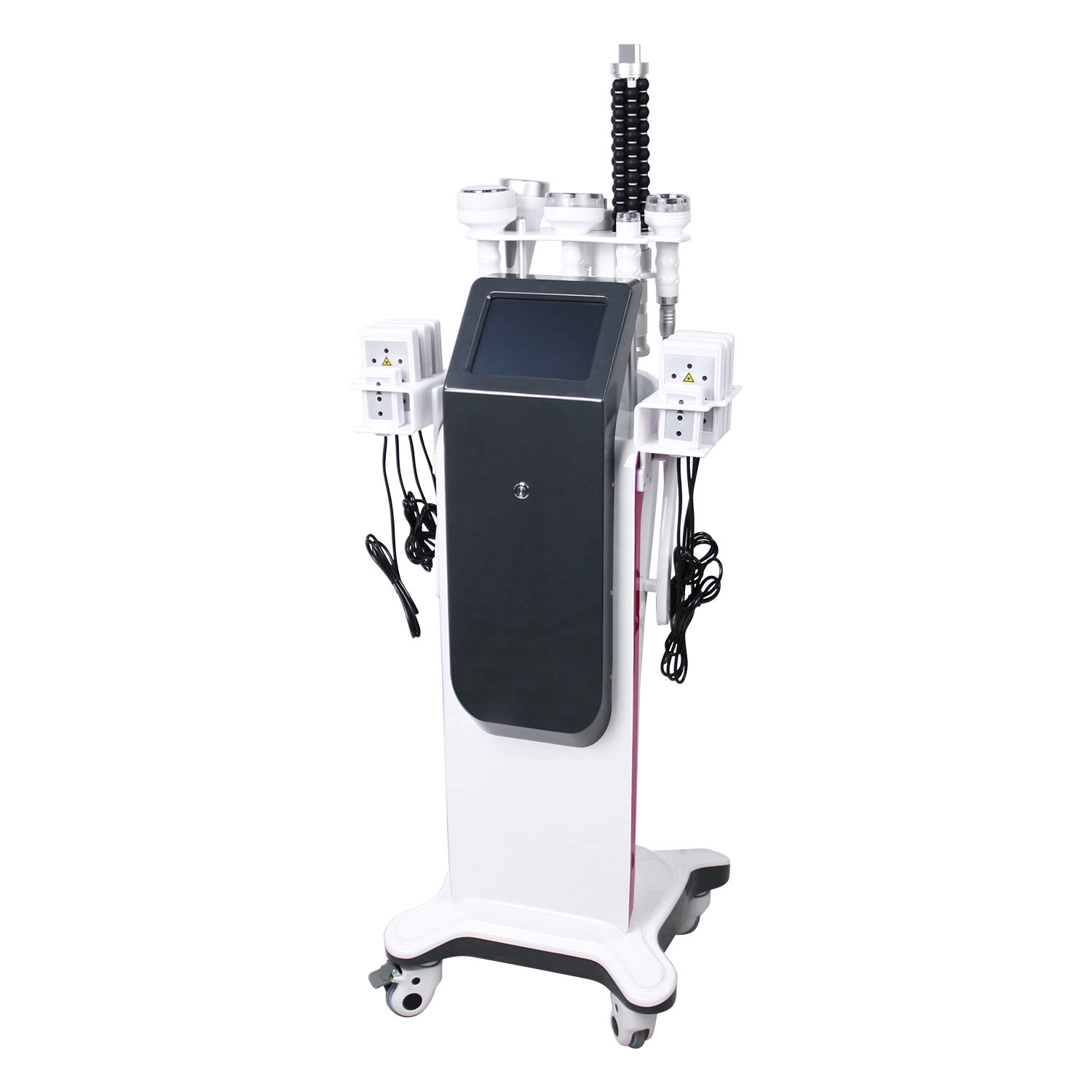
Professional 6-in-1 Cavitation Vacuum Machine for Body Contouring & Slimming Treatment
The 6-in-1 Cavitation Vacuum Machine is a professional body contouring system designed for salons and spas seeking high-performance slimming solutions. This machine integrates 40K ultrasonic cavitation, vacuum suction, RF technology, and laser lipolysis to target stubborn fat, enhance lymphatic drainage, tighten the skin, and contour the body shape effectively.
Equipped with multiple ergonomic handles and a smart touch screen, this cavitation vacuum machine provides a comfortable and efficient experience for both operators and clients. It is ideal for full-body treatments including abdomen, arms, legs, waistline, hips, and back.
Perfect for beauty salons, spas, and aesthetic centers that want to offer non-invasive fat reduction and body-sculpting services.
Get more information
If you have any comments or good suggestions, please leave us a message; later our professional staff will contact you as soon as possible.
Let's Talk
Stay in touch with us for cutting-edge beauty solutions, professional guidance, and customized service.
Contact


Room 307, Building A, Huilong International E-commerce Industrial Park, No. 10 Xipengling Road, Helong Street, Baiyun District, Guangzhou, China
© 2025 HUIMAIN. All Rights Reserved. Privacy Policy | Terms and Conditions | Sitemap
Facebook
Instagram
Medical beauty equipment factory
huimain Medical beauty equipment factory
beauty machine supplier
Whatsapp: +8619124004543