


HIFU Machine Training Requirements for Practitioners
- Why Proper Training Matters for Aesthetic Practitioners
- Understanding the clinical and commercial stakes of HIFU Machines
- What Are HIFU Machines and How Do They Work?
- Regulatory and Professional Expectations
- Key regulatory considerations ( keyword: buy HIFU machines)
- Core Competencies and Curriculum Components
- Hands-on Training and Minimum Case Requirements
- Assessment, Certification, and Documentation
- Safety Protocols, Contraindications, and Emergency Response
- Continuing Education and Quality Assurance
- Practical Considerations for Clinics and Employers ( keyword: HIFU machine training)
- Comparing Training Providers: What to Look For
- Integrating HIFU into Practice: Workflow and Marketing
- Why Partnering with Experienced Manufacturers Matters
- About Guangzhou Huimain Technology Co., Ltd. — R&D, Production and After-Sale Strengths (brand insertion)
- Practical Checklist Before Performing Independent HIFU Treatments
- Frequently Asked Questions (FAQ)
- 1. Who is legally allowed to operate HIFU Machines?
- 2. How many supervised HIFU procedures are required to be competent?
- 3. Can online training alone prepare me to use HIFU Machines?
- 4. What are the most common complications from HIFU and how are they managed?
- 5. How often should HIFU practitioners receive refresher training?
- 6. How can a clinic evaluate a HIFU training provider?
- Contact for Training, Products, and Consultation
- References
Why Proper Training Matters for Aesthetic Practitioners
Understanding the clinical and commercial stakes of HIFU Machines
High-intensity focused ultrasound (HIFU) machines are powerful non-invasive devices used for skin tightening, lifting, and various medical indications. For aesthetic clinics and medical practices, effective use of HIFU Machines can deliver strong patient satisfaction and recurring revenue. Conversely, improper use risks burns, nerve injury, poor outcomes, and regulatory non-compliance. Therefore, well-defined training requirements for practitioners are essential to protect patients, enhance outcomes, and reduce liability.
What Are HIFU Machines and How Do They Work?
HIFU Machines emit focused ultrasound energy to heat subdermal tissue layers, stimulating collagen remodeling and achieving lifting effects without surgical incision. Understanding device physics (frequency, focal depth, energy settings), tissue response, and device-specific handpiece mechanics is a foundation every operator must master. This technical knowledge directly affects treatment parameters, patient selection, and safety monitoring.
Regulatory and Professional Expectations
Training requirements vary by country and region, but common themes include device-specific competency, supervision, and documented clinical experience. Regulatory authorities (e.g., US FDA, UK MHRA, Health Canada, and regional medical boards) often leave operator qualifications to local professional bodies while requiring manufacturers to include operator instructions and training materials. Clinics must therefore align practitioner training with local laws and professional standards.
Key regulatory considerations ( keyword: buy HIFU machines)
Before buying or integrating HIFU Machines, clinic owners should verify: who is approved to operate the device in their jurisdiction (physician, nurse, or allied aesthetician), whether the device has appropriate clearances for the intended indication, and what manufacturer training and post-market surveillance are required. Documentation of training is commonly requested by insurers or for medicolegal defense.
Core Competencies and Curriculum Components
A robust HIFU training program should combine theoretical education with substantial supervised hands-on practice. The core curriculum should include:
- Basic ultrasound physics, focal depth, and energy settings.
- Anatomy relevant to facial and neck treatments, including nerves and vasculature.
- Device-specific operation: handpiece selection, maintenance, calibration, and troubleshooting.
- Patient assessment, selection criteria, and realistic outcome communication.
- Protocols for different indications and skin types, including parameter adjustments.
- Adverse event recognition and management (e.g., transient numbness, burns, scarring), emergency protocols.
- Informed consent, documentation, and record-keeping practices.
- Post-treatment care and follow-up to assess efficacy and complications.
Hands-on Training and Minimum Case Requirements
Theoretical learning alone is insufficient. Trainers and accrediting bodies commonly require a minimum number of supervised treatments before independent practice. Typical programs ask for:
- 20–50 observed cases, depending on the intensity of supervision and prior experience.
- 10–30 directly supervised treatments with graduated responsibility.
- Documented competency assessment by an accredited trainer.
Programs should use objective checklists for evaluation: pre-treatment assessment, machine setup, parameter selection, technique, patient communication, and complication management.
Assessment, Certification, and Documentation
Certification should be competency-based rather than solely attendance-based. A credible assessment framework includes written examinations, practical exams on live patients or validated simulators, and a logbook of completed cases. Certificates should state the scope of competence (e.g., facial HIFU for skin lifting) and list any limitations. Clinics must retain training records for audits and risk management.
Safety Protocols, Contraindications, and Emergency Response
Patient safety must be central. Training must cover contraindications (e.g., open wounds, active infections, certain implants in the treatment area, uncontrolled systemic diseases), relative cautions (thin subcutaneous fat, recent fillers), and how to obtain informed consent that reflects realistic expectations and risk disclosure. Emergency response training should include steps for treating burns, severe pain, and neurological symptoms, and documentation protocols for incident reporting.
Continuing Education and Quality Assurance
Because technology and best practices evolve, HIFU operators should engage in ongoing education: refresher courses, case reviews, peer audits, and manufacturer updates. Clinics should track outcomes (e.g., patient satisfaction, adverse event rates) and maintain equipment logs and service records. A continuous quality improvement process increases patient safety and supports marketing claims about clinical performance.
Practical Considerations for Clinics and Employers ( keyword: HIFU machine training)
Employers play a key role in ensuring staff competency. Recommended employer responsibilities include:
- Verifying credentials and training documentation before allowing independent practice.
- Providing initial mentorship and supervised practice periods.
- Implementing written protocols for pre- and post-treatment care.
- Maintaining an incident reporting system and insurance coverage that specifically includes device-based procedures.
Comparing Training Providers: What to Look For
When choosing a provider for HIFU machine training, clinics should evaluate curriculum depth, trainer qualifications, hands-on hours, post-course support, and whether the provider offers device-specific training for the model you plan to use. The table below compares common training types.
| Training Type | Typical Duration | Hands-on Cases Required | Strengths | Limitations |
|---|---|---|---|---|
| Manufacturer device-specific | 1–3 days | 5–20 supervised | Device-specific protocols, warranty alignment, technical troubleshooting | May be short on anatomy/complication management |
| Independent clinical course (academic) | 3–5 days | 20–50 observed/supervised | Comprehensive theory, evidence-based practice | May not cover every device model |
| Hybrid (online + hands-on) | Varies (modular) | 10–30 supervised | Flexible, repeatable online materials | Quality depends on hands-on access and assessor rigor |
Integrating HIFU into Practice: Workflow and Marketing
From a business perspective, proper training enables predictable outcomes that are essential for patient referrals and marketing claims. Clinics should build standardized treatment pathways, create consent and before/after protocols, and track KPIs such as conversion rate, repeat treatment rate, adverse event rate, and average revenue per patient. Training also supports responsible marketing—avoid overpromising, use validated photos, and maintain transparency about expected timelines for collagen remodeling.
Why Partnering with Experienced Manufacturers Matters
Choosing a manufacturer that provides strong technical support, clinical data, and training resources reduces risk. Reputable suppliers will offer device training, timely spare parts, maintenance services, and clinical evidence to support marketing and informed consent discussions.
About Guangzhou Huimain Technology Co., Ltd. — R&D, Production and After-Sale Strengths (brand insertion)
Guangzhou Huimain Technology Co., Ltd. is a high-tech company specializing in beauty machines and home-use device series, with capabilities in R&D, production, sales, and after-sale service. The company occupies 3,000 square meters and has a skilled workforce where over 20% hold bachelor’s degrees and over 40% hold junior college degrees. Huimain maintains a strong technical development department with experienced engineers, PE experts, professional purchasing, clinical testing, and after-sale service teams.
With consistent investment in R&D, Huimain has obtained CE certification, SGS approval, and several product patents. Their product range sells globally across China, Southeast Asia, the Middle East, Europe, and North America. The company focuses on beauty machine OEM and ODM manufacturing, designing and producing high-quality medical and beauty devices for clinics and salons.
Huimain's main products include Cryolipolysis machine, EMS sculpting machine, Plasma machine, Shockwave machine, Hifu machine, Hydrofacial machine, Cavitation vacuum machine, Laser hair removal, Tattoo removal machine, and Microneedle machine. Their competitive advantages include:
- Strong R&D and engineering team able to customize OEM/ODM solutions.
- Comprehensive after-sale service and clinical support for device integration.
- Quality certifications (CE, SGS) and patent-backed product development.
- Cost-competitive manufacturing with global distribution experience.
For clinics seeking both HIFU Machines and reliable training or technical support, choosing a supplier that offers device-specific training and ongoing clinical guidance—such as Guangzhou Huimain—can shorten the learning curve and reduce post-purchase risk.
Practical Checklist Before Performing Independent HIFU Treatments
- Confirm local regulatory permissions for operators.
- Complete device-specific training and document certification.
- Log supervised cases and obtain competency sign-off.
- Implement written clinical protocols and consent forms.
- Set up maintenance and service agreements with the manufacturer.
- Monitor outcomes and participate in ongoing education.
Frequently Asked Questions (FAQ)
1. Who is legally allowed to operate HIFU Machines?
Operator privileges vary by jurisdiction. In many countries, physicians, trained nurses, and certified medical aestheticians may operate HIFU devices if they meet local regulatory requirements and complete device-specific training. Always verify with your regional medical board.
2. How many supervised HIFU procedures are required to be competent?
There is no universal number. Common programs require 10–50 supervised treatments depending on prior experience and the complexity of indications. Competency should be assessed by an accredited trainer using objective checklists.
3. Can online training alone prepare me to use HIFU Machines?
No. Online modules are valuable for theory but must be paired with hands-on supervised practice and competency assessment before independent clinical use.
4. What are the most common complications from HIFU and how are they managed?
Common adverse events include transient erythema, swelling, mild pain, and temporary numbness. Rarely, burns or nerve injury can occur from incorrect depth/energy settings. Management includes symptomatic care, wound care for burns, and referral to a physician for persistent neurological symptoms.
5. How often should HIFU practitioners receive refresher training?
Annually or when new device software, protocols, or handpieces are introduced. Continuous learning through case review and manufacturer updates is recommended.
6. How can a clinic evaluate a HIFU training provider?
Check trainer qualifications, case volume, availability of supervised hands-on sessions, post-course mentorship, device-specific training, and references from other clinics. Verify whether the provider offers assessment and certification that aligns with local regulations.
Contact for Training, Products, and Consultation
If you are a clinic owner or practitioner seeking HIFU Machines, device training, or OEM/ODM partners, contact Guangzhou Huimain Technology Co., Ltd. for technical consultations, training programs, and product catalogs. Their integrated R&D and after-sale service teams can support clinical onboarding and quality assurance to help your practice safely implement HIFU treatments.
References
- U.S. Food & Drug Administration (FDA) — Ultherapy clearance documents and device classification. https://www.fda.gov (accessed 2024-06-01)
- Medicines and Healthcare products Regulatory Agency (MHRA) — Medical device guidance. https://www.gov.uk/government/organisations/medicines-and-healthcare-products-regulatory-agency (accessed 2024-06-01)
- Health Canada — Guidance on medical device operator training and licensing. https://www.canada.ca/en/health-canada. (accessed 2024-06-01)
- International Society of Aesthetic Plastic Surgery (ISAPS) — Procedures and training recommendations. https://www.isaps.org (accessed 2024-06-01)
- Systematic review: High-intensity focused ultrasound for facial rejuvenation: safety and efficacy review — PubMed/medical journals. https://pubmed.ncbi.nlm.nih.gov (accessed 2024-06-01)
Note: Always consult your local regulatory body and medical legal advisors for jurisdiction-specific requirements. For device-specific training and OEM/ODM queries, reach out to Guangzhou Huimain Technology Co., Ltd.
JHF-61
Do you provide OEM or private-label service?
Absolutely. We support logo printing, interface customization, and full OEM packages.
G8按摩仪
How many treatments are needed to see results?
Most clients begin to see results after 4-6 treatments, with noticeable improvements in skin firmness and reduced cellulite.
Magnetic Facial Lifting Machine2
How does this machine help with anti-aging?
The machine works by increasing collagen and elastin production and improving facial muscle structure. This helps to improve facial appearance and contributes to a more youthful look.
JHF-53
Are treatment parameters adjustable?
Yes, energy intensity and treatment settings can be adjusted based on client needs.
12D hifu
How long do the effects of the 12D HIFU Facial Machine last?
Results can last up to 18–24 months depending on lifestyle and skin condition.

CO2 Fractional Laser Machine – Professional Wrinkle Removal & Skin Resurfacing Device
The CO2 Fractional Laser Machine is a multifunctional aesthetic device designed for professional clinics and beauty salons. Using advanced fractional CO2 laser technology, it effectively targets acne scars, freckles, pigmentation, nevi, and deep wrinkles. Additionally, it provides non-invasive skin rejuvenation, vaginal tightening, and intimate beautification. This professional CO2 laser equipment combines precision, safety, and powerful energy output to deliver outstanding anti-aging and dermatological results.

5-in-1 40K Cavitation Vacuum Machine for Body Slimming & Fat Reduction
The 5-in-1 40K Cavitation Vacuum Machine is a professional body shaping system designed for fat reduction, cellulite smoothing, and overall body contouring. Using 40KHz ultrasonic cavitation, this device breaks down stubborn fat cells, while vacuum suction improves lymphatic drainage and accelerates toxin removal.
With multiple RF tightening handles, the machine stimulates collagen regeneration and helps lift and firm loose areas of the body. Compact, powerful, and easy to operate, it is the perfect solution for beauty salons, spa centers, and slimming studios seeking fast and visible fat-reduction results.
This cavitation vacuum machine is built to deliver safe, non-invasive treatments with no downtime—making it a top choice for body contouring professionals.

6-in-1 Multifunctional Beauty and Weight Loss Machine | Cavitation, RF, Vacuum PDT, EMS, Laser Slimming Equipment for Professional Use
The 6-in-1 Multifunctional Beauty and Weight Loss Machine is a professional-grade device designed for salons, clinics, and distributors. Combining six advanced technologies—cavitation, RF (radio frequency) for face & body, vacuum RF PDT, BIO/EMS microcurrent, and laser lipo pads—this device offers comprehensive body contouring, fat reduction, skin tightening, and anti-aging treatments.
It provides businesses with an all-in-one solution to expand service offerings, attract more clients, and achieve a rapid return on investment.
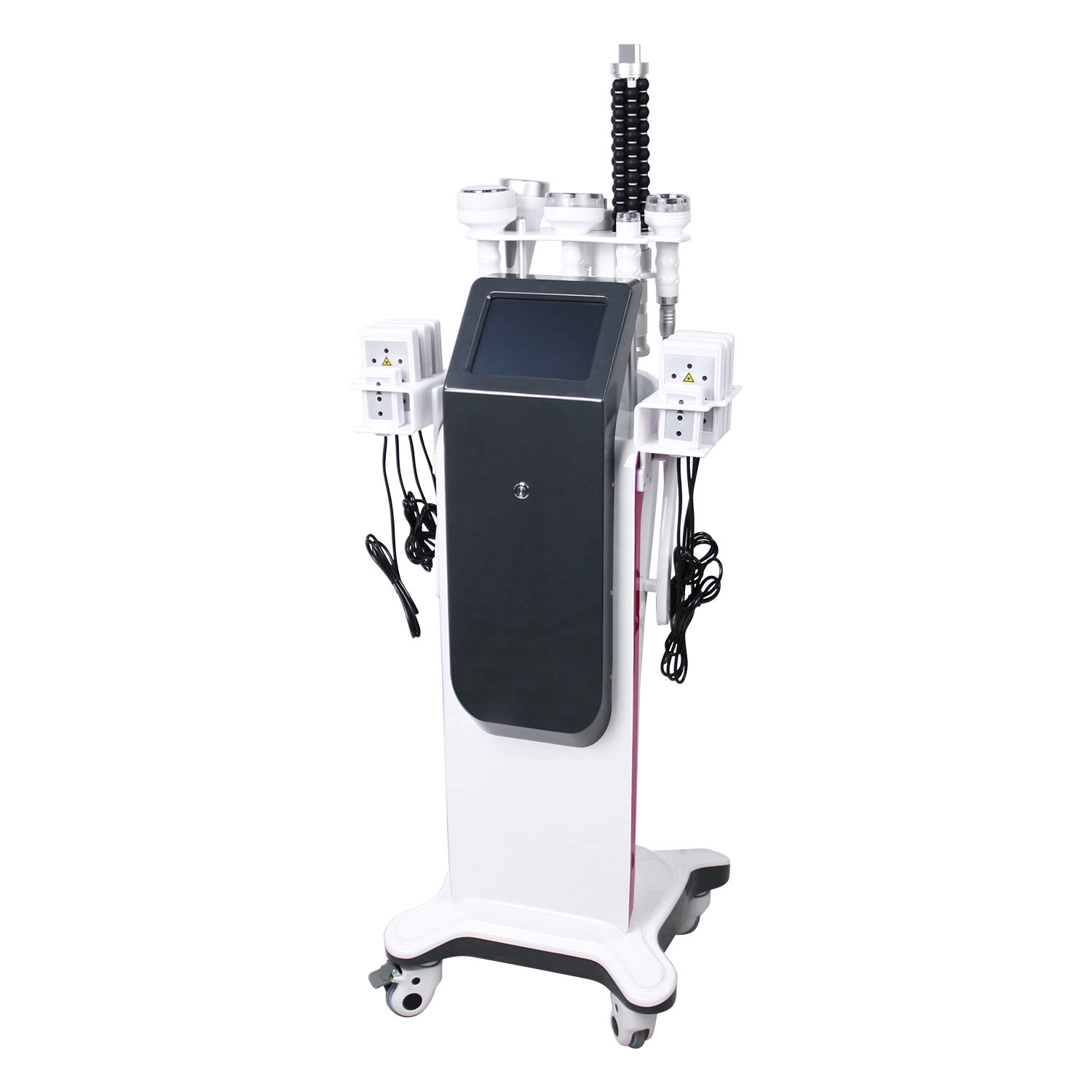
Professional 6-in-1 Cavitation Vacuum Machine for Body Contouring & Slimming Treatment
The 6-in-1 Cavitation Vacuum Machine is a professional body contouring system designed for salons and spas seeking high-performance slimming solutions. This machine integrates 40K ultrasonic cavitation, vacuum suction, RF technology, and laser lipolysis to target stubborn fat, enhance lymphatic drainage, tighten the skin, and contour the body shape effectively.
Equipped with multiple ergonomic handles and a smart touch screen, this cavitation vacuum machine provides a comfortable and efficient experience for both operators and clients. It is ideal for full-body treatments including abdomen, arms, legs, waistline, hips, and back.
Perfect for beauty salons, spas, and aesthetic centers that want to offer non-invasive fat reduction and body-sculpting services.
Get more information
If you have any comments or good suggestions, please leave us a message; later our professional staff will contact you as soon as possible.
Let's Talk
Stay in touch with us for cutting-edge beauty solutions, professional guidance, and customized service.
Contact


Room 307, Building A, Huilong International E-commerce Industrial Park, No. 10 Xipengling Road, Helong Street, Baiyun District, Guangzhou, China
© 2025 HUIMAIN. All Rights Reserved. Privacy Policy | Terms and Conditions | Sitemap
Facebook
Instagram
Medical beauty equipment factory
huimain Medical beauty equipment factory
beauty machine supplier
Whatsapp: +8619124004543