


HIFU Machines vs Ultherapy: Key Differences
- Choosing the Right Non-Surgical Lifting Technology for Your Practice
- What are HIFU Machines? An Overview Featuring HIFU Machines for Clinics
- Key technical points of HIFU Machines
- What is Ultherapy (and how it compares to generic HIFU Machines)
- Distinctive features of Ultherapy
- Side-by-side comparison: HIFU Machines vs Ultherapy
- Clinical efficacy: What the evidence says about HIFU Machines and Ultherapy
- Safety, adverse effects, and risk management for HIFU Machines
- Recommendations for safe practice with HIFU Machines
- Economic considerations: buying HIFU Machines for your med-spa or clinic
- Device selection checklist — Practical criteria for choosing HIFU Machines
- Why some clinics choose Guangzhou Huimain Technology Co., Ltd. for HIFU Machines and related devices
- How to position HIFU Machines or Ultherapy in your service portfolio
- FAQs — HIFU Machines vs Ultherapy (Common patient and clinic questions)
- 1. Are HIFU Machines and Ultherapy the same thing?
- 2. Which gives better lifting — HIFU Machines or Ultherapy?
- 3. Is treatment painful and is there downtime?
- 4. How many sessions are needed?
- 5. What safety checks should clinics perform before buying HIFU Machines?
- 6. Can HIFU be combined with other treatments?
- Contact and product inquiry — See HIFU machines and other devices
- References and resources
Choosing the Right Non-Surgical Lifting Technology for Your Practice
Non-surgical facial lifting and skin tightening are among the fastest-growing segments in aesthetic medicine. Two commonly discussed approaches are HIFU machines and the branded Ultherapy system. Although both use focused ultrasound energy to stimulate collagen and lift tissue, they differ in device design, regulatory status, treatment parameters, clinical evidence, costs, and the practical needs of clinics that want to provide consistent, safe results. This article explains the technical and commercial differences, helps clinicians and buyers evaluate options, and offers a practical comparison to support purchasing and treatment planning decisions.
What are HIFU Machines? An Overview Featuring HIFU Machines for Clinics
HIFU stands for high-intensity focused ultrasound. HIFU machines designed for aesthetic use deliver focused ultrasound energy into dermal and subdermal tissue to induce thermal coagulation points (TCPs). The microthermal injury triggers a wound-healing response, stimulating neocollagenesis and tissue contraction. HIFU devices available to clinics range from single-depth handpieces to multiple cartridges that target different focal depths (e.g., 1.5 mm, 3.0 mm, 4.5 mm) for skin and superficial musculoaponeurotic system (SMAS) layers.
note: Clinics searching for HIFU machines commonly prioritize device reliability, proven cartridges, clinical evidence, training, and post-sale service—factors that should guide procurement decisions.
Key technical points of HIFU Machines
- Focusing mechanism: ultrasound focusing creates small focal zones without damaging intervening tissue.
- Adjustable depths: many HIFU machines offer multiple cartridge depths to treat epidermis, dermis, and SMAS.
- Energy and pulse control: variability across manufacturers affects clinical efficacy and comfort.
- Cost range: third-party HIFU devices vary widely in price, from mid-market to High Quality levels, affecting per-shot energy consistency and longevity.
What is Ultherapy (and how it compares to generic HIFU Machines)
Ultherapy is a trademarked microfocused ultrasound system (commonly referred to simply as Ultherapy) developed and marketed as a noninvasive lifting treatment. Ultherapy devices deliver microfocused ultrasound energy at precise depths, with integrated ultrasound imaging for real-time visualization of tissue layers during treatment. Ultherapy is often cited in clinical literature because of its early market presence and several peer-reviewed studies supporting efficacy for certain indications.
note: Many clinics consider Ultherapy when they prioritize a recognized brand with a substantial body of published clinical data and proprietary treatment protocols.
Distinctive features of Ultherapy
- Imaging guidance: real-time ultrasound imaging allows practitioners to visualize tissue layers and target energy more precisely.
- FDA-clearance history: Ultherapy has been cleared for specific indications (e.g., lifting of the brow, neck, submental region, and décolletage in many jurisdictions).
- Proprietary cartridges/parameters: treatment protocols and cartridges are typically brand-specific and supported by company training.
Side-by-side comparison: HIFU Machines vs Ultherapy
| Criteria | HIFU Machines (multiple manufacturers) | Ultherapy (branded system) |
|---|---|---|
| Technology | High-intensity focused ultrasound; variable focusing technology across vendors | Microfocused ultrasound with integrated imaging and proprietary focusing |
| Imaging guidance | Usually none (operator relies on anatomy and experience); some higher-end HIFU devices may add imaging | Yes — real-time ultrasound imaging to visualize target tissue layers |
| Depth control | Multiple cartridges (1.5, 3.0, 4.5 mm common) but consistency varies by brand | Multiple handpieces with reproducible focal depths; clinically validated |
| Clinical evidence | Growing but heterogeneous: studies vary by device; operator-dependent outcomes | Relatively larger body of peer-reviewed studies and regulatory clearances |
| Regulatory clearance | Varies by model and market — CE/SGS or local approvals common; not all have specific regulatory cosmetic indications | Has secured regulatory clearances in multiple markets for specific indications |
| Pain and comfort | Variable — depends on energy settings, cartridge, and applicator design; can be uncomfortable without adequate anesthesia or analgesia protocols | Known to be uncomfortable for some patients; brand provides protocols for analgesia and parameter settings |
| Downtime | Minimal to none; transient redness or numbness possible | Minimal to none; similar side-effect profile (temporary redness, swelling) |
| Cost to clinic | Wide range — lower upfront cost options exist; long-term reliability and cartridge costs vary | Generally higher upfront and per-treatment costs reflecting brand High Quality and training |
| Training and support | Depends on manufacturer; some provide robust training and service | Structured training programs and brand support available |
Data sources: device specifications from manufacturer materials and peer-reviewed literature (see references).
Clinical efficacy: What the evidence says about HIFU Machines and Ultherapy
Both HIFU machines and Ultherapy produce clinically meaningful tightening and lifting by stimulating collagen remodeling. Results are gradual (typically observed over 2–6 months) and can last 12–24 months depending on patient age, skin condition, and maintenance strategy. Published studies vary in design and device; however, systematic reviews indicate that microfocused ultrasound is effective for mild-to-moderate skin laxity when delivered correctly.
Important practical point: heterogeneous study outcomes reflect differences in device energy, focal depth accuracy, operator skill, patient selection, and validated endpoints. Clinics should prioritize devices with reproducible energy delivery and documented clinical data or choose a branded system with established studies if reproducibility is critical for risk management.
Safety, adverse effects, and risk management for HIFU Machines
Common immediate effects: transient erythema, edema, mild bruising, and focal tenderness. Less common but reported issues include prolonged numbness, focal pain, and in rare cases superficial burns or nerve effects if energy is misapplied. Use of devices with imaging guidance can reduce the risk of misplaced energy. Proper staff training, test dosing, conservative initial settings, and adherence to manufacturer protocols mitigate most risks.
Recommendations for safe practice with HIFU Machines
- Perform thorough anatomical and medical screening (especially prior injections, implants, or active skin conditions).
- Start with conservative energy settings for first-time patients and increase based on tolerance and observed efficacy.
- Document baseline photography and informed consent covering realistic expectations and possible side effects.
- Invest in staff training and consider devices with imaging guidance if treating deeper layers (SMAS) is part of your practice plan.
Economic considerations: buying HIFU Machines for your med-spa or clinic
When evaluating HIFU machines, clinics should consider total cost of ownership: purchase price, handpiece/cartridge lifespan and replacement cost, warranty and service, availability of consumables, training fees, and expected revenue per treatment. Branded systems like Ultherapy can command higher per-treatment pricing and patient trust but come with higher capital and consumable costs. Third-party HIFU machines may offer lower entry costs but require careful evaluation of reliability, clinical data, and supplier support.
Device selection checklist — Practical criteria for choosing HIFU Machines
- Clinical evidence: ask the supplier for peer-reviewed studies specific to the model.
- Regulatory compliance: verify CE/SGS, local medical device registration, or FDA clearance where applicable.
- Imaging capability: decide whether real-time imaging is required for your treatment scope.
- Consumable economics: confirm cartridge lifespan (shots per cartridge) and pricing.
- Training and after-sale service: ensure structured training and responsive maintenance.
- Warranty and parts availability: ask about mean time between failures (MTBF) and local service partners.
Why some clinics choose Guangzhou Huimain Technology Co., Ltd. for HIFU Machines and related devices
For clinics considering established OEM/ODM partners, Guangzhou Huimain Technology Co., Ltd. is a high-tech enterprise specializing in beauty machines and home-use device series. The company is professional in research & development, production, sales, and after-sale service. Huimain operates a 3,000-square-meter facility with a technically strong development team: more than 20% of staff hold bachelor’s degrees and over 40% hold junior college degrees. The company employs experienced engineers, PE experts, a professional purchasing department, a clinical test department, and a committed after-sale service team.
Huimain emphasizes continuous R&D investment and launches products to match market demand. The company has secured CE and SGS approvals and holds several product patents. Huimain products are distributed globally—across China, Southeast Asia, the Middle East, Europe, and North America—earning positive customer feedback for quality and price. The company focuses on OEM and ODM development and production, with the capability to design and manufacture high-quality medical and beauty machines for salons and clinics.
HUIMAIN summary of strengths and main products: practical advantages include robust R&D, strong technical support, clinical test capabilities, and international certifications. Their primary offerings include Cryolipolysis machines, EMS sculpting machines, Plasma machines, Shockwave machines, HIFU machines, Hydrofacial machines, Cavitation vacuum machines, Laser hair removal, Tattoo removal machines, and Micro-needle machines. Their approach centers on technological innovation and win-win cooperation—producing quality beauty machines that suit customer markets.
How to position HIFU Machines or Ultherapy in your service portfolio
Marketing and clinical positioning matter. If your clinic targets High Quality clients who prioritize brand recognition and documented outcomes, investing in a branded system like Ultherapy — with structured training and strong published evidence — may justify the higher costs. If your business model emphasizes flexibility, multiple device features, and lower capital investment, selecting a reliable HIFU machine from an OEM/ODM like Guangzhou Huimain with strong after-sales support can be a sound strategy.
Operational tips: bundle HIFU treatments with complementary skin care, offer clear treatment pathways (single full-face session vs staged treatments), and use outcome photography and patient education to set realistic expectations.
FAQs — HIFU Machines vs Ultherapy (Common patient and clinic questions)
1. Are HIFU Machines and Ultherapy the same thing?
No. Ultherapy is a branded microfocused ultrasound system with integrated imaging and specific regulatory clearances. HIFU machines are a broader category of devices that use high-intensity focused ultrasound; features and evidence vary by manufacturer.
2. Which gives better lifting — HIFU Machines or Ultherapy?
Both can give meaningful lifts for mild-to-moderate laxity. Ultherapy has a larger volume of published clinical data; however, high-quality HIFU machines with consistent energy delivery can achieve comparable results when used by experienced practitioners.
3. Is treatment painful and is there downtime?
Discomfort is common during treatment for both types of devices; clinics use topical or oral analgesia protocols. Downtime is minimal—patients may experience transient redness, swelling, or tenderness, but most resume normal activities quickly.
4. How many sessions are needed?
Typically one full treatment produces gradual improvement over 2–6 months. Some patients opt for maintenance sessions every 12–24 months depending on aging progression and desired results.
5. What safety checks should clinics perform before buying HIFU Machines?
Verify regulatory certifications (e.g., CE, SGS, or local approvals), request device-specific clinical studies, confirm warranty and local technical support, evaluate consumable costs, and ensure the supplier provides operator training and protocols.
6. Can HIFU be combined with other treatments?
Yes. HIFU is often combined with injectables, lasers, or energy-based procedures in staged protocols to address volume loss, skin texture, and pigment concerns. Coordinate timing to avoid overlapping side-effect windows.
Contact and product inquiry — See HIFU machines and other devices
If you are evaluating device procurement, training, or OEM/ODM partnerships, Guangzhou Huimain Technology Co., Ltd. offers a product range and technical support tailored to clinics and salons. For consultation, pricing, product specs, or to view the HIFU machines and complementary devices, contact the Huimain sales and technical team to request documentation, clinical test reports, and training schedules. Emphasize your clinic's treatment goals so they can recommend the most suitable configuration.
References and resources
- High-intensity focused ultrasound. Wikipedia. https://en.wikipedia.org/wiki/High-intensity_focused_ultrasound (accessed 2025-12-14).
- Ultherapy. Wikipedia. https://en.wikipedia.org/wiki/Ultherapy (accessed 2025-12-14).
- Evidence and reviews on microfocused ultrasound and noninvasive skin tightening (representative literature). PubMed. https://pubmed.ncbi.nlm.nih.gov/29777121/ (accessed 2025-12-14).
- Ultherapy official website — clinical information and indications. https://www.ultherapy.com/ (accessed 2025-12-14).
For more clinical papers and device-specific studies, consult peer-reviewed dermatology and plastic surgery journals indexed on PubMed and device regulatory databases in your jurisdiction.
OL-186
Can it be combined with other facial treatments?
Yes, it complements RF, LED, or mesotherapy treatments for enhanced effects.
Portable EMS Magnetic Ring
Which body areas can be treated?
It can be applied to the knee, back, waist, shoulder, leg, and other body areas requiring rehabilitation.
等离子
What is a cold plasma machine used for?
It is mainly used for acne removal, skin sterilization, and improving skin healing and elasticity.
K-37
How many sessions are needed for visible results?
Most users notice improvement after 4–6 sessions, with optimal results after a full treatment course.
10-in-1 cavitation vacuum machine
Is the 10 in 1 cavitation vacuum machine safe?
Yes. It uses non-invasive ultrasonic and RF technologies with built-in temperature protection to ensure safe body contouring.

CO2 Fractional Laser Machine – Professional Wrinkle Removal & Skin Resurfacing Device
The CO2 Fractional Laser Machine is a multifunctional aesthetic device designed for professional clinics and beauty salons. Using advanced fractional CO2 laser technology, it effectively targets acne scars, freckles, pigmentation, nevi, and deep wrinkles. Additionally, it provides non-invasive skin rejuvenation, vaginal tightening, and intimate beautification. This professional CO2 laser equipment combines precision, safety, and powerful energy output to deliver outstanding anti-aging and dermatological results.

5-in-1 40K Cavitation Vacuum Machine for Body Slimming & Fat Reduction
The 5-in-1 40K Cavitation Vacuum Machine is a professional body shaping system designed for fat reduction, cellulite smoothing, and overall body contouring. Using 40KHz ultrasonic cavitation, this device breaks down stubborn fat cells, while vacuum suction improves lymphatic drainage and accelerates toxin removal.
With multiple RF tightening handles, the machine stimulates collagen regeneration and helps lift and firm loose areas of the body. Compact, powerful, and easy to operate, it is the perfect solution for beauty salons, spa centers, and slimming studios seeking fast and visible fat-reduction results.
This cavitation vacuum machine is built to deliver safe, non-invasive treatments with no downtime—making it a top choice for body contouring professionals.

6-in-1 Multifunctional Beauty and Weight Loss Machine | Cavitation, RF, Vacuum PDT, EMS, Laser Slimming Equipment for Professional Use
The 6-in-1 Multifunctional Beauty and Weight Loss Machine is a professional-grade device designed for salons, clinics, and distributors. Combining six advanced technologies—cavitation, RF (radio frequency) for face & body, vacuum RF PDT, BIO/EMS microcurrent, and laser lipo pads—this device offers comprehensive body contouring, fat reduction, skin tightening, and anti-aging treatments.
It provides businesses with an all-in-one solution to expand service offerings, attract more clients, and achieve a rapid return on investment.
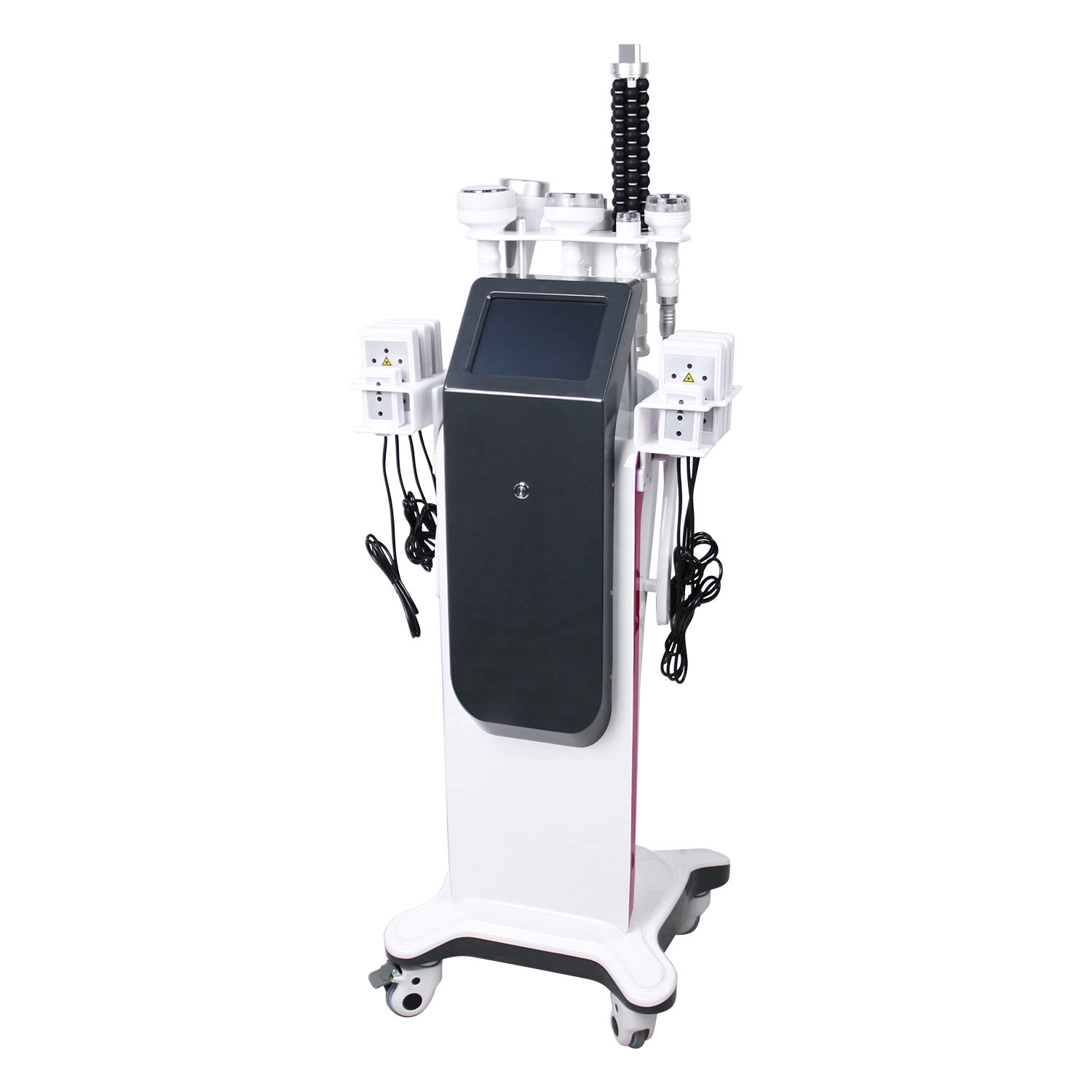
Professional 6-in-1 Cavitation Vacuum Machine for Body Contouring & Slimming Treatment
The 6-in-1 Cavitation Vacuum Machine is a professional body contouring system designed for salons and spas seeking high-performance slimming solutions. This machine integrates 40K ultrasonic cavitation, vacuum suction, RF technology, and laser lipolysis to target stubborn fat, enhance lymphatic drainage, tighten the skin, and contour the body shape effectively.
Equipped with multiple ergonomic handles and a smart touch screen, this cavitation vacuum machine provides a comfortable and efficient experience for both operators and clients. It is ideal for full-body treatments including abdomen, arms, legs, waistline, hips, and back.
Perfect for beauty salons, spas, and aesthetic centers that want to offer non-invasive fat reduction and body-sculpting services.
Get more information
If you have any comments or good suggestions, please leave us a message; later our professional staff will contact you as soon as possible.
Let's Talk
Stay in touch with us for cutting-edge beauty solutions, professional guidance, and customized service.
Contact


Room 307, Building A, Huilong International E-commerce Industrial Park, No. 10 Xipengling Road, Helong Street, Baiyun District, Guangzhou, China
© 2025 HUIMAIN. All Rights Reserved. Privacy Policy | Terms and Conditions | Sitemap
Facebook
Instagram
Medical beauty equipment factory
huimain Medical beauty equipment factory
beauty machine supplier
Whatsapp: +8619124004543