


HIFU Treatment Protocols: Time, Depth, and Pulses
- Understanding HIFU Fundamentals Before Protocol Design
- What HIFU machines do and why protocol details matter
- Key biological targets and cartridge depths: matching depth to anatomy with HIFU Machines
- Treatment pulses: energy per shot, pulse duration, and spacing
- Treatment time and total shot counts: estimating session length with HIFU Machines
- Zone-specific protocols: practical templates for common facial regions
- Patient selection, pain management, and safety considerations with HIFU Machines
- Optimizing outcomes: timing of retreatment and measurable endpoints
- Device differences and why operator training matters
- Clinical evidence highlights and what the literature supports
- Practical checklist before starting any HIFU session
- Comparative summary: typical settings and expectations (reference table)
- Guangzhou Huimain Technology Co., Ltd.: R&D, OEM/ODM partner for HIFU Machines and beauty devices
- How Huimain adds value for clinics buying HIFU Machines
- FAQ — Frequently Asked Questions
- Contact & product inquiry CTA
- References and further reading
Understanding HIFU Fundamentals Before Protocol Design
What HIFU machines do and why protocol details matter
High-Intensity Focused Ultrasound (HIFU) machines deliver focused ultrasound energy to precise depths in skin and subcutaneous tissues to induce coagulative thermal injury zones that stimulate neocollagenesis and tissue contraction. For clinics and device purchasers, understanding treatment parameters — time, depth, and pulses — is essential to achieve reliable results, optimize patient throughput, and minimize complications. This article explains clinical rationale, practical ranges for parameters, and evidence-based recommendations you can adapt for different patient types and device platforms.
Key biological targets and cartridge depths: matching depth to anatomy with HIFU Machines
One of the most important decisions in protocol design is cartridge (transducer) depth selection. Most HIFU aesthetic devices offer multiple handpiece depths; the common set for facial rejuvenation includes 1.5 mm, 3.0 mm, and 4.5 mm. Each targets different tissue layers and yields distinct clinical effects. Choosing the correct depth for the treatment zone and patient's tissue thickness is fundamental.
| Cartridge depth | Primary target | Typical clinical goal |
|---|---|---|
| 1.5 mm | Superficial dermis | Improve fine lines, pore texture, superficial tightening |
| 3.0 mm | Mid-dermis / deeper dermis | Skin tightening and collagen remodeling over broader area |
| 4.5 mm | SMAS / superficial musculoaponeurotic system | Lift and reposition deeper tissues (jawline, submental, brow) |
Reference anatomy matters: in thinner skin regions (periorbital, forehead) avoid deep cartridges without ultrasound visualization. HIFU Machines equipped with real-time imaging (e.g., some higher-end models) allow visualization of layers and reduce risk of overtreatment.
Treatment pulses: energy per shot, pulse duration, and spacing
In HIFU devices, a single “shot” or pulse deposits focused energy at the focal point. Three interrelated variables define the microthermal effect: energy per pulse (Joules), pulse duration (ms), and spatial shot spacing (mm). Manufacturers report energy settings differently (absolute Joules, relative power levels), so clinicians must rely on device-specific guidance and clinical outcomes rather than raw numbers across brands.
- Energy per pulse: Typical clinical ranges are device-specific. For most cosmetic HIFU Machines used in aesthetics, clinicians commonly use moderate energy settings to balance effect and comfort.
- Pulse duration: Very short pulses (tens to hundreds of milliseconds) create a precise thermal focus with minimal collateral heating.
- Shot spacing (line and point spacing): Typical spacing recommendations are 1.0–2.0 mm between focal points on a line and 1.0–2.0 mm between treatment lines, but protocols vary by zone to avoid stacking of energy that could cause adverse effects.
Practical note: When switching from deeper to superficial cartridges in the same session (e.g., 4.5 mm then 3.0 mm then 1.5 mm), reduce overlap and adjust spacing to avoid excessive cumulative energy in the dermis.
Treatment time and total shot counts: estimating session length with HIFU Machines
Treatment time is driven by total shot count, which depends on treated area, cartridge depth, and clinician chosen spacing. Below are typical ranges used in clinical practice; adapt for patient anatomy and device output.
| Area | Typical total shots (range) | Approx. treatment time (including prep) |
|---|---|---|
| Full face (excluding neck) | 500–800 shots | 45–75 minutes |
| Periorbital / forehead | 100–250 shots | 15–30 minutes |
| Submental / neck | 300–600 shots | 30–60 minutes |
| Small localized areas (e.g., jowls) | 100–300 shots | 15–40 minutes |
These times include imaging, marking, and device setup. Procedures on HIFU Machines with automated line firing are faster than manually delivered single-shot systems.
Zone-specific protocols: practical templates for common facial regions
Below are example starting protocols for an adult patient with mild-to-moderate laxity. These are templates — adjust according to device, patient pain tolerance, and clinical judgment.
| Zone | Depths typically used | Shots / line spacing | Goal |
|---|---|---|---|
| Forehead / brow | 3.0 mm (conservative) / 4.5 mm (limited) | Line spacing 1.0–1.5 mm; 2–4 lines per region | Brow lift, improve forehead laxity |
| Periorbital | 1.5 mm / 3.0 mm (avoid 4.5 mm) | Fine spacing 0.8–1.2 mm; conservative shots | Reduce fine lines, tighten eyelid skin |
| Cheeks / midface | 3.0 mm & 4.5 mm combination | 1.0–1.5 mm spacing; 3–5 lines per vector | Lift malar fat, tighten skin |
| Jawline & submental | 4.5 mm & 3.0 mm | 1.0–1.5 mm spacing; higher shot density along jawline | Define jawline, reduce submental laxity |
Note: Avoid using 4.5 mm too superficially in very thin skin or periorbital areas. Use ultrasound-visualized devices or conservative parameters in high-risk zones.
Patient selection, pain management, and safety considerations with HIFU Machines
Not every patient is a good candidate. Ideal candidates: mild-to-moderate skin laxity, realistic expectations, and physiologic collagen remodeling potential (typically ages 30–65). Contraindications include active infection in the treatment area, open wounds, severe photodamage with thin skin, pacemakers (relative), pregnancy, and recent isotretinoin use.
Pain control: Most patients tolerate HIFU with topical anesthetic and oral analgesics; some clinics use nerve blocks for increased comfort in sensitive patients. Short pulses reduce thermal spread but can still be uncomfortable at higher energies. Always follow device-specific analgesia recommendations.
Adverse events: transient erythema, edema, and tenderness are common. Less common but more serious events include focal nerve injury, prolonged paresthesia, and superficial blistering from excessive cumulative energy or incorrect focal depth. These risks underscore the need for training, conservative initial settings, and adherence to manufacturer protocols for HIFU Machines.
Optimizing outcomes: timing of retreatment and measurable endpoints
Clinical improvement typically appears gradually over 2–6 months as new collagen remodels; some tightening is immediate due to collagen contraction. Many clinics offer a single treatment with a follow-up at 3–6 months; retreatment intervals vary but are commonly 12–18 months if additional lift is desired. Track outcomes with standardized photography, objective measurements (jawline angle, submental fullness scales), and patient-reported outcome measures.
Device differences and why operator training matters
HIFU Machines differ in frequency, focal length precision, energy control, and whether they offer real-time imaging. Devices with imaging allow more accurate targeting of tissue layers and typically carry a lower complication rate when operated correctly. That said, operator experience — recognition of tissue anatomy, patient selection, and protocol customization — is often a larger determinant of outcomes than minor differences between reputable devices.
Clinical evidence highlights and what the literature supports
Multiple peer-reviewed studies and device clinical trials demonstrate that HIFU can achieve modest to significant non-surgical skin tightening with an acceptable safety profile when used appropriately. The degree of lift vs. downtime trade-off depends on energy settings and treated depth. Systematic reviews emphasize heterogeneity of study protocols, reinforcing the need for standardized treatment templates adapted to each device and population.
Practical checklist before starting any HIFU session
- Confirm patient suitability and consent; discuss realistic outcomes and recovery timeline.
- Examine skin thickness and mark treatment vectors and safety margins for delicate zones.
- Set device parameters per manufacturer guidance — cartridge depth, energy level, spacing, and line count.
- Use topical or systemic analgesia as appropriate; monitor during treatment.
- Document shots delivered per zone and provide standardized post-procedure instructions.
Comparative summary: typical settings and expectations (reference table)
| Parameter | Low-intensity (conservative) | Moderate (common) | High-intensity (aggressive) |
|---|---|---|---|
| Energy per pulse | Lower device-specific power | Manufacturer mid-range | Upper manufacturer range |
| Shot density | Lower (1.5–2.0 mm spacing) | Standard (1.0–1.5 mm) | High (0.8–1.0 mm) |
| Treatment time (full face) | 30–45 min | 45–75 min | 75–120 min |
| Expected downtime | Minimal | 1–7 days mild swelling | Longer swelling, higher risk of bruising |
Guangzhou Huimain Technology Co., Ltd.: R&D, OEM/ODM partner for HIFU Machines and beauty devices
For clinics and distributors seeking reliable OEM/ODM partners, Guangzhou Huimain Technology Co., Ltd. is a high-tech company focused on beauty machines and home-use device series. The company has R&D, production, sales, and after-sales service capabilities. Its facilities cover 3,000 square meters, and over 20% of staff hold bachelor’s degrees while more than 40% have junior college degrees. Huimain’s technical development department includes experienced engineers and PE experts; it also maintains clinical testing and after-sale service departments to support product verification and customer care.
Huimain invests continuously in R&D, developing new products to meet market demand, and has obtained CE and SGS approvals as well as multiple patents. Products are sold globally across China, Southeast Asia, the Middle East, Europe, and North America, receiving positive feedback for quality and price. The company focuses on OEM and ODM development and production of high-quality medical and beauty machines for salons and clinics.
和主题简要总结 HUIMAIN优势和主营产品:HUIMAIN 的优势包括强大的技术研发能力、经验丰富的工程团队、规范的临床测试与完善的售后服务。主营产品涵盖:Cryolipolysis machine、Ems sculpting machine、Plasama machine、Shockwave machine、Hifu machine、Hydrofacial machine、Cavitation vacuum machine、Laser hair removal、Tattoo removal machine、Micro needle machine。公司理念:创新技术、互利共赢,致力于生产真正好质量且受市场认可的美容设备。
How Huimain adds value for clinics buying HIFU Machines
- Customized device design (OEM/ODM) to match clinic workflow and local regulatory needs.
- Technical training and clinical protocol support to help standardize treatment parameters and safety procedures.
- Clinical test department support for validation and post-market surveillance.
- After-sale service network to minimize device downtime and ensure consistent output.
FAQ — Frequently Asked Questions
- How many HIFU sessions are typically needed? Most clinicians treat once and evaluate at 3–6 months. Retreatments are based on desired additional lift and are commonly spaced 12–18 months apart.
- What is the usual downtime after a HIFU treatment? Downtime is minimal for most patients: transient redness and mild swelling for 1–7 days. More intense settings can increase downtime and risk of bruising.
- Are HIFU results permanent? HIFU induces collagen remodeling; results are long-lasting but not permanent because aging continues. Expect maintenance treatments every 12–24 months depending on clinical goals.
- Can HIFU be safely used on all skin types? Yes, HIFU is generally safe across Fitzpatrick skin types because it uses ultrasound rather than light-based energy, reducing risk of pigmentary changes. However, skin thickness and anatomy still dictate safe depth selection.
- What are common complications and how to avoid them? Common minor reactions include erythema, edema, and transient numbness. Major complications (nerve injury, burns) are uncommon and usually result from incorrect depth selection, excessive energy, or poor technique. Prevent with training, conservative settings, and device-specific protocols.
- How many shots do I need for a full-face treatment with a standard HIFU Machine? Typically 500–800 shots depending on spacing and extent treated. Document shots by zone for reproducibility.
Contact & product inquiry CTA
If you are evaluating HIFU Machines for your clinic, or need OEM/ODM partnerships for beauty devices, contact Guangzhou Huimain Technology Co., Ltd. for product catalogs, clinical protocol support, and training options. Request a consultation to receive device specifications, CE/SGS documentation, and clinical evidence packages tailored to your market.
References and further reading
- High-Intensity Focused Ultrasound — Wikipedia. https://en.wikipedia.org/wiki/High-intensity_focused_ultrasound (accessed 2025-12-21)
- Ultherapy Clinical Evidence and Education — Ultherapy (device platform examples and clinical resources). https://www.ultherapy.com/clinical (accessed 2025-12-21)
- PubMed search: HIFU skin tightening and facial rejuvenation — relevant peer-reviewed literature overview. https://pubmed.ncbi.nlm.nih.gov/?term=HIFU+skin+tightening (accessed 2025-12-21)
- Device safety and user manuals — consult specific HIFU Machines manufacturer manuals and clinical training materials for device-specific parameter ranges (manufacturer websites; always follow supplied protocol).
- CE and SGS certification resources — consult notified body reports and SGS certificates provided by manufacturers to confirm conformity (manufacturer-provided documentation).
Note: Protocol examples provided here are evidence-informed templates based on common clinical practice and manufacturer guidance; always verify parameters with the specific HIFU Machines' manual and local regulatory recommendations before clinical use.
C5
Is the CO2 fractional laser machine safe for all skin types?
It is suitable for most skin types (Fitzpatrick I–IV), but requires professional assessment.
HMT72R
How effective is a single-handle machine compared to a dual-handle one?
A single-handle machine is ideal for targeting specific, smaller areas with concentrated energy, providing powerful and effective results. While a dual-handle machine allows for simultaneous treatment of two areas, a single-handle unit is perfect for businesses that focus on a single client at a time and value a more cost-effective investment.
Super 808nm 3 wavelengths Diode Laser Hair Removal
Can I use the machine for all body areas?
Yes. It is designed for full-body use including face, arms, legs, bikini, and underarms.
JLM-3
How long does each treatment take?
Each session lasts about 15–30 minutes, depending on the treatment area.
EMS Sculpting vs. Cryolipolysis
How do the running costs compare?
A cryolipolysis machine requires the ongoing purchase of anti-freeze membranes for every session. An ems shape machine has zero consumables—meaning 100% of your session revenue is pure profit.

CO2 Fractional Laser Machine – Professional Wrinkle Removal & Skin Resurfacing Device
The CO2 Fractional Laser Machine is a multifunctional aesthetic device designed for professional clinics and beauty salons. Using advanced fractional CO2 laser technology, it effectively targets acne scars, freckles, pigmentation, nevi, and deep wrinkles. Additionally, it provides non-invasive skin rejuvenation, vaginal tightening, and intimate beautification. This professional CO2 laser equipment combines precision, safety, and powerful energy output to deliver outstanding anti-aging and dermatological results.

5-in-1 40K Cavitation Vacuum Machine for Body Slimming & Fat Reduction
The 5-in-1 40K Cavitation Vacuum Machine is a professional body shaping system designed for fat reduction, cellulite smoothing, and overall body contouring. Using 40KHz ultrasonic cavitation, this device breaks down stubborn fat cells, while vacuum suction improves lymphatic drainage and accelerates toxin removal.
With multiple RF tightening handles, the machine stimulates collagen regeneration and helps lift and firm loose areas of the body. Compact, powerful, and easy to operate, it is the perfect solution for beauty salons, spa centers, and slimming studios seeking fast and visible fat-reduction results.
This cavitation vacuum machine is built to deliver safe, non-invasive treatments with no downtime—making it a top choice for body contouring professionals.

6-in-1 Multifunctional Beauty and Weight Loss Machine | Cavitation, RF, Vacuum PDT, EMS, Laser Slimming Equipment for Professional Use
The 6-in-1 Multifunctional Beauty and Weight Loss Machine is a professional-grade device designed for salons, clinics, and distributors. Combining six advanced technologies—cavitation, RF (radio frequency) for face & body, vacuum RF PDT, BIO/EMS microcurrent, and laser lipo pads—this device offers comprehensive body contouring, fat reduction, skin tightening, and anti-aging treatments.
It provides businesses with an all-in-one solution to expand service offerings, attract more clients, and achieve a rapid return on investment.
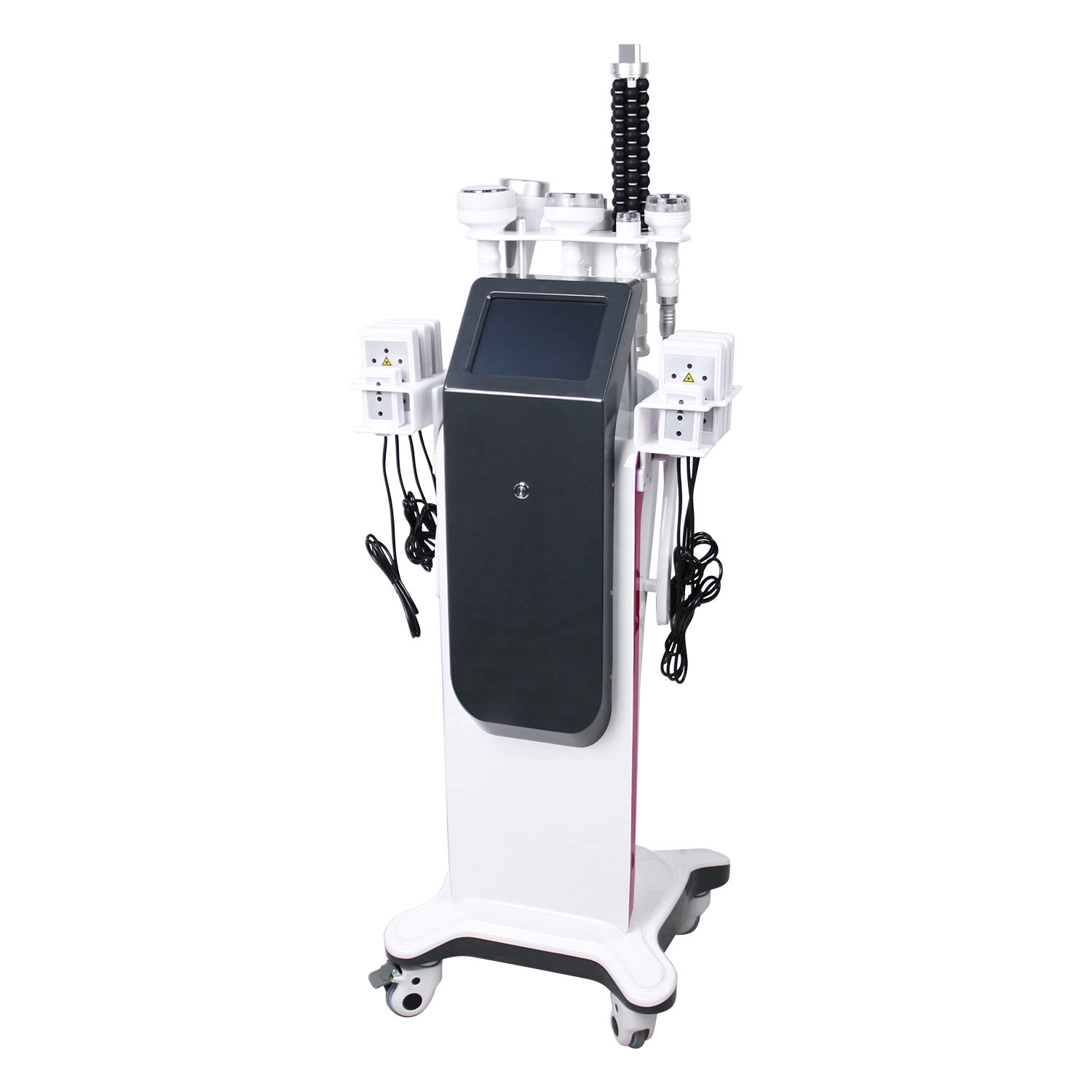
Professional 6-in-1 Cavitation Vacuum Machine for Body Contouring & Slimming Treatment
The 6-in-1 Cavitation Vacuum Machine is a professional body contouring system designed for salons and spas seeking high-performance slimming solutions. This machine integrates 40K ultrasonic cavitation, vacuum suction, RF technology, and laser lipolysis to target stubborn fat, enhance lymphatic drainage, tighten the skin, and contour the body shape effectively.
Equipped with multiple ergonomic handles and a smart touch screen, this cavitation vacuum machine provides a comfortable and efficient experience for both operators and clients. It is ideal for full-body treatments including abdomen, arms, legs, waistline, hips, and back.
Perfect for beauty salons, spas, and aesthetic centers that want to offer non-invasive fat reduction and body-sculpting services.
Get more information
If you have any comments or good suggestions, please leave us a message; later our professional staff will contact you as soon as possible.
Let's Talk
Stay in touch with us for cutting-edge beauty solutions, professional guidance, and customized service.
Contact


Room 307, Building A, Huilong International E-commerce Industrial Park, No. 10 Xipengling Road, Helong Street, Baiyun District, Guangzhou, China
© 2025 HUIMAIN. All Rights Reserved. Privacy Policy | Terms and Conditions | Sitemap
Facebook
Instagram
Medical beauty equipment factory
huimain Medical beauty equipment factory
beauty machine supplier
Whatsapp: +8619124004543