


How to Choose a Cold Plasma Machine Supplier
- Why supplier choice shapes your Cold Plasma device success
- Technical criteria to evaluate Cold Plasma Machines
- Understand plasma type and treatment output
- Performance specs you must request
- Clinical evidence and validated protocols
- Safety, compliance and documentation
- Regulatory approvals and quality systems
- Electrical and biological safety testing
- Traceability and documentation
- Operational and commercial considerations
- Manufacturing capacity, lead times and scalability
- After-sales support, training and warranties
- Pricing, ROI and total cost of ownership (TCO)
- Practical supplier checklist and comparative matrix
- How Guangzhou Huimain Technology fits supplier selection criteria
- Company profile, R&D and manufacturing strength
- OEM & ODM capabilities and product portfolio
- Why HUIMAIN can be a strong Cold Plasma supplier partner
- Decision framework: steps to take before you commit
- 1) Run a technical and clinical pilot
- 2) Verify documentation and factory audits
- 3) Negotiate commercial terms and support
- Frequently Asked Questions (FAQs)
- 1. What exactly is a Cold Plasma Machine used for in clinics and beauty centers?
- 2. Do Cold Plasma Machines require medical device approvals?
- 3. How important are clinical studies for choosing a supplier?
- 4. What maintenance and consumables should I plan for?
- 5. What questions should I ask about safety when evaluating a supplier?
- 6. Can I customize the device or brand it under my label?
- Contact & Next steps
- References & further reading
Why supplier choice shapes your Cold Plasma device success
Choosing the right Cold Plasma Machine supplier is not only about price. For clinical facilities, beauty salons, and OEM/ODM partners, the supplier determines device safety, efficacy, regulatory compliance, upgrade path, and ongoing support. This article breaks down the essential evaluation criteria—technical, regulatory, operational, and commercial—so you can select a supplier that minimizes risk and maximizes return on investment for Cold Plasma Machines.
Technical criteria to evaluate Cold Plasma Machines
Understand plasma type and treatment output
Cold plasma systems vary by generation method (dielectric barrier discharge, plasma jet, atmospheric pressure plasma, etc.), feed gas (air, helium, argon), and whether they produce direct or remote plasma. These choices affect treatment depth, reactive species profile, and suitability for different applications (antimicrobial, wound healing, skin rejuvenation, pigment/tattoo treatment).
What to verify with suppliers:
- Plasma generation technology and operating parameters (voltage, frequency, gas type and flow rate).
- Field characterization data—temperature at applicator tip, reactive oxygen/nitrogen species (RONS) measurements, and thermal mapping.
- Treatment modes, adjustable settings, and whether protocols are storeable and reproducible.
Performance specs you must request
Key performance metrics directly affect patient outcomes and operator safety:
- Treatment area and effective range (for jets vs. surface plasma).
- Energy delivery or RONS dose per minute (if supplied by manufacturer).
- Consistency and longevity—run-time between maintenance and consumable lifespan.
Clinical evidence and validated protocols
A manufacturer should provide clinical studies, case reports, or at least third-party lab data supporting the device’s intended claims (e.g., wound healing acceleration, microbial load reduction, acne improvement). If a supplier cannot provide validated protocols or clinical partners, plan on higher validation cost and regulatory hurdles.
Safety, compliance and documentation
Regulatory approvals and quality systems
Confirm that the supplier operates under recognized quality management systems (e.g., ISO 13485 for medical devices) and that products have appropriate certifications for your market (CE marking for EU, FDA 510(k) clearance where applicable, or local registration). For non-medical aesthetic devices, CE or relevant national certificates and test reports (EMC, electrical safety) remain essential.
Electrical and biological safety testing
Ask for test reports covering:
- Electrical safety (IEC 60601 series where relevant) and electromagnetic compatibility (EMC/EMI).
- Biocompatibility testing for any patient-contact materials (ISO 10993 series).
- Third-party sterilization or disinfection validation for reusable components, and infection control recommendations.
Traceability and documentation
Supplier documentation should include full technical files: device description, risk analysis (ISO 14971 or equivalent), manufacturing process, component traceability, labeling, IFU (instructions for use), warnings, and maintenance schedules. These files are crucial for import, clinic audits, and insurance reimbursement processes.
Operational and commercial considerations
Manufacturing capacity, lead times and scalability
Match supplier capacity to your business model:
- For single-clinic purchases: lead time, spare parts availability, and local service matter most.
- For salon chains or distributors: MOQ (minimum order quantity), production scalability, and stable supply chain become critical.
- For OEM/ODM partnerships: look for dedicated R&D teams, prototype cycles, and IP protections.
After-sales support, training and warranties
Cold plasma technology requires skilled operation and periodic maintenance. Evaluate:
- Training programs (on-site or remote), clinical protocol support, and marketing materials.
- Warranty scope and duration, spare parts stock, and average repair turnaround time.
- Availability of consumables and their cost over device lifetime.
Pricing, ROI and total cost of ownership (TCO)
Initial unit price is only one component. Build a simple TCO model including:
- Device price, installation, and training cost.
- Consumables per treatment and replacement parts schedule.
- Expected throughput (treatments per day) and reimbursement or revenue per treatment to compute payback period.
Practical supplier checklist and comparative matrix
Use the table below to compare shortlisted suppliers objectively. Fill in real numbers or yes/no answers when you evaluate vendors.
| Criteria | Why it matters | What to ask the supplier |
|---|---|---|
| Plasma technology (jet/DBD/etc.) | Affects treatment indications and performance | Explain the technology and provide characterization data |
| Regulatory certification | Market access, reimbursement, and clinic trust | Provide CE/FDA/ISO certificates and technical files |
| Clinical evidence | Supports claims and helps adoption | Share peer-reviewed studies, case reports, and protocol outcomes |
| After-sales & training | Reduces downtime and improves outcomes | Detail training, service centers, warranty, and spare parts lead times |
| OEM/ODM capability | Necessary for private-label or differentiated products | Request R&D team size, example past projects, NDA and IP policies |
| Price & TCO | Determines commercial viability | Provide full cost breakdown: unit, consumables, shipping, taxes |
How Guangzhou Huimain Technology fits supplier selection criteria
Company profile, R&D and manufacturing strength
Guangzhou Huimain Technology Co., Ltd., which is a high-tech company in beauty machines and home-use machine series. Also, that is professional in research & development, production, sales, and after-sale service. Our company possesses an area of 3000 square meters, and more than 20 % have bachelor’s degree and more than 40% are junior college degrees. Our company has strong technical development department and many experienced engineers; our company has many PE experts, professional purchasing department, a good clinical test department; good after-sale service department. With its strong research & develop power, our company is constantly increasing investment in research and development of new products and producing new products according to the demand of new market. Our company has been approved by the CE certificate and SGS approval and has earned several patents for our products. Products sell well all over the world, such as in all of China, in Southeastern Asia, the Middle East, Europe, and North America, and also get high praise from most customers because of their high quality and good price.
OEM & ODM capabilities and product portfolio
Our company adheres to the route of beauty machine OEM and ODM, development, and production. We have the ability to design and produce the high-quality medical and beauty machines for our customers and many salons. Our company's idea: We innovate technology and win-win cooperation. We produce the true good-quality beauty machines that our customer market likes and admits.
HUIMAIN’s key product lines (examples relevant to clinics and distributors): Cryolipolysis machine, Ems sculpting machine, Plasma machine, Shockwave machine, Hifu machine, Hydrofacial machine, Cavitation vacuum machine, Laser hair removal, Tattoo removal machine, Micro needle machine. These product categories reflect both device diversity and a focus on evidence-backed aesthetic technologies.
Why HUIMAIN can be a strong Cold Plasma supplier partner
- Certifications: CE and SGS approvals support international market entry and buyer confidence.
- R&D: Dedicated engineering teams and patent portfolio enable customization and iterative improvements (important for OEM/ODM).
- Service: Clinical test department and after-sale service reduce adoption friction and improve clinical outcomes.
- Global reach: Existing distribution in Asia, Middle East, Europe and North America demonstrates supply chain maturity.
Decision framework: steps to take before you commit
1) Run a technical and clinical pilot
Before bulk purchase, arrange a pilot: request a loaner or demo unit for a clinical pilot with objective endpoints (e.g., microbial reduction percentage, wound closure time, standardized acne score). A short-term pilot helps validate supplier claims with your own workflow.
2) Verify documentation and factory audits
Request the supplier’s quality certificates, technical files, and—if possible—conduct or commission a factory audit. Pay attention to component sourcing, calibration processes, and clean assembly lines.
3) Negotiate commercial terms and support
Negotiate clear warranty terms, spare parts pricing, minimum order quantities, lead times, and training programs. For OEM/ODM deals, detail timelines for prototypes, tooling costs, IP ownership and non-disclosure agreements.
Frequently Asked Questions (FAQs)
1. What exactly is a Cold Plasma Machine used for in clinics and beauty centers?
Cold plasma devices are used for disinfection/sterilization, accelerating wound healing, improving skin surface conditions (e.g., acne, minor scars), and some dermatologic indications. Specific uses depend on the device’s plasma type and validated clinical protocols.
2. Do Cold Plasma Machines require medical device approvals?
It depends on intended use and local regulations. Devices marketed for diagnostic or therapeutic medical claims typically require medical device registration (e.g., CE for EU, FDA clearance in US). For aesthetic or non-medical uses, regulatory requirements vary but safety certifications (electrical, EMC) are still necessary.
3. How important are clinical studies for choosing a supplier?
Very important. Clinical studies or third-party laboratory data demonstrate efficacy and safety, helping protect against liability and supporting marketing claims. If a supplier lacks studies, plan to invest in local validation.
4. What maintenance and consumables should I plan for?
Expect consumables like gas cylinders (if required), applicator tips, and filters. Regular maintenance includes calibration, replacement of wear parts, and software updates. Confirm intervals and costs with the supplier to build an accurate TCO.
5. What questions should I ask about safety when evaluating a supplier?
Ask for electrical safety reports (IEC 60601 where applicable), EMC/EMI testing, biocompatibility tests for patient-contact parts, and infection control protocols. Also check whether training covers emergency procedures and contraindications.
6. Can I customize the device or brand it under my label?
Many manufacturers (including those offering OEM/ODM) provide customization and private labeling. Review prototype timelines, tooling costs, MOQ, IP clauses, and guarantee quality equivalence to the base model.
Contact & Next steps
If you are evaluating Cold Plasma machines for clinical or commercial deployment and want a supplier that combines R&D strength, production capability and after-sales service, consider contacting Guangzhou Huimain Technology Co., Ltd. for product specifications, pilot programs, and OEM/ODM discussions. View product details or request a quotation to compare cost, certification and delivery timelines.
References & further reading
- European Commission — CE marking: https://ec.europa.eu/growth/single-market/ce-marking_en (accessed 2025-01-05)
- U.S. Food & Drug Administration — Medical Devices: https://www.fda.gov/medical-devices (accessed 2025-01-05)
- PubMed search results for cold atmospheric plasma: https://pubmed.ncbi.nlm.nih.gov/?term=cold+atmospheric+plasma (accessed 2025-01-05)
- SGS — About our company and services: https://www.sgs.com/en/our-company/about-sgs (accessed 2025-01-05)
- Wikipedia — Plasma medicine: https://en.wikipedia.org/wiki/Plasma_medicine (accessed 2025-01-05)
Note: When evaluating suppliers, always request the original test reports and certificates (not screenshots) and confirm their validity with issuing bodies. A short technical due diligence or third-party lab test prior to purchase can prevent costly integration mistakes.
Contact CTA: For product information, OEM/ODM enquiries, or to request a demo unit, contact Guangzhou Huimain Technology Co., Ltd. (product catalog includes Cryolipolysis, EMS sculpting, Plasma machines, Shockwave, HIFU, Hydrofacial, Cavitation & Vacuum, Laser hair removal, Tattoo removal, Micro-needle devices). Email or visit the company website to request technical files and pilot program terms.
HMT22
How many treatments are needed to see results?
Most clients see noticeable results after 3-4 sessions, though the number of sessions required can vary based on the individual’s goals and areas treated.
MF8
Is the treatment safe?
Yes, it’s non-invasive and clinically tested. The system includes temperature monitoring and adjustable energy levels for safety
HMR-2 立式磁力环
How long is a typical treatment session?
A standard body pain relief physical therapy session usually lasts 20–30 minutes, depending on treatment intensity.
C5
Is the CO2 fractional laser machine safe for all skin types?
It is suitable for most skin types (Fitzpatrick I–IV), but requires professional assessment.
专业级三波长激光脱毛设备
Is this hair remover suitable for all skin types?
Yes, the 755nm, 808nm, and 1064nm wavelengths make it suitable for all skin tones.

Desktop Cold Plasma Skin Care Machine | Professional Cold Ion Facial Device for Acne and Skin Rejuvenation
The Cold Plasma Device for Skin is a professional cold plasma facial machine designed to deeply purify, heal, and rejuvenate the skin. Using innovative cold plasma technology, this device effectively eliminates acne-causing bacteria, promotes cell regeneration, and reduces inflammation—all while being completely non-invasive and painless.
This cold plasma machine is ideal for beauty salons, medical spas, and skincare clinics that aim to offer premium facial treatments such as acne removal, anti-aging, skin sterilization, and post-laser recovery. It’s suitable for all skin types, helping clients achieve smoother, brighter, and healthier skin.
The cold plasma beauty device combines advanced ionized plasma energy with intelligent control technology to deliver fast, safe, and visible skin results.

CO2 Fractional Laser Machine – Professional Wrinkle Removal & Skin Resurfacing Device
The CO2 Fractional Laser Machine is a multifunctional aesthetic device designed for professional clinics and beauty salons. Using advanced fractional CO2 laser technology, it effectively targets acne scars, freckles, pigmentation, nevi, and deep wrinkles. Additionally, it provides non-invasive skin rejuvenation, vaginal tightening, and intimate beautification. This professional CO2 laser equipment combines precision, safety, and powerful energy output to deliver outstanding anti-aging and dermatological results.
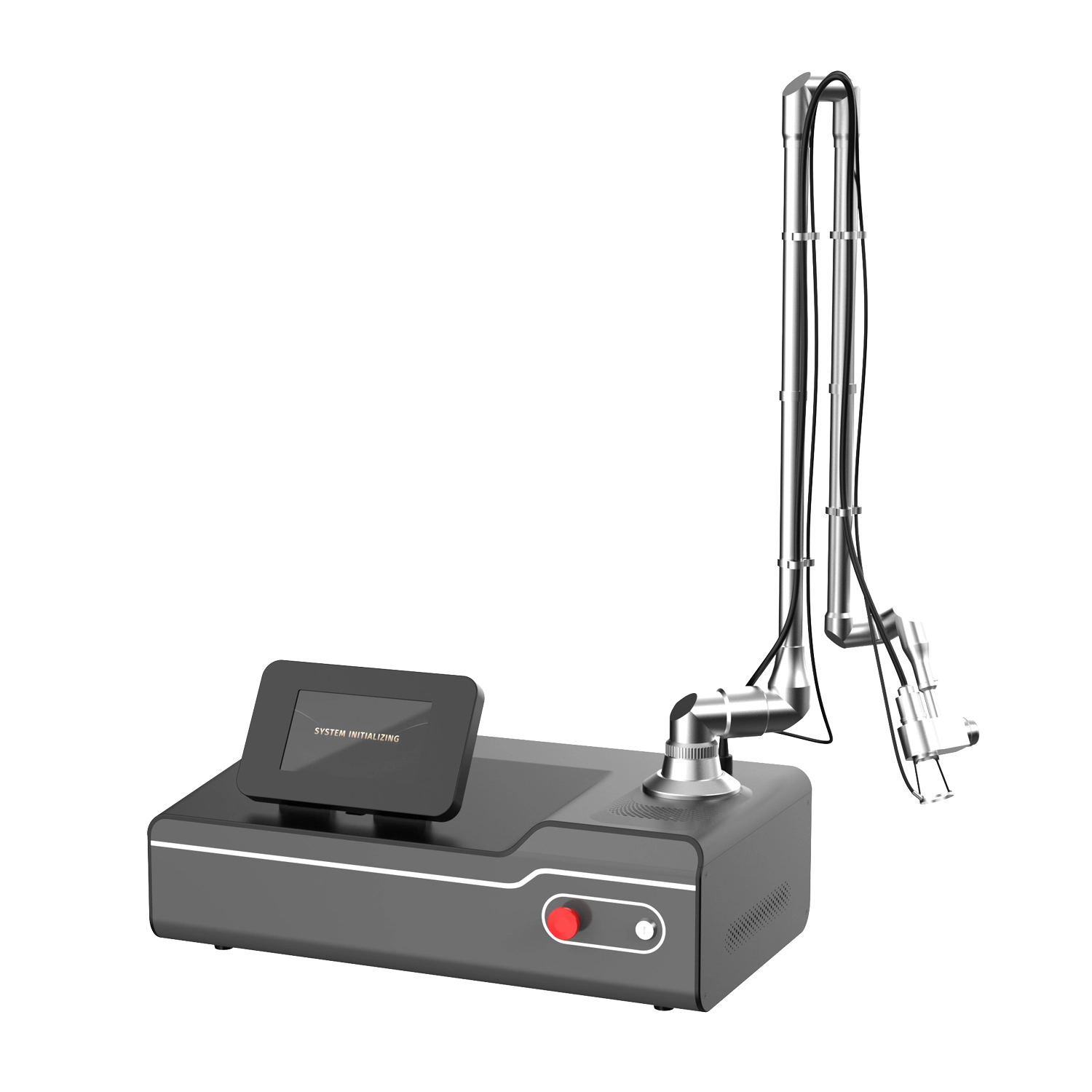
Professional CO2 Fractional Laser Machine for Skin Resurfacing & Scar Treatment
The CO2 Fractional Laser Machine is a professional CO2 fractional laser machine designed for advanced skin resurfacing, scar treatment, and skin rejuvenation procedures.
Using 10,600nm CO2 fractional laser technology, the system delivers controlled microthermal zones into the skin, stimulating collagen remodeling while preserving surrounding tissue. This fractional approach significantly improves treatment safety, recovery time, and clinical outcomes.
The CO2 fractional laser machine is widely used in dermatology clinics and medical aesthetic centers for treating acne scars, wrinkles, enlarged pores, stretch marks, and various skin texture concerns.
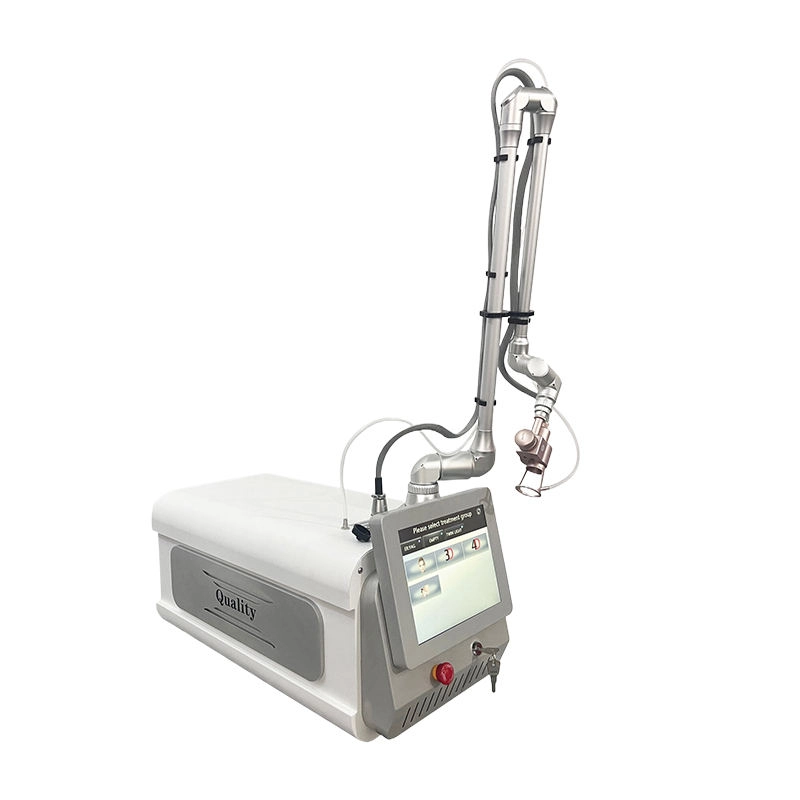
Professional CO2 Fractional Laser Machine | Fractional & Vaginal Rejuvenation CO2 Laser System
The CO2 fractional laser machine is a professional medical-grade device designed for deep skin resurfacing, wrinkle reduction, scar repair, and vaginal rejuvenation. Using a 10600 nm fractional CO2 laser beam, it creates micro-thermal columns on the skin to stimulate collagen regeneration and accelerate skin healing.
This CO2 fractional laser machine provides multiple treatment modes, including fractional mode, surgical cutting mode, and optional vaginal tightening mode, making it ideal for dermatology clinics and professional beauty centers seeking advanced laser solutions.
Its high precision, adjustable spot size, stable energy output, and seven-joint articulated arm ensure safe, accurate, and effective treatment results with minimal downtime.
Get more information
If you have any comments or good suggestions, please leave us a message; later our professional staff will contact you as soon as possible.
Let's Talk
Stay in touch with us for cutting-edge beauty solutions, professional guidance, and customized service.
Contact


Room 307, Building A, Huilong International E-commerce Industrial Park, No. 10 Xipengling Road, Helong Street, Baiyun District, Guangzhou, China
© 2025 HUIMAIN. All Rights Reserved. Privacy Policy | Terms and Conditions | Sitemap
Facebook
Instagram
Medical beauty equipment factory
huimain Medical beauty equipment factory
beauty machine supplier
Whatsapp: +8619124004543