


Import regulations for salon machines by country
- Understanding device classification and global standards
- Why classification drives the process
- Key international standards to plan for
- Clinical claims and intended use
- Country-by-country comparison: what to expect
- Overview table of key regulatory checkpoints
- Interpreting the table
- Practical steps to import beauty machines for salon
- Step 1 — Do a regulatory gap assessment
- Step 2 — Prepare documentation and testing
- Step 3 — Appoint local representation
- Costs, timelines, and common obstacles
- Estimated timelines and typical costs
- Common obstacles and how I recommend avoiding them
- Post-market obligations, customs, and commercial considerations
- Post-market surveillance and vigilance
- Customs, HS codes and import documentation
- After-sales and maintenance—commercially critical
- How I help clients get products market-ready
- Regulatory strategy and technical file preparation
- Testing and clinical evaluation coordination
- Local registration and distribution setup
- Case examples and references
- Energy-based devices (lasers, HIFU)
- Non-invasive body contouring (cryolipolysis, EMS)
- Microneedling and plasma devices
- About Guangzhou Huimain Technology Co., Ltd. and why partners choose us
- Frequently Asked Questions (FAQ)
- 1. Do beauty machines for salon always need medical device approval?
- 2. How long does CE marking usually take for an energy-based aesthetic device?
- 3. What standards should I prioritize for electrical safety and EMC?
- 4. Can I use CE or FDA clearance to expedite registration in other countries?
- 5. What common labeling mistakes cause customs delays?
- 6. How do I choose an Authorized Representative or local distributor?
As a consultant and content creator with deep experience in beauty machines for salon, I help manufacturers and buyers navigate the increasingly complex import landscape. This article summarizes the core regulatory requirements you’ll meet when importing salon aesthetic devices into major markets (United States, European Union, United Kingdom, Australia, China, and GCC), highlights common pitfalls, and offers an actionable checklist to speed approvals and customs clearance. Wherever possible I reference authoritative sources so you can verify requirements for your specific device and market.
Understanding device classification and global standards
Why classification drives the process
Before you can import any aesthetic device—whether a cryolipolysis machine, HIFU machine, laser hair removal system, or micro-needle device—you must determine how regulators classify it. Classification determines the premarket pathway, the level of evidence needed, and applicable standards (for example, biocompatibility or electrical safety). For example, a non-invasive cavitation machine may be treated as a low-to-moderate risk device, while energy-based devices (lasers, HIFU) often attract stricter controls because of potential tissue injury risks.
Key international standards to plan for
Most regulators expect compliance with internationally recognized standards such as ISO 13485 (quality management for medical devices), IEC 60601 series (electrical safety and electromagnetic compatibility), and ISO 10993 (biocompatibility). Meeting these standards makes approvals smoother. See ISO guidance on ISO 13485: https://www.iso.org/iso-13485-medical-devices. and IEC info: https://www.iec.ch/.
Clinical claims and intended use
I always stress: your stated intended use and claims determine the regulatory pathway. If you market a device for cosmetic use only versus medical treatment of subcutaneous fat the classification and evidence expectations change. Be conservative and align labels, marketing materials, and instructions with the regulatory strategy.
Country-by-country comparison: what to expect
Overview table of key regulatory checkpoints
| Market | Key regulator / scheme | Typical classification | Main requirements | Authoritative link |
|---|---|---|---|---|
| United States | FDA (CDRH) | Class I–III depending on risk | 510(k) clearance or PMA for higher risk; electrical safety (IEC 60601); labeling; QMS | FDA Medical Devices |
| European Union | EU MDR 2017/745 | Class I–III; many energy-based devices fall into IIa/IIb | CE marking under MDR; Technical Documentation; Clinical Evaluation; Notified Body for IIa–III | EU MDR overview |
| United Kingdom | MHRA / UKCA | Similar to EU MDR; UKCA replacing CE over transition | UKCA mark; technical file; UK Responsible Person for non-UK manufacturers | UKCA marking |
| Australia | TGA | Class I–III | Inclusion in Australian Register of Therapeutic Goods (ARTG) for higher classes; conformity evidence | TGA Medical Devices |
| China | NMPA (formerly CFDA) | Class I–III; many devices are Class II/III | Registration or filing (clinical data often required); Chinese-language documentation; local testing labs | NMPA |
| GCC (e.g., UAE, Saudi) | GCC conformity / local authority | Varies; many accept CE/FDA with local registration | Local registration, authorized representative, VAT/customs rules | WHO country resources |
Interpreting the table
As the table shows, the core elements repeat across markets: accurate device classification, adherence to applicable standards (electrical safety, EMC, biocompatibility), a robust technical file, and responsible local representation. The differences lie in whether a Notified Body/competent authority review is mandatory and the extent of local clinical or bench testing.
Practical steps to import beauty machines for salon
Step 1 — Do a regulatory gap assessment
I begin every project with a gap assessment: match your device to the target market(s) and list which documents, tests, and approvals are missing. This minimizes surprises during customs inspections or premarket submissions.
Step 2 — Prepare documentation and testing
Core documentation includes a detailed technical file (device description, risk analysis, labeling, IFU), a Declaration of Conformity (where relevant), test reports for IEC 60601/EMC, and ISO 10993 biocompatibility testing for parts in contact with skin. For clinical evidence, the EU MDR requires a clinical evaluation per MEDDEV 2.7/1 rev 4 principles and often published literature plus device-specific studies. See EU MDR details: https://ec.europa.eu/health/md_sector/overview_en.
Step 3 — Appoint local representation
If you are a non-resident manufacturer you will need a local Authorized Representative (EU), Responsible Person (UK), or local sponsor/registrant (China, GCC). This entity handles registration, post-market vigilance, and customs liaison.
Costs, timelines, and common obstacles
Estimated timelines and typical costs
Timelines vary widely by device class and market. The following table summarizes typical ranges based on my company experience and public guidance (estimates for planning only):
| Market | Typical timeline | Typical cost drivers |
|---|---|---|
| USA | 3–12 months (510(k) ~6–12 mo) | Testing (IEC 60601), 510(k) preparation, consultant fees, possible clinical studies |
| EU | 3–18 months (depends on Notified Body availability) | Notified Body fees, clinical evaluation, testing, technical file development |
| UK | 3–12 months | UK Responsible Person, technical documentation updates, UKCA transition costs |
| Australia | 3–12 months | TGA conformity assessment, local agent fees |
| China | 6–18 months | Local testing, translation, clinical data, agent fees |
For precise cost estimates consult accredited testing labs and regulatory consultants. The cost is driven by test complexity, device invasiveness, and whether new clinical data are required.
Common obstacles and how I recommend avoiding them
- Poorly aligned marketing claims: Ensure claims match your technical file and intended use.
- Insufficient electrical and EMC testing: Pre-book accredited labs familiar with medical device testing (IEC 60601).
- Language gaps: Prepare translations for IFU and labeling in required local languages to avoid customs delays.
- Not having a local representative: Appoint one early to speed registration and post-market surveillance tasks.
Post-market obligations, customs, and commercial considerations
Post-market surveillance and vigilance
Once in market, you must monitor device performance, report serious incidents, and maintain a complaint handling system. The EU MDR and FDA both enforce post-market reporting. See FDA guidance: FDA postmarket.
Customs, HS codes and import documentation
Customs clearance requires correct HS codes, commercial invoices, packing lists, certificates of origin, and regulatory certificates (CE/Declaration of Conformity, FDA 510(k) letter where applicable). Tariff classification affects import duty and VAT; work with customs brokers who understand medical/aesthetic devices.
After-sales and maintenance—commercially critical
For salon owners, reliable after-sales service, spare parts availability, and local training are top purchasing criteria. From the manufacturer perspective, having a local service partner or training program reduces returns and reputational risk.
How I help clients get products market-ready
Regulatory strategy and technical file preparation
I work with manufacturers to create regulatory roadmaps that align product claims, clinical evidence, and testing plans with the desired target markets. This reduces rework and speeds approvals.
Testing and clinical evaluation coordination
I coordinate accredited labs for IEC 60601/EMC testing, ISO 10993 biocompatibility, and clinical studies when required. Using labs and CROs with prior medical device experience expedites the process.
Local registration and distribution setup
I advise on selecting Authorized Representatives, local distributors, and warranty/service models that fit market expectations, protecting both brand and end users.
Case examples and references
Energy-based devices (lasers, HIFU)
These devices frequently require higher classification due to tissue effects. In the EU they often sit in Class IIa/IIb requiring Notified Body involvement under MDR. In the US, many laser systems require 510(k) clearance. Appropriate IEC 60825 (laser safety) and IEC 60601 testing is essential.
Non-invasive body contouring (cryolipolysis, EMS)
While often marketed as aesthetic, regulators evaluate the mechanism of action and risk. Many such devices fit into moderate risk classes and require documented performance and electrical safety testing plus documentation of clinical effectiveness if specific claims are made.
Microneedling and plasma devices
Devices that breach the skin (microneedling) or create intentional wounding carry higher scrutiny; biocompatibility and sterility/cleaning instructions are key. For devices making therapeutic claims, expect clinical evidence requirements.
About Guangzhou Huimain Technology Co., Ltd. and why partners choose us
Guangzhou Huimain Technology Co., Ltd. is a high-tech enterprise specializing in the research, development, production, and after-sales service of professional beauty machines and home-use devices. Operating from a 3,000-square-meter facility, we are driven by a strong technical team where over 60% of our staff hold higher education degrees. Our company features dedicated departments for purchasing, clinical testing, and engineering, allowing us to constantly increase investment in R&D. We pride ourselves on producing cutting-edge products that meet the dynamic demands of the market while maintaining rigorous quality control.
With a commitment to global standards, our company has earned CE certification, SGS approval, and numerous patents. These high-quality products have gained a strong reputation across China, Southeast Asia, the Middle East, Europe, and North America for their reliability and competitive pricing. Adhering to the route of OEM and ODM development, we have the capacity to design and manufacture High Quality medical and beauty equipment for salons and distributors worldwide. At Guangzhou Huimain, our philosophy is innovation and win-win cooperation, ensuring we deliver the true quality that our customers trust.
HUIMAIN’s core salon and pro products include Cryolipolysis machine, EMS sculpting machine, Plasma machine, Shockwave machine, HIFU machine, Hydrofacial machine, Cavitation vacuum machine, Laser hair removal, Tattoo removal machine, Micro needle machine. We combine certified quality systems (ISO/CE/SGS), in-house clinical testing, and responsive after-sales to minimize regulatory and commercial risk for our partners.
Visit our website: https://www.huimainbeauty.com/ or email us at coco@huimainbeauty.com to discuss OEM/ODM options, technical dossiers, or to request product datasheets and regulatory support.
Frequently Asked Questions (FAQ)
1. Do beauty machines for salon always need medical device approval?
Not always. It depends on intended use and claims. If marketed purely for cosmetic purposes without therapeutic claims and minimal risk, some devices may be considered consumer or cosmetic devices. However, energy-based devices or devices that breach skin often fall under medical device regulations. Always perform a classification review for each target market.
2. How long does CE marking usually take for an energy-based aesthetic device?
CE marking under the EU MDR for energy-based devices often takes 6–18 months, largely influenced by Notified Body capacity, the completeness of technical documentation, and clinical evidence needs. Plan for additional time if new clinical data are required. See EU MDR overview: https://ec.europa.eu/health/md_sector/overview_en.
3. What standards should I prioritize for electrical safety and EMC?
IEC 60601-1 (general electrical safety) and IEC 60601-1-2 (EMC) are primary. Laser devices also require IEC 60825. Aligning with these standards significantly reduces technical objections during review.
4. Can I use CE or FDA clearance to expedite registration in other countries?
Many countries accept CE or FDA evidence as part of their registration package, but local submission steps, language requirements, and fees still apply. GCC countries, for instance, often accept CE/FDA documentation but still require local registration and an authorized local agent.
5. What common labeling mistakes cause customs delays?
Common issues include missing local language IFU, incorrect HS code, lack of regulatory certificates, unclear country of origin, and product/serial number discrepancies between packing list and actual units. Pre-review labels against local requirements to avoid holds.
6. How do I choose an Authorized Representative or local distributor?
Choose partners with medical device regulatory experience, a track record with similar product types, technical service capability, and good relationships with local authorities. Ensure contractual clarity on responsibilities for vigilance and recalls.
Need help assessing a specific product or preparing a regulatory strategy for your target market? Contact me at coco@huimainbeauty.com or visit our product catalog at HUIMAIN. I can help you scope testing, prepare technical files, and identify the fastest compliant route to market.
emsculpt machine
What kind of after-sales service is provided with the emsculpt machine for sale?
We offer professional training, 6-12 months warranty, technical support, and spare parts supply to ensure smooth operation for salons and clinics.
Muscle exercise + Roller Massage
How does the EMS + RF + Inner Ball Roller machine work?
It uses electrical muscle stimulation to contract muscles, RF energy to heat and tighten skin, and inner roller massage to boost lymphatic drainage and circulation.
ulthra超声刀
Does HIFU treatment cause pain or downtime?
Most clients experience minimal discomfort. There is no downtime, and normal activities can resume immediately.
OL-164
Can it be used for acne-prone skin?
Yes, it effectively removes impurities and excess oil, reducing breakouts and inflammation.
MDZ-SC03 皮肤检测仪
Is the Skin Analyzer suitable for daily salon use?
Yes. It is designed for frequent professional use in salons and clinics.

CO2 Fractional Laser Machine – Professional Wrinkle Removal & Skin Resurfacing Device
The CO2 Fractional Laser Machine is a multifunctional aesthetic device designed for professional clinics and beauty salons. Using advanced fractional CO2 laser technology, it effectively targets acne scars, freckles, pigmentation, nevi, and deep wrinkles. Additionally, it provides non-invasive skin rejuvenation, vaginal tightening, and intimate beautification. This professional CO2 laser equipment combines precision, safety, and powerful energy output to deliver outstanding anti-aging and dermatological results.

5-in-1 40K Cavitation Vacuum Machine for Body Slimming & Fat Reduction
The 5-in-1 40K Cavitation Vacuum Machine is a professional body shaping system designed for fat reduction, cellulite smoothing, and overall body contouring. Using 40KHz ultrasonic cavitation, this device breaks down stubborn fat cells, while vacuum suction improves lymphatic drainage and accelerates toxin removal.
With multiple RF tightening handles, the machine stimulates collagen regeneration and helps lift and firm loose areas of the body. Compact, powerful, and easy to operate, it is the perfect solution for beauty salons, spa centers, and slimming studios seeking fast and visible fat-reduction results.
This cavitation vacuum machine is built to deliver safe, non-invasive treatments with no downtime—making it a top choice for body contouring professionals.
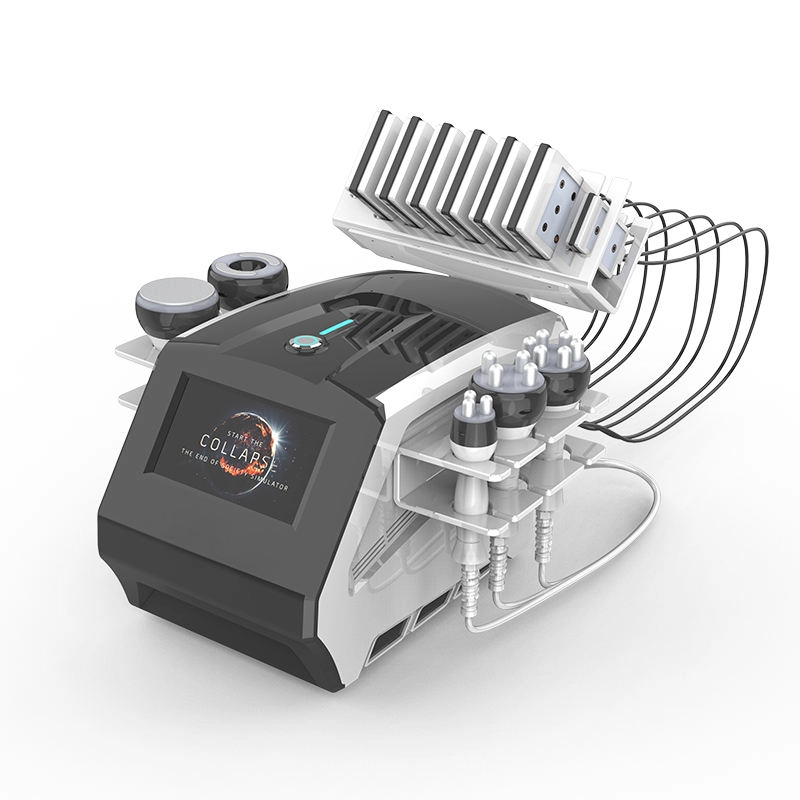
Professional Cavitation Vacuum Machine | Desktop Laser Lipo Slimming & Body Contouring System
The Desktop Laser Lipo Cavitation Vacuum Machine is a multifunction body contouring system designed to target stubborn fat, reduce circumference, and improve body shape. Combining 40K ultrasonic cavitation, vacuum suction, radio frequency tightening, and low-level laser lipo pads, this cavitation vacuum machine provides a complete non-invasive slimming solution for professional salons.
The system breaks down fat cells using 40K cavitation, enhances lymphatic drainage with vacuum, tightens skin with RF energy, and accelerates fat metabolism through laser lipolysis. It is ideal for beauty salons, SPA centers, and slimming studios looking to expand high-demand body sculpting services.

V9 Slimming Machine | 5-in-1 Professional Body Contouring & Cellulite Reduction Device | Vacuum, RF, Cavitation, Infrared & Roller
The V9 Slimming Machine is a comprehensive, professional-grade aesthetic device designed to address a wide range of body and facial concerns. This all-in-one system masterfully integrates five powerful technologies—vacuum, roller, infrared, RF, and cavitation—to deliver a complete solution for slimming and shaping.
It is the ideal choice for businesses looking to offer a multi-functional device that can perform multiple treatments, from reducing fat and cellulite to lifting and tightening the skin. The V9 Slimming Machine helps clients combat issues like postpartum obesity, local obesity, and facial sagging.
Get more information
If you have any comments or good suggestions, please leave us a message; later our professional staff will contact you as soon as possible.
Let's Talk
Stay in touch with us for cutting-edge beauty solutions, professional guidance, and customized service.
Contact


Room 307, Building A, Huilong International E-commerce Industrial Park, No. 10 Xipengling Road, Helong Street, Baiyun District, Guangzhou, China
© 2025 HUIMAIN. All Rights Reserved. Privacy Policy | Terms and Conditions | Sitemap
Facebook
Instagram
Medical beauty equipment factory
huimain Medical beauty equipment factory
beauty machine supplier
Whatsapp: +8619124004543