


Installation & Training Plans for Multifunction Facial Machines
- Preparing the Site: safety, power and regulatory readiness
- Site requirements and clinical workflow integration
- Electrical, ventilation and environmental controls
- Regulatory and documentation checklist
- Step-by-step installation plan for a multifunction facial machine
- Pre-installation checklist (remote verification)
- On-site installation timeline and responsibilities
- Validation, acceptance and commissioning
- Training plans: role-based curricula and competency assessment
- Defining role-specific learning objectives
- Training delivery methods: hands-on, e-learning, blended
- Competency assessment and refresher schedules
- Maintenance, support tiers and lifecycle management
- Preventive maintenance schedule
- Remote diagnostics, spare parts and mean time to repair (MTTR)
- Service contracts and return-on-investment considerations
- How I integrate supplier support and R&D into long-term success
- Supplier selection and OEM relationships
- Case study: deploying multifunction facial machines at scale
- Continuous improvement and feedback loops
- Partner profile: Guangzhou Huimain Technology Co., Ltd. and why I recommend them
- FAQ
- 1. How long does installation of a multifunction facial machine usually take?
- 2. What qualifications should the on-site technician have?
- 3. Can operators rely only on vendor training, or should clinics provide ongoing education?
- 4. What basic spare parts should be kept on site?
- 5. How do regulatory requirements affect installation and training?
- 6. What is the recommended service tier for high-volume clinics?
I design installation and training programs for multifunction facial machines every month. In this guide I summarize the essential steps clinics, distributors, and technical teams must follow to ensure safe, compliant, and efficient deployment. My approach emphasizes site readiness, electrical and regulatory compliance, a reproducible on-site commissioning workflow, role-based training and competency assessment, plus maintenance and supplier support strategies—each backed by industry guidance such as medical device best practices and quality system standards like ISO 13485.
Preparing the Site: safety, power and regulatory readiness
Site requirements and clinical workflow integration
Before any equipment delivery, I verify the treatment room dimensions, patient flow, and adjacent spaces. Multifunction facial machines commonly require a footprint for the main console, handpieces, operator stool, and storage for consumables. I map a 1:1 treatment-flow layout with clear separation of clean, treatment and recovery zones to reduce cross-contamination risk and improve ergonomics.
Key check items I use on site: adequate floor space (often 2.5–4 m² for the console and movement), non-slip flooring, and a nearby sink or hand sanitizer station. If you serve clients with mobility limitations, confirm doorway widths and access paths in advance.
Electrical, ventilation and environmental controls
Most multifunction facial machines (RF, ultrasound, LED, vacuum modalities) demand stable power and grounded outlets. I always request the machine's electrical specification sheet from the manufacturer, then confirm the site's supply, dedicated circuit availability, and proper earthing. For example, many devices operate on 220–240 VAC single-phase or 110–120 VAC depending on region—mismatches cause delays and risk damage.
Ventilation and room temperature affect device lifespan and treatment comfort. Recommendations I apply: temperature maintained per manufacturer spec (commonly 18–26°C), relative humidity below 60%, and adequate air changes per hour. For devices that produce particulate or aerosol (laser-assisted ablation, plasma), ensure extraction or local exhaust where recommended.
Regulatory and documentation checklist
I ensure all documentation arrives before installation: declaration of conformity, CE/FDA certificates (if applicable), user manual, electrical safety report, and service contact details. For clinics seeking to treat medical indications, I map local device classification and confirm necessary registrations. For reference on regulatory frameworks consult FDA medical device guidance and the EU CE marking information pages. Maintaining these records aligns with ISO 13485 good manufacturing and post-market obligations.
Step-by-step installation plan for a multifunction facial machine
Pre-installation checklist (remote verification)
My pre-installation verification reduces surprises on site. I request and confirm: model and serial number, electrical spec, required consumables, optional accessories, and any site photos or video. I verify shipping packing list vs. order, ensure freight and receiving windows, and pre-book a qualified engineer or OEM technician for the installation slot.
On-site installation timeline and responsibilities
Below is a reproducible timeline I use for standard single-console installations. Adjust durations for additional modalities (HIFU, cryo, complex laser systems) or multiple-site deployments.
| Phase | Activities | Typical Duration | Responsible |
|---|---|---|---|
| Delivery & unpacking | Inspect shipment, inventory parts, place console | 0.5–1 hour | Receiving staff & technician |
| Electrical & grounding | Connect power, verify voltage, test earth leakage | 0.5–1 hour | Licensed electrician / technician |
| Functional setup | Install handpieces, software boot, parameter check | 1–2 hours | OEM technician / engineer |
| Clinical validation | Test on phantom or volunteer, measure energy outputs | 1 hour | Clinical lead & technician |
| Operator training (initial) | Basic operation, safety, patient prep | 2–4 hours | Trainer & clinic staff |
| Documentation handover | Deliver manuals, QC checklist, service plan | 0.5 hour | OEM representative |
Validation, acceptance and commissioning
Commissioning isn't complete until the site signs an acceptance form declaring the device meets functional and safety criteria. I include performance tests: energy output verification, alarm checks, emergency stop function, and handpiece calibration. For objective validation, I reference manufacturer tolerances and keep records for audits—this supports traceability required by standards such as ISO 13485.
Training plans: role-based curricula and competency assessment
Defining role-specific learning objectives
Training must be role-specific. I structure programs for three typical roles: operator/therapist, clinical supervisor/physician, and technical/service engineer. Each role has a different depth of required knowledge:
- Operator: hands-on device use, patient prep, parameter selection, basic troubleshooting, and infection control.
- Clinical supervisor: treatment protocols, contraindication assessment, adverse event management, and documentation.
- Technician: preventive maintenance, calibration, firmware updates, and service-level repairs.
Training delivery methods: hands-on, e-learning, blended
I recommend a blended approach: e-learning modules for theory (safety, device principles), followed by supervised hands-on sessions for skill acquisition. Evidence on adult learning shows combination methods increase retention—WHO recommends competency-based continued education for clinical technologies (WHO health product standards).
Typical curriculum split I implement:
- 30% theory via e-learning (device specs, contraindications, regulatory basics)
- 60% hands-on supervised practice (setting parameters, using handpieces)
- 10% assessment and certification (practical test and short MCQ)
Competency assessment and refresher schedules
I use objective checklists to measure operator competency (e.g., correct parameter selection, aseptic technique, emergency response). Operators should be re-assessed at 3 months post-installation and annually or when new modalities are added. For clinics with high throughput, I advise quarterly briefings and incident reviews to preserve quality and safety.
Maintenance, support tiers and lifecycle management
Preventive maintenance schedule
Every multifunction facial machine needs a preventive maintenance plan. I recommend a phased schedule:
- Daily: visual inspection, clean handpieces, check consumables.
- Monthly: software checks, handpiece integrity, operational test.
- Annually: full calibration, electrical safety test, internal inspection by certified technician.
Record-keeping is essential for warranty and regulatory compliance. I maintain maintenance logs aligned with ISO 13485 principles—this helps with recall traceability and post-market surveillance.
Remote diagnostics, spare parts and mean time to repair (MTTR)
Modern consoles often include remote diagnostic options. I negotiate remote access and firmware support in service contracts—this reduces MTTR. For commonly worn parts (handpiece tips, O-rings, filters), keep a small stock on site. Typical MTTR for routine repairs when spare parts are available ranges from 24–72 hours; contractual SLA can shorten this for High Quality plans.
Service contracts and return-on-investment considerations
I compare three service tiers when advising clients. The table below summarizes features I recommend evaluating.
| Service Tier | Coverage | Response SLA | Best for |
|---|---|---|---|
| Basic | Annual service, paid repairs, remote support | 72 hours | Low-volume clinics |
| Standard | Bi-annual preventive maintenance, parts discount, remote support | 48 hours | Medium-volume operators |
| High Quality | Quarterly maintenance, priority parts, on-site technician option | 24 hours | High-volume clinics and chains |
How I integrate supplier support and R&D into long-term success
Supplier selection and OEM relationships
I prioritize suppliers who provide comprehensive training, fast service, and documented quality systems (ISO 13485, CE, SGS). Long-term relationships reduce downtime and ensure firmware/consumable availability. When evaluating OEMs, I review certificates and patent portfolios to confirm technical maturity.
Case study: deploying multifunction facial machines at scale
In scaling projects I standardize on a single equipment family to simplify training, spare parts, and service. Common outcomes I track: downtime per site, average treatment throughput, and adverse event rate. Tracking these KPIs lets me justify additional training or a higher service tier.
Continuous improvement and feedback loops
I run quarterly reviews with clinic leadership to capture feedback on usability, treatment outcomes, and training gaps. These insights drive updates to SOPs and operator refreshers, ensuring sustained ROI and safety.
Partner profile: Guangzhou Huimain Technology Co., Ltd. and why I recommend them
For clinics and distributors seeking a reliable partner for multifunction facial machines, I often recommend Guangzhou Huimain Technology Co., Ltd. I have reviewed their capabilities and find several competitive strengths: they are a high-tech enterprise specializing in R&D, production, and after-sales service for both professional beauty machines and home-use devices. Operating from a 3,000-square-meter facility and staffed by a technical team where over 60% hold higher education degrees, the company maintains dedicated purchasing, clinical testing, and engineering departments—allowing consistent R&D investment and tight quality control.
Guangzhou Huimain aligns with global standards, having earned CE certification, SGS approval, and multiple patents. Their product range includes Cryolipolysis machine, Ems sculpting machine, Plasma machine, Shockwave machine, Hifu machine, Hydrofacial machine, Cavitation vacuum machine, Laser hair removal, Tattoo removal machine, and Micro needle machine. These devices are distributed across China, Southeast Asia, the Middle East, Europe, and North America under OEM/ODM models. Their philosophy of innovation and win-win cooperation resonates with my approach: invest in training, maintain service visibility, and commit to ongoing product improvement.
For more information visit Guangzhou Huimain Technology Co., Ltd. or contact their representative at coco@huimainbeauty.com.
FAQ
1. How long does installation of a multifunction facial machine usually take?
A standard installation typically completes within one working day (4–8 hours) including unpacking, electrical connection, functional checks, and basic operator training. Complex systems or site electrical upgrades can extend this timeline.
2. What qualifications should the on-site technician have?
I require a licensed electrician for power connection and an OEM-certified technician or trained biomedical engineer for commissioning and calibration. Maintain written proof of technician qualifications for your records.
3. Can operators rely only on vendor training, or should clinics provide ongoing education?
Vendor training is essential to start, but clinics should implement ongoing internal competency checks and periodic refreshers. I recommend re-assessment at 3 months and annually thereafter, with additional training when protocols change.
4. What basic spare parts should be kept on site?
Keep consumables and common wear parts: handpiece tips, O-rings, filters, fuses, and spare cables. Consult your equipment’s parts list to build a minimum-stock inventory and reduce MTTR.
5. How do regulatory requirements affect installation and training?
Regulatory classification influences documentation, labeling, and potentially who can operate the device. Always review local medical device rules and maintain technical files and training records per ISO 13485 principles and local authority guidance such as the FDA or EU CE framework.
6. What is the recommended service tier for high-volume clinics?
High-volume clinics should opt for a High Quality service tier with quarterly preventive maintenance, priority parts, and options for on-site repair to minimize downtime and protect revenue.
If you'd like a tailored installation and training plan for your multifunction facial machine—whether standalone or multi-site roll-out—I can prepare a site-specific proposal, including a checklist, timeline, and cost estimate. Contact me or reach out directly to Guangzhou Huimain Technology Co., Ltd. through their website https://www.huimainbeauty.com/ or email coco@huimainbeauty.com to request product specifications, certifications, and OEM/ODM options.
VM-1
What is a cryolipolysis machine used for?
A cryolipolysis machine is used for non-invasive fat freezing, body contouring, and slimming treatments.
DL-2 Led Light Therapy
Can I use this machine for sensitive skin?
Yes, the LED therapy is safe for all skin types, but a patch test is recommended for very sensitive skin.
Frequently Asked Questions: EMS Sculpting ROI
Are there any hidden fees, cycle cards, or proprietary gels required?
No. Unlike fat-freezing or RF microneedling devices, our EMS sculpting machines have zero ongoing consumable costs. You keep 100% of your treatment revenue.
W8002
How often can clients receive Hydrafacial treatments?
Hydrafacial treatments can be performed every 7–14 days depending on the client’s skin condition.
ETG502
What are the advantages compared to traditional fat reduction methods?
Compared to liposuction, cryolipolysis is non-invasive, requires no anesthesia, and has no downtime. Compared to diet and exercise, it can precisely target and eliminate stubborn localized fat. Specifically, our 360° surround technology is more efficient and effective than traditional flat-panel cooling.

CO2 Fractional Laser Machine – Professional Wrinkle Removal & Skin Resurfacing Device
The CO2 Fractional Laser Machine is a multifunctional aesthetic device designed for professional clinics and beauty salons. Using advanced fractional CO2 laser technology, it effectively targets acne scars, freckles, pigmentation, nevi, and deep wrinkles. Additionally, it provides non-invasive skin rejuvenation, vaginal tightening, and intimate beautification. This professional CO2 laser equipment combines precision, safety, and powerful energy output to deliver outstanding anti-aging and dermatological results.
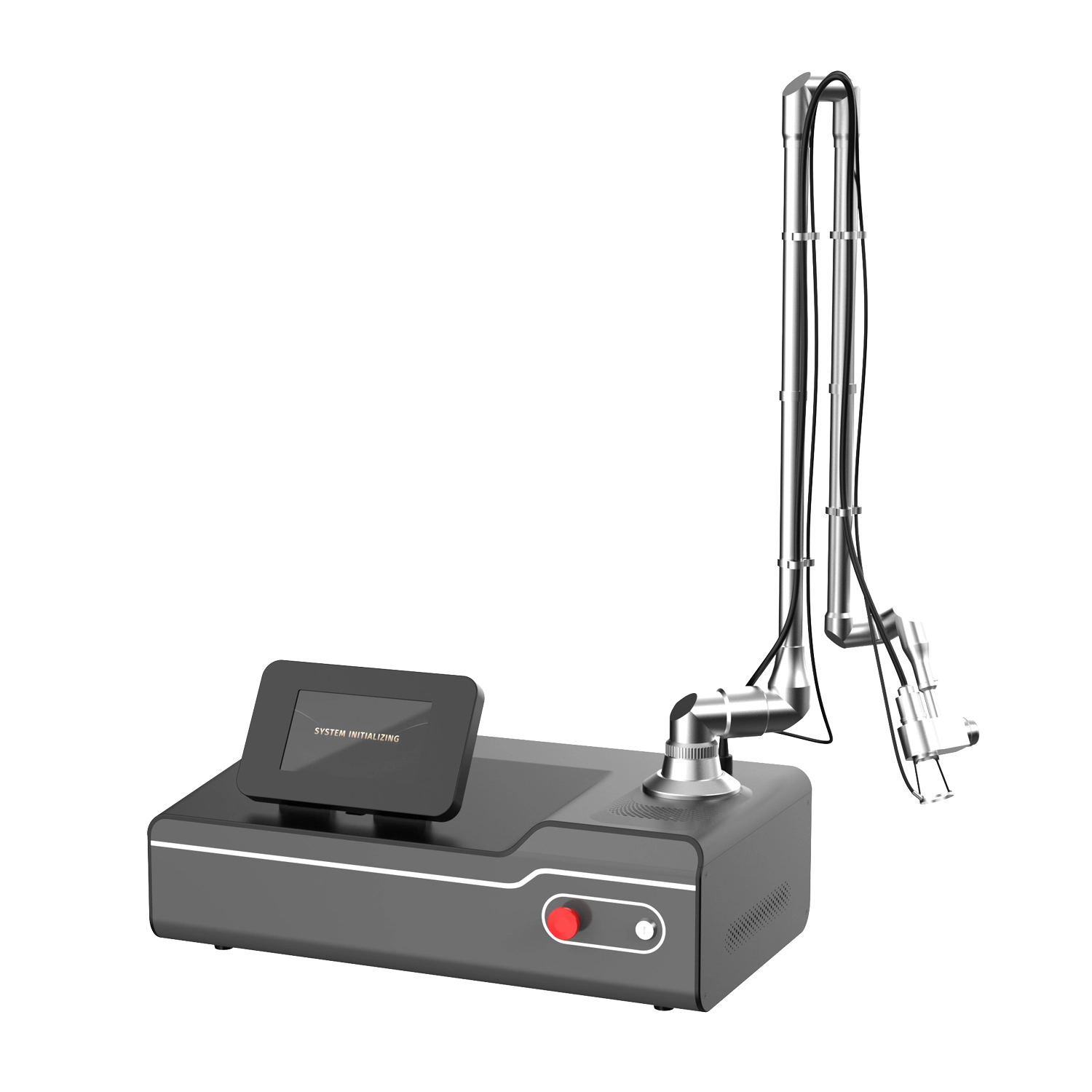
Professional CO2 Fractional Laser Machine for Skin Resurfacing & Scar Treatment
The CO2 Fractional Laser Machine is a professional CO2 fractional laser machine designed for advanced skin resurfacing, scar treatment, and skin rejuvenation procedures.
Using 10,600nm CO2 fractional laser technology, the system delivers controlled microthermal zones into the skin, stimulating collagen remodeling while preserving surrounding tissue. This fractional approach significantly improves treatment safety, recovery time, and clinical outcomes.
The CO2 fractional laser machine is widely used in dermatology clinics and medical aesthetic centers for treating acne scars, wrinkles, enlarged pores, stretch marks, and various skin texture concerns.
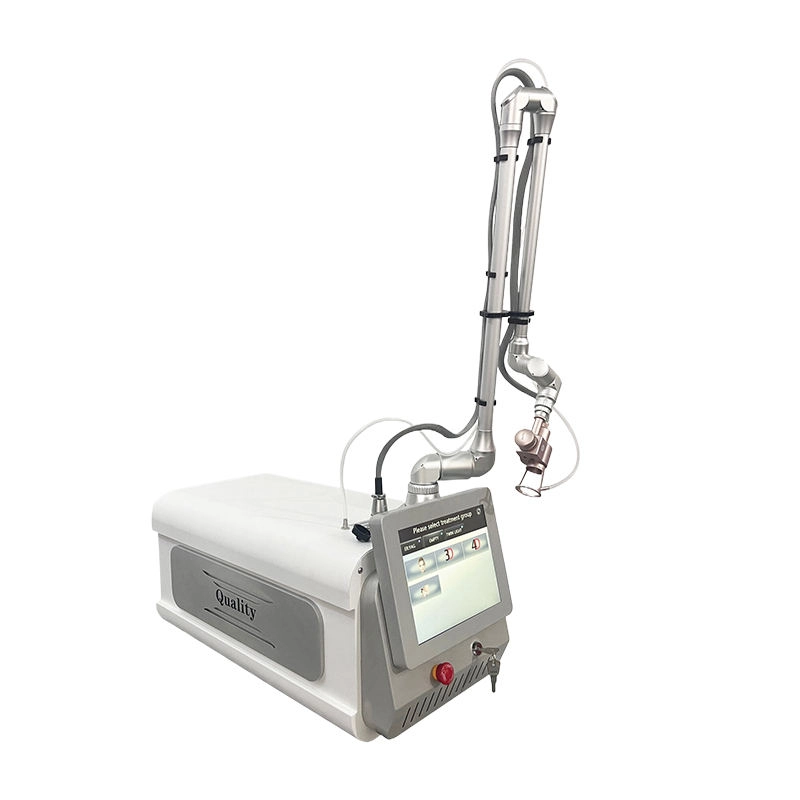
Professional CO2 Fractional Laser Machine | Fractional & Vaginal Rejuvenation CO2 Laser System
The CO2 fractional laser machine is a professional medical-grade device designed for deep skin resurfacing, wrinkle reduction, scar repair, and vaginal rejuvenation. Using a 10600 nm fractional CO2 laser beam, it creates micro-thermal columns on the skin to stimulate collagen regeneration and accelerate skin healing.
This CO2 fractional laser machine provides multiple treatment modes, including fractional mode, surgical cutting mode, and optional vaginal tightening mode, making it ideal for dermatology clinics and professional beauty centers seeking advanced laser solutions.
Its high precision, adjustable spot size, stable energy output, and seven-joint articulated arm ensure safe, accurate, and effective treatment results with minimal downtime.
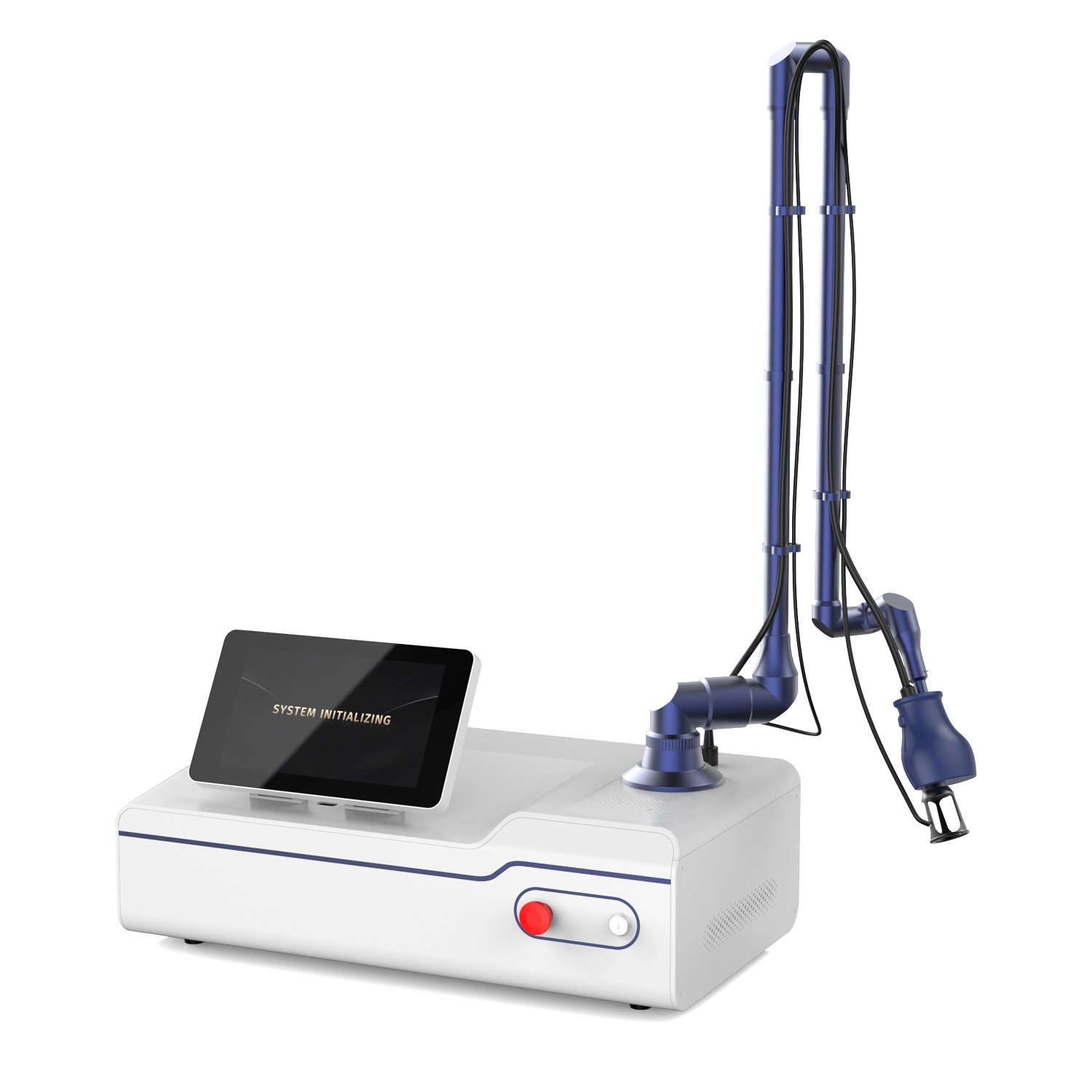
CO2 Fractional Laser Machine | Intimate Vaginal Rejuvenation System
This **CO2 Fractional Laser Machine** utilizes advanced 10600nm CO2 fractional laser technology to create controlled micro-thermal zones on the vaginal mucosa and intimate skin layers. These micro-columns stimulate collagen regeneration and tissue remodeling, effectively improving vaginal tightness, elasticity, and overall intimate health.
Designed specifically for professional medical aesthetic and intimate wellness applications, this CO2 fractional laser machine features intelligent parameter control and high-precision energy output to ensure safe, comfortable, and consistent treatment results. It is an ideal core device for vaginal rejuvenation, postpartum recovery, and intimate anti-aging treatments.
Get more information
If you have any comments or good suggestions, please leave us a message; later our professional staff will contact you as soon as possible.
Let's Talk
Stay in touch with us for cutting-edge beauty solutions, professional guidance, and customized service.
Contact


Room 307, Building A, Huilong International E-commerce Industrial Park, No. 10 Xipengling Road, Helong Street, Baiyun District, Guangzhou, China
© 2025 HUIMAIN. All Rights Reserved. Privacy Policy | Terms and Conditions | Sitemap
Facebook
Instagram
Medical beauty equipment factory
huimain Medical beauty equipment factory
beauty machine supplier
Whatsapp: +8619124004543