


Legal and Ethical Issues for Slimming Machine Clinics
- Regulatory Landscape for Aesthetic Devices
- Device classification and market authorization for Body Slimming Machine
- Clinical evidence, claims, and advertising for Body Slimming Machine
- Informed consent and patient selection
- Training, scope of practice and delegation
- Quality systems, documentation and post-market surveillance
- Privacy, data protection and telemedicine
- Liability, malpractice insurance and product responsibility
- Ethical issues specific to body contouring
- Practical compliance checklist for clinics using Body Slimming Machine technologies
- Comparison: Regulatory obligations (FDA vs EU MDR vs MHRA)
- Guangzhou Huimain Technology Co., Ltd. — Partnering with Clinics
- Case study: Handling an adverse event
- FAQs — Legal and Ethical Issues for Slimming Machine Clinics
- 1. Do body slimming machines require FDA or CE approval?
- 2. What should be included in informed consent for Body Slimming Machine treatments?
- 3. Can non-medical staff operate slimming machines?
- 4. What privacy rules apply to patient photos and records?
- 5. How should a clinic respond to an adverse event?
- 6. What records should a clinic maintain to reduce legal risk?
- Contact and product inquiry
- References
Regulatory Landscape for Aesthetic Devices
The rapid expansion of body contouring technologies means clinics offering Body Slimming Machine treatments face a complex mix of legal obligations and ethical responsibilities. Whether you operate cryolipolysis, HIFU, EMS, cavitation or laser systems, understanding device classification, clinical evidence requirements, advertising limits, patient consent, data privacy and adverse-event reporting is essential to reduce legal risk and protect patients.
Device classification and market authorization for Body Slimming Machine
Most jurisdictions treat body slimming machines as medical devices or aesthetic devices subject to regulatory oversight. The applicable pathway depends on device intended use, risk level and local regulation. For example:
| Jurisdiction | Typical classification | Key compliance steps |
|---|---|---|
| United States (FDA) | Medical device; class depends on technology and indication | 510(k) clearance or De Novo classification if predicate devices exist; adverse event reporting to MAUDE; quality systems (21 CFR 820) |
| European Union (MDR 2017/745) | Medical device under MDR; classification rules apply (I–III) | CE conformity assessment by a Notified Body for many devices; technical documentation; post-market surveillance |
| United Kingdom (MHRA) | UKCA/UK MDR alignment; transitional rules | UKCA marking or CE during transition; registration with MHRA; vigilance reporting |
Sources for these frameworks include FDA device guidance, EU MDR text and MHRA guidance (references listed below). Clinics must verify that devices used are legally marketed for their jurisdiction and indications. Using non-cleared equipment or devices marketed for home-use without appropriate clinical validation can create significant liability.
Clinical evidence, claims, and advertising for Body Slimming Machine
Regulators scrutinize marketing claims for aesthetic devices. Claims that a treatment removes fat permanently or treats obesity may reclassify intended use or be seen as misleading. Ethical advertising requires accuracy, balanced information about benefits and risks, and avoidance of exploitative imagery or promises.
Best practices for claims and evidence:
- Maintain device technical files and clinical evidence aligning with claimed intended use.
- Use peer-reviewed clinical trials or validated clinical data when promoting efficacy — avoid relying solely on manufacturer marketing materials.
- Disclose common adverse events, typical number of sessions, realistic outcomes and alternative options.
Informed consent and patient selection
Informed consent is both an ethical obligation and a legal requirement in most jurisdictions. For Body Slimming Machine treatments, informed consent should cover:
- Nature and purpose of the procedure
- Expected benefits and realistic outcome timelines
- Known and reasonably foreseeable risks and side effects (e.g., bruising, burns, paradoxical adipose hyperplasia for cryolipolysis)
- Contraindications and alternative treatments
- Post-treatment care and follow-up plan
Clinics should document medical history and contraindications (e.g., pregnancy, pacemakers, bleeding disorders) and retain signed consent forms in medical records. A protocol for screening and escalation (referral to a physician if needed) reduces clinical risk.
Training, scope of practice and delegation
Legal liability often turns on who performs treatments and their qualifications. Regulations or professional boards may limit procedures to licensed professionals (physicians, registered nurses) or allow delegation under supervision.
Risk mitigation strategies:
- Define roles and competencies: document which staff perform assessments, operate specific Body Slimming Machine modalities, and handle complications
- Implement formal training, competency assessments and continuing education from recognized providers or manufacturer-led programs
- Maintain written protocols and escalation pathways for adverse events
Quality systems, documentation and post-market surveillance
Regulatory compliance for devices includes quality management systems (e.g., ISO 13485), maintenance logs, device calibration records, and incident reporting. Clinics should keep device operating manuals and maintenance certificates on file.
Where required, adverse events must be reported to regulators (e.g., FDA’s MAUDE, EU vigilance system, MHRA). Even where not mandatory, tracking outcomes and complications supports patient safety and defensible practice.
Privacy, data protection and telemedicine
Patient data collected during consultations and treatment is protected under data privacy laws such as GDPR in the EU/UK and HIPAA in the US. Clinics must:
- Obtain lawful consent for processing health data and use secure electronic medical records
- Limit access to PHI, use encryption, maintain access logs and retention policies
- Ensure third-party service providers (EMR vendors, telemedicine platforms) have appropriate data processing agreements
Liability, malpractice insurance and product responsibility
Legal exposure for clinics arises from professional negligence, product defects, inadequate informed consent or improper advertising. Distinguish responsibilities:
- Operator/clinic: standard of care in assessment, treatment delivery, aftercare
- Manufacturer/supplier: device design, manufacturing defects, labeling accuracy
Clinics should carry professional liability insurance that specifically covers non-surgical cosmetic procedures and review supplier warranties and product liability coverage. Written service agreements and device certificates (CE, FDA clearance where applicable) should be part of procurement due diligence.
Ethical issues specific to body contouring
Beyond legal compliance, clinics must navigate ethical concerns unique to aesthetic care:
- Managing patient expectations and avoiding exploitative marketing tactics that prey on body image vulnerabilities
- Recognizing vulnerable populations and avoiding coercive sales practices
- Access and equity: aesthetic services are often fee-for-service — transparency in pricing and financing is important
- Balancing innovation with patient safety when adopting novel Body Slimming Machine technologies without robust long-term data
Practical compliance checklist for clinics using Body Slimming Machine technologies
- Verify device regulatory status in your jurisdiction (CE/UKCA or FDA clearance where required)
- Keep technical files and clinical evidence accessible
- Establish written consent and screening protocols
- Train and document staff competencies
- Implement data protection measures and agreements with vendors
- Maintain maintenance logs, incident reports and patient outcome tracking
- Secure appropriate professional liability and product liability insurance
- Audit advertising and patient communications for accuracy and ethics
Comparison: Regulatory obligations (FDA vs EU MDR vs MHRA)
| Aspect | FDA (US) | EU MDR (EU) | MHRA (UK) |
|---|---|---|---|
| Device market authorization | 510(k), De Novo, or PMA depending on risk | CE mark after conformity assessment; Notified Body involvement for many devices | UKCA marking / transitional CE recognition; registration with MHRA |
| Post-market surveillance | MAUDE adverse reporting; MDR-like reporting for manufacturers | Vigilance system; periodic safety update reports | Incident reporting to MHRA; vigilance |
| Quality system | 21 CFR 820 (QMS) | ISO 13485 commonly used | Aligned with EU requirements; ISO 13485 recommended |
Clinics should consult local guidance and legal counsel for jurisdiction-specific obligations.
Guangzhou Huimain Technology Co., Ltd. — Partnering with Clinics
For clinics sourcing Body Slimming Machine equipment, selecting a reputable manufacturer is part of legal and ethical risk management. Guangzhou Huimain Technology Co., Ltd. is a high-tech company focused on beauty machines and home-use device series with professional capabilities in R&D, production, sales and after-sale service. Huimain operates a 3,000 m2 facility and a skilled workforce where over 20% hold bachelor’s degrees and more than 40% have junior college qualifications. The company emphasizes a strong technical development department, experienced engineers, PE experts, a professional purchasing team and a clinical test department to support product quality and safety.
Huimain highlights continuous investment in research and development, CE certification and SGS approvals, and multiple patents. Their machines are sold across China, Southeast Asia, the Middle East, Europe and North America. Huimain focuses on OEM and ODM production and claims the capacity to design and manufacture high-quality medical and beauty machines for clinics and salons.
Key product lines and competitive advantages summarized:
- Core products: Cryolipolysis machine, EMS sculpting machine, Plasma machine, Shockwave machine, HIFU machine, Hydrofacial machine, Cavitation vacuum machine, Laser hair removal, Tattoo removal machine, Micro-needle machine
- Advantages: In-house R&D and engineering, clinical testing capability, CE & SGS compliance, patent portfolio, OEM/ODM services, global distribution and after-sale support
When evaluating suppliers like Huimain, clinics should request copies of conformity documentation (CE/UKCA/FDA clearance if claimed), clinical evidence and test reports, service agreements, and clear warranty and recall procedures. A strong supplier helps clinics meet regulatory documentation requirements and supports safer, more ethical patient care.
Case study: Handling an adverse event
Consider a clinic that experiences a thermal burn after a radiofrequency Body Slimming Machine session. Recommended steps:
- Immediate clinical care and documentation of the event
- Notify the device manufacturer and preserve the device and logs for inspection
- Report to local regulator if required (FDA, MHRA, national competent authority)
- Review staff competency, device maintenance logs and treatment protocol to identify root cause
- Communicate transparently with the patient and document follow-up care
Such protocols protect patient safety and help mitigate legal exposure.
FAQs — Legal and Ethical Issues for Slimming Machine Clinics
1. Do body slimming machines require FDA or CE approval?
It depends on the device and jurisdiction. Many professional devices are regulated as medical devices and require FDA clearance (US) or CE conformity assessment (EU). Clinics must verify the regulatory status for their country and for the device's intended use.
2. What should be included in informed consent for Body Slimming Machine treatments?
Explain the procedure, realistic outcomes, risks, contraindications, number of sessions, alternatives, and aftercare. Document patient medical history and obtain a signed consent form.
3. Can non-medical staff operate slimming machines?
That depends on local laws and the device’s risk. Many jurisdictions require licensed personnel for certain modalities. Regardless, clinics must ensure staff are trained, competent, and supervised per protocol.
4. What privacy rules apply to patient photos and records?
Patient photos and health records are protected health information. Consent must be obtained for images and storage must comply with data protection laws (GDPR, HIPAA, or local equivalents). Use secure storage and limit access.
5. How should a clinic respond to an adverse event?
Provide immediate care, document the incident, notify the manufacturer, report to regulators if required, preserve device logs, and review protocols to prevent recurrence.
6. What records should a clinic maintain to reduce legal risk?
Device certificates and maintenance logs, clinical protocols, staff training records, signed informed consent forms, treatment notes, incident reports, and advertising claim substantiation.
Contact and product inquiry
If you operate a clinic and need compliant Body Slimming Machine solutions or technical documentation support, contact Guangzhou Huimain Technology Co., Ltd. for OEM/ODM options, clinical test support and after-sales service. Speak with their technical development team to obtain device certificates (CE/SGS), clinical studies, training programs and maintenance agreements tailored to your market and regulatory needs.
Protect your patients and your practice by choosing verified devices, documented protocols and transparent communication.
References
- U.S. Food & Drug Administration — Overview of Medical Devices. https://www.fda.gov/medical-devices/overview-medical-devices (accessed 2025-12-09)
- European Parliament and Council — Regulation (EU) 2017/745 on medical devices (MDR). https://eur-lex.europa.eu/eli/reg/2017/745/oj (accessed 2025-12-09)
- Medicines and Healthcare products Regulatory Agency (MHRA) — Medical devices. https://www.gov.uk/government/organisations/medicines-and-healthcare-products-regulatory-agency (accessed 2025-12-09)
- FDA MAUDE (Manufacturer and User Facility Device Experience) database. https://www.accessdata.fda.gov/scripts/cdrh/cfdocs/cfmaude/search.cfm (accessed 2025-12-09)
- ISO — ISO 13485 Medical devices — Quality management systems. https://www.iso.org/standard/59752. (accessed 2025-12-09)
- General Data Protection Regulation (GDPR) overview. https://gdpr.eu/ (accessed 2025-12-09)
- U.S. Department of Health & Human Services — HIPAA. https://www.hhs.gov/hipaa/index. (accessed 2025-12-09)
- World Medical Association — Declaration of Helsinki (ethical principles). https://www.wma.net/what-we-do/medical-ethics/declaration-of-helsinki/ (accessed 2025-12-09)
808nm Diode Laser
What kind of training is provided?
We offer online training, user manuals, and technical support, ensuring quick onboarding for clinic staff.
K-37
Is the treatment painful?
No. The treatment is comfortable, non-invasive, and feels like an intensive workout.
OL-186
Is it suitable for all skin types?
Yes, the OL-186 is safe for all skin types, including sensitive and acne-prone skin.
3 in 1 808+Pico+DPL
What is the main advantage of the 3 in 1 Hair Removal Beauty Machine?
It integrates Nd Yag, IPL, and 808nm diode technologies, offering permanent hair removal, pigment removal, and skin rejuvenation in one machine.
EMS Sculpting vs. Cryolipolysis
Can I use both machines on the same patient?
Yes! This is the ultimate clinical strategy. Use cryolipolysis to "debulk" the fat layer first, then use an ems shape machine to build the underlying muscle. This combination allows you to sell premium, high-ticket "Total Body Transformation" packages.

CO2 Fractional Laser Machine – Professional Wrinkle Removal & Skin Resurfacing Device
The CO2 Fractional Laser Machine is a multifunctional aesthetic device designed for professional clinics and beauty salons. Using advanced fractional CO2 laser technology, it effectively targets acne scars, freckles, pigmentation, nevi, and deep wrinkles. Additionally, it provides non-invasive skin rejuvenation, vaginal tightening, and intimate beautification. This professional CO2 laser equipment combines precision, safety, and powerful energy output to deliver outstanding anti-aging and dermatological results.

5-in-1 40K Cavitation Vacuum Machine for Body Slimming & Fat Reduction
The 5-in-1 40K Cavitation Vacuum Machine is a professional body shaping system designed for fat reduction, cellulite smoothing, and overall body contouring. Using 40KHz ultrasonic cavitation, this device breaks down stubborn fat cells, while vacuum suction improves lymphatic drainage and accelerates toxin removal.
With multiple RF tightening handles, the machine stimulates collagen regeneration and helps lift and firm loose areas of the body. Compact, powerful, and easy to operate, it is the perfect solution for beauty salons, spa centers, and slimming studios seeking fast and visible fat-reduction results.
This cavitation vacuum machine is built to deliver safe, non-invasive treatments with no downtime—making it a top choice for body contouring professionals.

6-in-1 Multifunctional Beauty and Weight Loss Machine | Cavitation, RF, Vacuum PDT, EMS, Laser Slimming Equipment for Professional Use
The 6-in-1 Multifunctional Beauty and Weight Loss Machine is a professional-grade device designed for salons, clinics, and distributors. Combining six advanced technologies—cavitation, RF (radio frequency) for face & body, vacuum RF PDT, BIO/EMS microcurrent, and laser lipo pads—this device offers comprehensive body contouring, fat reduction, skin tightening, and anti-aging treatments.
It provides businesses with an all-in-one solution to expand service offerings, attract more clients, and achieve a rapid return on investment.
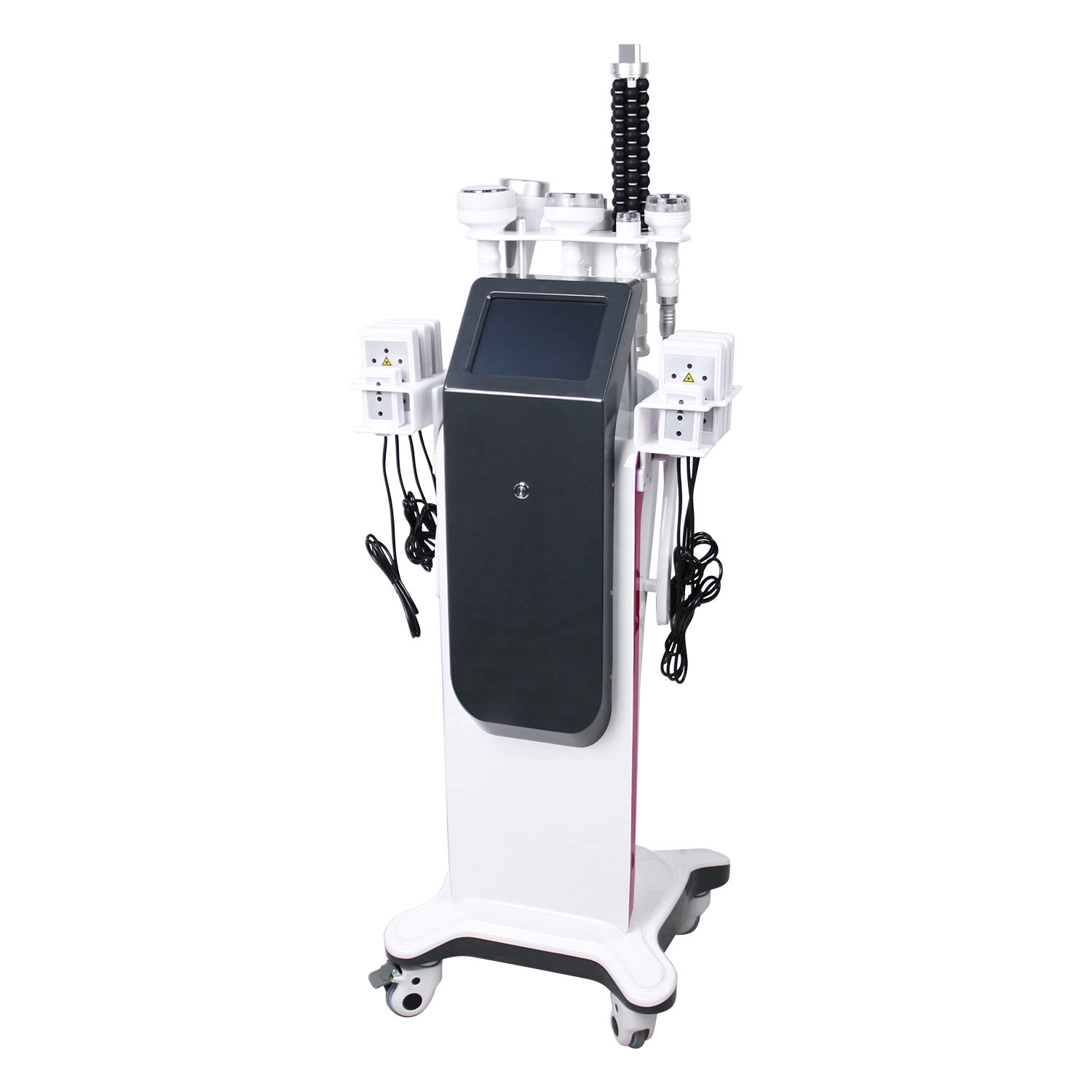
Professional 6-in-1 Cavitation Vacuum Machine for Body Contouring & Slimming Treatment
The 6-in-1 Cavitation Vacuum Machine is a professional body contouring system designed for salons and spas seeking high-performance slimming solutions. This machine integrates 40K ultrasonic cavitation, vacuum suction, RF technology, and laser lipolysis to target stubborn fat, enhance lymphatic drainage, tighten the skin, and contour the body shape effectively.
Equipped with multiple ergonomic handles and a smart touch screen, this cavitation vacuum machine provides a comfortable and efficient experience for both operators and clients. It is ideal for full-body treatments including abdomen, arms, legs, waistline, hips, and back.
Perfect for beauty salons, spas, and aesthetic centers that want to offer non-invasive fat reduction and body-sculpting services.
Get more information
If you have any comments or good suggestions, please leave us a message; later our professional staff will contact you as soon as possible.
Let's Talk
Stay in touch with us for cutting-edge beauty solutions, professional guidance, and customized service.
Contact


Room 307, Building A, Huilong International E-commerce Industrial Park, No. 10 Xipengling Road, Helong Street, Baiyun District, Guangzhou, China
© 2025 HUIMAIN. All Rights Reserved. Privacy Policy | Terms and Conditions | Sitemap
Facebook
Instagram
Medical beauty equipment factory
huimain Medical beauty equipment factory
beauty machine supplier
Whatsapp: +8619124004543