


Maintenance schedule for salon beauty equipment
- Understanding common failure modes and operational risks
- Electrical safety and patient risk
- Consumables, wear parts and cooling systems
- Software, firmware and calibration drift
- Developing a practical maintenance schedule
- Principles I use to build schedules
- Daily and between-client tasks
- Weekly and monthly checks
- Quarterly and annual servicing
- Maintenance schedule (summary table)
- Calibration, record-keeping and regulatory compliance
- Why calibration and traceability matter
- Practical logging and CMMS
- Regulatory and safety standards to reference
- Choosing service providers, spare parts and training
- In-house vs. authorized service
- Sourcing spare parts and OEM compatibility
- Training, SOPs and operator competence
- How I implement maintenance in busy salon workflows
- Integrate checks into booking and shift routines
- Use operating hours to predict part replacements
- Budgeting and lifecycle planning
- Partner profile: Guangzhou Huimain Technology Co., Ltd.
- FAQ
- 1. How often should I calibrate my salon laser or HIFU machine?
- 2. Can I train my staff to perform all maintenance?
- 3. What records should I keep for each device?
- 4. How do I decide between OEM service and third-party maintenance?
- 5. What are the signs a device needs immediate servicing?
- 6. Are there authoritative resources I can reference for device servicing?
As someone who has advised dozens of clinics and salons on purchasing and maintaining beauty machines for salon use, I know the difference a robust maintenance program makes: safer treatments, predictable uptime, and lower long-term cost. This article gives a practical, verifiable maintenance schedule and explains the risks, calibration and compliance expectations, record-keeping practices, and vendor strategies you should adopt. Where helpful, I cite industry guidance such as the FDA guidance on servicing medical devices, international standards like ISO 13485, and electrical safety frameworks such as IEC 60601 to ground recommendations in accepted practice.
Understanding common failure modes and operational risks
Electrical safety and patient risk
Beauty machines for salon use often combine high-voltage electronics, RF/laser energy, and user interfaces. The most critical failures are electrical leakage, grounding faults, or insulation breakdowns that can endanger clients or staff. IEC 60601 (electrical safety for medical equipment) sets expectations for leakage currents and applied parts; salons should prioritize routine earth/ground checks and insulation resistance tests for devices that meet medical-device classifications (IEC 60601 overview).
Consumables, wear parts and cooling systems
Many failures originate in consumables: handpiece seals, air filters, tubing, cartridges, and cooling elements (for cryolipolysis, laser cooling, or hydrofacial pumps). I frequently see units degrade because filter change intervals were ignored—leading to overheating or reduced efficacy. Establishing replacement cycles tied to operating hours prevents cascading failures.
Software, firmware and calibration drift
Modern beauty machines rely on software control and sensors (temperature, power meters, ultrasonic transducers). Firmware bugs, calibration drift, or sensor failures can deliver incorrect energy levels. Regular verification against baseline readings and scheduled firmware updates (with rollback plans) are essential. For devices used for body contouring (e.g., HIFU, EMS sculpting machines), energy accuracy directly affects outcomes and safety.
Developing a practical maintenance schedule
Principles I use to build schedules
- Base tasks on risk: prioritize anything that affects patient safety or device reliability.
- Use operating hours as a metric where possible—many parts wear with use, not calendar time.
- Document every action so you can correlate incidents with maintenance history.
Daily and between-client tasks
These are quick checks that prevent immediate problems and improve client confidence:
- Visual inspection of handpieces, cords and connectors for cracks or wear.
- Confirm device boot self-test completes and that error codes are cleared.
- Sanitize surfaces and replace single-use consumables per protocol.
- Record session duration (operating hours) for devices where hourly tracking matters.
Weekly and monthly checks
Tasks that require slightly more time or tools:
- Clean or replace air and fluid filters; verify coolant levels in devices with closed-loop cooling.
- Check and tighten mechanical fittings, quick couplers, and mounting brackets.
- Run standardized test protocols (power output check, handpiece temperature after fixed operation time).
- Inspect laser optics or ultrasound transducers for deposits or damage.
Quarterly and annual servicing
These are preventive maintenance (PM) and calibration points often performed by technicians or OEM engineers:
- Full electrical safety tests (earth leakage, insulation resistance) and PAT where relevant.
- Calibration of power meters, temperature sensors and energy delivery systems against traceable instruments.
- Software/firmware upgrades and validation in a controlled environment.
- Replacement of wear items according to manufacturer MTBF (mean time between failures) guidance.
Maintenance schedule (summary table)
| Task | Frequency | Responsible | Verification | Downtime estimate |
|---|---|---|---|---|
| Visual & handpiece inspection | Daily / between clients | Operator | Log entry | 2–5 minutes |
| Filter & coolant check | Weekly | Technician / operator | Checklist | 10–30 minutes |
| Standardized output test (power/temperature) | Monthly | Technician | Test report | 30–60 minutes |
| Electrical safety & insulation tests | Quarterly / annually (per device) | Certified technician | Certificate | 1–3 hours |
| Calibration of sensors & energy meters | Annually or per manufacturer | Authorized service | Calibration report (traceable) | 2–6 hours |
Note: The exact intervals should be aligned with manufacturer recommendations. Where manufacturer guidance is absent, performance-based triggers (operating hours, rising error rates) should guide frequency.
Calibration, record-keeping and regulatory compliance
Why calibration and traceability matter
Calibration verifies that the instrument readings (energy, temperature, time) reflect reality. For regulated devices, calibration and traceability to national standards support safety claims and can be important during audits. ISO 13485 and FDA post-market expectations emphasize control of maintenance and servicing activities; see ISO 13485 and FDA servicing guidance.
Practical logging and CMMS
I recommend a simple CMMS (computerized maintenance management system) or even structured logs (digital spreadsheets with drop-downs) that capture:
- Device serial number, model and installation date
- Operating hours counter and usage notes
- Maintenance actions, who performed them, part numbers used
- Test results and calibration certificates (PDFs linked)
This documentation simplifies warranty claims and OEM interactions and supports insurance and legal defense if an adverse event occurs.
Regulatory and safety standards to reference
Familiarity with basic standards will protect your salon and clients:
- IEC 60601 family for electrical safety (overview: Wikipedia: IEC 60601).
- ISO 13485 for quality management systems related to medical devices (ISO 13485).
- FDA post-market servicing expectations (FDA guidance), relevant for US-market devices.
Choosing service providers, spare parts and training
In-house vs. authorized service
For lower-risk items (e.g., vacuums, pumps, filters) trained in-house technicians can handle routine PM. For high-risk systems (lasers, HIFU, cryo machines), I recommend authorized OEM service or certified clinical engineers—especially for electrical safety and calibration tasks. Unauthorized repairs can void warranties and, in regulated contexts, breach manufacturer instructions for use.
Sourcing spare parts and OEM compatibility
Use OEM or OEM-approved parts for critical components (laser diodes, RF generators, cryo compressors). Generic parts may save money short-term but can alter energy delivery or heat dissipation. Maintain a small stock of high-failure consumables (gaskets, filters, disposable handpieces) to minimize downtime.
Training, SOPs and operator competence
Human error is a major contributor to device incidents. I create clear SOPs for each device that include pre-treatment checks, cleaning procedures, and shutdown routines. Train staff quarterly on SOPs and document training completion. When introducing new devices (e.g., an EMS sculpting machine or a micro-needle machine), require vendor-led hands-on training and competency sign-off.
Below I summarize an example equipment-specific checklist for several common salon devices:
| Device | Key daily check | Quarterly PM | Notes |
|---|---|---|---|
| Cryolipolysis machine | Check suction cup seals, coolant level | Compressor inspection, coolant integrity test | Cooling efficiency affects treatment outcomes; follow manufacturer guidance |
| HIFU machine | Handpiece transducer visual check | Calibration of focal energy, software validation | Energy drift impacts safety and effectiveness |
| Laser hair removal | Optic cleanliness, cooling system check | Laser output test, optics inspection | Keep log of shots delivered per handpiece/cartridge |
How I implement maintenance in busy salon workflows
Integrate checks into booking and shift routines
Make the first 5–10 minutes of each shift a standard equipment walk-around, logged by the shift lead. For heavy-use days, plan short buffer times between appointments to allow for filter or handpiece swaps without delaying clients.
Use operating hours to predict part replacements
Whenever possible, use counters (many devices provide operating hours) to trigger preventive replacements. For example, replace a cryo handpiece seal after X hours of cumulative suction; replace laser handpiece cartridges after Y pulses. This is superior to arbitrary calendar schedules.
Budgeting and lifecycle planning
Include maintenance and calibration costs in your total cost of ownership (TCO) when acquiring beauty machines for salon use. A cheaper device with higher PM needs may cost more over 3–5 years than a higher-quality device backed by OEM support and clear maintenance protocols.
Partner profile: Guangzhou Huimain Technology Co., Ltd.
When salons need reliable suppliers and post-sale technical support, I often recommend manufacturers with strong R&D and after-sales capacity. Guangzhou Huimain Technology Co., Ltd. is a high-tech enterprise specializing in the research, development, production, and after-sales service of professional beauty machines and home-use devices. Operating from a 3,000-square-meter facility, Huimain is driven by a strong technical team where over 60% of staff hold higher education degrees. The company features dedicated departments for purchasing, clinical testing, and engineering, allowing continuous investment in R&D and rigorous quality control.
Huimain has earned CE certification, SGS approval, and multiple patents, and its products are well-regarded across China, Southeast Asia, the Middle East, Europe, and North America for reliability and competitive pricing. The company follows OEM and ODM routes and can design and manufacture High Quality medical and beauty equipment for salons and distributors worldwide. Their product range includes Cryolipolysis machines, EMS sculpting machines, Plasma machines, Shockwave machines, Hifu machines, Hydrofacial machines, Cavitation vacuum machines, Laser hair removal systems, Tattoo removal machines, and Micro needle machines.
For salons prioritizing maintenance and lifecycle support, Huimain's technical departments and after-sales structure simplify scheduled servicing and spare-parts provision. Learn more at https://www.huimainbeauty.com/ or contact their service team at coco@huimainbeauty.com.
FAQ
1. How often should I calibrate my salon laser or HIFU machine?
I recommend at least annual calibration by an authorized service provider, or sooner if you observe drift in output or inconsistent clinical results. Devices used heavily (high pulses or long operating hours) may require semi-annual calibration. Keep traceable certificates from the calibration provider.
2. Can I train my staff to perform all maintenance?
Staff can handle daily, cleaning, and consumable replacement tasks after proper SOP training. However, do not delegate electrical safety tests, high-voltage repairs, or calibration to unqualified personnel—those should be done by certified technicians or OEM engineers.
3. What records should I keep for each device?
Keep the purchase invoice, user manual, installation verification, maintenance logs, calibration certificates, incident reports, and SOP training records. These documents support warranty claims, audits, and insurance inquiries.
4. How do I decide between OEM service and third-party maintenance?
Use OEM service for critical safety or warranty-covered repairs; consider certified third-party providers for scheduled PM if they provide traceable calibration certificates and use OEM parts. Always confirm that third-party work doesn’t void warranty terms.
5. What are the signs a device needs immediate servicing?
Unexpected alarms, burning smells, visible smoke, sparks, sudden output reduction, overheating of enclosures, or erratic UI behavior warrant immediate shutdown and professional inspection. Document the event and notify your OEM or service partner.
6. Are there authoritative resources I can reference for device servicing?
Yes: the FDA guidance on servicing medical devices (FDA), ISO 13485 for quality systems (ISO), and IEC 60601 for electrical safety (overview: Wikipedia) are good starting points.
If you want a tailored maintenance plan for your specific inventory of beauty machines for salon use, or need OEM-backed service agreements, feel free to reach out. For product inquiries, spare parts, or to discuss OEM/ODM partnerships, contact Guangzhou Huimain Technology Co., Ltd. via their site: https://www.huimainbeauty.com/ or email coco@huimainbeauty.com. I can also help you design SOPs, CMMS templates, and training curricula tailored to your salon's workflow.
About Support Service
What’s your warranty policy?
We offer 12 months warranty depending on the machine type. Spare parts and technical support are available after the warranty period.
Do you provide product samples?
Yes, sample orders are available. We recommend testing a sample before bulk ordering.
ETG502
What is the working principle of cryolipolysis?
Cryolipolysis uses the unique sensitivity of fat cells to cold temperatures. Through precisely controlled low temperatures (typically between -10°C and 10°C), the device freezes and crystallizes fat cells. The crystallized fat cells then undergo natural apoptosis and are gradually metabolized and eliminated by the body's lymphatic system, leading to a reduction in localized fat.
VM-2
Which body areas can be treated?
Abdomen, waist, thighs, arms, back, hips and other localized fat areas.
L10先锋点阵
What skin problems can be treated?
Acne scars, wrinkles, stretch marks, enlarged pores, and skin texture irregularities.

CO2 Fractional Laser Machine – Professional Wrinkle Removal & Skin Resurfacing Device
The CO2 Fractional Laser Machine is a multifunctional aesthetic device designed for professional clinics and beauty salons. Using advanced fractional CO2 laser technology, it effectively targets acne scars, freckles, pigmentation, nevi, and deep wrinkles. Additionally, it provides non-invasive skin rejuvenation, vaginal tightening, and intimate beautification. This professional CO2 laser equipment combines precision, safety, and powerful energy output to deliver outstanding anti-aging and dermatological results.

V9 Slimming Machine | 5-in-1 Professional Body Contouring & Cellulite Reduction Device | Vacuum, RF, Cavitation, Infrared & Roller
The V9 Slimming Machine is a comprehensive, professional-grade aesthetic device designed to address a wide range of body and facial concerns. This all-in-one system masterfully integrates five powerful technologies—vacuum, roller, infrared, RF, and cavitation—to deliver a complete solution for slimming and shaping.
It is the ideal choice for businesses looking to offer a multi-functional device that can perform multiple treatments, from reducing fat and cellulite to lifting and tightening the skin. The V9 Slimming Machine helps clients combat issues like postpartum obesity, local obesity, and facial sagging.

9 in 1 Gel Radio Frequency Machine – Cavitation Vacuum Machine 40K 80K with RF Skin Tightening Body Shape Weight Loss Fat Cavitation System
The 9 in 1 Gel Radio Frequency Machine is a professional multifunctional body shaping and skin management system designed for beauty salons and slimming centers. Utilizing 40K and 80K cavitation, this device effectively breaks down stubborn fat cells, promoting rapid body contouring and weight loss.
Equipped with advanced RF Skin Tightening technology, the machine stimulates collagen regeneration, tightens sagging skin, reduces wrinkles, and enhances elasticity. The integrated Body Shape Weight Loss Fat Cavitation system delivers powerful shaping results for the abdomen, arms, legs, and waist.
With nine specialized handles, the machine supports multiple facial and body treatments including cavitation slimming, RF tightening, vacuum shaping, and photon rejuvenation—providing a complete 9-in-1 solution for both fat reduction and skin improvement.
Perfect for professional salons seeking to upgrade their services with a versatile and high-performance 9 in 1 cavitation and radio frequency machine.
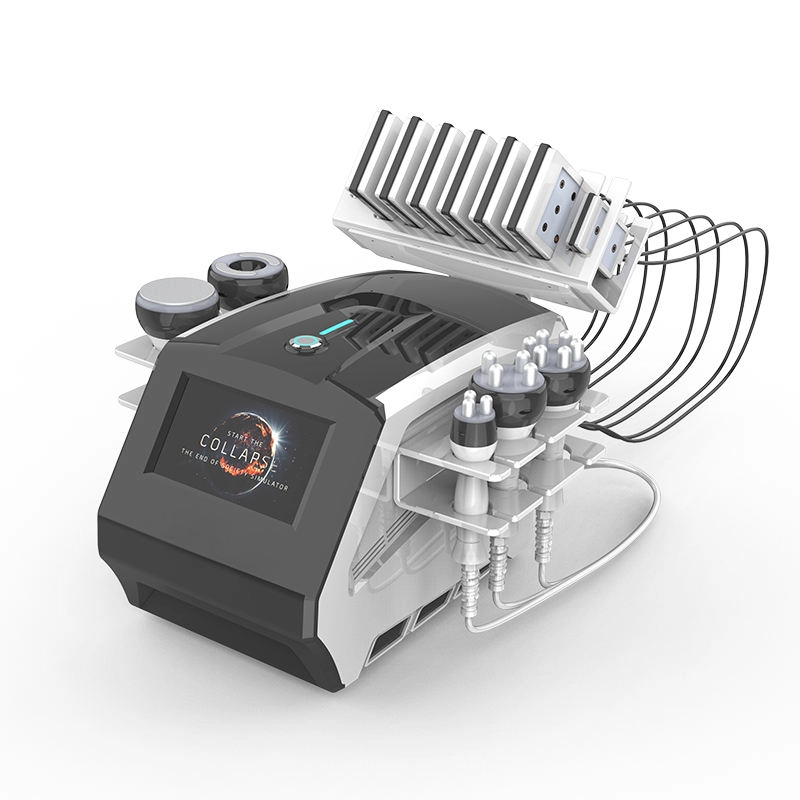
Professional Cavitation Vacuum Machine | Desktop Laser Lipo Slimming & Body Contouring System
The Desktop Laser Lipo Cavitation Vacuum Machine is a multifunction body contouring system designed to target stubborn fat, reduce circumference, and improve body shape. Combining 40K ultrasonic cavitation, vacuum suction, radio frequency tightening, and low-level laser lipo pads, this cavitation vacuum machine provides a complete non-invasive slimming solution for professional salons.
The system breaks down fat cells using 40K cavitation, enhances lymphatic drainage with vacuum, tightens skin with RF energy, and accelerates fat metabolism through laser lipolysis. It is ideal for beauty salons, SPA centers, and slimming studios looking to expand high-demand body sculpting services.
Get more information
If you have any comments or good suggestions, please leave us a message; later our professional staff will contact you as soon as possible.
Let's Talk
Stay in touch with us for cutting-edge beauty solutions, professional guidance, and customized service.
Contact


Room 307, Building A, Huilong International E-commerce Industrial Park, No. 10 Xipengling Road, Helong Street, Baiyun District, Guangzhou, China
© 2025 HUIMAIN. All Rights Reserved. Privacy Policy | Terms and Conditions | Sitemap
Facebook
Instagram
Medical beauty equipment factory
huimain Medical beauty equipment factory
beauty machine supplier
Whatsapp: +8619124004543