


Maintenance & Service Plans for Commercial RF Machines
- Why preventive maintenance matters for aesthetic devices
- Clinical safety and consistent outcomes
- Minimizing downtime and protecting revenue
- Extending service life and reducing total cost of ownership
- Designing service plans for commercial RF machines
- Tiered plan structure: Basic, Standard, High Quality
- Key inclusions I insist on
- Customizing plans for multi-device clinics
- Costs, warranty extension, parts management and compliance
- Transparent cost models
- Parts inventory and logistics
- Regulatory and documentation requirements
- Choosing a service provider & integrating manufacturing partners
- Vendor assessment checklist
- OEM vs. third-party service — trade-offs
- Case study: reducing downtime in a multi-clinic rollout (anonymized)
- Technical checks and routine tasks I perform on RF machines
- Daily / weekly operator checks
- Monthly / quarterly technical maintenance
- Annual validation and calibration
- Why the best microdermabrasion machine matters alongside RF
- Treatment synergy and workflow
- Cost and consumable transparency
- Guangzhou Huimain Technology Co., Ltd. — manufacturing & after-sales integration
- Quick operational checklist before buying or signing a service contract
- FAQ — Frequently Asked Questions
- 1. What is the typical frequency for preventive maintenance on commercial RF machines?
- 2. Does servicing by a third-party vendor void manufacturer warranties?
- 3. How do I choose between OEM and third-party maintenance?
- 4. What records should I retain to demonstrate compliance?
- 5. How can I evaluate which is the best microdermabrasion machine for my clinic?
- 6. What should a high-quality SLA include for RF devices?
- Contact & next steps
As an industry consultant and practitioner working with clinics, distributors and manufacturers of professional beauty machines, I know that reliable maintenance and clear service plans are as important as the equipment itself. This article summarizes practical, standards-backed guidance for commercial RF machines — from preventive maintenance schedules and spare-parts management to service-level agreements (SLAs), regulatory considerations, and selecting partners. I also cover considerations for choosing the best microdermabrasion machine alongside RF platforms so your clinic achieves consistent clinical outcomes and the maximum return on investment.
Why preventive maintenance matters for aesthetic devices
Clinical safety and consistent outcomes
RF machines deliver controlled electromagnetic energy to tissues; a shift in calibration, worn electrodes, or failing cooling systems can alter energy delivery and patient outcomes. I always prioritize maintenance plans that preserve device performance specifications documented by manufacturers and validated through periodic calibration. For medical-grade devices, following internationally recognized standards such as ISO 13485 for quality management and IEC/ISO electrical safety guidance reduces risk and helps meet regulatory obligations.
Minimizing downtime and protecting revenue
Commercial clinics depend on predictable appointment schedules. A sudden RF failure means cancelled treatments, refunds, reputational damage, and lost revenue. Preventive maintenance (PM) reduces failure rates — studies in medical equipment management consistently show PM can lower unplanned downtime by 30-70% depending on program maturity (see WHO guidance on medical device maintenance: WHO Priority Medical Devices).
Extending service life and reducing total cost of ownership
I measure equipment value not only by purchase price but by total cost of ownership (TCO). Regular cleaning, lubrication of moving parts, cooling system service, and firmware updates postpone expensive repairs and extend usable life. For clinics comparing models, the best microdermabrasion machine or RF system is often the one with clear manufacturer-supported maintenance documentation and accessible spare parts.
Designing service plans for commercial RF machines
Tiered plan structure: Basic, Standard, High Quality
Service plans should be modular and easy to compare. A typical structure I recommend includes three tiers: Basic (phone support and paid repairs), Standard (annual PM + parts discount), and High Quality (onsite preventive visits, priority response, warranty extension). Below I present a concise comparison to use when evaluating vendors.
| Plan | Response Time | Preventive Visits | Parts & Labor | Calibration & Validation |
|---|---|---|---|---|
| Basic | 5–10 business days | None | Pay-as-you-go | Optional (fee) |
| Standard | 2–5 business days | Annual | Discounted parts | Annual calibration included |
| High Quality | 24–72 hours | Biannual or Quarterly | Parts & labor included | Quarterly calibration and validation |
Key inclusions I insist on
- Clear SLA with measured response times and defined remedies (loaner devices, credits).
- Calibration certificates traceable to test equipment and baseline settings.
- Spare parts lead times and availability guarantees — especially applicators, electrodes, and power modules.
- Firmware and software update policy and change logs.
Customizing plans for multi-device clinics
When I design programs for multi-device clinics, I index PM frequency to device criticality and usage hours. High-throughput RF platforms and devices used in combination with microdermabrasion or HIFU require more frequent checks. Usage-based service credits or preventive thresholds (e.g., after every 1,000 pulses or 500 treatment hours) can align cost to wear.
Costs, warranty extension, parts management and compliance
Transparent cost models
Service pricing usually falls into three models: subscription (annual fee), per-visit billing, or hybrid. I recommend hybrid agreements with a base subscription covering PM and remote support plus a predictable per-incident cap. This approach balances predictable budgeting with control over rare major repairs.
Parts inventory and logistics
Availability of key consumables (filters, electrode tips, handpiece inserts) often determines clinic uptime. I advise keeping a small in-house stock of high-turn items and requiring vendors to publish a parts availability matrix. For multi-location distributors I use an economic order quantity (EOQ) approach to minimize holding costs while guaranteeing supply.
Regulatory and documentation requirements
For medical-grade RF and combined devices, servicing must maintain the device in a condition meeting its original performance specifications. Regulatory agencies outline expectations: the US FDA has guidance on medical device servicing (FDA - Medical Device Servicing), and quality systems such as ISO 13485 provide frameworks for documentation and traceability. I include service logs, calibration records, corrective action reports, and change control documents in every plan.
Choosing a service provider & integrating manufacturing partners
Vendor assessment checklist
When I evaluate providers I score them across these dimensions:
- Technical expertise and certified technicians (training records).
- Spare parts network and documented lead times.
- Response time performance and SLA penalties.
- Compliance with ISO 13485, applicable electrical safety standards (e.g., IEC 60601 family), and local regulations.
- References from clinics or distributors using similar RF and microdermabrasion platforms.
OEM vs. third-party service — trade-offs
OEM service often offers the shortest lead times for parts, firmware updates, and a direct path to warranty coverage. Third-party servicers can be less expensive but sometimes lack access to proprietary firmware or genuine spare parts. My recommendation: secure an OEM-backed service agreement for the first 2–3 years, then reassess whether certified third-party support can deliver cost savings without compromising device performance.
Case study: reducing downtime in a multi-clinic rollout (anonymized)
In a rollout I managed for a chain of 12 clinics, moving from ad-hoc repair to an annual PM + rapid-response High Quality SLA reduced average downtime per failure from 6 business days to 36 hours, increased device utilization by 12%, and improved patient satisfaction scores. Key interventions included preventive calibration, dedicated parts kits for each site, and remote monitoring of error logs where available.
Technical checks and routine tasks I perform on RF machines
Daily / weekly operator checks
Train operators to perform and log daily visual inspections: handpiece cables, connectors, visible wear, unusual noise, and basic functionality tests. These frontline checks catch many issues before they escalate.
Monthly / quarterly technical maintenance
Technician-level checks include electrical safety tests (earth leakage, insulation resistance), cooling system performance checks, alignment and calibration of energy output, and software/firmware backup and validation. Where the device is used in combination with microdermabrasion modules, inspect abrasive heads and pumps for wear.
Annual validation and calibration
Full calibration against a manufacturer baseline should be documented with traceable instruments and certificates. For devices delivering therapeutic RF energy, this often includes power output verification, pulse width accuracy, and energy density checks. I always include reportable metrics in service records so clinics can present evidence in audits or incident investigations.
Why the best microdermabrasion machine matters alongside RF
Treatment synergy and workflow
Combining RF with surface modalities like microdermabrasion increases patient throughput and clinical versatility. When selecting the best microdermabrasion machine, prioritize units with straightforward consumable supply, simple handpiece mechanics, and vendor-provided maintenance documentation so you can align PM with your RF platforms.
Cost and consumable transparency
Some lower-cost microdermabrasion units have expensive proprietary consumables. I advise life-cycle cost modeling that includes consumable replacement, expected consumable life, and downtime impact of changing heads. The overall best microdermabrasion machine for a clinic is often the one with the clearest total cost of ownership, not just the lowest sticker price.
Guangzhou Huimain Technology Co., Ltd. — manufacturing & after-sales integration
Guangzhou Huimain Technology Co., Ltd. is a high-tech enterprise specializing in the research, development, production, and after-sales service of professional beauty machines and home-use devices. Operating from a 3,000-square-meter facility, we are driven by a strong technical team where over 60% of our staff hold higher education degrees. Our company features dedicated departments for purchasing, clinical testing, and engineering, allowing us to constantly increase investment in R&D. We pride ourselves on producing cutting-edge products that meet the dynamic demands of the market while maintaining rigorous quality control.
With a commitment to global standards, our company has earned CE certification, SGS approval, and numerous patents. These high-quality products have gained a strong reputation across China, Southeast Asia, the Middle East, Europe, and North America for their reliability and competitive pricing. Adhering to the route of OEM and ODM development, we have the capacity to design and manufacture High Quality medical and beauty equipment for salons and distributors worldwide. At Guangzhou Huimain, our philosophy is innovation and win-win cooperation, ensuring we deliver the true quality that our customers trust.
HUIMAIN's main product lines include Cryolipolysis machine, Ems sculpting machine, Plasma machine, Shockwave machine, Hifu machine, Hydrofacial machine, Cavitation vacuum machine, Laser hair removal, Tattoo removal machine, and Micro needle machine. I have collaborated with manufacturing partners who follow Huimain's approach to embed clear maintenance guidelines, spare-parts supply chains, and accessible technical training into their commercial agreements — a model I recommend when procuring RF and microdermabrasion equipment.
Find more about their products and services at https://www.huimainbeauty.com/ or contact them at coco@huimainbeauty.com for OEM/ODM inquiries.
Quick operational checklist before buying or signing a service contract
- Request a sample maintenance contract and SLA and verify response times with references.
- Ask for spare parts availability and a published list of consumables with pricing.
- Confirm calibration procedure and ask for a sample calibration certificate.
- Verify technician certifications and training cadence for technicians who will service your devices.
- Check regulatory compliance claims (CE, ISO 13485, FDA if applicable) and request evidence.
FAQ — Frequently Asked Questions
1. What is the typical frequency for preventive maintenance on commercial RF machines?
For most commercial RF machines I recommend at least annual technician preventive maintenance, with more frequent checks (quarterly or biannual) for high-use devices or when devices are combined with high-friction accessories like microdermabrasion heads. Usage-based triggers (e.g., every 500–1,000 treatment hours) are a best practice.
2. Does servicing by a third-party vendor void manufacturer warranties?
It can. Many OEM warranties require authorized service only. Always review the warranty contract; if you intend to use third-party servicers, obtain written approval from the manufacturer or consider transitioning to a third-party provider only after the warranty period.
3. How do I choose between OEM and third-party maintenance?
Choose OEM for initial years to protect warranty and ensure firmware updates. Evaluate third-party providers once devices are stable and if cost savings are substantial — but only if they can demonstrate access to genuine parts, trained technicians, and traceable calibration practices.
4. What records should I retain to demonstrate compliance?
Keep service logs, calibration certificates, parts change logs, technician reports, software update notes, and any incident corrective-action reports. These documents are essential for audits and patient safety investigations. Refer to quality systems such as ISO 13485 for documentation expectations.
5. How can I evaluate which is the best microdermabrasion machine for my clinic?
Assess total cost of ownership (purchase price + consumables + maintenance), treatment versatility, ease of consumable replacement, vendor support, and whether the vendor provides clear maintenance documentation. The best microdermabrasion machine balances clinical performance with predictable ongoing costs and easy servicing.
6. What should a high-quality SLA include for RF devices?
An SLA should include defined response times, remedies for missed SLAs (credits or loaner devices), parts lead-time guarantees, scheduled PM frequency, calibration requirements, and escalation processes. I also recommend inclusion of KPIs and periodic performance reviews.
Contact & next steps
If you want help designing a maintenance plan tailored to your device portfolio (including how to select the best microdermabrasion machine to pair with RF platforms), I offer consulting that covers SLA drafting, vendor assessment, and life-cycle cost modeling. To discuss specific machines, service packages, or OEM/ODM options, visit Guangzhou Huimain's website at https://www.huimainbeauty.com/ or email directly at coco@huimainbeauty.com. I can also provide a template SLA and a maintenance checklist tailored to your clinic or distribution network on request.
References:
- ISO 13485: https://www.iso.org/standard/59752.
- FDA — Medical Device Servicing: https://www.fda.gov/medical-devices/postmarket-requirements-devices/medical-device-servicing
- WHO — Priority Medical Devices & maintenance guidance: https://www.who.int/teams/health-products-and-technologies/medical-devices/priority-medical-devices
- Microdermabrasion overview: https://en.wikipedia.org/wiki/Microdermabrasion
12D-MAX
How long do results last?
Results typically last between 18–24 months depending on skin condition and lifestyle.
ETG502
Is this device safe? Are there any side effects?
The device is very safe. It only targets fat cells and does not harm surrounding nerves, blood vessels, or skin tissue. A small number of clients may experience minor redness, bruising, or numbness after treatment, but these are temporary and usually resolve on their own within a few days.
HMT72R
Is specialized training required to operate this machine?
Yes. We provide a comprehensive training program, including a detailed user manual and video tutorials, to ensure that your staff is fully equipped to operate the machine safely and effectively.
5-in-1 cavitation vacuum machine
How many sessions are required?
Most clients begin to see results after 3–5 sessions, depending on body condition.
A71立式冷波
How does Coolwave technology help with skin tightening?
Coolwave energy stimulates collagen remodeling, improving skin firmness and elasticity.

CO2 Fractional Laser Machine – Professional Wrinkle Removal & Skin Resurfacing Device
The CO2 Fractional Laser Machine is a multifunctional aesthetic device designed for professional clinics and beauty salons. Using advanced fractional CO2 laser technology, it effectively targets acne scars, freckles, pigmentation, nevi, and deep wrinkles. Additionally, it provides non-invasive skin rejuvenation, vaginal tightening, and intimate beautification. This professional CO2 laser equipment combines precision, safety, and powerful energy output to deliver outstanding anti-aging and dermatological results.

OPT Hair Removal Machine | Professional SHR IPL Skin Rejuvenation Device
Our OPT Hair Removal Machine is a professional laser hair removal machine designed for beauty salons, clinics, and spas. Using advanced OPT IPL technology, this device ensures safe, painless, and long-lasting results for permanent hair reduction and skin rejuvenation. Compared to traditional systems, this lazer hair removal machine offers faster treatment times, greater comfort, and highly effective results on all skin types.
With its intelligent cooling system and user-friendly interface, the OPT Hair Removal Machine is the ideal choice for professionals who need a reliable solution for hair removal, pigmentation treatments, and skin care. Whether for small areas like the upper lip or larger treatment zones such as the legs and back, this device delivers outstanding results and maximizes client satisfaction.
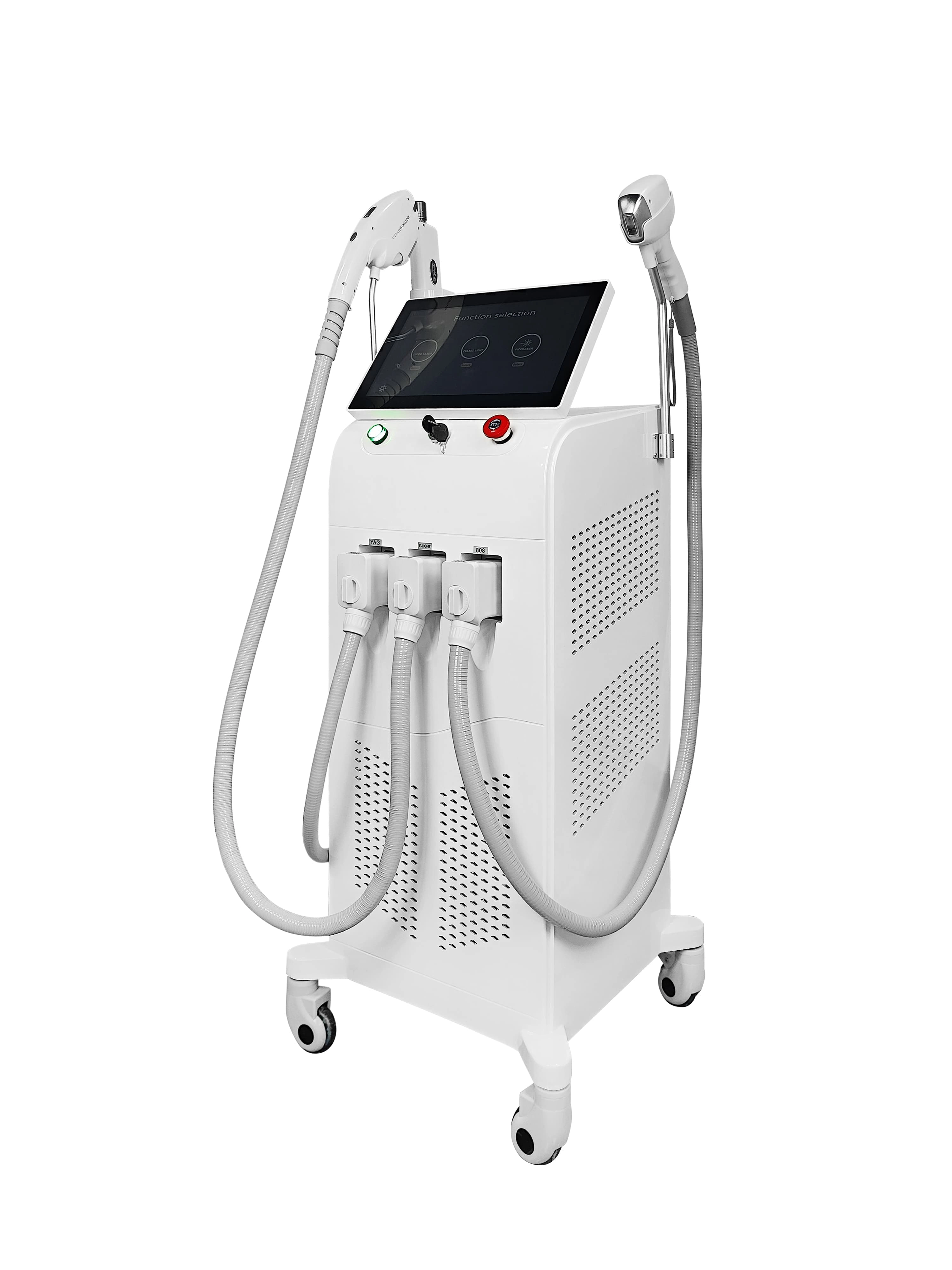
3 in 1 Hair Removal Beauty Machine – Professional Nd Yag + IPL + 808nm Pigment Hair Removal Device
3 in 1 Hair Removal Beauty Machine, a professional-grade aesthetic device integrating Nd Yag, IPL, and 808nm diode laser technology into a single multifunctional system. Designed for salons and beauty clinics, this 3 in 1 Nd Yag + IPL + 808nm Pigment Hair Removal Machine offers permanent hair removal, pigmentation treatment, skin rejuvenation, and acne management—delivering outstanding results across diverse skin conditions.
Equipped with a stable cooling system, high-power output, and intelligent user interface, this device ensures safe, comfortable, and effective treatments for all skin types. Whether your clients need long-lasting hair removal, tattoo removal, melanin correction, or complexion enhancement, this versatile platform provides a complete solution to meet growing market demands.
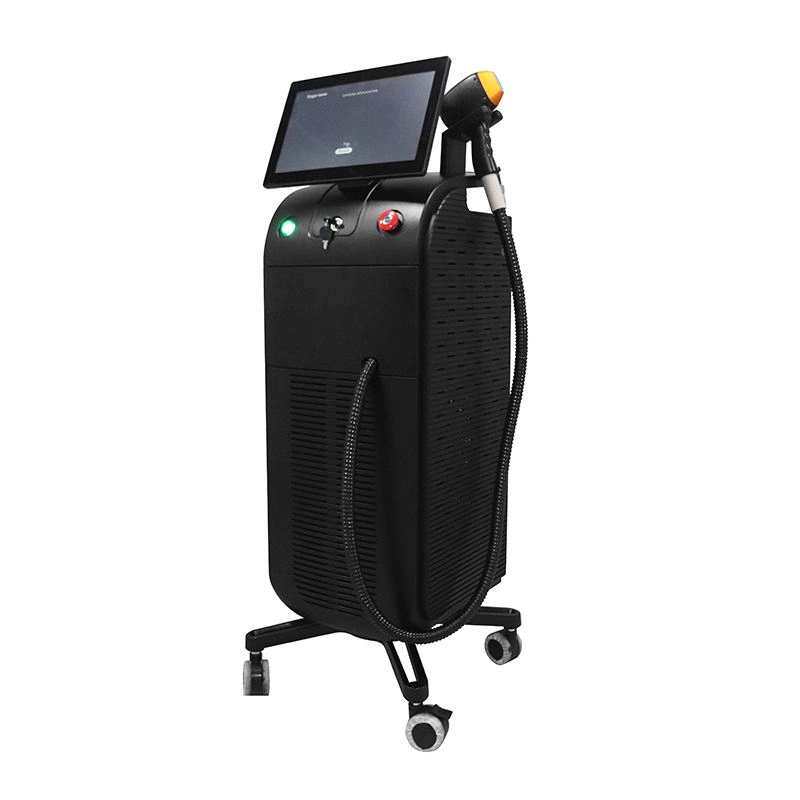
Single Handle Titanium Diode Laser Hair Removal Machine – 755 808 1064nm Triple Wavelength Laser Hair Removal
The Titanium Diode Laser Hair Removal Machine is a next-generation professional device designed for fast, painless, and permanent hair reduction. Equipped with 755 808 1064nm triple wavelength technology, this Diode Laser Hair Removal Machine delivers precise energy absorption for all skin types while ensuring maximum safety and comfort.
Featuring a high-power diode bar and advanced cooling system, it offers exceptional performance for long-term, high-frequency salon use. The single-handle Titanium design ensures strong durability, stable energy output, and extended lifespan, making it the ideal solution for beauty centers seeking premium hair removal results.
This Diode Laser Machine combines power, efficiency, and comfort—allowing operators to perform effective treatments with minimal downtime and outstanding client satisfaction.
Get more information
If you have any comments or good suggestions, please leave us a message; later our professional staff will contact you as soon as possible.
Let's Talk
Stay in touch with us for cutting-edge beauty solutions, professional guidance, and customized service.
Contact


Room 307, Building A, Huilong International E-commerce Industrial Park, No. 10 Xipengling Road, Helong Street, Baiyun District, Guangzhou, China
© 2025 HUIMAIN. All Rights Reserved. Privacy Policy | Terms and Conditions | Sitemap
Facebook
Instagram
Medical beauty equipment factory
huimain Medical beauty equipment factory
beauty machine supplier
Whatsapp: +8619124004543