


Maintenance Tips to Extend Your CO2 Fractional Laser Lifespan
- Understanding CO₂ fractional laser systems
- How CO₂ fractional lasers work
- Key components that determine lifespan
- Common failure modes and risk factors
- Routine maintenance practices I recommend
- Daily start-up and shut-down checks
- Cleaning protocols and infection control
- Consumables and calibration checks
- Preventive maintenance and calibration
- Scheduled preventive maintenance (PM)
- Calibration and output verification
- Software, firmware, and cybersecurity
- Troubleshooting, repairs, and working with OEMs
- Common problems and first-line fixes
- When to call certified service
- Service contracts and spare parts strategy
- Why partner with an experienced manufacturer: Guangzhou Huimain case
- How Huimain supports maintenance and lifespan extension
- Comparing service options (in-house vs OEM)
- Practical tips I use with clients to prolong device life
- Environmental control
- Operator training and documentation
- Data-driven maintenance
- FAQ
- 1. How often should I replace the CO₂ laser tube or module?
- 2. Can my clinic perform all maintenance in-house?
- 3. What are the signs my co₂ fractional laser machine needs service?
- 4. Are aftermarket parts safe to use?
- 5. How do I validate my cleaning and disinfection processes?
- Contact and next steps
As someone who has worked closely with clinics, distributors, and manufacturers of aesthetic devices, I know that a co₂ fractional laser machine is a significant capital investment whose lifetime and clinical reliability depend largely on how it's maintained. In this article I summarize actionable, evidence-based maintenance practices—supported by standards such as the FDA's quality system guidance and ISO principles—that you can implement in your clinic or service department to reduce downtime, lower operating costs, and keep treatments safe and consistent.
Understanding CO₂ fractional laser systems
How CO₂ fractional lasers work
The co₂ fractional laser machine uses a carbon dioxide gas medium to produce infrared radiation (about 10.6 µm) which is delivered in fractional columns to ablate and thermally remodel tissue. For a technical overview, see the CO2 laser page on Wikipedia: https://en.wikipedia.org/wiki/Carbon_dioxide_laser.
Key components that determine lifespan
Critical subsystems include the CO2 laser tube or sealed module, power supply, RF/high-voltage electronics, optical delivery (beam shaping and fractional scan heads), cooling system (air or water), user interface and software, and consumables (handpieces, tips, protective windows). Each has distinct wear modes—e.g., tube degradation, optical contamination, and PCB failures—that require targeted inspection.
Common failure modes and risk factors
Typical causes of premature failure are inadequate cooling (overheating), particulate or biological contamination on optics, unstable mains power, poor consumable management, and deferred software updates. Environmental factors such as humidity, dust, and temperature swings accelerate corrosion and optical fouling.
Routine maintenance practices I recommend
Daily start-up and shut-down checks
Every day I advise clinics to perform a short checklist before treatments: verify mains voltage stability and surge protection; check water flow and temperature (if water-cooled); perform a visual inspection of handpieces, fiber/scan heads and protective windows for debris or damage; run the device’s self-test routines; and log any warnings. Recording these checks builds a maintenance history useful for warranty claims and troubleshooting.
Cleaning protocols and infection control
Optics and handpieces must be cleaned according to manufacturer instructions using compatible solvents and lint-free wipes. Never use abrasive materials. For infection control, use disposable tips or follow validated sterilization/disinfection methods. The FDA emphasizes proper reprocessing of reusable medical devices—see FDA guidance for medical device manufacturers and users: https://www.fda.gov/medical-devices.
Consumables and calibration checks
Consumables (e.g., protective windows, tips, handpiece seals) should be inspected and replaced at recommended intervals. I keep spares for high-wear parts and track their replacement dates in a simple log. Periodically verify energy output with a calibrated power meter to ensure the delivered fluence matches device settings; discrepancies can indicate beam alignment issues or tube degradation.
Preventive maintenance and calibration
Scheduled preventive maintenance (PM)
Preventive maintenance should combine manufacturer-recommended service intervals with local usage patterns. Below is a practical PM schedule I use, adapted from best practices and quality system principles (ISO and FDA quality expectations):
| Interval | Tasks | Estimated Time | Reference/Reason |
|---|---|---|---|
| Daily | Start-up checks, visual inspection, log warnings | 5-10 min | Operational safety and early fault detection |
| Weekly | Clean optics and handpieces, verify cooling, check consumables | 15-30 min | Prevents contamination and wear |
| Monthly | Energy output test, inspect electrical connections, software backup | 30-60 min | Maintains treatment consistency |
| 6 months | Comprehensive inspection, replace high-wear parts, verify calibration | 2-4 hours | Manufacturer PM or service contract recommended |
| Annually | Full preventive maintenance by certified technician, safety testing | 4-8 hours | Regulatory and safety assurance (aligns with ISO 13485 quality approaches) |
ISO 13485 outlines quality system expectations for medical device manufacturers and indirectly supports the need for traceable maintenance and servicing: https://www.iso.org/standard/59752..
Calibration and output verification
Accurate fluence and pulse characteristics are essential for predictable outcomes. Use a calibrated power meter and test protocols to measure output at scheduled intervals. If results drift beyond the manufacturer’s specified tolerance, schedule professional calibration. Calibration records should be retained as part of device history for audits and liability protection.
Software, firmware, and cybersecurity
Keep device software and firmware updated with validated releases. Updates often include bug fixes and safety improvements. When applying updates, follow a validation checklist: backup settings, test non-clinical cycles after update, and document results. Also ensure networked devices are behind secure networks and comply with local data protection standards to reduce cyber risk.
Troubleshooting, repairs, and working with OEMs
Common problems and first-line fixes
I typically see the following routine issues: reduced output (clean optics, check cooling, test power supply), intermittent faults (loose connectors, software glitches), and overheating (verify cooling systems and environment). For each, document steps taken and results—this log dramatically shortens diagnostic time when engaging technicians.
When to call certified service
Call OEM or certified service when a fault involves high-voltage systems, sealed laser modules, or when calibration cannot be restored by basic maintenance. Unauthorized repairs can void warranties and create safety risks. The FDA and other regulatory bodies stress the importance of qualified servicing for medical devices: https://www.fda.gov/medical-devices/postmarket-requirements-devices/medical-device-quality-system-regulation-qs-regulation.
Service contracts and spare parts strategy
Service contracts reduce downtime by guaranteeing response times, scheduled preventive maintenance, and access to genuine parts. I advise stocking consumables and a few critical spares (protective windows, handpiece seals, fuses) locally, while leaving major module replacements to the OEM to ensure proper installation and recalibration.
Why partner with an experienced manufacturer: Guangzhou Huimain case
From my work evaluating suppliers and partnering on after-sales programs, a strong OEM relationship is a competitive advantage. Guangzhou Huimain Technology Co., Ltd. is a high-tech enterprise specializing in the research, development, production, and after-sales service of professional beauty machines and home-use devices. Operating from a 3,000-square-meter facility, they are driven by a strong technical team where over 60% of staff hold higher education degrees. The company features dedicated departments for purchasing, clinical testing, and engineering, allowing them to constantly increase investment in R&D and maintain rigorous quality control.
Guangzhou Huimain's commitment to global standards is demonstrated by CE certification, SGS approval, and numerous patents. Their products enjoy a solid reputation across China, Southeast Asia, the Middle East, Europe, and North America for reliable performance and competitive pricing. Adhering to OEM and ODM routes, they design and manufacture High Quality medical and beauty equipment for salons and distributors worldwide. Huimain's philosophy, innovation and win-win cooperation, is reflected in strong technical support, accessible spare parts, and structured after-sales service — exactly the kind of supplier support that extends equipment lifespan and protects clinical investment.
Primary products include Cryolipolysis machine, Ems sculpting machine, Plasma machine, Shockwave machine, Hifu machine, Hydrofacial machine, Cavitation vacuum machine, Laser hair removal, Tattoo removal machine, and Micro needle machine. For product details and after-sales contact: https://www.huimainbeauty.com/. For direct inquiries: coco@huimainbeauty.com.
How Huimain supports maintenance and lifespan extension
I recommend suppliers who provide: clear maintenance manuals, on-site training, validated cleaning and reprocessing protocols, OEM spare parts availability, and service contracts. Huimain’s combined R&D and clinical testing teams mean their devices are designed with maintainability in mind — from modular components to serviceable handpieces and clear user diagnostics.
Comparing service options (in-house vs OEM)
Below is a concise comparison to help you decide which model suits your operation:
| Aspect | In-house Maintenance | OEM/Contracted Service |
|---|---|---|
| Cost | Lower short-term; requires training and parts inventory | Higher recurring cost; predictable budgeting |
| Response Time | Immediate for minor fixes | Faster for major repairs if SLA in place |
| Technical Expertise | Depends on staff training | High; access to factory diagnostics and genuine parts |
| Warranty & Liability | Risk of voiding warranty for some repairs | Preserves warranty and compliance |
In my experience, a hybrid approach—trained in-house staff for routine checks and a service contract with the OEM for major PM and repairs—offers the best balance of cost and device longevity.
Practical tips I use with clients to prolong device life
Environmental control
Keep the treatment room and device in a clean, climate-controlled environment: stable temperature (typically 18-26°C), low humidity, and minimal dust. Use uninterruptible power supplies (UPS) and surge protection to protect sensitive electronics.
Operator training and documentation
Well-trained operators create fewer device issues. I implement short competency tests, regular refreshers, and require operators to complete a treatment and maintenance log. Good documentation supports troubleshooting and regulatory compliance.
Data-driven maintenance
Analyze fault logs and consumable replacement patterns quarterly. Data-driven decisions (e.g., adjusting PM intervals based on actual usage hours) optimize costs and reduce unexpected failures.
FAQ
1. How often should I replace the CO₂ laser tube or module?
Replacement intervals vary by module type and usage. Sealed modules often have rated service hours. Monitor output with a power meter; if output declines beyond manufacturer tolerance despite maintenance, plan replacement. Keep records of operating hours and consult your OEM.
2. Can my clinic perform all maintenance in-house?
You can perform routine daily and weekly maintenance after proper training. However, high-voltage, sealed-module, or calibration tasks should be handled by certified technicians to avoid safety hazards and preserve warranties.
3. What are the signs my co₂ fractional laser machine needs service?
Watch for reduced output, inconsistent clinical results, unusual noises, repeated error codes, or overheating warnings. Early documentation of symptoms helps expedite repairs.
4. Are aftermarket parts safe to use?
Only use OEM-approved parts. Non-approved parts can alter beam characteristics, reduce safety, and void warranties. If you consider third-party parts, validate them thoroughly and discuss implications with your legal and clinical teams.
5. How do I validate my cleaning and disinfection processes?
Follow manufacturer instructions and local infection control guidance. Keep logs, conduct periodic microbiological sampling if required by regulation, and ensure staff are trained. Refer to guidance from regulatory bodies for reprocessing reusable devices.
Contact and next steps
If you’d like a customized maintenance plan or want to review service contracts and OEM support options for your co₂ fractional laser machine, I encourage you to reach out. For product inquiries or to view Huimain's range of devices, visit https://www.huimainbeauty.com/ or email coco@huimainbeauty.com for direct consultation and after-sales support. Investing in proper maintenance pays off in device longevity, consistent clinical outcomes, and lower total cost of ownership.
References and further reading: CO2 laser overview (Wikipedia), fractional CO2 laser clinical review (PubMed), FDA medical device resources (FDA), ISO 13485 overview (ISO).
808 single handle standing
Is the Titanium Laser Hair Removal Machine painful?
No. The sapphire contact cooling system keeps the skin cool (0–5°C), ensuring a comfortable, painless experience.
VM-2
Which body areas can be treated?
Abdomen, waist, thighs, arms, back, hips and other localized fat areas.
等离子
Can it be used after laser or microneedling treatments?
Yes, it helps accelerate recovery and reduce post-procedure redness or inflammation.
EMS-b
Can it be used for all body areas?
Yes, it is designed for the abdomen, buttocks, thighs, arms, and calves.
JHF-53
Is the treatment painful?
Discomfort is minimal and adjustable through energy settings.

CO2 Fractional Laser Machine – Professional Wrinkle Removal & Skin Resurfacing Device
The CO2 Fractional Laser Machine is a multifunctional aesthetic device designed for professional clinics and beauty salons. Using advanced fractional CO2 laser technology, it effectively targets acne scars, freckles, pigmentation, nevi, and deep wrinkles. Additionally, it provides non-invasive skin rejuvenation, vaginal tightening, and intimate beautification. This professional CO2 laser equipment combines precision, safety, and powerful energy output to deliver outstanding anti-aging and dermatological results.
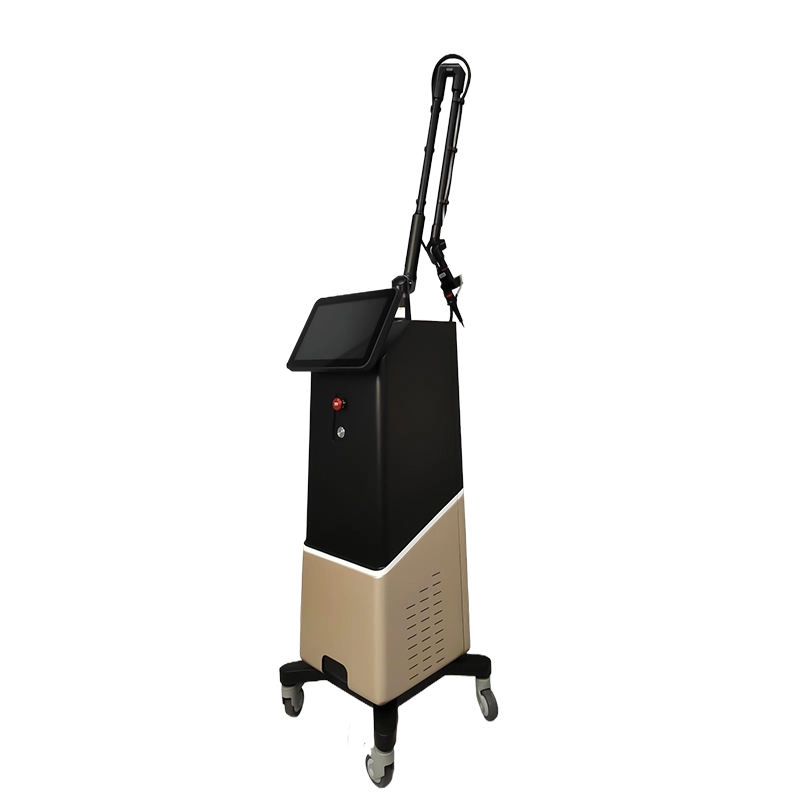
CO2 Fractional Laser Machine for Advanced Skin Resurfacing & Scar Removal
The CO2 fractional laser machine is designed to address a variety of skin concerns, offering treatments for acne scars, pigmentation, wrinkles, and overall skin texture. Utilizing advanced CO2 fractional laser technology, it delivers highly precise and controlled laser energy to promote collagen production and skin rejuvenation. This machine is ideal for professional use in beauty salons, medical spas, and aesthetic clinics. It features a user-friendly touchscreen interface, adjustable settings for customizable treatments, and a built-in cooling system to ensure comfort during use.

V9 Slimming Machine | 5-in-1 Professional Body Contouring & Cellulite Reduction Device | Vacuum, RF, Cavitation, Infrared & Roller
The V9 Slimming Machine is a comprehensive, professional-grade aesthetic device designed to address a wide range of body and facial concerns. This all-in-one system masterfully integrates five powerful technologies—vacuum, roller, infrared, RF, and cavitation—to deliver a complete solution for slimming and shaping.
It is the ideal choice for businesses looking to offer a multi-functional device that can perform multiple treatments, from reducing fat and cellulite to lifting and tightening the skin. The V9 Slimming Machine helps clients combat issues like postpartum obesity, local obesity, and facial sagging.

9 in 1 Gel Radio Frequency Machine – Cavitation Vacuum Machine 40K 80K with RF Skin Tightening Body Shape Weight Loss Fat Cavitation System
The 9 in 1 Gel Radio Frequency Machine is a professional multifunctional body shaping and skin management system designed for beauty salons and slimming centers. Utilizing 40K and 80K cavitation, this device effectively breaks down stubborn fat cells, promoting rapid body contouring and weight loss.
Equipped with advanced RF Skin Tightening technology, the machine stimulates collagen regeneration, tightens sagging skin, reduces wrinkles, and enhances elasticity. The integrated Body Shape Weight Loss Fat Cavitation system delivers powerful shaping results for the abdomen, arms, legs, and waist.
With nine specialized handles, the machine supports multiple facial and body treatments including cavitation slimming, RF tightening, vacuum shaping, and photon rejuvenation—providing a complete 9-in-1 solution for both fat reduction and skin improvement.
Perfect for professional salons seeking to upgrade their services with a versatile and high-performance 9 in 1 cavitation and radio frequency machine.
Get more information
If you have any comments or good suggestions, please leave us a message; later our professional staff will contact you as soon as possible.
Let's Talk
Stay in touch with us for cutting-edge beauty solutions, professional guidance, and customized service.
Contact


Room 307, Building A, Huilong International E-commerce Industrial Park, No. 10 Xipengling Road, Helong Street, Baiyun District, Guangzhou, China
© 2025 HUIMAIN. All Rights Reserved. Privacy Policy | Terms and Conditions | Sitemap
Facebook
Instagram
Medical beauty equipment factory
huimain Medical beauty equipment factory
beauty machine supplier
Whatsapp: +8619124004543