

Regulatory Compliance for Salons Offering Microdermabrasion
- Understanding Regulatory Requirements for Salon Microdermabrasion
- 1. Regulatory frameworks and device classification by jurisdiction
- United States — FDA and state boards
- European Union — MDR and national rules
- Canada, United Kingdom and other markets
- Comparative summary table
- 2. Operational compliance: infection control, staff competency, and documentation
- Infection prevention and instrument handling
- Staff training, scope of practice, and informed consent
- Recordkeeping, incident reporting and quality management
- 3. Choosing and maintaining a microdermabrasion machine for salon use
- Device selection checklist
- Maintenance, servicing and incident management
- Insurance, liability and marketing claims
- 4. Practical compliance checklist for salon managers
- Before you offer microdermabrasion services
- Daily and weekly operational tasks
- Audit and continuous improvement
- 5. About Guangzhou Huimain Technology Co., Ltd.
- Company profile and technical strengths
- Products, OEM/ODM capabilities and salon advantages
- Competitive differentiators
- Frequently Asked Questions (FAQ)
- 1. Do I need a medical license to perform microdermabrasion in my salon?
- 2. How do I know if my microdermabrasion device is compliant?
- 3. What infection-control practices are required?
- 4. What records should the salon keep?
- 5. What should I include in client informed consent for microdermabrasion?
- 6. Who should I contact if a device malfunctions or a client has a serious adverse reaction?
- Contact and product inquiry
- References
Understanding Regulatory Requirements for Salon Microdermabrasion
Microdermabrasion has become a standard non-invasive aesthetic service in many salons. For salon owners and managers, understanding the regulatory landscape and implementing robust operational controls is essential to protect clients, avoid enforcement actions, and maintain business continuity. This article focuses on practical compliance guidance for salons using a microdermabrasion machine for salon services—covering jurisdictional differences, clinical safety, equipment selection, maintenance, staff competence, documentation, and recommended action steps.
1. Regulatory frameworks and device classification by jurisdiction
United States — FDA and state boards
In the U.S., the Food and Drug Administration (FDA) regulates medical devices. Whether a microdermabrasion device is regulated as a medical device depends on intended use and claims. Devices marketed for general cosmetic exfoliation often fall under lower-risk categories, but if a device makes medical claims (e.g., scar reduction, treatment of a medical skin condition) it may be treated as a higher-class device requiring 510(k) clearance or equivalent. Separate from FDA, state cosmetology and medical boards set practice rules for salons and clinician involvement. Salons must also comply with OSHA workplace safety standards, particularly bloodborne pathogen rules when procedures risk breakage of the skin.
European Union — MDR and national rules
In the EU, Regulation (EU) 2017/745 (MDR) governs medical devices. A device considered a medical device under MDR needs appropriate conformity assessment, CE marking, and a notified body when required. Many microdermabrasion devices are marketed as cosmetic; however, classification depends on intended purpose. Member states additionally regulate who may perform certain skin procedures.
Canada, United Kingdom and other markets
Health Canada classifies devices and distinguishes cosmetics from medical devices; devices with therapeutic claims are regulated as medical devices. The UK’s MHRA enforces device rules post-Brexit. In many Asian and Middle Eastern markets, national regulations vary—import approvals, local registration, and practitioner licensing requirements differ and must be verified before offering services.
Comparative summary table
| Jurisdiction | Typical device classification | Key salon obligations |
|---|---|---|
| United States (FDA + state) | Cosmetic device or Class I/II depending on claims | Ensure device clearance if medical claims; state licensing; OSHA compliance |
| European Union (MDR) | Medical device if intended for medical/therapeutic use | Use CE-marked devices where required; follow national practice restrictions |
| Canada | Medical device if therapeutic claims | Device licensing; practitioner scope of practice |
| UK | Similar to EU; MHRA oversight | Device registration where applicable; local practice rules |
Sources: FDA device guidance, EU MDR, Health Canada—see references for links.
2. Operational compliance: infection control, staff competency, and documentation
Infection prevention and instrument handling
Salons must adopt evidence-based disinfection and sterilization procedures. Although microdermabrasion is generally non-ablative, skin can be compromised, increasing infection risk. Implement these minimum controls:
- Standard precautions for all clients (hand hygiene, gloves when indicated).
- Clean and disinfect non-disposable parts per manufacturer instructions and CDC guidance on disinfection of reusable medical devices.
- Use single-use tips/accessories if provided; if reusable, follow validated sterilization protocols and maintain sterilization logs.
- Surface disinfection of treatment areas between clients with EPA-registered disinfectants (or equivalent in your jurisdiction).
Staff training, scope of practice, and informed consent
Competence is a regulatory and business imperative. Key steps:
- Define who can perform microdermabrasion (licensed esthetician, nurse, etc.) per local law.
- Document initial and ongoing training—device-specific instruction from the manufacturer, infection control, emergency response (e.g., managing adverse skin reactions).
- Use pre-treatment screening forms (contraindications, medications, skin conditions) and obtain written informed consent outlining risks and aftercare.
Recordkeeping, incident reporting and quality management
Maintain client records, device maintenance logs, sterilization records, and adverse event logs. In jurisdictions where devices are regulated, serious adverse events may need to be reported to national authorities (e.g., FDA's MedWatch in the U.S.). Implement a simple quality checklist to review equipment performance, consumables inventory, and staff certifications monthly.
3. Choosing and maintaining a microdermabrasion machine for salon use
Device selection checklist
When selecting a microdermabrasion machine for salon services, evaluate the following criteria:
- Regulatory marks and documentation: CE marking, Declaration of Conformity, and relevant testing reports (EMC, electrical safety, and where applicable, 510(k) or local device registration).
- Clinical evidence: clinical trials or studies supporting safety and performance for the intended use.
- Manufacturer support: clear user manual, cleaning/sterilization instructions, warranty, and local after-sales service.
- Design features: adjustable intensity levels, disposable tips, safety interlocks, and ergonomic attachments for salon throughput.
Maintenance, servicing and incident management
Follow the manufacturer's recommended preventive maintenance schedule. Keep a maintenance log with dates, performed tasks, and technician details. For any device malfunction or client adverse event:
- Quarantine the device and document the event.
- Report to the manufacturer and to local regulatory authority if required.
- Review policies and retrain staff as indicated to prevent recurrence.
Insurance, liability and marketing claims
Confirm salon liability insurance covers microdermabrasion. Avoid making unsubstantiated medical claims in marketing materials—claims that imply disease treatment can trigger device regulation or liability. Use accurate language focused on cosmetic outcomes and aftercare expectations.
4. Practical compliance checklist for salon managers
Before you offer microdermabrasion services
Essential pre-opening actions:
- Verify device regulatory status for your market and retain certificates (CE, test reports, 510(k) if applicable).
- Confirm staff qualifications and document training records.
- Establish written infection control and emergency procedures.
- Acquire client intake, informed consent and aftercare templates.
- Update insurance to include device-based aesthetic treatments.
Daily and weekly operational tasks
Maintain daily logs for cleaning/disinfection, disposable consumables used, and device checks. Weekly supervision meetings should review any adverse events, inventory, and staff refreshers on protocols.
Audit and continuous improvement
Conduct periodic internal audits (quarterly) checking documentation completeness, device maintenance logs, infection control adherence, and training currency. Use audit findings to update SOPs and training plans.
5. About Guangzhou Huimain Technology Co., Ltd.
Company profile and technical strengths
Guangzhou Huimain Technology Co., Ltd. is a high-tech company focused on beauty machines and home-use device series. The company integrates R&D, production, sales, and after-sale service. Huimain operates on a 3,000 square meter production area. More than 20% of staff hold bachelor’s degrees and over 40% hold junior college degrees. With a strong technical development department and experienced engineers, the company also maintains a clinical test department and a dedicated after-sales service team. Huimain emphasizes steady investment in R&D and holds CE certification, SGS approval, and several product patents.
Products, OEM/ODM capabilities and salon advantages
Huimain specializes in OEM/ODM development and production of medical and beauty machines for salons and distributors worldwide. Key products include Cryolipolysis machines, EMS sculpting machines, Plasma machines, Shockwave machines, HIFU machines, Hydrofacial machines, Cavitation vacuum machines, Laser hair removal, Tattoo removal machines, and Micro-needle machines. For salons seeking a compliant, quality microdermabrasion machine for salon operations, Huimain can provide product customization, technical documentation, and after-sales support required for regulatory and operational compliance.
Competitive differentiators
Huimain's advantages include:
- Integrated R&D and clinical testing capabilities for product validation.
- CE and SGS approvals and multiple product patents that support market acceptance.
- OEM/ODM capacity to tailor features (disposable tips, safety interlocks, user interface) to salon workflow and regulatory requirements.
- Global sales footprint—China, Southeast Asia, Middle East, Europe, and North America—backed by positive customer feedback on quality and pricing.
Frequently Asked Questions (FAQ)
1. Do I need a medical license to perform microdermabrasion in my salon?
It depends on local regulations. Some jurisdictions allow licensed estheticians to perform microdermabrasion, while others restrict certain procedures to medical professionals. Check state or national cosmetology and medical board rules before offering the service.
2. How do I know if my microdermabrasion device is compliant?
Request the manufacturer’s Declaration of Conformity, CE certificate (for EU), applicable safety testing (electrical/EMC), and any local registrations. For the U.S., verify whether the device has required FDA clearance/registration if it makes medical claims.
3. What infection-control practices are required?
Follow manufacturer cleaning instructions and national guidance on disinfection and sterilization. Use disposable tips where possible, disinfect surfaces between clients, practice hand hygiene, and maintain sterilization logs for reusable accessories.
4. What records should the salon keep?
Keep client intake and consent forms, device maintenance and calibration logs, sterilization records, staff training certificates, and incident/adverse event reports. Retain records per local legal requirements (often several years).
5. What should I include in client informed consent for microdermabrasion?
Disclose procedure goals, common side effects (redness, sensitivity), rare risks (infection, scarring), contraindications (active infection, certain medications), aftercare instructions, and emergency contact procedures. Document client acknowledgment and signature.
6. Who should I contact if a device malfunctions or a client has a serious adverse reaction?
Immediately stop using the device, document the incident, provide appropriate clinical care or referral, notify the device manufacturer, and report to the relevant regulatory authority if required (e.g., FDA MedWatch in the U.S.).
Contact and product inquiry
If you are evaluating options for a compliant microdermabrasion machine for salon use or need OEM/ODM solutions, contact Guangzhou Huimain Technology Co., Ltd. for technical specifications, clinical documentation, and after-sales support. Reach out to their sales and technical team to request product datasheets, CE and test documentation, and customization options tailored to your jurisdiction and salon workflow.
References
- FDA — What is a Medical Device? U.S. Food & Drug Administration. https://www.fda.gov/medical-devices/overview-center-medical-devices-and-radiological-health/what-medical-device (Accessed 2024-06-01).
- EU Medical Device Regulation (MDR) — Regulation (EU) 2017/745. https://eur-lex.europa.eu/eli/reg/2017/745/oj (Accessed 2024-06-01).
- CDC — Guideline for Disinfection and Sterilization in Healthcare Facilities. https://www.cdc.gov/infectioncontrol/guidelines/disinfection/ (Accessed 2024-06-01).
- OSHA — Bloodborne Pathogens and Needlestick Prevention. https://www.osha.gov/bloodborne-pathogens (Accessed 2024-06-01).
- Health Canada — Medical Devices. https://www.canada.ca/en/health-canada/services/drugs-health-products/medical-devices. (Accessed 2024-06-01).
- MHRA (UK) — Medical devices regulation. https://www.gov.uk/government/organisations/medicines-and-healthcare-products-regulatory-agency (Accessed 2024-06-01).
- European Commission — CE Marking. https://ec.europa.eu/growth/single-market/ce-marking/ (Accessed 2024-06-01).
- American Academy of Dermatology Association — Microdermabrasion. https://www.aad.org/public/cosmetic/procedures/microdermabrasion (Accessed 2024-06-01).
- SGS — Testing, Certification and Inspection services. https://www.sgs.com/en/our-company/about-sgs/what-we-do (Accessed 2024-06-01).
For further assistance evaluating devices or establishing compliance procedures, contact Guangzhou Huimain Technology Co., Ltd. for product catalogs and regulatory documentation.
7D
Is the treatment painful for the client?
This device is designed to provide a "low pain experience," making the treatment more comfortable for clients. The "ultra pulse technology" also contributes to a more pleasant sensation with a short recovery period.
3 in 1 808+Pico+DPL
How long is the treatment result for hair removal?
Most clients achieve long-term or permanent results after 6–8 sessions.
VM-2
What is Cryolipolysis Cryotherapy Fat Freezing Machine?
It is a non-invasive body slimming device that freezes fat cells using cryotherapy, allowing the body to naturally eliminate them.
等离子
Can it be used after laser or microneedling treatments?
Yes, it helps accelerate recovery and reduce post-procedure redness or inflammation.
HMT82S-2
Is the treatment painful? Is it safe?
Not at all. The procedure is non-invasive and painless. Clients only feel deep rhythmic muscle contractions — similar to intense workouts. It is CE-certified and completely safe.

CO2 Fractional Laser Machine – Professional Wrinkle Removal & Skin Resurfacing Device
The CO2 Fractional Laser Machine is a multifunctional aesthetic device designed for professional clinics and beauty salons. Using advanced fractional CO2 laser technology, it effectively targets acne scars, freckles, pigmentation, nevi, and deep wrinkles. Additionally, it provides non-invasive skin rejuvenation, vaginal tightening, and intimate beautification. This professional CO2 laser equipment combines precision, safety, and powerful energy output to deliver outstanding anti-aging and dermatological results.
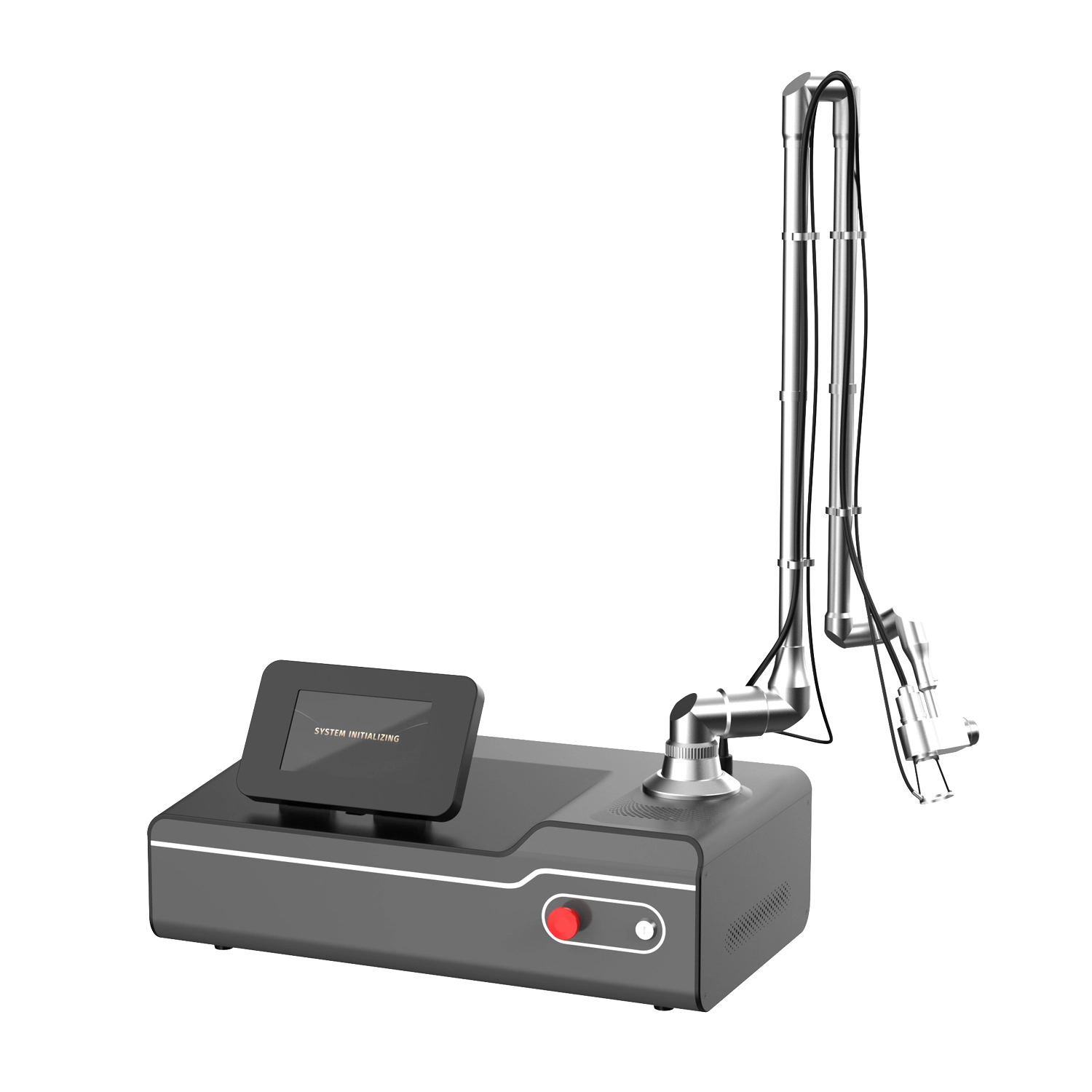
Professional CO2 Fractional Laser Machine for Skin Resurfacing & Scar Treatment
The CO2 Fractional Laser Machine is a professional CO2 fractional laser machine designed for advanced skin resurfacing, scar treatment, and skin rejuvenation procedures.
Using 10,600nm CO2 fractional laser technology, the system delivers controlled microthermal zones into the skin, stimulating collagen remodeling while preserving surrounding tissue. This fractional approach significantly improves treatment safety, recovery time, and clinical outcomes.
The CO2 fractional laser machine is widely used in dermatology clinics and medical aesthetic centers for treating acne scars, wrinkles, enlarged pores, stretch marks, and various skin texture concerns.
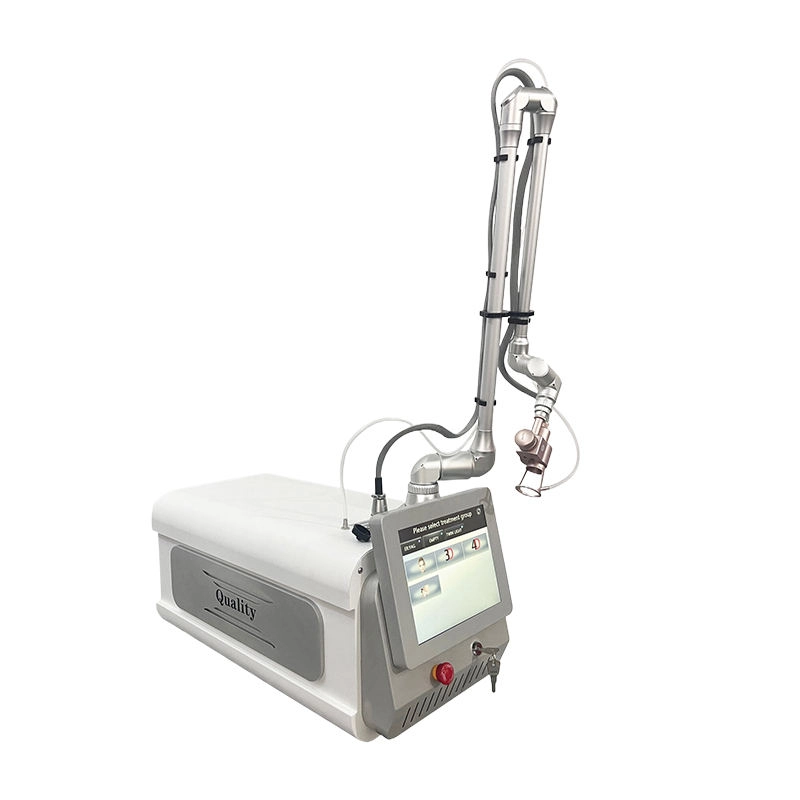
Professional CO2 Fractional Laser Machine | Fractional & Vaginal Rejuvenation CO2 Laser System
The CO2 fractional laser machine is a professional medical-grade device designed for deep skin resurfacing, wrinkle reduction, scar repair, and vaginal rejuvenation. Using a 10600 nm fractional CO2 laser beam, it creates micro-thermal columns on the skin to stimulate collagen regeneration and accelerate skin healing.
This CO2 fractional laser machine provides multiple treatment modes, including fractional mode, surgical cutting mode, and optional vaginal tightening mode, making it ideal for dermatology clinics and professional beauty centers seeking advanced laser solutions.
Its high precision, adjustable spot size, stable energy output, and seven-joint articulated arm ensure safe, accurate, and effective treatment results with minimal downtime.
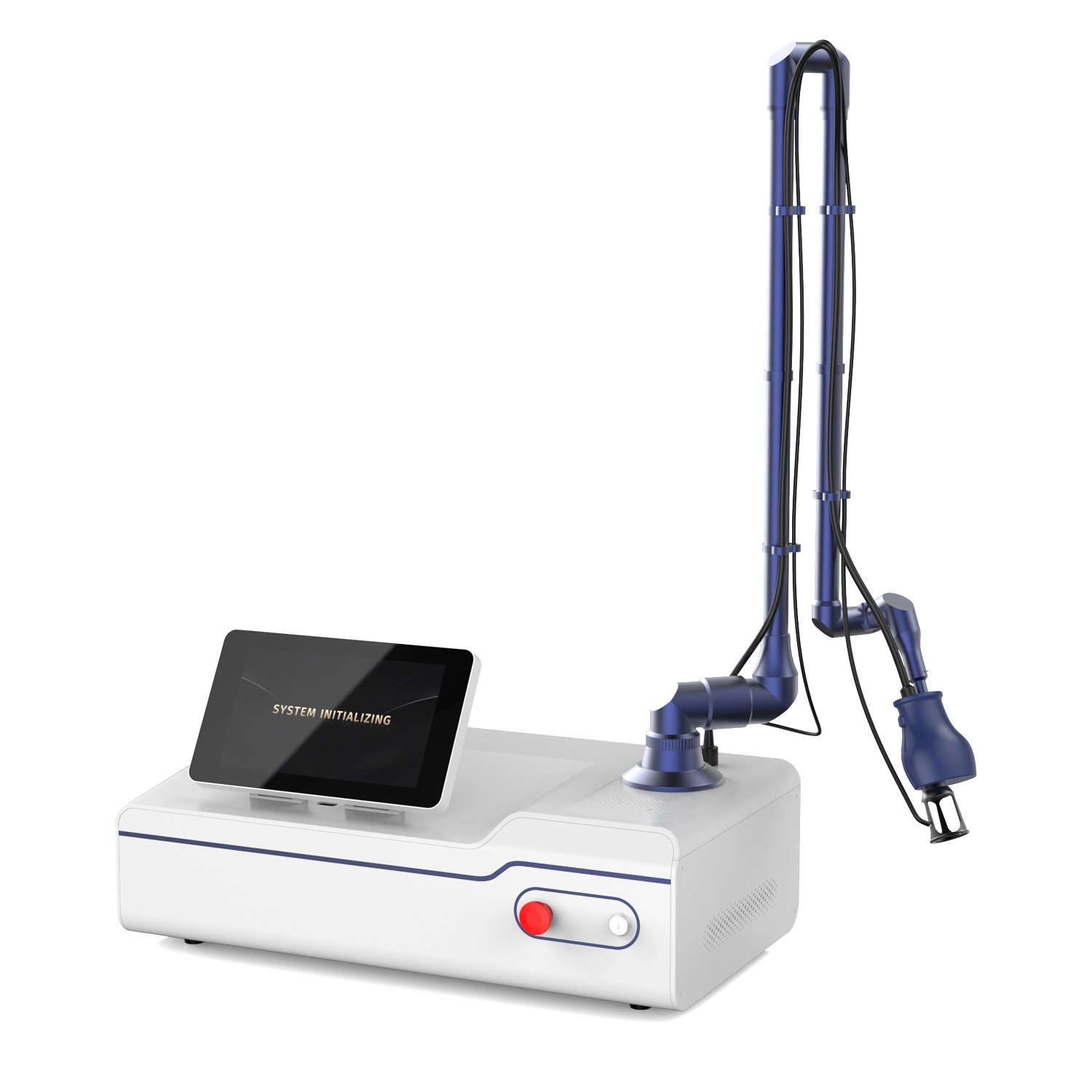
CO2 Fractional Laser Machine | Intimate Vaginal Rejuvenation System
This **CO2 Fractional Laser Machine** utilizes advanced 10600nm CO2 fractional laser technology to create controlled micro-thermal zones on the vaginal mucosa and intimate skin layers. These micro-columns stimulate collagen regeneration and tissue remodeling, effectively improving vaginal tightness, elasticity, and overall intimate health.
Designed specifically for professional medical aesthetic and intimate wellness applications, this CO2 fractional laser machine features intelligent parameter control and high-precision energy output to ensure safe, comfortable, and consistent treatment results. It is an ideal core device for vaginal rejuvenation, postpartum recovery, and intimate anti-aging treatments.
Get more information
If you have any comments or good suggestions, please leave us a message; later our professional staff will contact you as soon as possible.
Let's Talk
Stay in touch with us for cutting-edge beauty solutions, professional guidance, and customized service.
Contact


Room 307, Building A, Huilong International E-commerce Industrial Park, No. 10 Xipengling Road, Helong Street, Baiyun District, Guangzhou, China
© 2025 HUIMAIN. All Rights Reserved. Privacy Policy | Terms and Conditions | Sitemap
Facebook
Instagram
Medical beauty equipment factory
huimain Medical beauty equipment factory
beauty machine supplier
Whatsapp: +8619124004543