


Hygiene Protocols: Disinfection for Microdermabrasion Tools
- Practical Disinfection Protocols for Salon Microdermabrasion Tools
- Understanding risks, responsibilities and SOP foundations
- Why microdermabrasion tools require strict protocols
- Regulatory expectations and salon responsibilities
- Establishing a written, auditable SOP
- Step-by-step cleaning, disinfection and sterilization workflow
- Pre-cleaning and barrier precautions
- Chemical disinfection choices, contact times and compatibility
- Sterilization vs high-level disinfection for tips and accessories
- Selecting tools, disposables and device maintenance to minimize infection risk
- Disposable vs reusable tips — practical comparison
- Material compatibility and preventive maintenance
- Recordkeeping and traceability
- Training, quality assurance and client communication
- Staff training and competency assessment
- Audit cycles, environmental monitoring and corrective action
- Client consent, aftercare and marketing hygiene as a competitive advantage
- Manufacturer partnerships and device selection: partnering with Huimain (brand highlight)
- Why choose a reputable OEM/ODM like Guangzhou Huimain Technology Co., Ltd.
- Huimain’s product and service strengths
- Practical checklist and SOP template (quick-reference)
- Per-treatment checklist
- Weekly/monthly QA items
- Frequently Asked Questions (FAQ)
- 1. Do I need to sterilize microdermabrasion tips after every use?
- 2. Are disposable tips necessary for salons?
- 3. Which disinfectants are recommended?
- 4. How should I document disinfection to satisfy inspections?
- 5. What immediate actions if a client develops an infection after treatment?
- Contact and product consultation
- References
Practical Disinfection Protocols for Salon Microdermabrasion Tools
Microdermabrasion is a high-volume, skin-abrasive aesthetic procedure commonly offered in salons and medi-spas. Proper hygiene is essential to protect clients and staff, preserve device lifespan, and meet regulatory expectations. This article gives salon owners, managers, and device operators an evidence-based framework for cleaning, disinfection, and sterilization of microdermabrasion machines and accessories — with clear SOP elements, product-selection guidance, and QA measures tailored for 'microdermabrasion machine for salon' use.
Understanding risks, responsibilities and SOP foundations
Why microdermabrasion tools require strict protocols
Microdermabrasion produces micro-abrasions and removes the stratum corneum, increasing transient skin susceptibility to microbial entry. Instruments contact multiple clients’ skin surfaces and can transfer bacteria, viruses or fungi if not properly processed. Even if infection events are uncommon, they can be severe and damage reputation and legal compliance. Employing standardized cleaning/disinfection reduces this risk and aligns with occupational safety expectations (OSHA) and medical-device reprocessing guidance (FDA/WHO).
Regulatory expectations and salon responsibilities
Salons must adhere to local public health rules and applicable national guidance for device reprocessing. Even if microdermabrasion devices are marketed for aesthetic use, best practice is to follow healthcare-grade cleaning and high-level disinfection where indicated. Key references include CDC’s Disinfection & Sterilization Guidance, WHO reprocessing manuals, FDA recommendations on reprocessing reusable devices, and OSHA bloodborne pathogen expectations for exposure-prone procedures.
Establishing a written, auditable SOP
A practical SOP contains: scope (which devices, tips, tubing), definitions (cleaning, low/intermediate/high-level disinfection, sterilization), stepwise procedures, approved products and contact times, PPE requirements, waste handling, traceability/recording, training regimen and corrective actions. Place SOPs near processing area and review quarterly or after any infection incident.
Step-by-step cleaning, disinfection and sterilization workflow
Pre-cleaning and barrier precautions
Immediately after each treatment, remove gross soil (dead skin, debris) from tips and handpieces. Use disposable barrier covers on handpieces where feasible and change between clients. Staff should wear gloves and eye protection during processing and dispose of gloves after cleaning steps. Pre-cleaning reduces bioburden, improving efficacy of chemical disinfectants and prolonging device life.
Chemical disinfection choices, contact times and compatibility
Selection should be based on: organism spectrum, material compatibility, contact time, and manufacturer instructions for use (IFU). For routine salon microdermabrasion tips and non-lumened handpieces, intermediate-level disinfectants (e.g., EPA-registered hospital disinfectant with tuberculocidal claims) are commonly used; high-level disinfection or sterilization is required for devices that penetrate sterile tissue or enter vascular spaces.
| Method | Typical Use | Advantages | Limitations |
|---|---|---|---|
| Detergent + Water | Pre-cleaning to remove debris | Essential first step | Not a disinfectant |
| EPA-registered hospital disinfectant (intermediate) | External, noninvasive tips & handpieces | Broad efficacy; convenient | Requires correct contact time; may affect plastics |
| High-level disinfectant (glutaraldehyde, ortho-phthalaldehyde) | Reusable devices contacting mucous membranes or non-intact skin | Kills bacteria, mycobacteria, viruses, fungi | Long contact times; chemical hazard handling |
| Steam sterilization (autoclave) | Sterilizable detachable metal tips/components | Highest assurance — kills spores | Not suitable for heat-sensitive plastics |
| UV-C devices | Supplemental surface disinfection | Nonchemical; rapid | Line-of-sight limits; adjunct only |
Always follow the microdermabrasion device manufacturer IFU regarding which parts are autoclavable or chemically compatible. If manufacturer instructions conflict with general guidance, document the risk assessment and contact manufacturer for clarification.
Sterilization vs high-level disinfection for tips and accessories
Decide processing category by device contact type. For tips that only touch intact skin briefly, intermediate-level disinfection after thorough cleaning is generally appropriate if manufacturer allows. For tips or needle-assisted accessories that breach skin continuity, treat as semi-critical or critical items — requiring high-level disinfection or sterilization (e.g., autoclave) depending on device construction.
Selecting tools, disposables and device maintenance to minimize infection risk
Disposable vs reusable tips — practical comparison
| Feature | Disposable Tips | Reusable Tips |
|---|---|---|
| Infection risk | Lowest (single use) | Dependent on reprocessing quality |
| Cost | Higher per-treatment consumable cost | Lower long-term if reprocessed correctly |
| Workflow | Simplifies processing, faster turnover | Requires validated cleaning/disinfection/sterilization |
| Environmental impact | More waste | Less waste but chemical use increases |
When possible, adopt single-use disposable tips for salons to reduce reprocessing burden and client risk, particularly in high-throughput settings.
Material compatibility and preventive maintenance
Repeated exposure to aggressive disinfectants can degrade seals, tubing and plastics. Maintain an equipment log that tracks exposure to specific chemicals and follows manufacturer-recommended maintenance intervals. Replace O-rings, filters and tubing per IFU and record serial numbers and service dates for traceability.
Recordkeeping and traceability
Maintain disinfection logs showing: date/time, operator, device ID/serial, method, disinfectant used, lot number, contact time, and any test results (e.g., biological indicators for sterilizers). These records support audits and help investigate any adverse events.
Training, quality assurance and client communication
Staff training and competency assessment
Train staff on SOPs, PPE, spill response, and emergency protocols. Validate competency with direct observation, quizzes and practical demonstrations at hire and at least annually. Keep training records for each operator. Emphasize proper glove removal, hand hygiene, and avoidance of cross-contamination (e.g., do not touch clean surfaces with contaminated gloves).
Audit cycles, environmental monitoring and corrective action
Implement internal audits (monthly) and environmental checks (surface ATP testing or visual inspection). For sterilizers, run biological indicators according to standards. When nonconformance is found, halt use of implicated devices, document, retrain staff, and report to relevant authorities if client harm occurred.
Client consent, aftercare and marketing hygiene as a competitive advantage
Inform clients about hygiene measures in consent materials and verbally before treatments. Provide clear aftercare instructions to reduce infection risk (cleaning regimen, signs of infection). Visible hygiene standards and documented SOPs build client trust and can be a marketing differentiator for salons advertising a professional 'microdermabrasion machine for salon' experience.
Manufacturer partnerships and device selection: partnering with Huimain (brand highlight)
Why choose a reputable OEM/ODM like Guangzhou Huimain Technology Co., Ltd.
Selecting devices from experienced manufacturers who provide clear IFUs, validation data and after-sale support simplifies compliance. Guangzhou Huimain Technology Co., Ltd. is a high-tech company specializing in beauty machines and home-use machine series, with full capabilities in R&D, production, sales and after-sale service. The company operates a 3,000 m2 facility and has a strong technical development team including engineers and PE experts. Over 20% of staff hold bachelor’s degrees and over 40% have junior college degrees, supporting strong clinical testing and purchasing processes.
Huimain’s product and service strengths
Huimain adheres to OEM and ODM routes, focusing on quality medical and beauty machines for salons and customers worldwide. The company has CE and SGS approvals and several product patents. Products sell globally across China, Southeast Asia, the Middle East, Europe and North America. Huimain’s main product lines relevant to salon and medspa operators include:
- Cryolipolysis machine
- EMS sculpting machine
- Plasma machine
- Shockwave machine
- HIFU machine
- Hydrofacial machine
- Cavitation vacuum machine
- Laser hair removal & tattoo removal machines
- Micro-needle machine
For salons seeking robust after-sale service, validated IFUs and OEM customization for disposable tip options or sterilizable components, partnering with a manufacturer like Huimain can reduce compliance risk and accelerate market responsiveness. Their emphasis: 'We innovate technology and win-win cooperation' — producing high-quality beauty machines that meet client-market demands.
Practical checklist and SOP template (quick-reference)
Per-treatment checklist
- Use single-use disposable tip where feasible; if not, remove and pre-clean immediately after use.
- Wear gloves and protective eyewear during processing.
- Clean visually with detergent and water to remove organic debris.
- Apply approved disinfectant; observe manufacturer-claimed contact time and concentration.
- Rinse (if required by disinfectant) and dry; inspect for damage.
- Record processing details in log.
Weekly/monthly QA items
- Check and replace filters and tubing per IFU.
- Audit 5 random processing logs and operator competency.
- Run sterilizer biological indicators (if autoclave used) and retain records.
- Review patient/client adverse event logs and investigate.
Frequently Asked Questions (FAQ)
1. Do I need to sterilize microdermabrasion tips after every use?
Not always. Determine processing level based on manufacturer IFU and the type of contact. Tips that only touch intact skin typically require thorough cleaning and intermediate-level disinfection. Tips that penetrate skin or contact non-intact skin should be treated as semi-critical or critical — requiring high-level disinfection or sterilization.
2. Are disposable tips necessary for salons?
Disposable tips reduce reprocessing burden and lower infection risk, often making them the preferred choice for busy salons despite higher per-treatment consumable cost.
3. Which disinfectants are recommended?
Use EPA-registered hospital disinfectants with appropriate claims, or high-level disinfectants when device classification requires it. Always follow IFU and product label for contact time and material compatibility.
4. How should I document disinfection to satisfy inspections?
Maintain logs with date/time, operator, device ID, method, disinfectant lot/expiry, contact time and any test results. Keep training records and maintenance/service logs for devices.
5. What immediate actions if a client develops an infection after treatment?
Advise the client to seek medical attention, document details, quarantine implicated device(s), review processing logs and staff competency, and notify local public health or licensing authorities if required. Perform root-cause analysis and corrective action before resuming use.
Contact and product consultation
If you are evaluating or upgrading equipment (including microdermabrasion machine for salon use) and need OEM/ODM solutions, device IFU customization, or post-sale technical support, Guangzhou Huimain Technology Co., Ltd. offers R&D, production and after-sale services tailored for salons and clinics. Contact their sales or technical team for product specifications, sterilization compatibility data, and options for disposable tips or sterilizable components.
References
- CDC — Guideline for Disinfection and Sterilization in Healthcare Facilities (2008). Centers for Disease Control and Prevention. https://www.cdc.gov/infectioncontrol/guidelines/disinfection/ (accessed 2026-01-01).
- FDA — Reprocessing of Reusable Medical Devices in Health Care Settings: Validation Methods and Labeling. U.S. Food & Drug Administration. https://www.fda.gov/medical-devices/reprocessing-reusable-medical-devices (accessed 2026-01-01).
- WHO — Decontamination and Reprocessing of Medical Devices for Health-care Facilities. World Health Organization, 2016. https://www.who.int/publications/i/item/9789241549889 (accessed 2026-01-01).
- OSHA — Bloodborne Pathogens and Needlestick Prevention. Occupational Safety and Health Administration. https://www.osha.gov/bloodborne-pathogens (accessed 2026-01-01).
- EPA — List N: Disinfectants for Coronavirus (SARS-CoV-2). U.S. Environmental Protection Agency. https://www.epa.gov/pesticide-registration/list-n-disinfectants-coronavirus-covid-19 (accessed 2026-01-01).
- Sample industry discussion on microdermabrasion safety and complications — PubMed overview (search results). PubMed. https://pubmed.ncbi.nlm.nih.gov/ (accessed 2026-01-01).
Article prepared by an industry consultant experienced in beauty-device manufacturing, salon compliance and clinical-grade infection control. For tailored SOP templates, training programs, or device-sourcing advice, contact Guangzhou Huimain Technology Co., Ltd. or consult the referenced guidance documents.
![Stop Shaving Forever: 10 Best Laser Hair Removal Machines That Actually Work [2026 Update] - HUIMAIN](https://www.huimainbeauty.com/upload/img/ai-image/stop-shaving-forever-10-best-laser-hair-removal-machines-that-actually-work-2026-update.png?x-oss-process=image/format,webp/quality,Q_100 "Stop-Shaving-Forever:-10-Best-Laser-Hair-Removal-Machines-That-Actually-Work-[2026-Update] - HUIMAIN")
OL-186
How often can treatments with the OL-186 hydro oxygen machine be performed?
1–2 times per week is recommended, depending on the client’s skin condition.
EMT8 MAX
How many sessions are needed to see results?
Most users see visible improvement after 4–6 sessions, depending on body type and treatment goals.
L50
Which areas can be treated?
Arms, abdomen, waist, back, hips, legs, and thighs—basically all major body areas.
ETG502
What is the working principle of cryolipolysis?
Cryolipolysis uses the unique sensitivity of fat cells to cold temperatures. Through precisely controlled low temperatures (typically between -10°C and 10°C), the device freezes and crystallizes fat cells. The crystallized fat cells then undergo natural apoptosis and are gradually metabolized and eliminated by the body's lymphatic system, leading to a reduction in localized fat.
A50
How soon can clinics see ROI after purchasing this machine?
With high-demand slimming treatments, most clinics achieve full ROI within 2–3 months.

CO2 Fractional Laser Machine – Professional Wrinkle Removal & Skin Resurfacing Device
The CO2 Fractional Laser Machine is a multifunctional aesthetic device designed for professional clinics and beauty salons. Using advanced fractional CO2 laser technology, it effectively targets acne scars, freckles, pigmentation, nevi, and deep wrinkles. Additionally, it provides non-invasive skin rejuvenation, vaginal tightening, and intimate beautification. This professional CO2 laser equipment combines precision, safety, and powerful energy output to deliver outstanding anti-aging and dermatological results.
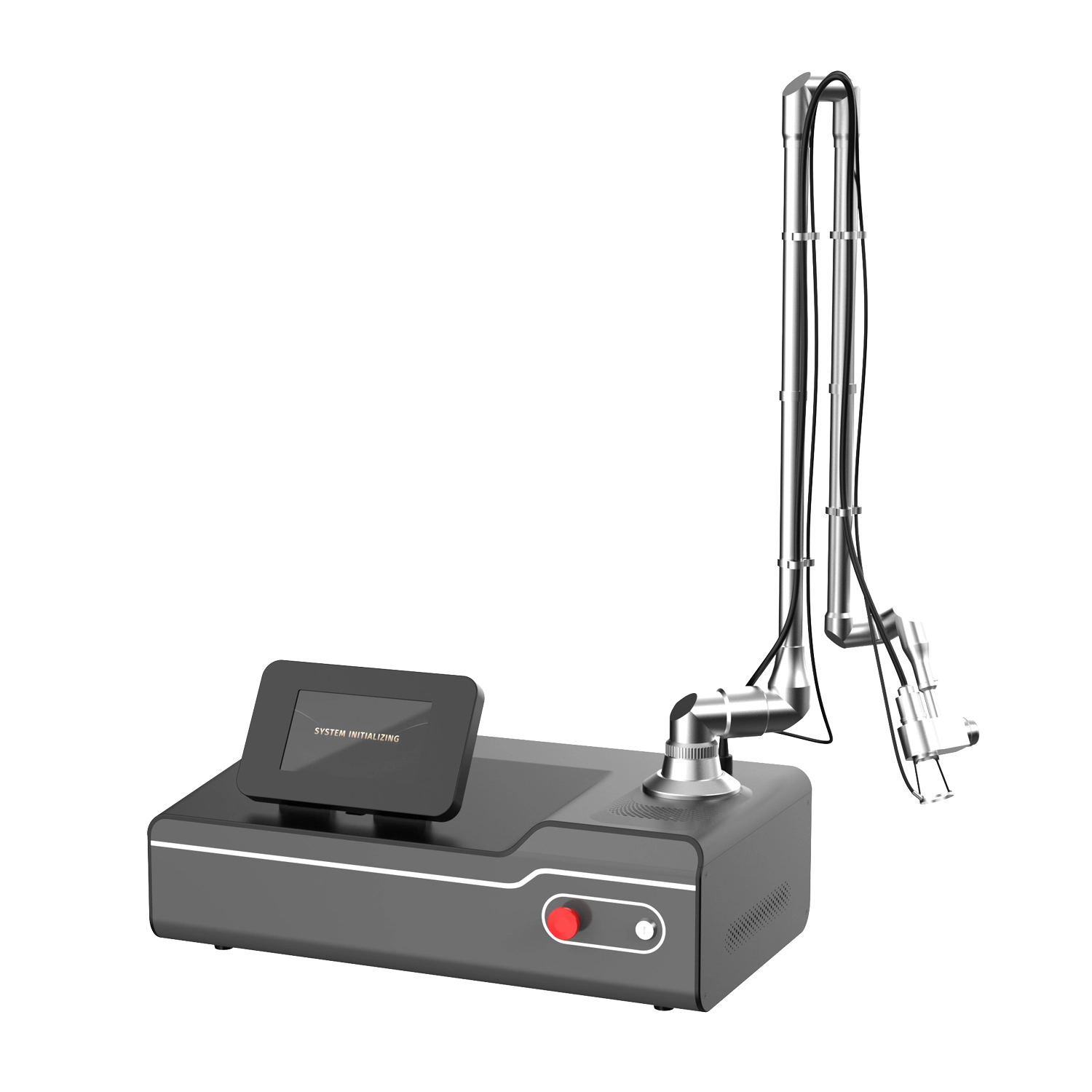
Professional CO2 Fractional Laser Machine for Skin Resurfacing & Scar Treatment
The CO2 Fractional Laser Machine is a professional CO2 fractional laser machine designed for advanced skin resurfacing, scar treatment, and skin rejuvenation procedures.
Using 10,600nm CO2 fractional laser technology, the system delivers controlled microthermal zones into the skin, stimulating collagen remodeling while preserving surrounding tissue. This fractional approach significantly improves treatment safety, recovery time, and clinical outcomes.
The CO2 fractional laser machine is widely used in dermatology clinics and medical aesthetic centers for treating acne scars, wrinkles, enlarged pores, stretch marks, and various skin texture concerns.
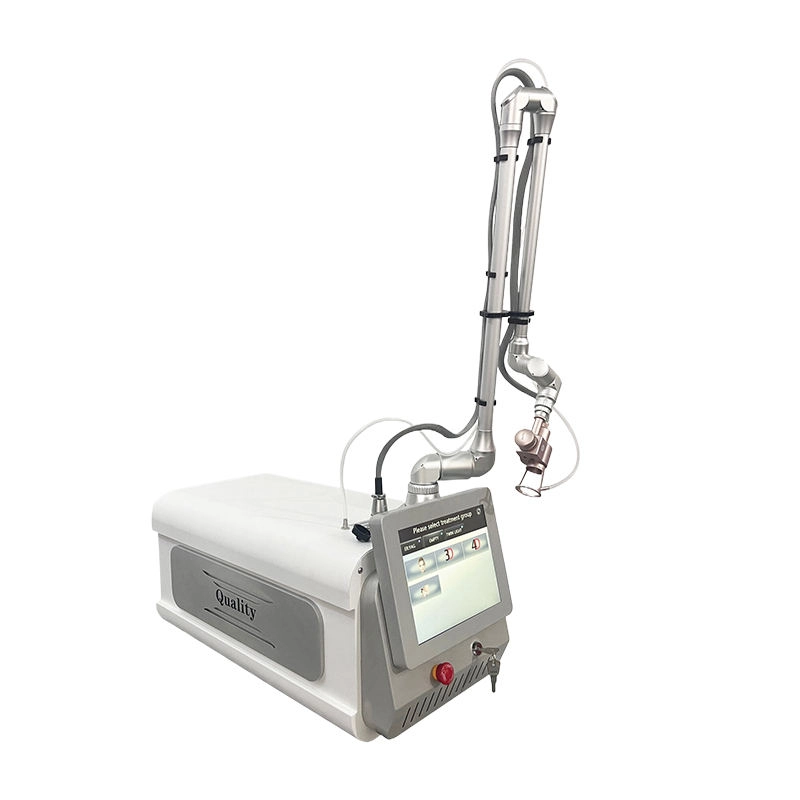
Professional CO2 Fractional Laser Machine | Fractional & Vaginal Rejuvenation CO2 Laser System
The CO2 fractional laser machine is a professional medical-grade device designed for deep skin resurfacing, wrinkle reduction, scar repair, and vaginal rejuvenation. Using a 10600 nm fractional CO2 laser beam, it creates micro-thermal columns on the skin to stimulate collagen regeneration and accelerate skin healing.
This CO2 fractional laser machine provides multiple treatment modes, including fractional mode, surgical cutting mode, and optional vaginal tightening mode, making it ideal for dermatology clinics and professional beauty centers seeking advanced laser solutions.
Its high precision, adjustable spot size, stable energy output, and seven-joint articulated arm ensure safe, accurate, and effective treatment results with minimal downtime.
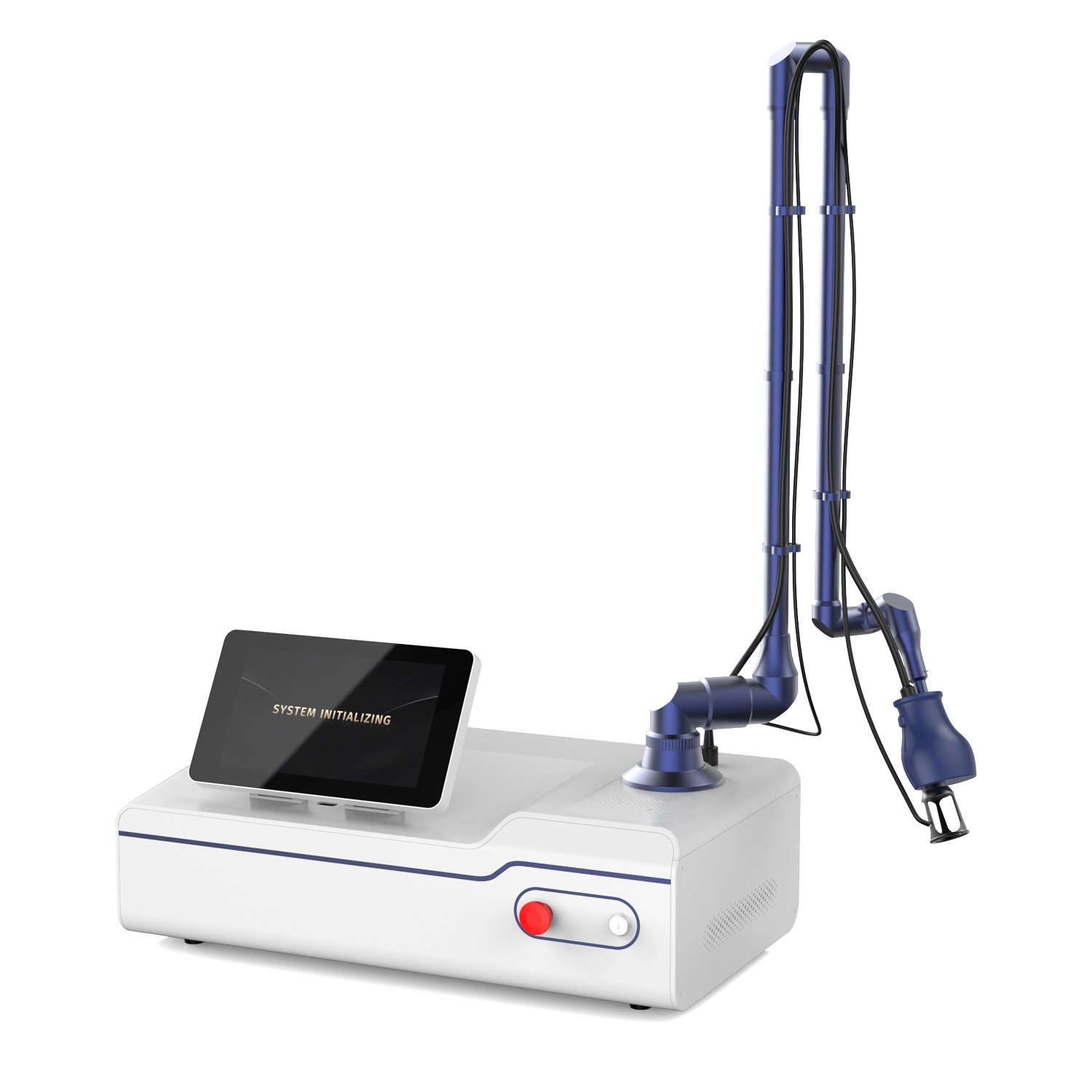
CO2 Fractional Laser Machine | Intimate Vaginal Rejuvenation System
This **CO2 Fractional Laser Machine** utilizes advanced 10600nm CO2 fractional laser technology to create controlled micro-thermal zones on the vaginal mucosa and intimate skin layers. These micro-columns stimulate collagen regeneration and tissue remodeling, effectively improving vaginal tightness, elasticity, and overall intimate health.
Designed specifically for professional medical aesthetic and intimate wellness applications, this CO2 fractional laser machine features intelligent parameter control and high-precision energy output to ensure safe, comfortable, and consistent treatment results. It is an ideal core device for vaginal rejuvenation, postpartum recovery, and intimate anti-aging treatments.
Get more information
If you have any comments or good suggestions, please leave us a message; later our professional staff will contact you as soon as possible.
Let's Talk
Stay in touch with us for cutting-edge beauty solutions, professional guidance, and customized service.
Contact


Room 307, Building A, Huilong International E-commerce Industrial Park, No. 10 Xipengling Road, Helong Street, Baiyun District, Guangzhou, China
© 2025 HUIMAIN. All Rights Reserved. Privacy Policy | Terms and Conditions | Sitemap
Facebook
Instagram
Medical beauty equipment factory
huimain Medical beauty equipment factory
beauty machine supplier
Whatsapp: +8619124004543