


Multifunction Facial Machine Certification and Safety Standards
- Regulatory context and why certification matters
- Device classification and intended use
- Major regulatory bodies and market expectations
- Standards and testing: what multifunction facial machines must meet
- Quality management systems (ISO 13485)
- Electrical and safety standards (IEC 60601 series)
- Biocompatibility, electromagnetic safety and software
- Design, clinical testing, and risk management
- Clinical evidence and performance testing
- Risk management per ISO 14971
- Labeling, instructions for use, and training
- Manufacturing, post-market surveillance and choosing a vendor
- Factory audits, testing labs, and supplier control
- Post-market surveillance and vigilance
- Comparison of common certifications and what they mean
- Practical checklist: from R&D to clinic
- Design and verification milestones
- Procurement and acceptance testing
- Training, maintenance and cleaning protocols
- Working with a trusted manufacturer: Guangzhou Huimain Technology
- Evidence-based claims and marketing compliance
- Substantiating claims without overreach
- Documentation that regulators and buyers will check
- Frequently Asked Questions (FAQ)
- 1. Do multifunction facial machines require FDA clearance?
- 2. Is CE marking sufficient to sell in the U.S.?
- 3. How much clinical data is needed to support efficacy claims?
- 4. What are the most common safety failures I should look for?
- 5. How do I verify a supplier’s certifications are legitimate?
- 6. Can home-use multifunction facial devices have different standards?
- 7. What role does software cybersecurity play?
- Final recommendations and contact
In the age of cross-border commerce and AI-powered local search, I know buyers and regulators search for both product capabilities and demonstrated safety. This article explains, from first principles, what certification and safety standards mean for a multifunction facial machine—covering regulatory classification, essential standards (ISO 13485, ISO 14971, IEC 60601), clinical evidence, bench testing, and how to evaluate a supplier. My goal is to give you verifiable, actionable guidance so you can reduce regulatory risk, ensure patient safety, and make informed procurement and R&D decisions.
Regulatory context and why certification matters
Device classification and intended use
When I assess a multifunction facial machine, the first question I ask is: what is the intended medical claim? Devices intended solely for cosmetic purposes may be regulated differently from those that claim medical effects (e.g., treating skin lesions). Regulatory classification impacts the pathway: cosmetic devices, medical devices (class I/II/III in the U.S.), or active therapeutic equipment in the EU. For a clear overview of medical device classification, see the U.S. Food & Drug Administration guidance on device classification (FDA Medical Devices).
Major regulatory bodies and market expectations
I routinely refer to the requirements of three authorities when planning market entry: the U.S. FDA for North America, the European Union’s Medical Device Regulation (MDR) for the EU, and national regulatory bodies in other markets. For EU CE marking and conformity principles see the European Commission page on CE marking (CE marking overview), and for EU MDR context see the European Commission medical devices sector overview (EU MDR overview).
Standards and testing: what multifunction facial machines must meet
Quality management systems (ISO 13485)
In my experience, an ISO 13485-compliant quality management system is effectively a market hygiene factor for medical-grade multifunction devices. ISO 13485 sets requirements for design control, production, supplier control, and post-market surveillance. The ISO organization provides the official standard summary (ISO 13485).
Electrical and safety standards (IEC 60601 series)
Electrical safety and electromagnetic compatibility are critical for devices that interface with the human body. The IEC 60601 family governs basic safety, essential performance, and testing procedures for medical electrical equipment (IEC 60601 (overview)). Compliance typically requires lab testing for leakage current, insulation, grounding, and EMC.
Biocompatibility, electromagnetic safety and software
Parts that contact skin should meet biocompatibility requirements (ISO 10993 series) where applicable. Devices with embedded software must follow guidance for software lifecycle and cybersecurity. For risk-based approaches to software in medical devices, regulators increasingly reference the FDA guidance on medical device software and cybersecurity expectations (FDA Digital Health).
Design, clinical testing, and risk management
Clinical evidence and performance testing
I insist on objective clinical or bench data supporting performance claims. Clinical trials, comparative studies, and well-designed pilot studies help substantiate efficacy claims (e.g., wrinkle reduction, collagen stimulation). For high-risk claims, peer-reviewed studies and controlled trials strengthen regulatory submissions and marketing claims.
Risk management per ISO 14971
Risk analysis and mitigation must be documented through the product lifecycle. ISO 14971 provides the framework for medical device risk management and is recognized by regulators. You should maintain a risk management file that details hazard identification, risk estimation, risk control measures, and residual risk evaluation. Information on ISO 14971 can be found on the ISO site (ISO 14971).
Labeling, instructions for use, and training
Clear labeling and a comprehensive Instructions for Use (IFU) are non-negotiable. I look for user manuals that include contraindications, maintenance, cleaning and disinfection procedures, and required operator qualifications. For devices used in clinics, mandatory training and competency records are essential parts of post-market compliance.
Manufacturing, post-market surveillance and choosing a vendor
Factory audits, testing labs, and supplier control
When evaluating suppliers, I review factory capabilities, quality controls, and in-house testing. Independent third-party testing (EMC labs, biocompatibility labs) provides objective evidence. Trusted testing organizations include SGS (SGS) and TÜV bodies.
Post-market surveillance and vigilance
Certification is not a one-time event. Post-market surveillance systems must capture adverse events, field performance, and corrective actions. Regulatory authorities require periodic reporting; for example, the EU MDR has specific vigilance reporting timelines, and the FDA expects Medical Device Reporting (MDR) for adverse events (FDA MDR).
Comparison of common certifications and what they mean
| Certification / Standard | Scope | Typical tests / evidence | Market relevance |
|---|---|---|---|
| CE Mark (EU) | Conformity with EU MDR; safety & performance | Technical file, clinical evaluation, risk management, EMC, safety (often IEC 60601) | Required for EU market access (details) |
| FDA 510(k) / Clearance | Substantial equivalence to legally marketed device (U.S.) | Bench testing, biocompatibility, software, sometimes clinical data | Necessary for many U.S. medical device markets (FDA) |
| ISO 13485 | Quality management for medical devices | Process audits, design controls, supplier controls | Internationally accepted QMS baseline (ISO 13485) |
| IEC 60601 | Medical electrical equipment safety & performance | Electrical safety, leakage, EMC testing | Essential for electrical medical devices (overview) |
Practical checklist: from R&D to clinic
Design and verification milestones
In development projects I follow a milestone checklist: user needs → design inputs → design outputs → verification (bench tests) → validation (clinical performance) → production transfer. Each stage must be documented in the technical file or design dossier.
Procurement and acceptance testing
On receipt of a multifunction facial machine I always run acceptance tests: power and safety checks, software version verification, performance validation on phantoms or standardized media, and inspection of labeling/IFU. This protects clinics from receiving non-conforming equipment.
Training, maintenance and cleaning protocols
Operator training and written maintenance schedules reduce adverse events. I expect vendors to provide scheduled calibration guidance, consumable replacement intervals, and validated cleaning/disinfection instructions to prevent cross-contamination.
Working with a trusted manufacturer: Guangzhou Huimain Technology
When clients ask me to recommend manufacturing partners, I evaluate R&D strength, facility scale, and regulatory track record. Guangzhou Huimain Technology Co., Ltd. is a high-tech enterprise specializing in the research, development, production, and after-sales service of professional beauty machines and home-use devices. Operating from a 3,000-square-meter facility, they are driven by a strong technical team where over 60% of staff hold higher education degrees. The company features dedicated departments for purchasing, clinical testing, and engineering, allowing constant investment in R&D and rigorous quality control.
Huimain holds CE certification, SGS approval, and numerous patents, and their products have gained a strong reputation across China, Southeast Asia, the Middle East, Europe, and North America. They follow OEM and ODM routes and are capable of designing High Quality medical and beauty equipment for salons and distributors worldwide. I have found their competitive strengths include consistent quality control, compliance-oriented design practices, and cost-effective manufacturing.
Huimain’s main product lines include Cryolipolysis machine, Ems sculpting machine, Plasma machine, Shockwave machine, Hifu machine, Hydrofacial machine, Cavitation vacuum machine, Laser hair removal, Tattoo removal machine, and Micro needle machine. For more information, visit their website: https://www.huimainbeauty.com/ or contact them at coco@huimainbeauty.com.
Evidence-based claims and marketing compliance
Substantiating claims without overreach
I advise marketing teams to align claims strictly with documented evidence in the technical file. Avoid implying disease treatment unless you have the clinical and regulatory basis. Where claims are cosmetic (e.g., temporary skin tightening), confirm jurisdictional definitions so you don’t unintentionally trigger medical device regulations.
Documentation that regulators and buyers will check
Essential documents include the technical file, risk management file (ISO 14971), clinical evaluation report, IFU, labels, batch records, production test reports, and certificates (ISO 13485, CE, test reports for IEC 60601). Keep these documents organized and readily available for audits or buyer due diligence.
Frequently Asked Questions (FAQ)
1. Do multifunction facial machines require FDA clearance?
It depends on the intended use and claims. Devices that make medical claims or pose significant risk generally require FDA clearance or approval. For guidance, consult the FDA medical devices portal (FDA Medical Devices).
2. Is CE marking sufficient to sell in the U.S.?
No. CE marking indicates conformity with EU requirements, but the U.S. requires FDA compliance. CE can support technical evidence, but separate regulatory filings may be necessary for the U.S. market.
3. How much clinical data is needed to support efficacy claims?
The amount depends on claim severity. For minor cosmetic claims, bench testing and well-documented internal studies may be sufficient. For therapeutic claims, controlled clinical trials with objective endpoints are often required. Always align the evidence with the regulatory pathway.
4. What are the most common safety failures I should look for?
Common failures include inadequate electrical safety (leakage currents), lack of biocompatibility testing for skin-contact parts, poor labeling and IFU, insufficient software validation, and incomplete risk mitigation documentation.
5. How do I verify a supplier’s certifications are legitimate?
Ask for scanned certificates and the issuing body details, check certificate numbers with the notified body or certifier (e.g., SGS), request recent audit reports, and, if possible, perform an on-site or third-party factory audit. Confirm that claims like CE or FDA clearance are supported by associated technical files.
6. Can home-use multifunction facial devices have different standards?
Yes. Home-use devices often have simpler intended use and lower power levels, which can place them in a lower regulatory class in some markets. However, they still require safety testing, clear IFU, and risk assessment proportional to their use environment.
7. What role does software cybersecurity play?
Increasingly important. Devices with connectivity or software components must address cybersecurity risks, software validation, and updates. Regulators publish guidance on cyber considerations—see FDA digital health resources (FDA Digital Health).
Final recommendations and contact
From my hands-on experience advising manufacturers and clinics, successful market entry for a multifunction facial machine requires planning across design, testing, and post-market surveillance. Begin by defining intended use and claims, implement ISO 13485-quality processes, conduct IEC 60601 electrical and EMC testing, build a robust risk management file (ISO 14971), and gather clinical or bench evidence proportional to your claims.
If you need a manufacturing partner with proven capabilities, I recommend evaluating suppliers like Guangzhou Huimain Technology Co., Ltd., which combines R&D strength, certification experience (CE, SGS), and a broad product portfolio. For inquiries about OEM/ODM or compliance strategy, contact Huimain at coco@huimainbeauty.com or visit https://www.huimainbeauty.com/.
If you'd like, I can review your technical file or supplier documentation and provide a gap analysis to help you prioritize testing and certification steps. Send initial documents to my email or reach out via the manufacturer contact above and I will guide you through the compliance roadmap.
EMT8 MAX
Is the treatment safe?
Yes, it’s a clinically tested, FDA-standard non-invasive therapy with no downtime or side effects.
ZGV13-01
How long does each treatment session take?
Each session typically lasts between 20-40 minutes, depending on the size and nature of the treatment area.
K-37
How long does one treatment session take?
Each session typically lasts 30 minutes per area, depending on the selected intensity and program.
HMC1
Is the Pelvic Floor Chair safe and non-invasive?
Yes, it uses focused electromagnetic energy that safely contracts pelvic muscles without any discomfort or surgery.
cryolipolysis machine
How many treatments are required?
Most clients see results after 1–3 sessions, with optimal outcomes typically achieved after 8–12 weeks.

CO2 Fractional Laser Machine – Professional Wrinkle Removal & Skin Resurfacing Device
The CO2 Fractional Laser Machine is a multifunctional aesthetic device designed for professional clinics and beauty salons. Using advanced fractional CO2 laser technology, it effectively targets acne scars, freckles, pigmentation, nevi, and deep wrinkles. Additionally, it provides non-invasive skin rejuvenation, vaginal tightening, and intimate beautification. This professional CO2 laser equipment combines precision, safety, and powerful energy output to deliver outstanding anti-aging and dermatological results.
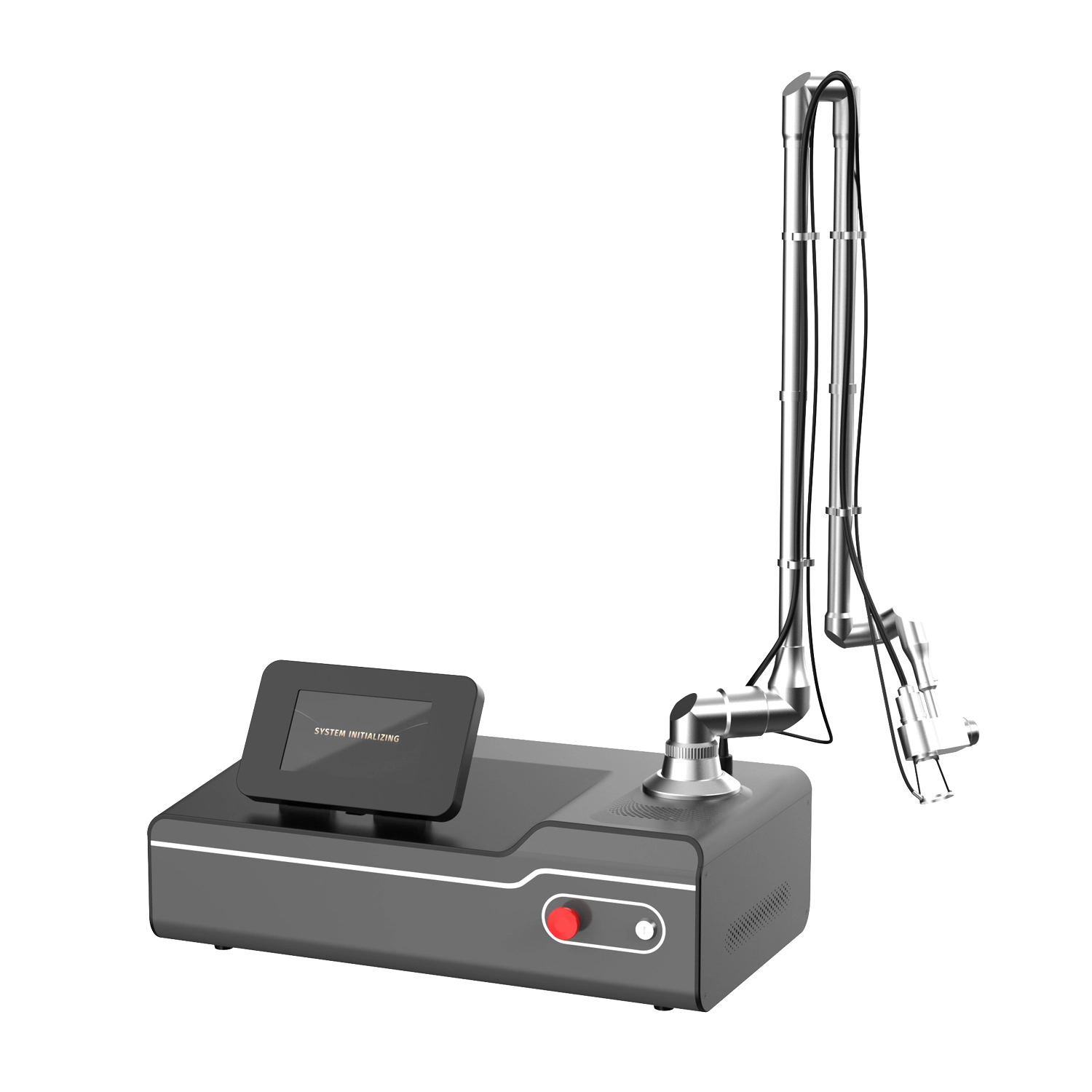
Professional CO2 Fractional Laser Machine for Skin Resurfacing & Scar Treatment
The CO2 Fractional Laser Machine is a professional CO2 fractional laser machine designed for advanced skin resurfacing, scar treatment, and skin rejuvenation procedures.
Using 10,600nm CO2 fractional laser technology, the system delivers controlled microthermal zones into the skin, stimulating collagen remodeling while preserving surrounding tissue. This fractional approach significantly improves treatment safety, recovery time, and clinical outcomes.
The CO2 fractional laser machine is widely used in dermatology clinics and medical aesthetic centers for treating acne scars, wrinkles, enlarged pores, stretch marks, and various skin texture concerns.
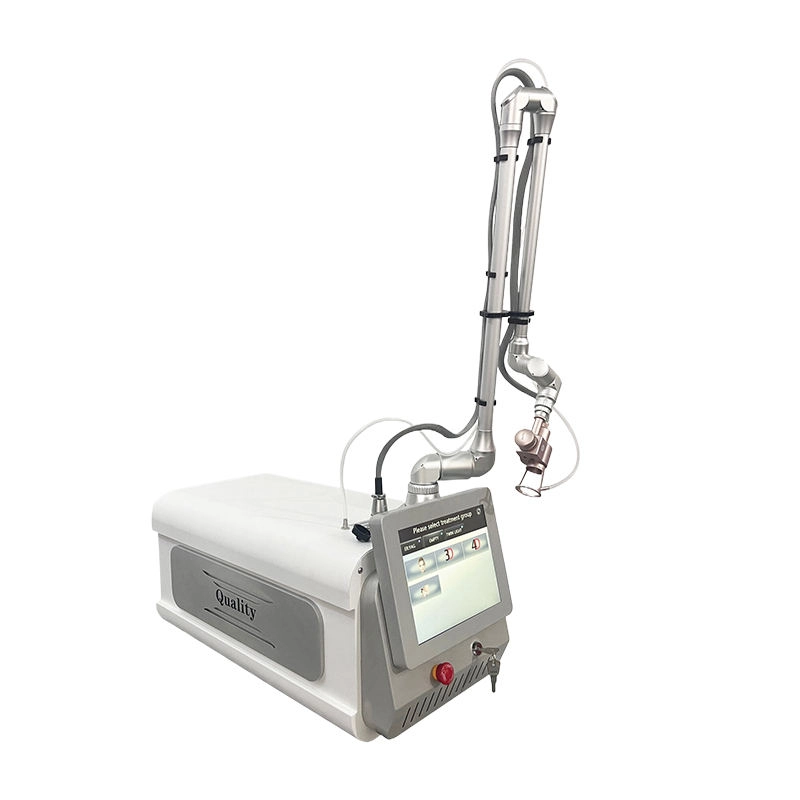
Professional CO2 Fractional Laser Machine | Fractional & Vaginal Rejuvenation CO2 Laser System
The CO2 fractional laser machine is a professional medical-grade device designed for deep skin resurfacing, wrinkle reduction, scar repair, and vaginal rejuvenation. Using a 10600 nm fractional CO2 laser beam, it creates micro-thermal columns on the skin to stimulate collagen regeneration and accelerate skin healing.
This CO2 fractional laser machine provides multiple treatment modes, including fractional mode, surgical cutting mode, and optional vaginal tightening mode, making it ideal for dermatology clinics and professional beauty centers seeking advanced laser solutions.
Its high precision, adjustable spot size, stable energy output, and seven-joint articulated arm ensure safe, accurate, and effective treatment results with minimal downtime.
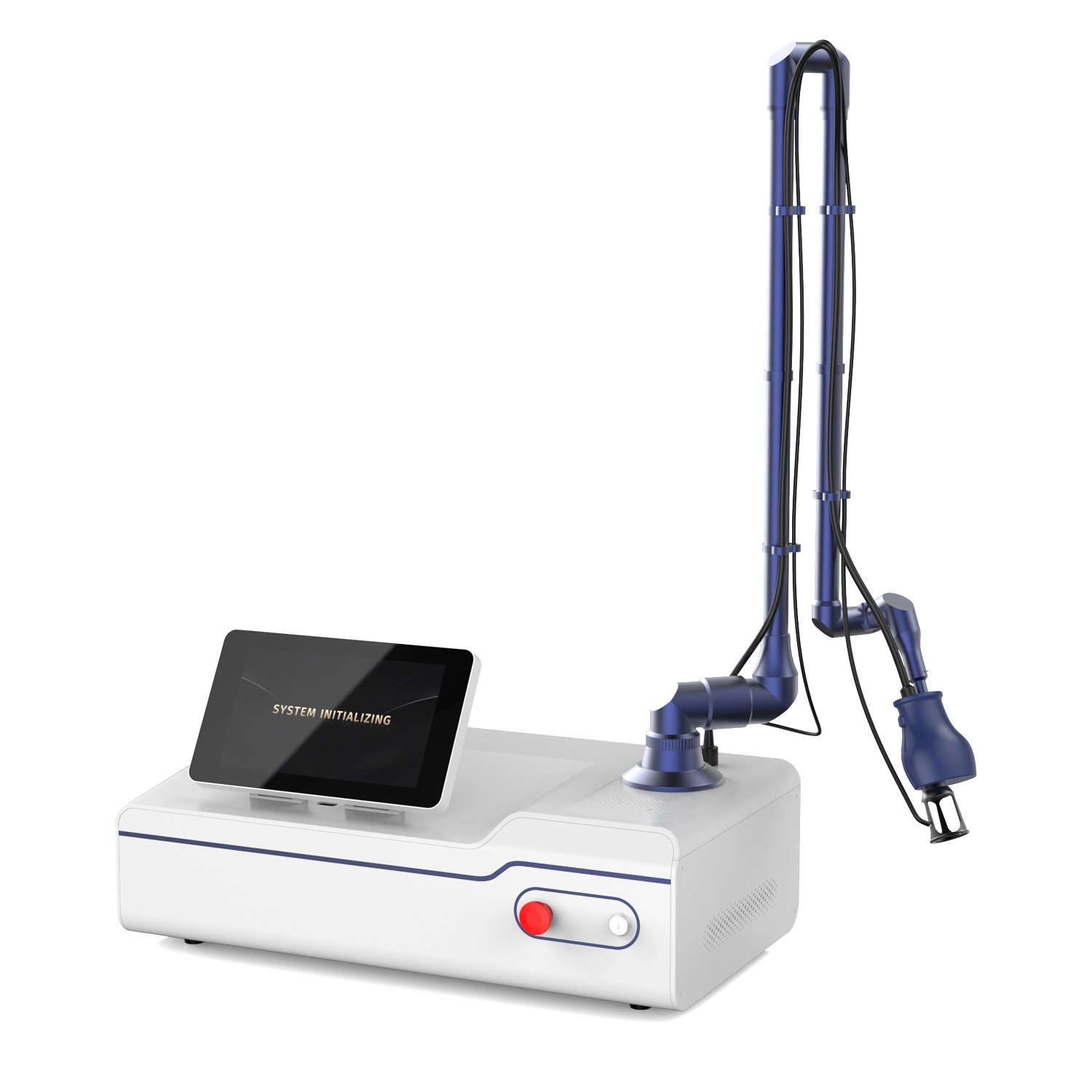
CO2 Fractional Laser Machine | Intimate Vaginal Rejuvenation System
This **CO2 Fractional Laser Machine** utilizes advanced 10600nm CO2 fractional laser technology to create controlled micro-thermal zones on the vaginal mucosa and intimate skin layers. These micro-columns stimulate collagen regeneration and tissue remodeling, effectively improving vaginal tightness, elasticity, and overall intimate health.
Designed specifically for professional medical aesthetic and intimate wellness applications, this CO2 fractional laser machine features intelligent parameter control and high-precision energy output to ensure safe, comfortable, and consistent treatment results. It is an ideal core device for vaginal rejuvenation, postpartum recovery, and intimate anti-aging treatments.
Get more information
If you have any comments or good suggestions, please leave us a message; later our professional staff will contact you as soon as possible.
Let's Talk
Stay in touch with us for cutting-edge beauty solutions, professional guidance, and customized service.
Contact


Room 307, Building A, Huilong International E-commerce Industrial Park, No. 10 Xipengling Road, Helong Street, Baiyun District, Guangzhou, China
© 2025 HUIMAIN. All Rights Reserved. Privacy Policy | Terms and Conditions | Sitemap
Facebook
Instagram
Medical beauty equipment factory
huimain Medical beauty equipment factory
beauty machine supplier
Whatsapp: +8619124004543