


Multifunction Facial Machine Customization and Branding Solutions
- Understanding Market Needs for Professional Beauty Devices
- What customers actually search for and want
- Clinical vs. home-use product expectations
- Regulatory baseline every buyer should require
- Customization Options for Multifunction Facial Machines
- Core feature modules and integration choices
- Software and user interface customization
- Branding, aesthetics, and ergonomics
- OEM vs. ODM Workflows and Commercial Considerations
- Comparing OEM and ODM: cost, time, and IP
- Lead times, MOQ and supply chain risk
- Quality system expectations
- Safety, Testing, and Regulatory Pathways
- Risk management and standards
- Electrical safety, EMC, and biocompatibility testing
- Clinical testing and claims substantiation
- Production, Quality Control and After-Sales
- Factory acceptance and incoming quality control
- Serviceability and spare parts strategy
- After-sales documentation and training
- Branding, Go-To-Market and Commercial Differentiation
- Positioning and pricing strategies
- Marketing assets that support sales
- International distribution and local regulations
- Why partner with a proven OEM/ODM: Case for Guangzhou Huimain Technology
- Company capabilities and R&D strength
- Certifications, geographic reach and product portfolio
- Core products and competitive advantages
- Practical Checklist for Bringing a Customized Multifunction Facial Machine to Market
- Frequently Asked Questions (FAQ)
- 1. How long does it take to customize a multifunction facial machine?
- 2. What certifications should I insist on from a manufacturer?
- 3. Can I add my own brand to an existing Huimain machine?
- 4. What is the difference between clinical-grade and salon-grade multifunction machines?
- 5. How should I validate treatment efficacy and safety before marketing?
- 6. What after-sales support should I expect from a reputable manufacturer?
As a consultant and practitioner in the professional beauty device industry, I often speak with clinics, distributors, and startups who need multifunction facial machines that are technically reliable, regulatory-compliant, and marketable. In this article I will walk you through the key business and technical considerations for customizing and branding multifunction facial machines, from defining feature sets and safety standards to OEM/ODM workflows, quality assurance, and go-to-market positioning. My goal is to give practical, verifiable guidance you can use to reduce time-to-market, limit regulatory risk, and create products that sell.
Understanding Market Needs for Professional Beauty Devices
What customers actually search for and want
for the keyword multifunction facial machine usually breaks into three groups: 1) clinic owners seeking reliable, high-performance devices for treatments (hydrofacial, RF, HIFU, micro-needling etc.), 2) distributors and retailers seeking OEM/ODM partnerships, and 3) consumers researching technology and safety. Understanding which segment you target determines customization scope, certification requirements, pricing and branding strategy. Data from market reports like Grand View Research shows rising demand for non-invasive aesthetic devices driven by aging populations and interest in minimally invasive procedures (Grand View Research).
Clinical vs. home-use product expectations
Clinical devices are expected to have higher power, advanced safety interlocks, and clearer regulatory pathways (often Class II medical devices in many jurisdictions), while home-use devices prioritize ease of use, safety limits, and consumer-friendly branding. This difference will affect choices for components (e.g., medical-grade power supplies, certified laser modules), testing protocols, and documentation.
Regulatory baseline every buyer should require
Before customization, you must define the regulatory baseline: will the product target the EU (CE marking), the US (FDA), or global markets? Familiarize yourself with medical device definitions and standards: the FDA's medical device overview (FDA), CE marking rules (European Commission) and ISO 13485 quality management (ISO). These documents inform documentation, risk management and clinical testing requirements.
Customization Options for Multifunction Facial Machines
Core feature modules and integration choices
Multifunction facial machines commonly combine modules such as RF (radiofrequency), HIFU (high-intensity focused ultrasound), cryotherapy, micro-needling, LED therapy, oxygen infusion (hydro), cavitation, and laser modules. The key is modular architecture: designing a common controller and power platform with swappable treatment heads reduces R&D time and simplifies maintenance. I recommend specifying standard communication protocols (e.g., CAN bus or RS485) between mainboard and modules to allow future upgrades without redesigning the chassis.
Software and user interface customization
Clinical users value precise parameter control and treatment presets, while spa owners prefer simplified modes. Offer tiered UI firmware: Pro Mode for clinicians with parameter logging and treatment profiles; Salon Mode for quick presets and client records. Include multilingual UI support, treatment timers, and automatic safety cutoffs. For data handling, follow best practices for patient privacy and, when applicable, local data protection laws.
Branding, aesthetics, and ergonomics
Physical customization—brand colors, logo placement, panel materials, and ergonomic handpieces—contributes strongly to perceived value. I advise investing in materials and surface finishes that withstand frequent disinfection and improve perceived hygiene. For distributors, offering private-label front panels or custom packaging helps differentiate your product in local markets.
OEM vs. ODM Workflows and Commercial Considerations
Comparing OEM and ODM: cost, time, and IP
Choosing OEM or ODM affects your level of control and investment. OEM means you supply the design and the manufacturer produces it; ODM means the manufacturer provides an existing design you can rebrand or slightly modify. Below is a concise comparison table I use with clients when advising on sourcing strategy.
| Aspect | OEM | ODM |
|---|---|---|
| Design ownership | Customer owns IP | Manufacturer retains core design IP (customization allowed) |
| Development time | Longer (design transfer and validation) | Shorter (use proven platform) |
| Cost | Higher up-front R&D | Lower initial cost, faster ROI |
| Regulatory burden | Customer manages approvals | Manufacturer may provide supporting docs |
Lead times, MOQ and supply chain risk
Customization affects minimum order quantities (MOQs), lead times and component sourcing. For example, sourcing certified laser diodes or medical-grade transducers can have lead times of weeks to months; long-term contracts and predictable volumes reduce per-unit cost. I recommend building dual-source strategies for critical components and insisting on BOM transparency from your manufacturer to manage obsolescence.
Quality system expectations
Any partner should operate under a recognized quality management system like ISO 13485. You should require process documentation, incoming inspection reports, production test logs, and traceability. Ask for sample Device Master Records (DMR) and evidence of clinical testing protocols when applicable. Manufacturers that provide CE/SGS/FDA support materially reduce regulatory friction for global distribution.
Safety, Testing, and Regulatory Pathways
Risk management and standards
Device risk management under ISO 14971 is essential for multifunction facial machines. You must document hazard analyses, mitigation strategies (hardware and software safety measures), and residual risk acceptance criteria. Refer to ISO 14971 guidance and ensure your clinical claims are supported by relevant testing or literature (Medical device - Wikipedia provides context on risk-based classification).
Electrical safety, EMC, and biocompatibility testing
Electromedical devices require electrical safety testing (IEC 60601 series) and electromagnetic compatibility (EMC) testing. Consumable parts contacting the skin should pass biocompatibility testing per ISO 10993. For distribution in the EU, CE marking requires conformity with applicable standards; in the US, the FDA may require 510(k) clearance for certain device classes. Useful references: FDA medical devices page (FDA), ISO 13485 (ISO).
Clinical testing and claims substantiation
Marketing claims must be supported by clinical data. For energy-based devices (HIFU, RF, lasers), controlled trials, bench tests, and safety data are commonly required. If relying on peer-reviewed literature, ensure the cited studies match your device parameters (e.g., energy density). For CE, clinical evaluation reports must follow MEDDEV or equivalent guidance and demonstrate benefit-risk balance.
Production, Quality Control and After-Sales
Factory acceptance and incoming quality control
I insist on factory acceptance tests (FAT) and pre-shipment inspection (PSI). FAT should verify key functions across all modules, calibration records, and safety interlocks. Incoming inspection for each batch should verify component traceability, solder quality, and cosmetic standards.
Serviceability and spare parts strategy
Design for serviceability reduces downtime for clinics and improves lifecycle value. Standardize replaceable modules, provide clear troubleshooting guides, and hold critical spares in regional warehouses to shorten mean time to repair (MTTR). Consider offering tiered warranties and maintenance contracts as part of HUIMAINed solution.
After-sales documentation and training
Provide user manuals, clinical protocols, training videos, and maintenance schedules. For many buyers, on-site training and marketing materials (treatment menus, before/after photos, consent forms) are part of the purchasing decision. Digital training platforms and remote troubleshooting (secure firmware updates) add value.
Branding, Go-To-Market and Commercial Differentiation
Positioning and pricing strategies
I recommend segmenting offerings: an entry-level multifunction facial machine for budget-conscious salons, a mid-tier model for high-volume spas, and a High Quality clinical device with advanced modules and professional documentation. Pricing must reflect certification level, warranty, and included training.
Marketing assets that support sales
High-quality product photography, demonstration videos, and clinical case studies drive conversion. Include downloadable technical files for distributors, and build a clear value proposition: treatment versatility, ROI per chair, and safety certifications. Testimonials and published clinical results help build trust—especially for medical-grade claims.
International distribution and local regulations
When expanding internationally, plan for local registrations, required translations, and in-country representation. Many countries require local authorized representatives for CE-marked devices or specific import documentation. Align your distribution agreements with service commitments and exclusive territory rights if desired.
Why partner with a proven OEM/ODM: Case for Guangzhou Huimain Technology
Company capabilities and R&D strength
In my work I evaluate partners based on technical depth, certifications and production capacity. Guangzhou Huimain Technology Co., Ltd. is a high-tech enterprise specializing in the research, development, production, and after-sales service of professional beauty machines and home-use devices. Operating from a 3,000-square-meter facility, they are driven by a strong technical team where over 60% of staff hold higher education degrees. Their dedicated departments for purchasing, clinical testing, and engineering enable ongoing investment in R&D.
Certifications, geographic reach and product portfolio
Huimain has secured CE certification, SGS approval, and holds numerous patents—indicators of reliable QA and competitive R&D. Their products have reputation across China, Southeast Asia, the Middle East, Europe, and North America. They follow OEM and ODM routes and can design and manufacture High Quality equipment for salons and distributors worldwide.
Core products and competitive advantages
Huimain's main products include Cryolipolysis machines, Ems sculpting machines, Plasma machines, Shockwave machines, Hifu machines, Hydrofacial machines, Cavitation vacuum machines, Laser hair removal, Tattoo removal machines and Micro-needle machines. Their competitive differentiation lies in combining rigorous quality control, cost-effective production, and adaptability for private-label branding—making them suitable for distributors seeking turnkey customization.
For more details visit their website: https://www.huimainbeauty.com/ or contact their sales at coco@huimainbeauty.com.
Practical Checklist for Bringing a Customized Multifunction Facial Machine to Market
- Define target market and feature set (clinic vs. home-use).
- Select OEM or ODM based on IP requirements and timeline.
- Confirm regulatory pathway (CE, FDA, local).
- Specify electrical, EMC and biocompatibility testing needs (IEC 60601, ISO 10993).
- Require ISO 13485 certification and quality documentation from your partner.
- Plan for FAT, PSI, and spare parts logistics.
- Create training, marketing collateral, and post-sales support programs.
Frequently Asked Questions (FAQ)
1. How long does it take to customize a multifunction facial machine?
Typical timelines vary: for ODM (minor branding/customization) 8–12 weeks; for OEM with major design changes or new modules 4–9 months depending on prototyping, testing and regulatory work. Lead times increase if clinical trials or extensive safety testing are required.
2. What certifications should I insist on from a manufacturer?
At minimum, request ISO 13485 (quality management), CE marking for EU markets, and if you target the US, support for FDA submissions. Third-party test reports for IEC 60601 (electrical safety), EMC testing, and biocompatibility (ISO 10993) are also important. SGS reports can validate specific tests (SGS).
3. Can I add my own brand to an existing Huimain machine?
Yes. Guangzhou Huimain supports OEM/ODM workflows and offers private-label options including front-panel branding, packaging, and documentation customization. Contact them at coco@huimainbeauty.com for specific MOQ and lead time details.
4. What is the difference between clinical-grade and salon-grade multifunction machines?
Clinical-grade devices usually operate at higher performance, have more granular control, and are accompanied by clinical data and medical certifications. Salon-grade machines prioritize safety limits, simplified controls, and ease of use. The intended use determines regulatory classification and required documentation.
5. How should I validate treatment efficacy and safety before marketing?
Start with bench testing and pre-clinical validation, followed by pilot clinical studies or customer evaluations. Collect objective metrics (skin temperature, energy delivery, patient-reported outcomes) and document adverse events. Use clinical evaluation reports aligned with MEDDEV guidance and ISO 14155 for clinical investigations when applicable.
6. What after-sales support should I expect from a reputable manufacturer?
Reasonable expectations include training materials, remote technical support, spare parts availability, warranty terms, and clear RMA processes. Manufacturers with global presence often provide regional warehouses and faster service response times.
If you want hands-on support in selecting features, preparing regulatory documentation, or identifying the right OEM/ODM partner, I can help you audit technical proposals and supplier capabilities. For direct inquiries and product consultations, visit https://www.huimainbeauty.com/ or email coco@huimainbeauty.com. Let's design a multifunction facial solution that meets your clinical needs, regulatory requirements, and brand ambitions.
References: FDA - Medical Devices (https://www.fda.gov/medical-devices); ISO 13485 information (https://www.iso.org/iso-13485-medical-devices.); CE marking overview (https://ec.europa.eu/growth/single-market/ce-marking_en); Medical device context (https://en.wikipedia.org/wiki/Medical_device); SGS healthcare testing (https://www.sgs.com/en/healthcare-pharmaceuticals).
Muscle exercise + Roller Massage
When can I see results?
Most users experience visible results within 3–5 sessions, with improved muscle tone and smoother skin texture.
DL-2 Led Light Therapy
Can I use this machine for sensitive skin?
Yes, the LED therapy is safe for all skin types, but a patch test is recommended for very sensitive skin.
ZGP05-01立式皮秒
How many sessions are needed for tattoo removal?
Most tattoos require fewer sessions compared to traditional lasers, depending on tattoo color, size, and depth.
MF8
What is EMS RF technology?
It combines Electrical Muscle Stimulation (EMS) to tone facial muscles and Radio Frequency (RF) to heat deep layers of the skin, promoting collagen renewal and tightening.
HMT12R
What kind of training and support do you provide for B2B partners?
We provide comprehensive training materials and technical support for all our B2B clients. This includes a detailed user manual, video tutorials, and dedicated customer service to ensure your staff can operate the device safely and effectively. We are committed to your success.

CO2 Fractional Laser Machine – Professional Wrinkle Removal & Skin Resurfacing Device
The CO2 Fractional Laser Machine is a multifunctional aesthetic device designed for professional clinics and beauty salons. Using advanced fractional CO2 laser technology, it effectively targets acne scars, freckles, pigmentation, nevi, and deep wrinkles. Additionally, it provides non-invasive skin rejuvenation, vaginal tightening, and intimate beautification. This professional CO2 laser equipment combines precision, safety, and powerful energy output to deliver outstanding anti-aging and dermatological results.
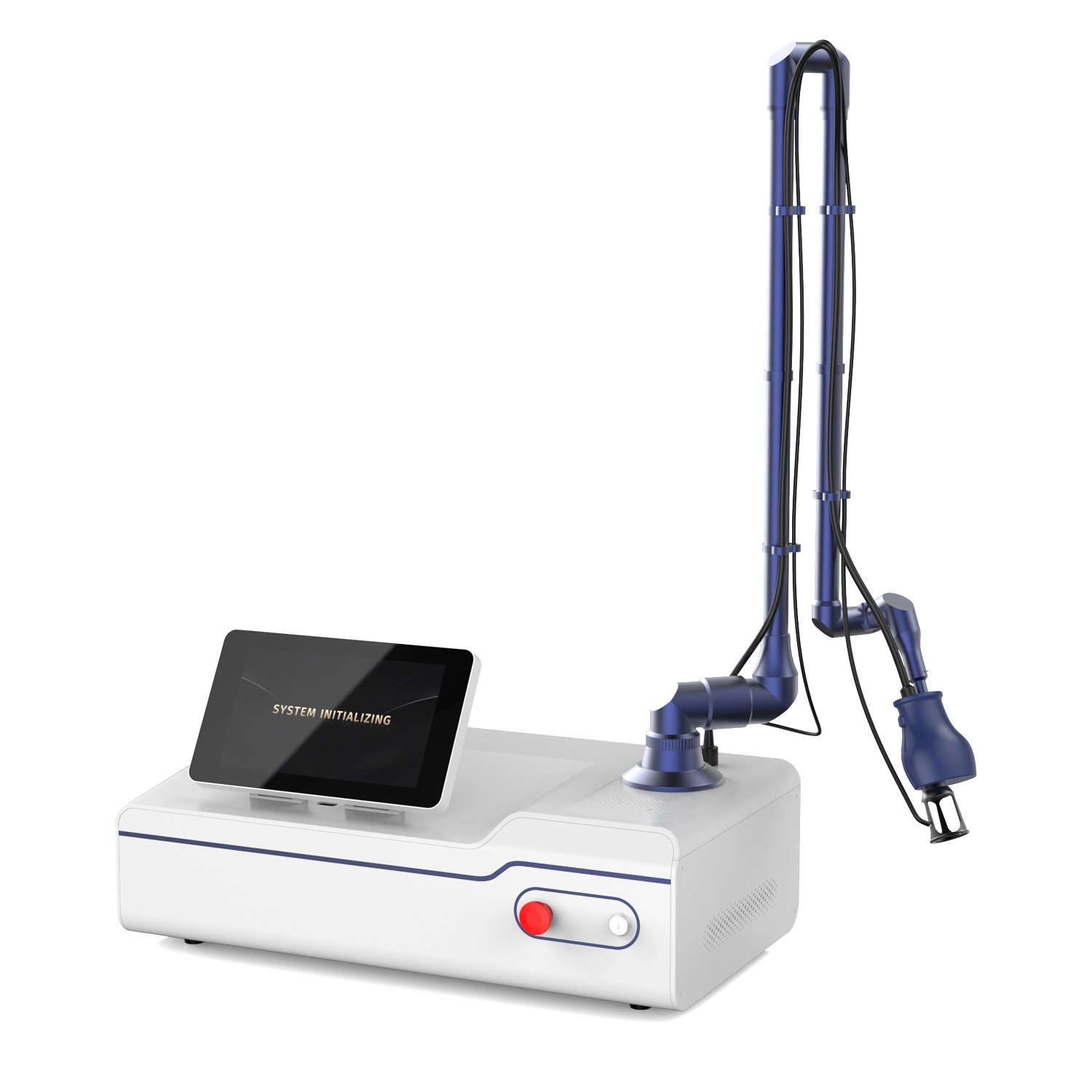
CO2 Fractional Laser Machine | Intimate Vaginal Rejuvenation System
This **CO2 Fractional Laser Machine** utilizes advanced 10600nm CO2 fractional laser technology to create controlled micro-thermal zones on the vaginal mucosa and intimate skin layers. These micro-columns stimulate collagen regeneration and tissue remodeling, effectively improving vaginal tightness, elasticity, and overall intimate health.
Designed specifically for professional medical aesthetic and intimate wellness applications, this CO2 fractional laser machine features intelligent parameter control and high-precision energy output to ensure safe, comfortable, and consistent treatment results. It is an ideal core device for vaginal rejuvenation, postpartum recovery, and intimate anti-aging treatments.
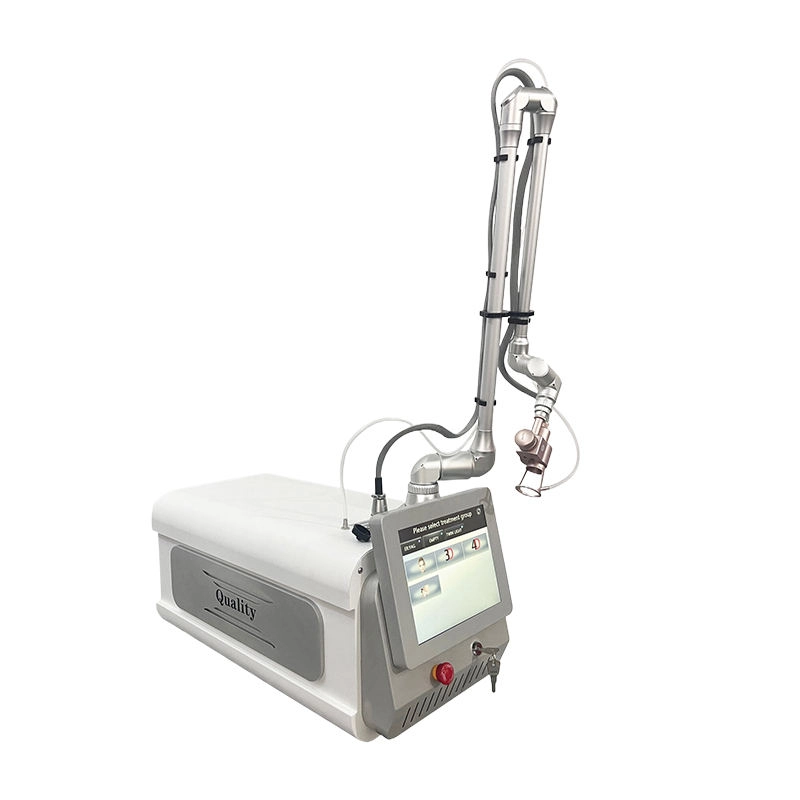
Professional CO2 Fractional Laser Machine | Fractional & Vaginal Rejuvenation CO2 Laser System
The CO2 fractional laser machine is a professional medical-grade device designed for deep skin resurfacing, wrinkle reduction, scar repair, and vaginal rejuvenation. Using a 10600 nm fractional CO2 laser beam, it creates micro-thermal columns on the skin to stimulate collagen regeneration and accelerate skin healing.
This CO2 fractional laser machine provides multiple treatment modes, including fractional mode, surgical cutting mode, and optional vaginal tightening mode, making it ideal for dermatology clinics and professional beauty centers seeking advanced laser solutions.
Its high precision, adjustable spot size, stable energy output, and seven-joint articulated arm ensure safe, accurate, and effective treatment results with minimal downtime.
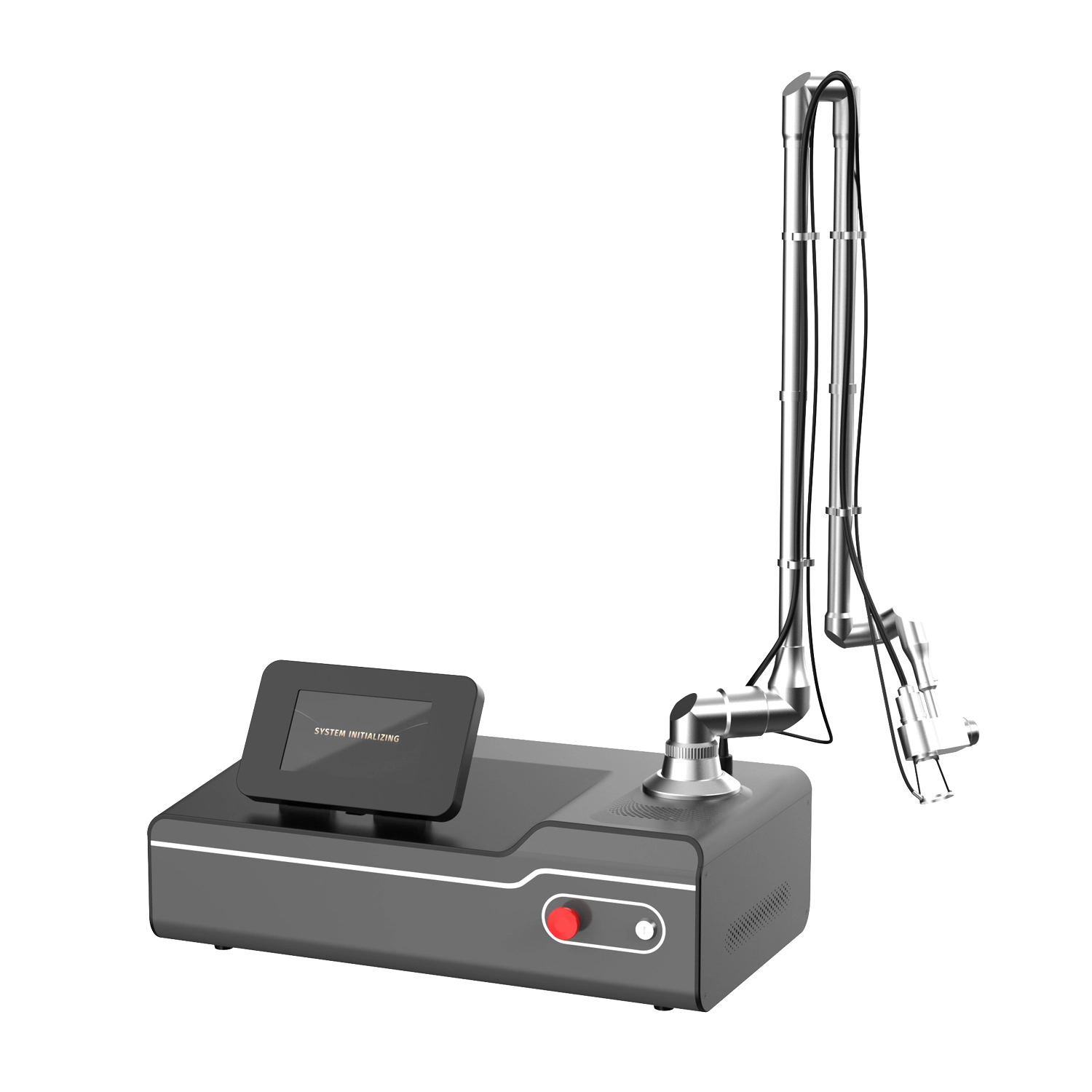
Professional CO2 Fractional Laser Machine for Skin Resurfacing & Scar Treatment
The CO2 Fractional Laser Machine is a professional CO2 fractional laser machine designed for advanced skin resurfacing, scar treatment, and skin rejuvenation procedures.
Using 10,600nm CO2 fractional laser technology, the system delivers controlled microthermal zones into the skin, stimulating collagen remodeling while preserving surrounding tissue. This fractional approach significantly improves treatment safety, recovery time, and clinical outcomes.
The CO2 fractional laser machine is widely used in dermatology clinics and medical aesthetic centers for treating acne scars, wrinkles, enlarged pores, stretch marks, and various skin texture concerns.
Get more information
If you have any comments or good suggestions, please leave us a message; later our professional staff will contact you as soon as possible.
Let's Talk
Stay in touch with us for cutting-edge beauty solutions, professional guidance, and customized service.
Contact


Room 307, Building A, Huilong International E-commerce Industrial Park, No. 10 Xipengling Road, Helong Street, Baiyun District, Guangzhou, China
© 2025 HUIMAIN. All Rights Reserved. Privacy Policy | Terms and Conditions | Sitemap
Facebook
Instagram
Medical beauty equipment factory
huimain Medical beauty equipment factory
beauty machine supplier
Whatsapp: +8619124004543