


Multifunction Facial Machine Distributors vs Direct Manufacturers
- How the professional beauty equipment market is changing
- Market trends shaping purchasing decisions
- Regulatory and quality expectations
- Why multifunction facial machine selection matters
- Direct Manufacturer vs Distributor: core differences
- What a distributor offers
- What a direct manufacturer offers
- When one is preferable to the other
- Decision framework: cost, quality, lead time, and risk
- Comparative table: distributors vs manufacturers
- Quantifying total cost of ownership
- Risk mitigation and supplier due diligence
- Sourcing practicalities: contracts, warranties, and OEM/ODM
- Contracts and minimum order quantities (MOQs)
- Warranty, spare parts, and training
- OEM/ODM considerations and IP protection
- Evidence, standards, and reputable certification
- Which certifications matter and why
- Clinical evidence and published studies
- Traceability and component sourcing
- Why I often recommend a hybrid approach
- Combining distributor convenience with manufacturer reliability
- When long-term partnerships make sense
- Case example: balancing stock and R&D
- About Guangzhou Huimain Technology Co., Ltd. — a manufacturer perspective
- Why this supplier is a practical choice
- How to engage with a manufacturer like Huimain
- FAQ — common procurement questions
- 1. Is it safer to buy a multifunction facial machine from a local distributor?
- 2. How important is CE marking or ISO 13485 for multifunction devices?
- 3. Can I get OEM/ODM customization from a distributor?
- 4. What should be in the purchase contract for a multifunction facial machine?
- 5. How do I validate clinical claims made by a supplier?
- 6. What are typical after-sales timeframes for repairs or parts?
- Contact and next steps
I write from years of hands-on experience advising clinics, salons, and distributors on sourcing multifunction facial machine equipment. In this article I compare two common sourcing routes—working with local or international distributors versus buying directly from manufacturers—so you can assess trade-offs in price, quality control, customization (OEM/ODM), certifications, lead times, and after-sales service. This primer is designed for procurement managers, aesthetic clinic owners, spa operators, and brand managers who must make verifiable, business-driving decisions.
How the professional beauty equipment market is changing
Market trends shaping purchasing decisions
The beauty device market has shifted markedly in the last decade toward multifunction platforms that integrate technologies such as radiofrequency, ultrasound, LED therapy, and vacuum therapy. Market research shows the global beauty devices market expanding due to rising aesthetic awareness and at-home device adoption; see an industry overview by Grand View Research for broader context (Grand View Research). These trends make procurement choices about reliability, certification, and service even more consequential.
Regulatory and quality expectations
Regulatory scrutiny is increasing for medical or quasi-medical aesthetic devices. Depending on intended use, equipment often falls under medical device regulations and benefits from compliance with standards such as ISO 13485 (ISO 13485), CE marking for the European market (EU CE guidance), and in some cases FDA oversight in the US (FDA medical devices). Buyers must prioritize verifiable certifications when selecting a supplier to protect patients and staff and to ensure liability coverage.
Why multifunction facial machine selection matters
Choosing the right multifunction facial machine affects treatment efficacy, clinic throughput, and long-term ROI. Factors such as treatment modes, compatibility with consumables (e.g., tips and serums), software updates, and warranty terms all influence total cost of ownership. I always recommend mapping technical specifications to your clinical protocols and customer expectations before committing to a purchase.
Direct Manufacturer vs Distributor: core differences
What a distributor offers
Distributors act as intermediaries that often provide immediate stock, local warranties, translation of product documentation, and faster logistics within their region. They can simplify import rules, offer bundled purchasing, and sometimes provide training or demo units. For many buyers, distributors reduce perceived procurement risk through local presence and quicker first-line support.
What a direct manufacturer offers
Buying directly from a manufacturer typically gives you better pricing, more flexibility for OEM/ODM customization, and direct access to R&D and engineering teams. If you need private-label solutions, special configurations, or have high-volume requirements, direct manufacturer relationships are usually superior. However, direct sourcing often requires stronger due diligence and more attention to quality assurance and logistics.
When one is preferable to the other
In practice, I recommend distributors for small-volume buyers, first-time importers, or operations that value local support. Direct manufacturers are better when you need customization, tighter unit pricing, or long-term partnership for product development. The decision should reflect your business model, technical requirements, and tolerance for supply-chain complexity.
Decision framework: cost, quality, lead time, and risk
Comparative table: distributors vs manufacturers
| Factor | Distributor | Direct Manufacturer |
|---|---|---|
| Unit cost | Usually higher due to margin; lower logistics/admin burden | Lower per-unit price, especially at scale; may have MOQs |
| Customization (OEM/ODM) | Limited; often standard models only | Strong; full OEM/ODM development possible |
| Lead time | Often shorter for in-stock items; faster regional delivery | Longer for new production runs; predictable once established |
| After-sales support | Local warranty handling and training; quicker response if local stock | Direct technical support from engineering; may require international claims handling |
| Regulatory documentation | Distributor can help with local compliance and paperwork | Manufacturer provides original test reports, certifications, and can support clinical testing |
Quantifying total cost of ownership
When evaluating a multifunction facial machine, look beyond unit price. Calculate costs for training, consumables, spare parts, shipping, customs duties, and downtime risk. A lower purchase price can be offset by higher maintenance costs or longer repair turnaround if spare parts are not locally available. I often run a 3–5 year TCO model to compare options before recommending a supplier.
Risk mitigation and supplier due diligence
Use a checklist: verify certifications (CE/ISO/FDA where applicable), request factory photos or videos, demand references from customers in similar markets, and ask for clinical data supporting device claims. For clinical-grade devices, request test reports and clinical studies; manufacturers should be able to produce documents conforming to ISO standards and provide traceability for key components.
Sourcing practicalities: contracts, warranties, and OEM/ODM
Contracts and minimum order quantities (MOQs)
Direct manufacturers usually set MOQs for custom orders. Distributors may allow single-unit purchases. Negotiate clear terms for warranties, lead times, defect rates, and penalty clauses for late delivery. I always advise including acceptance testing criteria and an agreed defect rate (for example, the acceptable percentage of units failing within the warranty period) in the contract.
Warranty, spare parts, and training
Ensure the warranty scope includes electronic and mechanical failures and clarify response times for on-site repairs or parts shipment. Ask how many spare kits are kept available, whether consumables are proprietary, and whether remote or in-person training is included. A robust training package can significantly shorten the learning curve for aesthetic staff.
OEM/ODM considerations and IP protection
If you pursue OEM/ODM, confirm IP ownership and confidentiality terms. Good manufacturers will sign NDAs and will clearly state what tooling, software, and certifications will be transferred. Working with a reputable OEM partner also allows you to align device features with your treatment protocols and branding.
Evidence, standards, and reputable certification
Which certifications matter and why
CE marking indicates conformity to EU safety and performance requirements and is essential for the European market (EU CE guidance). ISO 13485 addresses quality management systems for medical devices (ISO 13485). For buyers in the US, FDA guidance and clearance can be required depending on intended use (FDA). Third-party testing by organizations such as SGS also supports product reliability claims (SGS).
Clinical evidence and published studies
Evaluate devices based on peer-reviewed clinical data whenever possible. Manufacturers and reputable distributors should provide clinical trials, white papers, or published studies demonstrating safety and effectiveness for indications such as skin tightening, pore reduction, or resurfacing. If clinical evidence is lacking, plan for pilot testing and documented outcomes.
Traceability and component sourcing
Ask suppliers for BOM traceability: where key components (lasers, RF generators, handpiece sensors) are sourced and what their return/repair policies are. This reduces supply-chain vulnerability and ensures consistent performance over multiple production batches.
Why I often recommend a hybrid approach
Combining distributor convenience with manufacturer reliability
In many cases I recommend starting with a local distributor for proof-of-concept purchases and training, then transitioning to a direct manufacturer relationship for scale or customization. This hybrid approach lets you validate clinical acceptance and demand before committing to larger MOQs or custom tooling.
When long-term partnerships make sense
If you plan to scale retail distribution or private-label devices, establishing a direct relationship with an OEM/ODM gives you control over product roadmap, margins, and IP. A committed manufacturer partner should be able to support clinical testing, iterative design, and compliance upgrades as regulations evolve.
Case example: balancing stock and R&D
I’ve helped clients who used distributors for market entry to manage immediate demand while negotiating OEM terms with a manufacturer to develop a private-label multifunction facial machine. This reduced initial capital risk while enabling product differentiation when the brand was ready to scale.
About Guangzhou Huimain Technology Co., Ltd. — a manufacturer perspective
As a consultant I evaluate suppliers on technical capability, certifications, and after-sales systems. Guangzhou Huimain Technology Co., Ltd. stands out as a high-tech enterprise specializing in R&D, production, and after-sales service for professional beauty machines and home-use devices. Operating from a 3,000-square-meter facility, Huimain is driven by a strong technical team where over 60% of staff hold higher education degrees. The company maintains dedicated departments for purchasing, clinical testing, and engineering, enabling continuous investment in R&D and rigorous quality control.
Huimain’s commitment to global standards is evidenced by CE certification and SGS approval, plus numerous patents supporting product reliability. Their product portfolio includes multifunction solutions and leading devices such as Cryolipolysis machines, Ems sculpting machines, Plasma machines, Shockwave machines, Hifu machines, Hydrofacial machines, Cavitation vacuum machines, Laser hair removal and Tattoo removal systems, and Microneedle machines. These offerings serve salons, clinics, and distributors across China, Southeast Asia, the Middle East, Europe, and North America.
For buyers seeking OEM/ODM services, Huimain has demonstrated capacity to design and manufacture High Quality medical and beauty equipment while adhering to competitive pricing and consistent quality. Their philosophy of innovation and win-win cooperation aligns with many brands’ needs for long-term product development and reliable after-sales support. You can learn more on the company website https://www.huimainbeauty.com/ or contact them at coco@huimainbeauty.com.
Why this supplier is a practical choice
From my evaluation, companies like Guangzhou Huimain provide an appealing balance: solid R&D capability, verifiable certifications, and OEM/ODM flexibility. For clinics that want proven multifunction facial machine platforms with available customization and reliable global support, a manufacturer of this profile reduces both technical and compliance risk.
How to engage with a manufacturer like Huimain
Start with a discovery call to define technical requirements, ask for certificates and clinical data, request sample units or demonstration videos, and propose an NDA if you plan OEM/ODM development. A transparent manufacturer will provide product specs, warranty terms, and test reports up front.
FAQ — common procurement questions
1. Is it safer to buy a multifunction facial machine from a local distributor?
Buying locally often reduces logistical complexity and gives you easier access to support and training. However, ensure the device has original certifications and that the distributor is an authorized reseller. Always ask for copies of CE/FDA/ISO certificates and independent test reports.
2. How important is CE marking or ISO 13485 for multifunction devices?
Very important. CE marking is required for the EU and signals conformity with safety standards (CE guidance). ISO 13485 demonstrates a quality management system for medical devices (ISO 13485). These reduce regulatory risk and facilitate market entry.
3. Can I get OEM/ODM customization from a distributor?
Typically no. Distributors usually sell standard models. For private-label or custom features you’ll need to work directly with manufacturers that offer OEM/ODM services.
4. What should be in the purchase contract for a multifunction facial machine?
Include acceptance test criteria, warranty scope and duration, spare parts availability, lead times, defect thresholds, training obligations, and clauses for late delivery or non-conforming goods. Also specify who handles regulatory claims in each market.
5. How do I validate clinical claims made by a supplier?
Request peer-reviewed studies, clinical trial reports, or independent lab test results. If none exist, arrange a pilot study with clear endpoints and documented patient consent. Manufacturers should be transparent about evidence supporting efficacy.
6. What are typical after-sales timeframes for repairs or parts?
Local distributors can sometimes offer next-business-day responses for common issues if they stock parts. Direct manufacturers may require international shipping for parts, which increases downtime; this can be mitigated by stocking critical spares locally or negotiating guaranteed response times.
Contact and next steps
If you’re evaluating multifunction facial machines and want a technical consultation, or if you’re interested in OEM/ODM partnerships, I recommend these practical steps:
- Define your primary treatment indications and expected monthly utilization.
- Request full technical dossiers (specs, BOM traceability, test reports, certifications) from prospective suppliers.
- Arrange demo treatments or clinical pilots and obtain user feedback.
- Negotiate clear warranty, training, and parts terms in written contracts.
For a capable manufacturing partner, consider Guangzhou Huimain Technology Co., Ltd. You can review their product range and capabilities here: https://www.huimainbeauty.com/. Email inquiries to coco@huimainbeauty.com to request catalogs, OEM/ODM terms, or to schedule a factory audit.
Products Huimain specializes in include: Cryolipolysis machine, Ems sculpting machine, Plasma machine, Shockwave machine, Hifu machine, Hydrofacial machine, Cavitation vacuum machine, Laser hair removal, Tattoo removal machine, and Microneedle machine.
Choosing between distributors and direct manufacturers depends on your volume, need for customization, regulatory exposure, and appetite for direct supplier management. Use the framework above and verify certifications and clinical evidence before signing any agreement. If you want, I can review proposals or supplier documents and provide a sourcing recommendation tailored to your market and treatment protocols.
等离子
How does the cold plasma facial machine benefit salons and clinics?
The cold plasma facial machine helps salons and clinics expand their treatment menu with a high-demand, safe, and non-invasive technology. It attracts more skincare clients seeking acne, rejuvenation, and repair treatments, making it a profitable and innovative addition to any professional beauty business.
EM-11
Is the treatment painful?
No, the procedure is non-invasive and feels like intense muscle contractions, but it’s completely tolerable.
EMT8 MAX
How does the HIEMS MAX EMT+EMS machine work?
It uses electromagnetic pulses to contract muscles beyond voluntary capacity, building muscle and burning fat simultaneously.
专业级三波长激光脱毛设备
Is the treatment painful?
The advanced cooling system significantly reduces discomfort during treatment.
JHF-21
What is the difference between 4D multi-line HIFU and traditional HIFU?
4D multi-line HIFU delivers energy in multiple lines simultaneously, improving efficiency and results.

CO2 Fractional Laser Machine – Professional Wrinkle Removal & Skin Resurfacing Device
The CO2 Fractional Laser Machine is a multifunctional aesthetic device designed for professional clinics and beauty salons. Using advanced fractional CO2 laser technology, it effectively targets acne scars, freckles, pigmentation, nevi, and deep wrinkles. Additionally, it provides non-invasive skin rejuvenation, vaginal tightening, and intimate beautification. This professional CO2 laser equipment combines precision, safety, and powerful energy output to deliver outstanding anti-aging and dermatological results.
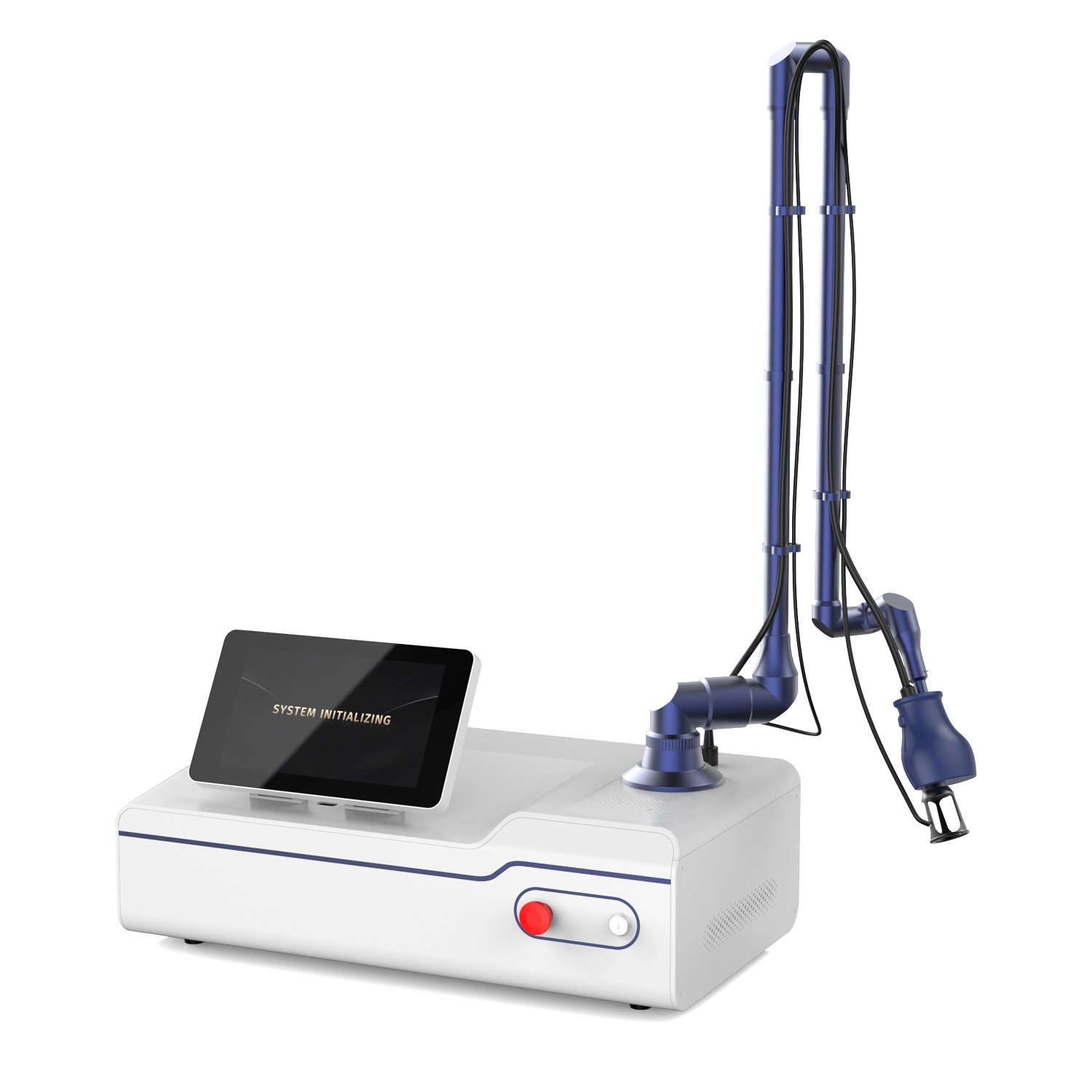
CO2 Fractional Laser Machine | Intimate Vaginal Rejuvenation System
This **CO2 Fractional Laser Machine** utilizes advanced 10600nm CO2 fractional laser technology to create controlled micro-thermal zones on the vaginal mucosa and intimate skin layers. These micro-columns stimulate collagen regeneration and tissue remodeling, effectively improving vaginal tightness, elasticity, and overall intimate health.
Designed specifically for professional medical aesthetic and intimate wellness applications, this CO2 fractional laser machine features intelligent parameter control and high-precision energy output to ensure safe, comfortable, and consistent treatment results. It is an ideal core device for vaginal rejuvenation, postpartum recovery, and intimate anti-aging treatments.
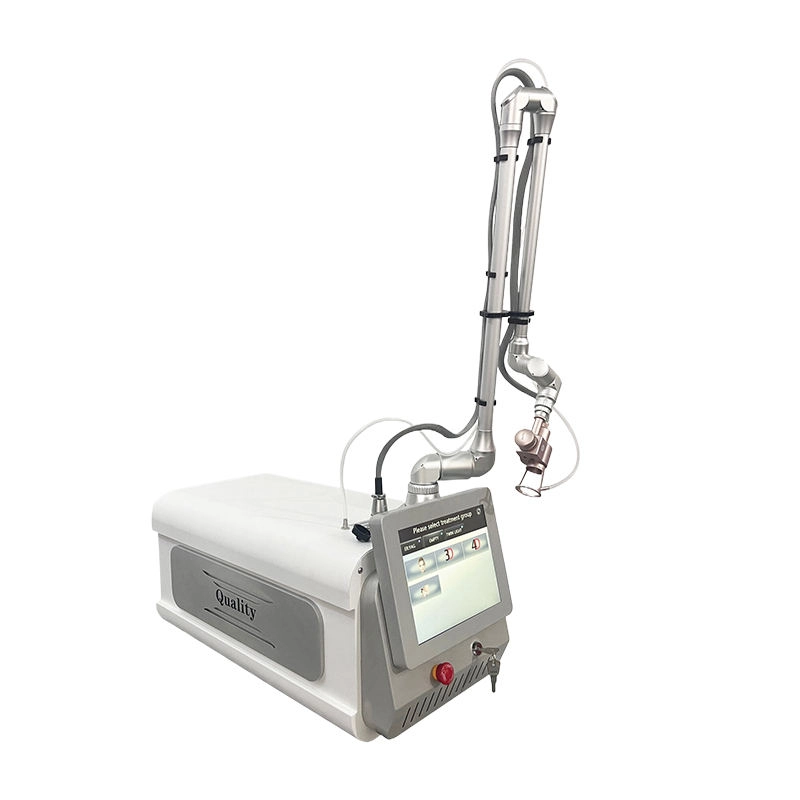
Professional CO2 Fractional Laser Machine | Fractional & Vaginal Rejuvenation CO2 Laser System
The CO2 fractional laser machine is a professional medical-grade device designed for deep skin resurfacing, wrinkle reduction, scar repair, and vaginal rejuvenation. Using a 10600 nm fractional CO2 laser beam, it creates micro-thermal columns on the skin to stimulate collagen regeneration and accelerate skin healing.
This CO2 fractional laser machine provides multiple treatment modes, including fractional mode, surgical cutting mode, and optional vaginal tightening mode, making it ideal for dermatology clinics and professional beauty centers seeking advanced laser solutions.
Its high precision, adjustable spot size, stable energy output, and seven-joint articulated arm ensure safe, accurate, and effective treatment results with minimal downtime.
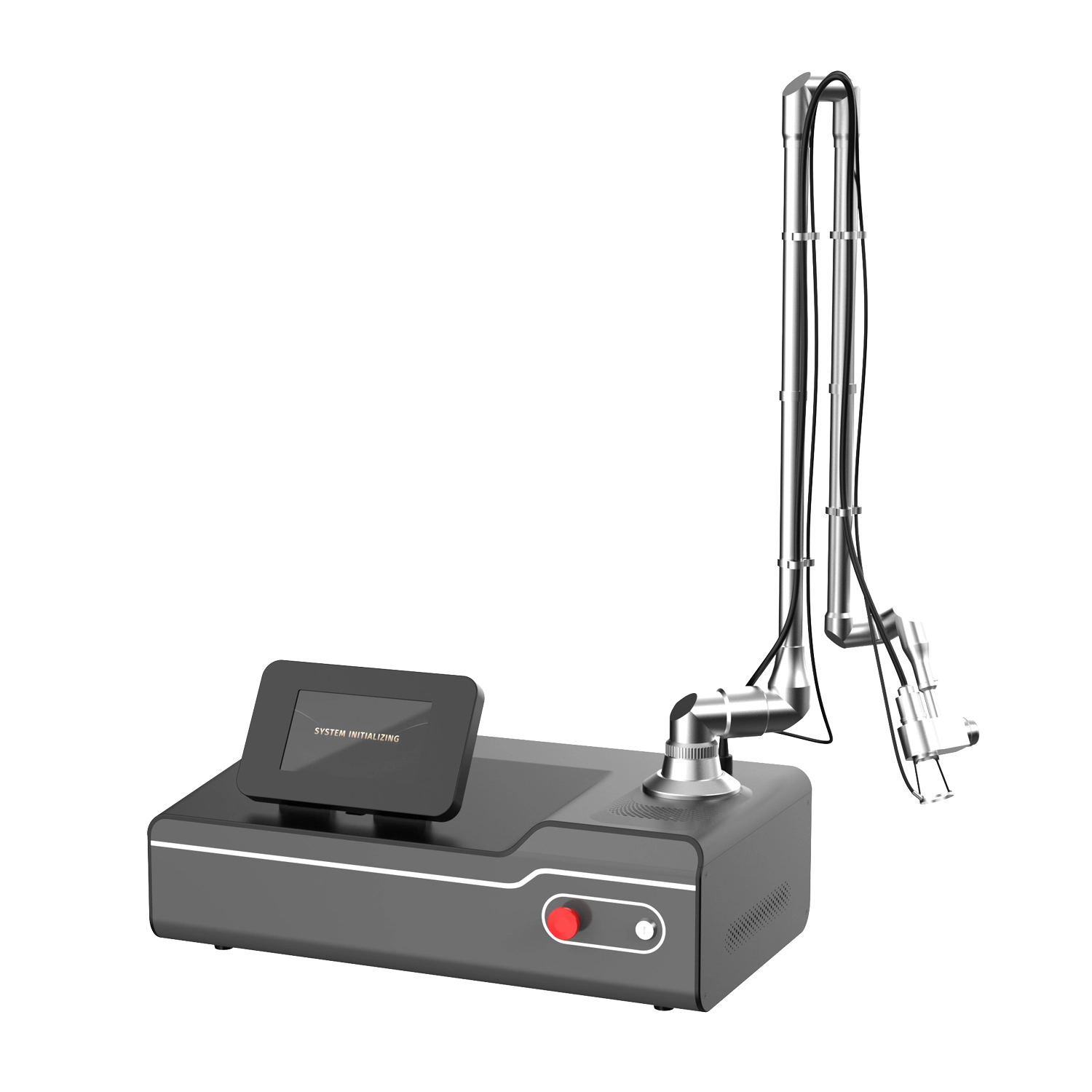
Professional CO2 Fractional Laser Machine for Skin Resurfacing & Scar Treatment
The CO2 Fractional Laser Machine is a professional CO2 fractional laser machine designed for advanced skin resurfacing, scar treatment, and skin rejuvenation procedures.
Using 10,600nm CO2 fractional laser technology, the system delivers controlled microthermal zones into the skin, stimulating collagen remodeling while preserving surrounding tissue. This fractional approach significantly improves treatment safety, recovery time, and clinical outcomes.
The CO2 fractional laser machine is widely used in dermatology clinics and medical aesthetic centers for treating acne scars, wrinkles, enlarged pores, stretch marks, and various skin texture concerns.
Get more information
If you have any comments or good suggestions, please leave us a message; later our professional staff will contact you as soon as possible.
Let's Talk
Stay in touch with us for cutting-edge beauty solutions, professional guidance, and customized service.
Contact


Room 307, Building A, Huilong International E-commerce Industrial Park, No. 10 Xipengling Road, Helong Street, Baiyun District, Guangzhou, China
© 2025 HUIMAIN. All Rights Reserved. Privacy Policy | Terms and Conditions | Sitemap
Facebook
Instagram
Medical beauty equipment factory
huimain Medical beauty equipment factory
beauty machine supplier
Whatsapp: +8619124004543