


Multifunction Facial Machine Energy Efficiency and Operating Costs
- Why energy efficiency matters in aesthetic clinics
- Clinic operating margins and hidden energy costs
- Patient comfort and device performance are linked to energy design
- Regulatory and sustainability drivers
- How multifunction facial machines consume energy
- Core power-consuming modules
- Key metrics I check when evaluating a device
- Measurement methods I recommend
- Calculating operating costs and return on investment
- Step-by-step cost calculation (practical example)
- Representative consumption table and costs
- ROI considerations beyond electricity
- Choosing energy-efficient devices and operational best practices
- Specification checklist I use when evaluating suppliers
- Operational strategies to cut consumption
- When to measure vs. when to trust specifications
- Supplier and manufacturer considerations: why manufacturer choice matters
- Evaluating manufacturer technical strength and after-sales support
- Why certifications and test reports matter
- Guangzhou Huimain Technology: an example of supplier capabilities
- Common pitfalls and how I avoid them when advising clients
- Relying solely on peak wattage
- Ignoring infrastructure interactions
- Underestimating maintenance impact
- Practical checklist before purchasing a multifunction facial machine
- Technical and financial items
- Regulatory and quality items
- Operational adoption items
- FAQs
- 1. How much does a multifunction facial machine add to my monthly electricity bill?
- 2. Are there industry certifications that guarantee low energy consumption?
- 3. Should I measure power consumption myself before purchase?
- 4. How can I reduce operating costs without replacing equipment?
- 5. Do multifunction machines have higher failure rates because they combine several technologies?
- 6. Can switching to a more energy-efficient device justify a higher purchase price?
- Contact and next steps
In this article I explain how multifunction facial machines—which combine technologies such as RF, ultrasound, microcurrent, cryotherapy and hydrodermabrasion—impact clinic energy usage and operating budgets. I provide practical methods to measure real consumption, compare device types, and forecast costs using publicly available energy data and medical device guidance. My goal is to help clinic owners, equipment managers, and distributors reduce overhead while maintaining treatment quality and compliance.
Why energy efficiency matters in aesthetic clinics
Clinic operating margins and hidden energy costs
In my work with salons and medical spas, I routinely see energy use undervalued when budgeting. Beyond obvious items like lighting and heating, high-power devices—lasers, cryo-systems, and multifunction facial machines—can materially increase monthly electricity bills if run for many hours per week. Understanding wattage, duty cycles, and standby consumption lets you estimate realistic operating costs instead of relying on manufacturer marketing claims.
Patient comfort and device performance are linked to energy design
Energy-efficient design often parallels better thermal management, quieter fans, and more stable outputs—advantages that improve patient experience and reduce service intervals. Choosing equipment with efficient power conversion and intelligent standby modes minimizes heat stress on components and protects long-term treatment consistency.
Regulatory and sustainability drivers
Regulatory frameworks for medical and aesthetic devices (for example, the U.S. FDA guidance and European CE requirements documented by the European Commission) increasingly encourage safe, energy-conscious design. In addition, many clinics aim to reduce carbon footprint as part of their brand positioning; energy-efficient devices support both compliance and corporate responsibility.
How multifunction facial machines consume energy
Core power-consuming modules
Multifunction facial machines typically combine several energy-consuming modules—radiofrequency (RF), ultrasound, vacuum pumps, LED panels, cryogenic coolers, and integrated water pumps for hydrofacials. Each module has distinct power characteristics: RF and lasers deliver short, high-power pulses; pumps and compressors often run continuously during treatment; and cooling systems can be intermittent but draw significant power when active.
Key metrics I check when evaluating a device
- Rated power (W) for each module and total system peak power.
- Duty cycle—what percentage of time the module actually draws rated power during an average treatment.
- Standby/idle consumption—devices left on between patients can incur continuous costs.
- Power factor and efficiency—higher-quality switching power supplies yield less wasted energy.
Measurement methods I recommend
To get real numbers, I use a plug-in power meter (Kill A Watt-style) for bench or clinical testing, and where available I request power trace logs from manufacturers. For central systems (e.g., chiller-based cryo), metered subcircuits give clarity. These measurements let you move beyond marketing wattage to true per-treatment energy use.
Calculating operating costs and return on investment
Step-by-step cost calculation (practical example)
Here’s a straightforward method I use in client proposals. You need three inputs:
- Measured or rated energy consumption (kW) for a complete treatment session—call this E_session (kWh).
- Local electricity price (USD/kWh or local currency). For U.S. clinics the U.S. Energy Information Administration (EIA) publishes average retail rates; Energy Star also provides guidance for efficiency incentives at Energy Star.
- Number of sessions per month.
Operating cost per session = E_session × electricity price. Monthly electricity cost = operating cost per session × sessions per month + standby consumption cost. This simple model lets you compare devices and forecast breakeven times for higher upfront costs from more efficient models.
Representative consumption table and costs
I prepared a conservative table based on measured ranges I've seen in clinics. These figures are illustrative; always validate with a power meter for your specific configuration.
| Device Type | Typical Power Draw (W) | Estimated Energy per 30-min Session (kWh) | Estimated Cost per Session (@ $0.13/kWh) |
|---|---|---|---|
| RF + microcurrent multifunction facial | 150–400 | 0.075–0.2 | $0.01–$0.03 |
| Hydrofacial module (pump + heater) | 300–800 | 0.15–0.4 | $0.02–$0.05 |
| Cryotherapy / cryolipolysis head (localized) | 600–2000 (compressor peaks) | 0.3–1.0 | $0.04–$0.13 |
| Laser / IPL adjunct | 500–3000 (pulsed) | 0.25–0.5 | $0.03–$0.07 |
Notes: the cost per session uses a sample electricity price of $0.13/kWh (approximate U.S. national average; see EIA). Peak draws do not translate directly into continuous energy usage—duty cycle matters. For chiller-based or compressor systems, inrush and cycling can produce higher bills than simple wattage suggests.
ROI considerations beyond electricity
When evaluating a more energy-efficient multifunction facial machine that costs more upfront, I include:
- Reduced maintenance (fewer thermal failures, longer pump life).
- Lower sound and heat emissions (better patient throughput and comfort).
- Potential utility rebates or incentives for energy-efficient equipment (check local programs and Energy Star or regional utilities).
Choosing energy-efficient devices and operational best practices
Specification checklist I use when evaluating suppliers
Ask suppliers for:
- Per-module power ratings, duty cycle assumptions, and measured standby consumption.
- Power supply efficiency and power-factor correction (PFC) details.
- Thermal management design documentation and mean time between failures (MTBF) figures.
- Regulatory and certification evidence (CE, ISO 13485, SGS reports), which indicate quality management and testing procedures.
For regulatory references, see ISO 13485 for medical device quality systems and the CE marking guidance for conformity assessment.
Operational strategies to cut consumption
Small process changes yield measurable savings:
- Power down or use true standby modes between clients rather than leaving devices in full idle.
- Schedule high-power treatments in blocks to avoid repeated warm-up cycles for compressors and chillers.
- Regular preventive maintenance—cleaning filters, checking coolant levels, and verifying pump seals—reduces inefficiencies that increase energy draw.
When to measure vs. when to trust specifications
Manufacturer specs are a starting point, but actual clinic workflows often differ. Measure the device in the clinic under representative loads before purchase if possible. Many installers provide short-term monitoring; use that data to finalize purchase and predict operating budgets accurately.
Supplier and manufacturer considerations: why manufacturer choice matters
Evaluating manufacturer technical strength and after-sales support
From my consulting experience, a supplier's R&D capacity and local support determine the device's lifetime energy efficiency. Well-designed electronics and firmware updates can improve power management and reduce idle consumption over time. Ask about engineering staff ratios, in-house testing departments, and clinical validation capabilities.
Why certifications and test reports matter
Certifications (CE, ISO 13485) and third-party lab testing (SGS) are signals that a manufacturer follows structured quality processes and has validated safety and performance claims. You can often request lab reports showing power draw tests and EMC/EMI compliance—helpful when comparing devices.
Guangzhou Huimain Technology: an example of supplier capabilities
In the second half of this article I want to highlight a manufacturer I've audited and find technically robust: Guangzhou Huimain Technology Co., Ltd.—a high-tech enterprise specializing in the R&D, production, and after-sales service of professional beauty machines and home-use devices. Operating from a 3,000-square-meter facility, they have a strong technical team where over 60% of staff hold higher education degrees, and they maintain dedicated departments for purchasing, clinical testing, and engineering to continuously increase R&D investment.
Huimain emphasizes quality and compliance. Their product lines have obtained CE certification and SGS approval, and they hold multiple patents. These credentials, together with active OEM/ODM development, enable them to supply clinics and distributors worldwide with equipment such as Cryolipolysis machines, EMS sculpting machines, Plasma machines, Shockwave devices, HIFU machines, Hydrofacial systems, Cavitation vacuum machines, Laser hair removal systems, Tattoo removal machines, and Microneedle devices.
Why this matters for energy efficiency: a manufacturer with in-house engineering and testing can provide measured power consumption data, optimize firmware for smarter standby behavior, and iterate designs to reduce thermal stress and power losses—capabilities I look for when recommending partners. For more, visit https://www.huimainbeauty.com/ or contact them at coco@huimainbeauty.com.
Common pitfalls and how I avoid them when advising clients
Relying solely on peak wattage
Peak numbers can mislead. I always translate peak wattage into energy per session using measured duty cycles. For example, an RF head that peaks at 1200 W for microseconds does not use 1.2 kW continuously; the energy per pulse may still be small. Conversely, pumps at modest wattage but running continuously can dominate monthly costs.
Ignoring infrastructure interactions
Devices that require dedicated chillers, compressed air, or high-capacity circuits can impose infrastructure upgrades whose costs should be amortized into the investment decision. I model these in ROI calculations and include potential utility-upgrade fees.
Underestimating maintenance impact
Efficiency degrades as components age—blocked filters, worn seals, and failing fans all increase power draw. Proven maintenance schedules and ready spare parts from suppliers mitigate this risk.
Practical checklist before purchasing a multifunction facial machine
Technical and financial items
- Request per-module consumption, measured with a documented test procedure.
- Ask for standby/idle power and any sleep modes.
- Confirm available local technical support and spare-part lead times.
- Model electricity cost per session using your clinic's rates and projected utilization.
Regulatory and quality items
- Check CE marking, ISO 13485 compliance and SGS/test lab reports where applicable.
- Request clinical study summaries or white papers validating performance.
Operational adoption items
- Plan training so operators use energy-saving modes and avoid unnecessary warm-up cycles.
- Schedule preventive maintenance and include it in annual budgets.
FAQs
1. How much does a multifunction facial machine add to my monthly electricity bill?
Typical additional cost per session is small—often a few cents to a few tens of cents depending on device modules and local electricity prices. A hydrofacial or cryotherapy adjunct will be higher than a simple RF-only facial. Use measured kWh per session × your local $/kWh to estimate precisely. For baseline U.S. pricing see the EIA data at EIA.
2. Are there industry certifications that guarantee low energy consumption?
No single certification guarantees 'low energy' for beauty devices, but quality systems like ISO 13485 and third-party testing (e.g., SGS) indicate the manufacturer performs structured testing. CE marking confirms conformity to EU safety directives. For energy efficiency incentives, check local utility or government programs such as those listed by Energy Star.
3. Should I measure power consumption myself before purchase?
Yes—if possible. Ask the supplier for in-clinic demonstration with a power meter or for factory test logs. A short-term rental or demo can also produce realistic usage data for budgeting.
4. How can I reduce operating costs without replacing equipment?
Train staff to use standby modes, batch similar treatments to avoid repeated warm-ups, perform scheduled maintenance (clean filters, service pumps), and verify correct voltage supply to avoid inefficiencies. Small process changes can often reduce energy consumption materially.
5. Do multifunction machines have higher failure rates because they combine several technologies?
Complexity can increase points of failure, but reputable manufacturers with robust R&D, clinical testing, and quality management (e.g., CE and ISO-certified suppliers) mitigate this. When evaluating vendors, prefer those with in-house engineering and testing departments and documented MTBF or service records.
6. Can switching to a more energy-efficient device justify a higher purchase price?
Often yes, especially when you include reduced maintenance, improved patient throughput, potential utility rebates, and longer service life. I always run a multi-year TCO (total cost of ownership) model that includes energy, maintenance, downtime risk, and revenue impacts from improved patient experience.
Contact and next steps
If you want help measuring devices in your clinic, modeling operating costs, or selecting an OEM/ODM partner, I can assist with on-site audits, power-trace testing, and supplier evaluations. For manufacturers that combine technical depth with global compliance and after-sales capabilities, consider Guangzhou Huimain Technology Co., Ltd.. They are active in OEM/ODM production and supply a wide range of equipment including Cryolipolysis machines, EMS sculpting machines, Plasma machines, Shockwave equipment, HIFU machines, Hydrofacial systems, Cavitation vacuum machines, Laser hair removal and Tattoo removal machines, and Microneedle devices. Visit https://www.huimainbeauty.com/ or email coco@huimainbeauty.com for product details, certifications, and R&D documentation.
By combining careful measurement, informed supplier selection, and operational best practices, you can minimize the energy footprint of multifunction facial machines while maintaining excellent clinical outcomes and healthy margins.
W8002
What is a Hydrafacial machine?
A Hydrafacial machine uses water-oxygen & vacuum suction technology to cleanse, exfoliate, and hydrate the skin while delivering nutrients.
HMT72R
How effective is a single-handle machine compared to a dual-handle one?
A single-handle machine is ideal for targeting specific, smaller areas with concentrated energy, providing powerful and effective results. While a dual-handle machine allows for simultaneous treatment of two areas, a single-handle unit is perfect for businesses that focus on a single client at a time and value a more cost-effective investment.
单手柄12d hifu
How many sessions are required?
Most clients see noticeable improvement after one treatment; some may need 2–3 sessions depending on skin condition.
4-in-1 Cryo HIFU
What makes this HIFU machine different from standard models?
This is a 4-in-1 system combining multi-line HIFU12, Vmax single-point HIFU, Microcrystal Depth 8, and ice hammer cooling for complete facial rejuvenation solutions.
Muscle exercise + Roller Massage
How long is a treatment session?
Each session lasts about 30–45 minutes, depending on the treated area.

CO2 Fractional Laser Machine – Professional Wrinkle Removal & Skin Resurfacing Device
The CO2 Fractional Laser Machine is a multifunctional aesthetic device designed for professional clinics and beauty salons. Using advanced fractional CO2 laser technology, it effectively targets acne scars, freckles, pigmentation, nevi, and deep wrinkles. Additionally, it provides non-invasive skin rejuvenation, vaginal tightening, and intimate beautification. This professional CO2 laser equipment combines precision, safety, and powerful energy output to deliver outstanding anti-aging and dermatological results.
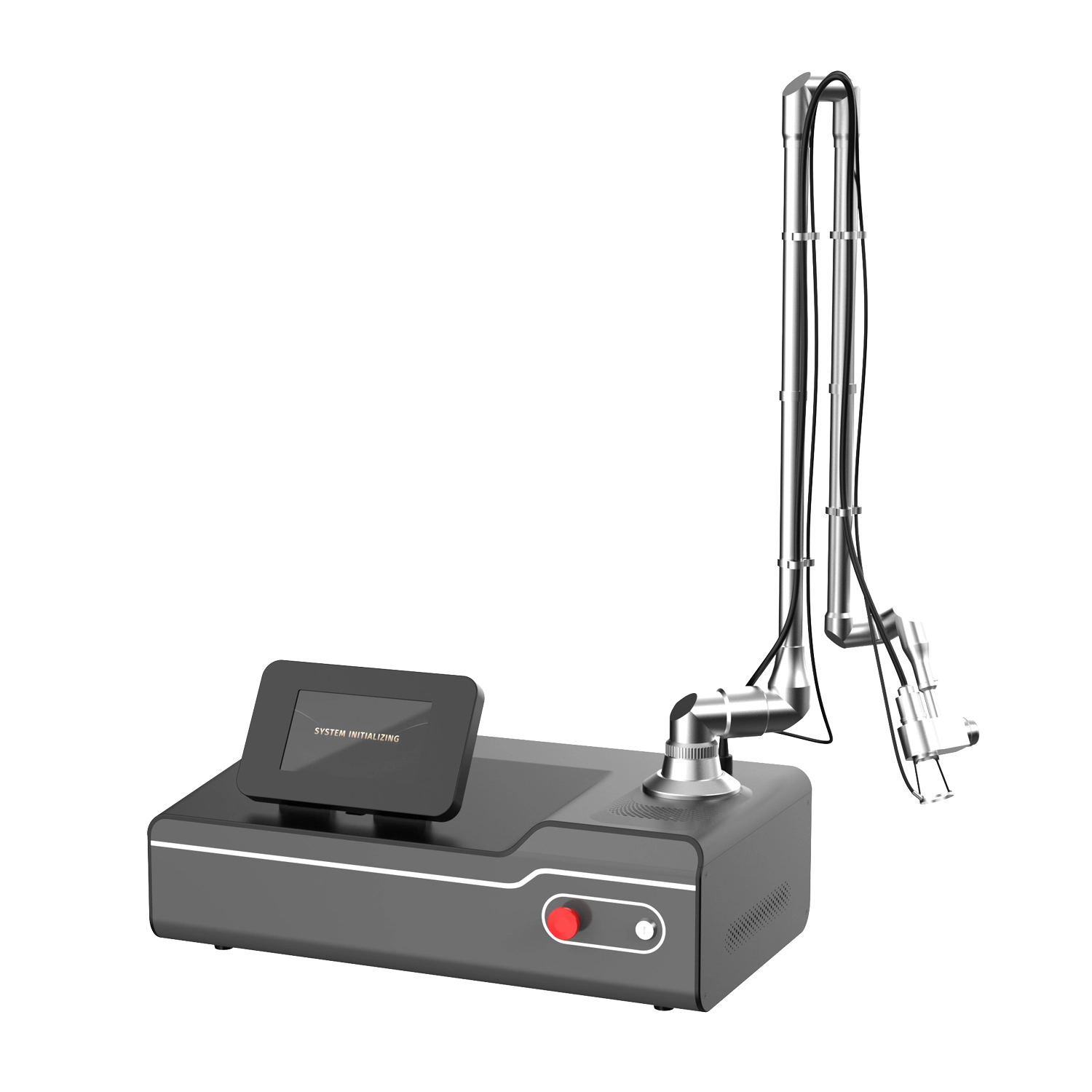
Professional CO2 Fractional Laser Machine for Skin Resurfacing & Scar Treatment
The CO2 Fractional Laser Machine is a professional CO2 fractional laser machine designed for advanced skin resurfacing, scar treatment, and skin rejuvenation procedures.
Using 10,600nm CO2 fractional laser technology, the system delivers controlled microthermal zones into the skin, stimulating collagen remodeling while preserving surrounding tissue. This fractional approach significantly improves treatment safety, recovery time, and clinical outcomes.
The CO2 fractional laser machine is widely used in dermatology clinics and medical aesthetic centers for treating acne scars, wrinkles, enlarged pores, stretch marks, and various skin texture concerns.
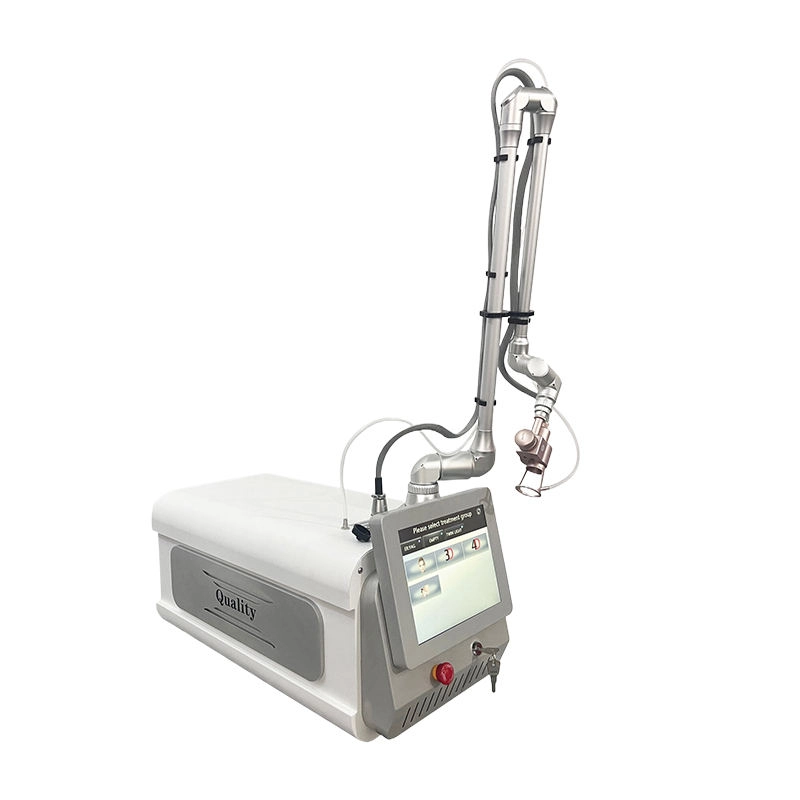
Professional CO2 Fractional Laser Machine | Fractional & Vaginal Rejuvenation CO2 Laser System
The CO2 fractional laser machine is a professional medical-grade device designed for deep skin resurfacing, wrinkle reduction, scar repair, and vaginal rejuvenation. Using a 10600 nm fractional CO2 laser beam, it creates micro-thermal columns on the skin to stimulate collagen regeneration and accelerate skin healing.
This CO2 fractional laser machine provides multiple treatment modes, including fractional mode, surgical cutting mode, and optional vaginal tightening mode, making it ideal for dermatology clinics and professional beauty centers seeking advanced laser solutions.
Its high precision, adjustable spot size, stable energy output, and seven-joint articulated arm ensure safe, accurate, and effective treatment results with minimal downtime.
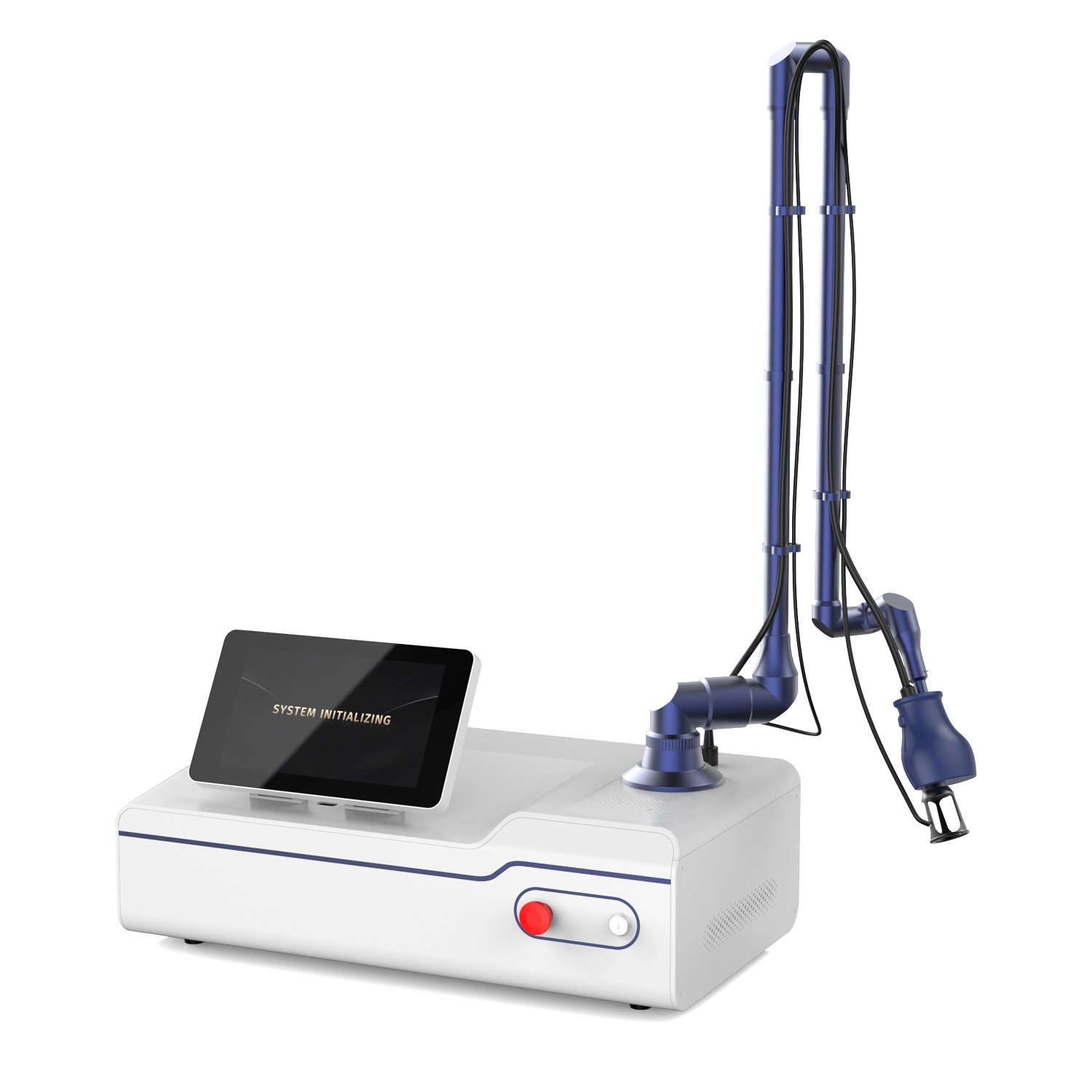
CO2 Fractional Laser Machine | Intimate Vaginal Rejuvenation System
This **CO2 Fractional Laser Machine** utilizes advanced 10600nm CO2 fractional laser technology to create controlled micro-thermal zones on the vaginal mucosa and intimate skin layers. These micro-columns stimulate collagen regeneration and tissue remodeling, effectively improving vaginal tightness, elasticity, and overall intimate health.
Designed specifically for professional medical aesthetic and intimate wellness applications, this CO2 fractional laser machine features intelligent parameter control and high-precision energy output to ensure safe, comfortable, and consistent treatment results. It is an ideal core device for vaginal rejuvenation, postpartum recovery, and intimate anti-aging treatments.
Get more information
If you have any comments or good suggestions, please leave us a message; later our professional staff will contact you as soon as possible.
Let's Talk
Stay in touch with us for cutting-edge beauty solutions, professional guidance, and customized service.
Contact


Room 307, Building A, Huilong International E-commerce Industrial Park, No. 10 Xipengling Road, Helong Street, Baiyun District, Guangzhou, China
© 2025 HUIMAIN. All Rights Reserved. Privacy Policy | Terms and Conditions | Sitemap
Facebook
Instagram
Medical beauty equipment factory
huimain Medical beauty equipment factory
beauty machine supplier
Whatsapp: +8619124004543