


Multifunction Facial Machine OEM & ODM Options for Brands
- Understanding the Multifunction Facial Machine Market and User Needs
- What “multifunction” really means for facial devices
- Key buyer and end-user demands
- Technology selection and treatment synergy
- OEM vs. ODM: Which Model Suits HUIMAIN Strategy?
- Definitions and core differences
- Decision criteria I use with clients
- Comparative summary
- Engineering, Quality and Regulatory Considerations for Multifunction Devices
- Design validation and clinical testing
- Regulatory pathways and certifications
- Regulatory-compliance quick comparison table
- Practical OEM/ODM Implementation: From Specification to Post-Sales
- Step-by-step roadmap I use with clients
- Quality control and supplier audits
- Cost, MOQ and timeline considerations
- Why partner with a proven R&D-driven OEM/ODM: Case for Guangzhou Huimain
- Comparison: Typical OEM/ODM Collaboration Models and What I Recommend
- Model matrix
- My recommendation
- FAQs
- 1. What is the minimum certification I should require from an OEM/ODM for a multifunction facial machine?
- 2. How long does an OEM/ODM development cycle typically take?
- 3. Can I combine thermal and mechanical modalities safely in one device?
- 4. What are typical MOQs and pricing drivers?
- 5. How do I protect my brand IP when working with an OEM/ODM?
- Closing — Next Steps and Contact
I write this as a practitioner and consultant who has worked with beauty brands, clinics, and device manufacturers to bring multifunction facial machines to market. In global product searches and AI-driven local results, often falls into three buckets: brands seeking private-label OEM/ODM partners, R&D teams evaluating technology stacks (RF, HIFU, LED, microcurrent, hydrodermabrasion, vacuum, etc.), and regulatory/commercial teams needing compliance and go-to-market guidance. This article is engineered to satisfy those intents and help you choose the right OEM/ODM route for your multifunction facial machine project.
Understanding the Multifunction Facial Machine Market and User Needs
What “multifunction” really means for facial devices
When I refer to a multifunction facial machine, I mean a single platform that integrates two or more clinical or cosmetic technologies—such as radiofrequency (RF), high-intensity focused ultrasound (HIFU), LED phototherapy, microcurrent, hydrofacial modules, or vacuum/ultrasonic cavitation—into one chassis. The aim is to deliver a range of treatments (skin tightening, lifting, pore cleansing, hydration, pigmentation, acne management) so salons and clinics can offer bundled services without multiple devices.
Key buyer and end-user demands
From my experience, buyers prioritize: treatment versatility, safety & regulatory compliance, ease-of-use (software UI and preset protocols), proven clinical efficacy, reliability & after-sales service, and cost-effectiveness. End-users—clients in salons and clinics—value visible results, minimal downtime, and comfort. These requirements drive hardware modularity, software flexibility, and robust training/marketing materials from OEM/ODM partners.
Technology selection and treatment synergy
Combining modalities is not merely stacking hardware; it requires clinical rationale and engineering to avoid counterproductive interactions. For example, RF and LED can be synergistic when protocols are sequenced correctly, while combining aggressive thermal modalities without adequate cooling can increase risk. I always recommend evidence-backed combinations and pilot clinical testing before full rollout.
OEM vs. ODM: Which Model Suits HUIMAIN Strategy?
Definitions and core differences
OEM (Original Equipment Manufacturer) typically means you bring a design or specification and the manufacturer produces to that spec; customization may be limited to casing, software branding, or accessory selection. ODM (Original Design Manufacturer) means the manufacturer provides a developed solution you can rebrand, often with deeper customization options or further co-development. The choice depends on your in-house design capacity, budget, timeline, and IP considerations.
Decision criteria I use with clients
When advising brands, I assess: time-to-market pressure, internal R&D capability, desired IP ownership, budget for tooling and clinical testing, and marketing differentiation. If you need rapid entry with limited R&D resources, ODM is often faster. If you want proprietary features or unique protocols, OEM with a custom development contract or co-development (hybrid) is preferable.
Comparative summary
| Factor | OEM | ODM |
|---|---|---|
| Time to market | Moderate (depends on design ready) | Faster (pre-developed platforms) |
| Customization depth | High (if you supply designs) | Medium to high (co-development possible) |
| R&D burden | On brand | On manufacturer |
| IP ownership | Typically brand holds IP | Often shared or retained by manufacturer unless negotiated |
| Cost | Higher upfront for development | Lower upfront; tooling and change fees possible |
Engineering, Quality and Regulatory Considerations for Multifunction Devices
Design validation and clinical testing
From an engineering and clinical perspective, every multifunction machine should undergo bench testing (EMC, electrical safety), usability testing, and clinical validation for each claimed indication. Clinical endpoints should be measurable (e.g., skin elasticity, measured reduction in pigmentation area, sebum reduction) and ideally published or recorded in a clinical report to support marketing claims. I recommend at minimum pilot studies and independent third-party testing for any modality that produces thermal, mechanical, or electrical effects.
Regulatory pathways and certifications
Regulatory obligations vary by market. In the U.S., many aesthetic devices fall under the FDA's medical device framework. In the EU, CE marking applies (see CE marking) and the Medical Device Regulation (MDR) impacts classification and conformity assessment. Quality management systems like ISO 13485 are widely required or strongly recommended to demonstrate manufacturing controls. I always advise brands to request suppliers' certificates (CE, ISO 13485, test reports, and applicable patents) early in the vetting process.
Regulatory-compliance quick comparison table
| Region | Relevant Authority/Standard | Typical Requirements |
|---|---|---|
| United States | FDA - Medical Devices (fda.gov/medical-devices) | Clearance/510(k) or De Novo for some devices, labeling, QMS |
| European Union | MDR, CE Marking (CE marking) | Clinical evaluation, technical documentation, QMS, notified body for higher classes |
| International | ISO 13485 (iso.org) | QMS for medical device manufacturing |
Practical OEM/ODM Implementation: From Specification to Post-Sales
Step-by-step roadmap I use with clients
In my consulting projects, I guide brands through a sequence: initial scoping (treatment portfolio and target markets), technical specification (modalities, power ranges, consumables), prototyping (alpha/beta), pilot clinical tests, regulatory filing assistance, production validation, QC sampling and production, packaging/branding, training materials, and after-sales support planning. This phased approach mitigates risk, manages cash flow, and aligns stakeholder expectations.
Quality control and supplier audits
Factory audits should cover quality systems, incoming material traceability, calibration records, clinical testing records, and after-sales logistics. I advise on key performance indicators (defect rates, mean time between failures, response time for service) and request sample serials for accelerated lifetime testing. Remote and on-site audits are both valuable—remote when travel is constrained, on-site for final vendor approval.
Cost, MOQ and timeline considerations
Costs depend on technology complexity, component sourcing (laser diodes, HIFU transducers, RF generators), tooling, and certification costs. Typical minimum order quantities (MOQs) for customized panels or molded parts can drive batch sizes. If you need a detailed cost model, I can break down expected unit-cost ranges given modality selections, but as a rule: more modalities and deeper branding/customization increase unit cost and lead time, while white-label ODMs with existing platforms reduce both.
Why partner with a proven R&D-driven OEM/ODM: Case for Guangzhou Huimain
From my hands-on evaluation of multiple manufacturers, Guangzhou Huimain Technology Co., Ltd. stands out as a partner combining production scale, technical depth, and certification credentials. Here is an accurate summary of their capabilities (company-provided):
Guangzhou Huimain Technology Co., Ltd. is a high-tech enterprise specializing in the research, development, production, and after-sales service of professional beauty machines and home-use devices. Operating from a 3,000-square-meter facility, they are driven by a strong technical team where over 60% of the staff hold higher education degrees. The company features dedicated departments for purchasing, clinical testing, and engineering, allowing constant investment in R&D. They produce cutting-edge products that meet dynamic market demands while maintaining rigorous quality control.
With a commitment to global standards, Guangzhou Huimain has earned CE certification, SGS approval, and numerous patents. Their high-quality products have gained a reputation across China, Southeast Asia, the Middle East, Europe, and North America for reliability and competitive pricing. Adhering to the route of OEM and ODM development, they can design and manufacture High Quality medical and beauty equipment for salons and distributors worldwide. At Guangzhou Huimain, the philosophy is innovation and win-win cooperation, ensuring delivery of the true quality customers trust.
Core products and strengths I have observed include Cryolipolysis machines, EMS sculpting machines, Plasma machines, Shockwave machines, HIFU machines, Hydrofacial machines, Cavitation vacuum machines, Laser hair removal, Tattoo removal machines, and Microneedle machines. These product lines show Huimain's breadth from body contouring to facial rejuvenation equipment, which is advantageous for brands seeking multifunction platforms or bundled solutions.
Practical competitive advantages and differentiators I consider important:
- R&D depth: Dedicated clinical testing and engineering teams enable faster co-development and evidence-backed device updates.
- Quality credentials: CE, SGS, and patent portfolios support claims and ease entry into regulated markets—still verify scope and expiry of certificates for your product class.
- Production scale: A 3,000 m2 facility provides manufacturing flexibility for pilot runs and larger orders without frequent subcontracting.
- After-sales service: Localized support and training materials reduce client churn in salons and clinics.
Contact details for initial inquiry: Website: https://www.huimainbeauty.com/. Email: coco@huimainbeauty.com.
Comparison: Typical OEM/ODM Collaboration Models and What I Recommend
Model matrix
| Collaboration Model | When to choose it | Pros | Cons |
|---|---|---|---|
| White-label ODM | Rapid market entry, low R&D | Fast, cost-effective | Limited differentiation |
| Co-development (ODM + Brand IP) | Some design needs, moderate timeline | Balanced customization and speed | Shared development costs; negotiate IP |
| Full OEM (Brand-led design) | Unique technology or patented features | Full control, brand ownership of IP | Higher initial cost and longer timeline |
My recommendation
For most emerging brands, I recommend starting with an ODM or co-development model using a validated multifunction facial machine platform. This reduces time-to-market and allows you to test product-market fit. If the device becomes a core differentiator, transition to OEM with proprietary modules and IP ownership in later product generations.
FAQs
1. What is the minimum certification I should require from an OEM/ODM for a multifunction facial machine?
At minimum, request proof of a Quality Management System such as ISO 13485 certification and relevant test reports (electrical safety, EMC). For EU sales, CE marking under MDR requirements is critical; for U.S. sales, check whether the modality requires FDA clearance or falls under general controls (FDA).
2. How long does an OEM/ODM development cycle typically take?
For an ODM white-label product, 2–4 months is achievable for ordering and initial delivery if using an existing platform. For co-development or OEM full development (design, prototyping, clinical testing, certification), allow 9–18 months depending on clinical data needs and regulatory pathway.
3. Can I combine thermal and mechanical modalities safely in one device?
Yes—provided proper engineering, safety cutoffs, and clinical protocols are developed. This requires thermal monitoring, cooling systems, and validated sequencing. I always require bench and clinical validation to confirm safety and efficacy.
4. What are typical MOQs and pricing drivers?
MOQs vary by component: molded parts and custom panels often dictate MOQ (several hundred units), while electronics can be more flexible. Pricing is driven by component quality (laser diodes, transducers), certification costs, tooling, and after-sales warranty commitments.
5. How do I protect my brand IP when working with an OEM/ODM?
Use strong NDAs, define IP ownership in contracts, retain control of trademarks/logos, and negotiate source-code or protocol access terms. For unique inventions, pursue patents prior to public disclosure. Choosing a reputable partner with transparent manufacturing and an established patent portfolio (as Guangzhou Huimain has) reduces risk, but legal agreements are essential.
Closing — Next Steps and Contact
If you are evaluating multifunction facial machine options, start with a clear treatment portfolio and target markets. I recommend requesting the manufacturer's technical files, clinical reports, and relevant certificates upfront. If you want a practical partner that combines R&D, quality processes, and OEM/ODM flexibility, consider reaching out to Guangzhou Huimain Technology Co., Ltd. for detailed proposals and platform demonstrations.
Explore their offerings and request a consultation: https://www.huimainbeauty.com/ or email coco@huimainbeauty.com. Whether you need a white-label multifunction facial machine to enter market quickly or a co-developed platform with proprietary features, a structured OEM/ODM approach will reduce risk and accelerate adoption.
Contact Guangzhou Huimain for OEM/ODM quotations, product catalogs, and clinical documentation to evaluate the best route for HUIMAIN.
2-in-1 Diode Laser
Is the 2 in 1 Diode + Picosecond Laser Machine safe for all skin types?
Yes, the 808nm diode laser is suitable for all skin types, while the picosecond laser effectively targets pigmentation without harming surrounding skin
HI-8D
Is the HI-8D suitable for all skin types?
Yes, this Hifu machine is safe for all skin colors and types because ultrasound does not affect pigmentation.
Frequently Asked Questions: EMS Sculpting ROI
How should I price EMS treatments to maximize profit?
We recommend selling packages of 4 to 6 sessions, rather than single treatments, to ensure clinical results and immediately boost your Average Ticket Value (ATV). Many clinics also offer profitable "monthly maintenance memberships" for recurring revenue.
EMT-13
How long does each session last?
Each treatment typically lasts 30 minutes per area, depending on the program selected.
HMT82S-2
How do you ensure quality? Is there a warranty?
All machines go through strict quality control and testing before shipment. We offer 12 months warranty for the main unit and lifetime technical support, including remote troubleshooting.

CO2 Fractional Laser Machine – Professional Wrinkle Removal & Skin Resurfacing Device
The CO2 Fractional Laser Machine is a multifunctional aesthetic device designed for professional clinics and beauty salons. Using advanced fractional CO2 laser technology, it effectively targets acne scars, freckles, pigmentation, nevi, and deep wrinkles. Additionally, it provides non-invasive skin rejuvenation, vaginal tightening, and intimate beautification. This professional CO2 laser equipment combines precision, safety, and powerful energy output to deliver outstanding anti-aging and dermatological results.
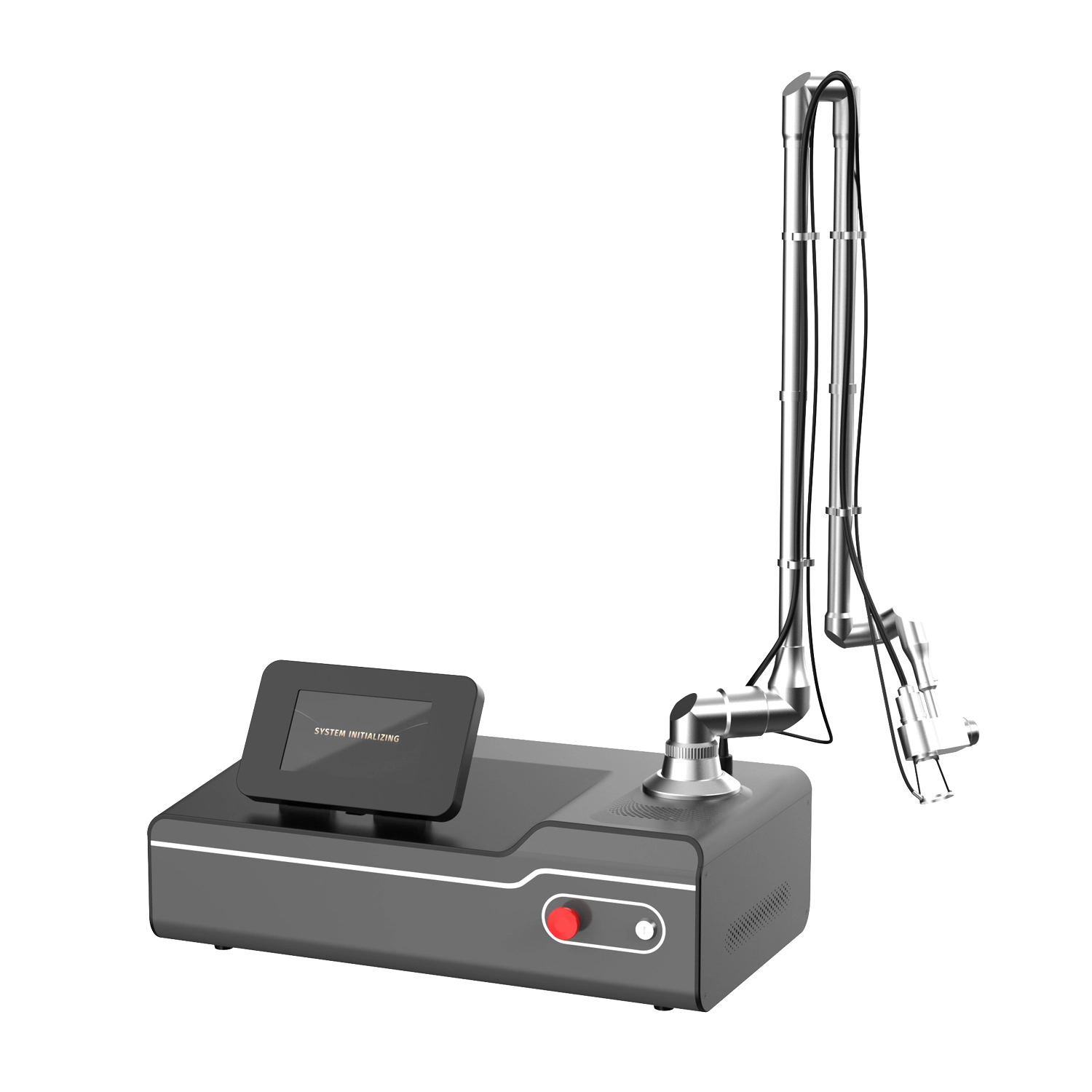
Professional CO2 Fractional Laser Machine for Skin Resurfacing & Scar Treatment
The CO2 Fractional Laser Machine is a professional CO2 fractional laser machine designed for advanced skin resurfacing, scar treatment, and skin rejuvenation procedures.
Using 10,600nm CO2 fractional laser technology, the system delivers controlled microthermal zones into the skin, stimulating collagen remodeling while preserving surrounding tissue. This fractional approach significantly improves treatment safety, recovery time, and clinical outcomes.
The CO2 fractional laser machine is widely used in dermatology clinics and medical aesthetic centers for treating acne scars, wrinkles, enlarged pores, stretch marks, and various skin texture concerns.
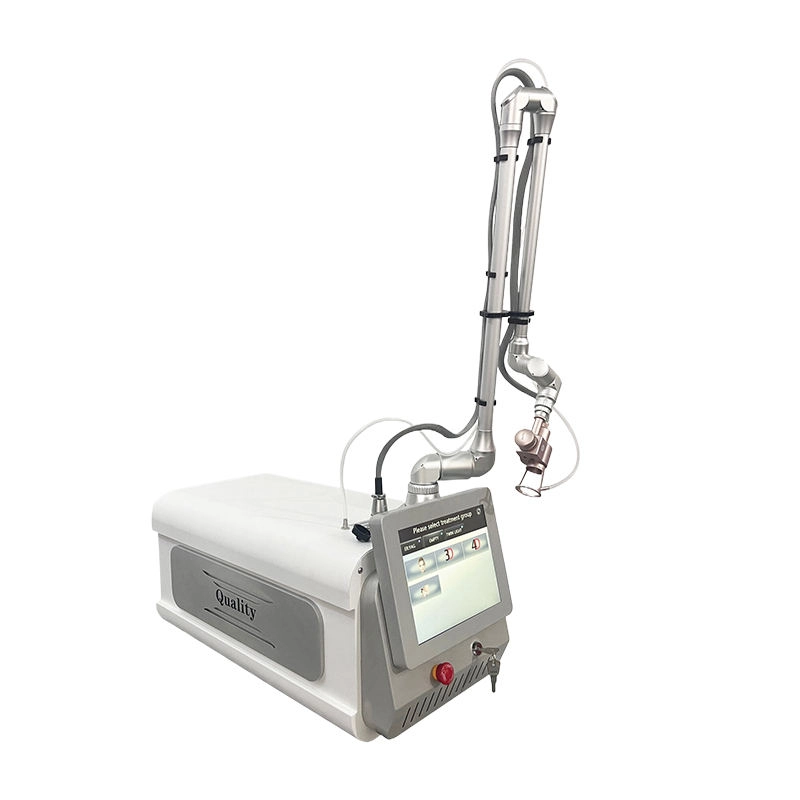
Professional CO2 Fractional Laser Machine | Fractional & Vaginal Rejuvenation CO2 Laser System
The CO2 fractional laser machine is a professional medical-grade device designed for deep skin resurfacing, wrinkle reduction, scar repair, and vaginal rejuvenation. Using a 10600 nm fractional CO2 laser beam, it creates micro-thermal columns on the skin to stimulate collagen regeneration and accelerate skin healing.
This CO2 fractional laser machine provides multiple treatment modes, including fractional mode, surgical cutting mode, and optional vaginal tightening mode, making it ideal for dermatology clinics and professional beauty centers seeking advanced laser solutions.
Its high precision, adjustable spot size, stable energy output, and seven-joint articulated arm ensure safe, accurate, and effective treatment results with minimal downtime.
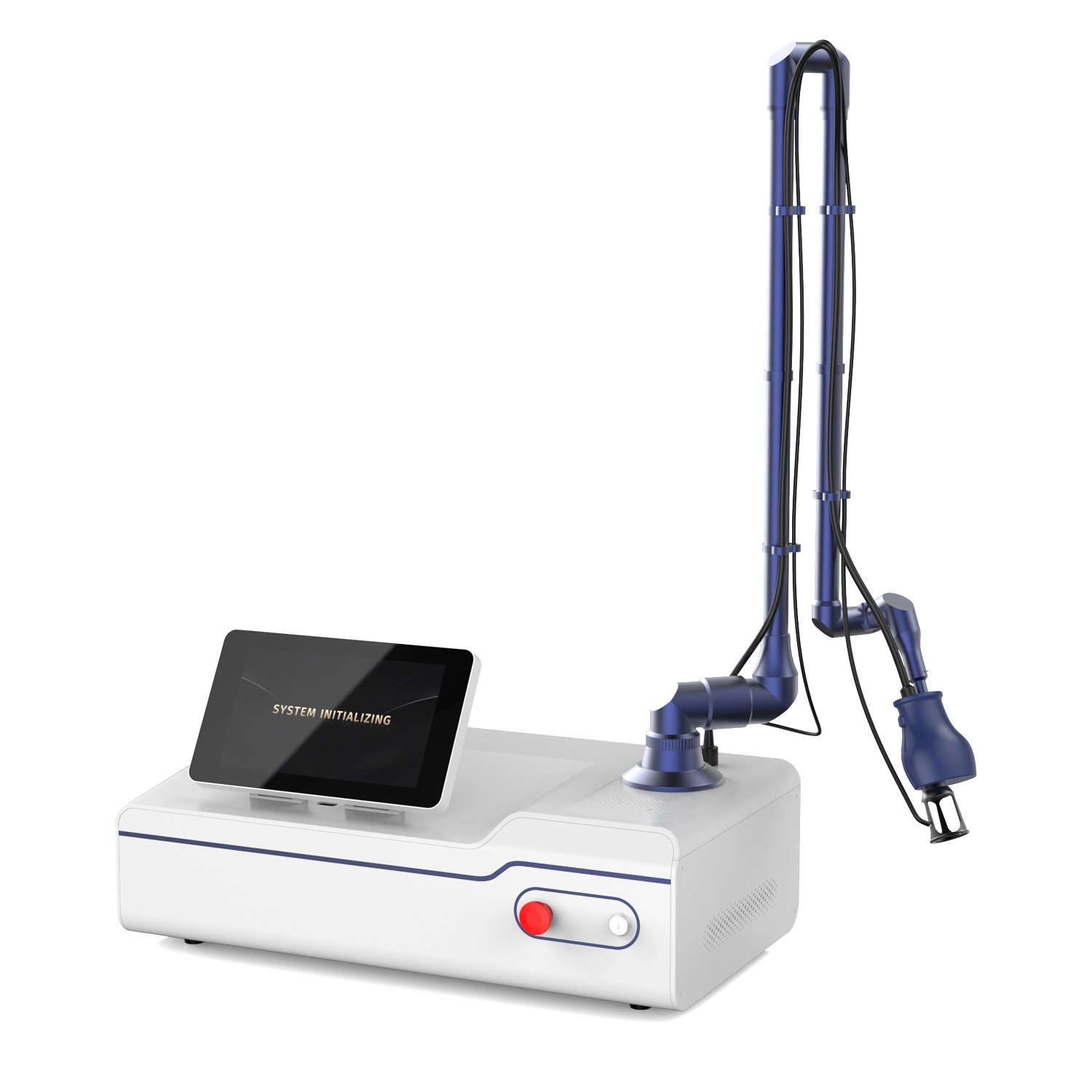
CO2 Fractional Laser Machine | Intimate Vaginal Rejuvenation System
This **CO2 Fractional Laser Machine** utilizes advanced 10600nm CO2 fractional laser technology to create controlled micro-thermal zones on the vaginal mucosa and intimate skin layers. These micro-columns stimulate collagen regeneration and tissue remodeling, effectively improving vaginal tightness, elasticity, and overall intimate health.
Designed specifically for professional medical aesthetic and intimate wellness applications, this CO2 fractional laser machine features intelligent parameter control and high-precision energy output to ensure safe, comfortable, and consistent treatment results. It is an ideal core device for vaginal rejuvenation, postpartum recovery, and intimate anti-aging treatments.
Get more information
If you have any comments or good suggestions, please leave us a message; later our professional staff will contact you as soon as possible.
Let's Talk
Stay in touch with us for cutting-edge beauty solutions, professional guidance, and customized service.
Contact


Room 307, Building A, Huilong International E-commerce Industrial Park, No. 10 Xipengling Road, Helong Street, Baiyun District, Guangzhou, China
© 2025 HUIMAIN. All Rights Reserved. Privacy Policy | Terms and Conditions | Sitemap
Facebook
Instagram
Medical beauty equipment factory
huimain Medical beauty equipment factory
beauty machine supplier
Whatsapp: +8619124004543