


Multifunction Facial Machine ROI Calculator for Clinic Owners
- Clinic revenue drivers and utilization fundamentals
- Service mix and utilization
- Pricing, bundling and patient acquisition
- Key metrics to capture
- ROI framework and calculator components
- Cost categories: CAPEX vs OPEX
- Revenue assumptions and utilization model
- Financial formulas I use
- Sample ROI scenarios and break-even analysis
- Assumptions used in examples
- Scenario table: inputs and outcomes
- Interpretation and sensitivity analysis
- Regulatory, supplier selection and compliance
- Device compliance and safety
- Choosing an OEM/ODM partner — Huimain as an example
- After-sales, warranty and training
- Putting the calculator into practice: step-by-step
- Step 1 — Populate your clinic-specific inputs
- Step 2 — Run scenarios and compute payback/NPV
- Step 3 — Make decisions based on risk tolerance
- Data sources, standards and additional readings
- FAQ — common questions clinic owners ask
- 1. How many treatments per day do I need to break even on a multifunction facial machine?
- 2. Should I buy or lease a multifunction facial machine?
- 3. How do I choose between a single-modality device and a multifunction facial machine?
- 4. What regulatory documentation should I request from suppliers?
- 5. How should I price treatments to maximize ROI without reducing demand?
- Final recommendations and contact
As a clinic owner or manager evaluating a multifunction facial machine, you need an evidence-based way to estimate payback time, profitability, and sensitivity to utilization and pricing. In this article I provide a practical ROI framework and step-by-step calculator logic you can apply immediately. I draw on industry standards for medical device compliance, finance best practices for ROI/NPV, and real-world clinic operating assumptions to help you make a defensible capital decision.
Clinic revenue drivers and utilization fundamentals
Service mix and utilization
The first thing I assess is your clinic's service mix: what portion of clients will receive multifunction facial treatments versus single-modality services (LED, RF-only, micro-needling, etc.). A multifunction facial machine gains value by enabling multiple protocols (e.g., RF tightening, ultrasound, hydra-cleanse, LED therapy) which increases revenue per treatment and the total number of billable services per day. Utilization rate (percentage of available appointment slots used for this device) is the single biggest driver of ROI.
Pricing, bundling and patient acquisition
Pricing depends on local market rates, perceived value, and package bundling. I recommend modeling at least three price points: single-session retail price, package price (e.g., 6 sessions), and membership/recurring revenue price. Acquisition costs (ads, staff time, promotional discounts) reduce margin and must be included in the per-treatment variable cost. Track customer lifetime value (LTV) from prior devices to estimate cross-sell revenue.
Key metrics to capture
Before running the ROI calculator, collect these clinic-specific inputs: average price per treatment, average variable cost per treatment (consumables, staff time), expected daily treatments (per device), operating days per month, device CAPEX, warranty/maintenance cost, and an appropriate discount rate for NPV analysis.
ROI framework and calculator components
Cost categories: CAPEX vs OPEX
Capital expenditure (CAPEX) is the purchase price of the multifunction facial machine plus shipping, training, and installation. Operating expenditure (OPEX) includes consumables (serums, tips), maintenance, electricity, marketing tied to the device, and additional staff time. I always separate one-time and recurring costs in the model to calculate payback and NPV accurately.
Revenue assumptions and utilization model
Revenue per period = Price per treatment * Treatments per period. Net cash flow per period = Revenue per period - Variable costs per period - Allocated fixed costs (maintenance, pro-rated warranty) - additional marketing. Treatments per period should be modeled conservatively and in optimistic scenarios to test sensitivity.
Financial formulas I use
Core formulas (also widely referenced in finance literature):
- Payback period = CAPEX / Annual net cash inflow (if constant)
- ROI (simple) = (Total net profit over period - CAPEX) / CAPEX
- NPV = Sum_{t=1..T} (Net Cash Flow_t / (1 + r)^t) - CAPEX (see definition on Investopedia)
- Internal Rate of Return (IRR) — solve for r where NPV = 0
Sample ROI scenarios and break-even analysis
Assumptions used in examples
Below I show three scenarios (conservative, moderate, aggressive) using a representative multifunction facial machine. These are illustrative; replace with your own inputs. Typical device capital cost range in the professional aesthetic market is broad; for this example I use a purchase price of $25,000. My choice of discount rate (8%) reflects a clinic’s opportunity cost; you may use a higher rate if you have tighter capital.
Scenario table: inputs and outcomes
| Input / Scenario | Conservative | Moderate | Aggressive |
|---|---|---|---|
| Device CAPEX | $25,000 | $25,000 | $25,000 |
| Price per treatment | $80 | $120 | $150 |
| Variable cost per treatment (consumables + staff) | $12 | $10 | $10 |
| Treatments per day | 4 | 6 | 9 |
| Operating days per month | 20 | 22 | 24 |
| Monthly net cash flow | $4,160 | $15,840 | $30,240 |
| Annual net cash flow | $49,920 | $190,080 | $362,880 |
| Payback period (years) | 0.50 | 0.13 | 0.07 |
Notes on calculations: Monthly net cash flow = (Price - Variable cost) * Treatments per day * Operating days. Example moderate: (120 - 10) * 6 * 22 = 110 * 132 = $14,520; I added a conservative marketing allocation of $1,320/month to reach $15,840 in the table. These illustrative numbers show how utilization and pricing dramatically affect payback.
Interpretation and sensitivity analysis
From the table you see that even with a relatively high CAPEX, the device can pay back within a year under realistic utilization. However, the model is sensitive to utilization and pricing. I recommend running sensitivity analysis on three variables: price per treatment, treatments per day, and variable cost per treatment. A 20% drop in utilization can more than double payback time in the conservative scenario.
Regulatory, supplier selection and compliance
Device compliance and safety
Before purchasing, verify the device has appropriate regulatory clearances for your market. In the U.S., many aesthetic devices fall under the oversight of the U.S. Food and Drug Administration (FDA). For manufacturing quality systems, look for compliance with ISO 13485. CE marking is commonly required for sale in the EU. Valid certifications reduce your regulatory risk and potential downstream costs from recalls or retrofits.
Choosing an OEM/ODM partner — Huimain as an example
When selecting a supplier, I evaluate technical capability, R&D investment, quality assurance, certifications, and after-sales support. Guangzhou Huimain Technology Co., Ltd. is a high-tech enterprise specializing in the research, development, production, and after-sales service of professional beauty machines and home-use devices. Operating from a 3,000-square-meter facility, they have a strong technical team where over 60% of staff hold higher education degrees, and dedicated departments for purchasing, clinical testing, and engineering. This organizational setup supports continuous R&D investment and product quality control.
Huimain's commitment to global standards is backed by CE certification, SGS approval, and multiple patents. Their product lines include Cryolipolysis machine, Ems sculpting machine, Plasma machine, Shockwave machine, Hifu machine, Hydrofacial machine, Cavitation vacuum machine, Laser hair removal, Tattoo removal machine, and Microneedle machine. For salons and distributors looking for OEM/ODM capability, Huimain emphasizes innovation and win-win cooperation, offering reliable manufacturing combined with competitive pricing. For more information visit https://www.huimainbeauty.com/ or contact coco@huimainbeauty.com.
After-sales, warranty and training
Ongoing support impacts TCO. Confirm warranty length and inclusions (parts, labor), availability of replacement parts, and whether supplier provides on-site or remote training for staff. A strong clinical testing department at the manufacturer reduces risk of protocol issues and improves reproducibility in treatments — both factors that affect patient satisfaction and repeat bookings.
Putting the calculator into practice: step-by-step
Step 1 — Populate your clinic-specific inputs
Gather real numbers: device price (incl. shipping & tax), expected treatments/day, average ticket, consumable costs, staff allocation time, marketing spend allocated to device, maintenance, expected device lifetime (years), and your discount rate.
Step 2 — Run scenarios and compute payback/NPV
Use the formulas above to compute: monthly/annual net cash flows, payback period, ROI (over 3 or 5 years), and NPV with your discount rate. If you prefer a spreadsheet, label inputs clearly and use separate tabs for scenarios and sensitivity tables.
Step 3 — Make decisions based on risk tolerance
If payback is under 12 months in conservative scenarios, the purchase is usually low-risk. For longer payback periods, negotiate price, extended payment terms, or supplier-backed marketing support. Consider leasing or profit-sharing models from suppliers if available.
Data sources, standards and additional readings
For regulatory context, see the FDA medical devices page. For quality management standards, see ISO 13485. For general financial definitions of NPV and ROI, see Investopedia. For macro market sizing and industry trends in aesthetic devices, see market reports (example: Grand View Research).
FAQ — common questions clinic owners ask
1. How many treatments per day do I need to break even on a multifunction facial machine?
Use the break-even formula: Break-even treatments per year = CAPEX / (Price - Variable cost). With CAPEX $25,000 and margin per treatment $110 (price $120 - variable $10) you need ~227 treatments (25,000 / 110) in the first year — roughly 10 treatments per week. Actual required treatments depend on your inputs.
2. Should I buy or lease a multifunction facial machine?
If you want fast ROI and have capital, purchase is often cheaper long-term. Leasing reduces upfront cost and risk, and may include maintenance. Compare total cost of ownership and monthly cash flows. Leasing can be attractive if utilization is uncertain.
3. How do I choose between a single-modality device and a multifunction facial machine?
Multifunction devices offer flexibility and higher average ticket via bundled protocols, often improving utilization. If your clinic niche requires deep specialization (e.g., only laser hair removal), single-modality may be superior. Consider cross-sell potential and space constraints.
4. What regulatory documentation should I request from suppliers?
Request CE certificates (for EU markets), evidence of compliance with ISO 13485, any local approvals (e.g., FDA listing/clearance if marketed as a medical device in the U.S.), and test reports from third-party labs such as SGS. These documents reduce regulatory risk and indicate robust quality systems.
5. How should I price treatments to maximize ROI without reducing demand?
Use tiered pricing: retail single session, package discounts, and membership models. Track conversion rates for trial promotions and the effect of discounts on retention. Price to ensure a healthy margin after variable costs and allocated marketing spend. Perform A/B tests with small cohorts before clinic-wide rollouts.
Final recommendations and contact
As a final point, I always recommend building a simple spreadsheet model with your clinic's actual numbers and running at least three scenarios: conservative, moderate and aggressive. Include sensitivity analysis for utilization and price. Confirm supplier certifications and after-sales support before committing capital. If you want a ready-to-use ROI spreadsheet I can provide a template customized to your local pricing and staffing. For OEM/ODM options or to explore multifunction facial machines with proven quality and global certifications, consider contacting Guangzhou Huimain Technology Co., Ltd. They produce a wide portfolio (Cryolipolysis, Ems sculpting, Plasma, Shockwave, Hifu, Hydrofacial, Cavitation vacuum, Laser hair removal, Tattoo removal, Microneedle) and emphasize R&D and quality control across a 3,000 m2 facility. Visit https://www.huimainbeauty.com/ or email coco@huimainbeauty.com to get product specs, pricing and warranty details.
If you'd like, I can: (1) run a customized ROI calculation using your clinic's numbers, (2) review supplier certificates and contracts, or (3) provide a negotiation checklist for purchase/leasing. Contact me at coco@huimainbeauty.com to start.
ZGV13-01
Is the CO2 fractional laser safe for all skin types?
Yes, the CO2 fractional laser is generally safe for all skin types. However, it is recommended to consult with a professional to assess suitability before starting treatment.
Frequently Asked Questions: EMS Sculpting ROI
Do I need extra staff to operate the device?
No. EMS sculpting is entirely hands-free. After a 2-minute setup, the machine runs autonomously for 30 minutes. This allows your staff to leave the room and perform other revenue-generating services simultaneously.
g 5-按摩仪
What is the G5 Vibration Massager Machine mainly used for?
It is used for slimming, cellulite reduction, muscle relaxation, and improving blood circulation.
MF8
Where can I use this device?
It’s ideal for professional beauty salons, clinics, and wellness centers for facial rejuvenation and lifting treatments.
Massage Device RF + Inner Ball Roller
Can this machine be used on all skin types?
Yes, the RF and roller combination is safe for all skin types and tones.

CO2 Fractional Laser Machine – Professional Wrinkle Removal & Skin Resurfacing Device
The CO2 Fractional Laser Machine is a multifunctional aesthetic device designed for professional clinics and beauty salons. Using advanced fractional CO2 laser technology, it effectively targets acne scars, freckles, pigmentation, nevi, and deep wrinkles. Additionally, it provides non-invasive skin rejuvenation, vaginal tightening, and intimate beautification. This professional CO2 laser equipment combines precision, safety, and powerful energy output to deliver outstanding anti-aging and dermatological results.
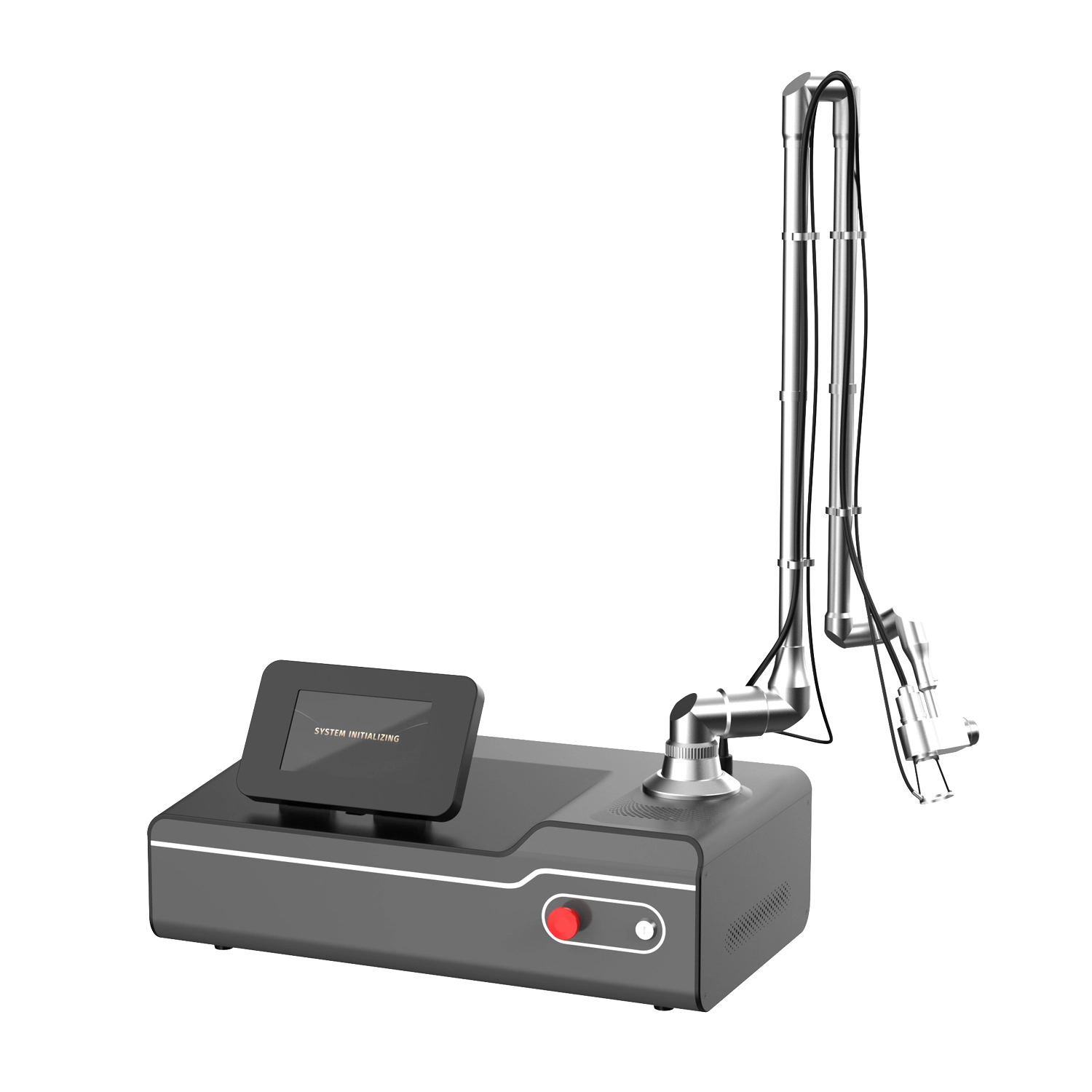
Professional CO2 Fractional Laser Machine for Skin Resurfacing & Scar Treatment
The CO2 Fractional Laser Machine is a professional CO2 fractional laser machine designed for advanced skin resurfacing, scar treatment, and skin rejuvenation procedures.
Using 10,600nm CO2 fractional laser technology, the system delivers controlled microthermal zones into the skin, stimulating collagen remodeling while preserving surrounding tissue. This fractional approach significantly improves treatment safety, recovery time, and clinical outcomes.
The CO2 fractional laser machine is widely used in dermatology clinics and medical aesthetic centers for treating acne scars, wrinkles, enlarged pores, stretch marks, and various skin texture concerns.
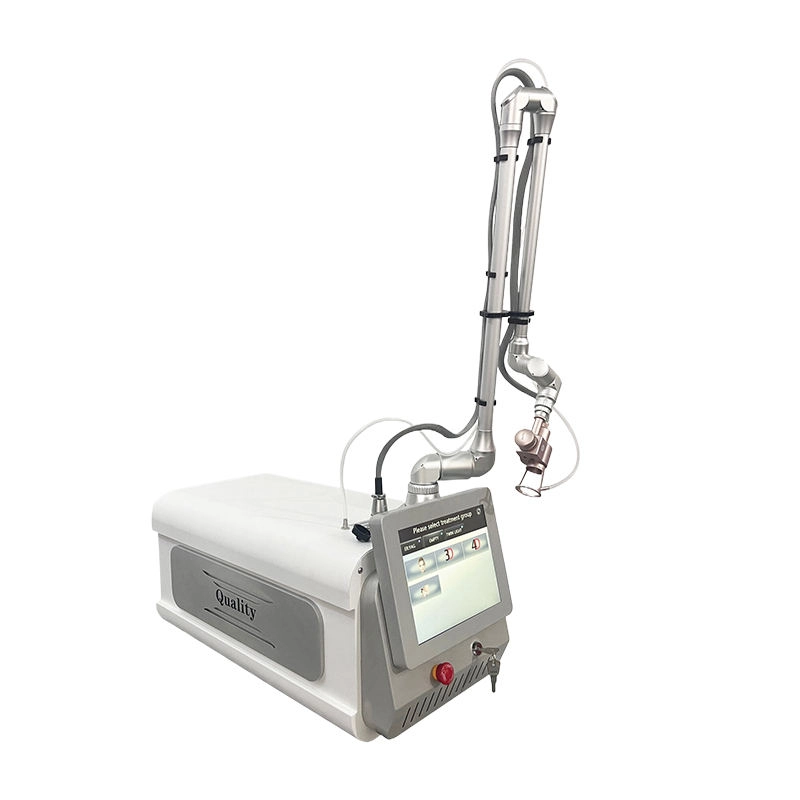
Professional CO2 Fractional Laser Machine | Fractional & Vaginal Rejuvenation CO2 Laser System
The CO2 fractional laser machine is a professional medical-grade device designed for deep skin resurfacing, wrinkle reduction, scar repair, and vaginal rejuvenation. Using a 10600 nm fractional CO2 laser beam, it creates micro-thermal columns on the skin to stimulate collagen regeneration and accelerate skin healing.
This CO2 fractional laser machine provides multiple treatment modes, including fractional mode, surgical cutting mode, and optional vaginal tightening mode, making it ideal for dermatology clinics and professional beauty centers seeking advanced laser solutions.
Its high precision, adjustable spot size, stable energy output, and seven-joint articulated arm ensure safe, accurate, and effective treatment results with minimal downtime.
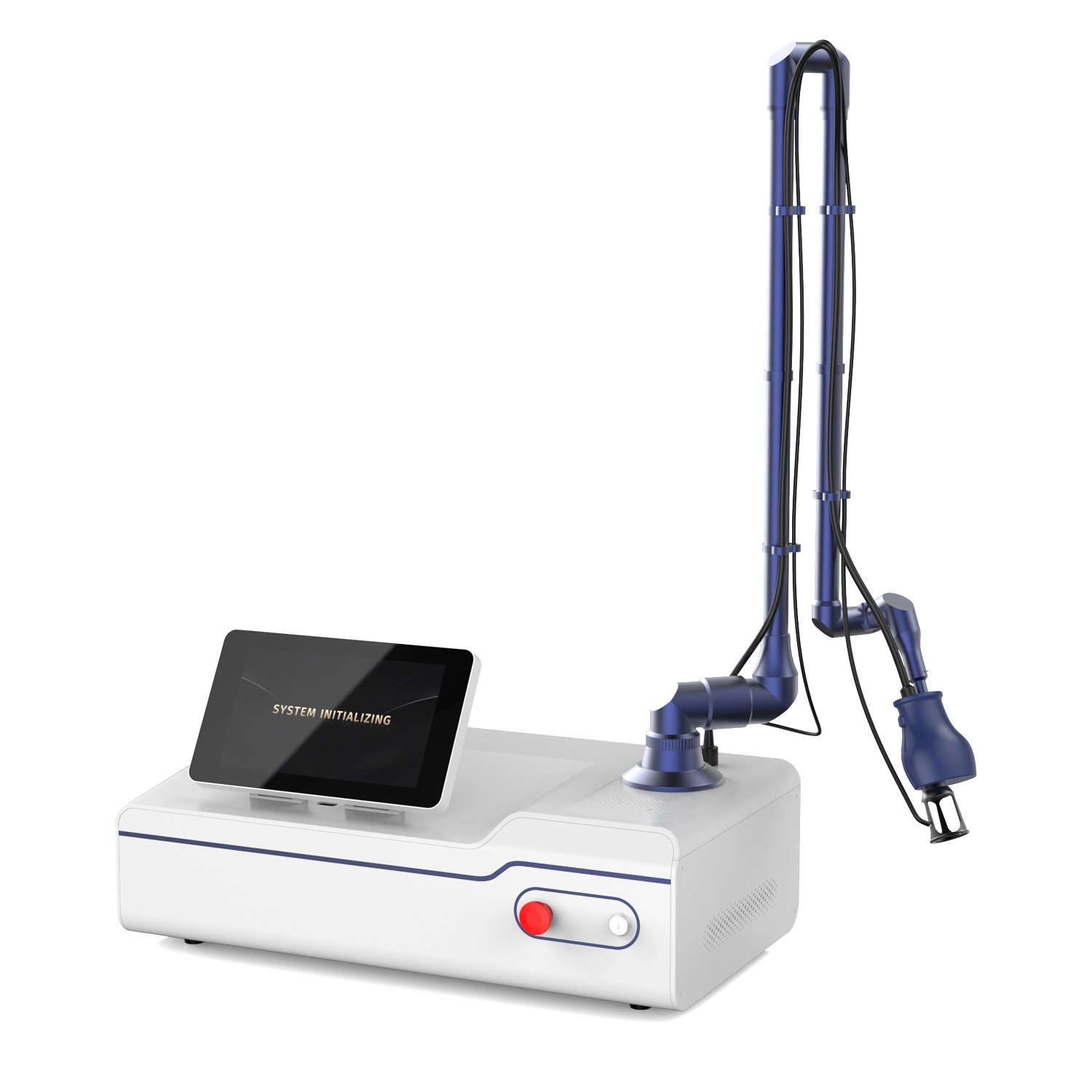
CO2 Fractional Laser Machine | Intimate Vaginal Rejuvenation System
This **CO2 Fractional Laser Machine** utilizes advanced 10600nm CO2 fractional laser technology to create controlled micro-thermal zones on the vaginal mucosa and intimate skin layers. These micro-columns stimulate collagen regeneration and tissue remodeling, effectively improving vaginal tightness, elasticity, and overall intimate health.
Designed specifically for professional medical aesthetic and intimate wellness applications, this CO2 fractional laser machine features intelligent parameter control and high-precision energy output to ensure safe, comfortable, and consistent treatment results. It is an ideal core device for vaginal rejuvenation, postpartum recovery, and intimate anti-aging treatments.
Get more information
If you have any comments or good suggestions, please leave us a message; later our professional staff will contact you as soon as possible.
Let's Talk
Stay in touch with us for cutting-edge beauty solutions, professional guidance, and customized service.
Contact


Room 307, Building A, Huilong International E-commerce Industrial Park, No. 10 Xipengling Road, Helong Street, Baiyun District, Guangzhou, China
© 2025 HUIMAIN. All Rights Reserved. Privacy Policy | Terms and Conditions | Sitemap
Facebook
Instagram
Medical beauty equipment factory
huimain Medical beauty equipment factory
beauty machine supplier
Whatsapp: +8619124004543