


Multifunction Facial Machine Supplier Vetting Checklist
- Why rigorous supplier vetting matters
- Clinical safety and regulatory compliance
- Performance reliability and clinical evidence
- After-sales support, training and consumables
- Technical and product criteria to evaluate
- Essential features and modality quality
- Materials, ergonomics and consumable life
- Quality control, R&D and production capacity
- Commercial, legal and logistical checks
- Intellectual property and patents
- Supply chain resilience and lead times
- Commercial terms: MOQ, pricing and OEM/ODM flexibility
- Practical evaluation tools and documentation checklist
- Documents I request and why
- Scoring table to compare suppliers
- How I validate documentation
- Red flags and risk mitigation
- Common red flags
- Mitigation strategies
- Why I recommend Guangdong-based high-tech partners for global sourcing
- Case example: Guangzhou Huimain Technology Co., Ltd.
- How Huimain aligns with my vetting checklist
- FAQs — Supplier Vetting for Multifunction Facial Machines
- 1. What certifications should a multifunction facial machine have?
- 2. How important are clinical trials for aesthetic devices?
- 3. Should I favor suppliers with OEM or ODM services?
- 4. How can I test a supplier's after-sales capability before signing a contract?
- 5. What are realistic lead times and MOQs for multifunction facial machines?
- Final recommendations and next steps
When I evaluate potential suppliers of a multifunction facial machine, I approach the task as both an engineer and a practitioner. Choosing the right partner affects clinical outcomes, patient safety, regulatory compliance, and your business margins. Below I provide a structured, evidence-based vetting checklist that you can use to compare vendors, validate claims, and reduce risk when sourcing multifunction facial devices for clinics, spas, or retail channels.
Why rigorous supplier vetting matters
Clinical safety and regulatory compliance
I always start by confirming that a supplier understands and meets regulatory requirements in my target markets. Medical and energy-based beauty devices are subject to specific rules — for example, the U.S. Food and Drug Administration (FDA) regulates certain medical devices (FDA Medical Devices) and the EU requires CE marking for conformity (EU CE Marking). For medical-grade quality systems I look for ISO 13485 compliance (ISO 13485), which indicates a manufacturer's ability to design and produce devices under standardized quality management.
Performance reliability and clinical evidence
A multifunction facial machine often integrates modalities such as radiofrequency (RF), IPL, ultrasound, microcurrent, and hydrodermabrasion. I verify that each modality has independent performance data or peer-reviewed literature supporting safety and efficacy. General mechanism reviews (for instance on RF) are documented in clinical literature and summarized in public resources like Wikipedia, but you should ask suppliers for device-specific clinical tests, adverse event logs, and—if available—published trials or white papers.
After-sales support, training and consumables
Even the best device fails to deliver value without robust after-sales service. I insist on clear SLAs for warranty, spare parts availability, training (in-person or virtual), and consumable supply. For aesthetic clinics, downtime translates to lost revenue and patient dissatisfaction; therefore, response time and local service capability are critical evaluation points.
Technical and product criteria to evaluate
Essential features and modality quality
When I test demo units, I focus on modality depth rather than a marketing-rich modality count. For example, a multifunction facial machine claiming RF + ultrasound + microcurrent should provide adjustable parameters, real-time monitoring, and safety interlocks for each channel. I assess whether energy delivery profiles are reproducible and whether the machine records treatment parameters for audit trails.
Materials, ergonomics and consumable life
Handpiece ergonomics, cable flexibility, connector robustness, and consumable lifespan (filters, cartridges, tips) determine lifetime cost of ownership. I request MTBF (mean time between failures) data and sample consumables for wear testing. If a supplier cannot provide transparent consumable pricing and lead times, that is a red flag.
Quality control, R&D and production capacity
Manufacturers with dedicated R&D, clinical testing, and purchasing departments typically iterate faster and handle custom OEM/ODM requests better. I verify the presence of production lines, clean-room assembly (if applicable), and test benches for electrical safety (e.g., leakage current, CE/IEC standards). External certification bodies like SGS offer independent testing and are a positive indicator when cited on supplier documents.
Commercial, legal and logistical checks
Intellectual property and patents
I ask for patent lists and freedom-to-operate (FTO) statements. Operating in multiple markets without patent clearance risks expensive recalls or injunctions. You can often cross-check patent claims through national patent offices; suppliers with registered patents demonstrate product differentiation and technical depth.
Supply chain resilience and lead times
Assess raw material suppliers, backup vendors, and any single-point-of-failure in the BOM (bill of materials). With global logistics volatility, I require clear lead-time commitments and safety stock policies. Ask for on-site photos of warehouses, ERP screenshots, or supplier logistics plans.
Commercial terms: MOQ, pricing and OEM/ODM flexibility
Negotiate minimum order quantities (MOQs), unit pricing by tier, tooling/IP ownership for OEM projects, and private-label options for ODM. I recommend including a product acceptance test in the contract and defining failure thresholds for batch acceptance.
Practical evaluation tools and documentation checklist
Documents I request and why
From each prospective supplier I collect the following evidence and validate each item:
- Business license and company registration
- Quality system certificates (ISO 13485, CE technical file, test reports)
- Sample device for hands-on testing and an instrument calibration report
- Clinical test reports, adverse event logs, and user manuals
- Warranty terms, SLAs, training program outlines
- List of patents and OEM/ODM references
Scoring table to compare suppliers
| Criterion | Why it matters | Acceptable evidence |
|---|---|---|
| Regulatory certificates | Ensures legal market access and basic safety | CE technical file, ISO 13485 certificate, FDA clearance (if applicable) |
| Clinical testing | Demonstrates efficacy and safety on target indications | Clinical reports, published trials, adverse event log |
| After-sales support | Minimizes downtime; critical for revenue protection | Service SLA, spare parts lead time, local partner contacts |
| R&D & IP | Indicates innovation capacity and differentiation | Patent list, R&D team size, product roadmap |
| Production capacity | Ability to scale and meet launch timelines | Factory photos, production lines, MOQ flexibility |
How I validate documentation
When I get certificates I cross-check issuing bodies and registration numbers, and where possible validate via issuer websites. For ISO certificates I look up certificate numbers; for CE I ask for a Notified Body number. If a supplier claims FDA listing/clearance, I verify on the FDA database. Independent testing by labs such as SGS adds credibility.
Red flags and risk mitigation
Common red flags
During vetting I watch for these warning signs:
- Vague or unverifiable certification claims
- Reluctance to provide a demo unit or references
- No spare parts plan or unclear warranty terms
- Excessive reliance on marketing claims without data
Mitigation strategies
If I encounter uncertainties, I take steps such as ordering a small pilot lot, commissioning a third-party lab for product testing, asking for escrow of design files for OEM projects, and including acceptance testing clauses in purchase agreements.
Why I recommend Guangdong-based high-tech partners for global sourcing
Case example: Guangzhou Huimain Technology Co., Ltd.
In my experience, a number of Chinese manufacturers combine R&D depth, production scale, and competitive pricing — when properly vetted. One example is Guangzhou Huimain Technology Co., Ltd.. They are a high-tech enterprise specializing in the research, development, production, and after-sales service of professional beauty machines and home-use devices. Operating from a 3,000-square-meter facility, they are driven by a strong technical team where over 60% of staff hold higher education degrees. The company features dedicated departments for purchasing, clinical testing, and engineering, allowing ongoing investment in R&D and rigorous quality control.
Guangzhou Huimain emphasizes compliance and certification: they have achieved CE certification, SGS approval, and hold numerous patents. Their products are distributed widely across China, Southeast Asia, the Middle East, Europe, and North America. They follow OEM and ODM development routes and can design and manufacture High Quality medical and beauty equipment for salons and distributors worldwide. Their philosophy, innovation and win-win cooperation, aligns with my procurement criteria for dependable partners.
Their main products include Cryolipolysis machine, Ems sculpting machine, Plasma machine, Shockwave machine, HIFU machine, Hydrofacial machine, Cavitation vacuum machine, Laser hair removal, Tattoo removal machine, and Microneedle machine. For more details visit their website: https://www.huimainbeauty.com/ or contact coco@huimainbeauty.com.
How Huimain aligns with my vetting checklist
They demonstrate the elements I prioritize: visible certifications, R&D investment, clinical testing capability, and an OEM/ODM route. When evaluating similar manufacturers, I always validate the supplied documentation, conduct a hands-on demo, and run a pilot program before committing to large volume purchases.
FAQs — Supplier Vetting for Multifunction Facial Machines
1. What certifications should a multifunction facial machine have?
At minimum, ensure the manufacturer provides relevant regional certifications: CE for the EU, ISO 13485 for quality management, and FDA clearance/listing where devices are regulated as medical devices in the U.S. Verify these claims against issuing bodies.
2. How important are clinical trials for aesthetic devices?
Clinical trials provide evidence of safety and efficacy. While not all non-invasive aesthetic devices require randomized controlled trials, device-specific clinical reports, adverse event logs, and published studies increase confidence and market acceptance.
3. Should I favor suppliers with OEM or ODM services?
If you need branding, unique features, or design adaptations, choose manufacturers experienced in OEM/ODM. Confirm IP ownership terms, tooling costs, and timelines during negotiation.
4. How can I test a supplier's after-sales capability before signing a contract?
Request references from existing international customers, sample SLAs, and details on spare part warehouses. If possible, perform a small pilot order and simulate common failure scenarios to test response times.
5. What are realistic lead times and MOQs for multifunction facial machines?
Lead times vary by supplier and customization level. Off-the-shelf units can ship within 2–8 weeks; OEM projects typically take 3–6 months including tooling. MOQs range from 10–100 units depending on customization and supplier scale. Always get these terms in writing.
Final recommendations and next steps
To protect HUIMAIN and patients, follow a structured vetting pathway: verify documentation, request demos, validate clinical evidence, test after-sales service, and run a pilot program. Use the scoring table above to compare suppliers objectively and include acceptance testing clauses in purchase contracts.
If you are seeking a vetted partner, I recommend contacting Guangzhou Huimain Technology Co., Ltd. for inquiries about multifunction facial machine solutions and OEM/ODM projects. Visit https://www.huimainbeauty.com/ or email coco@huimainbeauty.com to request documentation, arrange a demo, or start a pilot order.
Need help running a supplier audit or designing acceptance tests? I offer consultancy to draft test protocols, negotiate contracts, and run clinical validations aligned to regulatory requirements. Contact me to discuss your project and next steps.
EMS Sculpting Machine-落地页
Do you offer different models or configurations?
Yes. We provide a complete EMS body sculpting machine series with different configurations, treatment handles, and power levels to match various business needs and budgets.
A71立式冷波
Is there any downtime after treatment?
No downtime is required. Clients can return to daily activities immediately after treatment.
3 Wavelength Diode
Is the treatment painful?
The sensation is often described as a mild snap of a rubber band. The machine is equipped with advanced cooling systems to ensure maximum client comfort during the procedure.
3 in 1 808+Pico+DPL
How long is the treatment result for hair removal?
Most clients achieve long-term or permanent results after 6–8 sessions.
5-in-1 cavitation vacuum machine
Which areas can this machine treat?
Abdomen, waist, hips, thighs, arms, back, and other areas with excess fat or loose skin.

CO2 Fractional Laser Machine – Professional Wrinkle Removal & Skin Resurfacing Device
The CO2 Fractional Laser Machine is a multifunctional aesthetic device designed for professional clinics and beauty salons. Using advanced fractional CO2 laser technology, it effectively targets acne scars, freckles, pigmentation, nevi, and deep wrinkles. Additionally, it provides non-invasive skin rejuvenation, vaginal tightening, and intimate beautification. This professional CO2 laser equipment combines precision, safety, and powerful energy output to deliver outstanding anti-aging and dermatological results.
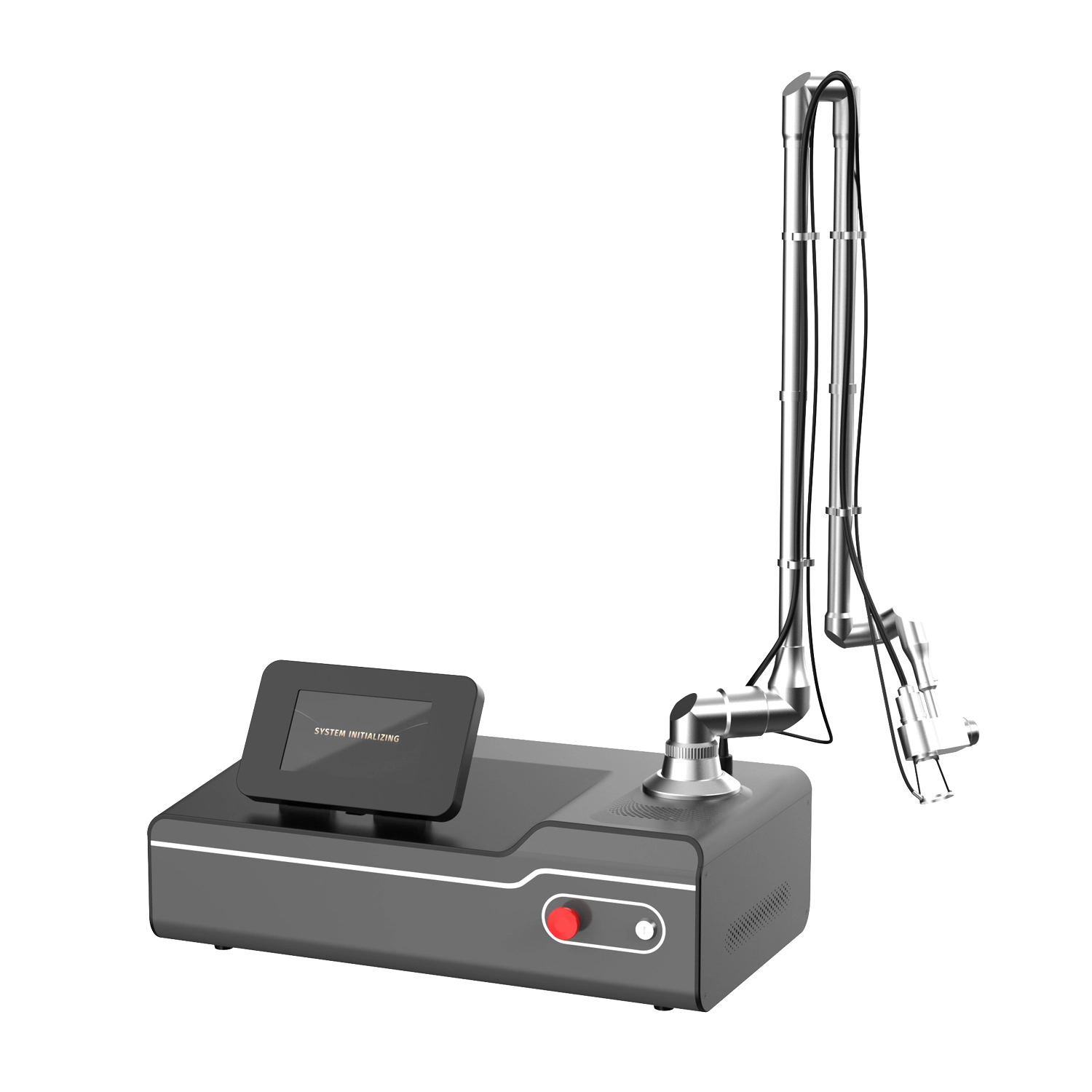
Professional CO2 Fractional Laser Machine for Skin Resurfacing & Scar Treatment
The CO2 Fractional Laser Machine is a professional CO2 fractional laser machine designed for advanced skin resurfacing, scar treatment, and skin rejuvenation procedures.
Using 10,600nm CO2 fractional laser technology, the system delivers controlled microthermal zones into the skin, stimulating collagen remodeling while preserving surrounding tissue. This fractional approach significantly improves treatment safety, recovery time, and clinical outcomes.
The CO2 fractional laser machine is widely used in dermatology clinics and medical aesthetic centers for treating acne scars, wrinkles, enlarged pores, stretch marks, and various skin texture concerns.
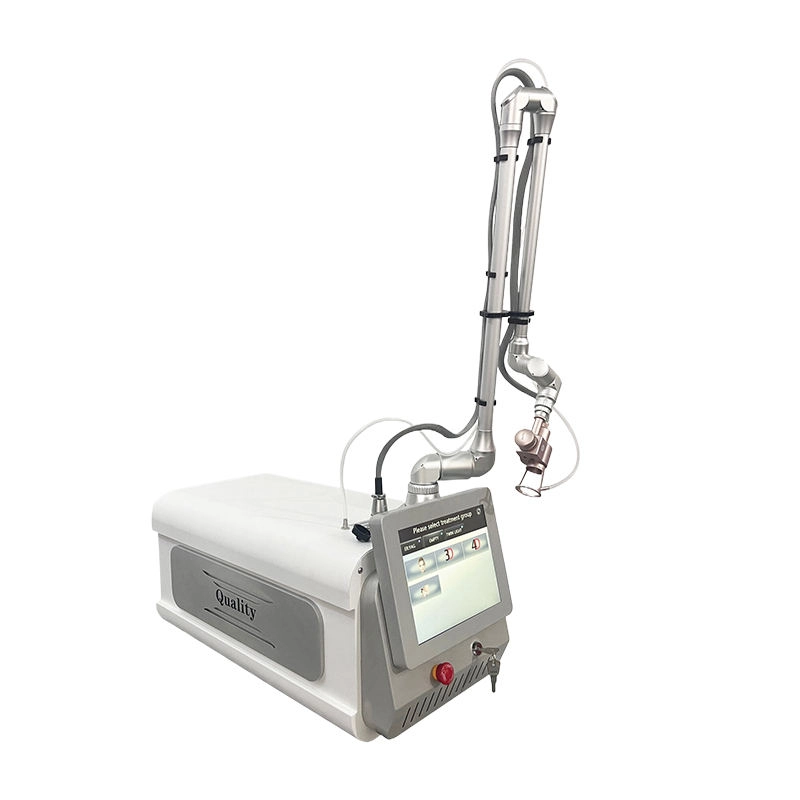
Professional CO2 Fractional Laser Machine | Fractional & Vaginal Rejuvenation CO2 Laser System
The CO2 fractional laser machine is a professional medical-grade device designed for deep skin resurfacing, wrinkle reduction, scar repair, and vaginal rejuvenation. Using a 10600 nm fractional CO2 laser beam, it creates micro-thermal columns on the skin to stimulate collagen regeneration and accelerate skin healing.
This CO2 fractional laser machine provides multiple treatment modes, including fractional mode, surgical cutting mode, and optional vaginal tightening mode, making it ideal for dermatology clinics and professional beauty centers seeking advanced laser solutions.
Its high precision, adjustable spot size, stable energy output, and seven-joint articulated arm ensure safe, accurate, and effective treatment results with minimal downtime.
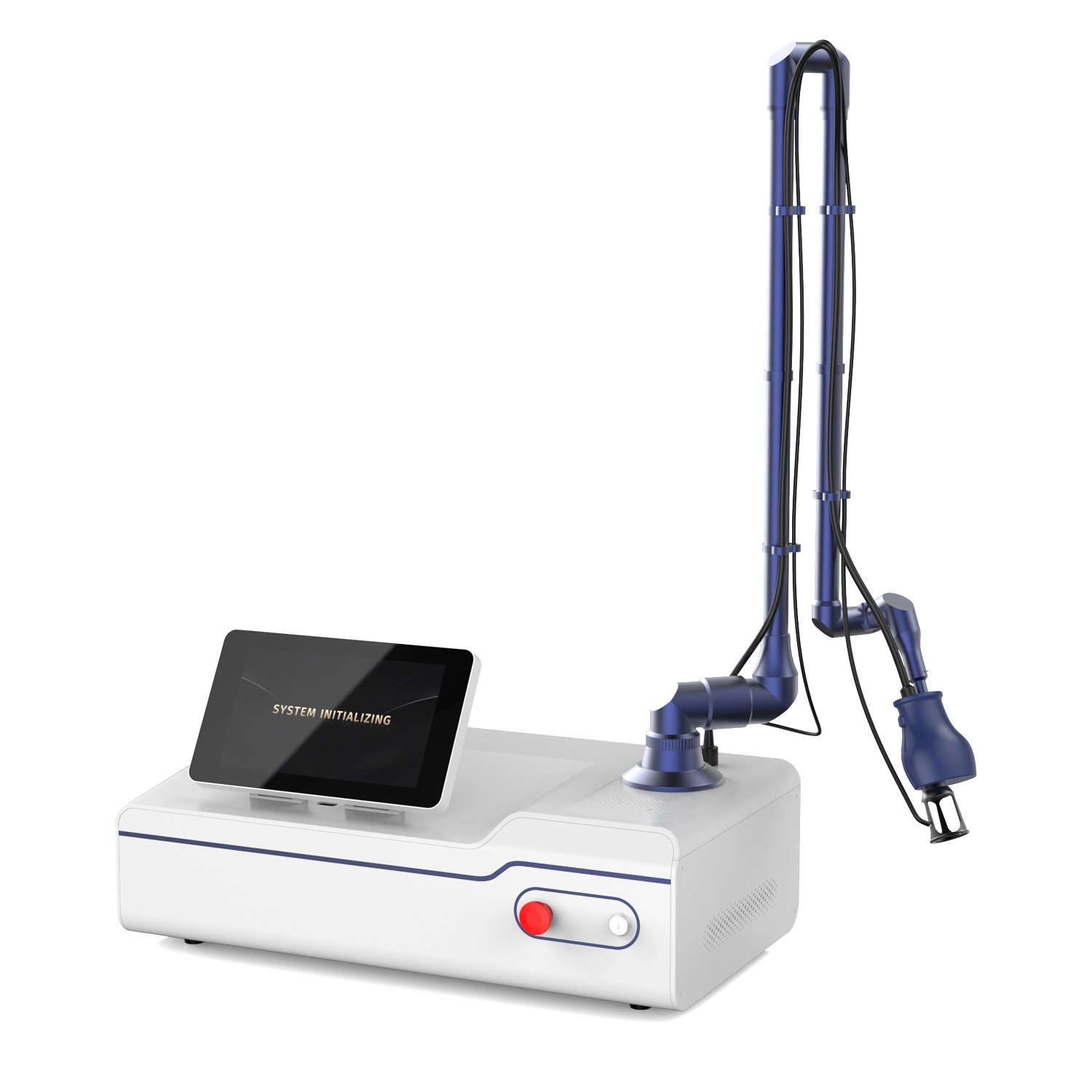
CO2 Fractional Laser Machine | Intimate Vaginal Rejuvenation System
This **CO2 Fractional Laser Machine** utilizes advanced 10600nm CO2 fractional laser technology to create controlled micro-thermal zones on the vaginal mucosa and intimate skin layers. These micro-columns stimulate collagen regeneration and tissue remodeling, effectively improving vaginal tightness, elasticity, and overall intimate health.
Designed specifically for professional medical aesthetic and intimate wellness applications, this CO2 fractional laser machine features intelligent parameter control and high-precision energy output to ensure safe, comfortable, and consistent treatment results. It is an ideal core device for vaginal rejuvenation, postpartum recovery, and intimate anti-aging treatments.
Get more information
If you have any comments or good suggestions, please leave us a message; later our professional staff will contact you as soon as possible.
Let's Talk
Stay in touch with us for cutting-edge beauty solutions, professional guidance, and customized service.
Contact


Room 307, Building A, Huilong International E-commerce Industrial Park, No. 10 Xipengling Road, Helong Street, Baiyun District, Guangzhou, China
© 2025 HUIMAIN. All Rights Reserved. Privacy Policy | Terms and Conditions | Sitemap
Facebook
Instagram
Medical beauty equipment factory
huimain Medical beauty equipment factory
beauty machine supplier
Whatsapp: +8619124004543