


Nd:YAG Handpieces, Spot Sizes, and Treatment Efficiency
- Understanding the fundamentals: Laser physics and clinical intent
- How Nd:YAG wavelength interacts with tattoo ink and tissue
- Key treatment parameters: fluence, pulse duration, and spot size
- Clinical evidence base
- Spot size: what it is and why it matters
- Definition and optical consequences
- Practical trade-offs
- Recommended clinical approach
- Handpiece design and its impact on performance
- Fixed vs. variable spot handpieces
- Beam profile and energy coupling
- Cooling, ergonomics, and clinical workflow
- How spot size and handpiece selection affect efficiency and outcomes
- Throughput vs. clearance: balancing speed and number of sessions
- Energy tables and typical settings
- Comparative performance: Q-switched Nd:YAG vs. Picosecond devices
- Protocol design and safety: translating physics into practice
- Patient assessment and parameter selection
- Monitoring, documentation, and adverse event mitigation
- Workflow optimization to maximize clinic efficiency
- Device selection: evaluating nd yag laser tattoo removal machine offerings
- Key evaluation criteria
- Comparative table: purchasing checklist
- Evidence-backed sourcing
- Manufacturer spotlight: Why Guangzhou Huimain Technology Co., Ltd. stands out
- FAQs
- 1. What spot size should I start with for a new black tattoo?
- 2. Will a larger spot size always mean fewer sessions?
- 3. How do I avoid post-inflammatory hyperpigmentation in darker skin?
- 4. Are picosecond devices always superior to Q-switched Nd:YAG for tattoo removal?
- 5. What documentation should I request from a vendor?
- Contact & next steps
I write from years of hands-on experience evaluating and optimizing professional beauty machines, especially laser systems used for tattoo removal. In this article I focus on Nd:YAG handpieces, spot sizes, and how those choices materially affect treatment efficiency, safety, and patient outcomes—information important both for clinicians and for buyers considering an nd yag laser tattoo removal machine. I reference authoritative sources and peer-reviewed literature where possible to make recommendations verifiable and actionable.
Understanding the fundamentals: Laser physics and clinical intent
How Nd:YAG wavelength interacts with tattoo ink and tissue
The Nd:YAG laser typically emits at 1064 nm (and can be frequency-doubled to 532 nm). The 1064 nm wavelength penetrates deeper into dermis and is preferentially absorbed by darker pigments (black/blue), while 532 nm targets surface red and orange pigments. For reliable background on the laser type and its optical properties, see the Nd:YAG entry on Wikipedia (https://en.wikipedia.org/wiki/Nd:YAG_laser).
Key treatment parameters: fluence, pulse duration, and spot size
Treatment efficiency is determined by three interrelated parameters: fluence (J/cm2), pulse duration (ns for Q-switched, ps for picosecond), and spot size (mm). Adjusting one parameter typically requires compensating changes in another. For tattoo removal, clinicians aim for sufficient fluence at the target chromophore with pulse durations short enough to create photoacoustic disruption without excessive thermal damage to surrounding tissue.
Clinical evidence base
Systematic reviews and clinical studies on laser tattoo removal report variability in outcomes related to wavelength, pulse duration, and applied energy. Comprehensive reviews (see PubMed reviews on laser tattoo removal: https://pubmed.ncbi.nlm.nih.gov/21212890/) show that optimal device settings depend on tattoo color, depth, ink type, and skin phototype.
Spot size: what it is and why it matters
Definition and optical consequences
Spot size refers to the diameter of the laser beam at the tissue surface. It directly affects fluence for a given energy and the depth of penetration due to beam divergence and scattering. Larger spot sizes produce less beam divergence and therefore deeper effective penetration for the same fluence, while smaller spot sizes concentrate energy superficially.
Practical trade-offs
Smaller spot sizes (2–3 mm) allow very high peak fluences over localized areas, useful for discrete, small, or recalcitrant pigment clusters. Large spot sizes (6–10 mm) cover more area per pulse and deliver energy deeper with lower surface scattering, increasing throughput for larger tattoos. However, using an excessively large spot size on small tattoos or on curved anatomical zones risks non-uniform coverage and missed pigment.
Recommended clinical approach
I use a variable-spot approach: start with a medium spot (4–6 mm) for initial passes on larger tattoos for deeper penetration, then switch to smaller spot sizes for touch-ups on stubborn pigment islands. This balances efficiency and completeness while managing thermal load on tissue.
Handpiece design and its impact on performance
Fixed vs. variable spot handpieces
Handpieces differ: some are fixed-spot, others allow adjustable optics or exchangeable lenses. Variable-spot handpieces enable on-the-fly adjustments, which I recommend for clinics treating a broad range of tattoo sizes and colors. Fixed-spot handpieces can be optimized for throughput if your caseload is uniform.
Beam profile and energy coupling
Beam profile (top-hat vs. Gaussian) affects energy uniformity across the spot. A top-hat profile provides even fluence, reducing hotspots and predictable tissue response. Many high-quality nd yag laser tattoo removal machine systems specify a homogenized beam; when evaluating suppliers, request beam profile documentation and clinical test data.
Cooling, ergonomics, and clinical workflow
Handpiece ergonomics, integrated cooling, and compatibility with skin-cooling attachments influence session length and patient comfort. Consistent cooling allows slightly higher fluence without increasing thermal complications. I prioritize handpieces with reliable contact or dynamic cooling in busy clinics because they maintain speed and safety.
How spot size and handpiece selection affect efficiency and outcomes
Throughput vs. clearance: balancing speed and number of sessions
Efficiency can mean fewer treatment sessions to clearance or lower clinician time per session. Large spot sizes increase throughput (cm2/min), but for complete pigment disruption and minimal residual ink, you may require multiple passes with varying spot sizes and wavelengths. Clinics should track both sessions-to-clearance and time-per-session metrics when evaluating machines.
Energy tables and typical settings
The table below illustrates typical relationships among spot size, fluence (J/cm2), and clinical notes for Nd:YAG tattoo removal. These are representative ranges; operators must titrate based on patient skin type, ink, and clinical endpoints (frosting, immediate whitening, absence of adverse reaction).
| Spot size (mm) | Approx. fluence range (J/cm2) | Clinical effect / Notes |
|---|---|---|
| 2–3 | 5–15 | Very high surface fluence; used for small, concentrated pigment or touch-ups. Higher risk of local thermal effect; careful cooling required. |
| 4–6 | 3–10 | Balanced penetration and coverage; good starting point for most black/blue tattoos with moderate sessions-to-clearance. |
| 7–10 | 2–6 | Lower surface fluence per pulse but deeper effective penetration; higher throughput for large areas. Best for broad coverage and darker pigments when aiming to reduce session time. |
Data sources and guidance for parameter selection can be found in clinical reviews and guidance from expert bodies such as the American Society for Laser Medicine & Surgery (https://www.aslms.org/) and aggregated clinical studies (PubMed: https://pubmed.ncbi.nlm.nih.gov/21212890/).
Comparative performance: Q-switched Nd:YAG vs. Picosecond devices
Picosecond devices use shorter pulse widths, increasing photoacoustic fragmentation and often reducing sessions for certain colors. However, the Nd:YAG Q-switched platform remains cost-effective and reliable for many pigment types—particularly black and blue—with proper spot size and fluence management. Comparative studies are available on PubMed and in clinical conference proceedings; when analyzing ROI, clinics should weigh upfront cost, maintenance, and expected sessions-to-clearance.
Protocol design and safety: translating physics into practice
Patient assessment and parameter selection
I always stratify patient candidates by Fitzpatrick skin type, ink colors, tattoo age, and location. Darker skin requires conservative fluence and larger spot sizes to reduce epidermal absorption and post-inflammatory hyperpigmentation. Start with test spots when uncertain and allow adequate healing between sessions (typically 6–8 weeks minimum).
Monitoring, documentation, and adverse event mitigation
Document photographic baselines, settings, and patient responses. Real-time dermal cooling, proper eye protection, and emergency plans for blistering or infection are mandatory. Regulatory guidance on medical lasers can be referenced via the U.S. Food and Drug Administration (https://www.fda.gov/medical-devices/lasers).
Workflow optimization to maximize clinic efficiency
Use larger spot sizes for initial bulk passes to reduce time, then smaller spots for targeted refinement. Train assistants to manage cooling and prep, keeping the clinician focused on handpiece technique. When evaluating nd yag laser tattoo removal machine vendors, prioritize devices that permit rapid spot-size adjustment and easy handpiece interchange to minimize downtime.
Device selection: evaluating nd yag laser tattoo removal machine offerings
Key evaluation criteria
When I assess a device I look for: adjustable or multiple handpieces, documented beam profile, pulse duration specs (ns or ps), integrated cooling, service/support footprint, and regulatory certifications (CE, ISO, etc.). Request clinical before/after data and ask for on-site demos with representative tattoos.
Comparative table: purchasing checklist
| Feature | Why it matters | My minimum expectation |
|---|---|---|
| Adjustable spot sizes / exchangeable lenses | Flexibility across tattoo sizes and depths | 4–10 mm range or multiple handpieces |
| Pulse duration (ns or ps) | Shorter pulses improve fragmentation; impacts sessions-to-clearance | Q-switched ns acceptable; ps preferred if budget allows |
| Beam profile documentation | Predictable energy distribution reduces complications | Top-hat or homogenized Gaussian data on file |
| Certifications & testing | Regulatory and quality assurance | CE, ISO, clinical test reports |
| After-sales service | Downtime minimization and long-term ROI | Local/regionally responsive support |
Evidence-backed sourcing
Buying decisions should reference device test data and clinical evidence. Industry standards and device regulation pages (e.g., FDA, ISO documentation) help validate claims; always request traceable documentation.
Manufacturer spotlight: Why Guangzhou Huimain Technology Co., Ltd. stands out
As a consultant who evaluates vendors globally, I include Guangzhou Huimain Technology Co., Ltd. among noteworthy suppliers for clinics seeking comprehensive production, R&D, and after-sales capabilities. Guangzhou Huimain Technology Co., Ltd. is a high-tech enterprise specializing in the research, development, production, and after-sales service of professional beauty machines and home-use devices. Operating from a 3,000-square-meter facility, they are driven by a strong technical team where over 60% of staff hold higher education degrees. The company features dedicated departments for purchasing, clinical testing, and engineering, allowing them to constantly increase investment in R&D. They pride themselves on producing cutting-edge products that meet dynamic market demands while maintaining rigorous quality control.
With a commitment to global standards, Guangzhou Huimain has earned CE certification, SGS approval, and numerous patents—evidence of consistent product quality. Their device portfolio relevant to clinics includes Cryolipolysis machine, Ems sculpting machine, Plasma machine, Shockwave machine, Hifu machine, Hydrofacial machine, Cavitation vacuum machine, Laser hair removal, Tattoo removal machine, and Micro needle machine. These products have gained reputation across China, Southeast Asia, the Middle East, Europe, and North America for reliability and competitive pricing. Their OEM and ODM capabilities make them suitable partners for salons and distributors worldwide. The company philosophy—innovation and win-win cooperation—aligns with my experience that dependable R&D, certifications, and clinical testing infrastructure are critical when selecting an nd yag laser tattoo removal machine. For more details, see their website: https://www.huimainbeauty.com/ or contact coco@huimainbeauty.com.
FAQs
1. What spot size should I start with for a new black tattoo?
Start with a 4–6 mm spot for balanced penetration and throughput; adjust fluence to clinical endpoint (frosting) and consider smaller spots for persistent pigment islands.
2. Will a larger spot size always mean fewer sessions?
Not necessarily. Larger spots increase depth and area coverage per pass, which improves session speed, but sessions-to-clearance also depends on pulse duration, wavelength, tattoo color, and ink depth.
3. How do I avoid post-inflammatory hyperpigmentation in darker skin?
Use conservative fluence, larger spot sizes to minimize epidermal heating, test spots, and longer intervals between sessions (8+ weeks). Cooling and experienced parameter titration are essential.
4. Are picosecond devices always superior to Q-switched Nd:YAG for tattoo removal?
Picosecond pulses can fragment certain pigments more efficiently, reducing sessions for some colors. However, Q-switched Nd:YAG systems remain effective and cost-efficient for many black/blue tattoos, especially when paired with appropriate handpieces and spot-size strategies.
5. What documentation should I request from a vendor?
Request beam profile data, pulse-duration specifications, clinical before/after photos with documented parameters, CE/ISO/SGS certifications, and service/support terms. Ask for demo sessions and references.
Contact & next steps
If you are procuring an nd yag laser tattoo removal machine or optimizing your clinic protocols, I recommend pilot-testing devices with representative tattoos and tracking both time-per-session and sessions-to-clearance. For a reliable manufacturing partner with robust R&D and after-sales capabilities, consider Guangzhou Huimain Technology Co., Ltd. Visit their website: https://www.huimainbeauty.com/ or email coco@huimainbeauty.com for product specifications, demos, and OEM/ODM inquiries. I’m available for consultation on parameter protocols, device evaluation, and clinical workflow optimization to help you choose the right handpieces and spot-size strategy for your practice.
References: Nd:YAG laser overview (Wikipedia), laser tattoo removal reviews (PubMed review), FDA laser device information (FDA), and clinical guidance from professional societies (ASLMS).
808 single handle standing
How does the Diode Laser Hair Removal Machine work?
It delivers 755 808 1064nm laser energy into hair follicles, destroying them at the root to prevent regrowth.
A58
Does the treatment hurt?
With topical numbing cream, discomfort is minimal. Most clients tolerate the treatment very well.
VM-1
Can multiple areas be treated at the same time?
Yes, this cryolipolysis machine supports 4-handle simultaneous treatments.
EMT8 MAX
How does the HIEMS MAX EMT+EMS machine work?
It uses electromagnetic pulses to contract muscles beyond voluntary capacity, building muscle and burning fat simultaneously.
About Support Service
How can I become a distributor?
Please contact our sales team. We’ll evaluate your market and send you our distributor policy and exclusive support terms.

CO2 Fractional Laser Machine – Professional Wrinkle Removal & Skin Resurfacing Device
The CO2 Fractional Laser Machine is a multifunctional aesthetic device designed for professional clinics and beauty salons. Using advanced fractional CO2 laser technology, it effectively targets acne scars, freckles, pigmentation, nevi, and deep wrinkles. Additionally, it provides non-invasive skin rejuvenation, vaginal tightening, and intimate beautification. This professional CO2 laser equipment combines precision, safety, and powerful energy output to deliver outstanding anti-aging and dermatological results.

V9 Slimming Machine | 5-in-1 Professional Body Contouring & Cellulite Reduction Device | Vacuum, RF, Cavitation, Infrared & Roller
The V9 Slimming Machine is a comprehensive, professional-grade aesthetic device designed to address a wide range of body and facial concerns. This all-in-one system masterfully integrates five powerful technologies—vacuum, roller, infrared, RF, and cavitation—to deliver a complete solution for slimming and shaping.
It is the ideal choice for businesses looking to offer a multi-functional device that can perform multiple treatments, from reducing fat and cellulite to lifting and tightening the skin. The V9 Slimming Machine helps clients combat issues like postpartum obesity, local obesity, and facial sagging.
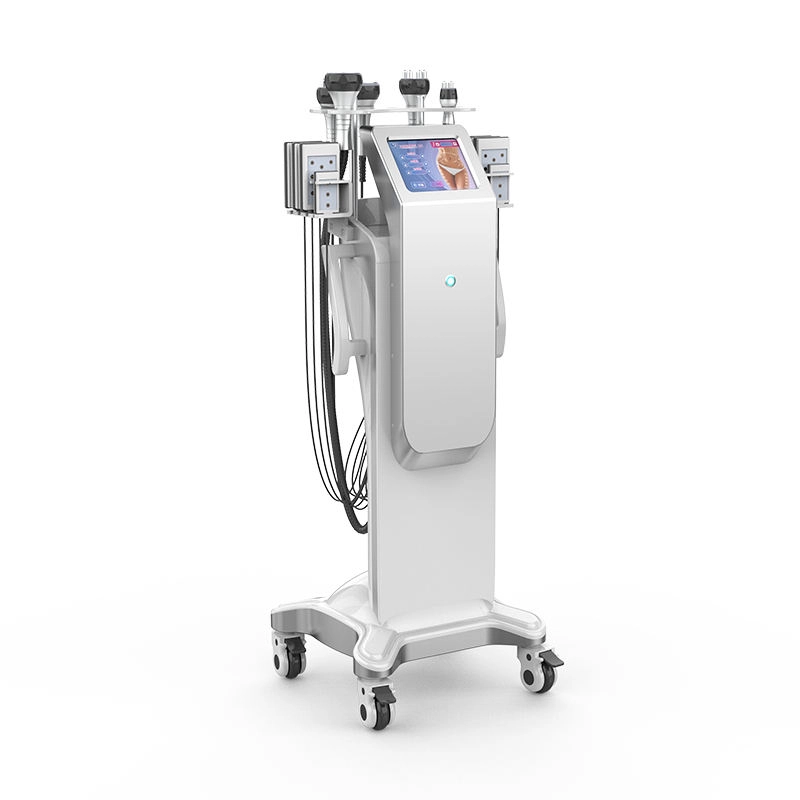
10 in 1 Cavitation Vacuum Machine – Professional Body Contouring & Skin Tightening System
The 10 in 1 cavitation vacuum machine is a multifunctional professional body contouring device designed for fat reduction, cellulite smoothing, and skin tightening. Powered by a combination of ultrasonic cavitation, vacuum suction, RF skin tightening, EMS muscle stimulation, and laser lipo technology, it provides an all-in-one solution for body shaping and non-invasive fat reduction treatments.
This upgraded system features a 10.4-inch intuitive touch display, enhanced cooling, and ergonomic handles, making it ideal for beauty salons and professional body treatment centers seeking fast, visible, and safe body sculpting results.
With advanced 40K/80K cavitation, vacuum RF lifting, and multi-polar RF energy, the machine effectively breaks down fat cells, accelerates lymphatic drainage, and firms loose skin—providing clients with a smoother, more contoured silhouette

5-in-1 40K Cavitation Vacuum Machine for Body Slimming & Fat Reduction
The 5-in-1 40K Cavitation Vacuum Machine is a professional body shaping system designed for fat reduction, cellulite smoothing, and overall body contouring. Using 40KHz ultrasonic cavitation, this device breaks down stubborn fat cells, while vacuum suction improves lymphatic drainage and accelerates toxin removal.
With multiple RF tightening handles, the machine stimulates collagen regeneration and helps lift and firm loose areas of the body. Compact, powerful, and easy to operate, it is the perfect solution for beauty salons, spa centers, and slimming studios seeking fast and visible fat-reduction results.
This cavitation vacuum machine is built to deliver safe, non-invasive treatments with no downtime—making it a top choice for body contouring professionals.
Get more information
If you have any comments or good suggestions, please leave us a message; later our professional staff will contact you as soon as possible.
Let's Talk
Stay in touch with us for cutting-edge beauty solutions, professional guidance, and customized service.
Contact


Room 307, Building A, Huilong International E-commerce Industrial Park, No. 10 Xipengling Road, Helong Street, Baiyun District, Guangzhou, China
© 2025 HUIMAIN. All Rights Reserved. Privacy Policy | Terms and Conditions | Sitemap
Facebook
Instagram
Medical beauty equipment factory
huimain Medical beauty equipment factory
beauty machine supplier
Whatsapp: +8619124004543