


Energy Efficiency and Cooling Systems in Nd:YAG Machines
- Fundamentals of Laser Energy and Thermal Management
- How Nd:YAG lasers convert electrical input into therapeutic output
- Why thermal control matters for tattoo removal efficacy
- Measuring thermal performance in the clinic and lab
- Energy Efficiency in Nd:YAG Tattoo Removal Machines
- Key drivers of efficiency: architecture and components
- Operational practices to improve energy usage
- Economic and lifecycle impacts
- Cooling Systems: Types, Trade-offs, and Best Practices
- Overview of common cooling technologies
- Comparative summary
- Design tips for reliable cooling in Nd:YAG systems
- Integration, Testing, and Regulatory Considerations
- Validation and test protocols I recommend
- Regulatory and safety context
- Operational SOPs and staff training
- Industry Application: Guangzhou Huimain Technology — Capabilities and Product Focus
- Practical Recommendations and Final Thoughts
- For clinics evaluating nd yag laser tattoo removal machine purchases
- For manufacturers and OEMs
- Closing perspective
- FAQ — Frequently Asked Questions
- 1. How much does cooling affect treatment results with an nd yag laser tattoo removal machine?
- 2. Is water cooling always better than air cooling?
- 3. What maintenance does a water-cooled Nd:YAG system need?
- 4. Can cryogen spray cooling replace device cooling?
- 5. How can I quantify if a device is energy-efficient?
- 6. What regulatory documentation should I request before purchasing?
As someone who has worked extensively with professional beauty machines, I know that energy management and thermal control are among the most consequential design and operational factors for an Nd:YAG laser tattoo removal machine. Proper energy efficiency reduces operating costs, improves treatment consistency, prolongs component life, and enhances patient safety. Effective cooling systems—whether air, water, thermoelectric, or cryogen-assisted—are essential to maintaining stable pulse characteristics and protecting optics, flashlamps, diodes, and electronics. In this article I walk through the physics and engineering principles, compare cooling strategies, discuss measurement and validation approaches backed by authoritative sources, and offer practical recommendations for clinics and manufacturers.
Fundamentals of Laser Energy and Thermal Management
How Nd:YAG lasers convert electrical input into therapeutic output
I always start from first principles: an Nd:YAG laser (neodymium-doped yttrium aluminium garnet) converts electrical energy into optical energy via a pumped gain medium. Not all input energy becomes laser output—substantial energy is lost as heat in pump diodes, Q-switching elements, and the gain medium itself. The optical-to-electrical (wall-plug) efficiency for such systems varies greatly depending on architecture (flashlamp-pumped vs diode-pumped), pulse regime (Q-switched vs long-pulse), and component quality. For a concise overview of Nd:YAG technology, see the Nd:YAG laser entry on Wikipedia (https://en.wikipedia.org/wiki/Neodymium-doped_yttrium_aluminium_garnet_laser).
Why thermal control matters for tattoo removal efficacy
Energy stability and pulse shape are critical for selective photothermolysis: consistent fluence and pulse width determine how pigment particles absorb energy and fragment. Temperature drifts in the resonator, pump diodes, or Q-switch modulator change emission wavelength, pulse energy, and beam quality. I have monitored systems where modest temperature increases introduced 5–15% energy variance—enough to affect clearance rates and risk side effects. The FDA provides general guidance about laser product safety that underscores the importance of device performance and control (https://www.fda.gov/medical-devices/laser-products).
Measuring thermal performance in the clinic and lab
Practical thermal metrics I rely on include: case temperature under load, pump diode junction temperature (when available), water-loop inlet/outlet temperature delta, and pulse-energy stability over prolonged operation (e.g., 1,000 consecutive pulses). Tools include thermocouples, IR thermal cameras, and calibrated energy meters. For manufacturers, ISO 13485 quality-management processes help formalize device testing and monitoring (https://www.iso.org/iso-13485-medical-devices.).
Energy Efficiency in Nd:YAG Tattoo Removal Machines
Key drivers of efficiency: architecture and components
Efficiency starts with architecture. Diode-pumped solid-state (DPSS) Nd:YAG systems are generally more efficient than flashlamp-pumped systems because diode pumps have higher electrical-to-optical efficiency and generate less waste heat. High-brightness pump diodes, optimized resonator coatings, and low-loss optical paths further improve usable output per watt input. When I evaluate devices, I look for manufacturer data on pump diode efficiency and measured energy-per-pulse versus input power.
Operational practices to improve energy usage
In the clinic, energy efficiency can be improved through routine maintenance (cleaning optics to reduce scatter losses), using appropriate pulse repetition rates to avoid unnecessary heat buildup, and selecting pulse energies matched to tattoo color and depth to minimize retreatments. I recommend logging per-session energy and device temperature to spot trends that indicate declining efficiency or failing components.
Economic and lifecycle impacts
Energy-efficient systems reduce electricity consumption, but the larger economic benefits are longer component lifetimes and fewer service interventions. For example, lower diode junction temperatures extend diode lifetime exponentially. Investing in a more efficient pump and an appropriately sized cooling system can reduce total cost of ownership—an important point for distributors and clinics when comparing nd yag laser tattoo removal machine offerings.
Cooling Systems: Types, Trade-offs, and Best Practices
Overview of common cooling technologies
There are four common approaches to thermal control in tattoo-removal lasers: forced-air cooling, closed-loop water cooling, thermoelectric cooling (TEC), and cryogen or spray cooling for epidermal protection. Each has distinct trade-offs in capacity, stability, noise, maintenance, and cost. For general descriptions of thermoelectric cooling and cryogen spray cooling, see the related references (TEC, cryogen).
Comparative summary
| Cooling Method | Cooling Capacity | Temperature Stability | Maintenance & Reliability | Typical Use |
|---|---|---|---|---|
| Forced-air | Low–Medium | Moderate (affected by ambient) | Low maintenance; dust ingress risk | Small portable units, electronics cooling |
| Closed-loop water | Medium–High | High (with adequate chiller) | Moderate; requires water quality control | Clinic-grade Nd:YAG with high duty cycles |
| Thermoelectric (TEC) | Low–Medium (good for localized cooling) | High (precise control for small loads) | Low moving parts; heat must be rejected | Diode arrays, handpiece skin cooling integration |
| Cryogen / Spray epidermal cooling | N/A (protects skin rather than device) | Provides transient surface cooling | Consumables; regulatory handling | Patient comfort and epidermal protection during pulses |
Note: the table uses qualitative categories to reflect real-world trade-offs; for technical background on TEC and cryogen approaches see the linked Wikipedia pages above.
Design tips for reliable cooling in Nd:YAG systems
From my experience, the highest-performing systems combine a robust primary cooling strategy for pump diodes (typically closed-loop water or high-capacity forced-air for low-power systems) with localized TEC elements for temperature stabilization of critical optical components. Key design considerations include adequate heat-sinking, redundant temperature sensors, interlocks to prevent firing under unsafe conditions, and easy access for maintenance. I always recommend the manufacturer document thermal limits and recommended ambient ranges in the user manual.
Integration, Testing, and Regulatory Considerations
Validation and test protocols I recommend
To ensure a device meets clinical needs, I implement tests that simulate worst-case usage: continuous pulses at maximum repetition rate, thermal soak tests (e.g., run cycles totaling hours), and environmental tests across expected ambient temperature/humidity ranges. Monitor pulse energy drift, beam profile, and component temperatures. Documented protocols aligned with quality systems (ISO 13485) will support regulatory submissions and customer confidence.
Regulatory and safety context
Regulatory bodies expect manufacturers to demonstrate reliable performance and safe operation across specified environmental ranges. The FDA provides oversight for medical laser systems in the U.S. and requires accurate device labeling and performance data (FDA Laser Products). For international markets, CE marking and relevant harmonized standards demonstrate compliance. Good design and thermal validation reduce risks of adverse events and recalls.
Operational SOPs and staff training
Even the best-cooled Nd:YAG devices require clinical SOPs: pre-treatment equipment checks, logs of water-chiller maintenance, and staff training to interpret warning lights or temperature interlocks. I provide clinics with a simple checklist: verify water flow (if applicable), check inlet/outlet temp, inspect handpiece optics, and run a quick energy calibration before the first patient of the day.
Industry Application: Guangzhou Huimain Technology — Capabilities and Product Focus
As a consultant who collaborates with manufacturers, I value partners that combine R&D strength with rigorous production controls. Guangzhou Huimain Technology Co., Ltd. is a high-tech enterprise specializing in the research, development, production, and after-sales service of professional beauty machines and home-use devices. Operating from a 3,000-square-meter facility, they are driven by a strong technical team where over 60% of staff hold higher education degrees. The company features dedicated departments for purchasing, clinical testing, and engineering, which enables ongoing investment in R&D and ensures high product quality.
Huimain has obtained CE certification, SGS approval, and multiple patents, and their product lines include Cryolipolysis machines, Ems sculpting machines, Plasma machines, Shockwave machines, HIFU machines, Hydrofacial machines, Cavitation vacuum machines, Laser hair removal, Tattoo removal machines (including nd yag laser tattoo removal machine solutions), and Micro-needle devices. Their devices are distributed across China, Southeast Asia, the Middle East, Europe, and North America, and they offer OEM/ODM services for salons and distributors.
What sets Huimain apart—based on my evaluations—are their integrated development and clinical testing loops, clear quality documentation, and a practical focus on delivering devices with balanced efficiency and maintainability. For product inquiries and technical collaboration, visit https://www.huimainbeauty.com/ or contact coco@huimainbeauty.com.
Practical Recommendations and Final Thoughts
For clinics evaluating nd yag laser tattoo removal machine purchases
- Prefer diode-pumped Nd:YAG systems for higher wall-plug efficiency if budget allows.
- Confirm the cooling approach and request thermal test reports under expected clinic duty cycles.
- Ask for measurable metrics: energy stability over X pulses, pump diode operating temps, and recommended maintenance intervals.
For manufacturers and OEMs
- Design for maintainability: easy access to filters, water-loop connectors, and service ports.
- Implement redundant temperature sensing and clear interlocks—these reduce liability and enhance product reputation.
- Invest in component-level testing and alignment with ISO 13485 processes for global market access.
Closing perspective
Energy efficiency and cooling are not just engineering details; they directly affect clinical outcomes, patient safety, and commercial viability. I encourage clinics and manufacturers to prioritize validated thermal designs, maintain clear documentation, and work with partners (like Guangzhou Huimain) that combine R&D, clinical testing, and production capabilities.
FAQ — Frequently Asked Questions
1. How much does cooling affect treatment results with an nd yag laser tattoo removal machine?
Cooling affects energy stability and pulse consistency, which in turn influence pigment fragmentation and safety. Poor cooling can lead to variable pulse energy and beam quality, increasing the risk of incomplete removal or adverse effects. I recommend reviewing manufacturer thermal validation data and monitoring device performance over time.
2. Is water cooling always better than air cooling?
Not always. Water cooling typically provides higher capacity and better temperature stability for high-duty-cycle systems, while forced-air is simpler and sufficient for lower-power or portable models. Consider clinic throughput, maintenance capabilities, and ambient conditions when choosing.
3. What maintenance does a water-cooled Nd:YAG system need?
Regular checks include coolant level and quality, flow rate, inlet/outlet temperature delta, cleaning or replacing filters, and periodic chiller servicing. Follow manufacturer guidelines and log maintenance actions to preserve performance and warranty coverage.
4. Can cryogen spray cooling replace device cooling?
No. Cryogen spray or epidermal cooling is used to protect skin and increase patient comfort during pulses; it does not remove heat from internal laser components. Device thermal management must still be handled by air, water, or TEC systems.
5. How can I quantify if a device is energy-efficient?
Ask for test data: delivered pulse energy per input power, energy stability over defined pulse counts, and thermal soak test results. Comparing these metrics between systems provides a practical measure of efficiency and reliability.
6. What regulatory documentation should I request before purchasing?
Request CE or FDA documentation where applicable, the device's safety and performance test reports, and the manufacturer's quality management system certification (e.g., ISO 13485). These documents support claims about device safety and efficacy.
For further consultation, custom OEM/ODM solutions, or to view Huimain's product range including Cryolipolysis machine, Ems sculpting machine, Plasma machine, Shockwave machine, HIFU machine, Hydrofacial machine, Cavitation vacuum machine, Laser hair removal, Tattoo removal machine, Micro needle machine, please visit https://www.huimainbeauty.com/ or email coco@huimainbeauty.com. I am available to help evaluate systems, design thermal validation protocols, or advise on integration for clinic workflows.
References and further reading: Nd:YAG laser (Wikipedia) https://en.wikipedia.org/wiki/Neodymium-doped_yttrium_aluminium_garnet_laser; FDA Laser Products https://www.fda.gov/medical-devices/laser-products; ISO 13485 https://www.iso.org/iso-13485-medical-devices.; Thermoelectric cooling https://en.wikipedia.org/wiki/Thermoelectric_cooling; Cryogen spray cooling https://en.wikipedia.org/wiki/Cryogen_spray_cooling; PubMed laser tattoo removal search https://pubmed.ncbi.nlm.nih.gov/?term=laser+tattoo+removal.
EMS Sculpting vs. Cryolipolysis
Can I use both machines on the same patient?
Yes! This is the ultimate clinical strategy. Use cryolipolysis to "debulk" the fat layer first, then use an ems shape machine to build the underlying muscle. This combination allows you to sell premium, high-ticket "Total Body Transformation" packages.
ZGV13-01
How many treatments are required for optimal results?
Typically, 3-5 treatments spaced 4-6 weeks apart are recommended to achieve the best results. This varies depending on the skin condition being treated.
JLM-36
How long does a treatment session take?
Treatment sessions typically last 30-60 minutes depending on the area being treated.
EM-11
How many sessions are needed to see results?
Most clients see visible improvements after 4–6 sessions, typically spaced a few days apart.
HMT42-4
What is the main difference between this machine and other body sculpting devices?
Our EMSHAPE device combines both EMS and RF technologies, offering a simultaneous "muscle building and fat burning" effect. Many other machines only target one of these aspects, making our device a more efficient and comprehensive solution for clients seeking total body transformation.

CO2 Fractional Laser Machine – Professional Wrinkle Removal & Skin Resurfacing Device
The CO2 Fractional Laser Machine is a multifunctional aesthetic device designed for professional clinics and beauty salons. Using advanced fractional CO2 laser technology, it effectively targets acne scars, freckles, pigmentation, nevi, and deep wrinkles. Additionally, it provides non-invasive skin rejuvenation, vaginal tightening, and intimate beautification. This professional CO2 laser equipment combines precision, safety, and powerful energy output to deliver outstanding anti-aging and dermatological results.
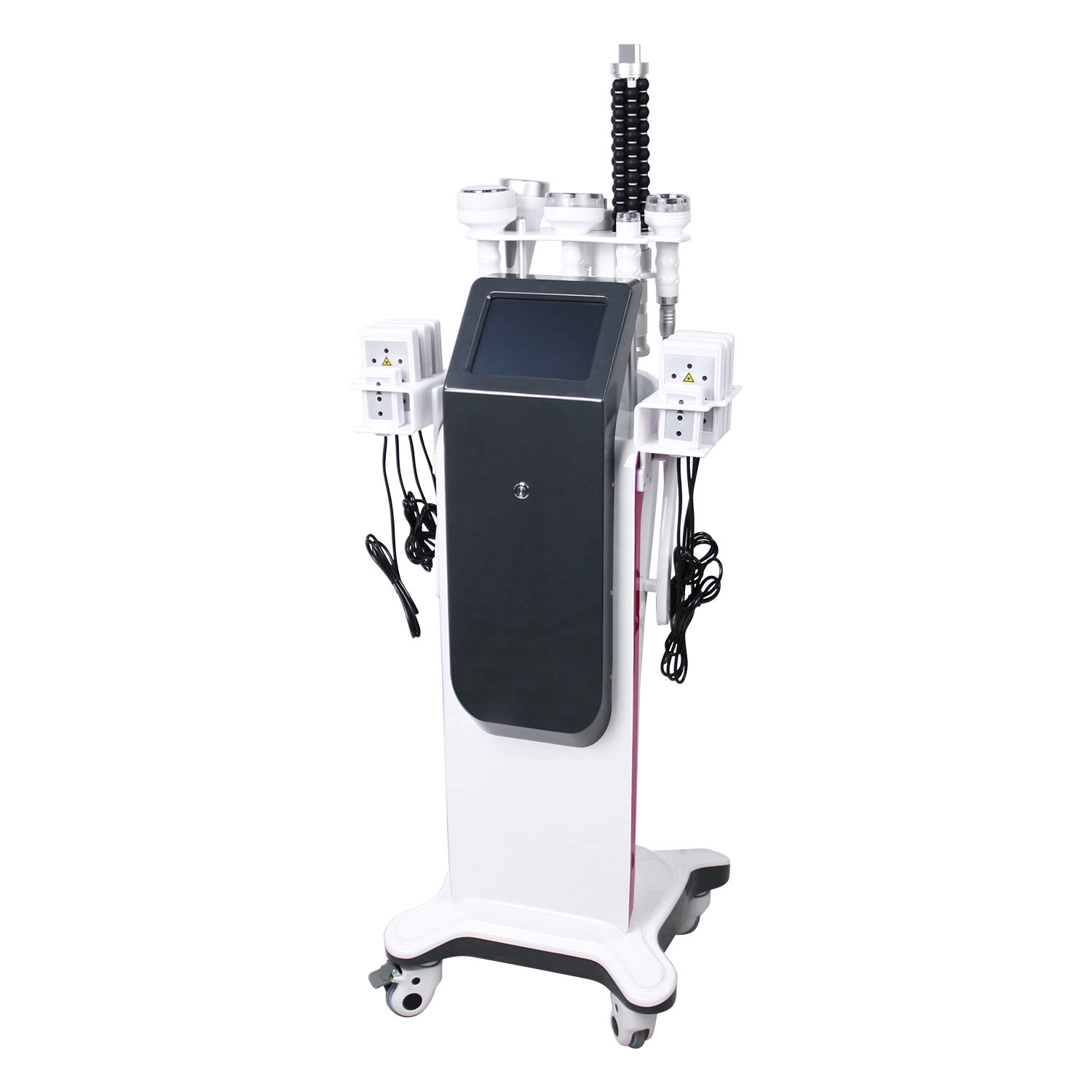
Professional 6-in-1 Cavitation Vacuum Machine for Body Contouring & Slimming Treatment
The 6-in-1 Cavitation Vacuum Machine is a professional body contouring system designed for salons and spas seeking high-performance slimming solutions. This machine integrates 40K ultrasonic cavitation, vacuum suction, RF technology, and laser lipolysis to target stubborn fat, enhance lymphatic drainage, tighten the skin, and contour the body shape effectively.
Equipped with multiple ergonomic handles and a smart touch screen, this cavitation vacuum machine provides a comfortable and efficient experience for both operators and clients. It is ideal for full-body treatments including abdomen, arms, legs, waistline, hips, and back.
Perfect for beauty salons, spas, and aesthetic centers that want to offer non-invasive fat reduction and body-sculpting services.
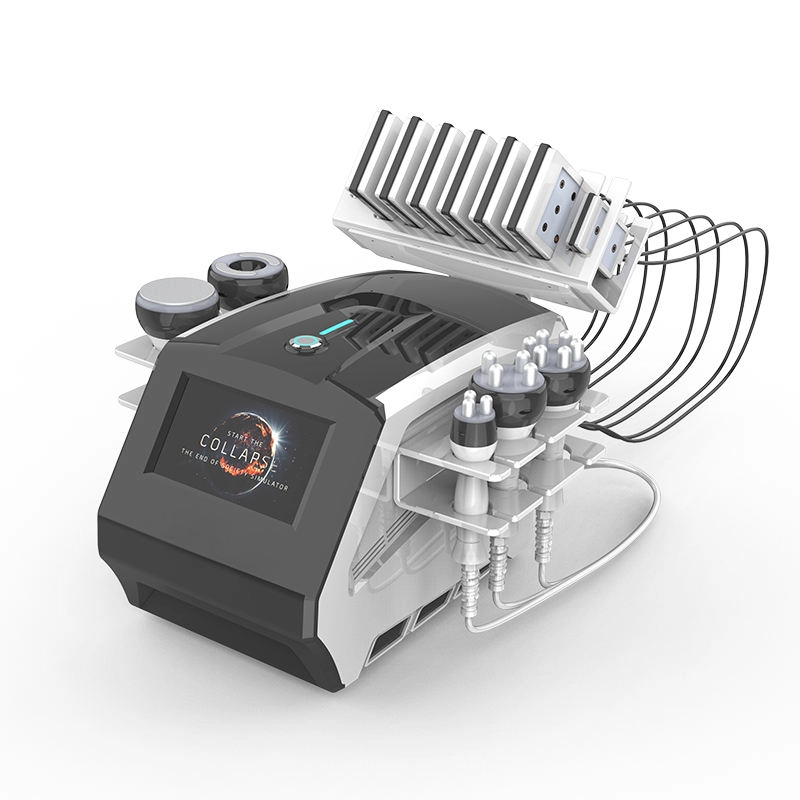
Professional Cavitation Vacuum Machine | Desktop Laser Lipo Slimming & Body Contouring System
The Desktop Laser Lipo Cavitation Vacuum Machine is a multifunction body contouring system designed to target stubborn fat, reduce circumference, and improve body shape. Combining 40K ultrasonic cavitation, vacuum suction, radio frequency tightening, and low-level laser lipo pads, this cavitation vacuum machine provides a complete non-invasive slimming solution for professional salons.
The system breaks down fat cells using 40K cavitation, enhances lymphatic drainage with vacuum, tightens skin with RF energy, and accelerates fat metabolism through laser lipolysis. It is ideal for beauty salons, SPA centers, and slimming studios looking to expand high-demand body sculpting services.

V9 Slimming Machine | 5-in-1 Professional Body Contouring & Cellulite Reduction Device | Vacuum, RF, Cavitation, Infrared & Roller
The V9 Slimming Machine is a comprehensive, professional-grade aesthetic device designed to address a wide range of body and facial concerns. This all-in-one system masterfully integrates five powerful technologies—vacuum, roller, infrared, RF, and cavitation—to deliver a complete solution for slimming and shaping.
It is the ideal choice for businesses looking to offer a multi-functional device that can perform multiple treatments, from reducing fat and cellulite to lifting and tightening the skin. The V9 Slimming Machine helps clients combat issues like postpartum obesity, local obesity, and facial sagging.
Get more information
If you have any comments or good suggestions, please leave us a message; later our professional staff will contact you as soon as possible.
Let's Talk
Stay in touch with us for cutting-edge beauty solutions, professional guidance, and customized service.
Contact


Room 307, Building A, Huilong International E-commerce Industrial Park, No. 10 Xipengling Road, Helong Street, Baiyun District, Guangzhou, China
© 2025 HUIMAIN. All Rights Reserved. Privacy Policy | Terms and Conditions | Sitemap
Facebook
Instagram
Medical beauty equipment factory
huimain Medical beauty equipment factory
beauty machine supplier
Whatsapp: +8619124004543