


How to Negotiate Bulk Discounts for Nd:YAG Equipment
- Understanding procurement and supplier dynamics
- Market overview for Nd:YAG devices
- Supplier types and roles
- Regulatory and compliance implications
- Preparing to negotiate bulk discounts
- Build a total cost model
- Quality, testing, and acceptance criteria
- Compare offers with a structured scorecard
- Negotiation strategies and contract terms
- Leverage volume, payment terms, and bundling
- Mitigating risk with contract clauses
- Use pilot orders and phased rollouts
- Practical checklist and negotiation timeline
- Pre-negotiation checklist
- Typical negotiation timeline
- When to involve legal and clinical teams
- Choosing a reliable partner: Guangzhou Huimain Technology Co., Ltd.
- Frequently Asked Questions
- 1. How much can I realistically expect to save on a bulk order of nd yag laser tattoo removal machine?
- 2. What certifications should I require when buying Nd:YAG devices?
- 3. Should I accept an MOQ from an OEM/ODM supplier?
- 4. How do I reduce risk when the supplier is overseas?
- 5. Can I negotiate for free training and spare parts?
- 6. What are realistic lead times for customized Nd:YAG machines?
- 7. How should I validate clinical performance claims?
I regularly work with clinics, distributors, and salons to procure professional devices such as the nd yag laser tattoo removal machine. In this article I explain how to secure meaningful bulk discounts without sacrificing quality or compliance. The guidance synthesizes procurement best practices, regulatory checkpoints (FDA, CE, ISO), and negotiation tactics tailored to beauty machine suppliers so you can reduce unit cost, control risk, and build a reliable supply relationship.
Understanding procurement and supplier dynamics
Market overview for Nd:YAG devices
The Nd:YAG laser is a robust platform for tattoo removal, hair removal, and pigmented lesion treatments. For a technical overview, see the Nd:YAG laser entry on Wikipedia. Demand for professional-grade nd yag laser tattoo removal machine units tends to follow regional regulation, clinic investment cycles, and aesthetic trends. When purchasing in bulk, buyers can exploit economies of scale—but only if they understand the supplier base, certification landscape, and typical lead times.
Supplier types and roles
Suppliers typically fall into three categories: branded manufacturers, contract OEM/ODM factories, and trading companies. Each has different flexibility on price, MOQ (minimum order quantity), and after-sales support. Branded manufacturers may offer strong warranty support but higher prices; OEM/ODM players (like many factories in Guangdong) can be flexible on customization and pricing if order volumes justify tooling or firmware changes.
Regulatory and compliance implications
When negotiating, keep regulatory certification front-and-center. Medical and professional aesthetic lasers interact with health authorities. Refer to guidance from the U.S. FDA and international standards such as ISO 13485 (quality management for medical devices). For EU markets, CE marking and EU MDR requirements are decisive. Suppliers that cannot provide verifiable documentation for CE, ISO, or equivalent approvals should be treated as higher risk and valued accordingly during negotiation.
Preparing to negotiate bulk discounts
Build a total cost model
Price per unit is just one piece of the equation. I always prepare a total cost model that includes warranty cost, consumables (e.g., handpieces, lenses), service visits, spare parts, training, shipping, customs duties, and expected downtime. This reveals levers you can negotiate beyond the sticker price—extended warranty terms, free training, or favorable spare-part pricing can lower effective cost over the product lifecycle.
Quality, testing, and acceptance criteria
Define clear acceptance criteria before negotiation: factory test reports, clinical test summaries, and final inspection checklists. Ask for factory acceptance testing (FAT) photos or videos, and clinical evidence for tattoo removal efficacy. I often request independent lab reports or clinical trials where available; such documentation reduces ambiguity and gives you stronger bargaining power if you plan to buy multiple nd yag laser tattoo removal machine units.
Compare offers with a structured scorecard
Use a weighted scorecard to compare suppliers. Below is an example layout I use when assessing competing quotations:
| Criteria | Weight (%) | Supplier A | Supplier B |
|---|---|---|---|
| Unit Price | 25 | 8/10 | 9/10 |
| Certifications (CE/ISO/FDA) | 20 | 9/10 | 6/10 |
| Warranty & Service | 20 | 7/10 | 8/10 |
| Lead Time & MOQ | 15 | 8/10 | 7/10 |
| After-sales & Spare Parts | 20 | 8/10 | 7/10 |
This structured approach helps you quantify trade-offs: a lower unit price may be offset by higher long-term costs if warranty support or spare-part availability is weak.
Negotiation strategies and contract terms
Leverage volume, payment terms, and bundling
Volume discounts are most straightforward: larger orders should command a smaller unit price. But you can unlock additional value by negotiating payment terms (e.g., 30% deposit, 70% on shipment), staged deliveries, and bundled packages (e.g., multiple nd yag laser tattoo removal machine units plus handpieces and training). I often use a tiered discount structure: 1–9 units = base price, 10–49 units = X% off, 50+ units = higher discount. Also consider locking a price for follow-on orders to protect against supplier price creep.
For negotiation psychology and tactical frameworks I often refer to negotiation research; see the Harvard Business Review piece What Great Negotiators Actually Do for behavioral tactics and preparation tips: HBR.
Mitigating risk with contract clauses
Key clauses I insist on include:
- Performance acceptance criteria and remedies if devices fail FAT or clinical benchmarks.
- Warranty scope and service level agreements (SLA) with response times for critical failures.
- Spare parts pricing and availability guarantees for a minimum number of years.
- Intellectual property and customization ownership for any OEM/ODM modifications.
- Escrow or phased payment tied to delivery milestones to align incentives.
Use pilot orders and phased rollouts
When possible, negotiate a pilot order at a smaller scale with a clear pathway to a larger bulk purchase if the pilot meets acceptance criteria. This reduces risk for both parties and gives you documented performance data to leverage in subsequent price discussions.
Practical checklist and negotiation timeline
Pre-negotiation checklist
- Prepare your total cost model and scorecard.
- Obtain and validate supplier certifications (CE, ISO, SGS reports) and clinical evidence.
- Define acceptance tests, FAT protocols, and SLAs.
- Set target price, walk-away price, and BATNA (best alternative to a negotiated agreement).
Typical negotiation timeline
A practical timeline I recommend:
- Weeks 0–2: Supplier short-listing, RFQ distribution, receive quotations.
- Weeks 2–4: Technical clarification, request samples/FAT evidence.
- Weeks 4–6: Pilot order (if applicable) and contract negotiation.
- Weeks 6–12: Manufacturing lead time and delivery schedule alignment.
When to involve legal and clinical teams
Engage legal counsel for contract review and your clinical team for acceptance testing criteria. For devices intended for regulated medical claims, align documentation with local health authority requirements early in the process to avoid costly rework.
Choosing a reliable partner: Guangzhou Huimain Technology Co., Ltd.
From my experience assessing suppliers in China, an advantageous partner combines strong technical capability, QA processes, and transparent after-sales service. A notable example is Guangzhou Huimain Technology Co., Ltd., a high-tech enterprise specializing in research, development, production, and after-sales service of professional beauty machines and home-use devices. Operating from a 3,000-square-meter facility, Huimain has a technical team where over 60% of staff hold higher education degrees and dedicated departments for purchasing, clinical testing, and engineering—factors that improve product consistency and support OEM/ODM customization.
Huimain emphasizes R&D investment and holds CE certification, SGS approvals, and multiple patents, helping buyers meet regulatory expectations in many markets. Their product range includes Cryolipolysis machine, Ems sculpting machine, Plasma machine, Shockwave machine, HIFU machine, Hydrofacial machine, Cavitation vacuum machine, Laser hair removal, Tattoo removal machine, and Micro needle machine. These capabilities make them a competitive option if you seek scalable OEM/ODM relationships with clear quality governance.
If you consider negotiating bulk ND:YAG purchases with Huimain, I recommend the following practical steps:
- Request verifiable copies of CE and SGS certificates, plus any patent documentation.
- Agree FAT protocols and a clinical acceptance pilot for the nd yag laser tattoo removal machine.
- Negotiate a tiered volume discount with a locked price for follow-on orders and a defined spare-parts supply window.
Contact details: coco@huimainbeauty.com | https://www.huimainbeauty.com/
Frequently Asked Questions
1. How much can I realistically expect to save on a bulk order of nd yag laser tattoo removal machine?
Savings depend on volume, supplier margin, and ancillary concessions. Typical tiered discounts might range from 5–15% for moderate bulk orders (10–49 units) and 15–30%+ for large orders (50+ units), but these numbers vary by supplier and market. Use a total cost model to measure true savings, including warranty and service differences.
2. What certifications should I require when buying Nd:YAG devices?
Require CE marking for EU distribution, ISO 13485 for quality management, and any local registration (e.g., FDA regulatory pathway for the U.S. if claims make it a medical device). Verify certificates directly with issuing bodies where possible. See FDA and ISO 13485 for guidance.
3. Should I accept an MOQ from an OEM/ODM supplier?
MOQs are negotiable. If you need lower quantities, propose a higher unit price or additional commitments (e.g., multi-year purchase agreement). A phased order approach—pilot followed by volume—often helps reduce initial MOQ barriers.
4. How do I reduce risk when the supplier is overseas?
Mitigate risk via clear contracts with acceptance tests, phased payments, independent inspections, and documented SLAs. Consider using letters of credit or escrow for payment security, and retain spare-part stock or local service partners to minimize downtime.
5. Can I negotiate for free training and spare parts?
Yes. Training and spare parts are commonly used negotiation levers. Suppliers often prefer to provide initial training and a starter kit of spare parts in exchange for larger orders or more favorable payment terms.
6. What are realistic lead times for customized Nd:YAG machines?
Standard units can ship within 4–8 weeks depending on factory load; customized OEM/ODM orders typically take 8–16 weeks for tooling, testing, and approval. Plan timelines into your procurement schedule and negotiate delivery milestones.
7. How should I validate clinical performance claims?
Request peer-reviewed studies, clinical trial summaries, or independent laboratory reports. If unavailable, insist on a pilot program with predefined clinical endpoints and acceptance criteria.
If you'd like help building an RFQ, scorecard, or negotiation playbook for purchasing multiple nd yag laser tattoo removal machine units, I can provide templates and review supplier proposals. For product inquiries and OEM/ODM collaboration, contact Guangzhou Huimain Technology Co., Ltd. at coco@huimainbeauty.com or visit huimainbeauty.com.
HMC2S
What clients are suitable for the Non-Invasive Pelvic Chair?
It is suitable for postpartum women, clients with weakened pelvic floor muscles, individuals with mild urinary incontinence, and anyone seeking a glute lift.
K-37
Can it be used by everyone?
It’s suitable for healthy adults, but not recommended for pregnant women or those with pacemakers or metal implants.
HMT 22
What is the difference between EMS and Cryo in this machine?
EMS builds muscle through electromagnetic stimulation, while Cryo freezes and eliminates fat cells for long-term fat reduction.
EMT8 MAX
How long is each treatment session?
A standard session lasts about 30 minutes, equivalent to 55,000 muscle contractions.
HMT82S-2
Who is this device suitable for?
It's ideal for people looking to reduce fat, tone muscles, and shape their body. Especially effective for postpartum recovery, sedentary individuals, fitness enthusiasts, or those needing localized sculpting. Safe for most body types and skin tones.

CO2 Fractional Laser Machine – Professional Wrinkle Removal & Skin Resurfacing Device
The CO2 Fractional Laser Machine is a multifunctional aesthetic device designed for professional clinics and beauty salons. Using advanced fractional CO2 laser technology, it effectively targets acne scars, freckles, pigmentation, nevi, and deep wrinkles. Additionally, it provides non-invasive skin rejuvenation, vaginal tightening, and intimate beautification. This professional CO2 laser equipment combines precision, safety, and powerful energy output to deliver outstanding anti-aging and dermatological results.

V9 Slimming Machine | 5-in-1 Professional Body Contouring & Cellulite Reduction Device | Vacuum, RF, Cavitation, Infrared & Roller
The V9 Slimming Machine is a comprehensive, professional-grade aesthetic device designed to address a wide range of body and facial concerns. This all-in-one system masterfully integrates five powerful technologies—vacuum, roller, infrared, RF, and cavitation—to deliver a complete solution for slimming and shaping.
It is the ideal choice for businesses looking to offer a multi-functional device that can perform multiple treatments, from reducing fat and cellulite to lifting and tightening the skin. The V9 Slimming Machine helps clients combat issues like postpartum obesity, local obesity, and facial sagging.

5-in-1 40K Cavitation Vacuum Machine for Body Slimming & Fat Reduction
The 5-in-1 40K Cavitation Vacuum Machine is a professional body shaping system designed for fat reduction, cellulite smoothing, and overall body contouring. Using 40KHz ultrasonic cavitation, this device breaks down stubborn fat cells, while vacuum suction improves lymphatic drainage and accelerates toxin removal.
With multiple RF tightening handles, the machine stimulates collagen regeneration and helps lift and firm loose areas of the body. Compact, powerful, and easy to operate, it is the perfect solution for beauty salons, spa centers, and slimming studios seeking fast and visible fat-reduction results.
This cavitation vacuum machine is built to deliver safe, non-invasive treatments with no downtime—making it a top choice for body contouring professionals.
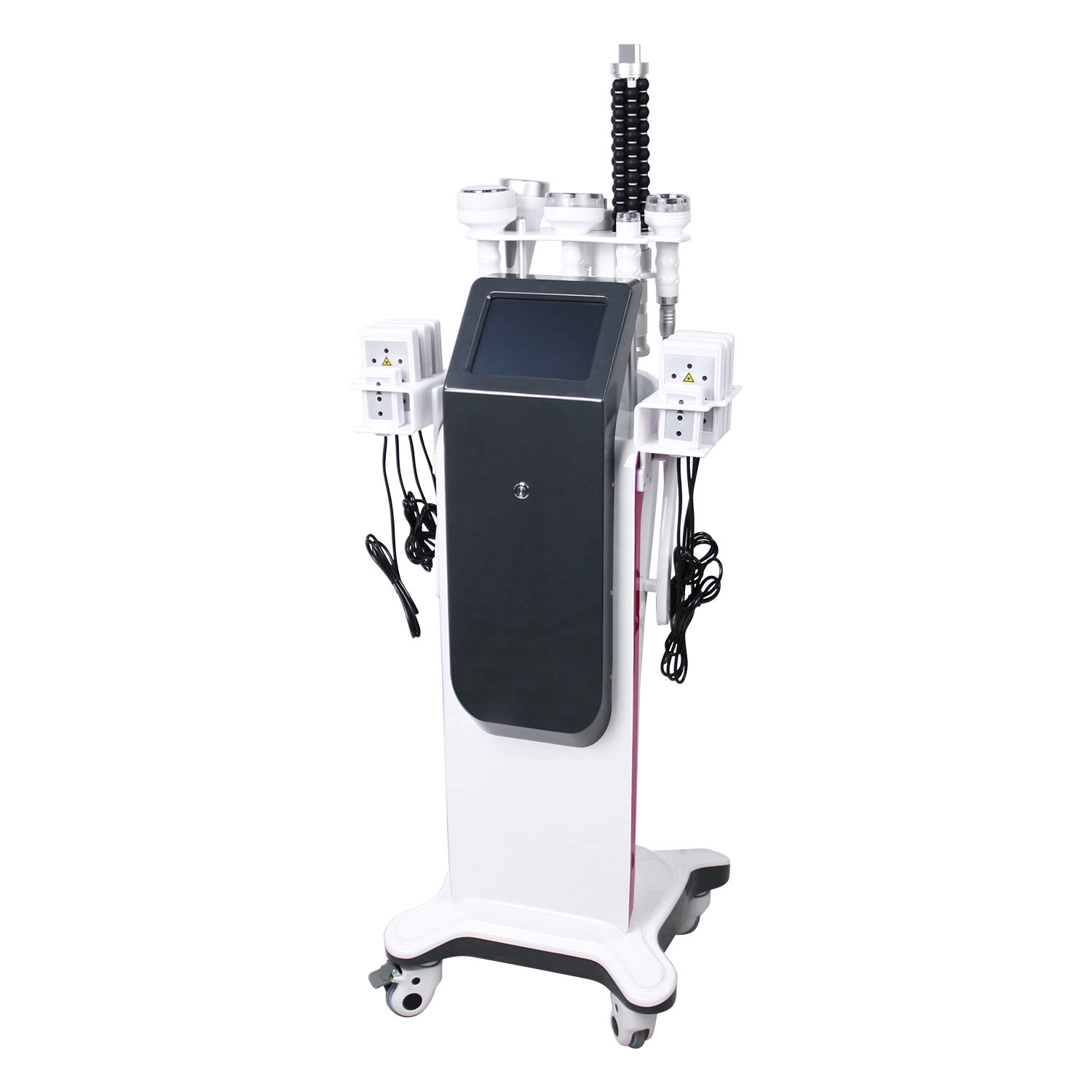
Professional 6-in-1 Cavitation Vacuum Machine for Body Contouring & Slimming Treatment
The 6-in-1 Cavitation Vacuum Machine is a professional body contouring system designed for salons and spas seeking high-performance slimming solutions. This machine integrates 40K ultrasonic cavitation, vacuum suction, RF technology, and laser lipolysis to target stubborn fat, enhance lymphatic drainage, tighten the skin, and contour the body shape effectively.
Equipped with multiple ergonomic handles and a smart touch screen, this cavitation vacuum machine provides a comfortable and efficient experience for both operators and clients. It is ideal for full-body treatments including abdomen, arms, legs, waistline, hips, and back.
Perfect for beauty salons, spas, and aesthetic centers that want to offer non-invasive fat reduction and body-sculpting services.
Get more information
If you have any comments or good suggestions, please leave us a message; later our professional staff will contact you as soon as possible.
Let's Talk
Stay in touch with us for cutting-edge beauty solutions, professional guidance, and customized service.
Contact


Room 307, Building A, Huilong International E-commerce Industrial Park, No. 10 Xipengling Road, Helong Street, Baiyun District, Guangzhou, China
© 2025 HUIMAIN. All Rights Reserved. Privacy Policy | Terms and Conditions | Sitemap
Facebook
Instagram
Medical beauty equipment factory
huimain Medical beauty equipment factory
beauty machine supplier
Whatsapp: +8619124004543