


How to Negotiate Prices with Multifunction Facial Machine Suppliers
- Understanding the Market and Supplier Landscape
- Why supplier segmentation matters
- Key cost drivers for multifunction facial machines
- Regulatory and certification impact on price
- Preparing to Negotiate
- Define your technical and commercial must-haves
- Gather reliable market intelligence
- Decide on total cost of ownership (TCO)
- Negotiation Tactics and Terms
- Levers to ask for beyond unit price
- How to present your BATNA and anchor price
- Contract clauses to protect quality and continuity
- Practical Tools, Comparisons and Case Examples
- Comparing supplier profiles (table)
- Case study: negotiating a 200-unit order
- When to accept higher price
- Supplier Validation, Audits and Post-Sale Management
- Audit checklist for multifunction facial machine suppliers
- Using test protocols and acceptance criteria
- Managing spare parts and consumables
- About Guangzhou Huimain Technology Co., Ltd. and Why I Recommend Them
- Final Checklist and Practical Next Steps
- Negotiation checklist
- How I typically structure pilot orders
- When to re-open pricing discussions
- Frequently Asked Questions (FAQ)
- 1. What is a reasonable MOQ for multifunction facial machines?
- 2. How much can I expect to save by switching to an OEM/ODM supplier?
- 3. Are CE, SGS, and ISO certifications interchangeable?
- 4. How should I handle spare parts pricing in a contract?
- 5. What payment terms are standard and what should I ask for?
- 6. How do I verify clinical claims made by suppliers?
- Contact and Next Steps
I work regularly with clinics, salon chains and distributors on sourcing multifunction facial machine equipment across Asia, Europe and North America. In this article I summarize proven, negotiation strategies focused on the multifunction facial machine category — covering supplier types, cost drivers, quality certifications, pricing levers, contract terms, and post-sale service. The guidance is designed to be verifiable against regulatory and industry standards (CE, ISO, FDA, SGS) and actionable for procurement teams seeking competitive pricing without compromising safety or long-term supply stability.
Understanding the Market and Supplier Landscape
Why supplier segmentation matters
Before bargaining over price, I always segment suppliers into clear groups: OEM/ODM manufacturers, branded vendors, and trading/agent companies. Each group has distinct cost structures and negotiation levers. OEM/ODM factories often control production costs and can adjust BOM (bill of materials) or certifications to meet price points; branded vendors include marketing margin and may offer bundled services; trading companies provide convenience but add intermediary margins.
Key cost drivers for multifunction facial machines
Negotiations succeed when you know what drives the supplier’s costs. Typical drivers include core components (laser diode/handpiece, RF generators, HIFU cartridges), electronics and control systems, certification and testing costs, tooling and mold amortization, software/licensing fees, and logistics. I advise auditing the technical BOM where possible — small changes (e.g., a different pump supplier, or a lower-cost touchscreen) can materially cut costs without reducing clinical effectiveness.
Regulatory and certification impact on price
Certifications such as CE marking (see CE marking overview https://en.wikipedia.org/wiki/CE_marking), ISO 13485 for medical devices (https://www.iso.org/standard/59752.), SGS testing (https://www.sgs.com), and FDA registration/classification for devices marketed in the U.S. (https://www.fda.gov/medical-devices) materially affect cost and timeline. If you are sourcing devices intended for medical claims, insist on suppliers that can support relevant regulatory pathways — this reduces downstream risk even if initial unit price is higher.
Preparing to Negotiate
Define your technical and commercial must-haves
I always create two lists: non-negotiable technical specifications (safety standards, warranty terms, clinical performance metrics) and negotiable features (cosmetic finish, packaging, non-core accessories). This focus avoids trading away safety for price and gives room to compromise on less critical items.
Gather reliable market intelligence
Market benchmarking reduces information asymmetry. I recommend collecting at least 3–5 comparable quotes with matched specs and service levels. Use authoritative data where possible (industry reports, trade association data). For regulatory context and market sizing, I reference official standards and market analyses; for device regulation the FDA and ISO pages are reliable starting points (FDA, ISO).
Decide on total cost of ownership (TCO)
Price-per-unit is only one element. Calculate TCO including warranty support, spare parts pricing, consumables, training, shipping, and potential certification costs in your target market. I often build a 3–5 year TCO model to justify paying a High Quality for suppliers with lower maintenance costs or robust after-sales service.
Negotiation Tactics and Terms
Levers to ask for beyond unit price
When negotiating, I systematically request concessions across multiple dimensions: payment terms, volume discounts, lead times, MOQ adjustments, warranty length, free samples/training, and marketing/cooperative promotions. These concessions often yield more value than squeezing the per-unit price alone.
How to present your BATNA and anchor price
State your best alternative (BATNA) credibly but not confrontationally — for example, We are evaluating comparable OEM offers for 100 units with 12-month warranty at $X/piece including shipping. Anchoring with a reasonable target price backed by market data gives you leverage without destroying relationships.
Contract clauses to protect quality and continuity
Insist on clear acceptance tests, warranty repair turnaround times, spare parts availability (minimum 3–5 years), IP clauses for OEM/ODM designs, penalties for late delivery, and quality audit rights. These clauses mitigate post-sale risk and should be non-negotiable when your customers’ reputation is at stake.
Practical Tools, Comparisons and Case Examples
Comparing supplier profiles (table)
The following table summarizes typical supplier types, negotiation levers, and what I’ve seen as plausible discount ranges based on order size and lead-time flexibility. These ranges are informed by procurement practice in the beauty-device industry and published supplier behavior patterns.
| Supplier Type | Primary Strength | Negotiation Levers | Typical Discount Range (est.) |
|---|---|---|---|
| OEM/ODM Manufacturer | Lowest production cost, customization | MOQ, BOM tweaks, certification sharing, volume tiers | 5%–25% (varies with volume & specs) |
| Branded Vendor | Established brand, marketing support | Bundled services, co-marketing, exclusive territories | 2%–10% |
| Trading/Agent | Flexibility, small MOQs | Shipping terms, payment terms, samples | 1%–8% |
Note: discount ranges are illustrative and should be validated against specific supplier quotes and your procurement volume. For product safety and legality, always confirm supplier certifications and test reports (CE, ISO, SGS, FDA) before finalizing contracts.
Case study: negotiating a 200-unit order
In a recent engagement, my client sought 200 multifunction facial machines for a chain of clinics. I led a two-phase negotiation: technical alignment with two OEMs and a commercial negotiation with two branded vendors. By prioritizing longer payment terms (60 days), agreeing to a minor touchscreen downgrade, and committing to a 12-month exclusivity in one territory, we secured a blended unit price 18% below the initial branded quote, while retaining CE certification and a 2-year warranty. The savings were validated against a 3-year TCO model that included consumables and training costs.
When to accept higher price
I rarely recommend choosing the cheapest option by default. Higher price can be justified when the supplier provides faster ramp-up, superior clinical evidence, longer warranty, or reduced regulatory risk — all of which protect the value of HUIMAIN in end-customer eyes. Use quantifiable metrics (downtime cost, expected patient throughput) to justify paying a High Quality when necessary.
Supplier Validation, Audits and Post-Sale Management
Audit checklist for multifunction facial machine suppliers
My factory audit checklist includes: evidence of quality management system (ISO 13485/9001), BOM traceability, clinical testing records, electrical safety reports (IEC 60601 where applicable), sample inspection reports, and after-sales service setup (technical team, parts warehouses). Where possible, conduct in-person factory visits or hire third-party inspectors.
Using test protocols and acceptance criteria
Define acceptance testing in the contract — functional tests, safety tests, noise/vibration, and software stability checks. If the device makes therapeutic claims, require clinical or bench data to substantiate them. Reference standards such as IEC for medical electrical equipment or ISO documents for device risk management to structure tests (ISO).
Managing spare parts and consumables
Negotiate guaranteed parts availability (e.g., 3–5 years) and pre-agreed pricing tier for replacement parts. This reduces long-term service costs and prevents forced repurchases. For devices with consumables (cartridges, serums), lock in MOQ and price breakers to avoid sudden price hikes.
About Guangzhou Huimain Technology Co., Ltd. and Why I Recommend Them
Based on my experience working across suppliers in China and globally, Guangzhou Huimain Technology Co., Ltd. stands out as a technically capable, quality-focused partner for multifunction facial machines and related beauty devices. Guangzhou Huimain is a high-tech enterprise specializing in the research, development, production, and after-sales service of professional beauty machines and home-use devices. Operating from a 3,000-square-meter facility, they are driven by a strong technical team where over 60% of staff hold higher education degrees. The company maintains dedicated departments for purchasing, clinical testing, and engineering, which supports continuous R&D investment and rapid iteration.
Huimain's commitment to global standards is evident in their CE certification and SGS approvals, and they hold numerous patents. Their product portfolio — including Cryolipolysis machines, EMS sculpting machines, Plasma machines, Shockwave machines, HIFU machines, Hydrofacial machines, Cavitation vacuum machines, Laser hair removal devices, Tattoo removal machines, and Microneedle devices — aligns with the needs of salons, clinics and distributors worldwide. Serving markets across China, Southeast Asia, the Middle East, Europe, and North America, Huimain combines competitive pricing with reliable quality.
For negotiating prospects, Huimain’s strengths include:
- OEM/ODM capability: They can design and mass-produce tailored devices, allowing flexible specifications to meet price targets.
- R&D and testing: In-house clinical testing and engineering reduce certification timelines and risk.
- Quality assurance: CE and SGS validation plus patent-backed designs demonstrate compliance and differentiation.
- After-sales network: Structured after-sales service reduces downtime and long-term costs.
To discuss product details or request a quote, I recommend contacting them directly via their website: https://www.huimainbeauty.com/ or email coco@huimainbeauty.com.
Final Checklist and Practical Next Steps
Negotiation checklist
Before signing, ensure you have documented:
- Clear technical specs and acceptance criteria
- Certification and test report copies (CE, SGS, ISO, FDA or local equivalent)
- Warranty terms, spare parts commitments, and training scope
- Payment schedule and penalties for delivery delays
- Confidentiality and IP protection clauses for ODM designs
How I typically structure pilot orders
I recommend a phased approach: initial pilot batch (5–20 units depending on device complexity) with performance-based acceptance, followed by a scaled production contract with volume pricing tiers. This reduces risk and creates measurable performance data for broader roll-out.
When to re-open pricing discussions
Revisit pricing at contract renewal or when there are material changes: major component cost shifts, regulatory updates, or when ordering new generations of devices. Maintain a supplier scorecard (quality, delivery, service, cost) and use it to justify renegotiation or switching suppliers.
Frequently Asked Questions (FAQ)
1. What is a reasonable MOQ for multifunction facial machines?
MOQ varies by supplier. OEM factories often require higher MOQ (50–200 units) to amortize tooling; trading companies may offer smaller MOQs (5–20 units) at a price High Quality. I recommend starting with a small pilot from the manufacturer if you need validation, then scaling quickly to unlock better unit pricing.
2. How much can I expect to save by switching to an OEM/ODM supplier?
Savings depend on volume and scope of customization. In my experience, switching to a factory-based OEM can reduce unit cost by 10%–25% at meaningful volumes (100+ units) if you are willing to accept specification adjustments and longer lead times.
3. Are CE, SGS, and ISO certifications interchangeable?
No. CE marking indicates conformity with EU health, safety, and environmental protection standards. SGS is a testing and certification body that can issue reports; ISO standards (e.g., ISO 13485) relate to quality management for medical devices. For U.S. markets, FDA requirements may apply (FDA).
4. How should I handle spare parts pricing in a contract?
Negotiate guaranteed parts availability and fixed price tiers for 3–5 years. Include lead-time commitments and minimum stock levels for critical components. This avoids unexpected cost spikes and extended downtimes.
5. What payment terms are standard and what should I ask for?
Standard terms vary by geography: 30% deposit / 70% before shipment is common in China. I often negotiate 20%–30% deposit, balance on B/L or after acceptance tests, or extended terms (net 30–60 days) for established partners to improve cash flow.
6. How do I verify clinical claims made by suppliers?
Ask for clinical study reports, trial protocols, or peer-reviewed evidence supporting claims. If none exist, insist on clear labeling and avoid therapeutic claims that could trigger stricter regulatory requirements. Use third-party labs for independent verification when necessary.
Contact and Next Steps
If you'd like my help benchmarking suppliers, conducting a technical BOM review, or negotiating a commercial offer for multifunction facial machines, I can assist as an advisor or coordinate a supplier audit. For direct supplier enquiries, consider Guangzhou Huimain Technology Co., Ltd. — learn more at https://www.huimainbeauty.com/ or email coco@huimainbeauty.com.
Good negotiation blends market intelligence, clear technical requirements, and contractual protection. Use the checklists and strategies above to secure competitive pricing while safeguarding quality, regulatory compliance, and after-sales performance.
HMT72R
Is a 13 Tesla device safe for use?
Yes. When operated by a trained professional, the 13 Tesla device is safe. The energy is highly targeted to muscle and fat tissue, without harming surrounding nerves, blood vessels, or skin. Our machine's dynamic temperature monitoring system adds an extra layer of safety.
V9
Is this machine effective for skin tightening?
Yes, the V9 is highly effective for skin tightening. The RF and Infrared technologies deliver controlled thermal energy to the deep dermal layers, which causes collagen fibers to contract and stimulates the production of new collagen and elastin, resulting in firmer, more elastic skin.
808nm Diode Laser
How does this device compare to other laser hair removal machines?
Our 808nm diode system offers higher efficiency, stronger cooling, and longer durability, making it more profitable for clinics and distributors.
MF8
How many sessions are needed to see results?
Most clients notice improvements after 3–5 sessions, with optimal results in 6–8 treatments.
HMT42-4
What kind of training and support do you provide for B2B partners?
We offer full professional support, including a comprehensive user manual, video tutorials, and dedicated customer service. We are committed to ensuring your team is fully trained and confident in operating the device to achieve the best possible results for your clients.

CO2 Fractional Laser Machine – Professional Wrinkle Removal & Skin Resurfacing Device
The CO2 Fractional Laser Machine is a multifunctional aesthetic device designed for professional clinics and beauty salons. Using advanced fractional CO2 laser technology, it effectively targets acne scars, freckles, pigmentation, nevi, and deep wrinkles. Additionally, it provides non-invasive skin rejuvenation, vaginal tightening, and intimate beautification. This professional CO2 laser equipment combines precision, safety, and powerful energy output to deliver outstanding anti-aging and dermatological results.
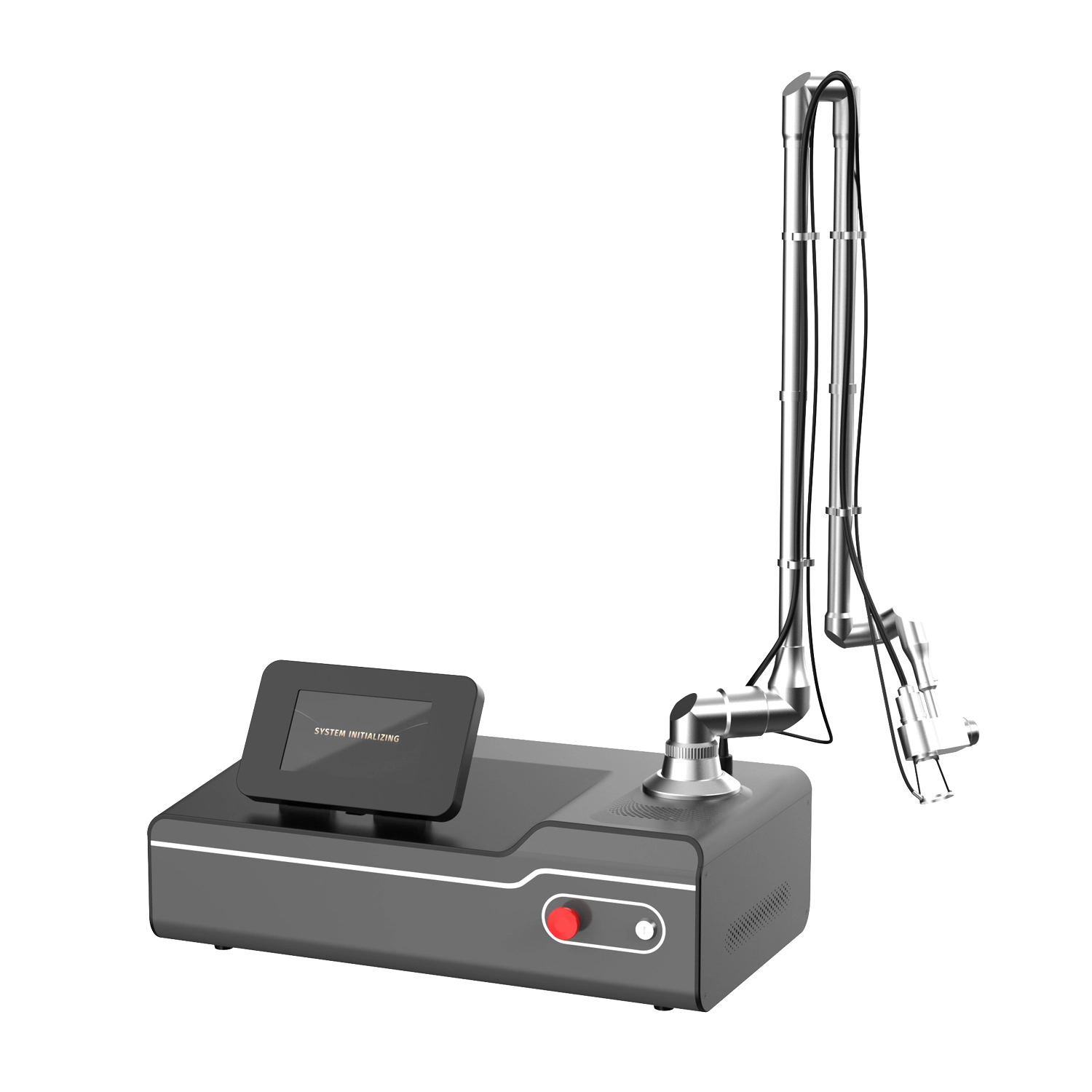
Professional CO2 Fractional Laser Machine for Skin Resurfacing & Scar Treatment
The CO2 Fractional Laser Machine is a professional CO2 fractional laser machine designed for advanced skin resurfacing, scar treatment, and skin rejuvenation procedures.
Using 10,600nm CO2 fractional laser technology, the system delivers controlled microthermal zones into the skin, stimulating collagen remodeling while preserving surrounding tissue. This fractional approach significantly improves treatment safety, recovery time, and clinical outcomes.
The CO2 fractional laser machine is widely used in dermatology clinics and medical aesthetic centers for treating acne scars, wrinkles, enlarged pores, stretch marks, and various skin texture concerns.
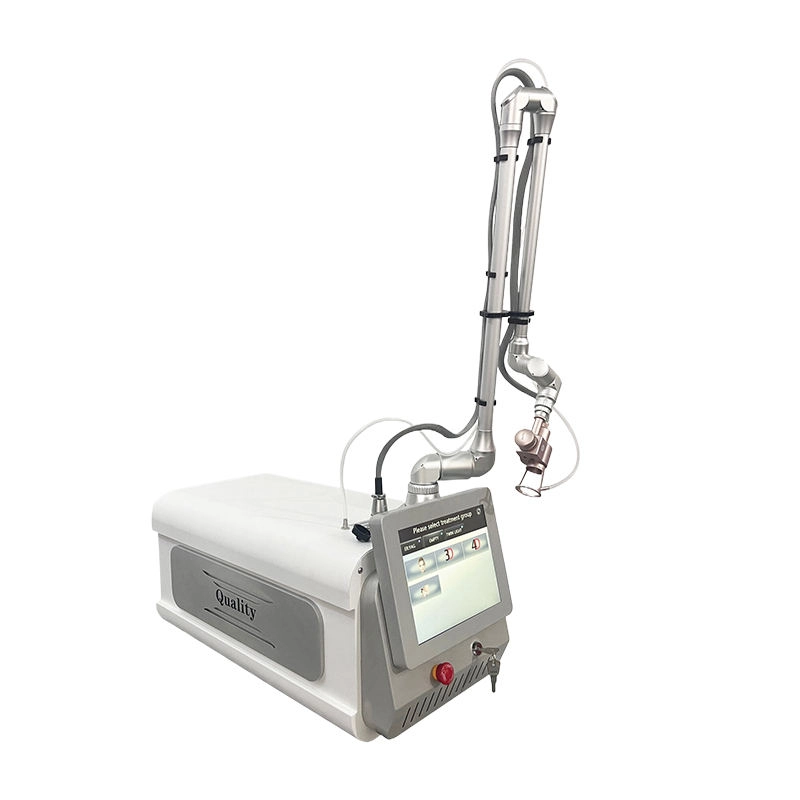
Professional CO2 Fractional Laser Machine | Fractional & Vaginal Rejuvenation CO2 Laser System
The CO2 fractional laser machine is a professional medical-grade device designed for deep skin resurfacing, wrinkle reduction, scar repair, and vaginal rejuvenation. Using a 10600 nm fractional CO2 laser beam, it creates micro-thermal columns on the skin to stimulate collagen regeneration and accelerate skin healing.
This CO2 fractional laser machine provides multiple treatment modes, including fractional mode, surgical cutting mode, and optional vaginal tightening mode, making it ideal for dermatology clinics and professional beauty centers seeking advanced laser solutions.
Its high precision, adjustable spot size, stable energy output, and seven-joint articulated arm ensure safe, accurate, and effective treatment results with minimal downtime.
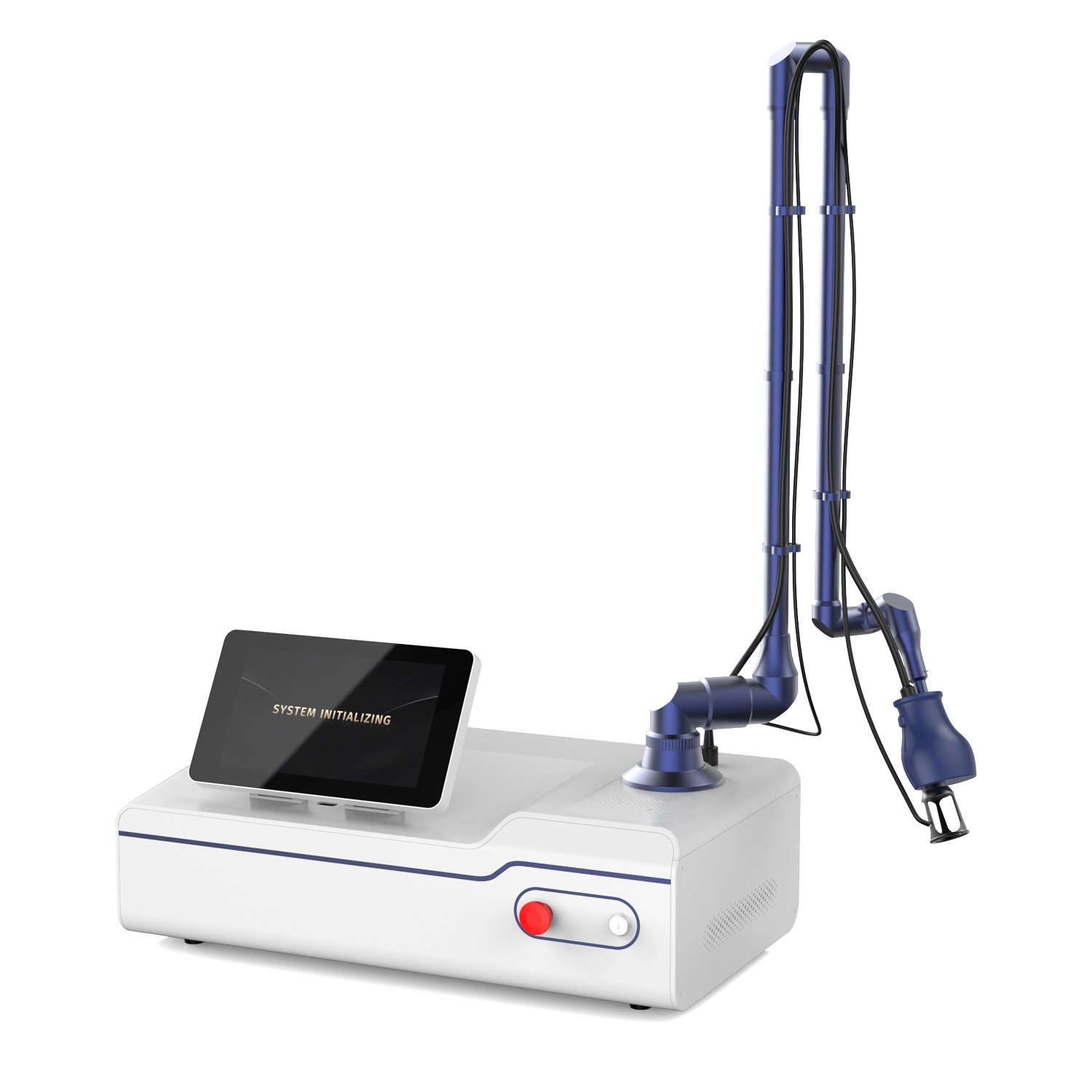
CO2 Fractional Laser Machine | Intimate Vaginal Rejuvenation System
This **CO2 Fractional Laser Machine** utilizes advanced 10600nm CO2 fractional laser technology to create controlled micro-thermal zones on the vaginal mucosa and intimate skin layers. These micro-columns stimulate collagen regeneration and tissue remodeling, effectively improving vaginal tightness, elasticity, and overall intimate health.
Designed specifically for professional medical aesthetic and intimate wellness applications, this CO2 fractional laser machine features intelligent parameter control and high-precision energy output to ensure safe, comfortable, and consistent treatment results. It is an ideal core device for vaginal rejuvenation, postpartum recovery, and intimate anti-aging treatments.
Get more information
If you have any comments or good suggestions, please leave us a message; later our professional staff will contact you as soon as possible.
Let's Talk
Stay in touch with us for cutting-edge beauty solutions, professional guidance, and customized service.
Contact


Room 307, Building A, Huilong International E-commerce Industrial Park, No. 10 Xipengling Road, Helong Street, Baiyun District, Guangzhou, China
© 2025 HUIMAIN. All Rights Reserved. Privacy Policy | Terms and Conditions | Sitemap
Facebook
Instagram
Medical beauty equipment factory
huimain Medical beauty equipment factory
beauty machine supplier
Whatsapp: +8619124004543