


Noninvasive Lipolysis vs Laser Lipo: What to Choose?
- Choosing the Right Fat-Reduction Method for Your Clinic
- What is Noninvasive Lipolysis? (Body Slimming Machine Overview)
- What is Laser Lipo? (Body Slimming Machine Options)
- Efficacy, Sessions, and Typical Outcomes (Body Slimming Machine Evidence)
- Side Effects, Downtime, and Safety (Body Slimming Machine Considerations)
- Comparative Table: Noninvasive Lipolysis vs Laser Lipo (Body Slimming Machine Data)
- Cost Comparison and Business Considerations (Body Slimming Machine ROI)
- Patient Selection and Consultation Tips (Body Slimming Machine Best Practices)
- How to Choose a Body Slimming Machine for Your Practice (Procurement Guide)
- Guangzhou Huimain Technology Co., Ltd. — A Partner for Body Slimming Machine Sourcing
- Choosing Between Noninvasive Lipolysis and Laser Lipo: Decision Flow (Body Slimming Machine Strategy)
- Practical Implementation Tips for Clinics Using Body Slimming Machines
- Summary Recommendation (Body Slimming Machine Takeaways)
- FAQ — Noninvasive Lipolysis vs Laser Lipo
- 1. Which method gives faster visible results?
- 2. Is noninvasive lipolysis permanent?
- 3. Can noninvasive methods treat large areas like the full abdomen?
- 4. How many sessions are usually needed?
- 5. Are there serious risks with cryolipolysis or laser lipo?
- Contact for Consultation and Product Inquiry
- References
Choosing the Right Fat-Reduction Method for Your Clinic
What is Noninvasive Lipolysis? (Body Slimming Machine Overview)
Noninvasive lipolysis refers to external energy-based treatments that reduce localized fat without skin incision or internal cannulas. Common modalities include cryolipolysis (controlled cooling), high-intensity focused ultrasound (HIFU), radiofrequency (RF), ultrasound cavitation, and noninvasive laser systems. As a category, noninvasive approaches are typically delivered by a Body Slimming Machine designed for office- or spa-based treatments, with the appeal of no general anesthesia, minimal downtime, and gradual visible improvement over weeks to months.
What is Laser Lipo? (Body Slimming Machine Options)
“Laser lipo” can mean two distinct things in practice:
- Noninvasive diode-laser body-contouring devices (e.g., certain 1060–1064 nm or other wavelength systems) that heat tissue externally to induce adipocyte damage; these are marketed as Body Slimming Machines for non-surgical contouring.
- Laser-assisted lipolysis (commonly called SmartLipo or laser lipo in clinics), which is a minimally invasive procedure using a small cannula containing a laser fiber to melt fat and tighten skin. This is performed under local tumescent anesthesia and requires brief downtime.
- Cryolipolysis: Multiple controlled studies show approximately 20–25% reduction in subcutaneous fat thickness in treated areas after a single session in many patients; some require 1–2 sessions for optimal results.
- Noninvasive laser or thermal devices (diode or 1060nm-type): Typical single-session reductions are frequently reported in the 20–25% range in manufacturer and independent studies, but results require multiple follow-ups and vary by device and patient.
- HIFU and RF: Tend to produce more modest fat reduction per session (variable, often <20%) but can improve skin tightening when combined with devices delivering volumetric heating.
- Laser-assisted lipolysis (minimally invasive): Because fat is suctioned or melted and aspirated, it produces more immediate and generally larger contour improvements per procedure, closer to traditional liposuction, with concurrent skin contraction benefits. It is therefore preferred when larger-volume debulking is needed.
- Noninvasive devices: Typical adverse events are transient erythema, swelling, numbness, bruising, or rarely paradoxical adipose hyperplasia (reported with cryolipolysis at low frequency). No surgical risks like infection or significant bleeding are expected. Downtime is minimal—patients often return to normal activity the same day.
- Laser-assisted lipolysis: Risks include bruising, swelling, infection, contour irregularity, seroma, and nerve irritation. Downtime is variable (several days to a couple of weeks), and patients typically require post-op garments and follow-up care.
- Capital cost: Noninvasive Body Slimming Machines cover a wide price range depending on modality and features. Laser-lipo-capable surgical systems and supporting equipment (tumescent fluids, aspirators, cannulas, disposable fibers) generally require higher initial investment and regulated surgical facility requirements.
- Per-treatment revenue and frequency: Noninvasive devices allow high throughput (walk-in outpatient sessions), recurring treatments, and upselling (multiple areas, maintenance packages). Minimally invasive laser lipo tends to generate higher per-case revenue but fewer procedures per week and requires surgical staffing and follow-up care.
- Regulatory and training costs: Laser-assisted procedures require specific training and may be subject to stricter medical oversight and consent processes. Noninvasive device marketing must still align with device clearances (FDA/CE) and truthful claims.
- Assess BMI, skin laxity, and fat distribution. Noninvasive options work best for patients near ideal weight with localized fat pockets; laser lipo suits those seeking more substantial debulking or who have moderate skin laxity needing tightening.
- Discuss timeline: noninvasive changes often peak at 6–12 weeks post-treatment; laser lipo shows earlier contour change but requires recovery.
- Use standardized photography, measurements, and consent forms. Explain possible need for repeat sessions and maintenance (weight management, exercise).
- Clinical evidence and independent peer-reviewed studies for the exact model you are buying.
- Regulatory clearances (CE, FDA 510(k) if selling in US) and device indications matching your intended treatments.
- After-sales support, warranty, and availability of consumables and replacements.
- Training and clinical protocols provided by the manufacturer.
- Serviceability — modular design, local engineers, spare parts availability.
- Facilities and team: 3,000 m² facility; >20% of staff hold bachelor’s degrees and >40% have junior college degrees; a strong technical development department with experienced engineers and PE experts.
- Clinical and quality infrastructure: Professional purchasing, clinical test, and after‑sale service departments ensure device quality and customer support.
- R&D and certification: Continuous investment in R&D; CE and SGS approvals; multiple patents for products.
- Market reach and reputation: Products sold across China, Southeast Asia, Middle East, Europe, and North America with positive customer feedback on quality and price.
- OEM/ODM capability: Full-service OEM/ODM for medical and beauty machines, capable of designing and producing high-quality devices for salons and clinics.
- If patient has small focal pockets, low skin laxity, seeks no downtime → consider noninvasive Body Slimming Machine (cryolipolysis / diode-laser / RF / HIFU).
- If patient wants larger-volume debulking, quicker visible change, and accepts short recovery → laser-assisted lipolysis (minimally invasive) is preferable.
- If skin tightening is primary concern, prioritize RF/HIFU devices or combine technologies; laser lipo also improves skin contraction when indicated.
- For a clinic: balance capital expenditure, throughput goals, staff capability, and regulatory environment when choosing devices; consider multi-modality platforms to broaden service offerings.
- Create standardized protocols for pre-treatment screening, photos, measurements, informed consent, and post-treatment instructions.
- Invest in staff training and device-specific certification; ensure emergency and infection control procedures are in place for minimally invasive procedures.
- Track outcomes: patient satisfaction surveys, objective circumference or ultrasound measures, and adverse events to refine protocols and marketing claims.
- Offer combination treatments (e.g., RF for skin tightening after fat-reduction sessions) where evidence and patient consent support combined benefit.
- Manstein D, Laubach H, Watanabe K, et al. Selective cryolysis: a novel method of non-invasive fat removal. Lasers Surg Med. 2008;40(9):595–604. (PubMed) https://pubmed.ncbi.nlm.nih.gov/19125718/ (accessed 2025-12-07)
- U.S. Food & Drug Administration (FDA). Medical devices for body contouring—information and regulatory considerations. https://www.fda.gov/medical-devices (accessed 2025-12-07)
- American Society of Plastic Surgeons (ASPS). Noninvasive body-contouring procedures: patient safety and outcomes summary. https://www.plasticsurgery.org/news (accessed 2025-12-07)
- Clinical reviews on noninvasive body contouring (systematic reviews capture cryolipolysis, thermal, HIFU, RF outcomes). Example review: PubMed Central articles on noninvasive body contouring. https://pubmed.ncbi.nlm.nih.gov/ (search results for review articles) (accessed 2025-12-07)
- Guangzhou Huimain Technology Co., Ltd. — company profile, product lines, certifications, and OEM/ODM services (company-supplied information). (accessed 2025-12-07)
Understanding which definition a vendor or clinician uses is critical when comparing options.
Efficacy, Sessions, and Typical Outcomes (Body Slimming Machine Evidence)
Outcome expectations differ substantially between noninvasive lipolysis and laser-assisted lipolysis.
Key evidence-based points:
Side Effects, Downtime, and Safety (Body Slimming Machine Considerations)
Safety profiles differ and influence patient selection:
Comparative Table: Noninvasive Lipolysis vs Laser Lipo (Body Slimming Machine Data)
| Feature | Noninvasive Lipolysis (cryolipolysis / RF / HIFU / noninvasive laser) | Laser Lipo (laser-assisted/minimally invasive) |
|---|---|---|
| Typical fat reduction per session | ~15–25% (device- and patient-dependent; may need multiple sessions) | Higher and more immediate; often comparable to limited-volume liposuction |
| Number of treatments | 1–4 sessions commonly | Usually 1 procedure |
| Downtime | Minimal (hours to 48 hrs) | Moderate (days to 2 weeks); compression recommended |
| Anesthesia | None required | Local tumescent ± sedation for comfort |
| Skin tightening effect | Variable; some RF/HIFU devices better for tightening | Good (thermal coagulation and skin contraction) |
| Typical candidates | Patients with small-to-moderate focal fat deposits and realistic expectations | Patients seeking larger volume reduction or immediate contour change |
| Safety | Good safety profile; rare device-specific adverse events | Higher procedural risk (surgical complications possible) |
Notes: Data ranges are evidence-informed averages; individual device studies vary. See references below for published clinical trial and review data.
Cost Comparison and Business Considerations (Body Slimming Machine ROI)
From a clinic procurement and ROI perspective, consider:
Patient Selection and Consultation Tips (Body Slimming Machine Best Practices)
Effective consultation differentiates modalities and sets realistic expectations:
How to Choose a Body Slimming Machine for Your Practice (Procurement Guide)
When selecting devices, evaluate:
Guangzhou Huimain Technology Co., Ltd. — A Partner for Body Slimming Machine Sourcing
For clinics and OEM partners seeking a reliable supplier, Guangzhou Huimain Technology Co., Ltd. is a high‑tech company specializing in beauty machines and home-use machine series. The company is professional in research & development, production, sales, and after-sale service.
Key strengths and capabilities of Huimain:
Huimain’s main products and advantages include Cryolipolysis machines, EMS sculpting machines, Plasma machines, Shockwave machines, HIFU machines, Hydrofacial machines, Cavitation vacuum machines, Laser hair removal, Tattoo removal machines, and Microneedle devices. Their competitive edge lies in technology innovation, integrated R&D-to-production workflow, and responsive after-sales that support clinic deployment and training.
Choosing Between Noninvasive Lipolysis and Laser Lipo: Decision Flow (Body Slimming Machine Strategy)
Use this simplified decision flow:
Practical Implementation Tips for Clinics Using Body Slimming Machines
Operational guidance to maximize safety and satisfaction:
Summary Recommendation (Body Slimming Machine Takeaways)
There is no single “best” option—choice depends on clinical goals and patient priorities. Noninvasive lipolysis (delivered by a Body Slimming Machine) is attractive for low-downtime, modest-volume fat reduction, while laser-assisted lipolysis is superior for larger-volume, faster contour changes but requires a surgical workflow. For clinics, a mixed offering or an evidence-backed multi-modality platform increases patient reach and revenue flexibility. Partnering with experienced OEM/ODM suppliers such as Guangzhou Huimain Technology can simplify procurement, training, and regulatory compliance.
FAQ — Noninvasive Lipolysis vs Laser Lipo
1. Which method gives faster visible results?
Laser-assisted lipolysis generally gives faster visible contour change because fat is physically removed or melted and aspirated. Noninvasive treatments rely on gradual biological clearance, so peak results often appear after 6–12 weeks.
2. Is noninvasive lipolysis permanent?
Targeted fat cell reduction is considered long-lasting; however, remaining fat cells can hypertrophy with weight gain. Long-term maintenance requires healthy lifestyle habits.
3. Can noninvasive methods treat large areas like the full abdomen?
Noninvasive treatments are practical for focal pockets. Treating very large areas may be time-consuming and less cost-effective than a single minimally invasive procedure like laser lipo or liposuction.
4. How many sessions are usually needed?
Noninvasive devices often require 1–3 sessions depending on device and patient goals. Laser lipo is typically a single procedure per treated area.
5. Are there serious risks with cryolipolysis or laser lipo?
Cryolipolysis has a generally good safety profile; rare complications include paradoxical adipose hyperplasia. Laser-assisted lipolysis bears more surgical risks (infection, contour irregularity). Proper patient selection, training, and sterile technique reduce risks.
Contact for Consultation and Product Inquiry
If you are evaluating Body Slimming Machines for your clinic or salon, Guangzhou Huimain Technology Co., Ltd. can provide OEM/ODM solutions, device specifications, clinical protocol support, and after-sales service. Contact Huimain to arrange product demos, clinical data, and partnership discussions — they offer Cryolipolysis, EMS sculpting, Plasma, Shockwave, HIFU, Hydrofacial, Cavitation vacuum, Laser hair removal, Tattoo removal, and Microneedle machines backed by CE and SGS certifications.
References
Note: The references include foundational clinical studies and authoritative regulatory resources. For device-specific efficacy and safety data, consult peer-reviewed publications and the exact device’s regulatory documentation provided by manufacturers.
808nm Diode Laser
Can this device be customized for distributors (logo, color, software language)?
Yes, OEM/ODM service is available, including branding, interface customization, and multi-language support.
emsculpt machine
What kind of after-sales service is provided with the emsculpt machine for sale?
We offer professional training, 6-12 months warranty, technical support, and spare parts supply to ensure smooth operation for salons and clinics.
HF-61
How long does a typical Hydrafacial treatment take?
A typical treatment lasts between 30-60 minutes, depending on the area being treated and the type of facial.
Are there any side effects?
-
There are no known side effects, though some clients may experience mild redness that typically fades within a few hours after the treatment.
OPT 脱毛机
How many sessions are needed for permanent results?
Typically, 6–8 sessions are recommended for optimal long-term hair reduction.

CO2 Fractional Laser Machine – Professional Wrinkle Removal & Skin Resurfacing Device
The CO2 Fractional Laser Machine is a multifunctional aesthetic device designed for professional clinics and beauty salons. Using advanced fractional CO2 laser technology, it effectively targets acne scars, freckles, pigmentation, nevi, and deep wrinkles. Additionally, it provides non-invasive skin rejuvenation, vaginal tightening, and intimate beautification. This professional CO2 laser equipment combines precision, safety, and powerful energy output to deliver outstanding anti-aging and dermatological results.

5-in-1 40K Cavitation Vacuum Machine for Body Slimming & Fat Reduction
The 5-in-1 40K Cavitation Vacuum Machine is a professional body shaping system designed for fat reduction, cellulite smoothing, and overall body contouring. Using 40KHz ultrasonic cavitation, this device breaks down stubborn fat cells, while vacuum suction improves lymphatic drainage and accelerates toxin removal.
With multiple RF tightening handles, the machine stimulates collagen regeneration and helps lift and firm loose areas of the body. Compact, powerful, and easy to operate, it is the perfect solution for beauty salons, spa centers, and slimming studios seeking fast and visible fat-reduction results.
This cavitation vacuum machine is built to deliver safe, non-invasive treatments with no downtime—making it a top choice for body contouring professionals.

6-in-1 Multifunctional Beauty and Weight Loss Machine | Cavitation, RF, Vacuum PDT, EMS, Laser Slimming Equipment for Professional Use
The 6-in-1 Multifunctional Beauty and Weight Loss Machine is a professional-grade device designed for salons, clinics, and distributors. Combining six advanced technologies—cavitation, RF (radio frequency) for face & body, vacuum RF PDT, BIO/EMS microcurrent, and laser lipo pads—this device offers comprehensive body contouring, fat reduction, skin tightening, and anti-aging treatments.
It provides businesses with an all-in-one solution to expand service offerings, attract more clients, and achieve a rapid return on investment.
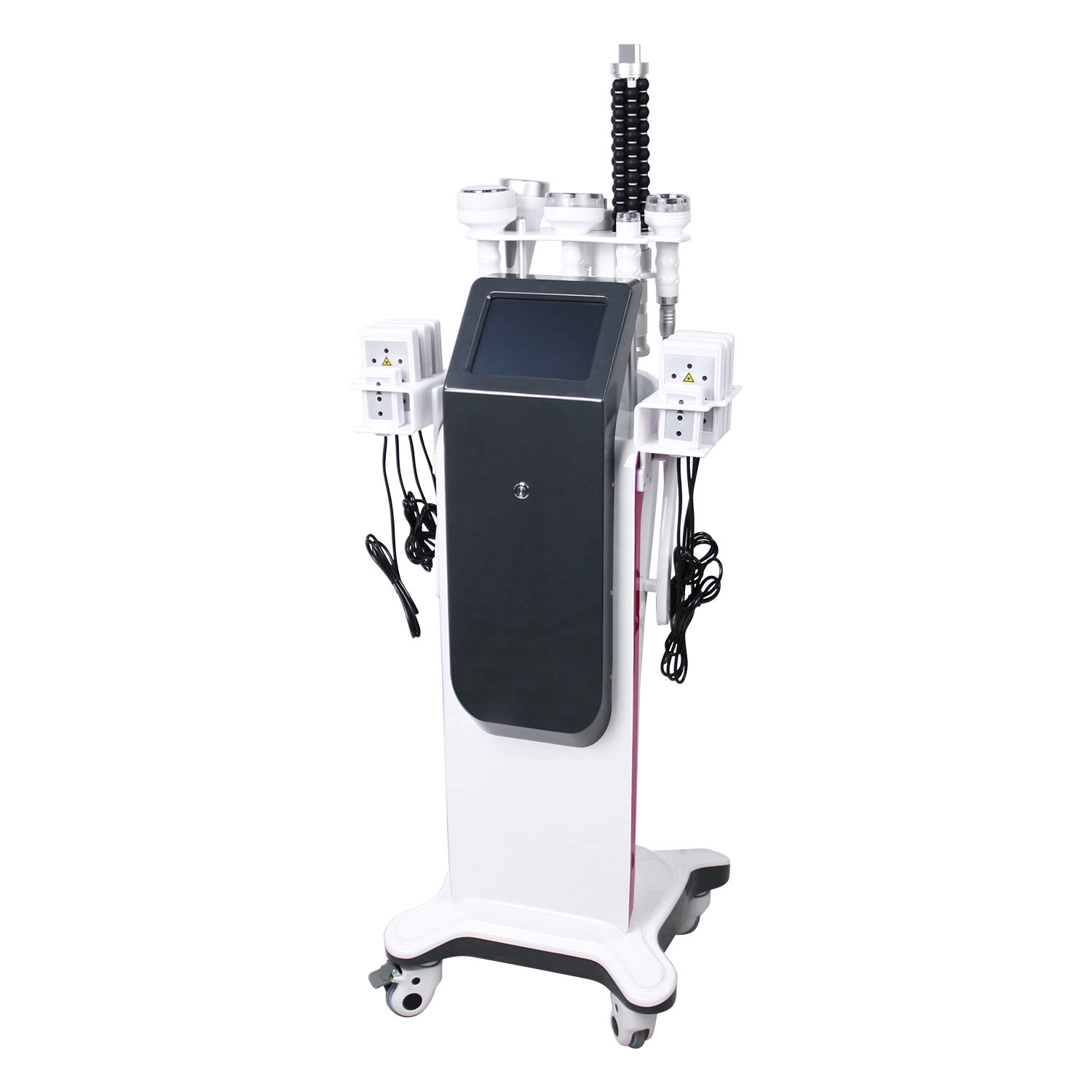
Professional 6-in-1 Cavitation Vacuum Machine for Body Contouring & Slimming Treatment
The 6-in-1 Cavitation Vacuum Machine is a professional body contouring system designed for salons and spas seeking high-performance slimming solutions. This machine integrates 40K ultrasonic cavitation, vacuum suction, RF technology, and laser lipolysis to target stubborn fat, enhance lymphatic drainage, tighten the skin, and contour the body shape effectively.
Equipped with multiple ergonomic handles and a smart touch screen, this cavitation vacuum machine provides a comfortable and efficient experience for both operators and clients. It is ideal for full-body treatments including abdomen, arms, legs, waistline, hips, and back.
Perfect for beauty salons, spas, and aesthetic centers that want to offer non-invasive fat reduction and body-sculpting services.
Get more information
If you have any comments or good suggestions, please leave us a message; later our professional staff will contact you as soon as possible.
Let's Talk
Stay in touch with us for cutting-edge beauty solutions, professional guidance, and customized service.
Contact


Room 307, Building A, Huilong International E-commerce Industrial Park, No. 10 Xipengling Road, Helong Street, Baiyun District, Guangzhou, China
© 2025 HUIMAIN. All Rights Reserved. Privacy Policy | Terms and Conditions | Sitemap
Facebook
Instagram
Medical beauty equipment factory
huimain Medical beauty equipment factory
beauty machine supplier
Whatsapp: +8619124004543