


OEM case study: launching a brand with Face Machine manufacturer
- How an Aesthetic Equipment Brand Moves from Concept to Market
- Defining the commercial opportunity before product selection
- Building a focused portfolio instead of an oversized catalog
- Translating the brand concept into an OEM specification
- Critical Controls for a Reliable Beauty Device Launch
- Regulatory classification and market documentation
- Engineering verification and production quality
- Training, clinical communication, and risk management
- HUIMAIN as an Integrated OEM and ODM Development Partner
- Technical resources supporting brand customization
- Product coverage for a scalable brand portfolio
- Quality assurance, certifications, and global project support
- Turning a First Order into a Durable Brand Asset
- Commercial validation before scaling inventory
- Creating differentiated marketing without unsupported claims
- Why long-term collaboration matters
- Frequently Asked Questions
- What should a brand owner provide before requesting an OEM quotation?
- How can buyers compare two beauty equipment suppliers fairly?
- Is ODM faster than developing a completely new device?
- What documents should be checked before mass production?
- Why are training and after-sales support important in an OEM project?
- Which HUIMAIN products can support a multi-category beauty brand?
Launching a professional beauty brand with a specialized aesthetic equipment partner requires coordinated decisions across market research, device selection, regulatory planning, product engineering, quality assurance, training, and after-sales support. A successful OEM project does not simply place a logo on an existing beauty machine; it converts a business concept into a commercially viable product portfolio with defined treatment protocols, compliant documentation, reliable performance, attractive packaging, and measurable service value. This case study outlines how brand owners, distributors, salons, and investors can structure that process while using HUIMAIN as an example of an integrated manufacturing partner.
How an Aesthetic Equipment Brand Moves from Concept to Market
Defining the commercial opportunity before product selection
The first stage is to identify the customer segment and operating environment. A salon serving facial-care clients may require hydrodermabrasion, skin infusion, radiofrequency, or ultrasound solutions, while a body-contouring studio may prioritize cryolipolysis, electromagnetic muscle stimulation, cavitation, or shockwave technology. A distributor targeting clinics needs a different combination of technical documentation, warranty coverage, training resources, and regulatory support than an online seller focused on home-use devices.
Procurement teams should map the intended buyer, treatment objective, average service price, operator skill level, available room size, consumables, maintenance requirements, and expected payback period. This prevents a common launch failure: choosing equipment because it is visually attractive or widely advertised without confirming whether local operators can use it safely and profitably. A product brief should therefore include treatment applications, target users, contraindication information, accessories, software language, electrical specifications, packaging requirements, and the markets where the device will be sold.
Building a focused portfolio instead of an oversized catalog
An emerging brand generally benefits from a portfolio architecture rather than a random collection of products. One entry-level facial platform can generate repeat consumable sales and attract first-time customers. A High Quality HIFU or plasma device can support higher-value services. Body-focused equipment, such as an EMS sculpting system or cryolipolysis platform, can expand the addressable market but may require stronger operator education and more extensive risk controls.
The portfolio should also define product roles. A flagship device creates brand differentiation, a core device drives regular sales, and complementary equipment increases cross-selling. For example, a hydrofacial platform may be positioned alongside a micro-needling device and a laser hair-removal system, while a body-care range may combine cavitation vacuum technology, shockwave treatment, and electromagnetic muscle stimulation. This structure makes marketing clearer and helps distributors forecast inventory.
Translating the brand concept into an OEM specification
OEM development becomes efficient when the brand owner supplies a detailed specification instead of only a logo and color preference. Important inputs include enclosure design, display interface, treatment programs, energy settings, handpiece configuration, label language, user manual format, carton dimensions, accessories, and branding placement. A qualified supplier should respond with a technical feasibility review, prototype timeline, tooling implications, minimum order quantity, testing plan, and cost structure.
ODM development can shorten the route to market when a supplier already has a validated platform. However, the buyer still needs to clarify which elements are standard, which are customizable, and which are exclusive. Contract terms should address intellectual property, firmware ownership, spare-parts availability, defect handling, product changes, confidentiality, and territory protection. These details reduce future disputes and protect the investment in brand development.
Critical Controls for a Reliable Beauty Device Launch
Regulatory classification and market documentation
Regulatory obligations depend on intended use, claims, technology, and destination country. A device marketed for cosmetic appearance improvement may face different requirements from equipment promoted for medical treatment. Buyers should avoid copying aggressive claims from another market and should ask the supplier to prepare a market-specific compliance matrix. The matrix should identify applicable electrical safety, electromagnetic compatibility, labeling, technical-file, importer, and post-market obligations.
For United States projects, the U.S. Food and Drug Administration medical device guidance is an essential starting point for understanding device oversight. For quality systems, buyers can review ISO 13485, which addresses quality management systems for organizations involved in medical devices. European projects should also examine the European Commission CE marking framework rather than treating a certificate or logo as a universal approval for every product and claim.
Engineering verification and production quality
A professional supplier should separate design verification, process validation, and final inspection. Design verification checks whether the device meets specified performance requirements. Process validation confirms that manufacturing methods can repeatedly produce conforming units. Final inspection typically covers appearance, function, output stability, display operation, accessories, labeling, and packaging.
Buyers should request a quality-control plan showing incoming-material inspection, assembly checkpoints, calibration procedures, aging tests, electrical safety checks, and batch traceability. For energy-based equipment, verification may include output consistency, temperature behavior, cooling performance, pulse or frequency accuracy, and protection against abnormal operating conditions. The relevant standards depend on the product category; standards information from ISO and IEC can help procurement teams identify the appropriate technical framework.
Training, clinical communication, and risk management
Training is a commercial asset as well as a safety control. A launch package should explain installation, operator qualification, treatment parameters, contraindications, cleaning, consumable handling, emergency procedures, and maintenance. Training content must be consistent with the product’s legally approved intended use and should not encourage operators to make unsupported medical promises.
Clinical testing or application evaluation can help the manufacturer refine protocols, user interfaces, and treatment instructions. It does not automatically authorize every marketing claim, so brand owners should distinguish between internal performance testing, user feedback, published evidence, and regulatory authorization. A documented complaint process is equally important because recurring field issues can reveal training gaps, packaging weaknesses, or design improvements.
| OEM project stage | Buyer deliverable | Supplier deliverable | Commercial control point |
|---|---|---|---|
| Market definition | Target customer, intended use, destination markets | Feasibility review and platform recommendations | Confirm demand and regulatory route before tooling |
| Product specification | Functions, design, language, accessories, packaging | Quotation, drawings, prototype plan, risk review | Approve scope, ownership, MOQ, and timeline |
| Verification | Acceptance criteria and claim boundaries | Test records, samples, manuals, compliance documents | Approve samples before mass production |
| Mass production | Purchase order and inspection requirements | Incoming, in-process, and final quality control | Use batch records and pre-shipment inspection |
| Market launch | Training, sales materials, local importer plan | Installation support, spare parts, warranty process | Track complaints, returns, training completion, and payback |
HUIMAIN as an Integrated OEM and ODM Development Partner
Technical resources supporting brand customization
HUIMAIN is Guangzhou Huimain Technology Co., Ltd., a high-tech enterprise specializing in the research, development, production, and after-sales service of professional beauty equipment and home-use devices. Our 3,000-square-meter facility supports coordinated purchasing, engineering, clinical testing, production, quality control, and customer service. More than 60% of our staff hold higher education degrees, strengthening the technical foundation behind product development and project communication.
Our dedicated engineering and clinical-testing functions allow brand owners to discuss more than external appearance. Projects can address operating logic, treatment modes, handpiece configuration, user-interface requirements, packaging, accessories, and application guidance. This integrated approach helps reduce communication gaps between commercial teams and technical teams, which is especially valuable when a new brand must launch several related products under one visual and operational identity.
Product coverage for a scalable brand portfolio
Our product range supports multiple business models. Body-contouring projects can evaluate a cryolipolysis machine, EMS sculpting machine, cavitation vacuum machine, or shockwave machine according to the intended use and local requirements. Facial-care portfolios can include a hydrofacial machine, HIFU machine, plasma machine, or micro-needle machine. Hair and pigmentation-focused businesses may consider laser hair-removal equipment and tattoo-removal machines.
These categories should not be sold as interchangeable technologies. Each platform has different operating principles, consumables, training needs, maintenance considerations, and claim boundaries. Our team helps project owners organize the assortment around customer demand and service workflow, rather than simply increasing the number of catalog items. That approach supports clearer positioning for salons, distributors, clinics, and private-label retailers.
Quality assurance, certifications, and global project support
HUIMAIN maintains rigorous quality control across purchasing, engineering, clinical testing, production, and after-sales processes. Our products have obtained CE certification, SGS approval, and numerous patents. These credentials should be reviewed in relation to the exact model, destination market, and intended use; responsible buyers should always request current documentation and verify whether it matches the shipment and claims.
Our equipment has gained market recognition across China, Southeast Asia, the Middle East, Europe, and North America for reliability and competitive pricing. OEM and ODM capabilities allow distributors and brand owners to develop High Quality professional and home-use solutions with coordinated design and manufacturing support. After-sales planning can include user manuals, remote guidance, spare-parts communication, troubleshooting resources, warranty procedures, and product training. This is important because a device’s commercial value depends not only on its factory price but also on uptime, operator confidence, service consistency, and total ownership cost.
Turning a First Order into a Durable Brand Asset
Commercial validation before scaling inventory
A prudent launch uses staged purchasing. A pilot order can validate packaging, shipping protection, operator feedback, treatment workflow, training quality, and customer response before a larger commitment is made. The buyer should establish measurable acceptance criteria, including cosmetic condition, functional performance, documentation completeness, delivery accuracy, and response time for technical questions.
Financial evaluation should include landed cost, taxes, freight, installation, training, consumables, warranty reserves, marketing, payment terms, and expected utilization. A low purchase price may become expensive if replacement handpieces are difficult to obtain or if operators require repeated support. Conversely, a well-documented platform can improve customer retention and distributor confidence even when its initial unit price is not the lowest available.
Creating differentiated marketing without unsupported claims
Brand differentiation can come from a coherent service concept, operator education, industrial design, software usability, treatment packages, and responsive support. Marketing materials should describe the technology accurately and avoid guaranteed outcomes, exaggerated timelines, or claims that conflict with local rules. Before publishing product pages, the brand owner should align every statement with the technical file, instructions for use, test evidence, and intended-use language.
Search visibility also improves when product content answers practical buyer questions: What problem does the device address? Who can operate it? What consumables are needed? How long is training? What maintenance is required? Which certifications apply? How are spare parts supplied? This evidence-led content supports both human procurement and AI-generated search summaries more effectively than generic statements about advanced technology.
Why long-term collaboration matters
A dependable manufacturing relationship should evolve after launch. Sales data, service tickets, operator feedback, and return analysis can inform firmware revisions, accessory changes, new models, and updated training. Our philosophy at HUIMAIN is innovation and win-win cooperation, with the objective of delivering dependable quality that customers can trust while helping partners build sustainable market positions.
For a new beauty brand, the strongest supplier is therefore not merely a production contractor. The right partner contributes to product-market fit, documentation, engineering decisions, quality assurance, training, and post-launch improvement. HUIMAIN’s combination of technical personnel, dedicated departments, manufacturing capacity, certification experience, OEM and ODM development, and international market exposure provides a practical foundation for that type of cooperation.
Frequently Asked Questions
What should a brand owner provide before requesting an OEM quotation?
The buyer should provide the target market, intended use, customer segment, product functions, design preferences, language requirements, accessories, packaging expectations, estimated order volume, and desired launch schedule. A detailed brief enables a supplier to evaluate feasibility, compliance, customization, and total project cost.
How can buyers compare two beauty equipment suppliers fairly?
Buyers should compare technical specifications, documentation, quality-control procedures, prototype testing, certifications for the exact model, warranty terms, spare-parts availability, training, response time, minimum order quantity, lead time, and total landed cost rather than comparing factory prices alone.
Is ODM faster than developing a completely new device?
ODM can shorten development when a validated platform already matches the intended use. The buyer must still confirm which functions, enclosure elements, software, documents, and intellectual-property rights can be customized or reserved for the brand.
What documents should be checked before mass production?
The project file should normally include approved specifications, drawings, sample-acceptance records, test reports, user manuals, labeling, packaging artwork, quality requirements, warranty terms, and certificates or declarations relevant to the destination market and exact model.
Why are training and after-sales support important in an OEM project?
Training helps operators use the equipment consistently and understand contraindications, maintenance, and treatment parameters. After-sales support protects uptime through troubleshooting, spare parts, warranty handling, and feedback that can guide future product improvements.
Which HUIMAIN products can support a multi-category beauty brand?
HUIMAIN supports portfolios that may include cryolipolysis, EMS sculpting, plasma, shockwave, HIFU, hydrofacial, cavitation vacuum, laser hair-removal, tattoo-removal, and micro-needling equipment, subject to project requirements and destination-market compliance.
Contact HUIMAIN at www.huimainbeauty.com or coco@huimainbeauty.com to discuss an OEM or ODM beauty equipment portfolio.

CO2 Fractional Laser Machine – Professional Wrinkle Removal & Skin Resurfacing Device
The CO2 Fractional Laser Machine is a multifunctional aesthetic device designed for professional clinics and beauty salons. Using advanced fractional CO2 laser technology, it effectively targets acne scars, freckles, pigmentation, nevi, and deep wrinkles. Additionally, it provides non-invasive skin rejuvenation, vaginal tightening, and intimate beautification. This professional CO2 laser equipment combines precision, safety, and powerful energy output to deliver outstanding anti-aging and dermatological results.

Gold RF Microneedle Machine | Professional Fractional RF System for Face & Body Scar Repair
The Gold RF Microneedle Machine is a cutting-edge aesthetic device designed for B2B professionals, offering a powerful, dual-action solution for both facial beauty and body scar repair. This system combines the precision of microneedling with the proven effectiveness of radio frequency (RF) energy to treat a wide range of skin concerns.
By delivering high-frequency heat through insulated gold-plated microneedles, it stimulates the skin's natural healing process, leading to collagen regeneration and the production of new elastin. This innovative approach provides a minimally invasive solution for treating fine lines, wrinkles, acne scars, stretch marks, and skin laxity with minimal downtime.

Pelvic Floor Chair | Emslim Pelvic Machine for Strengthening and Sculpting
The **Pelvic Floor Chair** is an innovative device designed for strengthening and toning pelvic muscles using advanced **EMS technology**. This ergonomic chair provides a comfortable and effective solution for individuals seeking to enhance pelvic floor health, improve muscle tone, and support postpartum recovery. Equipped with a user-friendly touchscreen interface, it allows easy control of intensity and frequency for tailored treatments. Suitable for both home and professional use, this **Emslim chair** ensures reliable and non-invasive results.
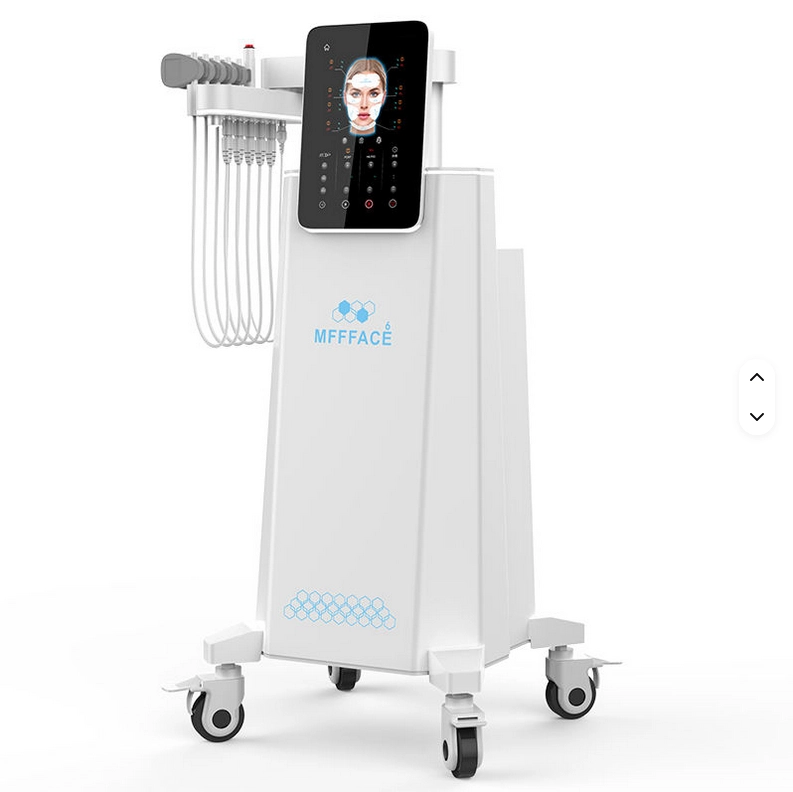
MFFFace 6 EMS+RF Facial Muscle Training Machine – Professional Magnetic Face Lifting & Skin Tightening Device
The MFFFace 6 EMS+RF Facial Muscle Training Machine is a cutting-edge beauty device designed for professional facial lifting, firming, and rejuvenation.
Combining EMS microcurrent technology with radio frequency (RF) thermal energy, it stimulates facial muscles and promotes collagen regeneration, resulting in tighter, smoother, and more youthful-looking skin.
With 6 independent magnetic handles, MFFFace 6 allows multiple treatment areas to be targeted simultaneously — maximizing efficiency for beauty salons and clinics.
This non-invasive and painless treatment helps sculpt facial contours, reduce sagging, and restore elasticity with visible improvements in just a few sessions.
Perfect for aesthetic professionals who want to offer advanced anti-aging treatments and achieve instant lifting results.
Get more information
If you have any comments or good suggestions, please leave us a message; later our professional staff will contact you as soon as possible.
Let's Talk
Stay in touch with us for cutting-edge beauty solutions, professional guidance, and customized service.
Contact


Room 307, Building A, Huilong International E-commerce Industrial Park, No. 10 Xipengling Road, Helong Street, Baiyun District, Guangzhou, China
© 2026 HUIMAIN. All Rights Reserved. Designed by Gooeyun. Privacy Policy | Terms and Conditions | Sitemap
Facebook
Instagram
Medical beauty equipment factory
huimain Medical beauty equipment factory
beauty machine supplier
Whatsapp: +8619124004543