


OEM Cryolipolysis Slimming Machines: Customization Options
- Understanding cryolipolysis technology and market expectations
- Principles of fat freezing and how it informs customization
- Clinical evidence, efficacy and patient expectations
- Safety standards and regulatory context
- Customization areas for OEM cryolipolysis devices
- Applicator design: shapes, sizes and treatment coverage
- Cooling systems and temperature precision
- Vacuum, pressure control and patient comfort
- Software, protocols and user experience
- Preloaded protocols, adjustable parameters and multi-mode operation
- Connectivity, reporting and remote servicing
- Integrations: combining modalities
- Designing for the market: clinical, salon and home-use segments
- Clinic-grade machines: durability and throughput
- Salon and medspa models: ergonomics and cost balance
- Home-use devices: safety-first engineering
- How to evaluate and choose the best cryolipolysis slimming machine for your business
- Checklist: technical, clinical and commercial criteria
- Comparison table: customization options by buyer profile
- Cost vs ROI: practical examples
- Certifications, testing and quality assurance
- Clinical testing and performance validation
- Third-party certifications and lab partners
- Warranty, spare parts and service network
- Why choose Guangzhou Huimain Technology as your OEM partner
- Implementation roadmap and common pitfalls
- Stepwise OEM development process
- Common mistakes and how I avoid them
- Tips for branding and differentiation
- Frequently Asked Questions (FAQ)
- 1. What makes one cryolipolysis machine the best?
- 2. How do OEM customization options affect regulatory approval?
- 3. Are combination devices (cryo + RF/EMS) safe and more effective?
- 4. What certifications should I insist upon from an OEM?
- 5. How do I estimate ROI for a cryolipolysis system?
- 6. How long does OEM customization and certification usually take?
I write from years of hands-on experience advising clinics, device OEMs and international distributors on selecting and customizing body contouring equipment. If you are evaluating the best cryolipolysis slimming machine for your product line, this article summarizes the technology, OEM customization levers, clinical and regulatory considerations, and actionable decision criteria to build or buy machines that sell and perform reliably in diverse markets.
Understanding cryolipolysis technology and market expectations
Principles of fat freezing and how it informs customization
Cryolipolysis, often called fat freezing, selectively cools subcutaneous fat to induce adipocyte apoptosis without damaging surrounding tissues. Typical clinical protocols use controlled cooling in a specific temperature window and application time to trigger gradual fat reduction. For a technical overview I refer to the general summary available on Wikipedia, and to clinical studies such as the initial controlled trials reported on PubMed.
Clinical evidence, efficacy and patient expectations
When advising clients I emphasize proven endpoints: consistent reduction in measured fat layer thickness, documented safety, and repeatable treatment outcomes. Systematic reviews and clinical reports (e.g., PubMed reviews) confirm moderate but reliable circumferential reduction when protocols are followed (PubMed review). These findings guide OEM choices: temperature stability, vacuum reliability, applicator ergonomics, and software presets matter more than marginal marketing claims.
Safety standards and regulatory context
Before customizing, understand the regulatory path: medical-grade devices must meet standards like ISO 13485 for quality management (ISO 13485), and region-specific approvals such as CE marking in the EU (EU CE info) and FDA communications for cryolipolysis devices in the U.S. (FDA). These requirements shape hardware design (electrical safety, biocompatibility), software controls (traceability, treatment logs), and clinical lab testing (temperature accuracy, device reliability).
Customization areas for OEM cryolipolysis devices
Applicator design: shapes, sizes and treatment coverage
Applicators are the primary user touchpoint. Customizations include suction cup geometry, contact surface, interchangeable sizes (small, medium, large, curved), and dual- or multi-zone heads for larger treatment areas. I recommend offering at least three sizes to serve typical anatomical regions (flanks, abdomen, inner thighs). Good applicator design reduces treatment time and improves comfort—critical to being recognized as the best cryolipolysis slimming machine in a competitive market.
Cooling systems and temperature precision
Precision cooling is essential. OEM options include thermoelectric (Peltier) modules vs. compressor-based systems. Compressor systems typically offer stronger sustained cooling for clinical use, while Peltier units may suit compact or lower-cost home-use models. Typical therapeutic temperatures are in a narrow range around −5 to −10 °C depending on protocol; ensure temperature sensors are redundant and calibrated. For background on typical temperature ranges see technical descriptions.
Vacuum, pressure control and patient comfort
Vacuum strength and pressure modulation affect tissue draw, cooling contact, and comfort. Customizable vacuum profiles (steady, pulsed, adjustable mmHg) let you fine-tune protocols for sensitive regions. I often recommend closed-loop pressure sensors and safety cutoffs in OEM machines to avoid over-suction and bruising.
Software, protocols and user experience
Preloaded protocols, adjustable parameters and multi-mode operation
Software is where OEM differentiation becomes visible to end-users. Provide a library of preloaded, evidence-based protocols (time, temperature, vacuum) and allow clinicians to save custom presets. Multi-mode operation—which can switch between single-head and simultaneous multi-head treatment—improves throughput in busy clinics. A clear touchscreen UI with treatment timers, real-time graphs and safety alerts increases adoption.
Connectivity, reporting and remote servicing
Networked devices that support secure data export, treatment logs, and software updates reduce downtime and support regulatory traceability. Consider optional cloud connectivity for remote diagnostics, OTA (over-the-air) updates, and usage analytics—features increasingly demanded by distributors and large chains. Ensure any patient data handling complies with local privacy rules like GDPR.
Integrations: combining modalities
Many buyers prefer combinational devices (cryolipolysis + RF, or cryo + EMS or HIFU) to offer bundled treatments. As an OEM consultant I evaluate thermal interactions carefully; combined modalities must be validated clinically to avoid adverse effects and to substantiate combined efficacy claims.
Designing for the market: clinical, salon and home-use segments
Clinic-grade machines: durability and throughput
Clinics expect higher duty cycles, multiple simultaneous applicators, and robust service agreements. For these customers prioritize compressor cooling, medical-grade components, modular serviceability (hot-swappable coils or Peltier modules), and clear CE/FDA-ready documentation. Clinics also value training materials, marketing kits, and patient brochures—elements you should include as OEM deliverables.
Salon and medspa models: ergonomics and cost balance
Salons need attractive design, ease of use, and lower acquisition costs. For these buyers a balanced approach—stable cooling, fewer simultaneous heads, simplified UI, and integrated esthetic features—helps adoption. Offering color customization, logo-branding and localized language packs are common OEM requests I implement for salon clients.
Home-use devices: safety-first engineering
Home devices require strict safeguards: limited temperature ranges, simplified interfaces, child-locks and automatic shutoffs. They are frequently classified differently by regulators; ensure you follow applicable consumer device standards and provide clear usage instructions and warnings to reduce risk.
How to evaluate and choose the best cryolipolysis slimming machine for your business
Checklist: technical, clinical and commercial criteria
When I assess options I use a checklist: temperature accuracy, vacuum control, applicator variety, duty cycle, certifications (CE, ISO 13485, relevant national approvals), warranty and spare parts availability, training & marketing support, and price-to-ROI estimates. Companies that provide transparent testing data and clinical references stand out in procurement decisions.
Comparison table: customization options by buyer profile
| Feature | Clinic (High-volume) | Salon/Medspa | Home-use |
|---|---|---|---|
| Cooling system | Compressor-based, redundant sensors | Compressor or high-performance Peltier | Low-power Peltier with safety limits |
| Applicator options | Multi-head, interchangeable sizes | 2–3 sizes, ergonomic design | Single compact head |
| Vacuum control | Adjustable mmHg, real-time monitoring | Adjustable with presets | Fixed safe-level vacuum |
| Software | Advanced presets, logs, network | Presets + simple customization | Fixed protocols, limited UI |
| Certifications | ISO 13485, CE/FDA (where required) | CE/Regional certifications | Consumer safety approvals |
All feature recommendations above are based on industry standards and clinical practice trends reported in peer-reviewed literature and regulatory guidance (see links to PubMed and FDA earlier).
Cost vs ROI: practical examples
Investment choices should be tied to throughput projections. For example, a clinic that can run two simultaneous applicators may cut per-patient treatment time and increase daily revenue—rapidly improving ROI despite higher purchase price. I typically build a simple payback model for clients comparing single-head vs multi-head systems under conservative booking assumptions.
Certifications, testing and quality assurance
Clinical testing and performance validation
Always require temperature mapping reports, vacuum stability logs, electrical safety test certificates and, for medical claims, clinical trial or pilot data. Independent clinical validation not only facilitates regulatory approval but also substantiates marketing claims when promoting the best cryolipolysis slimming machine.
Third-party certifications and lab partners
Working with accredited labs for EMC testing, IEC 60601 electrical safety, and biocompatibility helps clear major markets. SGS and similar test bodies provide global certification services; see SGS for third-party testing examples. CE marking and ISO 13485 compliance should be front-and-center in procurement criteria.
Warranty, spare parts and service network
My experience shows buyers value predictable service SLAs and local spare-part availability. For OEM projects I recommend establishing regional service partners and offering training packages to reduce downtime and build long-term client relationships.
Why choose Guangzhou Huimain Technology as your OEM partner
In my consulting engagements I evaluate potential OEM partners on technology depth, production capacity, R&D commitment and after-sales service. Guangzhou Huimain Technology Co., Ltd. matches these criteria. They are a high-tech enterprise specializing in R&D, production and after-sales of professional beauty machines and home-use devices. Operating from a 3,000-square-meter facility, Huimain is driven by a technical team where over 60% of staff hold higher education degrees. Their dedicated purchasing, clinical testing and engineering departments allow ongoing investment in R&D—important for iterative product customization and compliance testing.
Huimain has achieved CE certification, SGS approval and holds multiple patents, demonstrating both compliance and innovation. Their machines have a presence in China, Southeast Asia, the Middle East, Europe and North America—supporting regional market knowledge and logistics. They follow OEM and ODM routes and can design High Quality medical and beauty equipment for salons and distributors. I recommend contacting them if you seek a partner capable of delivering certified, customizable cryolipolysis machines at competitive prices.
Huimain’s core products include Cryolipolysis machine, EMS sculpting machine, Plasma machine, Shockwave machine, HIFU machine, Hydrofacial machine, Cavitation vacuum machine, Laser hair removal, Tattoo removal machine, and Micro-needle machine. Visit their website at https://www.huimainbeauty.com/ or email coco@huimainbeauty.com for OEM inquiries.
Implementation roadmap and common pitfalls
Stepwise OEM development process
I guide clients through a phased plan: requirements & market study → prototype design (mechanical, cooling, UI) → bench testing and safety certifications → pilot clinical validation → manufacturing scale-up and go-to-market support. Each phase has clear deliverables to reduce rework and regulatory delays.
Common mistakes and how I avoid them
Typical pitfalls include underestimating heat-extraction requirements, skipping independent temperature validation, neglecting local regulatory variance, and insufficient training materials. I mitigate these by insisting on independent lab reports, multi-site pilots, and robust service documentation.
Tips for branding and differentiation
To position a product as the best cryolipolysis slimming machine, invest in demonstrable metrics (e.g., temperature stability charts, independent fat-reduction data), excellent applicator ergonomics, and a strong warranty/service network. Clinical before-after photo libraries (with consent) and peer-reviewed pilot studies also dramatically improve trust in B2B and B2C channels.
Frequently Asked Questions (FAQ)
1. What makes one cryolipolysis machine the best?
Best combines consistent cooling accuracy, safety features, a portfolio of applicators, evidence-based protocols, reliable vacuum control, third-party certifications (CE/ISO/FDA where applicable), and strong after-sales support. A machine that delivers repeatable clinical outcomes and low downtime earns that label in practice.
2. How do OEM customization options affect regulatory approval?
Customization can affect classification (intended use changes), electrical safety, and clinical claim scope. Any change that impacts performance or risk profile typically requires re-validation and may need updated regulatory submissions. Early engagement with regulatory consultants and your OEM partner prevents late-stage surprises.
3. Are combination devices (cryo + RF/EMS) safe and more effective?
Combinations can offer enhanced clinical programs but require careful validation of interactions. Safety and efficacy should be backed by clinical data; do not assume additive benefits without supporting studies. OEMs should help design and fund pilot studies when combined modalities are a new offering.
4. What certifications should I insist upon from an OEM?
At minimum, ISO 13485-compliant quality management, IEC 60601 electrical safety testing, CE marking for EU sales, and relevant national approvals (e.g., FDA or local health authority) should be expected. Third-party lab reports for EMC and temperature accuracy are also essential.
5. How do I estimate ROI for a cryolipolysis system?
Estimate average revenue per treatment, average treatments per day, and variable costs (consumables, technician time). Compare single-head vs multi-head throughput improvements. I typically create 12–24 month cashflow scenarios; many clinics recoup investment within 6–18 months depending on utilization.
6. How long does OEM customization and certification usually take?
From requirements to certified product launch, timelines vary: a basic OEM variant with existing certified platform can take 3–6 months; significant hardware changes or new clinical claims may extend to 9–18 months. Allow time for independent testing and pilot clinical validation.
If you want tailored advice, product specifications or to evaluate prototypes, contact Guangzhou Huimain Technology Co., Ltd. at https://www.huimainbeauty.com/ or email coco@huimainbeauty.com. I work closely with OEM partners like Huimain and can facilitate technical briefings, sample testing and market-fit analysis to help you choose or develop the best cryolipolysis slimming machine for your business.
![Pain-Free & Permanent? The Top 5 Hair Removal Machines for Female Reviewed [2026 Edition] - HUIMAIN](https://www.huimainbeauty.com/upload/img/ai-image/pain-free-permanent-the-top-5-hair-removal-machines-for-female-reviewed-2026-edition.png?x-oss-process=image/format,webp/quality,Q_100 "Pain-Free-&-Permanent?-The-Top-5-Hair-Removal-Machines-for-Female-Reviewed-[2026-Edition] - HUIMAIN")
EMS Body Sculpting Machine
What are the main benefits of using an EMS Body Sculpting Machine?
-
Builds and strengthens muscles without physical exercise
-
Reduces fat in targeted body areas
-
Non-invasive, painless, and requires no downtime
-
Quick treatment sessions (typically 30 minutes)
-
Visible results after 4–6 sessions
QY-BT410 奇云台式脱毛仪
Does the machine have a cooling system?
Yes, it features a structure cooling system with sapphire contact cooling.
GL-1皮秒
Is this laser machine effective for tattoo removal?
Yes. The Q-switch laser machine delivers high peak energy to effectively break down tattoo pigments, especially black and dark-colored ink, with reliable clinical results.
About Distributor
Are you a factory or a trading company?
We are a manufacturer with over 3,000㎡ of production area, our own R&D team, and in-house production facilities. We support both OEM and ODM services.
ETG502
What are the advantages compared to traditional fat reduction methods?
Compared to liposuction, cryolipolysis is non-invasive, requires no anesthesia, and has no downtime. Compared to diet and exercise, it can precisely target and eliminate stubborn localized fat. Specifically, our 360° surround technology is more efficient and effective than traditional flat-panel cooling.

CO2 Fractional Laser Machine – Professional Wrinkle Removal & Skin Resurfacing Device
The CO2 Fractional Laser Machine is a multifunctional aesthetic device designed for professional clinics and beauty salons. Using advanced fractional CO2 laser technology, it effectively targets acne scars, freckles, pigmentation, nevi, and deep wrinkles. Additionally, it provides non-invasive skin rejuvenation, vaginal tightening, and intimate beautification. This professional CO2 laser equipment combines precision, safety, and powerful energy output to deliver outstanding anti-aging and dermatological results.

5-in-1 40K Cavitation Vacuum Machine for Body Slimming & Fat Reduction
The 5-in-1 40K Cavitation Vacuum Machine is a professional body shaping system designed for fat reduction, cellulite smoothing, and overall body contouring. Using 40KHz ultrasonic cavitation, this device breaks down stubborn fat cells, while vacuum suction improves lymphatic drainage and accelerates toxin removal.
With multiple RF tightening handles, the machine stimulates collagen regeneration and helps lift and firm loose areas of the body. Compact, powerful, and easy to operate, it is the perfect solution for beauty salons, spa centers, and slimming studios seeking fast and visible fat-reduction results.
This cavitation vacuum machine is built to deliver safe, non-invasive treatments with no downtime—making it a top choice for body contouring professionals.

6-in-1 Multifunctional Beauty and Weight Loss Machine | Cavitation, RF, Vacuum PDT, EMS, Laser Slimming Equipment for Professional Use
The 6-in-1 Multifunctional Beauty and Weight Loss Machine is a professional-grade device designed for salons, clinics, and distributors. Combining six advanced technologies—cavitation, RF (radio frequency) for face & body, vacuum RF PDT, BIO/EMS microcurrent, and laser lipo pads—this device offers comprehensive body contouring, fat reduction, skin tightening, and anti-aging treatments.
It provides businesses with an all-in-one solution to expand service offerings, attract more clients, and achieve a rapid return on investment.
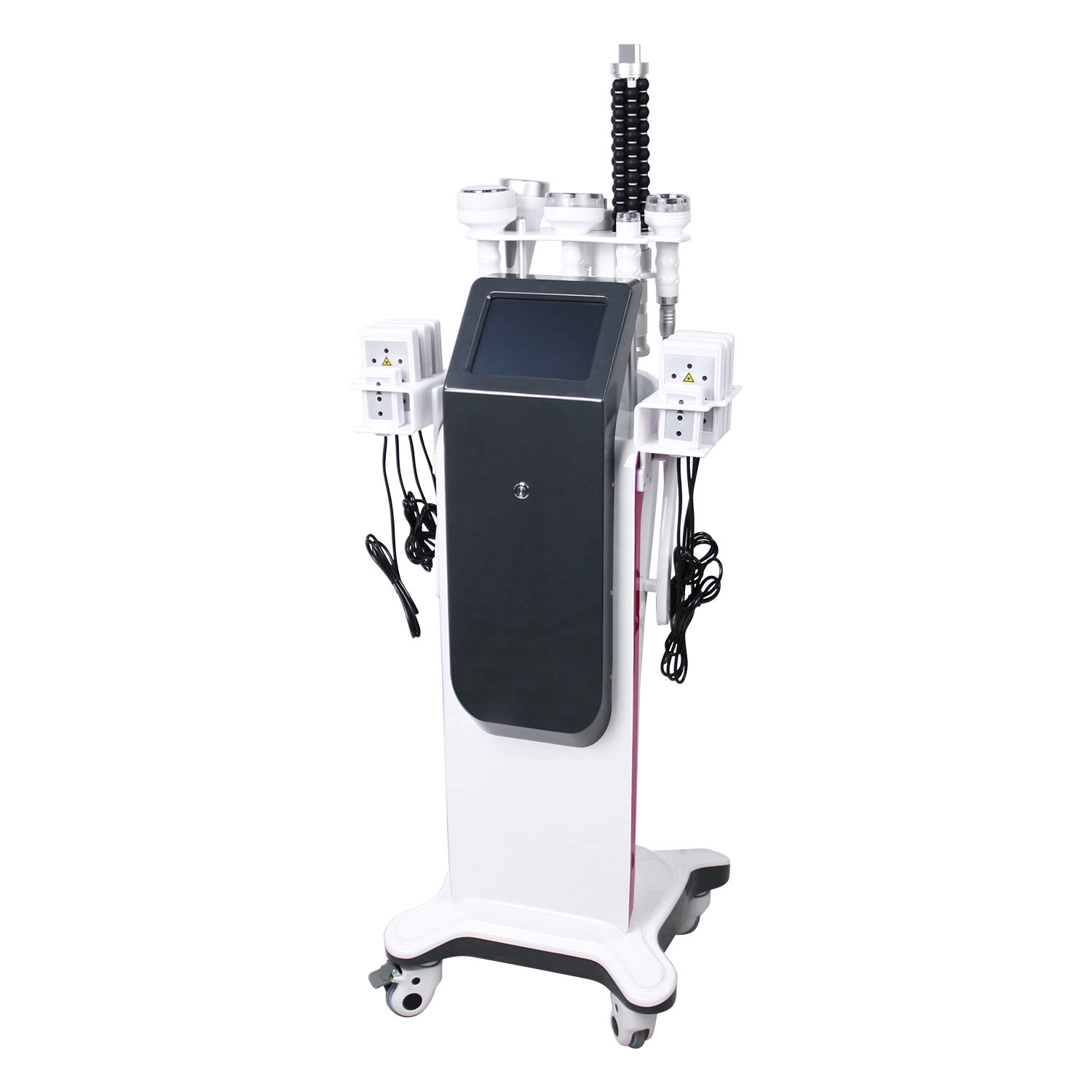
Professional 6-in-1 Cavitation Vacuum Machine for Body Contouring & Slimming Treatment
The 6-in-1 Cavitation Vacuum Machine is a professional body contouring system designed for salons and spas seeking high-performance slimming solutions. This machine integrates 40K ultrasonic cavitation, vacuum suction, RF technology, and laser lipolysis to target stubborn fat, enhance lymphatic drainage, tighten the skin, and contour the body shape effectively.
Equipped with multiple ergonomic handles and a smart touch screen, this cavitation vacuum machine provides a comfortable and efficient experience for both operators and clients. It is ideal for full-body treatments including abdomen, arms, legs, waistline, hips, and back.
Perfect for beauty salons, spas, and aesthetic centers that want to offer non-invasive fat reduction and body-sculpting services.
Get more information
If you have any comments or good suggestions, please leave us a message; later our professional staff will contact you as soon as possible.
Let's Talk
Stay in touch with us for cutting-edge beauty solutions, professional guidance, and customized service.
Contact


Room 307, Building A, Huilong International E-commerce Industrial Park, No. 10 Xipengling Road, Helong Street, Baiyun District, Guangzhou, China
© 2025 HUIMAIN. All Rights Reserved. Privacy Policy | Terms and Conditions | Sitemap
Facebook
Instagram
Medical beauty equipment factory
huimain Medical beauty equipment factory
beauty machine supplier
Whatsapp: +8619124004543