


OEM and ODM Options for Body Slimming Machine Suppliers
- How to Choose the Right Manufacturing Partner for Body Slimming Devices
- Market context: why sourcing strategy matters for Body Slimming Machine suppliers
- OEM vs ODM: clear definitions and business intent keywords
- Understanding the difference: OEM Body Slimming Machine vs ODM Body Slimming Machine
- Regulatory and clinical considerations for Body Slimming Machine suppliers
- Safety, certification and evidence-based claims
- Technical capabilities and customization options
- What to customize: hardware, software, consumables, accessories
- Manufacturing capacity, quality control and lead times
- Production planning for suppliers ordering body slimming machines
- Cost structures, MOQ and pricing negotiation tips
- Understanding commercial terms when you want to buy body slimming machine units
- Intellectual property, design ownership and confidentiality
- Protecting IP when developing a private-label Body Slimming Machine
- Quality assurance, testing and post-sale service expectations
- What a reliable supplier must provide
- Supplier profile: Guangzhou Huimain Technology Co., Ltd. — capabilities and strengths
- Why consider Huimain for OEM and ODM Body Slimming Machine projects
- HUIMAIN product portfolio and technical advantages
- Procurement checklist for buyers of Body Slimming Machines (commercial checklist)
- Actionable steps before signing an OEM/ODM contract
- Negotiation and risk mitigation tips for suppliers
- How to reduce risks and optimize ROI when developing body slimming devices
- Conclusion and recommended next steps
- Choosing the right path: OEM, ODM or hybrid approach
- Frequently Asked Questions (FAQ)
- 1. What is the main difference between OEM and ODM for Body Slimming Machines?
- 2. How long does it take to develop a custom Body Slimming Machine (OEM)?
- 3. What certifications should I require from a slimming machine supplier?
- 4. What is a realistic MOQ for ODM slimming machines?
- 5. How do I protect my IP when working with a manufacturer?
- 6. Can manufacturers help with regulatory filings?
- Contact and call to action
- References
How to Choose the Right Manufacturing Partner for Body Slimming Devices
Market context: why sourcing strategy matters for Body Slimming Machine suppliers
Demand for non-invasive body contouring and slimming devices continues to rise as clinics and home-use consumers seek effective, low-downtime treatments. Choosing the right manufacturing route — OEM (Original Equipment Manufacturer) or ODM (Original Design Manufacturer) — directly impacts product differentiation, unit cost, time-to-market, regulatory compliance, and long-term margins. Suppliers and private-label buyers must evaluate technical capability, regulatory track record, production capacity, and after-sales support before committing.
OEM vs ODM: clear definitions and business intent keywords
Understanding the difference: OEM Body Slimming Machine vs ODM Body Slimming Machine
OEM (Original Equipment Manufacturer): you provide the product design, specifications, and branding details; the manufacturer builds to your spec. keywords: buy OEM body slimming machine, private-label body slimming device.
ODM (Original Design Manufacturer): manufacturer provides an existing design that can be customized (cosmetics, software, minor hardware tweaks). keywords: ODM body slimming machines, turnkey slimming machine supplier.
| Aspect | OEM | ODM |
|---|---|---|
| Design Ownership | Buyer owns IP/design | Manufacturer owns base design; buyer may get limited IP rights |
| Customization Depth | Full customization (hardware, firmware, clinical parameters) | Moderate (branding, UI, modules) |
| Development Time | Longer (R&D, prototyping, validation) | Shorter (based on existing platform) |
| MOQ & Unit Cost | Higher MOQ and initial cost, lower long-term unit cost at scale | Lower MOQ, predictable pricing on standard platform |
| Regulatory Burden | Buyer responsible for regulatory filings under own brand | Often easier if manufacturer provides CE/ISO history for platform |
Regulatory and clinical considerations for Body Slimming Machine suppliers
Safety, certification and evidence-based claims
Body Slimming Machines (cryolipolysis, RF, HIFU, EMS, cavitation, laser-based devices) are treated as medical or aesthetic devices in many markets. Buyers must verify:
- CE marking status for EU sales and the manufacturer's technical documentation (MDD/MDR compliance).
- Relevant conformity assessments (ISO 13485 for medical device QMS) and third-party test reports (e.g., SGS, Intertek).
- Clinical data or pilot studies demonstrating safety and efficacy for the intended indication.
- Labeling, intended use statements, and marketing claims aligned with regulatory approvals to avoid misbranding.
Practical tip: ask the supplier for certificates, test reports, and sample clinical protocols. Verify CE and test reports with issuing bodies. Sources: European Commission CE guidance and SGS medical device services provide frameworks for verification.
Technical capabilities and customization options
What to customize: hardware, software, consumables, accessories
Buyers choosing OEM expect to control core parameters: energy delivery modality, applicator design, treatment protocols, and firmware. ODM clients often customize cosmetics, GUI language packs, treatment presets, and accessory bundles. Key customizable areas:
- Applicator ergonomics and sizes for different treatment areas.
- Control software: user interface, multi-language support, safety interlocks.
- Treatment protocols: pulse duration, energy levels, cooling profiles.
- Branding: casing, color, logo placement, user manuals, and packaging.
Manufacturing capacity, quality control and lead times
Production planning for suppliers ordering body slimming machines
Important KPIs when evaluating suppliers:
- Factory floor area and annual production capacity tied to specific modalities (e.g., how many cryolipolysis units/month).
- Quality control flow: incoming material inspection, in-line QC, final inspection, and batch traceability.
- Typical lead times: ODM units 6–10 weeks; full OEM development 4–9 months depending on prototyping, testing, and regulatory steps.
- After-sales capabilities: spare parts inventory, remote diagnostics, training and warranty handling.
| Category | Expected ODM Timeline | Expected OEM Timeline |
|---|---|---|
| Prototype to production | 4–8 weeks (minor customization) | 3–6 months (new hardware/firmware) |
| Clinical validation | Optional pilot studies (4–12 weeks) | Required for new claims (3–6+ months) |
| Regulatory filing | Depends on market; often shorter if platform already certified | Longer as documentation is created from scratch |
Cost structures, MOQ and pricing negotiation tips
Understanding commercial terms when you want to buy body slimming machine units
Costs include tooling, NRE (non-recurring engineering) for OEM design, per-unit manufacturing, certification, packaging, and shipping. Typical negotiation levers:
- MOQ: negotiate staggered orders (pilot then scale) to reduce risk.
- Price breaks on volume tiers; ask for CIF and EXW quotes to compare.
- Split payment: deposit, milestone payments, and final payment on inspection.
- Incentives for multi-year contracts or exclusivity in territories.
Intellectual property, design ownership and confidentiality
Protecting IP when developing a private-label Body Slimming Machine
Key steps:
- Execute NDAs before sharing detailed designs or clinical data.
- Define IP ownership in contracts: who owns firmware, schematics, and modifications.
- Consider design patents and trademarks in target markets.
- Audit supplier processes to ensure no unauthorized parallel manufacturing.
Quality assurance, testing and post-sale service expectations
What a reliable supplier must provide
A trustworthy manufacturer should offer:
- ISO 13485 QMS, batch-level test reports, and calibration certificates.
- Accelerated lifecycle and reliability testing summaries.
- Clear warranty terms, spare parts lead time, and technical training for end users.
- Remote support tools and software update procedures.
Supplier profile: Guangzhou Huimain Technology Co., Ltd. — capabilities and strengths
Why consider Huimain for OEM and ODM Body Slimming Machine projects
Guangzhou Huimain Technology Co., Ltd. is a high-tech company focusing on beauty machines and home-use device series, with integrated R&D, production, sales, and after-sale services. The company occupies around 3,000 square meters and has a skilled workforce: more than 20% hold bachelor’s degrees and over 40% have junior college qualifications. Huimain maintains a strong technical development department staffed with experienced engineers, PE experts, professional purchasing, clinical test, and after-sale service teams.
Huimain emphasizes continuous investment in R&D and produces new products tailored to market demand. The company has obtained CE certificates, SGS approvals, and multiple patents. Its products sell worldwide — in China, Southeast Asia, the Middle East, Europe, and North America — and are noted for competitive pricing and consistent quality. Huimain follows an OEM and ODM route for beauty machine development and manufacturing and can design and produce high-quality medical and beauty equipment for clinics and salons.
HUIMAIN product portfolio and technical advantages
Core products and strengths include:
- Cryolipolysis machine — proven cooling technology for non-invasive fat reduction.
- EMS sculpting machine — high-intensity muscle stimulation platforms.
- Plasma machine — energy-based devices for superficial skin treatments.
- Shockwave machine — for cellulite and tissue remodeling.
- HIFU machine — focused ultrasound solutions for deeper adipose and skin tightening.
- Hydrofacial machine — combined cleansing and hydration treatments.
- Cavitation vacuum machine — ultrasonic cavitation combined with suction for body shaping.
- Laser hair removal and tattoo removal machines — established optical platforms.
- Micro needle machine — minimally invasive skin remodeling tools.
HUIMAIN differentiators: strong R&D team, clinical test department, multiple certifications (CE, SGS), patent portfolio, and a full-service approach from design to after-sales. These elements make them a viable partner for both OEM and ODM projects, particularly for buyers prioritizing a balance of cost, technical depth, and regulatory readiness.
Procurement checklist for buyers of Body Slimming Machines (commercial checklist)
Actionable steps before signing an OEM/ODM contract
- Define target market(s) and regulatory requirements (CE, FDA, other local approvals).
- Request supplier documentation: ISO/QMS certificates, CE/SGS reports, patent list, and sample clinical data.
- Verify factory capacity, QC processes, and list of existing clients/references.
- Clarify IP ownership, confidentiality, and exclusivity clauses in writing.
- Agree on MOQ, lead times, pricing tiers, and warranty/support obligations.
- Include acceptance criteria: test procedures, performance thresholds, and remedial steps for failed lots.
Negotiation and risk mitigation tips for suppliers
How to reduce risks and optimize ROI when developing body slimming devices
Consider staged development: start with a small ODM batch to validate market fit while keeping an OEM roadmap for differentiated future models. Split payments according to milestones (design approval, pre-production sample, mass production run). Insist on third-party testing and include penalty clauses for missed delivery dates or unmet performance standards.
Conclusion and recommended next steps
Choosing the right path: OEM, ODM or hybrid approach
For brands seeking rapid entry and lower upfront cost, ODM platform-based Body Slimming Machines are an effective route. For companies targeting long-term differentiation, regulatory ownership, and scalable margins, OEM development is worth the initial investment. A hybrid approach — beginning with ODM to validate demand, then transitioning to OEM for a proprietary product — often provides the best balance of speed, cost, and IP control.
If you are evaluating partners, prioritize suppliers with documented certification, R&D depth, transparent QC processes, and clear after-sales service — attributes demonstrated by experienced manufacturers such as Guangzhou Huimain Technology Co., Ltd.
Frequently Asked Questions (FAQ)
1. What is the main difference between OEM and ODM for Body Slimming Machines?
OEM builds to your design and gives you design ownership; ODM offers an existing platform that you can brand and partially customize. OEM requires more R&D investment but yields stronger IP control.
2. How long does it take to develop a custom Body Slimming Machine (OEM)?
Typical OEM development cycles range from 3 to 9 months, depending on complexity, prototyping iterations, clinical validation, and regulatory documentation.
3. What certifications should I require from a slimming machine supplier?
At minimum, ask for ISO 13485 (QMS), CE marking for EU markets (MDR compliance), third-party test reports (e.g., SGS/Intertek), and any local medical device registrations for target countries.
4. What is a realistic MOQ for ODM slimming machines?
ODM MOQs vary but commonly start from 10–50 units depending on the supplier and product complexity. OEM MOQs tend to be higher due to tooling and NRE costs.
5. How do I protect my IP when working with a manufacturer?
Use NDAs, specify IP ownership clauses in contracts, register patents/trademarks in key markets, and audit supplier operations. Consider splitting sensitive development across multiple partners if necessary.
6. Can manufacturers help with regulatory filings?
Many experienced suppliers provide technical files, test reports, and clinical summaries that support regulatory submissions. However, the responsibility for filing often rests with the brand owner unless explicitly agreed otherwise.
Contact and call to action
Ready to compare OEM and ODM options or request product samples and quotations? Contact Guangzhou Huimain Technology Co., Ltd. for detailed proposals, factory tours, and tailored OEM/ODM plans. View product lines and request a quote to evaluate prototypes, certifications, and production timelines — make an informed sourcing decision today.
References
- Grand View Research — Body Contouring Market Analysis. https://www.grandviewresearch.com/industry-analysis/body-contouring-market (accessed 2024-05-01).
- MarketsandMarkets — Aesthetic Devices Market. https://www.marketsandmarkets.com/Market-Reports/aesthetic-devices-market-797. (accessed 2024-05-01).
- European Commission — CE marking. https://ec.europa.eu/growth/single-market/ce-marking_en (accessed 2024-04-15).
- SGS — Medical devices services. https://www.sgs.com/en/healthcare-medical (accessed 2024-04-20).
- U.S. FDA — Medical Devices. https://www.fda.gov/medical-devices (accessed 2024-04-30).
- Alibaba.com — OEM vs ODM guide. https://activities.alibaba.com/alibaba/oem-odm.php (accessed 2024-05-10).
台式黄金射频微针
What is an RF micro needle machine?
It is a device that combines microneedling with radio frequency energy to stimulate deep collagen, tighten skin, and treat acne scars.
A58
Does this micro needle machine require consumables?
Yes. Single-use needle cartridges are required to ensure hygiene and treatment safety.
g 5-按摩仪
Is the G5 Vibration Massager safe for all clients?
Yes, it is non-invasive and safe, suitable for most clients. However, it is not recommended for pregnant women or clients with severe medical conditions.
JLM-3
What is a cold plasma facial machine?
It’s a non-invasive device that uses cold plasma energy to sterilize, tighten, and rejuvenate skin safely.
HF-61
Can the machine treat acne and acne scars?
Yes, the vacuum suction and microdermabrasion features help to clear clogged pores and reduce acne, while promoting healing of acne scars.

CO2 Fractional Laser Machine – Professional Wrinkle Removal & Skin Resurfacing Device
The CO2 Fractional Laser Machine is a multifunctional aesthetic device designed for professional clinics and beauty salons. Using advanced fractional CO2 laser technology, it effectively targets acne scars, freckles, pigmentation, nevi, and deep wrinkles. Additionally, it provides non-invasive skin rejuvenation, vaginal tightening, and intimate beautification. This professional CO2 laser equipment combines precision, safety, and powerful energy output to deliver outstanding anti-aging and dermatological results.

5-in-1 40K Cavitation Vacuum Machine for Body Slimming & Fat Reduction
The 5-in-1 40K Cavitation Vacuum Machine is a professional body shaping system designed for fat reduction, cellulite smoothing, and overall body contouring. Using 40KHz ultrasonic cavitation, this device breaks down stubborn fat cells, while vacuum suction improves lymphatic drainage and accelerates toxin removal.
With multiple RF tightening handles, the machine stimulates collagen regeneration and helps lift and firm loose areas of the body. Compact, powerful, and easy to operate, it is the perfect solution for beauty salons, spa centers, and slimming studios seeking fast and visible fat-reduction results.
This cavitation vacuum machine is built to deliver safe, non-invasive treatments with no downtime—making it a top choice for body contouring professionals.

6-in-1 Multifunctional Beauty and Weight Loss Machine | Cavitation, RF, Vacuum PDT, EMS, Laser Slimming Equipment for Professional Use
The 6-in-1 Multifunctional Beauty and Weight Loss Machine is a professional-grade device designed for salons, clinics, and distributors. Combining six advanced technologies—cavitation, RF (radio frequency) for face & body, vacuum RF PDT, BIO/EMS microcurrent, and laser lipo pads—this device offers comprehensive body contouring, fat reduction, skin tightening, and anti-aging treatments.
It provides businesses with an all-in-one solution to expand service offerings, attract more clients, and achieve a rapid return on investment.
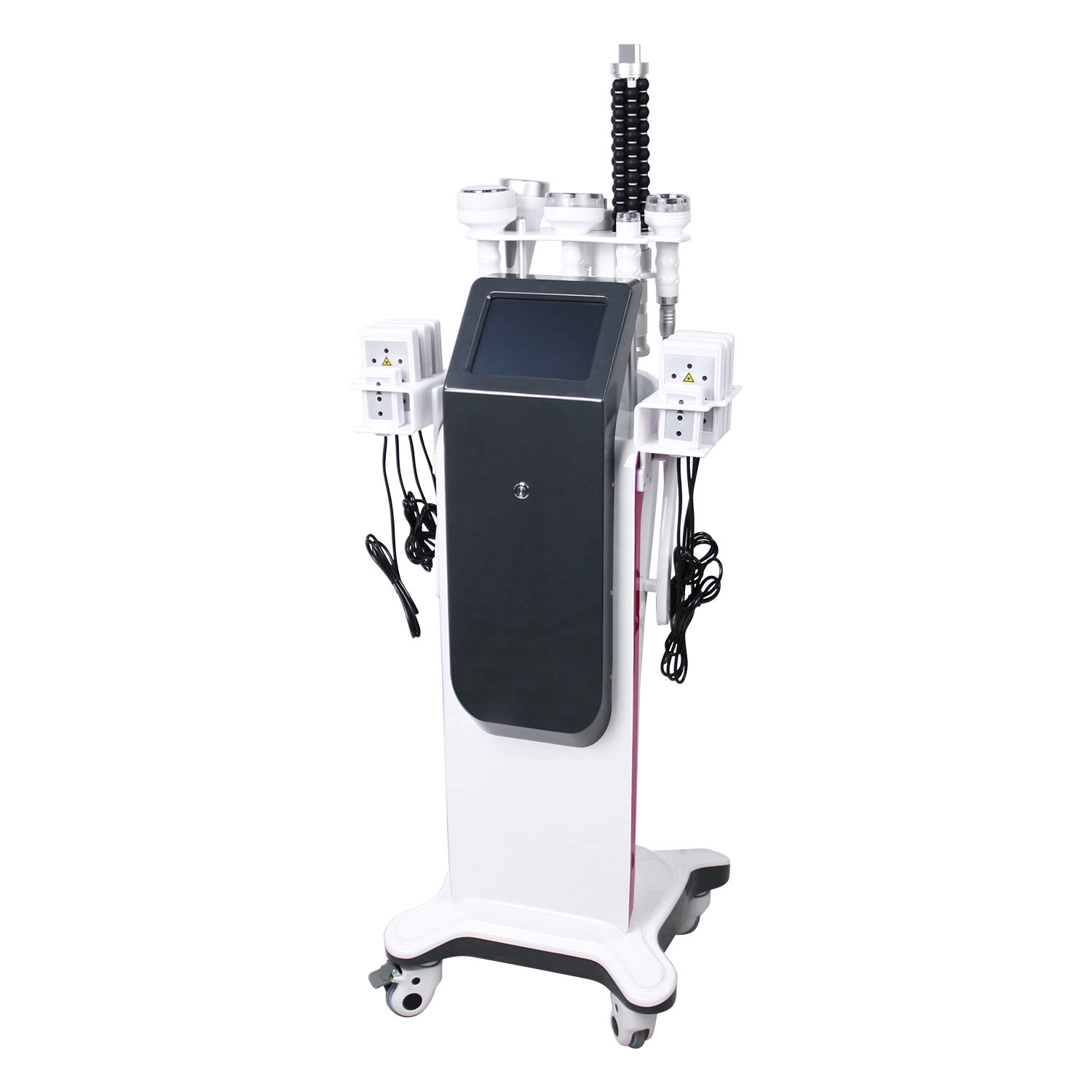
Professional 6-in-1 Cavitation Vacuum Machine for Body Contouring & Slimming Treatment
The 6-in-1 Cavitation Vacuum Machine is a professional body contouring system designed for salons and spas seeking high-performance slimming solutions. This machine integrates 40K ultrasonic cavitation, vacuum suction, RF technology, and laser lipolysis to target stubborn fat, enhance lymphatic drainage, tighten the skin, and contour the body shape effectively.
Equipped with multiple ergonomic handles and a smart touch screen, this cavitation vacuum machine provides a comfortable and efficient experience for both operators and clients. It is ideal for full-body treatments including abdomen, arms, legs, waistline, hips, and back.
Perfect for beauty salons, spas, and aesthetic centers that want to offer non-invasive fat reduction and body-sculpting services.
Get more information
If you have any comments or good suggestions, please leave us a message; later our professional staff will contact you as soon as possible.
Let's Talk
Stay in touch with us for cutting-edge beauty solutions, professional guidance, and customized service.
Contact


Room 307, Building A, Huilong International E-commerce Industrial Park, No. 10 Xipengling Road, Helong Street, Baiyun District, Guangzhou, China
© 2025 HUIMAIN. All Rights Reserved. Privacy Policy | Terms and Conditions | Sitemap
Facebook
Instagram
Medical beauty equipment factory
huimain Medical beauty equipment factory
beauty machine supplier
Whatsapp: +8619124004543