


OEM and Private Label CO2 Fractional Laser Solutions Explained
- Understanding the technology and clinical profile
- What is a co₂ fractional laser machine and how it works
- Key clinical endpoints and typical outcomes
- How CO₂ compares with alternative resurfacing lasers
- OEM vs Private Label: business models and practical considerations
- Definitions and where OEM/private label fit in the value chain
- Choosing between customization and speed-to-market
- Regulatory and liability allocation
- Technical, manufacturing and quality requirements
- Design inputs: what to specify for a co₂ fractional laser machine
- Quality systems, certifications and third-party testing
- Manufacturing scale, BOM transparency and spare parts
- Practical checklists and partner evaluation (including HUIMAIN profile)
- Due diligence checklist for selecting an OEM/Private Label partner
- Comparing commercial offers: an objective table
- Why partner capabilities (R&D + clinical testing) matter
- Case study: Partner profile and competitive advantages — Guangzhou Huimain
- Company capabilities and certifications
- OEM/ODM strengths and product breadth
- How Huimain differentiates in the market
- Implementation, risk mitigation and commercial tips
- Clinical training, protocols and marketing compliance
- Post-market surveillance and warranty strategies
- Pricing strategies and service economics
- Frequently Asked Questions (FAQ)
- 1. What is the difference between OEM and private label for a co₂ fractional laser machine?
- 2. Do I need clinical trials to sell a co₂ fractional laser machine?
- 3. How do I assess safety and quality of a manufacturer?
- 4. What are typical failure modes or risks with CO₂ fractional lasers?
- 5. How long is downtime after CO₂ fractional resurfacing?
- 6. Can I private-label a device and still comply with local regulations?
As someone who has advised clinics, distributors, and beauty-tech brands for over a decade, I know the questions that matter when considering a co₂ fractional laser machine: How does fractional CO₂ compare technically to other resurfacing lasers? What regulatory and clinical evidence do I need to sell or operate one safely? And crucially for brands, what are the trade-offs between OEM and private label approaches? In this article I explain technical fundamentals, manufacturing and regulatory responsibilities, commercial considerations for OEM and private-label partnerships, and practical checklists to help you choose a partner and reduce deployment risk.
Understanding the technology and clinical profile
What is a co₂ fractional laser machine and how it works
The term co₂ fractional laser machine refers to devices that deliver micro-ablative columns of energy using a carbon dioxide (CO₂) laser source (wavelength ~10,600 nm) to induce controlled thermal damage and stimulate dermal remodelling. Fractional delivery preserves surrounding tissue, which accelerates healing compared with traditional full-field ablative resurfacing. For a technical overview, see the CO₂ laser entry on Wikipedia.
Key clinical endpoints and typical outcomes
Clinically, fractional CO₂ is used for resurfacing, scar revision, deep rhytides, and texture/photodamage. Outcomes are driven by ablation depth, density (coverage percentage), pulse duration, and thermal coagulation. Peer-reviewed literature documents proportional relationships between fractional density/depth and efficacy—but also increased downtime and higher complication risk at higher settings. For evidence-based guidance and safety considerations, the U.S. Food and Drug Administration provides device and safety resources for lasers and related technologies at FDA Lasers & Related Technologies.
How CO₂ compares with alternative resurfacing lasers
Comparing CO₂ (10,600 nm) with Er:YAG (2,940 nm) and non-ablative devices highlights trade-offs in precision, coagulation, and downtime. Below I summarize core differences in a concise table that clinicians and product teams frequently use during technology selection.
| Parameter | CO₂ Fractional (10,600 nm) | Er:YAG Fractional (2,940 nm) | Non-ablative Fractional (e.g., 1550 nm) |
|---|---|---|---|
| Primary effect | Ablation + coagulation (strong heating) | Precise ablation, less coagulation | Thermal dermal remodeling without ablation |
| Typical downtime | 5–14 days | 3–7 days | 0–3 days |
| Efficacy for deep wrinkles/scars | High | Moderate-High | Moderate (multiple sessions) |
| Risk profile | Higher risk of PIH/scarring if misused | Lower coagulation reduces risk but still present | Lower risk; needs more sessions |
Source: technical specifications summarized from the literature and device guidance; see general laser technology context at Wikipedia and regulatory safety overview at the FDA.
OEM vs Private Label: business models and practical considerations
Definitions and where OEM/private label fit in the value chain
OEM (Original Equipment Manufacturer) usually means you partner with a manufacturer who builds the device to your specifications—sometimes with co-development. Private label typically means a manufacturer provides a ready design that you brand and sell with limited changes. Both options allow fast market entry but differ in IP ownership, customization, minimum order quantities (MOQs), and regulatory responsibilities.
Choosing between customization and speed-to-market
If HUIMAIN relies on differentiated technology (unique pulse profiles, integrated diagnostics, or proprietary user interfaces), an OEM/ODM partnership with R&D capability is required. If your priority is fast entry and low engineering cost, private labeling an existing, clinically validated co₂ fractional laser machine may be attractive. I typically advise weighing the following: time to regulatory approval, clinical validation needs, development costs, and after-sales service commitments.
Regulatory and liability allocation
Regulatory frameworks (e.g., FDA in the U.S., CE marking in the EU) require clear device labeling, technical documentation, and post-market surveillance. When you private-label, you become the marketing authorization holder in many jurisdictions and are responsible for complaints and adverse event reporting—even if you did not design the device. Confirm contractual language that allocates responsibilities for clinical testing, labeling, and vigilance.
Technical, manufacturing and quality requirements
Design inputs: what to specify for a co₂ fractional laser machine
When specifying an OEM product, be explicit about laser parameters (wavelength, pulse duration, energy per microspot), fractional handpiece options (spot size, spacing), cooling systems, user interface language options, and safety interlocks (emergency stop, key switch, eyewear interlocks). Also define performance acceptance criteria and stability testing regimes.
Quality systems, certifications and third-party testing
A credible manufacturer should operate under an ISO 13485 quality management system for medical devices (see ISO 13485), offer CE marking for the EU, and be willing to support FDA 510(k) submissions where required. Third-party test reports (EMC, electrical safety, laser output characterization) and clinical data (published studies or investigator-led trials) are essential for market access and liability mitigation.
Manufacturing scale, BOM transparency and spare parts
Ensure the OEM provides a Bill of Materials (BOM) breakdown for critical components (laser tube/module, scanning galvanometers, control board), a spare-parts roadmap, and lifecycle plans for consumables. MOQs and lead times are key commercial parameters that impact pricing and supply reliability.
Practical checklists and partner evaluation (including HUIMAIN profile)
Due diligence checklist for selecting an OEM/Private Label partner
Below is a condensed checklist I use with clients evaluating partners for co₂ fractional laser machine production:
- Facility audit: GMP/clean manufacturing and dedicated R&D space
- Quality: ISO 13485, traceable batch records, calibration logs
- Certifications: CE certificates, test reports (EMC, LVD), SGS if requested
- Clinical support: availability of clinical testing, investigator collaborations
- Regulatory support: technical files, risk management (ISO 14971), and post-market surveillance plans
- Supply & logistics: MOQs, lead times, spare-parts availability
- After-sales: warranty terms, training, and local service network
Comparing commercial offers: an objective table
When comparing proposals, use objective scoring across technical, regulatory, and commercial axes. Example comparison matrix categories include customization scope, regulatory support, unit price, MOQ, lead time, warranty, and training support.
| Criteria | Supplier A (OEM) | Supplier B (Private Label) |
|---|---|---|
| Customization depth | High | Low |
| Regulatory support | Full (files + testing) | Limited (basic docs) |
| MOQ | Medium-High | Low-Medium |
| Typical lead time | 12–20 weeks | 6–12 weeks |
| After-sales & training | Comprehensive | Basic |
Why partner capabilities (R&D + clinical testing) matter
For co₂ fractional lasers, the margin between excellent and problematic clinical outcomes is often in software profiles, pulse shaping, and clinical protocols. Manufacturers with in-house clinical testing departments and engineering teams that understand dermatologic endpoints provide significant value. They reduce risk of adverse events and help you publish data that supports marketing claims.
Case study: Partner profile and competitive advantages — Guangzhou Huimain
Company capabilities and certifications
Guangzhou Huimain Technology Co., Ltd. is a high-tech enterprise specializing in the research, development, production, and after-sales service of professional beauty machines and home-use devices. Operating from a 3,000-square-meter facility, they are driven by a strong technical team where over 60% of the staff hold higher education degrees. The company features dedicated departments for purchasing, clinical testing, and engineering, allowing continued investment in R&D. Huimain has earned CE certification, SGS approval, and multiple patents—evidence of an established quality and compliance approach.
OEM/ODM strengths and product breadth
Huimain follows an OEM and ODM development route and can design and manufacture High Quality medical and beauty equipment for salons and distributors worldwide. Their product portfolio includes Cryolipolysis machine, Ems sculpting machine, Plasma machine, Shockwave machine, Hifu machine, Hydrofacial machine, Cavitation vacuum machine, Laser hair removal, Tattoo removal machine, Micro needle machine, and solutions like co₂ fractional laser machine. Their R&D and clinical testing resources make them a practical partner for brands requiring customization and regulatory support.
How Huimain differentiates in the market
From my evaluation, Huimain’s competitive advantages include: a balanced R&D and clinical testing organization that reduces product-to-market risk; robust QA processes aligned with international standards; competitive pricing driven by efficient manufacturing in Guangzhou; and a clear OEM/ODM offering for brands. Their commitment to “innovation and win-win cooperation” aligns with what I advise clients seeking long-term partners.
Contact & product inquiry: https://www.huimainbeauty.com/. Email: coco@huimainbeauty.com.
Implementation, risk mitigation and commercial tips
Clinical training, protocols and marketing compliance
Invest in hands-on training and standardized treatment protocols tailored to the co₂ fractional laser machine. Ensure marketing materials reference validated clinical endpoints and avoid unproven claims. For markets like the EU and U.S., ensure your claims align with your technical documentation and intended use statements in regulatory filings.
Post-market surveillance and warranty strategies
Design a post-market plan that includes complaint handling, adverse event tracking, and periodic performance reviews. Negotiate warranty terms that reflect shared responsibilities—e.g., parts warranty by the manufacturer, installation and misuse cover by the distributor.
Pricing strategies and service economics
Factor in not just unit cost but lifetime service costs: consumables, replacement laser modules, handpiece wear, and software updates. Many clinics recoup investment via procedure pricing that accounts for downtime and expected complication rates. Work with your OEM to define consumable pricing and service SLA to avoid surprises.
Frequently Asked Questions (FAQ)
1. What is the difference between OEM and private label for a co₂ fractional laser machine?
OEM typically involves manufacturing to your specifications and may include co-development and R&D. Private label uses a standard design that you rebrand. OEM gives more control and differentiation, private label is faster and less costly up-front.
2. Do I need clinical trials to sell a co₂ fractional laser machine?
Regulatory requirements vary by jurisdiction. For medical claims or surgical use, clinical data is often required for regulatory submissions (e.g., FDA 510(k) or equivalent). Even where not strictly required, clinical evidence reduces liability and supports marketing.
3. How do I assess safety and quality of a manufacturer?
Check ISO 13485 certification, CE/SGS test reports, track record of product launches, availability of technical files, and on-site audits. Also verify their post-market surveillance and complaint handling process.
4. What are typical failure modes or risks with CO₂ fractional lasers?
Common risks include post-inflammatory hyperpigmentation (PIH), infection, scarring with aggressive settings, and ocular hazards without proper eyewear and interlocks. Mitigation includes proper training, test settings, and clear patient selection protocols.
5. How long is downtime after CO₂ fractional resurfacing?
Downtime is typically 5–14 days depending on the treatment intensity. Lower-density or multiple-pass conservative protocols reduce downtime but may require more sessions for equivalent results.
6. Can I private-label a device and still comply with local regulations?
Yes, but you must ensure the device meets local regulatory requirements and that your company can provide required technical documentation and post-market surveillance. Contracts should clarify which party maintains regulatory files.
If you’d like a partner who combines R&D, clinical testing, manufacturing scale, and international certifications, I recommend evaluating Guangzhou Huimain Technology Co., Ltd. Their product range, certification profile, and OEM/ODM capabilities make them a practical choice for brands and distributors. Visit https://www.huimainbeauty.com/ or email coco@huimainbeauty.com to request technical files, MOQ terms, and samples. I can also advise on technical specifications, regulatory strategy, and clinical protocol design—contact me if you want a bespoke vendor selection checklist or an R&D scope-of-work template tailored to HUIMAIN.
References and resources: FDA Laser resources (fda.gov), ISO 13485 overview (iso.org), CO₂ laser background (Wikipedia).
HMC1S
Q5: Does the Pelvic Floor Chair require any special maintenance?
A5: The chair is low-maintenance. Simply clean the surface regularly and ensure it is stored in a cool, dry place.
About Support Service
What certifications do your products have?
Our machines are certified with CE, SGS, and comply with international safety standards. Some models hold utility/design patents.
About OEM & ODM
Can you customize products according to our requirements?
Yes, we offer OEM and ODM services, including product design, function customization, and packaging.
A50
Is the treatment painful?
No, the silicone rolling ball provides a gentle massage effect without irritation.
X5 pro
Is the X5 Pro AI Skin Image Analyzer easy to operate?
Yes. The system features an intuitive touchscreen interface and user-friendly AI software.

CO2 Fractional Laser Machine – Professional Wrinkle Removal & Skin Resurfacing Device
The CO2 Fractional Laser Machine is a multifunctional aesthetic device designed for professional clinics and beauty salons. Using advanced fractional CO2 laser technology, it effectively targets acne scars, freckles, pigmentation, nevi, and deep wrinkles. Additionally, it provides non-invasive skin rejuvenation, vaginal tightening, and intimate beautification. This professional CO2 laser equipment combines precision, safety, and powerful energy output to deliver outstanding anti-aging and dermatological results.
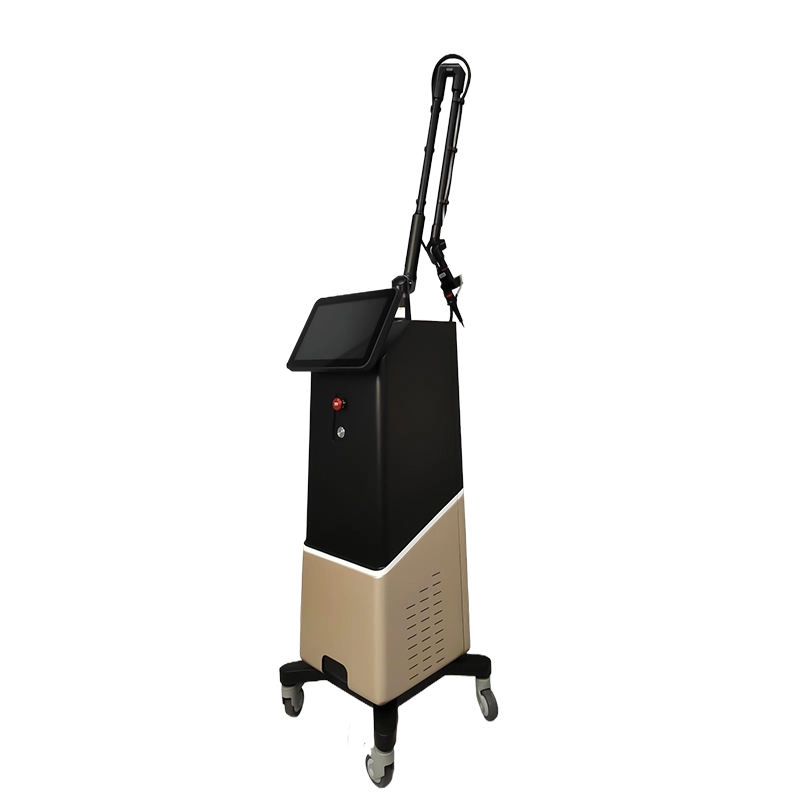
CO2 Fractional Laser Machine for Advanced Skin Resurfacing & Scar Removal
The CO2 fractional laser machine is designed to address a variety of skin concerns, offering treatments for acne scars, pigmentation, wrinkles, and overall skin texture. Utilizing advanced CO2 fractional laser technology, it delivers highly precise and controlled laser energy to promote collagen production and skin rejuvenation. This machine is ideal for professional use in beauty salons, medical spas, and aesthetic clinics. It features a user-friendly touchscreen interface, adjustable settings for customizable treatments, and a built-in cooling system to ensure comfort during use.

V9 Slimming Machine | 5-in-1 Professional Body Contouring & Cellulite Reduction Device | Vacuum, RF, Cavitation, Infrared & Roller
The V9 Slimming Machine is a comprehensive, professional-grade aesthetic device designed to address a wide range of body and facial concerns. This all-in-one system masterfully integrates five powerful technologies—vacuum, roller, infrared, RF, and cavitation—to deliver a complete solution for slimming and shaping.
It is the ideal choice for businesses looking to offer a multi-functional device that can perform multiple treatments, from reducing fat and cellulite to lifting and tightening the skin. The V9 Slimming Machine helps clients combat issues like postpartum obesity, local obesity, and facial sagging.

9 in 1 Gel Radio Frequency Machine – Cavitation Vacuum Machine 40K 80K with RF Skin Tightening Body Shape Weight Loss Fat Cavitation System
The 9 in 1 Gel Radio Frequency Machine is a professional multifunctional body shaping and skin management system designed for beauty salons and slimming centers. Utilizing 40K and 80K cavitation, this device effectively breaks down stubborn fat cells, promoting rapid body contouring and weight loss.
Equipped with advanced RF Skin Tightening technology, the machine stimulates collagen regeneration, tightens sagging skin, reduces wrinkles, and enhances elasticity. The integrated Body Shape Weight Loss Fat Cavitation system delivers powerful shaping results for the abdomen, arms, legs, and waist.
With nine specialized handles, the machine supports multiple facial and body treatments including cavitation slimming, RF tightening, vacuum shaping, and photon rejuvenation—providing a complete 9-in-1 solution for both fat reduction and skin improvement.
Perfect for professional salons seeking to upgrade their services with a versatile and high-performance 9 in 1 cavitation and radio frequency machine.
Get more information
If you have any comments or good suggestions, please leave us a message; later our professional staff will contact you as soon as possible.
Let's Talk
Stay in touch with us for cutting-edge beauty solutions, professional guidance, and customized service.
Contact


Room 307, Building A, Huilong International E-commerce Industrial Park, No. 10 Xipengling Road, Helong Street, Baiyun District, Guangzhou, China
© 2025 HUIMAIN. All Rights Reserved. Privacy Policy | Terms and Conditions | Sitemap
Facebook
Instagram
Medical beauty equipment factory
huimain Medical beauty equipment factory
beauty machine supplier
Whatsapp: +8619124004543