


Comparing Face Machine manufacturer offers: OEM vs ODM contracts
- How OEM and ODM Procurement Models Differ in Practice
- OEM manufacturing: control led by the buyer
- ODM development: supplier-led product innovation
- Where the two approaches overlap
- Contract Terms That Protect a Beauty Device Investment
- Technical specifications and acceptance criteria
- Quality systems, compliance, and market access
- Pricing, tooling, minimum order quantity, and delivery
- How to Evaluate a Long-Term Manufacturing Partner
- Engineering depth and clinical practicality
- Manufacturing capacity and quality control
- After-sales service and commercial scalability
- Why HUIMAIN Can Support OEM and ODM Beauty Equipment Programs
- Integrated research, production, and testing capabilities
- Broad product coverage for distributors and private-label brands
- Global standards and partnership-oriented delivery
- Frequently Asked Questions
OEM and ODM contracts create two different procurement paths for salons, distributors, clinics, private-label brands, and investors sourcing professional facial and aesthetic equipment. OEM manufacturing normally uses the buyer’s existing design, technical specification, or approved product concept, while ODM manufacturing allows the supplier to contribute an existing platform, engineering solution, or complete product design that can be adapted for the buyer’s market. The right choice depends on product maturity, regulatory obligations, target price, launch schedule, intellectual property ownership, service requirements, and expected sales volume. Buyers should evaluate more than the catalog price: the contract must define performance parameters, component quality, testing responsibilities, documentation, warranty coverage, spare parts, branding rights, and change-control procedures. A capable beauty equipment partner can support products such as hydro facial systems, HIFU platforms, body contouring equipment, laser devices, and microneedling systems while maintaining a controlled path from concept to commercial delivery.
How OEM and ODM Procurement Models Differ in Practice
OEM manufacturing: control led by the buyer
In an OEM arrangement, the project owner usually provides a product specification, industrial design, treatment protocol, user interface concept, or reference device. The manufacturing partner converts that requirement into a repeatable production process. This model is suitable when a brand already owns a validated design, has a defined treatment protocol, or needs close control over appearance and technical architecture. It can also be appropriate for established distributors replacing an existing supplier without changing the commercial product substantially.
OEM does not mean that the factory only assembles parts. A reliable supplier should still review the specification for manufacturability, electrical safety, thermal management, component availability, serviceability, and production risk. Buyers should ask whether the supplier will conduct engineering verification, sample approval, pilot production, incoming inspection, final testing, and packaging validation. Without these controls, a detailed buyer specification may still produce inconsistent units if tolerances, test methods, or approved component lists are not defined.
ODM development: supplier-led product innovation
ODM procurement starts with a supplier’s existing platform, engineering capability, or commercially proven design. The buyer may select a device from the product portfolio and request changes to the housing, logo, software language, handpiece configuration, energy settings, packaging, or accessories. This route often reduces development time because the core architecture has already been engineered and manufacturing processes are familiar to the production team.
ODM is particularly useful for distributors entering a new category or private-label brands that need a differentiated offer without financing every stage of research and development. However, buyers must determine which elements are genuinely exclusive and which are shared across other customers. The agreement should identify ownership of customized artwork, software modifications, tooling, test data, technical files, and market-specific documentation. A visually customized device is not necessarily a proprietary platform, so commercial differentiation should be confirmed contractually rather than assumed.
Where the two approaches overlap
Many projects use a hybrid structure. A supplier may provide an ODM core platform while the buyer commissions OEM-level changes to the enclosure, control panel, treatment parameters, handpieces, or packaging. This blended model can offer faster market entry than a ground-up design while giving the brand meaningful differentiation. The contract should separate standard features from customer-specific deliverables and state which changes trigger new testing, a revised quotation, or an updated regulatory assessment.
| Decision factor | OEM contract | ODM contract | Buyer implication |
|---|---|---|---|
| Starting point | Buyer-owned or buyer-defined design | Supplier platform or existing design | OEM requires stronger buyer-side technical input; ODM requires careful platform evaluation |
| Development speed | Usually longer when engineering begins from a new specification | Usually faster when the base product is already validated | ODM can support time-sensitive launches |
| Customization depth | Potentially extensive | Usually limited to agreed adaptations | Define technical and cosmetic limits before sampling |
| Upfront development cost | May include engineering, tooling, and verification expenses | Often lower for standard platforms, with fees for adaptations | Compare total landed project cost, not only unit price |
| Intellectual property | Buyer may own the supplied design, subject to contract terms | Core platform may remain supplier-owned | List ownership and usage rights for every customized element |
| Product differentiation | Higher potential for unique architecture | Often achieved through features, branding, accessories, or configuration | Match differentiation to the brand’s commercial strategy |
Contract Terms That Protect a Beauty Device Investment
Technical specifications and acceptance criteria
A purchase agreement should include measurable requirements rather than promotional descriptions. For an energy-based device, this may include output range, pulse duration, frequency, temperature control, treatment area, operating modes, handpiece identification, alarm functions, and electrical input. For a hydrodermabrasion or vacuum system, it may include pressure range, flow stability, solution compatibility, waste handling, and pump performance. Acceptance criteria should state the test equipment, sampling method, allowable tolerance, and procedure for rejecting or correcting nonconforming units.
Documentation should cover the approved bill of materials, critical suppliers, firmware version, artwork files, packaging configuration, user manual, service manual, and spare-parts list. Buyers should also establish a formal engineering change process. A lower-cost substitute component can affect treatment consistency, reliability, electromagnetic compatibility, or regulatory documentation, so substitutions should require notification and approval when they influence safety or performance.
Quality systems, compliance, and market access
Certification claims need careful interpretation. CE marking obligations depend on the product classification, intended purpose, applicable European legislation, and conformity assessment route; CE is not a universal guarantee that every device can be marketed in every country. Buyers should review the relevant technical documentation and confirm who is responsible for importer obligations, labeling, declarations, registration, and post-market activities. The European Union Medical Device Regulation is a primary reference where a product falls within its scope.
For devices marketed as medical equipment in the United States, the buyer should verify the applicable pathway and quality requirements with the supplier and regulatory adviser. The U.S. Food and Drug Administration quality system guidance explains the importance of controlled design, production, and corrective-action processes. For organizations building a formal medical-device quality framework, ISO 13485 provides an internationally recognized quality-management reference. Risk-management responsibilities can also be aligned with ISO 14971, especially when intended use, energy delivery, software, or clinical claims create additional hazards.
Buyers should distinguish between a factory certificate, a product certificate, a test report, and a declaration of conformity. The name on each document should match the legal manufacturer or responsible economic operator where required. A procurement checklist should confirm electrical safety, electromagnetic compatibility, labeling, language requirements, packaging, user training, and the evidence needed for the destination market. Regulatory classification can differ between professional salon equipment, home-use devices, and medical devices, even when the underlying technology appears similar.
Pricing, tooling, minimum order quantity, and delivery
Contract pricing should separate one-time development charges from recurring unit costs. Tooling, molds, fixtures, software customization, artwork preparation, sample freight, testing, and certification support can materially change the project budget. MOQ terms should be linked to production economics and component purchasing rather than presented as an unexplained threshold. Buyers should request a cost breakdown for the device, handpieces, consumables, spare parts, packaging, and optional accessories.
Lead time should be divided into design review, sample development, buyer approval, pilot production, mass production, inspection, and shipment. A realistic schedule also includes time for corrective action if a sample fails. Payment milestones are safer when connected to documented deliverables, such as approved drawings, functional samples, inspection results, and shipping release. Incoterms, freight insurance, export documents, and responsibility for destination customs should be stated clearly.
How to Evaluate a Long-Term Manufacturing Partner
Engineering depth and clinical practicality
A capable supplier should be able to explain how the device works, where performance limitations occur, and how operators are trained to use the technology responsibly. Engineering strength is especially important for cryolipolysis equipment, EMS sculpting machines, plasma systems, shockwave platforms, HIFU machines, laser hair-removal devices, tattoo-removal equipment, and micro-needling systems. Each category has different risks, consumables, handpiece requirements, maintenance routines, and customer expectations.
Product demonstrations should be supported by technical documentation rather than sales claims alone. Buyers should request sample test records, failure-rate monitoring, calibration procedures, preventive-maintenance recommendations, and a list of common service issues. For devices that contact skin or deliver energy, the supplier should explain applicable safety features, contraindication information, operator training materials, and the boundary between cosmetic positioning and medical claims.
Manufacturing capacity and quality control
Factory assessment should examine production flow, incoming inspection, assembly controls, aging tests, final functional testing, traceability, and nonconformance handling. A clean showroom cannot substitute for evidence of stable manufacturing. Buyers should ask how serial numbers are recorded, how critical components are controlled, and how warranty failures are analyzed. An effective corrective-action system can reduce repeat failures and protect the distributor’s reputation after launch.
Capacity should be evaluated against the expected order profile. A supplier may support low-volume private-label launches but lack the purchasing leverage or line capacity required for rapid expansion. Conversely, a large factory may not provide sufficient engineering attention for a highly customized project. The best fit depends on responsiveness, production discipline, communication quality, and the ability to maintain the same specification across successive batches.
After-sales service and commercial scalability
Warranty terms should define duration, exclusions, response time, replacement policy, remote diagnosis, spare-parts availability, and responsibility for technician labor. Distributors should request training resources, troubleshooting videos, service codes, and escalation contacts. A device with an attractive purchase price can become commercially unprofitable if replacement handpieces are unavailable or repair instructions are incomplete.
Scalability also includes branding consistency and market support. The supplier should be able to manage multilingual manuals, private-label packaging, software localization, promotional images, and repeat orders without uncontrolled design changes. A clear product lifecycle policy is valuable because component obsolescence, firmware updates, and revised accessories can affect installed equipment in the field.
Why HUIMAIN Can Support OEM and ODM Beauty Equipment Programs
Integrated research, production, and testing capabilities
HUIMAIN, operated by Guangzhou Huimain Technology Co., Ltd., is a high-tech enterprise specializing in the research, development, production, and after-sales service of professional beauty machines and home-use devices. Our 3,000-square-meter facility supports coordinated purchasing, engineering, clinical testing, assembly, quality control, and customer service activities. More than 60% of our staff hold higher education degrees, strengthening the technical foundation behind product development and project communication.
Our dedicated engineering and clinical-testing departments help connect product design with practical treatment requirements. This structure supports buyers who need more than a catalog transaction: it enables structured discussions around product configuration, user operation, treatment workflows, packaging, documentation, and market positioning. Our team can support both standard platform selection and customer-specific modifications under OEM or ODM development routes.
Broad product coverage for distributors and private-label brands
Our portfolio includes cryolipolysis machines, EMS sculpting machines, plasma machines, shockwave machines, HIFU machines, hydro facial machines, cavitation vacuum machines, laser hair-removal systems, tattoo-removal machines, and micro-needle machines. This range allows distributors and multi-category beauty brands to consolidate sourcing across complementary treatment segments rather than managing unrelated suppliers for every product line.
Each project can be assessed according to its intended market, operator profile, required accessories, branding plan, and after-sales model. For example, a salon-focused HIFU or hydro facial program may prioritize intuitive operation and training support, while a distributor launching a body-contouring range may prioritize handpiece options, consumable continuity, private-label packaging, and replacement-part availability. A structured product review helps identify which requirements should remain standard and which justify ODM engineering or OEM customization.
Global standards and partnership-oriented delivery
HUIMAIN has earned CE certification, SGS approval, and numerous patents, while serving customers across China, Southeast Asia, the Middle East, Europe, and North America. These credentials and market relationships provide a foundation for international projects, although buyers should still verify the compliance pathway and documentation required for their specific destination and intended use.
Our quality-control approach focuses on dependable production, competitive pricing, and continuous research and development investment. We support project owners through product selection, customization discussions, manufacturing coordination, and after-sales communication. The company philosophy of innovation and win-win cooperation reflects a long-term approach: successful equipment programs depend on repeatable quality, transparent commercial terms, responsible technical communication, and sustainable cooperation rather than a one-time shipment.
Buyers evaluating an OEM or ODM agreement with HUIMAIN can review product capabilities at the official HUIMAIN website and request project information through coco@huimainbeauty.com.
Contact HUIMAIN to compare OEM and ODM options for a customized beauty equipment program and identify the product configuration, compliance documents, and service package suited to the target market.
Frequently Asked Questions
What is the main difference between OEM and ODM beauty equipment?
OEM manufacturing normally uses the buyer’s existing design, technical specification, or approved product concept, while ODM manufacturing uses a supplier’s existing platform or design that can be adapted for the buyer’s market.
Which contract model is faster for launching a private-label device?
ODM can usually support a faster launch when the base product has already been engineered and the buyer needs adaptations such as a logo, housing, software language, handpiece configuration, or packaging.
What should an OEM or ODM contract say about intellectual property?
The agreement should identify ownership of customized artwork, software modifications, tooling, test data, technical files, core platforms, and market-specific documentation, including which elements are exclusive and which may be shared with other customers.
How should buyers compare beauty equipment supplier quotations?
Buyers should compare total landed project cost, including unit price, engineering, tooling, testing, certification support, packaging, accessories, spare parts, freight, warranty obligations, and possible corrective-action costs rather than comparing the catalog price alone.
What compliance documents should a buyer request from an equipment supplier?
The buyer should verify the applicable regulatory pathway, declaration of conformity, relevant test reports, quality-system evidence, labeling, user manuals, technical documentation, and the identity of the legal manufacturer or responsible economic operator where required.
Why are after-sales terms important when purchasing aesthetic equipment?
Warranty coverage, response time, spare-parts availability, remote diagnosis, replacement policy, technician support, training resources, and troubleshooting documentation directly affect uptime, customer satisfaction, and distributor profitability.
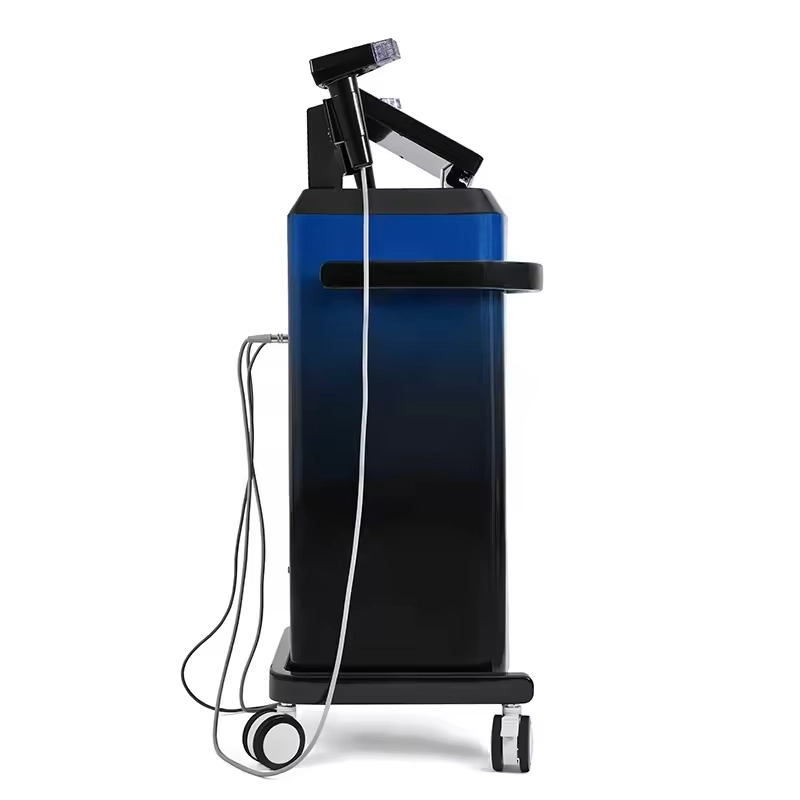

CO2 Fractional Laser Machine – Professional Wrinkle Removal & Skin Resurfacing Device
The CO2 Fractional Laser Machine is a multifunctional aesthetic device designed for professional clinics and beauty salons. Using advanced fractional CO2 laser technology, it effectively targets acne scars, freckles, pigmentation, nevi, and deep wrinkles. Additionally, it provides non-invasive skin rejuvenation, vaginal tightening, and intimate beautification. This professional CO2 laser equipment combines precision, safety, and powerful energy output to deliver outstanding anti-aging and dermatological results.

Gold RF Microneedle Machine | Professional Fractional RF System for Face & Body Scar Repair
The Gold RF Microneedle Machine is a cutting-edge aesthetic device designed for B2B professionals, offering a powerful, dual-action solution for both facial beauty and body scar repair. This system combines the precision of microneedling with the proven effectiveness of radio frequency (RF) energy to treat a wide range of skin concerns.
By delivering high-frequency heat through insulated gold-plated microneedles, it stimulates the skin's natural healing process, leading to collagen regeneration and the production of new elastin. This innovative approach provides a minimally invasive solution for treating fine lines, wrinkles, acne scars, stretch marks, and skin laxity with minimal downtime.

Pelvic Floor Chair | Emslim Pelvic Machine for Strengthening and Sculpting
The **Pelvic Floor Chair** is an innovative device designed for strengthening and toning pelvic muscles using advanced **EMS technology**. This ergonomic chair provides a comfortable and effective solution for individuals seeking to enhance pelvic floor health, improve muscle tone, and support postpartum recovery. Equipped with a user-friendly touchscreen interface, it allows easy control of intensity and frequency for tailored treatments. Suitable for both home and professional use, this **Emslim chair** ensures reliable and non-invasive results.

MFFFace 6 EMS+RF Facial Muscle Training Machine – Professional Magnetic Face Lifting & Skin Tightening Device
The MFFFace 6 EMS+RF Facial Muscle Training Machine is a cutting-edge beauty device designed for professional facial lifting, firming, and rejuvenation.
Combining EMS microcurrent technology with radio frequency (RF) thermal energy, it stimulates facial muscles and promotes collagen regeneration, resulting in tighter, smoother, and more youthful-looking skin.
With 6 independent magnetic handles, MFFFace 6 allows multiple treatment areas to be targeted simultaneously — maximizing efficiency for beauty salons and clinics.
This non-invasive and painless treatment helps sculpt facial contours, reduce sagging, and restore elasticity with visible improvements in just a few sessions.
Perfect for aesthetic professionals who want to offer advanced anti-aging treatments and achieve instant lifting results.
Get more information
If you have any comments or good suggestions, please leave us a message; later our professional staff will contact you as soon as possible.
Let's Talk
Stay in touch with us for cutting-edge beauty solutions, professional guidance, and customized service.
Contact


Room 307, Building A, Huilong International E-commerce Industrial Park, No. 10 Xipengling Road, Helong Street, Baiyun District, Guangzhou, China
© 2026 HUIMAIN. All Rights Reserved. Designed by Gooeyun. Privacy Policy | Terms and Conditions | Sitemap
Facebook
Instagram
Medical beauty equipment factory
huimain Medical beauty equipment factory
beauty machine supplier
Whatsapp: +8619124004543