


Optimizing HIFU Settings for Different Skin Types
- Clinical principles for safe HIFU energy delivery
- Why HIFU Machines require individualized settings
- Pre‑treatment assessment and risk stratification using HIFU Machines
- Essential clinical evaluation steps
- Key HIFU Machines parameters to adjust
- Depth cartridges, energy per shot, shot spacing and passes
- Practical parameter framework by Fitzpatrick skin type
- Tailored safety-first approach using HIFU Machines
- Adapting settings for skin thickness, laxity, and anatomical zones
- Practical modifications beyond skin type
- Protocols for test spots, escalation, and session planning
- How to titrate energy safely across sessions
- Managing pain, anesthesia, and patient comfort on HIFU Machines
- Options and recommendations
- Common complications and prevention strategies
- How to minimize and manage adverse events
- HIFU Machines in the context of other skin tightening technologies
- Comparative overview
- Documentation, training and device validation
- Operator competence and clinical governance
- Why partner with established OEM/ODM manufacturers for HIFU Machines
- How Guangzhou Huimain Technology Co., Ltd. supports clinical and commercial needs
- Troubleshooting common clinical scenarios with HIFU Machines
- Examples and corrective actions
- Conclusion and practical checklist before operating HIFU Machines
- Operator checklist
- FAQ — Frequently Asked Questions about HIFU Machines and skin types
- 1. Can HIFU be safely used on dark skin (Fitzpatrick V–VI)?
- 2. How many HIFU sessions are typically required for meaningful lifting?
- 3. Are there anatomical areas you should avoid treating with HIFU Machines?
- 4. What immediate aftercare reduces complications?
- 5. How do I choose an OEM/ODM partner for HIFU Machines?
- 6. When should I consider alternative modalities instead of HIFU?
- Contact & product inquiry
- References and further reading
Clinical principles for safe HIFU energy delivery
Why HIFU Machines require individualized settings
High-Intensity Focused Ultrasound (HIFU) Machines are widely used for non‑surgical skin tightening and lifting because they create precise thermal coagulation points at controlled depths. However, patient outcomes and complication risks depend heavily on matching device parameters to skin biology—most notably the Fitzpatrick skin type, dermal thickness, subcutaneous fat, and degree of laxity. A one‑size‑fits‑all protocol increases the chance of under‑treatment or adverse events such as burns, prolonged edema, or post‑inflammatory hyperpigmentation (PIH). This article provides a practical roadmap for optimizing HIFU settings per skin type and clinical scenario, grounded in clinical reasoning and device‑agnostic best practices for HIFU Machines.
Pre‑treatment assessment and risk stratification using HIFU Machines
Essential clinical evaluation steps
Before programming an HIFU device, perform a structured assessment:
- Determine Fitzpatrick skin type (I–VI) and history of PIH, keloids, or abnormal scarring. Fitzpatrick type predicts PIH risk and affects energy choices (see table below).
- Assess skin laxity, thickness, and subcutaneous fat distribution. Thinner skin is more prone to superficial burns; thick subcutaneous fat may require deeper penetration or a different modality.
- Review prior procedures (lasers, peels, fillers, threads). Wait recommended intervals—e.g., recent ablative laser or deep chemical peel increases risk.
- Consider diagnostic ultrasound imaging (if available) to measure dermal and SMAS depths, especially for atypical anatomy.
- Obtain informed consent that explains realistic outcomes, number of sessions, and potential side effects.
Key HIFU Machines parameters to adjust
Depth cartridges, energy per shot, shot spacing and passes
Modern HIFU Machines allow clinicians to modify four primary parameters:
- Focus depth (commonly 1.5 mm, 3.0 mm, 4.5 mm for face; other depths available for body): chooses target tissue layer (superficial dermis, deep dermis, SMAS).
- Energy per shot (commonly expressed in joules or device‑specific units): higher energy produces larger thermal coagulation zones but increases risk of pain and adverse events.
- Shot density/spacing (mm between adjacent focal points): denser patterns increase treatment intensity per area and risk of thermal stacking.
- Number of passes/lines: total coverage influences cumulative energy delivered.
Other clinician decisions include pulse interval, cooling, and anesthesia approach (topical anesthetic, nerve blocks, oral analgesia). All adjustments should follow manufacturer recommendations and local regulations.
Practical parameter framework by Fitzpatrick skin type
Tailored safety-first approach using HIFU Machines
The following table provides a conservative, clinician‑oriented framework to guide initial HIFU parameter selection according to Fitzpatrick skin type and common facial scenarios. These are generalized recommendations—always validate with device manuals and perform test spots.
| Fitzpatrick Type | PIH Risk | Recommended Initial Depths (typical) | Energy Guidance | Shot Spacing & Passes | Notes / Safety |
|---|---|---|---|---|---|
| I–II (very fair) | Low | 4.5 mm (SMAS), 3.0 mm (deep dermis), optional 1.5 mm | Start mid‑range energy; can escalate if tolerated | Standard spacing (e.g., 1.5–2.5 mm); 1–2 passes | Monitor for immediate erythema/edema; analgesia as needed |
| III–IV (olive to light brown) | Moderate | Prefer 3.0–4.5 mm; 1.5 mm used cautiously | Start low‑to‑mid energy and titrate; test spot recommended | Moderate spacing; avoid overlapping dense passes on same day | Higher PIH risk than I–II—observe 1–2 weeks before retreat |
| V–VI (brown to dark brown) | Higher | Favor deeper cartridges (3.0–4.5 mm); avoid routine superficial 1.5 mm unless justified | Begin low energy; increase slowly across sessions if needed | Wider spacing; single conservative pass initial session | Always perform patch test; strict sun avoidance and aggressive PIH prevention |
Rationale: darker phototypes have higher risk of PIH and may respond to lower energy with similar clinical benefit. Conservative initial dosing reduces complications while allowing staged escalation in later sessions.
Adapting settings for skin thickness, laxity, and anatomical zones
Practical modifications beyond skin type
Clinical decision‑making must integrate more than Fitzpatrick type:
- Thin skin (e.g., periorbital area): use lower energy and more superficial cartridges cautiously; avoid excessive passes.
- Heavy subcutaneous fat or severe laxity (e.g., jowls, neck): prioritize deeper focus (4.5 mm) and consider higher density over multiple sessions.
- Periorbital and infraorbital zones: use the lowest effective energy, minimal passes; careful protection of the eye and periorbital anatomy is essential.
- Previously treated areas (fillers, threads): avoid overlapping intense HIFU application; allow recommended intervals and map out filler locations.
Protocols for test spots, escalation, and session planning
How to titrate energy safely across sessions
Best practice is staged escalation:
- Perform a small test spot with the planned deepest cartridge at low energy on a discreet area. Observe immediate response and follow up at 1 week for delayed effects/PIH.
- If tolerated, complete a conservative full session (single pass, low‑mid energy) covering target zones.
- Schedule follow‑up at 4–12 weeks to evaluate tissue contraction and side effects; escalate energy, density, or add superficial cartridges in subsequent sessions if needed.
Most patients require 1–3 sessions spaced 6–12 weeks apart for cumulative tightening; clinical judgment depends on baseline laxity and goals.
Managing pain, anesthesia, and patient comfort on HIFU Machines
Options and recommendations
HIFU treatments can be uncomfortable. Comfort strategies include topical anesthetics (for superficial settings), local nerve blocks for intensive facial zones, oral analgesia/NSAIDs, and device features such as cooling or vibration. Avoid overuse of topical anesthetics in thin periocular skin where masking of complications is risky. Counsel patients about transient soreness, swelling, and paresthesia that generally resolve within days to weeks.
Common complications and prevention strategies
How to minimize and manage adverse events
Potential complications include transient erythema, edema, neuropraxia, surface crusting, burns, and PIH. To reduce risks:
- Adhere to manufacturer energy and cartridge guidance.
- Use test spots for darker phototypes and patients with prior pigmentary issues.
- Maintain conservative shot density and avoid overlapping energy in a single session.
- Provide clear pre/post instructions: avoid sun exposure, use broad‑spectrum sunscreen, and prescribe topical depigmenting agents if PIH risk exists.
For PIH management, early intervention with topical hydroquinone alternatives (e.g., azelaic acid, tranexamic acid) and strict photoprotection have evidence of benefit. Refer persistent neuropathic pain to appropriate specialists.
HIFU Machines in the context of other skin tightening technologies
Comparative overview
Understanding where HIFU fits helps set expectations. The table below compares HIFU Machines with radiofrequency (RF) and fractional lasers for lifting and skin rejuvenation.
| Modality | Typical Target Depth | Downtime | PIH Risk | Best Indications |
|---|---|---|---|---|
| HIFU Machines | Focused to SMAS/Deep dermis (1.5–4.5 mm) | Low–moderate (transient swelling/erythema) | Low–moderate (higher in darker phototypes) | Skin laxity, lifting, facial contouring without surgery |
| Radiofrequency (monopolar/ bipolar) | Superficial to mid dermis; some devices deeper | Low | Low–moderate | Fine lines, laxity, skin texture improvement |
| Fractional ablative lasers | Superficial to mid dermis | Moderate–high (depends on ablation depth) | Higher in darker skins | Resurfacing, scar revision, pigmentary correction |
Documentation, training and device validation
Operator competence and clinical governance
Operator training and device validation are essential components of safe HIFU practice. Clinicians should:
- Complete manufacturer training and competency assessment.
- Maintain detailed treatment logs (parameters, device serial number, photos) to audit outcomes and adverse events.
- Follow regulatory requirements for medical devices and maintain CE/ISO/ local approvals for devices in use.
Why partner with established OEM/ODM manufacturers for HIFU Machines
How Guangzhou Huimain Technology Co., Ltd. supports clinical and commercial needs
For clinics and distributors seeking reliable HIFU Machines and full lifecycle support (R&D, manufacturing, regulatory, and after‑sale service), partnering with an experienced OEM/ODM can be advantageous. Guangzhou Huimain Technology Co., Ltd. is a high‑tech company focused on beauty machines and home‑use device series. The company is professional in research & development, production, sales, and after‑sale service. Key points:
- Facility & team: 3,000 m² production area; over 20% of staff hold bachelor’s degrees and more than 40% have junior college degrees; a strong R&D department with experienced engineers and PE experts.
- Quality & certification: invests continuously in new product development; holds CE certification and SGS approval; has earned several patents for its products.
- Market reach & reputation: products sell globally—across China, Southeast Asia, the Middle East, Europe, and North America—and receive positive customer feedback for quality and cost‑effectiveness.
- OEM/ODM capability: designed for beauty machine OEM/ODM development and production, able to deliver high‑quality medical and beauty machines tailored to customers and salons.
Huimain's main product portfolio relevant to clinics includes: Cryolipolysis machine, EMS sculpting machine, Plasma machine, Shockwave machine, HIFU machine, Hydrofacial machine, Cavitation vacuum machine, Laser hair removal, Tattoo removal machine, and Microneedle machine. Their stated value proposition: innovate technology and win‑win cooperation, producing good‑quality devices favored by customer markets.
Troubleshooting common clinical scenarios with HIFU Machines
Examples and corrective actions
Scenario 1: Early PIH after treatment in a darker phototype. Action: start strict photoprotection, add topical lightening agents, halt further HIFU until resolution, and reassess energy approach for future sessions.
Scenario 2: Inadequate lift after single session. Action: re‑evaluate depth selection and shot density; consider staged additional sessions targeting SMAS with deeper cartridges and modestly increased density.
Scenario 3: Persistent neuropraxia or numbness. Action: neurologic assessment, conservative management (oral steroids if acute and indicated), and specialist referral for prolonged symptoms.
Conclusion and practical checklist before operating HIFU Machines
Operator checklist
- Complete patient assessment: Fitzpatrick type, skin/fat thickness, prior treatments.
- Plan cartridge depths and an initial conservative energy map; perform patch test when indicated.
- Document baseline photos, obtain consent, and educate about expectations and downtime.
- Follow up at 1–2 weeks and 6–12 weeks to evaluate results and escalate safely if needed.
- Ensure device maintenance, training, and regulatory compliance.
FAQ — Frequently Asked Questions about HIFU Machines and skin types
1. Can HIFU be safely used on dark skin (Fitzpatrick V–VI)?
Yes—with caution. Darker skin has higher PIH risk; start with low energy, avoid dense overlapping passes and perform a patch test. Strict photoprotection and early PIH management protocols should be in place.
2. How many HIFU sessions are typically required for meaningful lifting?
Most patients see progressive improvement after 1 session; 1–3 sessions spaced 6–12 weeks apart are common depending on baseline laxity and goals.
3. Are there anatomical areas you should avoid treating with HIFU Machines?
Avoid active infections, open wounds, areas with metal implants near the focal zone, and recently treated skin (e.g., recent ablative laser or deep peel) until healed. Use extreme caution around the eyes and thyroid region.
4. What immediate aftercare reduces complications?
Recommend gentle cleansing, avoidance of vigorous heat or exercise for 24–48 hours, strict sun protection, and topical anti‑inflammatory measures if needed. Provide written guidance and follow‑up scheduling.
5. How do I choose an OEM/ODM partner for HIFU Machines?
Evaluate the partner's R&D capability, regulatory track record (CE, ISO, FDA clearance where applicable), clinical testing support, warranty and after‑sales service, and flexibility for OEM/ODM customization. Onsite audits and reference checks are advisable.
6. When should I consider alternative modalities instead of HIFU?
If primary concerns are superficial textural changes or pigment, lasers or peels may be better. For minor laxity in very thin skin, RF or thread lifting might be preferable. Combine modalities strategically rather than over‑treating with a single one.
Contact & product inquiry
If you are purchasing HIFU Machines for clinical or distribution use, or seeking OEM/ODM manufacturing partners, consider contacting Guangzhou Huimain Technology Co., Ltd. for detailed product specifications, clinical validation support, and customization options. Their combination of R&D strength, certification, and global sales footprint makes them a pragmatic partner for clinics and distributors seeking reliable beauty equipment.
References and further reading
- High‑intensity focused ultrasound. Wikipedia. https://en.wikipedia.org/wiki/High-intensity_focused_ultrasound (accessed 2025-12-18).
- Fitzpatrick skin phototype classification. Wikipedia. https://en.wikipedia.org/wiki/Fitzpatrick_scale (accessed 2025-12-18).
- ISAPS Global Statistics. International Society of Aesthetic Plastic Surgery. https://www.isaps.org/medical-professionals/isaps-global-statistics/ (accessed 2025-12-18).
- CE Marking — European Commission. https://ec.europa.eu/growth/single-market/ce-marking/ (accessed 2025-12-18).
- SGS — Inspection, verification and testing services. https://www.sgs.com/ (accessed 2025-12-18).
- PubMed search results for HIFU clinical studies. https://pubmed.ncbi.nlm.nih.gov/?term=HIFU+skin+tightening (accessed 2025-12-18).
CRL-6
Is this machine suitable for all skin types?
Yes, the device is designed for all skin types and body areas, with adjustable energy levels for different clients.
立式7D hifu
Is the treatment painful?
Clients may feel mild warmth or tingling, but the treatment is generally well tolerated.
L50
Is the Cellulite Removal Tightening Therapy painful?
No, the treatment is non-invasive and comfortable, with adjustable intensity for different clients.
单手柄12d hifu
How many sessions are required?
Most clients see noticeable improvement after one treatment; some may need 2–3 sessions depending on skin condition.
7D
How long does a treatment session take?
While the exact duration can vary depending on the treatment area, the machine's "stacking large focal area sliding operation" is designed to be efficient and gentle.

CO2 Fractional Laser Machine – Professional Wrinkle Removal & Skin Resurfacing Device
The CO2 Fractional Laser Machine is a multifunctional aesthetic device designed for professional clinics and beauty salons. Using advanced fractional CO2 laser technology, it effectively targets acne scars, freckles, pigmentation, nevi, and deep wrinkles. Additionally, it provides non-invasive skin rejuvenation, vaginal tightening, and intimate beautification. This professional CO2 laser equipment combines precision, safety, and powerful energy output to deliver outstanding anti-aging and dermatological results.

5-in-1 40K Cavitation Vacuum Machine for Body Slimming & Fat Reduction
The 5-in-1 40K Cavitation Vacuum Machine is a professional body shaping system designed for fat reduction, cellulite smoothing, and overall body contouring. Using 40KHz ultrasonic cavitation, this device breaks down stubborn fat cells, while vacuum suction improves lymphatic drainage and accelerates toxin removal.
With multiple RF tightening handles, the machine stimulates collagen regeneration and helps lift and firm loose areas of the body. Compact, powerful, and easy to operate, it is the perfect solution for beauty salons, spa centers, and slimming studios seeking fast and visible fat-reduction results.
This cavitation vacuum machine is built to deliver safe, non-invasive treatments with no downtime—making it a top choice for body contouring professionals.

6-in-1 Multifunctional Beauty and Weight Loss Machine | Cavitation, RF, Vacuum PDT, EMS, Laser Slimming Equipment for Professional Use
The 6-in-1 Multifunctional Beauty and Weight Loss Machine is a professional-grade device designed for salons, clinics, and distributors. Combining six advanced technologies—cavitation, RF (radio frequency) for face & body, vacuum RF PDT, BIO/EMS microcurrent, and laser lipo pads—this device offers comprehensive body contouring, fat reduction, skin tightening, and anti-aging treatments.
It provides businesses with an all-in-one solution to expand service offerings, attract more clients, and achieve a rapid return on investment.
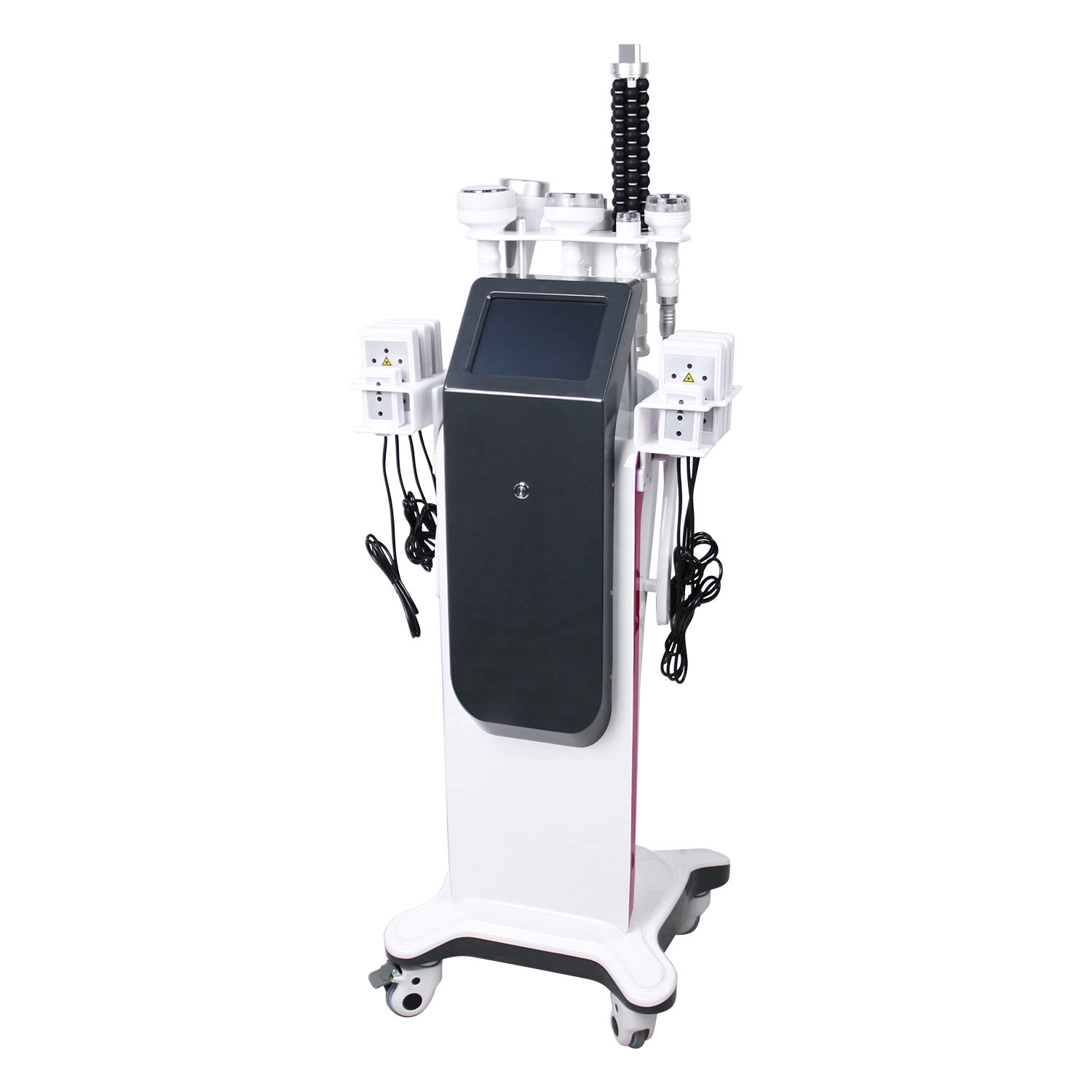
Professional 6-in-1 Cavitation Vacuum Machine for Body Contouring & Slimming Treatment
The 6-in-1 Cavitation Vacuum Machine is a professional body contouring system designed for salons and spas seeking high-performance slimming solutions. This machine integrates 40K ultrasonic cavitation, vacuum suction, RF technology, and laser lipolysis to target stubborn fat, enhance lymphatic drainage, tighten the skin, and contour the body shape effectively.
Equipped with multiple ergonomic handles and a smart touch screen, this cavitation vacuum machine provides a comfortable and efficient experience for both operators and clients. It is ideal for full-body treatments including abdomen, arms, legs, waistline, hips, and back.
Perfect for beauty salons, spas, and aesthetic centers that want to offer non-invasive fat reduction and body-sculpting services.
Get more information
If you have any comments or good suggestions, please leave us a message; later our professional staff will contact you as soon as possible.
Let's Talk
Stay in touch with us for cutting-edge beauty solutions, professional guidance, and customized service.
Contact


Room 307, Building A, Huilong International E-commerce Industrial Park, No. 10 Xipengling Road, Helong Street, Baiyun District, Guangzhou, China
© 2025 HUIMAIN. All Rights Reserved. Privacy Policy | Terms and Conditions | Sitemap
Facebook
Instagram
Medical beauty equipment factory
huimain Medical beauty equipment factory
beauty machine supplier
Whatsapp: +8619124004543