


Pelvic Floor Therapy Machine Customization Options for Private Label and Brand Development
- How to Define a Commercial Pelvic Wellness Equipment Platform
- Start with the intended use and market position
- Select the therapeutic modality and performance specification
- Build differentiation into the user experience
- Private-Label and ODM Customization Options Buyers Should Specify
- Hardware, enclosure, and accessory customization
- Software, interface, and data features
- Packaging, documentation, and brand assets
- Quality, Compliance, and Procurement Controls for Global Launches
- Separate certification from marketing claims
- Use a stage-gate supplier evaluation process
- Compare standard, semi-custom, and full ODM development
- Why HUIMAIN Supports Scalable Beauty Equipment Brand Development
- Engineering and manufacturing capabilities
- Certification, quality focus, and international distribution
- Broader portfolio opportunities for a complete brand
- Implementation Checklist for a Profitable Launch
- Before prototype approval
- Before mass production
- After market entry
- Frequently Asked Questions
Private-label pelvic wellness equipment requires a structured approach to product design, clinical positioning, regulatory planning, and supply-chain control. A pelvic floor therapy machine may be configured for professional clinics, women’s health centers, aesthetic salons, rehabilitation practices, or home-use channels, but the correct customization depends on intended users, treatment claims, operating environment, target countries, and service model. Buyers should evaluate energy delivery, applicator ergonomics, treatment presets, safety controls, software, enclosure design, packaging, documentation, certification, production capacity, and after-sales support before approving a prototype. The most reliable brand-development programs combine OEM manufacturing with ODM engineering so a project can achieve recognizable differentiation without creating unnecessary technical risk.
How to Define a Commercial Pelvic Wellness Equipment Platform
Start with the intended use and market position
The first decision is whether the device will be positioned as a rehabilitation product, a non-invasive wellness solution, an intimate-care beauty device, or a professional body-contouring accessory. These categories influence product claims, operator qualifications, labeling, training materials, clinical evidence, and regulatory obligations. A distributor selling to physiotherapy clinics may need detailed treatment protocols and anatomical education, while a salon-focused brand may prioritize simple workflows, High Quality appearance, multilingual menus, and short operator training.
Project owners should also define the customer journey. Important questions include whether treatments are delivered by a licensed professional, whether a session requires disposable accessories, how often the device is expected to operate, and whether the buyer earns revenue through packages, memberships, or individual appointments. These commercial assumptions affect the choice of consumables, warranty terms, expected duty cycle, user interface, and return on investment.
Select the therapeutic modality and performance specification
Pelvic wellness platforms can use different forms of stimulation or energy delivery, including electromagnetic stimulation, electrical muscle stimulation, mechanical vibration, thermal technologies, or hybrid configurations. Each modality has different engineering requirements for applicator placement, intensity control, heat management, electromagnetic compatibility, cleaning, and user protection. A supplier should explain measurable specifications rather than relying only on promotional language. Buyers should request output ranges, pulse characteristics, treatment duration, cooling or ventilation design, sensor functions, and emergency-stop behavior.
For a professional product, adjustable intensity, preset programs, session timers, operator lockout, treatment history, and clearly defined contraindication warnings can improve consistency. For a home-use product, lower complexity, compact dimensions, intuitive controls, conservative output limits, and strong misuse prevention are usually more important. The product architecture should match the risk profile instead of simply adding features that increase cost and training burden.
Build differentiation into the user experience
Private-label success depends on meaningful differentiation. A logo and a new color are useful, but they rarely create durable market value. Stronger options include proprietary treatment presets, guided operating screens, branded onboarding, multilingual software, appointment or session tracking, ergonomic applicators, quieter operation, integrated storage, and a recognizable industrial design. Customization should be prioritized according to what customers notice, what operators use daily, and what competitors cannot easily copy.
Human factors deserve particular attention because intimate-care equipment requires discretion and confidence. A comfortable applicator, clear positioning guidance, smooth intensity adjustment, easy cleaning, and professional visual language can influence treatment acceptance. The design should avoid exaggerated promises and should present wellness or therapeutic information in a responsible, evidence-aligned way.
Private-Label and ODM Customization Options Buyers Should Specify
Hardware, enclosure, and accessory customization
Hardware customization can include the control console, display size, handpiece or seat applicator, connector layout, ventilation system, wheels, carry handles, storage compartments, and power configuration. Brand owners may select a standard platform to shorten development time or request a new enclosure for a more distinctive market identity. The commercial decision should compare tooling costs, minimum order quantity, engineering time, replacement-part availability, and future upgrade flexibility.
Accessory specifications are equally important. Buyers should confirm material compatibility with cleaning agents, cable bend resistance, connector durability, skin-contact surfaces, protective covers, and optional positioning aids. If disposable or replaceable components are used, the procurement plan should include batch traceability, packaging integrity, shelf-life information, and a reliable replenishment channel.
Software, interface, and data features
A branded interface can include startup animation, logo placement, language selection, treatment menus, operator permissions, maintenance reminders, error codes, and post-session summaries. Software requirements should be documented in a version-controlled specification. Buyers should clarify who owns the interface design, how updates are delivered, whether remote access is available, and how cybersecurity or patient-data concerns are handled.
Connected features should not be added merely for marketing appeal. If a system stores identifiable health information or transfers data through a network, the project may require additional privacy, cybersecurity, access-control, and data-retention measures. A disconnected system may be more appropriate for small clinics that want operational simplicity and lower compliance exposure.
Packaging, documentation, and brand assets
Brand development extends to the complete commercial package: carton structure, protective foam, labels, user manuals, quick-start cards, training videos, warranty cards, spare-part lists, contraindication notices, and service forms. Documentation should identify the intended use, operating limits, cleaning procedure, inspection schedule, fault response, and escalation process. Professional translation is preferable to machine translation because unclear safety language can increase both customer complaints and regulatory risk.
Packaging should protect the equipment during international transport and should support efficient warehouse handling. Buyers should approve pre-production samples for color accuracy, typography, label placement, barcode quality, and accessory count. A packaging inspection checklist can prevent costly rework after mass production.
Quality, Compliance, and Procurement Controls for Global Launches
Separate certification from marketing claims
Certification is not a substitute for a complete regulatory strategy. The applicable pathway depends on the device’s technology, intended purpose, claims, risk classification, and destination market. The U.S. Food and Drug Administration provides device information through its medical device guidance and resources, while the European Union’s framework is defined in the Medical Devices Regulation. Buyers should ask the manufacturer which party is responsible for technical documentation, labeling, declarations, registration, post-market surveillance, and local representative arrangements.
For an electrical professional beauty or rehabilitation device, electrical safety and electromagnetic compatibility should be addressed through an appropriate test plan. The IEC 60601-1 standard is a widely recognized reference for basic safety and essential performance of medical electrical equipment, although the correct standard set must be determined for the specific product. Claims such as treatment, rehabilitation, pain reduction, or muscle strengthening should be reviewed with regulatory specialists before publication.
Use a stage-gate supplier evaluation process
A disciplined procurement process normally includes concept review, technical specification, prototype approval, verification testing, pilot production, pre-shipment inspection, and post-launch monitoring. At each gate, the buyer should record acceptance criteria, responsible parties, revision status, and corrective actions. This approach reduces the risk of approving a visually attractive prototype that cannot pass durability testing or maintain stable output during continuous operation.
Quality-system maturity is another decisive factor. Buyers can ask whether the supplier maintains documented design controls, incoming inspection, process inspection, final testing, calibration records, nonconformance procedures, and traceability. ISO 13485 information from ISO provides a recognized reference for quality management systems relevant to medical devices, although certification alone does not guarantee that every private-label project is well managed.
Compare standard, semi-custom, and full ODM development
| Development route | Typical customization | Commercial advantage | Main buyer risk |
|---|---|---|---|
| Standard OEM | Logo, color, packaging, manual | Fastest launch and lower tooling cost | Limited differentiation and possible channel competition |
| Semi-custom OEM | Interface, presets, accessories, enclosure details | Balanced branding, speed, and investment | Some platform limitations may remain |
| Full ODM | Industrial design, hardware, software, accessories, documentation | Stronger market identity and ownership of the customer experience | Higher development cost, testing burden, and longer lead time |
| Home-use adaptation | Lower output, simplified controls, compact format | Access to direct-to-consumer and retail channels | Greater need for misuse prevention, clear instructions, and complaint management |
The right route is determined by forecast volume, target price, desired exclusivity, regulatory classification, and launch timetable. A reliable supplier should provide a written quotation that separates engineering fees, tooling, samples, certification support, packaging, minimum order quantity, spare parts, and recurring production costs. This makes the total cost of ownership easier to compare than a single unit price.
Why HUIMAIN Supports Scalable Beauty Equipment Brand Development
Engineering and manufacturing capabilities
HUIMAIN, operated by Guangzhou Huimain Technology Co., Ltd., is a high-tech enterprise focused on the research, development, production, and after-sales service of professional beauty machines and home-use devices. Our 3,000-square-meter facility supports coordinated purchasing, engineering, clinical testing, assembly, quality control, and service activities. More than 60% of our staff hold higher education degrees, strengthening the technical foundation for product evaluation, process improvement, and ODM development.
Our engineering team can work with brand owners on platform selection, appearance design, operating logic, accessory configuration, packaging, and documentation. This is particularly valuable when a project needs to balance clinical positioning with the practical requirements of salons, distributors, and regional service networks. Our purchasing and quality-control functions also help maintain component consistency, while clinical testing resources support more structured product verification before launch.
Certification, quality focus, and international distribution
HUIMAIN products have obtained CE certification, SGS approval, and multiple patents, supporting the documentation and quality expectations of international buyers. These credentials should be evaluated alongside the exact model, intended use, destination-market requirements, and available technical file. Our products have reached customers across China, Southeast Asia, the Middle East, Europe, and North America, giving our team practical awareness of varied voltage requirements, packaging expectations, language needs, and distributor workflows.
Our OEM and ODM approach allows project owners to select a proven platform or develop a more distinct branded configuration. The objective is not simply to place a private label on a device, but to create a coherent product system with stable output, understandable operating instructions, reliable replacement support, and a commercially realistic margin structure. HUIMAIN follows the principle of innovation and win-win cooperation so that product owners, distributors, operators, and end users can receive sustainable value.
Broader portfolio opportunities for a complete brand
A pelvic wellness product can become an anchor in a broader professional beauty equipment portfolio. HUIMAIN also supports projects involving cryolipolysis machines, EMS sculpting machines, plasma machines, shockwave machines, HIFU machines, hydrofacial machines, cavitation and vacuum machines, laser hair removal systems, tattoo removal machines, and microneedling machines. A multi-category sourcing strategy can simplify training, consolidate spare-parts planning, improve container utilization, and help distributors present a more complete solution to salons and clinics.
Brand owners should still assess each category independently because intended use, regulatory pathway, operator training, consumables, and maintenance requirements vary. A coordinated supplier can nevertheless create consistent packaging architecture, visual identity, warranty procedures, and technical support across the portfolio. Buyers can review HUIMAIN’s product range at the official HUIMAIN website and discuss project specifications with the team before selecting a development route.
Implementation Checklist for a Profitable Launch
Before prototype approval
Confirm the target country, intended use, customer segment, claims, modality, output limits, treatment workflow, operating environment, languages, power requirements, accessories, software functions, packaging format, and service expectations. Request a technical data sheet, risk information, sample manual, certification scope, test reports where available, and a clear statement of what is customized versus standard.
Before mass production
Approve the golden sample, artwork, firmware version, bill of materials, inspection criteria, carton specifications, serial-number format, and spare-parts package. Define acceptable quality limits for cosmetics, assembly, display operation, connectors, output stability, noise, and safety functions. A pre-shipment inspection should verify both product performance and the completeness of manuals, labels, accessories, and certificates.
After market entry
Track installation issues, operator questions, warranty claims, consumable usage, customer reviews, and recurring fault codes. A structured feedback loop can guide firmware revisions, accessory improvements, training updates, and future models. The strongest private-label programs treat after-sales data as a source of product intelligence rather than as a cost center.
Frequently Asked Questions
What can be customized on a private-label pelvic wellness device?
Customization can include the enclosure, logo, colors, display interface, treatment presets, applicators, accessories, packaging, user manuals, training materials, software language, warranty cards, and service documentation.
Should a brand choose standard OEM, semi-custom OEM, or full ODM development?
Standard OEM is generally fastest and least expensive, semi-custom OEM balances differentiation with development efficiency, and full ODM offers the strongest market identity but requires greater investment, testing, and lead time.
What compliance issues should buyers review before selling the equipment?
Buyers should review intended use, product claims, destination-market classification, electrical safety, electromagnetic compatibility, labeling, technical documentation, registration, post-market obligations, and local representative requirements where applicable.
How can buyers evaluate a manufacturer before placing an order?
They should review engineering resources, quality procedures, incoming and final inspection, calibration records, traceability, test reports, certification scope, prototype controls, production capacity, spare-parts support, warranty terms, and references from relevant export markets.
What should be included in a pre-shipment inspection?
The inspection should verify the approved golden sample, output stability, safety functions, display and software version, connectors, cosmetic quality, serial numbers, packaging, manuals, labels, accessories, and certificate or documentation package.
Can a pelvic wellness product be combined with a broader beauty equipment portfolio?
Yes. A coordinated supplier can support related categories such as cryolipolysis, EMS sculpting, plasma, shockwave, HIFU, hydrofacial, cavitation and vacuum, laser hair removal, tattoo removal, and microneedling equipment, although each category requires separate technical and regulatory evaluation.

CO2 Fractional Laser Machine – Professional Wrinkle Removal & Skin Resurfacing Device
The CO2 Fractional Laser Machine is a multifunctional aesthetic device designed for professional clinics and beauty salons. Using advanced fractional CO2 laser technology, it effectively targets acne scars, freckles, pigmentation, nevi, and deep wrinkles. Additionally, it provides non-invasive skin rejuvenation, vaginal tightening, and intimate beautification. This professional CO2 laser equipment combines precision, safety, and powerful energy output to deliver outstanding anti-aging and dermatological results.

Gold RF Microneedle Machine | Professional Fractional RF System for Face & Body Scar Repair
The Gold RF Microneedle Machine is a cutting-edge aesthetic device designed for B2B professionals, offering a powerful, dual-action solution for both facial beauty and body scar repair. This system combines the precision of microneedling with the proven effectiveness of radio frequency (RF) energy to treat a wide range of skin concerns.
By delivering high-frequency heat through insulated gold-plated microneedles, it stimulates the skin's natural healing process, leading to collagen regeneration and the production of new elastin. This innovative approach provides a minimally invasive solution for treating fine lines, wrinkles, acne scars, stretch marks, and skin laxity with minimal downtime.

Pelvic Floor Chair | Emslim Pelvic Machine for Strengthening and Sculpting
The **Pelvic Floor Chair** is an innovative device designed for strengthening and toning pelvic muscles using advanced **EMS technology**. This ergonomic chair provides a comfortable and effective solution for individuals seeking to enhance pelvic floor health, improve muscle tone, and support postpartum recovery. Equipped with a user-friendly touchscreen interface, it allows easy control of intensity and frequency for tailored treatments. Suitable for both home and professional use, this **Emslim chair** ensures reliable and non-invasive results.
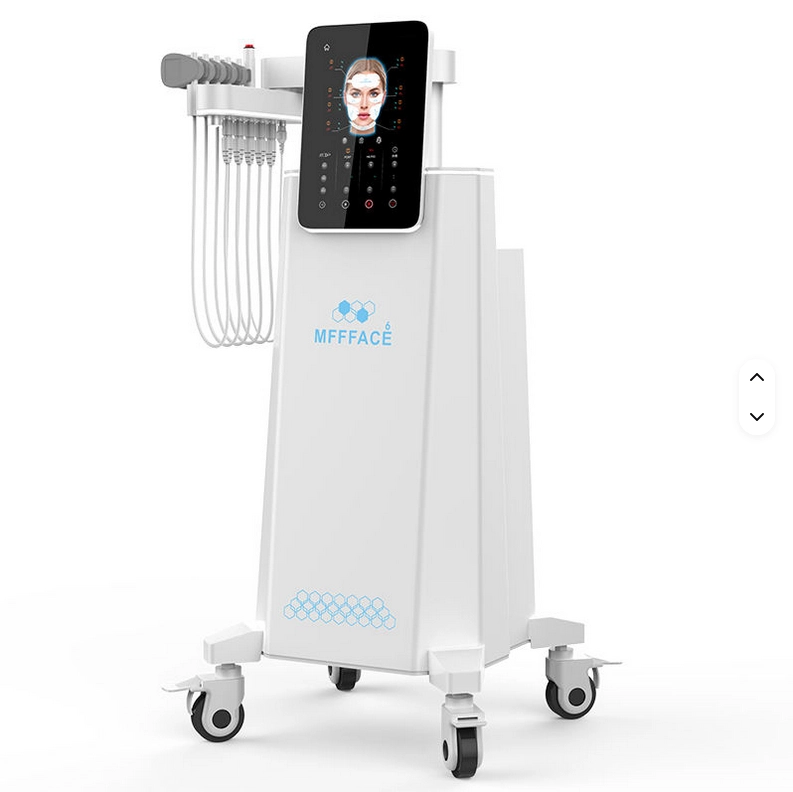
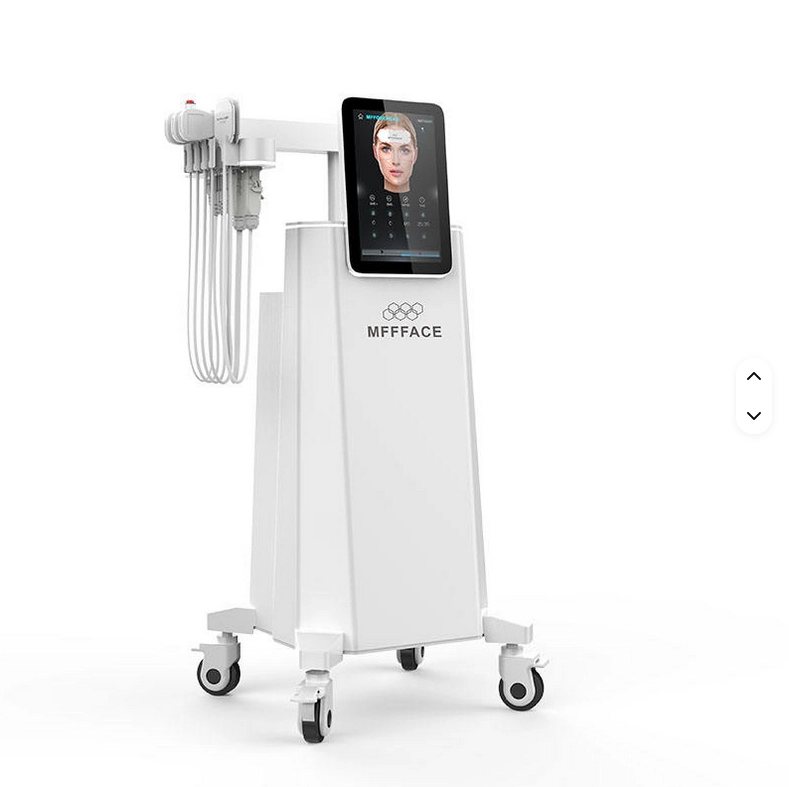
MFFFace 6 EMS+RF Facial Muscle Training Machine – Professional Magnetic Face Lifting & Skin Tightening Device
The MFFFace 6 EMS+RF Facial Muscle Training Machine is a cutting-edge beauty device designed for professional facial lifting, firming, and rejuvenation.
Combining EMS microcurrent technology with radio frequency (RF) thermal energy, it stimulates facial muscles and promotes collagen regeneration, resulting in tighter, smoother, and more youthful-looking skin.
With 6 independent magnetic handles, MFFFace 6 allows multiple treatment areas to be targeted simultaneously — maximizing efficiency for beauty salons and clinics.
This non-invasive and painless treatment helps sculpt facial contours, reduce sagging, and restore elasticity with visible improvements in just a few sessions.
Perfect for aesthetic professionals who want to offer advanced anti-aging treatments and achieve instant lifting results.
Get more information
If you have any comments or good suggestions, please leave us a message; later our professional staff will contact you as soon as possible.
Let's Talk
Stay in touch with us for cutting-edge beauty solutions, professional guidance, and customized service.
Contact


Room 307, Building A, Huilong International E-commerce Industrial Park, No. 10 Xipengling Road, Helong Street, Baiyun District, Guangzhou, China
© 2026 HUIMAIN. All Rights Reserved. Designed by Gooeyun. Privacy Policy | Terms and Conditions | Sitemap
Facebook
Instagram
Medical beauty equipment factory
huimain Medical beauty equipment factory
beauty machine supplier
Whatsapp: +8619124004543