


Permanent Results at Home: The Ultimate 2026 Guide to Hair Removal Machines for Women
- Quick Summary: The 2026 Landscape of At-Home Hair Removal
- What is a Hair Removal Machine for Women and How Does It Work?
- IPL vs. Laser Diode: Understanding the Technology
- Skin Tone & Hair Color Compatibility: The Fitzpatrick Scale
- 2026 Technology Trends: Smart Sensors and Cooling
- Step-by-Step Routine for Permanent Results
- Cost Analysis: At-Home Devices vs. Professional Clinics
- Expert Tips & Common Mistakes to Avoid
- Conclusion
- Is at-home laser hair removal actually permanent?
- Can I use hair removal machines on my face?
- Does IPL work on dark skin tones?
- How often should I use my hair removal machine?
- Does laser hair removal hurt?
- What is the difference between IPL and laser?
- Can I use a hair removal machine while pregnant?
- How long does it take to see results?
Quick Summary: The 2026 Landscape of At-Home Hair Removal
The best hair removal machine for women 2026 combines AI-regulated pulse technology with sapphire cooling to deliver salon-grade results at home. Gone are the days of painful, unregulated flashes; modern devices now adapt to your skin tone in real-time for maximum safety.
Since 2020, the technology has shifted from simple flash lamps to sophisticated Optical Energy systems. This evolution means that consistency—not just intensity—is the key to success. This guide is designed for women who want to break free from the cycle of shaving and waxing without paying thousands for professional clinical treatments. By understanding the core mechanics of selective photothermolysis, you can achieve lasting smoothness safely.
Why 2026 models are superior:
- Smart Skin Sensors: Automatically adjust power levels to prevent burns.
- Sapphire Cooling: Reduces surface temperature to 5°C, numbing the skin on contact.
- High-Speed Flashing: Full-body treatments now take under 15 minutes.
What is a Hair Removal Machine for Women and How Does It Work?
A hair removal machine utilizes pulses of light energy to target the melanin pigment within the hair follicle, converting that light into heat to disable future growth. This process disrupts the hair's growth cycle, specifically targeting the Anagen (growth) phase.
The underlying scientific principle is called Selective Photothermolysis. The device emits a specific wavelength of light that is absorbed by the dark pigment (melanin) in the hair shaft but reflected or ignored by the surrounding lighter skin. When the melanin absorbs this light, it generates heat (up to 70°C) which damages the follicle's stem cells, preventing them from producing new hair.
Key distinctions in hair removal methods:
- Depilation: Removal of hair from the surface (e.g., shaving, creams). Regrowth is visible in days.
- Epilation/Light-Based: Removal or disabling of the hair from the root (e.g., waxing, IPL, Laser). Results can last weeks or months.
IPL vs. Laser Diode: Understanding the Technology
The primary difference is that at-home IPL vs laser hair removal comes down to the light spectrum: IPL uses broad-spectrum light, while Laser uses a single, focused wavelength. While both can be effective, they serve different user needs and skin types.
Intense Pulsed Light (IPL) functions like a powerful camera flash, emitting a range of wavelengths (usually 500-1200nm). This scattering of light makes it excellent for covering large areas like legs quickly, but it requires a high contrast between hair and skin color to be safe and effective. Diode Lasers, essentially the gold standard in clinics, use a coherent beam (often 810nm) that penetrates deeper into the dermis, often making it more effective for stubborn hair.
Comparison of Technologies:
- Pain Level: IPL is generally described as a "warm snap," whereas Laser can be more intense (though modern cooling mitigates this).
- Treatment Speed: IPL heads are typically larger, allowing for faster sessions on legs and arms.
- Safety Profile: Lasers are more precise, reducing the risk of stray light heating the surrounding skin.
Skin Tone & Hair Color Compatibility: The Fitzpatrick Scale
Your safety depends entirely on where you fall on the Fitzpatrick Scale, as machines function by distinguishing dark hair against lighter skin backgrounds. Using the wrong device on melanin-rich skin can result in burns or hyperpigmentation.
According to the Fitzpatrick scale, skin types range from I (very fair) to VI (deeply pigmented). Traditional IPL devices are generally safe for Types I-IV. For hair removal devices for dark skin (Types V-VI), you must use machines specifically engineered with Nd:YAG technology or advanced IPL with built-in skin tone sensors that lock the device if the skin is too dark.
Compatibility Breakdown:
- Ideal Candidates: Pale to medium skin (Types I-III) with dark blonde to black hair.
- Challenging Candidates: Red, grey, or white hair contains little to no melanin, making light-based treatment ineffective.
- Dark Skin Safety: Users with Types V-VI should look for devices labeled "color-blind" or specific Diode lasers that bypass the epidermis.
2026 Technology Trends: Smart Sensors and Cooling
The defining feature of 2026 devices is the integration of AI-driven skin sensors that scan your skin 80 times per second to optimize energy output automatically. This ensures that every single flash delivers the maximum effective dose without risking a burn.
Alongside intelligence, Sapphire Cooling Technology has become a standard requirement for premium devices. By placing a chilled sapphire crystal directly against the skin, the device counteracts the heat generated by the laser, acting as a built-in analgesic (pain relief). This allows manufacturers to increase the power output (fluence) of the machine for better results without increasing user discomfort.
Top Innovations for 2026:
- Unlimited Flashes: Many high-end models no longer require cartridge replacements.
- Ergonomic Wands: Rotatable heads to reach difficult areas like the back of the knees or bikini line.
- App Connectivity: Bluetooth apps that track your at-home laser maintenance schedule and remind you of your next session.
Step-by-Step Routine for Permanent Results
To achieve FDA-cleared permanent hair reduction, you must strictly adhere to a weekly treatment schedule for the first 8-12 weeks. Inconsistency is the number one reason users fail to see results.
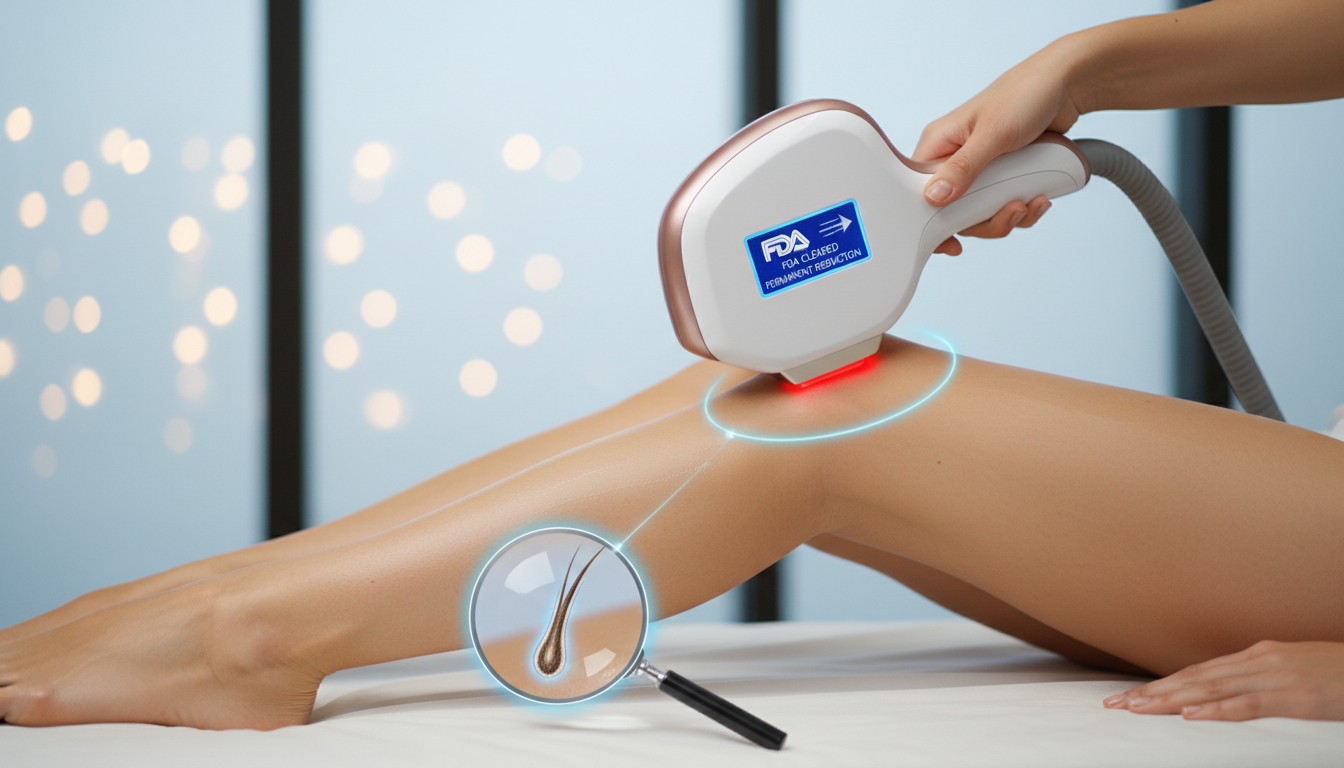
Successful home treatment requires preparation. The light energy needs a clear path to the follicle, so hair above the skin surface will only absorb the energy and burn the skin. Therefore, shaving is mandatory, while plucking or waxing (which removes the root) is forbidden.
The Ultimate Routine:
- Prep (24 Hours Prior): Shave the treatment area with a clean razor. Exfoliate to remove dead skin cells.
- Cleanse: Ensure skin is completely dry and free of lotions, deodorants, or oils.
- Patch Test: Flash a small area and wait 30 minutes to check for adverse reactions.
- Treat: Hold the device flat against the skin. For large areas, use "Glide Mode" to flash continuously. Overlap each flash by 10% to avoid missed stripes.
- Post-Care: Apply a fragrance-free aloe vera gel or ice pack if the skin feels warm. Avoid sun exposure for 48 hours.
Cost Analysis: At-Home Devices vs. Professional Clinics
Investing in a premium at-home device ($300–$600) typically saves over 80% compared to a full course of professional laser treatments ($3,000+). While the upfront cost of a machine seems high, it is a one-time purchase that covers infinite maintenance sessions.
Professional clinics charge per area and per session. A single full-leg session can cost $150, and you will need at least 6-8 sessions. In contrast, owning a device allows you to treat unlimited areas—legs, underarms, bikini, and face—for a single fixed price. In 2026, the ROI (Return on Investment) for a home device is usually realized within the first three months of use.
Financial Breakdown:
- Professional Clinic (Legs & Bikini): Approx. $2,500 for 8 sessions.
- At-Home Device (High-End): Approx. $450 one-time cost.
- Maintenance: Clinics charge for touch-ups; home devices are free to use forever.
Expert Tips & Common Mistakes to Avoid
The most common mistake users make is treating sun-exposed skin, which significantly increases the risk of blistering and permanent scarring. Melanin in tanned skin competes with the hair follicle for the light energy.
Another critical error is impatience. Hair grows in cycles (Anagen, Catagen, Telogen), and light-based removal is only effective during the Anagen phase. This is why you cannot treat the same area daily; you must wait for the dormant hairs to enter the growth phase.
Pro Tips for Success:
- Use a White Eyeliner: Draw a grid on your legs to ensure you don't miss spots or treat the same area twice.
- Clean the Window: Residue from hair or dead skin can bake onto the flash window, reducing efficacy. Wipe it with alcohol after every use.
- Start Low: Begin on the lowest intensity setting and work your way up as your tolerance increases.
Conclusion
High-quality hair removal machines offer a viable, cost-effective alternative to clinics in 2026 if consistency is maintained. By choosing a device with the right power for your skin tone and adhering to a strict schedule, you can achieve smooth, hair-free skin safely from home. Always prioritize safety features like skin sensors and cooling technology over sheer power.
Contact us today to optimize your beauty tech strategy.
Is at-home laser hair removal actually permanent?
The FDA defines it as "permanent hair reduction," meaning a stable decrease in the number of regrowing hairs. According to FDA regulations, this is defined as a long-term stable reduction in the number of hairs regrowing after a treatment regimen. Most users achieve about 90% reduction but will require maintenance touch-ups every few months to catch dormant follicles that wake up.
Can I use hair removal machines on my face?
Yes, but only on the upper lip, chin, and jawline where hair is coarse enough to treat. You must avoid the eye area entirely to prevent retinal damage from the intense light flashes. Men should generally avoid using these on beards due to the density of the hair, which can cause excessive heat buildup.
Does IPL work on dark skin tones?
Standard IPL can cause burns on dark skin due to the high melanin absorption in the epidermis. However, specific devices utilizing Nd:YAG lasers or advanced IPL with specific cutoff filters are safe for darker complexions. Always check if the device is cleared for Fitzpatrick Skin Types V and VI before purchasing.
How often should I use my hair removal machine?
Typically, you should use the device once a week for the first 4-12 weeks to catch all hairs in their active growth phase. Once you notice significant reduction (patchy regrowth), you can switch to an at-home laser maintenance schedule of once every 1-2 months to keep the skin smooth.
Does laser hair removal hurt?
It usually feels like a rubber band snapping against the skin, which is far less painful than waxing. Modern devices equipped with sapphire cooling heads or cryo-tips significantly reduce discomfort by freezing the skin surface immediately before or during the light pulse.
What is the difference between IPL and laser?
IPL uses broad-spectrum light (like a lightbulb) that spreads out, making it less concentrated but faster for large areas. Laser uses a single, focused wavelength of light (monochromatic and coherent) that travels deeper into the skin, making it more powerful and often more effective for stubborn roots.
Can I use a hair removal machine while pregnant?
No, it is not recommended due to a lack of clinical testing on pregnant women. Additionally, hormonal changes during pregnancy can alter hair growth cycles and skin sensitivity, leading to unpredictable results or adverse reactions like melasma (pregnancy mask).
How long does it take to see results?
Visible thinning usually occurs after 3-4 consistent weekly sessions. Significant, bare-skin results typically appear after 8-12 sessions. It is important to remember that results vary based on hair thickness, color, and hormonal balance.

CO2 Fractional Laser Machine – Professional Wrinkle Removal & Skin Resurfacing Device
The CO2 Fractional Laser Machine is a multifunctional aesthetic device designed for professional clinics and beauty salons. Using advanced fractional CO2 laser technology, it effectively targets acne scars, freckles, pigmentation, nevi, and deep wrinkles. Additionally, it provides non-invasive skin rejuvenation, vaginal tightening, and intimate beautification. This professional CO2 laser equipment combines precision, safety, and powerful energy output to deliver outstanding anti-aging and dermatological results.

Gold RF Microneedle Machine | Professional Fractional RF System for Face & Body Scar Repair
The Gold RF Microneedle Machine is a cutting-edge aesthetic device designed for B2B professionals, offering a powerful, dual-action solution for both facial beauty and body scar repair. This system combines the precision of microneedling with the proven effectiveness of radio frequency (RF) energy to treat a wide range of skin concerns.
By delivering high-frequency heat through insulated gold-plated microneedles, it stimulates the skin's natural healing process, leading to collagen regeneration and the production of new elastin. This innovative approach provides a minimally invasive solution for treating fine lines, wrinkles, acne scars, stretch marks, and skin laxity with minimal downtime.

Pelvic Floor Chair | Emslim Pelvic Machine for Strengthening and Sculpting
The **Pelvic Floor Chair** is an innovative device designed for strengthening and toning pelvic muscles using advanced **EMS technology**. This ergonomic chair provides a comfortable and effective solution for individuals seeking to enhance pelvic floor health, improve muscle tone, and support postpartum recovery. Equipped with a user-friendly touchscreen interface, it allows easy control of intensity and frequency for tailored treatments. Suitable for both home and professional use, this **Emslim chair** ensures reliable and non-invasive results.

MFFFace 6 EMS+RF Facial Muscle Training Machine – Professional Magnetic Face Lifting & Skin Tightening Device
The MFFFace 6 EMS+RF Facial Muscle Training Machine is a cutting-edge beauty device designed for professional facial lifting, firming, and rejuvenation.
Combining EMS microcurrent technology with radio frequency (RF) thermal energy, it stimulates facial muscles and promotes collagen regeneration, resulting in tighter, smoother, and more youthful-looking skin.
With 6 independent magnetic handles, MFFFace 6 allows multiple treatment areas to be targeted simultaneously — maximizing efficiency for beauty salons and clinics.
This non-invasive and painless treatment helps sculpt facial contours, reduce sagging, and restore elasticity with visible improvements in just a few sessions.
Perfect for aesthetic professionals who want to offer advanced anti-aging treatments and achieve instant lifting results.
Get more information
If you have any comments or good suggestions, please leave us a message; later our professional staff will contact you as soon as possible.
Let's Talk
Stay in touch with us for cutting-edge beauty solutions, professional guidance, and customized service.
Contact


Room 307, Building A, Huilong International E-commerce Industrial Park, No. 10 Xipengling Road, Helong Street, Baiyun District, Guangzhou, China
© 2026 HUIMAIN. All Rights Reserved. Designed by Gooeyun. Privacy Policy | Terms and Conditions | Sitemap
Facebook
Instagram
Medical beauty equipment factory
huimain Medical beauty equipment factory
beauty machine supplier
Whatsapp: +8619124004543