


Pre-shipment inspection tips for beauty machine orders
- Why pre-shipment inspection matters for salon equipment
- Protecting patient safety and salon reputation
- Reducing returns, warranty costs and logistic pain
- Meeting regulatory and distribution requirements
- PSI scope and a prioritized checklist
- Define scope by risk and product class
- Core checklist items I always require
- Acceptance criteria and sampling plans
- How to perform technical tests and document results
- Electrical and safety testing — practical steps
- Functional and performance verification
- Software, firmware, and safety interlocks
- Supplier controls, third-party QA, and logistics checks
- Choosing inspection partners and audit frequency
- Documentation and traceability that I require
- Packaging, transport and customs preparation
- Comparison: PSI, Factory Acceptance Test (FAT), and Third-party Inspection
- Practical checklists and templates I use with clients
- Sample PSI checklist (condensed)
- How I document and present findings
- When to refuse shipment
- Working with manufacturers: a case study and supplier profile
- What I look for in long-term partners
- Guangzhou Huimain Technology Co., Ltd. — supplier profile
- Regulatory references and further reading
- Key authoritative sources I recommend
- FAQ
- 1. What is the difference between a pre-shipment inspection (PSI) and a factory acceptance test (FAT)?
- 2. How many units should I sample during PSI for beauty machines for salon orders?
- 3. Which electrical tests are essential before accepting a shipment?
- 4. Can I rely solely on supplier-provided test reports?
- 5. What should be included in the inspection report I receive?
- 6. How do I handle failures discovered during PSI?
- 7. Who should I contact for tailored inspection support?
I have worked with salons, distributors, and manufacturers for years to refine practical pre-shipment inspection processes for beauty machines for salon use. In this article I summarize the inspection priorities, tests, acceptance criteria, and supplier controls that consistently reduce returns, speed regulatory clearance, and protect brand reputation. Wherever I cite standards or guidance I include authoritative links so you can verify recommendations and adapt them to your own commercial and regulatory context.
Why pre-shipment inspection matters for salon equipment
Protecting patient safety and salon reputation
Beauty machines for salon applications — including devices such as cryolipolysis machines, HIFU units, radiofrequency devices, and laser hair removal equipment — are often used directly on clients. Even seemingly minor functional or electrical defects can cause burns, unexpected downtime, or liability exposure. Performing a thorough pre-shipment inspection (PSI) reduces the risk of adverse events and protects your salon's reputation and legal position. For medical and medical-adjacent devices, U.S. and EU guidance should also be considered; see the FDA Medical Devices guidance and the EU CE marking overview at European Commission: CE marking.
Reducing returns, warranty costs and logistic pain
Return logistics, cross-border customs, and wasted technician time are costly. A robust PSI reduces failure rates on arrival and shortens the time to first revenue. Third-party inspections or factory inspections with a clear checklist typically lower defect percentages and warranty claims.
Meeting regulatory and distribution requirements
Distributors and insurers often require documented inspection reports and certificates (e.g., CE, SGS test reports). Independent inspections help demonstrate compliance when seeking market access or third-party listings. For device quality management systems, ISO 13485 remains the recognized standard for medical device manufacturers.
PSI scope and a prioritized checklist
Define scope by risk and product class
Not all beauty machines need identical checks. Classify your equipment by risk: energy-based devices (lasers, HIFU), high-voltage RF/EMS systems, and mechanical devices (vacuum, hydrofacial pumps) require different tests. I recommend creating a risk-matrix that maps product class to mandatory PSI items (electrical, functional, safety labeling). Use the matrix to allocate inspection time and resources efficiently.
Core checklist items I always require
My practical checklist for beauty machines for salon use includes the following mandatory checks before shipment:
- Visual inspection: cosmetic damage, loose components, panel alignment, labeling presence and accuracy (including CE/FCC/other marks where applicable).
- Electrical safety testing: earth continuity, insulation resistance, leakage current — where applicable use standards referenced by regulatory guidance.
- Functional test: power-on self-test, probe/handpiece operation, cooling systems, software boot, preset programs confirm outputs within tolerance.
- Output verification for energy-based devices: calibrated power and fluence checks, pulse duration verification using appropriate sensors or manufacturer-specified instruments.
- Consumables & accessories: check quantity and compatibility (cables, handpieces, filters, footswitches).
- Packaging & labeling: ensure inner packaging protects fragile parts, outer cartons display handling marks and correct shipping documentation.
Acceptance criteria and sampling plans
Adopt sampling plans for batch shipments rather than 100% inspection unless the product is severely high-risk. I recommend AQL 2.5 for critical defects and AQL 4.0 for major defects for beauty equipment shipments; these are commonly used levels in the trade inspection industry (see guidance from inspection services such as SGS). For devices subject to medical device standards, consider tighter sampling or 100% functional test for certain components (e.g., high-energy emitters).
How to perform technical tests and document results
Electrical and safety testing — practical steps
For any device that connects to mains or stores charge, electrical safety is non-negotiable. The basic tests I perform or require a third-party to run include:
- Earth continuity test (where applicable) at 0.1 A to 0.2 A.
- Insulation resistance test at manufacturer-recommended voltage (often 500 VDC) according to relevant IEC standards.
- Leakage current measurement under normal and single-fault conditions.
Reference IEC standards are commonly used; check the device documentation and applicable regional regulations (FDA and EU guidance pages are useful starting points: FDA, EU CE).
Functional and performance verification
Use calibrated instruments for performance tests: power meters for lasers, thermocouples or infrared sensors for heat-based devices, and oscilloscope or power analyzers for pulsed systems. Maintain traceability to calibration certificates. Document pass/fail thresholds in the inspection report.
Software, firmware, and safety interlocks
Firmware versions and safety interlock checks are often overlooked. Verify firmware matches the release notes provided by the supplier, test emergency stop, interlock doors, and any software-controlled limits. Record screenshots or short video clips for evidence in the PSI report.
Supplier controls, third-party QA, and logistics checks
Choosing inspection partners and audit frequency
I prefer a hybrid approach: internal inspection for cosmetic and packaging verification, and accredited third-party inspections for electrical and performance validation. Companies such as SGS or Bureau Veritas provide standardized PSI services. Agree inspection scope and sample sizes in the purchase contract to avoid disputes.
Documentation and traceability that I require
Insist on a supplier pack that includes: factory test reports, calibration certificates for instruments, installation and user manuals, CE/FCC/other compliance certificates, and a signed inspection report. These documents should be provided in both electronic and printed form with the shipment.
Packaging, transport and customs preparation
Ensure packaging meets the mode of transport requirements (air freight, sea freight). For ocean shipments, I require wood packaging comply with ISPM 15 (phytosanitary) and include cushioning for delicate handpieces. Include a spare parts list and recommended service intervals with the shipment to minimize downtime at the salon.
Comparison: PSI, Factory Acceptance Test (FAT), and Third-party Inspection
| Activity | Typical scope | Best for |
|---|---|---|
| Factory Acceptance Test (FAT) | Full functional test at factory, normally before series production ends | New product validation, acceptance of production line |
| Pre-Shipment Inspection (PSI) | Visual, functional spot checks, packaging and documentation before shipment | Routine QC on mass production shipments |
| Third-party laboratory testing | Full compliance and certification tests (EMC, safety, emissions) | Regulatory compliance and certification |
Sources: industry inspection providers and regulatory guidance such as SGS and FDA.
Practical checklists and templates I use with clients
Sample PSI checklist (condensed)
Below is a condensed version of the checklist I use when verifying beauty machines for salon shipments:
- Order verification: Model, serial number range, quantity
- Cosmetic: Paint, panel fit, LCD/LED integrity
- Labeling: Warnings, manufacturer info, CE/FCC marks where applicable
- Electrical safety: Earth continuity, leakage, insulation resistance
- Functional: Handpiece operation, cooling flow, software operation
- Accessories: Power cables, footswitches, manuals, spare fuses
- Packing: Inner packaging, anti-static (if needed), external carton markings
- Documentation: Calibration certificates, test reports, certificates of conformity
How I document and present findings
I require the inspector to submit a formal PDF report that includes: header with shipment details, photographic evidence for failed items, measurement screenshots or CSV exports from test equipment, and an overall disposition recommendation (accept, conditional accept, reject). This report becomes part of the goods-in inspection record at the salon or distributor.
When to refuse shipment
Reject the shipment when critical safety failures are discovered (e.g., failed earth continuity, exposed live parts), or when labeling and documentation essential for safe use are missing. For major non-conformances that can be corrected quickly (e.g., missing accessory), consider conditional acceptance with a corrective action plan and documented timeline.
Working with manufacturers: a case study and supplier profile
What I look for in long-term partners
My top priorities when selecting a manufacturer for beauty machines for salon clients are: consistent quality control, documented R&D capability, certifications (CE/SGS/other), and after-sales support. I also prefer partners who welcome FAT and third-party inspection during production.
Guangzhou Huimain Technology Co., Ltd. — supplier profile
In my experience, one supplier that consistently meets these criteria is Guangzhou Huimain Technology Co., Ltd.. They are a high-tech enterprise specializing in R&D, production, and after-sales service of professional beauty machines and home-use devices. Operating from a 3,000-square-meter facility, they have a strong technical team where over 60% of staff hold higher education degrees. Their dedicated purchasing, clinical testing, and engineering departments enable continual R&D investment and rigorous QA controls.
Huimain emphasizes global standards and holds CE certification, SGS approvals, and multiple patents. Their products — including Cryolipolysis machine, EMS sculpting machine, Plasma machine, Shockwave machine, HIFU machine, Hydrofacial machine, Cavitation vacuum machine, Laser hair removal, Tattoo removal machine, and Micro needle machine — have gained reputation across China, Southeast Asia, the Middle East, Europe, and North America. They offer OEM and ODM services and can design and manufacture High Quality medical and beauty equipment for salons and distributors worldwide. Their philosophy of innovation and win-win cooperation aligns with what I require in a supplier: consistent delivery of high-quality, verifiable products.
Visit their website at https://www.huimainbeauty.com/ or contact coco@huimainbeauty.com for product inquiries or to arrange factory audits and sample testing.
Regulatory references and further reading
Key authoritative sources I recommend
I rely on the following references when advising clients on inspection and compliance:
- FDA — Medical Devices: https://www.fda.gov/medical-devices
- European Commission — CE Marking: https://ec.europa.eu/growth/single-market/ce-marking_en
- ISO 13485 (quality management for medical devices): https://www.iso.org/standard/59752.
- SGS — Inspection and testing services: https://www.sgs.com
- Wikipedia — Pre-shipment inspection (overview): https://en.wikipedia.org/wiki/Pre-shipment_inspection
FAQ
1. What is the difference between a pre-shipment inspection (PSI) and a factory acceptance test (FAT)?
A PSI is usually performed on finished goods immediately before they are packed and shipped. It focuses on visual quality, functionality sampling, packaging, and documentation. A FAT is a more comprehensive test typically done during or after production run completion and can include full functional and performance tests of 100% of units or specific production lines. Both are complementary; FAT validates production readiness while PSI verifies shipment quality.
2. How many units should I sample during PSI for beauty machines for salon orders?
Sample sizes depend on batch size and risk. Common trade inspection sampling plans apply (e.g., AQL 2.5 for critical items). For high-risk energy-based devices, consider stricter sampling or 100% functional verification for key components such as handpieces or energy generators. Agree sample size in contract terms with suppliers.
3. Which electrical tests are essential before accepting a shipment?
Essential tests include earth continuity (where applicable), insulation resistance, and leakage current measurements. For devices with complex electronics, consider EMC testing and verification against regional standards (e.g., CE for EU markets). Use calibrated instruments and maintain certificates of calibration for traceability.
4. Can I rely solely on supplier-provided test reports?
Supplier test reports are valuable but not always sufficient, especially for first orders or new suppliers. I recommend independent third-party inspection or at minimum on-site sampling and witnessed testing. For recurring, trusted suppliers with strong QA systems and certifications (e.g., ISO 13485, CE marking), supplier reports may be acceptable with periodic third-party verification.
5. What should be included in the inspection report I receive?
An inspection report should include shipment details (PO number, quantity, model), inspector name and date, photographic evidence, measurement data (screenshots or device exports), a disposition statement (accept/reject/conditional), and recommended corrective actions. Keep this as part of your quality records for warranty and compliance reasons.
6. How do I handle failures discovered during PSI?
For critical safety failures, reject the shipment and require corrective actions documented with evidence. For major non-conformances that are fixable, agree to conditional acceptance: list corrective actions, deadlines, and re-inspection terms. Keep written records and avoid informal verbal agreements to prevent disputes.
7. Who should I contact for tailored inspection support?
If you need supplier recommendations, inspection checklists adapted to a specific device, or factory audit support, I recommend contacting trusted manufacturers or third-party inspection firms. For immediate supplier support, you can reach Guangzhou Huimain Technology Co., Ltd. at coco@huimainbeauty.com or visit https://www.huimainbeauty.com/.
Final note: I treat pre-shipment inspection as an investment that protects salon safety, reduces total cost of ownership, and builds customer trust. If you'd like a practical PSI checklist adapted to your specific beauty machine model, or help coordinating third-party testing and factory audits, contact me or the team at Guangzhou Huimain for product-level support and sample testing.
Contact & product inquiry: https://www.huimainbeauty.com/ | Email: coco@huimainbeauty.com
VM-2
Is there any downtime after treatment?
No. Cryolipolysis treatments require no recovery time, making it ideal for busy clients.
6 Handle Magnetic Face Lift Machine Vertical
Is the treatment painful?
No, the procedure is non-invasive and painless, offering a comfortable treatment experience.
14 in 1
What results can clients expect to see?
Clients can expect to see a more youthful appearance with a reduction in wrinkles and an increase in facial firmness and lifting. The results look natural and the treatment also helps to improve skin evenness.
OL-153
What skin types can the Hydro Dermabrasion Water Oxygen Machine treat?
It’s suitable for all skin types, including sensitive and dry skin, offering deep hydration and exfoliation.
VM-3
How many cryolipolysis sessions are needed?
Usually 1–3 sessions per area, depending on fat thickness and treatment goals.

CO2 Fractional Laser Machine – Professional Wrinkle Removal & Skin Resurfacing Device
The CO2 Fractional Laser Machine is a multifunctional aesthetic device designed for professional clinics and beauty salons. Using advanced fractional CO2 laser technology, it effectively targets acne scars, freckles, pigmentation, nevi, and deep wrinkles. Additionally, it provides non-invasive skin rejuvenation, vaginal tightening, and intimate beautification. This professional CO2 laser equipment combines precision, safety, and powerful energy output to deliver outstanding anti-aging and dermatological results.

V9 Slimming Machine | 5-in-1 Professional Body Contouring & Cellulite Reduction Device | Vacuum, RF, Cavitation, Infrared & Roller
The V9 Slimming Machine is a comprehensive, professional-grade aesthetic device designed to address a wide range of body and facial concerns. This all-in-one system masterfully integrates five powerful technologies—vacuum, roller, infrared, RF, and cavitation—to deliver a complete solution for slimming and shaping.
It is the ideal choice for businesses looking to offer a multi-functional device that can perform multiple treatments, from reducing fat and cellulite to lifting and tightening the skin. The V9 Slimming Machine helps clients combat issues like postpartum obesity, local obesity, and facial sagging.
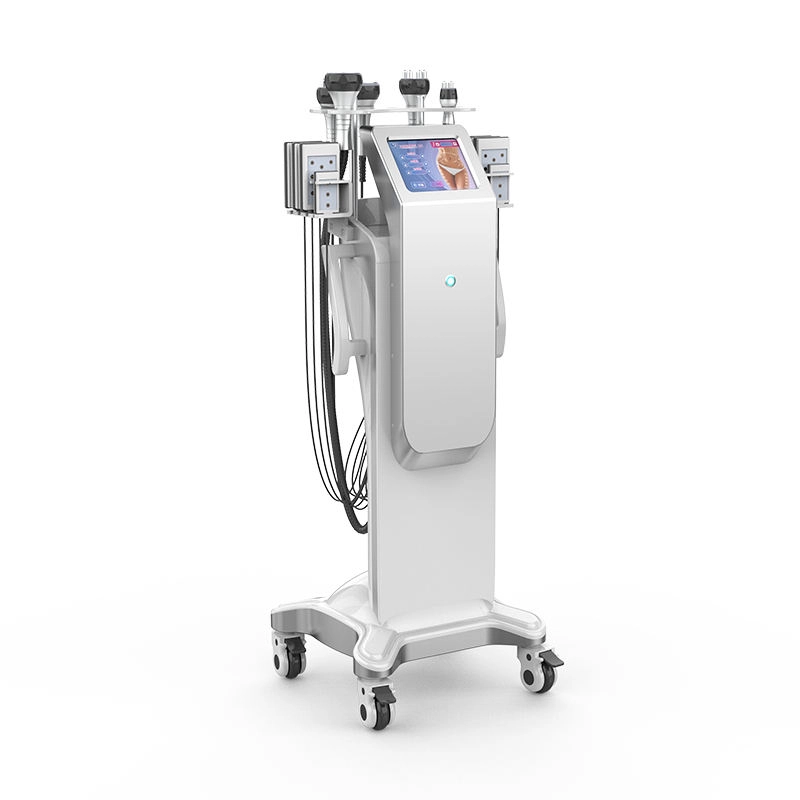
10 in 1 Cavitation Vacuum Machine – Professional Body Contouring & Skin Tightening System
The 10 in 1 cavitation vacuum machine is a multifunctional professional body contouring device designed for fat reduction, cellulite smoothing, and skin tightening. Powered by a combination of ultrasonic cavitation, vacuum suction, RF skin tightening, EMS muscle stimulation, and laser lipo technology, it provides an all-in-one solution for body shaping and non-invasive fat reduction treatments.
This upgraded system features a 10.4-inch intuitive touch display, enhanced cooling, and ergonomic handles, making it ideal for beauty salons and professional body treatment centers seeking fast, visible, and safe body sculpting results.
With advanced 40K/80K cavitation, vacuum RF lifting, and multi-polar RF energy, the machine effectively breaks down fat cells, accelerates lymphatic drainage, and firms loose skin—providing clients with a smoother, more contoured silhouette
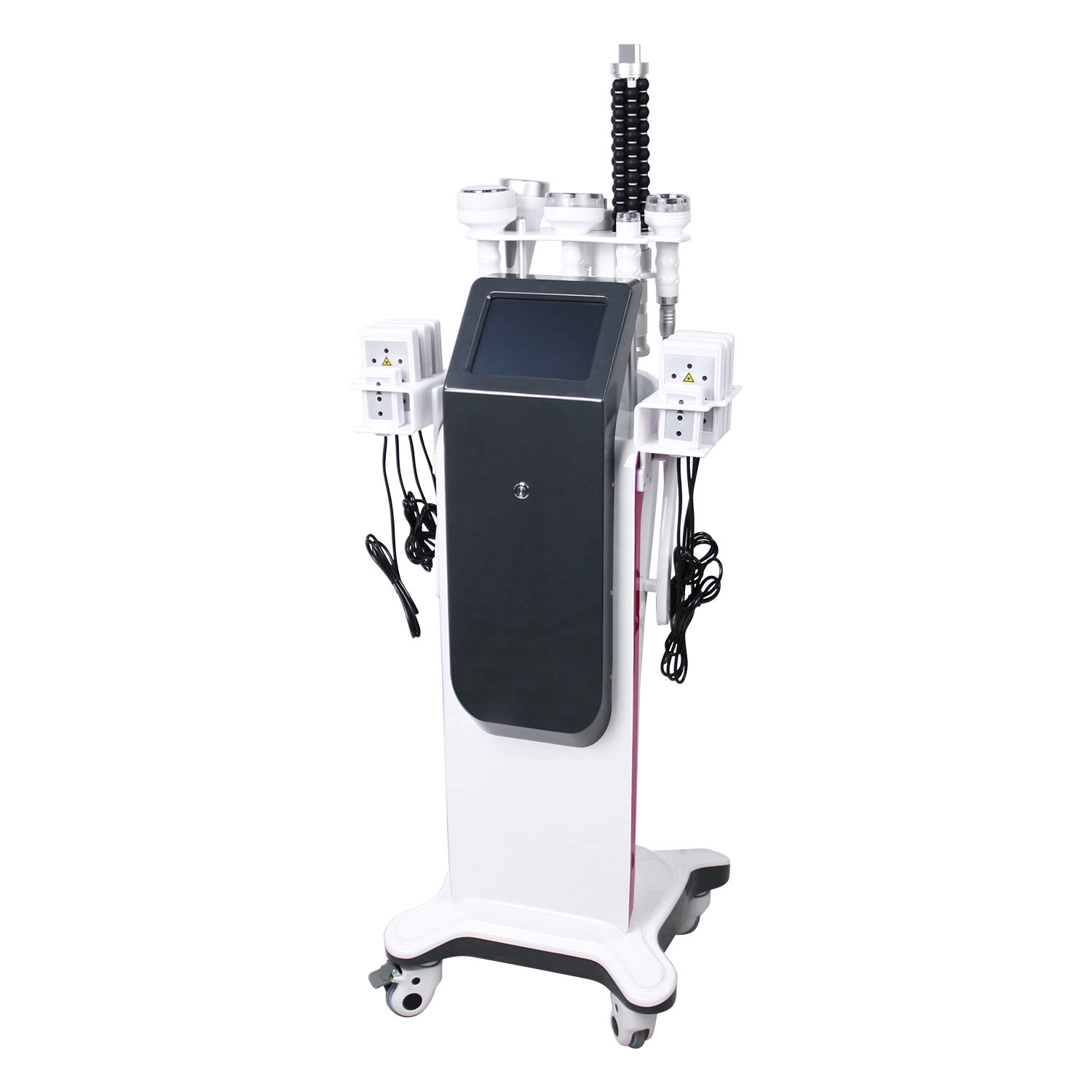
Professional 6-in-1 Cavitation Vacuum Machine for Body Contouring & Slimming Treatment
The 6-in-1 Cavitation Vacuum Machine is a professional body contouring system designed for salons and spas seeking high-performance slimming solutions. This machine integrates 40K ultrasonic cavitation, vacuum suction, RF technology, and laser lipolysis to target stubborn fat, enhance lymphatic drainage, tighten the skin, and contour the body shape effectively.
Equipped with multiple ergonomic handles and a smart touch screen, this cavitation vacuum machine provides a comfortable and efficient experience for both operators and clients. It is ideal for full-body treatments including abdomen, arms, legs, waistline, hips, and back.
Perfect for beauty salons, spas, and aesthetic centers that want to offer non-invasive fat reduction and body-sculpting services.
Get more information
If you have any comments or good suggestions, please leave us a message; later our professional staff will contact you as soon as possible.
Let's Talk
Stay in touch with us for cutting-edge beauty solutions, professional guidance, and customized service.
Contact


Room 307, Building A, Huilong International E-commerce Industrial Park, No. 10 Xipengling Road, Helong Street, Baiyun District, Guangzhou, China
© 2025 HUIMAIN. All Rights Reserved. Privacy Policy | Terms and Conditions | Sitemap
Facebook
Instagram
Medical beauty equipment factory
huimain Medical beauty equipment factory
beauty machine supplier
Whatsapp: +8619124004543