


Quality Control: Testing and QC for Nd:YAG Manufacturing
- Manufacturing Process Overview and Key Risk Points
- Why process mapping matters
- Critical components and their failure modes
- Incoming inspection: supplier qualification
- Quality Control Standards and Protocols
- Regulatory and standard references I use
- Design verification vs validation
- Risk management and traceability
- Testing Procedures for Nd:YAG Devices
- Optical performance testing
- Electrical, safety, and EMC testing
- Environmental and reliability stress testing
- Traceability, Documentation, and Continuous Improvement
- Production records and lot control
- Post-market surveillance and complaint handling
- Continuous improvement: metrics I track
- Implementing QC in Practice: Case Examples and Data
- Example: reducing pulse energy drift
- Comparative test table: before vs after corrective action
- Evidence-based design and literature
- Why Guangzhou Huimain’s Approach Meets Market Needs
- Frequently Asked Questions (FAQ)
- 1. What tests should a reliable nd yag laser tattoo removal machine pass before shipment?
- 2. How often should manufacturers perform supplier audits for critical components?
- 3. Are field service and firmware updates part of good QC practice?
- 4. How do we validate clinical performance for tattoo removal efficacy?
- 5. What are common causes of warranty returns for Nd:YAG devices and how can they be mitigated?
- 6. How does regulatory compliance like ISO 13485 affect QC processes?
In my work advising device manufacturers and clinical clients, I repeatedly see that consistent quality for an nd yag laser tattoo removal machine comes from integrating regulatory awareness, robust testing, and production-level process control. This article summarizes practical QC measures, test protocols, and traceability systems that reduce failures, ensure safety, and satisfy customers — all grounded in recognized standards and real-world manufacturing experience.
Manufacturing Process Overview and Key Risk Points
Why process mapping matters
Before specifying tests, I map the entire manufacturing flow: optics and laser gain media procurement, resonator and Q-switch assembly, power supply and electronics, cooling system, safety interlocks, firmware, final assembly, and packaging. Mapping highlights risk points for an nd yag laser tattoo removal machine such as misaligned optics, contaminant-induced scatter, unstable Q-switch timing, or inadequate thermal management. Identifying risk early allows targeted verification instead of blanket testing.
Critical components and their failure modes
In my experience the highest-impact components are: Nd:YAG crystal/gain medium, Q-switched module, flashlamp or pump diode, high-voltage capacitor bank/power supply, beam delivery optics (fiber or articulated arm), and cooling systems. Typical failure modes include diminished pulse energy, beam profile degradation, unstable pulse repetition frequency (PRF), overheating, and software/firmware faults causing unsafe beam emission. Each needs specific incoming and in-process tests.
Incoming inspection: supplier qualification
Incoming quality cannot be an afterthought. I require supplier quality agreements, material certificates, and periodic audits for optic, electronic, and cooling suppliers. I also implement batch-level incoming inspection: optical coatings checked by spectrophotometer, diode arrays tested for power and wavelength, and PCB assemblies verified with AOI/X-ray as needed. Supplier certification and SGS/CE conformity documentation are part of the routine review (SGS medical/device services).
Quality Control Standards and Protocols
Regulatory and standard references I use
For medical and aesthetic lasers I align processes with ISO 13485 for quality management of medical devices (ISO 13485) and laser safety standards such as IEC 60825-1/IEC 60601 series for electrical safety. The FDA's laser product guidance and Radiation-Emitting Products pages provide regulatory expectations in the U.S. (FDA - Laser Products).
Design verification vs validation
I separate verification (does the product meet design outputs?) from validation (does it meet user needs in the field?). Verification tests include optical bench measurement, electrical safety testing, EMC, and software unit tests. Validation uses clinical bench tests and pilot runs in representative operational scenarios — for example, repeated tattoo removal sessions to evaluate long-term reliability and user ergonomics.
Risk management and traceability
Risk management per ISO 14971 is integrated early: identify hazards (e.g., unintended emission), estimate risk severity and occurrence, mitigate, and verify residual risk. Crucially, traceability matrices map design inputs to verification tests and manufacturing records, so every shipped nd yag laser tattoo removal machine can be traced back to component lots and test reports.
Testing Procedures for Nd:YAG Devices
Optical performance testing
Key optical parameters I test on every unit: pulse energy, pulse duration, beam profile (M2 or beam diameter), wavelength accuracy (e.g., 1064 nm for Nd:YAG), and spot-size consistency at the handpiece. I typically use a calibrated energy meter and beam profiler and compare results against acceptance criteria. Reproducibility over 1,000 pulses is often verified to detect early degradation.
Electrical, safety, and EMC testing
Electrical safety per IEC 60601-series (leakage current, grounding) and EMC tests to ensure no interference with other equipment. High-voltage insulation tests and interlock verification are mandatory to prevent accidental emissions. These tests are done in-house if accredited equipment is available or via certified third-party labs.
Environmental and reliability stress testing
Thermal cycling, vibration, and humidity tests reveal failures that normal functional checks miss. I use accelerated life testing (ALT) to approximate mean time between failures (MTBF) for power supplies and pump diodes. For laser components, I monitor output drift at elevated operating temperatures to ensure thermal management design is adequate.
| Test | Purpose | Typical Acceptance | Reference |
|---|---|---|---|
| Pulse energy measurement | Ensure consistent fluence for clinical effect | ±10% of nominal across sample | Clinical literature |
| Beam profile / M2 | Quality of focus and energy distribution | M2 within design spec | ISO 13485 |
| Electrical safety | Prevent shock and fire hazards | Pass IEC 60601 tests | FDA guidance |
Traceability, Documentation, and Continuous Improvement
Production records and lot control
I insist every nd yag laser tattoo removal machine has a serialized build record capturing component lot numbers, test results, firmware versions, and inspector sign-off. This allows rapid field corrective actions if a component batch shows a systemic fault. In practice, a serialized production record shortens response time to customer complaints and reduces recall scopes.
Post-market surveillance and complaint handling
Effective QC doesn't stop at shipment. Post-market surveillance (PMS) collects field data on failures, warranty returns, and clinical feedback. I implement a closed-loop corrective action system (CAPA) so that trends in returned nd yag laser tattoo removal machine units trigger root-cause analysis and design/process changes. Documented CAPA is a regulatory expectation under ISO 13485 and many regulators.
Continuous improvement: metrics I track
Key Performance Indicators I monitor: first-pass yield, failure rate by subsystem, MTBF for critical components, mean time to repair (MTTR), and customer satisfaction scores. Monthly review of these metrics supports targeted training, process changes, or supplier remediation. Data-driven improvements reduce warranty costs and improve brand reputation.
Implementing QC in Practice: Case Examples and Data
Example: reducing pulse energy drift
At one project I led, new units showed a 15% drop in pulse energy after 500 pulses under continuous operation due to insufficient heat sinking of the Q-switch driver. We introduced a revised heat-sink and added a thermal shutdown threshold in firmware. Post-change testing showed energy drift reduced to <3% after 2,000 pulses. This demonstrates how combining mechanical fixes and firmware safeguards improves field reliability.
Comparative test table: before vs after corrective action
| Metric | Before | After | Acceptance |
|---|---|---|---|
| Pulse energy drift after 500 pulses | 15% | 2.5% | <10% |
| Mean time to first failure (power supply) | 6 months | 18 months | >12 months |
| Warranty returns (per 1,000 units) | 28 | 6 |
Evidence-based design and literature
Clinical and engineering literature on Q-switched Nd:YAG lasers supports parameter selection for safe and effective tattoo removal; I cross-check design output ranges against peer-reviewed studies to build design inputs that meet clinical expectations (PubMed).
Why Guangzhou Huimain’s Approach Meets Market Needs
Guangzhou Huimain Technology Co., Ltd. is a high-tech enterprise specializing in the research, development, production, and after-sales service of professional beauty machines and home-use devices. Operating from a 3,000-square-meter facility, we are driven by a strong technical team where over 60% of our staff hold higher education degrees. Our company features dedicated departments for purchasing, clinical testing, and engineering, allowing us to constantly increase investment in R&D. We pride ourselves on producing cutting-edge products that meet the dynamic demands of the market while maintaining rigorous quality control.
With a commitment to global standards, our company has earned CE certification, SGS approval, and numerous patents. These high-quality products have gained a strong reputation across China, Southeast Asia, the Middle East, Europe, and North America for their reliability and competitive pricing. Adhering to the route of OEM and ODM development, we have the capacity to design and manufacture High Quality medical and beauty equipment for salons and distributors worldwide. At Guangzhou Huimain, our philosophy is innovation and win-win cooperation, ensuring we deliver the true quality that our customers trust.
Our product range includes Cryolipolysis machine, Ems sculpting machine, Plasma machine, Shockwave machine, Hifu machine, Hydrofacial machine, Cavitation vacuum machine, Laser hair removal, Tattoo removal machine, and Micro needle machine. For customers seeking dependable nd yag laser tattoo removal machine solutions, Huimain's strengths are:
- End-to-end QC: incoming inspection, in-process tests, and final acceptance tests tied to serial records;
- Technical depth: engineers with formal training and clinical testing departments to validate designs in realistic conditions;
- Regulatory alignment: CE and SGS processes to support international distribution;
- OEM/ODM flexibility: capacity to adapt designs to customer requirements while maintaining QC traceability.
To learn more about our devices and quality approach, visit our website: https://www.huimainbeauty.com/ or contact us at coco@huimainbeauty.com.
Frequently Asked Questions (FAQ)
1. What tests should a reliable nd yag laser tattoo removal machine pass before shipment?
A reliable unit should pass optical performance checks (pulse energy, wavelength, beam profile), electrical safety (IEC 60601 series), EMC, interlock verification, and environmental stress tests. I also recommend acceptance criteria for pulse-to-pulse stability and an initial reliability burn-in (several hundred pulses) to detect early component defects.
2. How often should manufacturers perform supplier audits for critical components?
For critical items (gain medium, Q-switch, diodes, power supplies), I advise annual audits for stable suppliers and more frequent reviews (every 6 months) if failure rates rise. Incoming lot testing should be performed on each shipment.
3. Are field service and firmware updates part of good QC practice?
Yes. Post-market firmware updates can address safety or performance gaps. Field service data is essential input for CAPA. Efficient mechanisms for firmware version control and secure update delivery are part of a mature QC system.
4. How do we validate clinical performance for tattoo removal efficacy?
Clinical validation uses representative treatment protocols on test cohorts or bench models and compares outcomes against published clinical evidence. I recommend collaborating with clinics for pilot studies and documenting outcomes, adverse events, and device settings to support claims.
5. What are common causes of warranty returns for Nd:YAG devices and how can they be mitigated?
Common causes include power supply failures, diode degradation, cooling system faults, and user-related issues (improper settings). Mitigation includes higher-quality components, thermal management improvements, thorough user training, and better documentation for end-users.
6. How does regulatory compliance like ISO 13485 affect QC processes?
ISO 13485 formalizes procedures for document control, traceability, supplier evaluation, verification/validation, and CAPA. Implementing ISO 13485 aligns QC activities with regulatory expectations and helps when exporting to markets that recognize the standard. Read more: ISO 13485.
If you need tailored QC plans, test protocols, or assistance qualifying an nd yag laser tattoo removal machine for your markets, I and the team at Guangzhou Huimain are available to consult and deliver OEM/ODM solutions. Contact us: coco@huimainbeauty.com or visit https://www.huimainbeauty.com/.
HI-8D
Is the treatment painful?
The HI-8D uses multi-frequency energy for smoother output, reducing discomfort compared to traditional Hifu machines.
Portable EMS RF Body Sculpting Machine
How soon can results be seen?
Most users notice visible improvements after 4–6 sessions with regular use.
12D-MAX
Is the 12D TT HIFU Facial Machine safe for all skin types?
Yes. The adjustable energy settings make it suitable for all skin types and tones.
JHF-51
Is Liposonic treatment non-invasive?
Yes, Liposonic uses focused ultrasound energy to reduce fat without surgery or downtime.
cryolipolysis machine
How many treatments are required?
Most clients see results after 1–3 sessions, with optimal outcomes typically achieved after 8–12 weeks.

CO2 Fractional Laser Machine – Professional Wrinkle Removal & Skin Resurfacing Device
The CO2 Fractional Laser Machine is a multifunctional aesthetic device designed for professional clinics and beauty salons. Using advanced fractional CO2 laser technology, it effectively targets acne scars, freckles, pigmentation, nevi, and deep wrinkles. Additionally, it provides non-invasive skin rejuvenation, vaginal tightening, and intimate beautification. This professional CO2 laser equipment combines precision, safety, and powerful energy output to deliver outstanding anti-aging and dermatological results.
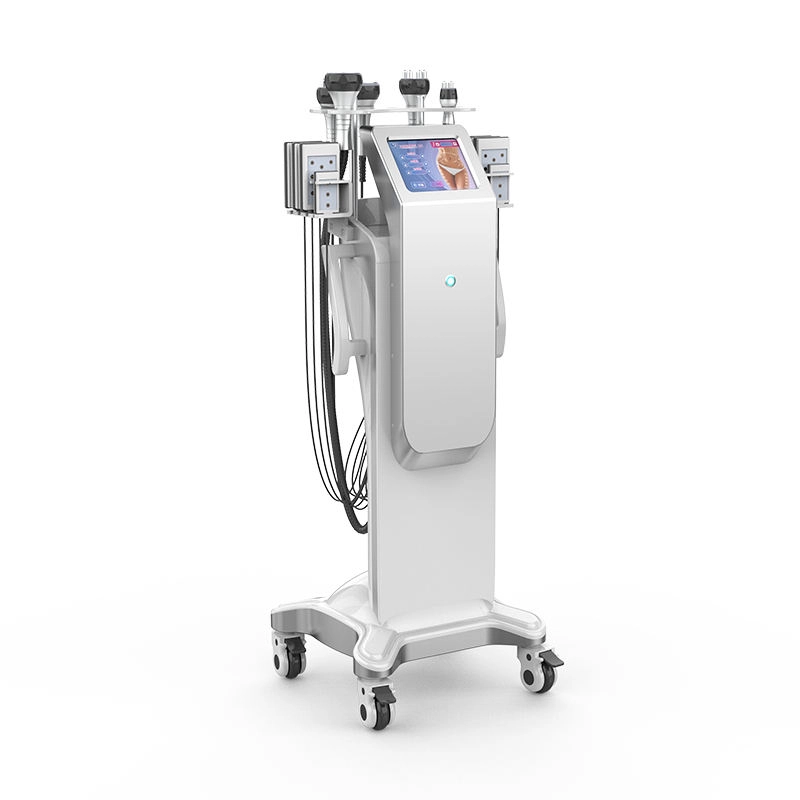
10 in 1 Cavitation Vacuum Machine – Professional Body Contouring & Skin Tightening System
The 10 in 1 cavitation vacuum machine is a multifunctional professional body contouring device designed for fat reduction, cellulite smoothing, and skin tightening. Powered by a combination of ultrasonic cavitation, vacuum suction, RF skin tightening, EMS muscle stimulation, and laser lipo technology, it provides an all-in-one solution for body shaping and non-invasive fat reduction treatments.
This upgraded system features a 10.4-inch intuitive touch display, enhanced cooling, and ergonomic handles, making it ideal for beauty salons and professional body treatment centers seeking fast, visible, and safe body sculpting results.
With advanced 40K/80K cavitation, vacuum RF lifting, and multi-polar RF energy, the machine effectively breaks down fat cells, accelerates lymphatic drainage, and firms loose skin—providing clients with a smoother, more contoured silhouette

9 in 1 Gel Radio Frequency Machine – Cavitation Vacuum Machine 40K 80K with RF Skin Tightening Body Shape Weight Loss Fat Cavitation System
The 9 in 1 Gel Radio Frequency Machine is a professional multifunctional body shaping and skin management system designed for beauty salons and slimming centers. Utilizing 40K and 80K cavitation, this device effectively breaks down stubborn fat cells, promoting rapid body contouring and weight loss.
Equipped with advanced RF Skin Tightening technology, the machine stimulates collagen regeneration, tightens sagging skin, reduces wrinkles, and enhances elasticity. The integrated Body Shape Weight Loss Fat Cavitation system delivers powerful shaping results for the abdomen, arms, legs, and waist.
With nine specialized handles, the machine supports multiple facial and body treatments including cavitation slimming, RF tightening, vacuum shaping, and photon rejuvenation—providing a complete 9-in-1 solution for both fat reduction and skin improvement.
Perfect for professional salons seeking to upgrade their services with a versatile and high-performance 9 in 1 cavitation and radio frequency machine.

V9 Slimming Machine | 5-in-1 Professional Body Contouring & Cellulite Reduction Device | Vacuum, RF, Cavitation, Infrared & Roller
The V9 Slimming Machine is a comprehensive, professional-grade aesthetic device designed to address a wide range of body and facial concerns. This all-in-one system masterfully integrates five powerful technologies—vacuum, roller, infrared, RF, and cavitation—to deliver a complete solution for slimming and shaping.
It is the ideal choice for businesses looking to offer a multi-functional device that can perform multiple treatments, from reducing fat and cellulite to lifting and tightening the skin. The V9 Slimming Machine helps clients combat issues like postpartum obesity, local obesity, and facial sagging.
Get more information
If you have any comments or good suggestions, please leave us a message; later our professional staff will contact you as soon as possible.
Let's Talk
Stay in touch with us for cutting-edge beauty solutions, professional guidance, and customized service.
Contact


Room 307, Building A, Huilong International E-commerce Industrial Park, No. 10 Xipengling Road, Helong Street, Baiyun District, Guangzhou, China
© 2025 HUIMAIN. All Rights Reserved. Privacy Policy | Terms and Conditions | Sitemap
Facebook
Instagram
Medical beauty equipment factory
huimain Medical beauty equipment factory
beauty machine supplier
Whatsapp: +8619124004543