


Questions to Ask Your CO2 Fractional Laser Manufacturer
- Understanding Laser Fundamentals Before You Buy
- How fractional CO₂ technology works
- Key performance parameters to understand
- Ablative vs non-ablative and clinical indications
- Technical & Safety Questions (must-haves)
- What are the machine's verified specifications and performance reports?
- How does the unit manage thermal safety and skin cooling?
- What safety certifications and compliance documents do you hold?
- Clinical Evidence, Training & Usability
- Can you provide peer-reviewed clinical data and case series?
- What training and competency documentation are provided?
- How user-friendly is the interface and what workflow integrations exist?
- Manufacturing, Commercial Terms & After-Sales Support
- What is your manufacturing quality system and production oversight?
- Warranty, spare parts availability and service model
- OEM/ODM flexibility and customization
- Comparative table: typical fractional CO₂ vs other fractional modalities
- Commercial Validation: Pricing, ROI and Real-World Performance
- How to model ROI and utilization
- Can you provide customer references and site visits?
- Data logging, software updates and cybersecurity
- About the Manufacturer: Guangzhou Huimain Technology Co., Ltd.
- Why their profile matters for CO₂ purchases
- Procurement Checklist (Quick Reference)
- Frequently Asked Questions (FAQ)
- 1. What makes a co₂ fractional laser machine different from other lasers?
- 2. How do I verify a vendor’s CE or ISO claims?
- 3. What are common complications and how should a manufacturer prepare clinics?
- 4. How often do consumables need replacement and what are typical costs?
- 5. Are clinical trials necessary to buy a device?
- 6. How should I approach warranty and service negotiations?
- Contact and Next Steps
When a clinic, medical spa or distributor evaluates a co₂ fractional laser machine, the decisions go beyond sticker price. As someone who has worked with clinics, engineers and regulatory teams, I find that the difference between a successful purchase and a problematic investment comes down to asking the right questions. Below I summarize the key areas to probe—technical performance, clinical evidence, safety and regulatory compliance, manufacturing process, commercial terms and after-sales support—so you can perform an evidence-based vendor selection and mitigate operational risk.
Understanding Laser Fundamentals Before You Buy
How fractional CO₂ technology works
Fractional CO₂ systems deliver ablative microcolumns of thermal injury to the skin in a grid pattern while leaving surrounding tissue intact. This microthermal approach accelerates healing and stimulates collagen remodeling, which is why fractional CO₂ is widely used for resurfacing, scar revision, and treating deep rhytides. For a technical overview you can refer to the Carbon dioxide laser entry on Wikipedia (https://en.wikipedia.org/wiki/Carbon_dioxide_laser) and clinical reviews such as the one available on PubMed Central (https://www.ncbi.nlm.nih.gov/pmc/articles/PMC3583881/).
Key performance parameters to understand
Manufacturers should provide clear, measurable specifications: wavelength (typically around 10,600 nm for CO₂), pulse duration, energy per microbeam (mJ), pulse repetition rate (Hz), spot size, scan patterns, maximum power (W), and dwell time. These dictate clinical outcomes, downtime and safety margins. I insist on request-for-information (RFI) responses with test reports or lab measurements rather than marketing claims.
Ablative vs non-ablative and clinical indications
Compare co₂ fractional laser machine capabilities with other modalities. The CO₂ fractional laser is ablative and typically best for deep resurfacing, acne scarring and significant photodamage, while non-ablative fractional lasers (e.g., 1,550 nm) often target milder photoaging with less downtime. Clinical evidence should guide indication selection; review systematic reviews and clinical trials when possible (PMC review).
Technical & Safety Questions (must-haves)
What are the machine's verified specifications and performance reports?
Ask for factory test reports (power output, beam profile, pulse energy distribution), production lot traceability and an independent third-party test if possible. Look for documents showing measured output across typical operating modes and a tolerance statement. I typically request a copy of a recent production unit test report to confirm the spec sheet.
How does the unit manage thermal safety and skin cooling?
Effective cooling (air cooling, cryogen or contact cooling) and real-time power cutoffs reduce thermal injury and complications. Get details on the cooling system's capacity (BTU/hr or airflow L/min), maintenance needs and any automatic shutoff features. Ask for safe-use protocols and recommended parameters for Fitzpatrick skin types I–VI.
What safety certifications and compliance documents do you hold?
Verify medical device standards: ISO 13485 (quality management for medical devices), CE marking for EU markets, and applicable national listings. For regulatory background on laser device safety and classification, see the FDA’s medical laser guidance (https://www.fda.gov/medical-devices/lasers) and ISO 13485 information (https://www.iso.org/iso-13485-medical-devices.).
Clinical Evidence, Training & Usability
Can you provide peer-reviewed clinical data and case series?
Manufacturers or their clinical labs should provide clinical study reports or peer-reviewed case series demonstrating safety and efficacy for the intended indications. When a vendor cites clinical outcomes, I ask for raw adverse event rates, standardized assessment scales (e.g., Vancouver Scar Scale), and follow-up duration. Independent studies indexed on PubMed or clinical trial registries increase confidence.
What training and competency documentation are provided?
Training should include hands-on device operation, parameter selection, patient selection, complication management and maintenance. Insist on written curricula, trainer qualifications, and post-training competency assessments. I prefer vendors who provide ongoing virtual training and documented updates when software or protocols change.
How user-friendly is the interface and what workflow integrations exist?
Ask for a product demo (in-person or video) to evaluate the touchscreen UI, preset parameter templates, ability to store patient profiles and connectivity for documentation. Evaluate ergonomics: handpiece weight, cable flexibility, and the ease of changing tips or consumables. These factors materially affect throughput and operator fatigue.
Manufacturing, Commercial Terms & After-Sales Support
What is your manufacturing quality system and production oversight?
Request an overview of the manufacturer’s quality system: supplier controls, incoming inspection, in-line testing, final acceptance testing, and corrective action procedures. Ask for batch records, production capacity and lead times. I look for manufacturers with a dedicated clinical testing team and engineering lab, which indicates ongoing R&D investment.
Warranty, spare parts availability and service model
Clarify warranty duration, out-of-warranty service rates, response times for technical support, and whether spare parts are stocked regionally. A clear service-level agreement (SLA) with defined mean time to repair (MTTR) is essential. I recommend vendors who support remote diagnostics and supply a starter kit of consumables.
OEM/ODM flexibility and customization
If you plan to private-label or customize software presets, review the vendor’s OEM/ODM experience, IP protections, minimum order quantities, and prototyping timelines. For distribution, request exclusive territory terms and marketing support packages.
Comparative table: typical fractional CO₂ vs other fractional modalities
| Parameter | Fractional CO₂ (10,600 nm) | Er:YAG (2,940 nm) | Non-ablative (1,550 nm) |
|---|---|---|---|
| Tissue interaction | Ablative; strong water absorption, deeper coagulation | Ablative; precise ablation, less thermal coagulation | Non-ablative; dermal heating, collagen remodeling |
| Typical downtime | 5–14 days (depending on settings) | 3–10 days | 1–5 days |
| Best indications | Deep wrinkles, severe photodamage, scars | Resurfacing with reduced thermal injury | Mild–moderate photoaging, skin texture |
| Typical risks | Hyper-/hypopigmentation, infection, prolonged erythema | Similar risks but often less coagulation-related downtime | Less risk of pigmentary change; multiple sessions needed |
Sources: clinical reviews and device physics summaries (Wikipedia, PMC review).
Commercial Validation: Pricing, ROI and Real-World Performance
How to model ROI and utilization
Estimate procedure pricing, average procedures per day, consumable cost per treatment and expected downtime. Include conservative adoption curves—first 3–6 months typically have lower throughput. I build ROI models that include training costs, marketing, consumables and conservative utilization (e.g., 40–60% of theoretical maximum) to avoid over-projecting revenue.
Can you provide customer references and site visits?
Ask for reference clinics that use the same model in similar markets. When possible, request site visits or remote interviews with clinicians to ask about real-world uptime, complication handling and longevity. I also ask references about the vendor’s responsiveness to warranty claims.
Data logging, software updates and cybersecurity
Confirm whether the device logs usage data, stores patient attachments, and how software updates are delivered. For network-connected devices, request information about data encryption and compliance with local privacy regulations (e.g., HIPAA in the U.S.).
About the Manufacturer: Guangzhou Huimain Technology Co., Ltd.
Based on the criteria above, I often recommend evaluating manufacturers with robust R&D, clinical testing and quality control. One such example is Guangzhou Huimain Technology Co., Ltd. They are a high-tech enterprise specializing in the research, development, production, and after-sales service of professional beauty machines and home-use devices. Operating from a 3,000-square-meter facility, they are driven by a strong technical team where over 60% of the staff hold higher education degrees. The company features dedicated departments for purchasing, clinical testing, and engineering, allowing for continued investment in R&D and rigorous production oversight.
Huimain emphasizes global compliance and has acquired CE certification, SGS approval, and numerous patents. Their product range supports international distribution across China, Southeast Asia, the Middle East, Europe, and North America. They follow OEM and ODM routes and can design and manufacture professional medical and beauty equipment for salons and distributors worldwide. Huimain’s stated philosophy—innovation and win-win cooperation—aligns with the attributes I prioritize: technical depth, quality control and responsive global service.
Their core products include Cryolipolysis machine, Ems sculpting machine, Plasama machine, Shockwave machine, Hifu machine, Hydrofacial machine, Cavitation vacuum machine, Laser hair removal, Tattoo removal machine, and Micro needle machine. For product information and direct inquiries, visit their website (https://www.huimainbeauty.com/) or contact their sales team at coco@huimainbeauty.com.
Why their profile matters for CO₂ purchases
Manufacturers like Huimain who demonstrate: (1) dedicated clinical testing departments, (2) significant R&D staffing, (3) relevant certifications (CE, SGS), and (4) OEM/ODM experience are better positioned to provide verifiable specs, responsive after-sales support and customization. These attributes reduce procurement risk and improve long-term uptime—critical considerations for high-value devices like a co₂ fractional laser machine.
Procurement Checklist (Quick Reference)
- Obtain documented device specifications and recent factory test reports.
- Verify CE/ISO/other regulatory certificates and ask for copies.
- Request clinical data and peer-reviewed evidence for the intended indications.
- Confirm training curriculum, service SLA and parts availability.
- Model ROI conservatively, factoring in downtime and consumables.
- Perform reference checks and, if possible, site visits.
Frequently Asked Questions (FAQ)
1. What makes a co₂ fractional laser machine different from other lasers?
Fractional CO₂ lasers operate at ~10,600 nm and are ablative, producing columns of vaporized tissue surrounded by intact skin. This design allows deeper resurfacing and robust collagen remodeling compared with many non-ablative lasers. Clinical reviews summarize these differences and typical indications (PMC review).
2. How do I verify a vendor’s CE or ISO claims?
Request scanned copies of certificates and the certificate numbers; independently validate with the issuing body where possible. For ISO 13485, check the registrar’s database; for CE, ensure the scope includes the device class in question. The ISO overview: https://www.iso.org/iso-13485-medical-devices..
3. What are common complications and how should a manufacturer prepare clinics?
Common complications include prolonged erythema, hyper- or hypopigmentation, infection and scarring in rare cases. The manufacturer should supply clinically tested treatment protocols, pre/post-care instructions, and emergency management guidelines. Training and clear parameter guides by Fitzpatrick skin type reduce risk.
4. How often do consumables need replacement and what are typical costs?
Consumable frequency depends on usage intensity and part (tips, handpieces, filters). Get a consumables list with unit costs and expected usage life. I recommend vendors provide a sample consumables cost table and include a spare parts starter kit with the initial purchase.
5. Are clinical trials necessary to buy a device?
Not strictly necessary for purchase, but peer-reviewed clinical evidence or documented case series increases confidence in safety and efficacy. Look for independent studies on similar device classes if vendor-specific trials are limited.
6. How should I approach warranty and service negotiations?
Negotiate for at least a 12–24 month warranty covering major components, with defined response times and on-site technical support options. Ensure spare parts lead times are contractually guaranteed or minimally specified.
Contact and Next Steps
If you’re evaluating co₂ fractional laser machines and want a checklist tailored to your clinic’s case mix, send me your clinical goals and expected monthly procedure volume and I’ll provide a procurement scorecard. For product details or to request quotations and OEM/ODM capabilities, you can contact Guangzhou Huimain Technology Co., Ltd. directly via their website: https://www.huimainbeauty.com/ or email coco@huimainbeauty.com.
Choosing the right co₂ fractional laser machine requires diligence across technical, clinical and commercial domains. Ask for verifiable documentation, insist on training and SLA commitments, and validate the manufacturer’s capacity to support you long-term. With the right questions, you’ll reduce risk and maximize patient outcomes.
3-in-1 Spiral RF & Gold Microneedle Anti-Aging Hifu Machine
Is the treatment painful?
Most clients experience mild warmth. The Spiral RF system ensures stable and comfortable energy delivery.
K-37
How many sessions are needed for visible results?
Most users notice improvement after 4–6 sessions, with optimal results after a full treatment course.
A67
Is this HIFU machine suitable for beauty salons?
Absolutely. The Fusion HIFU machine is designed for professional salons, clinics, and distributors.
HMT 42 R
What is an RF EMS Sculpting Machine?
The RF EMS Sculpting Machine is a non-invasive body sculpting machine that combines Radio Frequency (RF) technology with Electromagnetic Muscle Stimulation (EMS). It reduces fat, tones muscles, and tightens skin for visible body contouring results.
JHF-61
What cartridges or depths are available?
Face, body, and vaginal HIFU cartridges with multiple optional depths for customized treatment

CO2 Fractional Laser Machine – Professional Wrinkle Removal & Skin Resurfacing Device
The CO2 Fractional Laser Machine is a multifunctional aesthetic device designed for professional clinics and beauty salons. Using advanced fractional CO2 laser technology, it effectively targets acne scars, freckles, pigmentation, nevi, and deep wrinkles. Additionally, it provides non-invasive skin rejuvenation, vaginal tightening, and intimate beautification. This professional CO2 laser equipment combines precision, safety, and powerful energy output to deliver outstanding anti-aging and dermatological results.
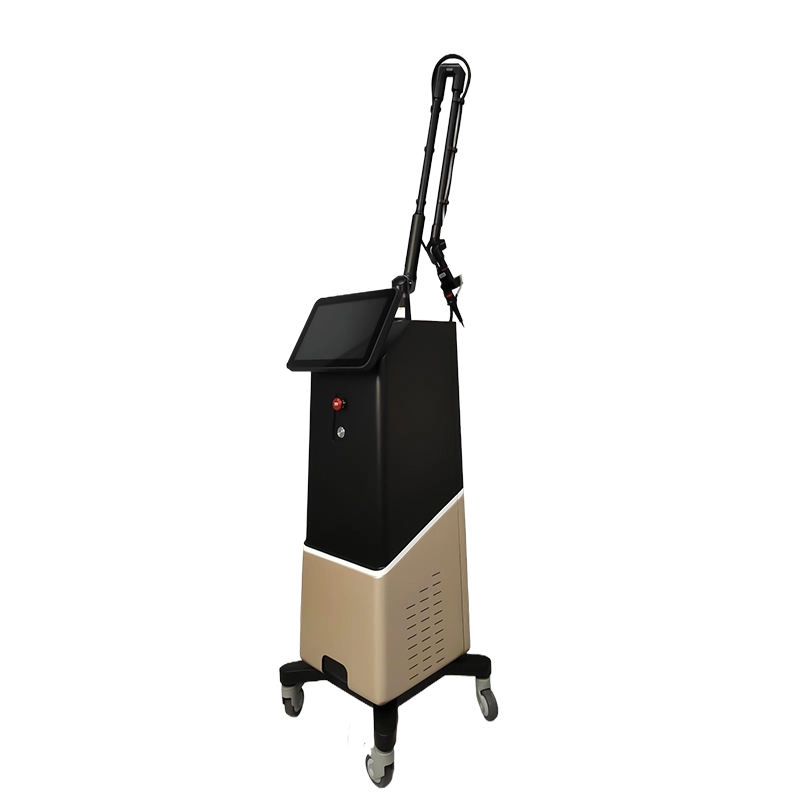
CO2 Fractional Laser Machine for Advanced Skin Resurfacing & Scar Removal
The CO2 fractional laser machine is designed to address a variety of skin concerns, offering treatments for acne scars, pigmentation, wrinkles, and overall skin texture. Utilizing advanced CO2 fractional laser technology, it delivers highly precise and controlled laser energy to promote collagen production and skin rejuvenation. This machine is ideal for professional use in beauty salons, medical spas, and aesthetic clinics. It features a user-friendly touchscreen interface, adjustable settings for customizable treatments, and a built-in cooling system to ensure comfort during use.
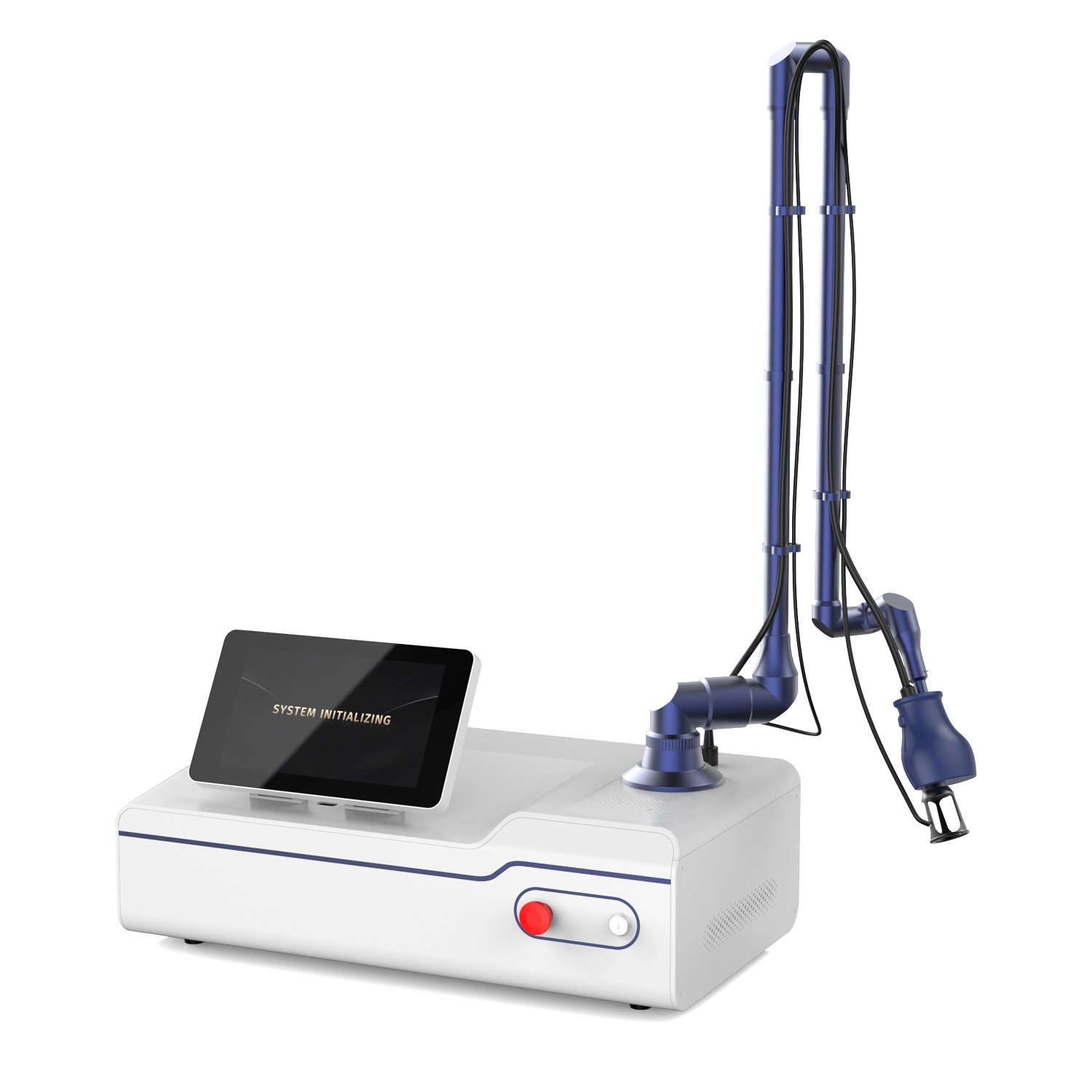
CO2 Fractional Laser Machine | Intimate Vaginal Rejuvenation System
This **CO2 Fractional Laser Machine** utilizes advanced 10600nm CO2 fractional laser technology to create controlled micro-thermal zones on the vaginal mucosa and intimate skin layers. These micro-columns stimulate collagen regeneration and tissue remodeling, effectively improving vaginal tightness, elasticity, and overall intimate health.
Designed specifically for professional medical aesthetic and intimate wellness applications, this CO2 fractional laser machine features intelligent parameter control and high-precision energy output to ensure safe, comfortable, and consistent treatment results. It is an ideal core device for vaginal rejuvenation, postpartum recovery, and intimate anti-aging treatments.
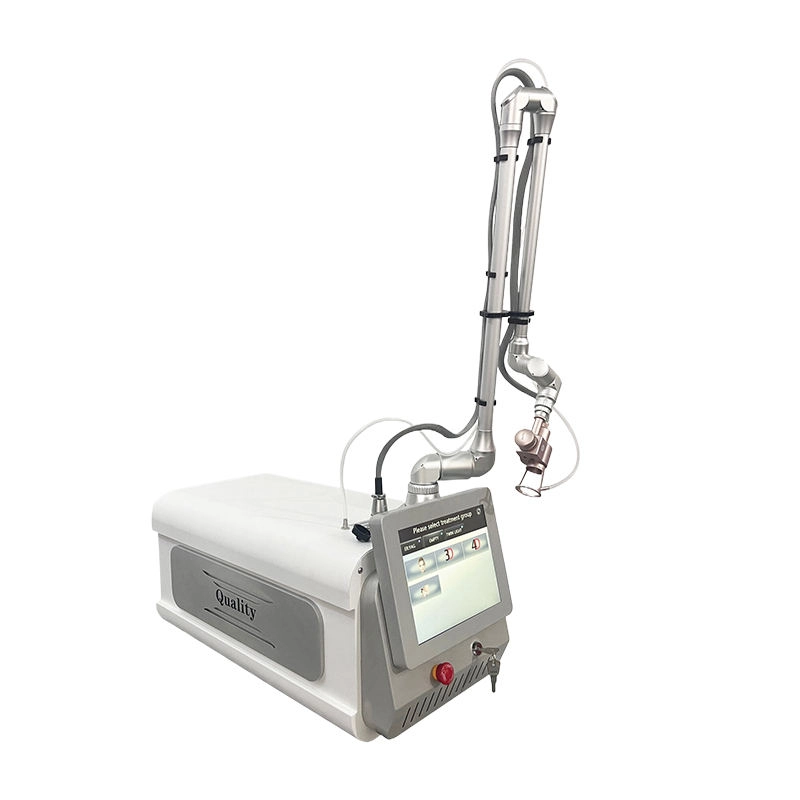
Professional CO2 Fractional Laser Machine | Fractional & Vaginal Rejuvenation CO2 Laser System
The CO2 fractional laser machine is a professional medical-grade device designed for deep skin resurfacing, wrinkle reduction, scar repair, and vaginal rejuvenation. Using a 10600 nm fractional CO2 laser beam, it creates micro-thermal columns on the skin to stimulate collagen regeneration and accelerate skin healing.
This CO2 fractional laser machine provides multiple treatment modes, including fractional mode, surgical cutting mode, and optional vaginal tightening mode, making it ideal for dermatology clinics and professional beauty centers seeking advanced laser solutions.
Its high precision, adjustable spot size, stable energy output, and seven-joint articulated arm ensure safe, accurate, and effective treatment results with minimal downtime.
Get more information
If you have any comments or good suggestions, please leave us a message; later our professional staff will contact you as soon as possible.
Let's Talk
Stay in touch with us for cutting-edge beauty solutions, professional guidance, and customized service.
Contact


Room 307, Building A, Huilong International E-commerce Industrial Park, No. 10 Xipengling Road, Helong Street, Baiyun District, Guangzhou, China
© 2025 HUIMAIN. All Rights Reserved. Privacy Policy | Terms and Conditions | Sitemap
Facebook
Instagram
Medical beauty equipment factory
huimain Medical beauty equipment factory
beauty machine supplier
Whatsapp: +8619124004543