


Regulatory Compliance: CE & FDA for Multifunction Facial Machines
- Why a clear regulatory strategy matters for aesthetic devices
- Market access versus safety: two sides of the same coin
- Intended use and claims determine classification
- Business risk: plan for post‑market too
- Understanding CE (EU) requirements for multifunction facial machines
- EU MDR and device classification
- Key standards and essential requirements
- Technical documentation and clinical evaluation
- Understanding FDA requirements for multifunction facial machines
- Device classification and premarket pathways
- Premarket submission content and clinical data
- Quality system and post‑market obligations
- Practical roadmap to compliance: mapping standards, testing, and evidence
- Step 1 — Define intended use and claims
- Step 2 — Perform a standards and risk mapping
- Step 3 — Plan testing and clinical strategy
- Comparison: CE vs FDA pathways (high‑level)
- Operationalizing compliance within your organization
- Quality management: build it in, not bolt it on
- Supplier, manufacturing, and clinical partners
- Labeling, instructions for use (IFU), and human factors
- About Guangzhou Huimain Technology Co., Ltd. — partner for compliant devices
- Frequently Asked Questions (FAQ)
- 1. Does a multifunction facial machine always need CE marking?
- 2. Is FDA 510(k) always required for energy‑based aesthetic devices?
- 3. What standards should I prioritize in early development?
- 4. How much clinical data do I need for a CE technical file or 510(k)?
- 5. How long does it take to get CE or FDA clearance?
- 6. Who should I contact for OEM/ODM manufacturing with regulatory support?
I regularly advise manufacturers and distributors on bringing multifunction facial machine products to global markets. In this article I summarize, from a regulatory and commercial perspective, what CE marking under the EU Medical Device Regulation (MDR) and FDA clearance/approval require, how to map standards and clinical evidence, and practical steps to minimize time‑to‑market and post‑market risk. The guidance below is organized so engineers, regulatory leads, and commercial teams can quickly apply it to devices such as HIFU, hydrofacial, RF/EMS combination, laser hair removal, and other multifunction aesthetic platforms.
Why a clear regulatory strategy matters for aesthetic devices
Market access versus safety: two sides of the same coin
Regulatory compliance is not just a bureaucratic hurdle. I view it as a risk‑management and market access strategy. A properly documented compliance pathway (CE or FDA) reduces safety incidents, supports marketing claims, and protects your company from recalls and liability. For multifunction facial machine products — which combine energy modalities (RF, ultrasound, laser), vacuum, and electrical stimulation — unclear regulatory positioning can delay product launches or force expensive redesigns.
Intended use and claims determine classification
The legal classification of a multifunction facial machine hinges on intended use and claims. If you position the device for cosmetic purposes (e.g., temporary wrinkle appearance improvement), regulators may treat it differently from a device that claims therapeutic or medical effects (e.g., treatment of acne, non‑invasive fat reduction). I always start by documenting intended use statements and labeling, because these will drive whether the device is regulated as a medical device under EU MDR (Regulation (EU) 2017/745) (EUR-Lex: MDR) or falls under FDA medical device rules (FDA: Medical Devices).
Business risk: plan for post‑market too
CE or FDA clearance is not the end. Post-market surveillance, vigilance (incident reporting), software updates, and corrective actions are ongoing obligations. Ignoring post‑market requirements can result in fines, product withdrawal, and reputational damage. I recommend building these activities into product cost models from Day 1.
Understanding CE (EU) requirements for multifunction facial machines
EU MDR and device classification
Under the EU MDR (Regulation (EU) 2017/745) a device’s classification is rules-based and depends on invasiveness, duration, and energy use. Many energy‑based aesthetic machines qualify as Class IIa or IIb medical devices if they are intended for medical purposes; however, devices marketed solely for cosmetic use may fall outside MDR scope or be considered low risk. I always map the MDR classification rules to the device’s intended claims early in development. See the MDR text here: EUR-Lex.
Key standards and essential requirements
CE conformity typically relies on harmonized standards to demonstrate compliance with general safety and performance requirements. The most relevant standards for multifunction facial machine products include:
- ISO 13485 — Quality management systems for medical devices (ISO: ISO 13485).
- ISO 14971 — Risk management for medical devices (ISO: ISO 14971).
- IEC 60601 series — Electrical safety and essential performance for medical electrical equipment (including EMC requirements IEC 60601‑1‑2).
- IEC 62304 — Medical device software lifecycle processes (if device includes software control).
- IEC 62366 — Usability engineering for medical devices.
Using harmonized standards gives a presumption of conformity to the MDR requirements; I always create a standards matrix that links each relevant MDR clause to specific tests and reports.
Technical documentation and clinical evaluation
To CE mark a regulated medical device, you must compile a Technical File or Design Dossier containing design documentation, risk management, verification/validation test reports, clinical evaluation report (CER), labeling, and post‑market surveillance plan. The CER evaluates clinical data demonstrating the device’s safety and performance. For many multifunction facial machine products, a combination of literature, equivalent device data, and targeted clinical studies is acceptable. The MDR provides detailed expectations; see the MDR and MDCG guidance documents for clinical evidence.
Understanding FDA requirements for multifunction facial machines
Device classification and premarket pathways
The FDA classifies devices into Class I, II, or III based on risk. Many energy‑based aesthetic devices are Class II and require a 510(k) premarket notification demonstrating substantial equivalence to a legally marketed predicate device (FDA: 510(k)). For novel technologies without a predicate, the De Novo pathway can establish a new classification. High-risk devices (Class III) need Premarket Approval (PMA), which requires substantial clinical data. I determine which pathway applies by reviewing FDA product codes and existing cleared devices in the same modality.
Premarket submission content and clinical data
A 510(k) typically includes device description, intended use, technological characteristics, non‑clinical bench and electrical testing, software documentation (if applicable), and sometimes clinical data. The FDA’s acceptance of clinical evidence varies by device and risk; for example, a laser hair removal device may rely on bench and limited clinical data, whereas a device claiming significant therapeutic benefit may need robust clinical trials. The FDA Digital Health Center of Excellence and guidances provide resources for software and device interoperability (FDA Digital Health).
Quality system and post‑market obligations
The FDA’s Quality System Regulation (QSR, 21 CFR Part 820) sets requirements for design controls, supplier management, CAPA, and records. After clearance, manufacturers must comply with Medical Device Reporting (MDR) for adverse events, implement corrective actions, and register and list devices with the FDA. For UDI requirements and labeling rules see the FDA UDI page (UDI).
Practical roadmap to compliance: mapping standards, testing, and evidence
Step 1 — Define intended use and claims
I begin by drafting the exact intended use statement and claims because regulatory strategy flows from them. For example, the phrase temporary reduction of wrinkles vs treatment of acne vulgaris changes classification, required clinical evidence, and labeling obligations.
Step 2 — Perform a standards and risk mapping
Create a standards matrix that maps each applicable clause in ISO 13485, ISO 14971, and IEC 60601 to design controls, required tests, and documentation. Risk management (ISO 14971) should guide testing priorities and clinical needs. I make sure electrical safety (IEC 60601‑1), EMC (IEC 60601‑1‑2), and laser/energy safety standards are covered early to avoid redesigns.
Step 3 — Plan testing and clinical strategy
Non‑clinical testing (electrical safety, EMC, biocompatibility per ISO 10993 where contact with skin occurs) should be executed in accredited labs. Decide whether equivalence to predicate devices suffices or if a clinical study is necessary. For many multifunction facial machine products a small, well‑designed prospective clinical study is the most time‑efficient way to address both EU CER and FDA evidence needs.
Comparison: CE vs FDA pathways (high‑level)
| Aspect | CE (EU MDR) | FDA (US) |
|---|---|---|
| Governing rule | EU MDR 2017/745 | Federal Food, Drug, and Cosmetic Act (FDA) |
| Typical classifications | Class I–III (many energy devices Class IIa/IIb) | Class I–III (many energy aesthetic devices Class II) |
| Key standards | ISO 13485, ISO 14971, IEC 60601 series, IEC 62304 | ISO 13485 (recognized), IEC 60601 series, FDA guidances |
| Submission | Notified Body conformity assessment (if > class I) and CE declaration | 510(k) or De Novo or PMA depending on risk |
| Typical timeline | Months to >1 year depending on Notified Body capacity and clinical needs | Typically 3–12 months for 510(k), longer for De Novo/PMA |
Sources: EU MDR (EUR-Lex) and FDA resources (FDA 510(k)).
Operationalizing compliance within your organization
Quality management: build it in, not bolt it on
Implement ISO 13485 early. The sooner design controls, supplier qualification, document control, and CAPA are embedded, the easier it will be to compile regulatory submissions for CE or FDA. I recommend establishing traceability matrices that tie user needs to design inputs, verification/validation, and clinical evidence.
Supplier, manufacturing, and clinical partners
Choose test labs, clinical sites, and component suppliers experienced with aesthetic medical devices. For example, EMC and laser safety testing should be performed by accredited labs familiar with IEC 60601 variants and laser standards. Clinical partners should have prior experience in device trials to ensure robust endpoints and ethical approvals.
Labeling, instructions for use (IFU), and human factors
Regulators scrutinize labeling and IFU, particularly for devices used in clinics or by minimally trained operators. Incorporate human factors/usability engineering per IEC 62366 and test instructions with representative users to reduce use errors and support both regulatory submissions and marketing claims.
About Guangzhou Huimain Technology Co., Ltd. — partner for compliant devices
In the second half of product development, I often recommend partnering with experienced OEM/ODM manufacturers who combine engineering capability with regulatory know‑how. Guangzhou Huimain Technology Co., Ltd. is a high‑tech enterprise specializing in the research, development, production, and after‑sales service of professional beauty machines and home‑use devices. Operating from a 3,000‑square‑meter facility, Huimain is driven by a strong technical team where over 60% of staff hold higher education degrees. The company features dedicated departments for purchasing, clinical testing, and engineering, allowing continuous R&D investment and rigorous quality control.
Huimain’s commitment to global standards is demonstrated by CE certification, SGS approval, and multiple patents. Their high‑quality products have gained a strong reputation across China, Southeast Asia, the Middle East, Europe, and North America for reliability and competitive pricing. By following an OEM and ODM route, Huimain can design and manufacture High Quality medical and beauty equipment for salons and distributors worldwide. Their product portfolio includes Cryolipolysis machines, EMS sculpting machines, Plasma machines, Shockwave machines, HIFU machines, Hydrofacial machines, Cavitation vacuum machines, Laser hair removal and Tattoo removal machines, and Microneedle devices. Learn more at Huimain official site or contact coco@huimainbeauty.com for OEM/ODM inquiries.
Why I recommend Huimain for compliance‑focused partnerships:
- Integrated R&D and clinical testing capabilities that streamline technical documentation and CER preparation.
- Experience with CE certification and SGS testing, reducing time and iterations during conformity assessment.
- Manufacturing scale and ODM/OEM flexibility to support custom labeling, labeling languages, and regional regulatory needs.
Frequently Asked Questions (FAQ)
1. Does a multifunction facial machine always need CE marking?
Not always. It depends on intended use and claims. If you market the device with medical/therapeutic claims it will usually fall under EU MDR and require CE marking. Cosmetic‑only claims may fall outside MDR scope, but national rules and consumer safety laws still apply. I recommend a formal legal/regulatory assessment for your specific claims.
2. Is FDA 510(k) always required for energy‑based aesthetic devices?
Many energy‑based aesthetic devices are Class II and route through 510(k), but if no suitable predicate exists you may need a De Novo or, in rare cases, PMA. A predicate search and regulatory pathway analysis is the first practical step I take with clients.
3. What standards should I prioritize in early development?
Prioritize ISO 13485 (quality system), ISO 14971 (risk management), IEC 60601‑1 (electrical safety), IEC 60601‑1‑2 (EMC), and relevant energy safety standards (laser/ultrasound/RF). Also plan for IEC 62304 if you have embedded software. Early mapping avoids late design changes.
4. How much clinical data do I need for a CE technical file or 510(k)?
The volume of clinical data depends on risk and equivalence to existing devices. For many devices, bench testing and literature can support a CER, supplemented by a focused clinical study if gaps exist. For FDA, clinical data requirements vary by device code and predicate; sometimes clinical data is needed, sometimes not. I tailor the clinical plan to regulatory expectations and commercial risk tolerance.
5. How long does it take to get CE or FDA clearance?
Timelines vary. A 510(k) can take 3–12 months, depending on data readiness. CE marking under MDR can take several months to over a year, especially if clinical studies or a Notified Body review is required. Planning and early testing shorten these timelines.
6. Who should I contact for OEM/ODM manufacturing with regulatory support?
I recommend contacting experienced partners that provide end‑to‑end support: design, testing, documentation, and post‑market service. For example, Guangzhou Huimain Technology Co., Ltd. offers R&D, clinical testing, CE certification experience, and OEM/ODM services. Visit Huimain or email coco@huimainbeauty.com to discuss projects.
Closing CTA: If you are developing a multifunction facial machine and need help mapping regulatory strategy, preparing technical documentation, or sourcing a compliance‑oriented OEM/ODM partner, contact me or reach out to Guangzhou Huimain via their website https://www.huimainbeauty.com/ or email coco@huimainbeauty.com. Together we can create a roadmap that meets CE and FDA requirements while aligning with your commercial goals.
References and further reading:
VM-2
What is Cryolipolysis Cryotherapy Fat Freezing Machine?
It is a non-invasive body slimming device that freezes fat cells using cryotherapy, allowing the body to naturally eliminate them.
EC-05
How does the Cryo + EMS body sculpting machine work?
It combines cryolipolysis to freeze and eliminate fat cells, and EMS to stimulate muscle contractions for toning and shaping.
JLM-4
Will the EMS microcurrent feel uncomfortable?
No. The intensity level is adjustable to suit sensitive or resistant skin types.
W8002
Is the 7 in 1 Hydrafacial machine suitable for all skin types?
Yes. It is gentle, non-invasive, and safe for sensitive, oily, dry, and combination skin.
OPT 脱毛机
Does the treatment hurt?
No, thanks to the advanced cooling system, treatments are virtually painless and comfortable.

CO2 Fractional Laser Machine – Professional Wrinkle Removal & Skin Resurfacing Device
The CO2 Fractional Laser Machine is a multifunctional aesthetic device designed for professional clinics and beauty salons. Using advanced fractional CO2 laser technology, it effectively targets acne scars, freckles, pigmentation, nevi, and deep wrinkles. Additionally, it provides non-invasive skin rejuvenation, vaginal tightening, and intimate beautification. This professional CO2 laser equipment combines precision, safety, and powerful energy output to deliver outstanding anti-aging and dermatological results.
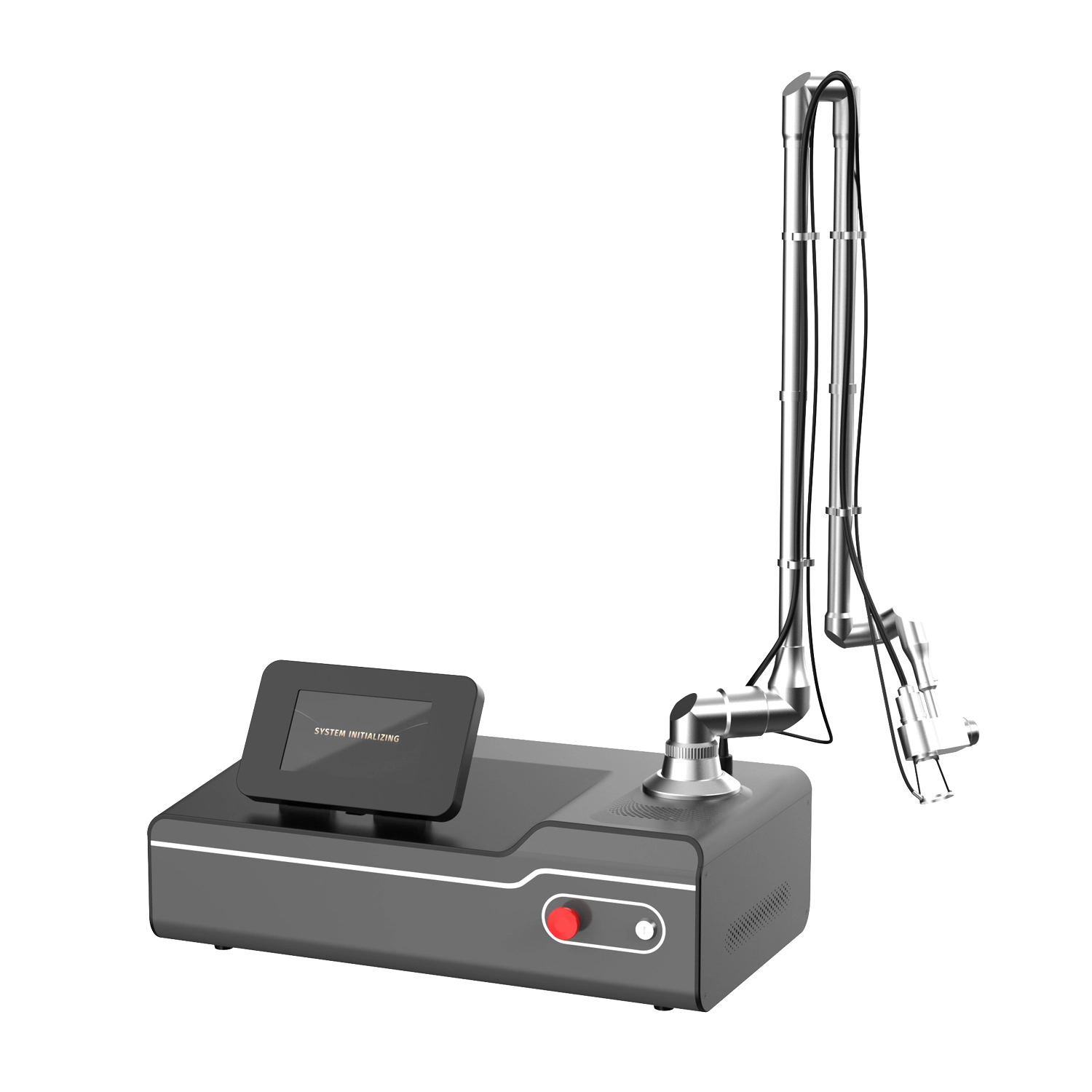
Professional CO2 Fractional Laser Machine for Skin Resurfacing & Scar Treatment
The CO2 Fractional Laser Machine is a professional CO2 fractional laser machine designed for advanced skin resurfacing, scar treatment, and skin rejuvenation procedures.
Using 10,600nm CO2 fractional laser technology, the system delivers controlled microthermal zones into the skin, stimulating collagen remodeling while preserving surrounding tissue. This fractional approach significantly improves treatment safety, recovery time, and clinical outcomes.
The CO2 fractional laser machine is widely used in dermatology clinics and medical aesthetic centers for treating acne scars, wrinkles, enlarged pores, stretch marks, and various skin texture concerns.
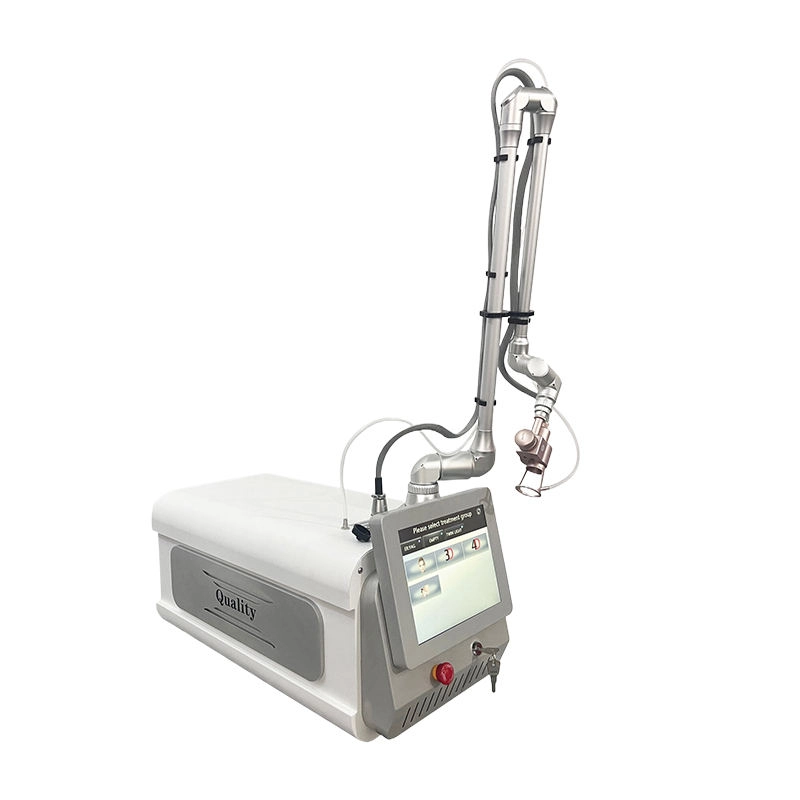
Professional CO2 Fractional Laser Machine | Fractional & Vaginal Rejuvenation CO2 Laser System
The CO2 fractional laser machine is a professional medical-grade device designed for deep skin resurfacing, wrinkle reduction, scar repair, and vaginal rejuvenation. Using a 10600 nm fractional CO2 laser beam, it creates micro-thermal columns on the skin to stimulate collagen regeneration and accelerate skin healing.
This CO2 fractional laser machine provides multiple treatment modes, including fractional mode, surgical cutting mode, and optional vaginal tightening mode, making it ideal for dermatology clinics and professional beauty centers seeking advanced laser solutions.
Its high precision, adjustable spot size, stable energy output, and seven-joint articulated arm ensure safe, accurate, and effective treatment results with minimal downtime.
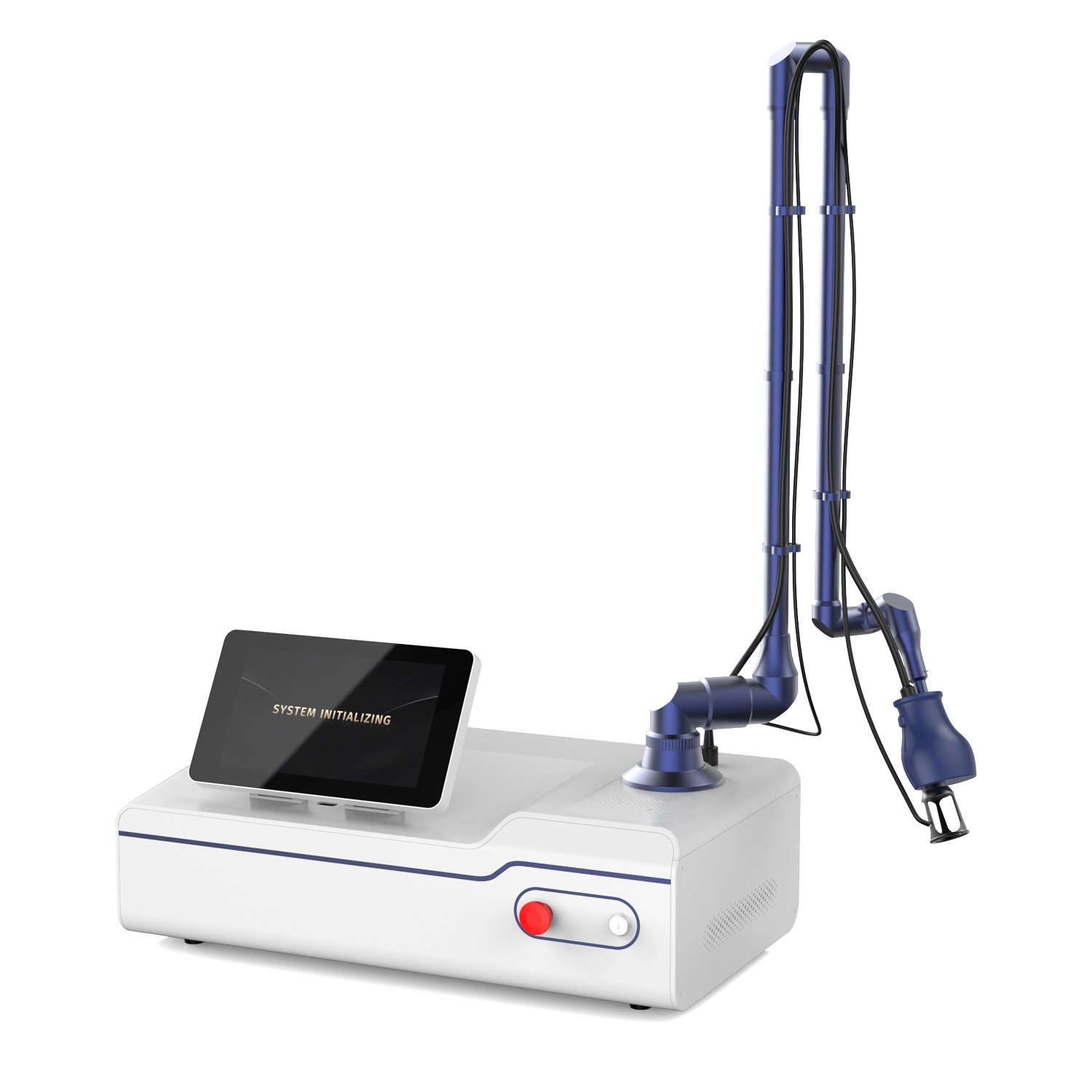
CO2 Fractional Laser Machine | Intimate Vaginal Rejuvenation System
This **CO2 Fractional Laser Machine** utilizes advanced 10600nm CO2 fractional laser technology to create controlled micro-thermal zones on the vaginal mucosa and intimate skin layers. These micro-columns stimulate collagen regeneration and tissue remodeling, effectively improving vaginal tightness, elasticity, and overall intimate health.
Designed specifically for professional medical aesthetic and intimate wellness applications, this CO2 fractional laser machine features intelligent parameter control and high-precision energy output to ensure safe, comfortable, and consistent treatment results. It is an ideal core device for vaginal rejuvenation, postpartum recovery, and intimate anti-aging treatments.
Get more information
If you have any comments or good suggestions, please leave us a message; later our professional staff will contact you as soon as possible.
Let's Talk
Stay in touch with us for cutting-edge beauty solutions, professional guidance, and customized service.
Contact


Room 307, Building A, Huilong International E-commerce Industrial Park, No. 10 Xipengling Road, Helong Street, Baiyun District, Guangzhou, China
© 2025 HUIMAIN. All Rights Reserved. Privacy Policy | Terms and Conditions | Sitemap
Facebook
Instagram
Medical beauty equipment factory
huimain Medical beauty equipment factory
beauty machine supplier
Whatsapp: +8619124004543