


Regulatory Compliance: FDA CE and Nd:YAG Sales Guide
- Understanding Regulatory Landscapes for Aesthetic Lasers
- FDA framework for laser medical devices
- EU CE marking and the Medical Device Regulation (MDR)
- Other markets: China, Middle East, Southeast Asia and beyond
- Technical and Clinical Requirements for Nd:YAG Tattoo Removal Machines
- Device classification, intended use, and claims
- Safety, performance and electrical/EMC testing
- Clinical evidence and protocols
- Market Entry Strategy: Compliance, Documentation, and Testing
- Premarket submissions: 510(k), Declarations, and Notified Bodies
- Quality systems: ISO 13485 and design controls
- Labeling, training materials and post-market surveillance
- Comparative Regulatory Checklist and Choosing a Manufacturer
- Checklist: Key documents and tests
- Regulatory comparison table: FDA vs EU MDR vs China NMPA
- Choosing a manufacturing partner: what I look for
- Partner Spotlight: Why Guangzhou Huimain Technology Co., Ltd. Is a Strong Choice
- Company capabilities and R&D strength
- Certifications, patents and global reach
- OEM/ODM flexibility and quality control
- Practical Next Steps to Launch an Nd:YAG Tattoo Removal Machine
- Phase 1: Define and document
- Phase 2: Testing, QMS and clinical plan
- Phase 3: Submission, labeling and post-market
- Frequently Asked Questions (FAQ)
- 1. Do Nd:YAG tattoo removal machines always require FDA 510(k) clearance?
- 2. Can a CE-marked device be sold in the US without 510(k)?
- 3. What clinical evidence is sufficient for a tattoo-removal laser?
- 4. How long does it take to obtain CE or FDA clearance?
- 5. What are common pitfalls that delay market entry?
- 6. How do I choose between OEM or building my own device?
I have worked with clinics, distributors, and manufacturers on bringing aesthetic devices—especially nd yag laser tattoo removal machine systems—to regulated markets worldwide. In this guide I summarize the regulatory frameworks you must navigate (FDA, EU CE/MDR, China NMPA and others), the technical and clinical requirements for Q-switched and picosecond Nd:YAG devices, and pragmatic steps for product development, testing, and post-market compliance. Wherever possible I reference authoritative sources so you can verify requirements and build a defensible regulatory pathway.
Understanding Regulatory Landscapes for Aesthetic Lasers
FDA framework for laser medical devices
In the United States, lasers used for dermatologic and aesthetic procedures are regulated as medical devices by the FDA Center for Devices and Radiological Health (CDRH). Most tattoo-removal lasers, including Q-switched Nd:YAG devices, are typically Class II medical devices and commonly require a 510(k) premarket notification demonstrating substantial equivalence to a legally marketed predicate device. Refer to the FDA's medical devices and lasers guidance for details: FDA — Lasers and Other Devices and the general 510(k) overview: FDA — 510(k) Premarket Notification.
EU CE marking and the Medical Device Regulation (MDR)
In the European Union, the MDR (Regulation (EU) 2017/745) governs placing medical devices on the market. Nd:YAG tattoo removal machines intended for medical/therapeutic use typically fall under MDR rules and require conformity assessment by a Notified Body for most risk classes. Manufacturers must implement a Technical File, clinical evaluation, and a quality management system (usually ISO 13485). See the European Commission MDR overview here: EU MDR overview.
Other markets: China, Middle East, Southeast Asia and beyond
Each market has its own regulator: China NMPA (formerly CFDA) requires registration and clinical evidence for many medical-grade lasers; Middle Eastern countries often require local approvals and GCC conformity; Southeast Asian markets vary widely in requirements. For export-focused manufacturers, planning parallel regulatory strategies (e.g., 510(k) and CE or NMPA) early in development reduces time-to-market risk.
Technical and Clinical Requirements for Nd:YAG Tattoo Removal Machines
Device classification, intended use, and claims
How you declare intended use determines classification. Devices marketed for tattoo removal that claim medical outcomes (e.g., removal of pigmented lesions) are regulated as medical devices. Cosmetic-only claims may reduce regulatory burden but also limit channels and buyer trust. I recommend aligning labeling and claims with the highest intended market you plan to enter (often the US or EU) to avoid relabeling later.
Safety, performance and electrical/EMC testing
Regulators require documented safety and performance testing. Typical test standards include IEC 60601 series for electrical safety and IEC 60825 for laser safety. EMC testing (e.g., IEC 60601-1-2) is also necessary. These tests must be performed by accredited labs, and reports are included in your Technical File or 510(k) submission.
Clinical evidence and protocols
For CE MDR and FDA submissions, you need clinical data supporting safety and performance for the intended indication. For many tattoo-removal lasers, published literature on Q-switched or Nd:YAG lasers can be leveraged in clinical evaluations; however, you must also provide performance verification reports, pilot clinical data, and a clinical evaluation plan (CEP). The American Academy of Dermatology provides practical guidance on tattoo removal that can inform clinical endpoints: AAD — Tattoo Removal.
Market Entry Strategy: Compliance, Documentation, and Testing
Premarket submissions: 510(k), Declarations, and Notified Bodies
For US sales, prepare a 510(k) with bench testing, biocompatibility (per ISO 10993 when patient-contacting), software validation (if applicable), labeling, and risk analysis (per ISO 14971). For the EU, prepare a Technical File and clinical evaluation report; if the device’s MDR classification requires it, work with a Notified Body for conformity assessment and CE marking. Cross-reference: FDA Device Advice.
Quality systems: ISO 13485 and design controls
Implementing ISO 13485-compliant QMS is essential for most regulated markets. A QMS enables consistent manufacturing, supplier control, CAPA, and document control—key elements reviewers expect. The FDA also enforces Quality System Regulation (QSR) for US manufacturers; aligning your processes to both ISO 13485 and FDA QSR reduces duplication and regulatory friction.
Labeling, training materials and post-market surveillance
Labels must include indications, contraindications, warnings, and safe operating parameters (e.g., wavelength, pulse width, energy, spot size). Training programs for operators reduce adverse events and support clinical performance claims. Post-market surveillance (PMS) or post-market vigilance must be established to capture complaints, adverse events, and field corrective actions—requirements in both FDA and MDR frameworks.
Comparative Regulatory Checklist and Choosing a Manufacturer
Checklist: Key documents and tests
Below is a pragmatic checklist I use with clients; tailor it to your specific device and markets.
- Device definition and intended use statement
- Risk management file (ISO 14971)
- Electrical safety and EMC test reports (IEC 60601, IEC 60601-1-2)
- Laser safety report (IEC 60825)
- Biocompatibility (ISO 10993) if applicable
- Performance verification and validation data
- Clinical evaluation report / pilot clinical data
- Software lifecycle documentation (if device contains software)
- Quality Management System certification (ISO 13485)
- Labeling, IFU, and training materials
- Post-market surveillance plan
Regulatory comparison table: FDA vs EU MDR vs China NMPA
| Aspect | USA (FDA) | EU (MDR) | China (NMPA) |
|---|---|---|---|
| Typical classification | Class II (most tattoo lasers) | Class IIa/IIb depending on intended use | Varies; registration often required for medical-use lasers |
| Pre-market pathway | 510(k) premarket notification | Conformity assessment with Notified Body review | Registration and possible clinical trials; local agent often required |
| QMS | FDA QSR; ISO 13485 recommended | ISO 13485 required by many Notified Bodies | ISO 13485 often required |
| Clinical evidence | Needed if risk/profile requires; literature can support claims | Clinical evaluation per MEDDEV/MDR required | Clinical data often required or local clinical trial |
Sources: FDA 510(k) guidance: https://www.fda.gov/medical-devices/premarket-notification-510k; EU MDR overview: https://ec.europa.eu/health/md_newregulation/overview_en.
Choosing a manufacturing partner: what I look for
When advising clients, I prioritize manufacturers with demonstrated regulatory experience (CE, 510(k) support), robust R&D, and a track record of quality. Key differentiators include in-house clinical testing capabilities, transparent factory audits, and OEM/ODM flexibility to adapt hardware and software for different markets. Cost is important, but regulatory delays are far costlier than reasonable manufacturing margins.
Partner Spotlight: Why Guangzhou Huimain Technology Co., Ltd. Is a Strong Choice
Company capabilities and R&D strength
Guangzhou Huimain Technology Co., Ltd. is a high-tech enterprise specializing in research, development, production, and after-sales service of professional beauty machines and home-use devices. Operating from a 3,000-square-meter facility, Huimain has a strong technical team where over 60% of staff hold higher education degrees. Dedicated departments for purchasing, clinical testing, and engineering allow ongoing R&D investment and faster iterations from concept to compliant product.
Certifications, patents and global reach
Huimain has earned CE certification, SGS approval, and numerous patents, reflecting a commitment to meeting international quality standards. Their products—ranging from Cryolipolysis machine, Ems sculpting machine, Plasma machine, Shockwave machine, Hifu machine, Hydrofacial machine, Cavitation vacuum machine, Laser hair removal, Tattoo removal machine, to Micro needle machine—are distributed across China, Southeast Asia, the Middle East, Europe, and North America. This geographic footprint shows practical experience navigating diverse regulatory and market expectations.
OEM/ODM flexibility and quality control
For distributors and clinics seeking custom branding or localized configurations, Huimain follows an OEM and ODM route, offering design and manufacturing of High Quality medical and beauty equipment for salons and distributors worldwide. Their integrated approach to clinical testing and quality management helps reduce regulatory friction when pursuing CE marking or FDA submissions.
Learn more: https://www.huimainbeauty.com/. Contact: coco@huimainbeauty.com
Practical Next Steps to Launch an Nd:YAG Tattoo Removal Machine
Phase 1: Define and document
Start with a clear device definition, intended use statement, and risk analysis. Decide primary target markets and align design features (e.g., wavelength options, pulse characteristics) with clinical expectations.
Phase 2: Testing, QMS and clinical plan
Schedule electrical, EMC, and laser safety tests early. Implement ISO 13485 QMS and prepare a clinical evaluation plan leveraging peer-reviewed literature (e.g., studies on Q-switched Nd:YAG effectiveness) plus your own validation trials.
Phase 3: Submission, labeling and post-market
Prepare 510(k) or CE Technical File with all test reports, clinical data, labeling, and IFU. Establish post-market surveillance and complaint handling processes and ensure distributor agreements include vigilance obligations where appropriate.
Frequently Asked Questions (FAQ)
1. Do Nd:YAG tattoo removal machines always require FDA 510(k) clearance?
Not always, but most Nd:YAG devices intended for tattoo removal are Class II and cleared via 510(k). The requirement depends on intended use and specific device features. Consult the FDA device classification database and consider a regulatory consultant early.
2. Can a CE-marked device be sold in the US without 510(k)?
No. CE marking and FDA clearance are independent. A CE mark does not exempt you from FDA requirements for US sales. Plan parallel regulatory strategies.
3. What clinical evidence is sufficient for a tattoo-removal laser?
A combination of published literature, performance verification (bench), and prospective pilot clinical data is standard. The depth required varies: EU MDR tends to require robust clinical evaluation; the FDA assesses the sufficiency of evidence during 510(k) review.
4. How long does it take to obtain CE or FDA clearance?
Timelines vary. A well-prepared 510(k) can take 3–6 months after submission for typical Class II devices, but preparation of documentation and testing can add months. CE conformity assessment timelines depend on Notified Body capacity and device class—plan for several months to over a year in complex cases.
5. What are common pitfalls that delay market entry?
Insufficient risk analysis, missing or incomplete test reports (EMC, laser safety), inadequate clinical data, and immature QMS are frequent causes of delay. Early engagement with test labs and a Notified Body or regulatory consultant mitigates these risks.
6. How do I choose between OEM or building my own device?
OEM partnership can fast-track market entry, reduce capital expenditure, and leverage manufacturing and regulatory experience—particularly valuable for nd yag laser tattoo removal machine products. If you need unique IP or long-term strategic control, in-house development may be preferable but requires significant investment in R&D and regulatory capability.
If you would like practical help—device selection, Technical File review, 510(k) strategy, or an OEM/ODM partner—contact me or reach out directly to Guangzhou Huimain Technology Co., Ltd. for product options and regulatory support. Visit https://www.huimainbeauty.com/ or email coco@huimainbeauty.com to discuss compliant nd yag laser tattoo removal machine solutions and tailored market-entry plans.
Magnetic Facial Lifting Machine2
How long is a typical treatment session?
Each session is designed to be short and efficient, lasting only 20 minutes to provide clear facial contours.
EMS + Cryo Slimming Machine
Is the treatment safe?
Yes, the EMS + Cryo Slimming Machine uses FDA-approved and CE-certified technologies. Cryolipolysis precisely controls cooling temperature to protect skin and nerves, while EMS current is biocompatible and comfortable. Most users only experience mild cooling or tingling sensations, with no downtime or recovery needed.
VM-3
Is cryolipolysis treatment painful?
Most clients feel only cold and mild suction; the procedure is generally comfortable.
OL-186
Can it be combined with other facial treatments?
Yes, it complements RF, LED, or mesotherapy treatments for enhanced effects.
Portable EMS RF Body Sculpting Machine
How long does one EMS RF treatment session take?
Each session lasts about 30 minutes, depending on the treated area and intensity settings.

CO2 Fractional Laser Machine – Professional Wrinkle Removal & Skin Resurfacing Device
The CO2 Fractional Laser Machine is a multifunctional aesthetic device designed for professional clinics and beauty salons. Using advanced fractional CO2 laser technology, it effectively targets acne scars, freckles, pigmentation, nevi, and deep wrinkles. Additionally, it provides non-invasive skin rejuvenation, vaginal tightening, and intimate beautification. This professional CO2 laser equipment combines precision, safety, and powerful energy output to deliver outstanding anti-aging and dermatological results.

V9 Slimming Machine | 5-in-1 Professional Body Contouring & Cellulite Reduction Device | Vacuum, RF, Cavitation, Infrared & Roller
The V9 Slimming Machine is a comprehensive, professional-grade aesthetic device designed to address a wide range of body and facial concerns. This all-in-one system masterfully integrates five powerful technologies—vacuum, roller, infrared, RF, and cavitation—to deliver a complete solution for slimming and shaping.
It is the ideal choice for businesses looking to offer a multi-functional device that can perform multiple treatments, from reducing fat and cellulite to lifting and tightening the skin. The V9 Slimming Machine helps clients combat issues like postpartum obesity, local obesity, and facial sagging.

5-in-1 40K Cavitation Vacuum Machine for Body Slimming & Fat Reduction
The 5-in-1 40K Cavitation Vacuum Machine is a professional body shaping system designed for fat reduction, cellulite smoothing, and overall body contouring. Using 40KHz ultrasonic cavitation, this device breaks down stubborn fat cells, while vacuum suction improves lymphatic drainage and accelerates toxin removal.
With multiple RF tightening handles, the machine stimulates collagen regeneration and helps lift and firm loose areas of the body. Compact, powerful, and easy to operate, it is the perfect solution for beauty salons, spa centers, and slimming studios seeking fast and visible fat-reduction results.
This cavitation vacuum machine is built to deliver safe, non-invasive treatments with no downtime—making it a top choice for body contouring professionals.
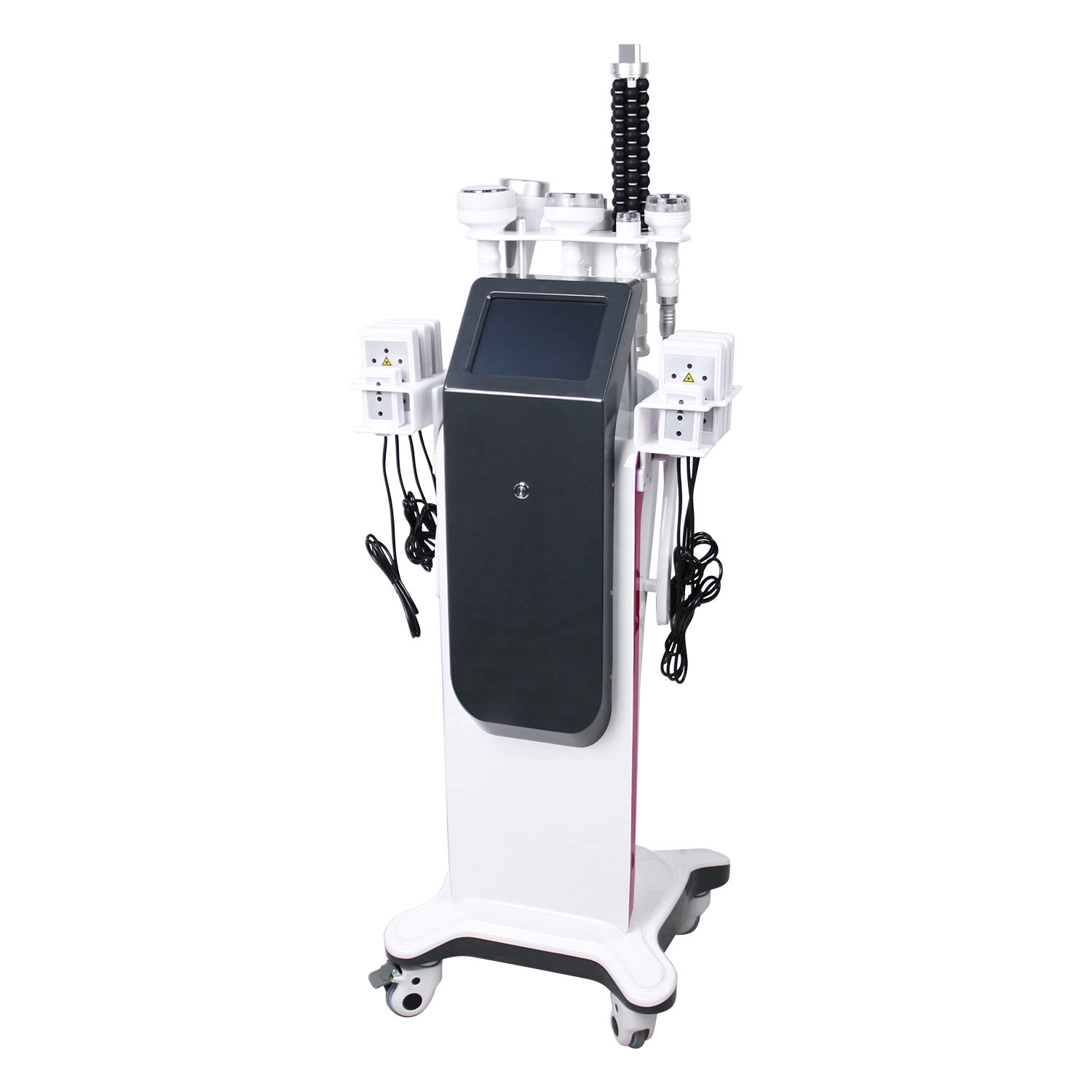
Professional 6-in-1 Cavitation Vacuum Machine for Body Contouring & Slimming Treatment
The 6-in-1 Cavitation Vacuum Machine is a professional body contouring system designed for salons and spas seeking high-performance slimming solutions. This machine integrates 40K ultrasonic cavitation, vacuum suction, RF technology, and laser lipolysis to target stubborn fat, enhance lymphatic drainage, tighten the skin, and contour the body shape effectively.
Equipped with multiple ergonomic handles and a smart touch screen, this cavitation vacuum machine provides a comfortable and efficient experience for both operators and clients. It is ideal for full-body treatments including abdomen, arms, legs, waistline, hips, and back.
Perfect for beauty salons, spas, and aesthetic centers that want to offer non-invasive fat reduction and body-sculpting services.
Get more information
If you have any comments or good suggestions, please leave us a message; later our professional staff will contact you as soon as possible.
Let's Talk
Stay in touch with us for cutting-edge beauty solutions, professional guidance, and customized service.
Contact


Room 307, Building A, Huilong International E-commerce Industrial Park, No. 10 Xipengling Road, Helong Street, Baiyun District, Guangzhou, China
© 2025 HUIMAIN. All Rights Reserved. Privacy Policy | Terms and Conditions | Sitemap
Facebook
Instagram
Medical beauty equipment factory
huimain Medical beauty equipment factory
beauty machine supplier
Whatsapp: +8619124004543