


Regulatory Compliance for Importing Cryolipolysis Machines
- Understanding Market Entry for Aesthetic Devices
- Device classification and claims
- Clinical evidence and claims substantiation
- Selecting the right product: performance, safety and the best cryolipolysis slimming machine
- Regulatory Pathways by Region
- United States: FDA pathways and practical tips
- European Union: MDR and CE marking
- China and other APAC markets
- Comparative overview
- Technical Documentation, Safety and Quality Systems
- Quality Management: ISO 13485
- Electrical safety, EMC and applicable standards
- Clinical evaluation and post-market surveillance (PMS)
- Practical Steps for Importers and Suppliers
- Pre-import checklist
- Working with distributors, service and spare parts
- Mitigating regulatory risk and recall preparedness
- Why choose a reliable OEM/ODM partner — case example
- How Huimain differentiates
- FAQ
- 1. Do cryolipolysis machines require FDA clearance to be imported into the U.S.?
- 2. Can I sell a CE-marked cryolipolysis device in the EU without additional steps?
- 3. What test reports should I request from a supplier?
- 4. How do I determine whether a device is the best cryolipolysis slimming machine for my market?
- 5. What are the top post-import compliance obligations?
- 6. Who can help me conduct a pre-market readiness audit?
As a consultant and product developer who has helped clinics and distributors source, certify, and import aesthetic devices globally, I know how regulatory complexity can determine whether an innovative product like the best cryolipolysis slimming machine succeeds or stalls at customs. This article gives a practical, region-aware roadmap (with references to primary regulatory sources) so you can evaluate devices, prepare documentation, and manage risk when importing cryolipolysis machines.
Understanding Market Entry for Aesthetic Devices
Device classification and claims
Before importing, determine how the device will be positioned: medical, aesthetic-medical, or cosmetic. Regulatory classification depends on intended use and claims. For example, a cryolipolysis device presented for fat reduction that impacts tissue structure is typically regulated as a medical device in many jurisdictions. Check the U.S. Food and Drug Administration (FDA) guidance on what constitutes a medical device and classification pathways: FDA - What is a medical device?. Positioning affects testing, clinical evidence and the documentation you must submit.
Clinical evidence and claims substantiation
I always advise clients to match claims to available clinical evidence. Peer-reviewed studies on cryolipolysis show measurable subcutaneous fat reduction with acceptable safety profiles; see representative reviews and randomized studies on PubMed: Cryolipolysis review and safety and efficacy study. If you plan to market the device as medical or make specific reduction claims, prepare a clinical evaluation report aligned with regional standards (e.g., EU MDR clinical evaluation requirements).
Selecting the right product: performance, safety and the best cryolipolysis slimming machine
When assessing suppliers, compare parameters—temperature control precision, applicator design, treatment monitoring, and safety cutoffs. The best cryolipolysis slimming machine for your market balances proven clinical outcomes, robust safety engineering (over-temperature protection, skin sensors), and regulatory-ready documentation (technical file/510(k)/NMPA dossier). Ask suppliers for evidence: clinical trial reports, adverse event logs, electrical safety and EMC test reports, and post-market surveillance plans.
Regulatory Pathways by Region
United States: FDA pathways and practical tips
In the U.S., many cryolipolysis systems have been cleared via 510(k) submissions demonstrating substantial equivalence to predicate devices (e.g., CoolSculpting). Review FDA device classification and 510(k) process at FDA 510(k) page. Key items for importers: register the establishment, list devices, ensure labeling meets FDA requirements, and confirm a cleared or approved pathway if your supplier claims clinical indications. If the device is distributed by you, you carry obligations for complaint handling and reporting (MDR reporting).
European Union: MDR and CE marking
The EU Medical Device Regulation (MDR 2017/745) strengthened requirements for clinical evaluation, technical documentation, and post-market surveillance. See the official MDR overview: EU MDR (2017/745). For importers or distributors in the EU, ensure the device is CE marked per MDR, check the Notified Body certificate (if applicable), and verify the Technical Documentation and Declaration of Conformity are available. The MDR also increases scrutiny of clinical evidence — a superficial literature review is often insufficient for devices with active treatment claims.
China and other APAC markets
China's National Medical Products Administration (NMPA) regulates many aesthetic devices; process steps differ from FDA/MDR—local testing or clinical trials may be required. See the NMPA official portal: NMPA. Other markets (e.g., Australia, Canada, Middle East) have their own classifications and import controls—factor these into commercialization plans early to avoid repeated product changes and lost time.
Comparative overview
Below is a concise comparison of typical regulatory expectations across key markets.
| Region | Typical legal pathway | Key documentary requirements | Typical timeline |
|---|---|---|---|
| United States | 510(k) clearance or de novo; PMA for novel devices | 510(k) dossier, bench tests, biocompatibility, labeling, clinical data if claimed | 3–12 months (variable) |
| European Union | CE marking per MDR (Notified Body involvement common) | Technical File, Clinical Evaluation Report, PMS plan, UDI | 6–18 months (depends on Notified Body workload) |
| China (NMPA) | Registration (may require local testing/clinical trials) | Local GMP/quality evidence, technical dossier, possible clinical data | 6–24+ months |
Sources: FDA and EU MDR guidance (links cited above).
Technical Documentation, Safety and Quality Systems
Quality Management: ISO 13485
A robust QMS aligned with ISO 13485 is the backbone of regulatory acceptability. I require suppliers to demonstrate ISO 13485 certification and to provide the certificate and scope. Certification shows the manufacturer consistently designs, produces and services medical devices under controlled processes.
Electrical safety, EMC and applicable standards
Medical electrical equipment must meet electrical safety and EMC standards (commonly IEC 60601 series). Request test reports from accredited labs showing conformity to applicable IEC standards and obtain copies of test certificates. Regulatory authorities and notified bodies will examine these as part of technical documentation.
Clinical evaluation and post-market surveillance (PMS)
Under modern regulatory regimes (notably EU MDR), a Clinical Evaluation Report (CER) and an active PMS plan are mandatory. I advise building a CER using internal data, supplier clinical studies, and independent literature. The CER should transparently present effectiveness and safety, including adverse events and risk mitigation.
Practical Steps for Importers and Suppliers
Pre-import checklist
My standard pre-import checklist for cryolipolysis devices includes:
- Verification of regulatory status for each target market (e.g., 510(k) number, CE certificate).
- Full technical file access: device description, risk analysis, manufacturing processes, QC records.
- Test reports: IEC 60601-1, EMC, biocompatibility (ISO 10993), and any performance testing.
- Clinical evidence package and PMS plan.
- Sample labeling and IFU in the local language(s).
As you evaluate suppliers for the best cryolipolysis slimming machine, insist on these documents before shipment to avoid delays or seizures at customs.
Working with distributors, service and spare parts
Importers often underestimate after-sales obligations. For devices that require applicator maintenance, consumables or software updates, set clear agreements for warranty, spare parts supply, training, and adverse event reporting responsibilities. The manufacturer must support you with technical training and clinical use guidelines to maintain safety and compliance.
Mitigating regulatory risk and recall preparedness
I recommend a risk-based import strategy: start with limited pilots, collect local clinical feedback, and maintain rapid-response plans for field corrective actions. Ensure traceability (UDI where applicable) and have a documented recall/notification workflow aligned with your market's regulatory expectations.
Why choose a reliable OEM/ODM partner — case example
Bringing the right supplier into your supply chain reduces compliance headaches. For example, Guangzhou Huimain Technology Co., Ltd. is a high-tech enterprise specializing in the research, development, production, and after-sales service of professional beauty machines and home-use devices. Operating from a 3,000-square-meter facility, Huimain is driven by a strong technical team where over 60% of staff hold higher education degrees. They feature dedicated departments for purchasing, clinical testing, and engineering, allowing continuous R&D investment and rigorous quality control. Their commitment to global standards includes CE certification, SGS approval, and multiple patents—credentials that I always check when validating suppliers.
Huimain's product portfolio includes Cryolipolysis machines, EMS sculpting machines, Plasma machines, Shockwave machines, HIFU machines, Hydrofacial machines, Cavitation vacuum machines, Laser hair removal and Tattoo removal machines, and Micro-needle devices. For importers seeking the best cryolipolysis slimming machine with reliable documentation and OEM/ODM flexibility, Huimain provides a credible combination of technical capability, test documentation, and production scale. Learn more at https://www.huimainbeauty.com/ or contact them at coco@huimainbeauty.com.
How Huimain differentiates
In my experience, key differentiators for trustworthy manufacturers are transparent clinical testing, full access to technical files, ISO 13485-aligned processes, and a clear after-sales structure. Huimain's investment in clinical testing and engineering departments, plus CE and SGS credentials, make them a practical partner for distributors seeking regulatory-compliant cryolipolysis units.
FAQ
1. Do cryolipolysis machines require FDA clearance to be imported into the U.S.?
Not all devices require premarket clearance, but most cryolipolysis systems that make therapeutic claims have historically used the 510(k) pathway. Confirm the device's regulatory status with the manufacturer and review the FDA 510(k) database. See FDA 510(k).
2. Can I sell a CE-marked cryolipolysis device in the EU without additional steps?
Only if the device is CE marked under the current EU MDR and the documentation covers your intended use and market. Distributors and importers must verify conformity, labeling, and that a Declaration of Conformity is in place. See EU MDR details: MDR.
3. What test reports should I request from a supplier?
At minimum: IEC 60601 electrical safety, EMC testing, biocompatibility (ISO 10993), performance/bench testing, and any relevant clinical study reports. Also request ISO 13485 certificate and the device's risk analysis (ISO 14971).
4. How do I determine whether a device is the best cryolipolysis slimming machine for my market?
Compare clinical efficacy data, safety features (skin temperature monitors, automatic shutoff), operator ergonomics, applicator options, serviceability, and the completeness of regulatory documentation. A device with robust safety engineering and transparent technical files is preferable to an unproven low-cost alternative.
5. What are the top post-import compliance obligations?
Maintain complaint handling, adverse event reporting (MDR/Vigilance), periodic safety updates, and corrective actions when required. Keep device records, distribution lists, and technical files accessible for regulators.
6. Who can help me conduct a pre-market readiness audit?
I provide supplier audits and technical file reviews, or you can engage notified bodies, regulatory consultants, or accredited testing labs to audit the manufacturer's QMS, testing records, and clinical evidence.
If you want a tailored compliance readiness review, or to evaluate supply options for the best cryolipolysis slimming machine, contact us to discuss your target markets, sample documentation review, and pilot import planning. For direct product inquiries, OEM/ODM cooperation or to request technical files from Guangzhou Huimain Technology Co., Ltd., visit https://www.huimainbeauty.com/ or email coco@huimainbeauty.com.
OPT 脱毛机
Can this machine be used for both men and women?
Yes, it is suitable for both men and women on various body areas.
g 5-按摩仪
How many massage heads does the machine include?
The machine comes with 5 specialized massage heads for different body areas.
B58 台式深度微晶8+冰锤
What treatments can this Micro needle machine perform?
Skin rejuvenation, acne scar repair, pore tightening, anti-aging, and product infusion.
L50
How many sessions are needed to see results?
Most clients see visible improvement after 3–5 sessions, depending on body condition.
ZGP03 (台式皮秒)
Is this device suitable for pigment treatment on the face?
Yes, its precise energy control makes it ideal for facial pigment treatment with minimal skin damage.

CO2 Fractional Laser Machine – Professional Wrinkle Removal & Skin Resurfacing Device
The CO2 Fractional Laser Machine is a multifunctional aesthetic device designed for professional clinics and beauty salons. Using advanced fractional CO2 laser technology, it effectively targets acne scars, freckles, pigmentation, nevi, and deep wrinkles. Additionally, it provides non-invasive skin rejuvenation, vaginal tightening, and intimate beautification. This professional CO2 laser equipment combines precision, safety, and powerful energy output to deliver outstanding anti-aging and dermatological results.
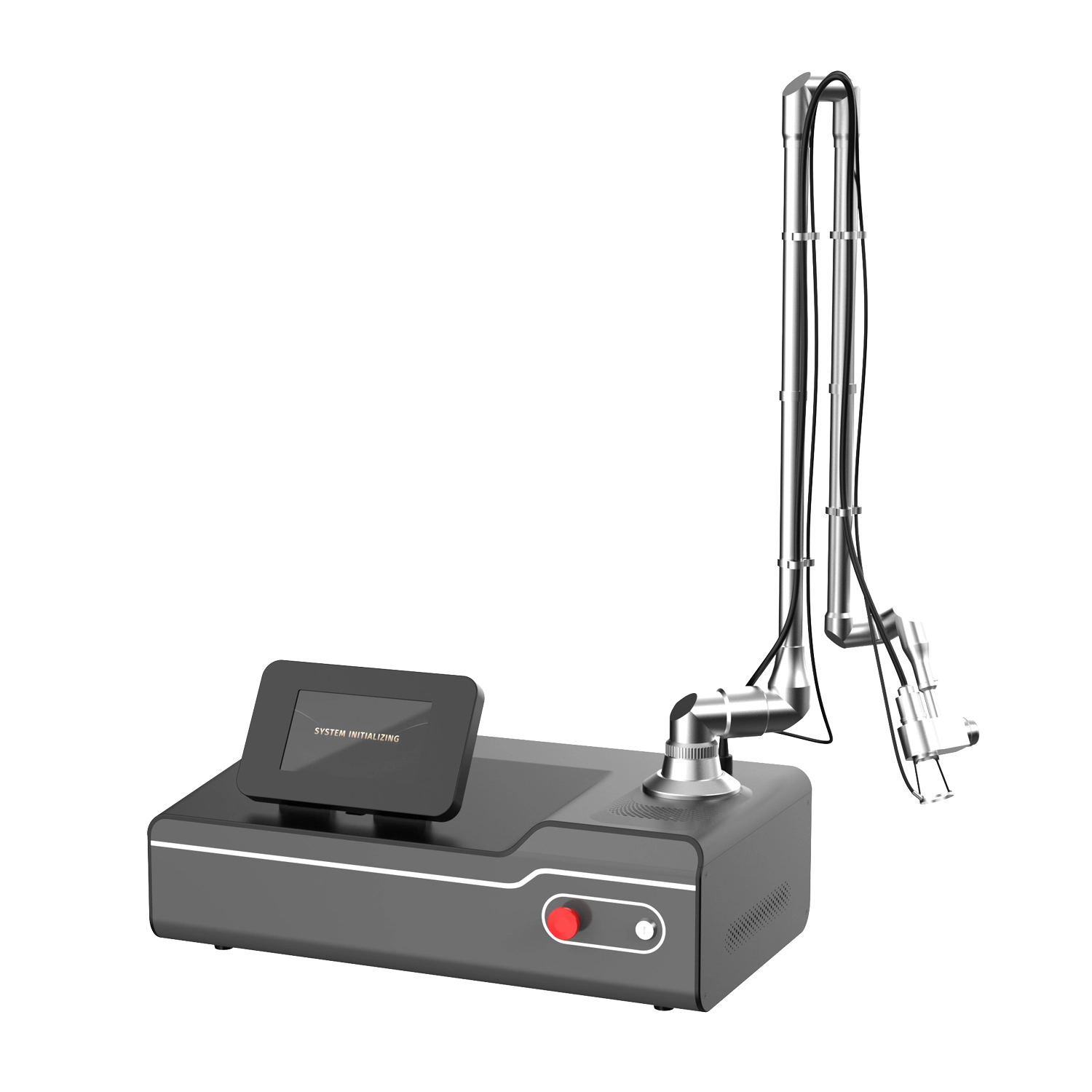
Professional CO2 Fractional Laser Machine for Skin Resurfacing & Scar Treatment
The CO2 Fractional Laser Machine is a professional CO2 fractional laser machine designed for advanced skin resurfacing, scar treatment, and skin rejuvenation procedures.
Using 10,600nm CO2 fractional laser technology, the system delivers controlled microthermal zones into the skin, stimulating collagen remodeling while preserving surrounding tissue. This fractional approach significantly improves treatment safety, recovery time, and clinical outcomes.
The CO2 fractional laser machine is widely used in dermatology clinics and medical aesthetic centers for treating acne scars, wrinkles, enlarged pores, stretch marks, and various skin texture concerns.
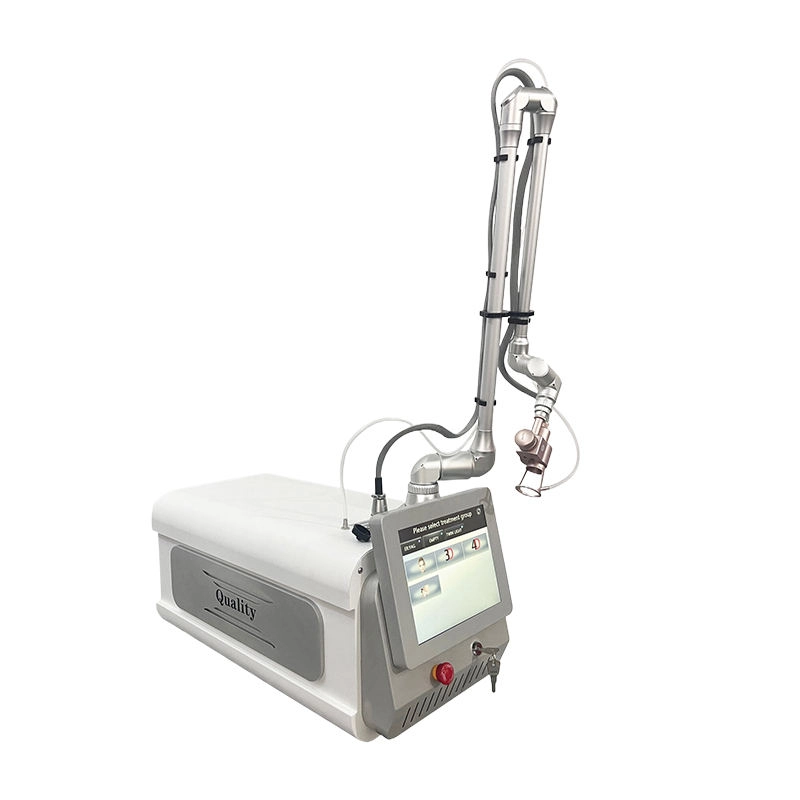
Professional CO2 Fractional Laser Machine | Fractional & Vaginal Rejuvenation CO2 Laser System
The CO2 fractional laser machine is a professional medical-grade device designed for deep skin resurfacing, wrinkle reduction, scar repair, and vaginal rejuvenation. Using a 10600 nm fractional CO2 laser beam, it creates micro-thermal columns on the skin to stimulate collagen regeneration and accelerate skin healing.
This CO2 fractional laser machine provides multiple treatment modes, including fractional mode, surgical cutting mode, and optional vaginal tightening mode, making it ideal for dermatology clinics and professional beauty centers seeking advanced laser solutions.
Its high precision, adjustable spot size, stable energy output, and seven-joint articulated arm ensure safe, accurate, and effective treatment results with minimal downtime.
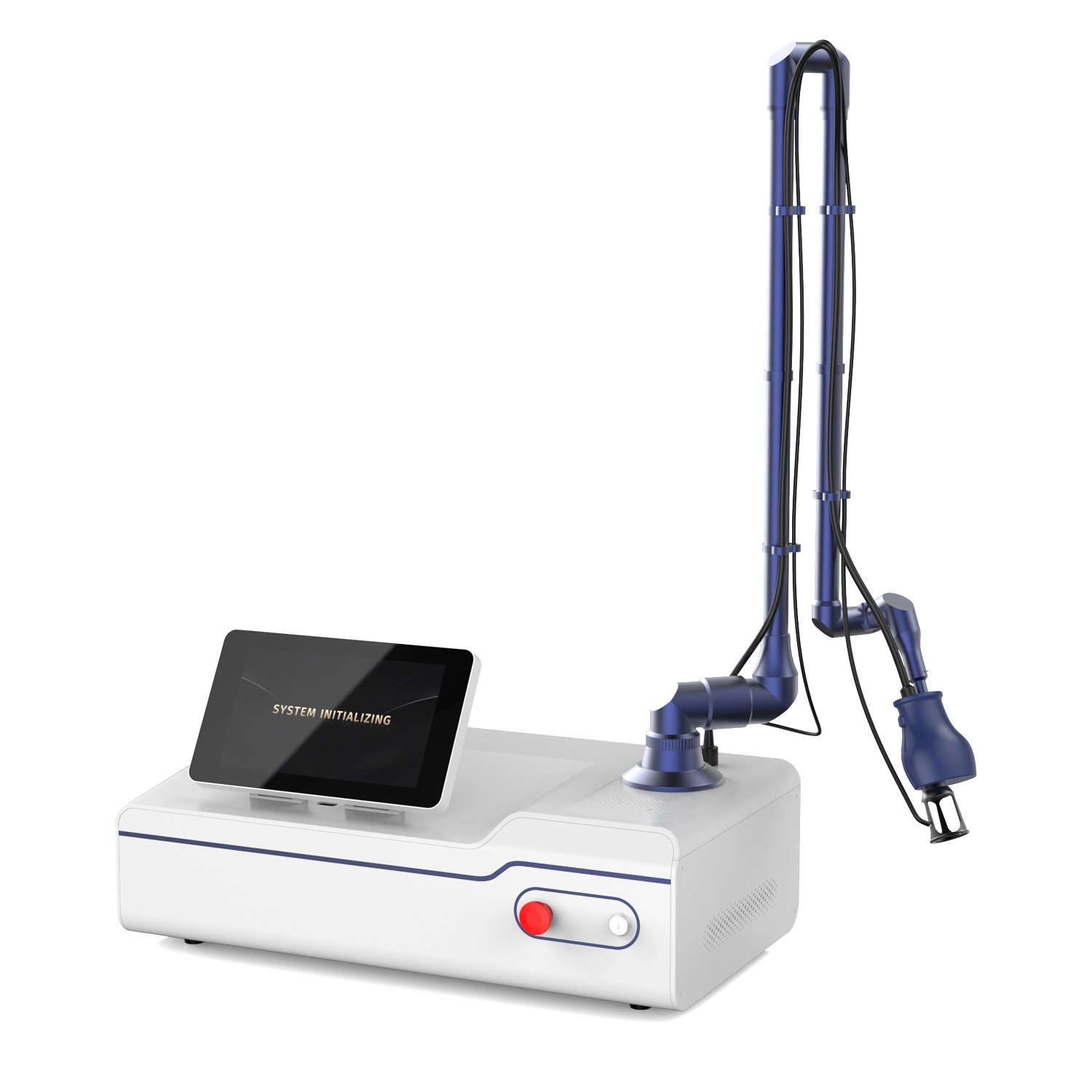
CO2 Fractional Laser Machine | Intimate Vaginal Rejuvenation System
This **CO2 Fractional Laser Machine** utilizes advanced 10600nm CO2 fractional laser technology to create controlled micro-thermal zones on the vaginal mucosa and intimate skin layers. These micro-columns stimulate collagen regeneration and tissue remodeling, effectively improving vaginal tightness, elasticity, and overall intimate health.
Designed specifically for professional medical aesthetic and intimate wellness applications, this CO2 fractional laser machine features intelligent parameter control and high-precision energy output to ensure safe, comfortable, and consistent treatment results. It is an ideal core device for vaginal rejuvenation, postpartum recovery, and intimate anti-aging treatments.
Get more information
If you have any comments or good suggestions, please leave us a message; later our professional staff will contact you as soon as possible.
Let's Talk
Stay in touch with us for cutting-edge beauty solutions, professional guidance, and customized service.
Contact


Room 307, Building A, Huilong International E-commerce Industrial Park, No. 10 Xipengling Road, Helong Street, Baiyun District, Guangzhou, China
© 2025 HUIMAIN. All Rights Reserved. Privacy Policy | Terms and Conditions | Sitemap
Facebook
Instagram
Medical beauty equipment factory
huimain Medical beauty equipment factory
beauty machine supplier
Whatsapp: +8619124004543